

Comparing High Power Operation Boundaries Between Solid State and Hybrid Transformers
JUN 4, 20269 MIN READ
Generate Your Research Report Instantly with AI Agent
Patsnap Eureka helps you evaluate technical feasibility & market potential.
Solid State vs Hybrid Transformer Technology Background
The evolution of power transformer technology has been fundamentally driven by the increasing demand for higher power density, improved efficiency, and enhanced controllability in electrical power systems. Traditional electromagnetic transformers, while reliable and well-established, face inherent limitations in high-frequency operation and dynamic response capabilities. The emergence of solid-state transformers represents a paradigm shift toward semiconductor-based power conversion, leveraging advanced power electronics to achieve unprecedented levels of control and functionality.
Solid-state transformers utilize power semiconductor devices such as IGBTs, MOSFETs, or wide-bandgap semiconductors like SiC and GaN to perform voltage transformation through high-frequency switching operations. This approach eliminates the need for bulky magnetic cores operating at line frequency, enabling significant size and weight reductions while providing bidirectional power flow, voltage regulation, and power quality enhancement capabilities. The technology has gained substantial momentum in applications requiring precise power management, including renewable energy integration, electric vehicle charging infrastructure, and smart grid systems.
Hybrid transformers emerged as an intermediate solution, combining the robustness of conventional magnetic coupling with selective integration of power electronic components. This architecture typically incorporates semiconductor switches for tap changing, voltage regulation, or harmonic compensation while maintaining the fundamental magnetic transformer structure for primary power transfer. The hybrid approach aims to capture benefits of both technologies while mitigating their respective limitations.
The development trajectory of these technologies has been significantly influenced by advances in semiconductor materials and manufacturing processes. Wide-bandgap semiconductors have particularly enabled higher switching frequencies and operating temperatures, directly impacting the power handling capabilities and thermal management requirements of solid-state solutions. Simultaneously, improvements in magnetic materials and core designs have enhanced the performance boundaries of hybrid configurations.
Current research focuses on optimizing the trade-offs between power density, efficiency, cost, and reliability across different operating conditions. The comparative analysis of high-power operation boundaries between solid-state and hybrid transformers has become increasingly critical as applications demand higher power levels while maintaining compact form factors and superior performance characteristics.
Solid-state transformers utilize power semiconductor devices such as IGBTs, MOSFETs, or wide-bandgap semiconductors like SiC and GaN to perform voltage transformation through high-frequency switching operations. This approach eliminates the need for bulky magnetic cores operating at line frequency, enabling significant size and weight reductions while providing bidirectional power flow, voltage regulation, and power quality enhancement capabilities. The technology has gained substantial momentum in applications requiring precise power management, including renewable energy integration, electric vehicle charging infrastructure, and smart grid systems.
Hybrid transformers emerged as an intermediate solution, combining the robustness of conventional magnetic coupling with selective integration of power electronic components. This architecture typically incorporates semiconductor switches for tap changing, voltage regulation, or harmonic compensation while maintaining the fundamental magnetic transformer structure for primary power transfer. The hybrid approach aims to capture benefits of both technologies while mitigating their respective limitations.
The development trajectory of these technologies has been significantly influenced by advances in semiconductor materials and manufacturing processes. Wide-bandgap semiconductors have particularly enabled higher switching frequencies and operating temperatures, directly impacting the power handling capabilities and thermal management requirements of solid-state solutions. Simultaneously, improvements in magnetic materials and core designs have enhanced the performance boundaries of hybrid configurations.
Current research focuses on optimizing the trade-offs between power density, efficiency, cost, and reliability across different operating conditions. The comparative analysis of high-power operation boundaries between solid-state and hybrid transformers has become increasingly critical as applications demand higher power levels while maintaining compact form factors and superior performance characteristics.
Market Demand for High Power Transformer Solutions
The global power infrastructure landscape is experiencing unprecedented transformation driven by renewable energy integration, grid modernization initiatives, and increasing demand for reliable high-power transmission systems. Traditional electromagnetic transformers have dominated the market for decades, but emerging solid-state and hybrid transformer technologies are creating new market segments with distinct value propositions.
Industrial applications represent the largest market segment for high-power transformer solutions, particularly in steel manufacturing, aluminum smelting, and chemical processing facilities where power ratings exceed several hundred megawatts. These industries require transformers capable of handling extreme operational conditions while maintaining efficiency and reliability. The operational boundaries of solid-state transformers offer advantages in dynamic load management and power quality control, making them increasingly attractive for industrial facilities with variable power demands.
Renewable energy integration has emerged as a critical market driver, with wind farms and solar installations requiring sophisticated power conversion systems. Solid-state transformers provide superior grid synchronization capabilities and fault ride-through performance compared to conventional solutions. The ability to operate across wider voltage and frequency ranges makes these technologies particularly valuable for offshore wind applications and utility-scale solar installations where grid stability is paramount.
Electric vehicle charging infrastructure represents a rapidly expanding market segment where high-power transformer solutions play crucial roles. Fast-charging stations require transformers capable of handling rapid load variations and maintaining power quality under dynamic conditions. Hybrid transformer architectures offer compelling solutions by combining the robustness of electromagnetic components with the controllability of solid-state elements.
Data center applications demand increasingly sophisticated power management solutions as computational loads continue growing. High-power transformers must deliver exceptional efficiency while providing precise voltage regulation and harmonic mitigation. The operational boundaries of different transformer technologies directly impact data center design flexibility and operational costs.
Railway electrification projects worldwide are driving demand for specialized high-power transformer solutions capable of handling regenerative braking loads and maintaining stable power delivery across varying operational conditions. The comparative operational boundaries between solid-state and hybrid transformers significantly influence system design decisions and long-term operational economics in these applications.
Industrial applications represent the largest market segment for high-power transformer solutions, particularly in steel manufacturing, aluminum smelting, and chemical processing facilities where power ratings exceed several hundred megawatts. These industries require transformers capable of handling extreme operational conditions while maintaining efficiency and reliability. The operational boundaries of solid-state transformers offer advantages in dynamic load management and power quality control, making them increasingly attractive for industrial facilities with variable power demands.
Renewable energy integration has emerged as a critical market driver, with wind farms and solar installations requiring sophisticated power conversion systems. Solid-state transformers provide superior grid synchronization capabilities and fault ride-through performance compared to conventional solutions. The ability to operate across wider voltage and frequency ranges makes these technologies particularly valuable for offshore wind applications and utility-scale solar installations where grid stability is paramount.
Electric vehicle charging infrastructure represents a rapidly expanding market segment where high-power transformer solutions play crucial roles. Fast-charging stations require transformers capable of handling rapid load variations and maintaining power quality under dynamic conditions. Hybrid transformer architectures offer compelling solutions by combining the robustness of electromagnetic components with the controllability of solid-state elements.
Data center applications demand increasingly sophisticated power management solutions as computational loads continue growing. High-power transformers must deliver exceptional efficiency while providing precise voltage regulation and harmonic mitigation. The operational boundaries of different transformer technologies directly impact data center design flexibility and operational costs.
Railway electrification projects worldwide are driving demand for specialized high-power transformer solutions capable of handling regenerative braking loads and maintaining stable power delivery across varying operational conditions. The comparative operational boundaries between solid-state and hybrid transformers significantly influence system design decisions and long-term operational economics in these applications.
Current Power Operation Limits and Technical Challenges
Solid state transformers currently face significant power operation limitations primarily due to semiconductor device constraints and thermal management challenges. The maximum power handling capability of SSTs is fundamentally restricted by the voltage and current ratings of power semiconductor switches such as IGBTs, MOSFETs, and emerging wide-bandgap devices like SiC and GaN. Current commercial SST implementations typically operate in the range of several hundred kilowatts to low megawatt levels, with voltage ratings constrained by the series connection limitations of semiconductor devices.
Thermal management represents one of the most critical technical challenges for high-power SST operation. The power density requirements and switching losses generate substantial heat that must be effectively dissipated to maintain reliable operation. Current cooling solutions, including advanced liquid cooling and heat sink designs, limit the practical power scaling of SST systems. The junction temperature constraints of semiconductor devices create operational boundaries that directly impact the maximum sustainable power throughput.
Hybrid transformers face different operational constraints, primarily related to the integration complexity between conventional magnetic components and power electronic interfaces. The power limits are often determined by the magnetic core saturation characteristics and the thermal capacity of windings. Current hybrid transformer designs typically achieve higher power ratings than pure SSTs, often reaching multi-megawatt levels, but face challenges in dynamic response and control complexity.
Electromagnetic interference and power quality issues present significant technical hurdles for both technologies. High-frequency switching operations in SSTs generate substantial EMI that requires sophisticated filtering and shielding solutions, adding complexity and cost. The harmonic distortion and switching ripple management become increasingly challenging at higher power levels, requiring advanced control algorithms and filtering techniques.
Grid integration challenges further constrain operational boundaries, particularly regarding fault handling capabilities and grid code compliance. SSTs struggle with fault current contribution requirements, while hybrid transformers face complexity in coordinating protection systems between conventional and electronic components. Reliability and maintenance considerations also impact practical power operation limits, as the complexity of power electronic systems introduces additional failure modes compared to conventional transformers.
The economic viability threshold creates practical operational boundaries, as the cost per kilowatt-hour processed must remain competitive with conventional transformer solutions while providing additional functionality benefits.
Thermal management represents one of the most critical technical challenges for high-power SST operation. The power density requirements and switching losses generate substantial heat that must be effectively dissipated to maintain reliable operation. Current cooling solutions, including advanced liquid cooling and heat sink designs, limit the practical power scaling of SST systems. The junction temperature constraints of semiconductor devices create operational boundaries that directly impact the maximum sustainable power throughput.
Hybrid transformers face different operational constraints, primarily related to the integration complexity between conventional magnetic components and power electronic interfaces. The power limits are often determined by the magnetic core saturation characteristics and the thermal capacity of windings. Current hybrid transformer designs typically achieve higher power ratings than pure SSTs, often reaching multi-megawatt levels, but face challenges in dynamic response and control complexity.
Electromagnetic interference and power quality issues present significant technical hurdles for both technologies. High-frequency switching operations in SSTs generate substantial EMI that requires sophisticated filtering and shielding solutions, adding complexity and cost. The harmonic distortion and switching ripple management become increasingly challenging at higher power levels, requiring advanced control algorithms and filtering techniques.
Grid integration challenges further constrain operational boundaries, particularly regarding fault handling capabilities and grid code compliance. SSTs struggle with fault current contribution requirements, while hybrid transformers face complexity in coordinating protection systems between conventional and electronic components. Reliability and maintenance considerations also impact practical power operation limits, as the complexity of power electronic systems introduces additional failure modes compared to conventional transformers.
The economic viability threshold creates practical operational boundaries, as the cost per kilowatt-hour processed must remain competitive with conventional transformer solutions while providing additional functionality benefits.
Existing High Power Operation Solutions
01 Thermal management and cooling systems for high power transformers
Advanced thermal management techniques are essential for maintaining operational boundaries in high power solid state and hybrid transformers. These systems incorporate sophisticated cooling mechanisms, heat dissipation structures, and temperature monitoring to prevent overheating during high power operations. The thermal design ensures reliable performance by managing heat generation from power semiconductor devices and magnetic components.- Thermal management and cooling systems for high power transformers: Advanced thermal management techniques are essential for maintaining operational boundaries in high power solid state and hybrid transformers. These systems incorporate sophisticated cooling mechanisms, heat dissipation structures, and temperature monitoring to prevent overheating and ensure reliable operation at maximum power levels. The thermal design directly impacts the power handling capacity and operational limits of the transformer systems.
- Power semiconductor switching devices and control circuits: High power operation boundaries are significantly influenced by the characteristics and control of power semiconductor devices used in solid state transformers. Advanced switching techniques, gate drive circuits, and protection mechanisms are implemented to maximize power handling while maintaining safe operating conditions. The switching frequency, voltage ratings, and current capabilities of these devices determine the overall power boundaries of the system.
- Magnetic core design and materials for high power applications: The magnetic core design and material selection play crucial roles in defining the operational boundaries of high power transformers. Advanced core materials, optimized geometries, and magnetic flux management techniques enable higher power densities while minimizing losses. The core saturation characteristics and permeability directly affect the maximum power handling capacity and efficiency of the transformer system.
- Insulation systems and voltage stress management: High voltage insulation systems are critical for establishing safe operational boundaries in high power transformer applications. Advanced insulation materials, electric field control techniques, and partial discharge prevention methods ensure reliable operation at elevated voltage and power levels. The insulation design determines the maximum voltage ratings and power handling capabilities while maintaining electrical safety margins.
- Protection and monitoring systems for operational boundary enforcement: Comprehensive protection and monitoring systems are essential for maintaining operation within safe boundaries in high power transformer applications. These systems include overcurrent protection, overvoltage detection, fault isolation mechanisms, and real-time parameter monitoring. The protection schemes ensure that the transformer operates within predetermined limits and provides rapid response to abnormal conditions that could exceed operational boundaries.
02 Power semiconductor switching control and protection circuits
Control systems for power semiconductor devices in solid state transformers require precise switching algorithms and protection mechanisms to handle high power operations. These circuits manage switching frequencies, gate drive signals, and fault detection to maintain safe operating boundaries. Advanced control strategies optimize efficiency while preventing device failure under extreme power conditions.Expand Specific Solutions03 Magnetic core design and saturation prevention
High power transformer operations require specialized magnetic core designs that prevent saturation and maintain linearity under extreme operating conditions. The magnetic components must be engineered to handle high flux densities while minimizing losses. Core materials and geometries are optimized to extend the operational boundaries and improve power handling capabilities.Expand Specific Solutions04 Voltage and current regulation systems
Precise voltage and current regulation is critical for maintaining operational boundaries in high power transformer applications. These systems incorporate feedback control loops, voltage sensing circuits, and current limiting mechanisms to ensure stable operation. The regulation systems must respond rapidly to load changes while maintaining power quality and preventing overcurrent conditions.Expand Specific Solutions05 Insulation and dielectric strength enhancement
High power operations demand enhanced insulation systems and improved dielectric strength to prevent breakdown under extreme voltage and current conditions. Advanced insulation materials and techniques are employed to maintain electrical isolation while handling high power densities. The insulation design must account for thermal expansion, partial discharge prevention, and long-term reliability under stress.Expand Specific Solutions
Key Players in Power Electronics and Transformer Industry
The high power operation boundaries comparison between solid state and hybrid transformers represents an emerging technology sector in the early commercialization stage, with significant market potential driven by grid modernization and renewable energy integration demands. The market is experiencing rapid growth as utilities and industrial users seek enhanced power quality, efficiency, and grid flexibility solutions. Technology maturity varies considerably across market players, with established power electronics companies like ABB Ltd., Delta Electronics, and Huawei Digital Power Technologies leading in solid-state transformer development, while specialized firms such as IONATE Ltd. are pioneering hybrid intelligent transformer solutions. Traditional transformer manufacturers including Pennsylvania Transformer Technology and Tamura Corp. are adapting their conventional technologies, while research institutions like Shanghai Jiao Tong University, Huazhong University of Science & Technology, and Georgia Tech Research Corp. are advancing fundamental research. The competitive landscape shows a convergence of power electronics expertise, grid infrastructure knowledge, and digital control capabilities, with companies like Hitachi Energy, Eaton Intelligent Power, and Rockwell Automation Technologies positioning themselves at the intersection of traditional and next-generation transformer technologies.
Delta Electronics, Inc.
Technical Solution: Delta Electronics specializes in solid-state transformer technology for industrial and renewable energy applications. Their solutions employ silicon carbide power devices operating at switching frequencies up to 50 kHz, achieving compact designs with power densities reaching 12 kW/L. The company's solid-state transformers feature three-stage conversion architecture with isolated DC-DC converters, enabling bidirectional power flow and enhanced grid integration. Their designs support power ratings from 500 kW to 5 MW with efficiency levels exceeding 96%. Advanced thermal management using liquid cooling maintains semiconductor junction temperatures below 100°C during high-power operation, while integrated energy storage capabilities provide grid stabilization and power quality improvement functions.
Strengths: Strong power electronics expertise, cost-effective manufacturing capabilities, comprehensive thermal management solutions. Weaknesses: Limited experience in utility-scale applications, focus primarily on medium-power range transformers.
ABB Ltd.
Technical Solution: ABB has developed comprehensive high-power transformer solutions including both solid-state and hybrid configurations. Their solid-state transformers utilize advanced silicon carbide (SiC) and gallium nitride (GaN) semiconductors, enabling operation at frequencies up to 20 kHz with power densities exceeding 10 kW/L. For hybrid transformers, ABB combines traditional magnetic coupling with power electronic converters, achieving efficiency rates above 98% while maintaining operational flexibility across varying load conditions. Their modular design approach allows for scalable power ratings from 1 MVA to 100 MVA, with enhanced grid integration capabilities including reactive power compensation and harmonic filtering.
Strengths: Market leadership in power electronics, extensive R&D capabilities, proven track record in high-voltage applications. Weaknesses: Higher initial costs compared to conventional transformers, complex control systems requiring specialized maintenance.
Core Technologies in Power Boundary Management
Solid-state transformer having uninterrupted operation ability under ac/DC fault and control method thereof
PatentActiveUS20220166343A1
Innovation
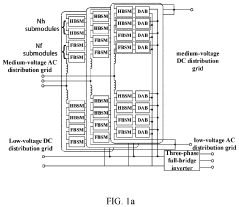
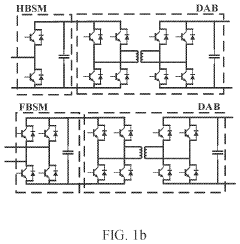
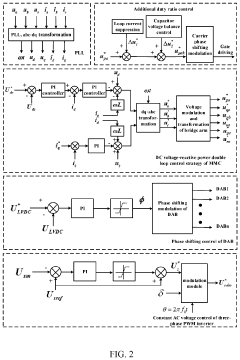
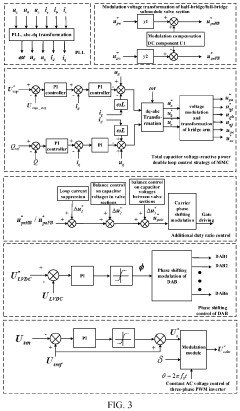
- A hybrid modular multilevel solid-state transformer with isolated dual-active-bridge converters and a three-phase full-bridge inverter, utilizing half-bridge and full-bridge submodules interconnected via DC capacitors, allows for uninterrupted operation under AC/DC faults by locking faulty ports and maintaining stable voltage and power flow through advanced control strategies.
Multilevel converter based intelligent universal transformer
PatentWO2005055408A1
Innovation
- A multilevel converter-based intelligent universal transformer is developed, utilizing back-to-back interconnected converters coupled with a high-frequency transformer and a switched inverter circuit, enabling direct interfacing with power distribution systems and maintaining voltage balance among multiple modules through active control.


Grid Integration Standards and Regulations
The integration of solid state transformers (SSTs) and hybrid transformers into electrical grids requires adherence to comprehensive standards and regulatory frameworks that differ significantly from conventional transformer installations. Current grid codes primarily address traditional electromagnetic transformers, creating regulatory gaps for advanced transformer technologies operating at high power levels.
IEEE 1547 series standards provide foundational requirements for distributed energy resource interconnection, which directly impacts SST and hybrid transformer deployment. These standards establish voltage and frequency ride-through capabilities, power quality requirements, and islanding protection protocols. However, the dynamic response characteristics of power electronics-based transformers necessitate additional considerations beyond conventional standards.
IEC 61850 communication protocols become critical for SST and hybrid transformer integration, enabling real-time monitoring and control capabilities essential for high power operation. The standard facilitates seamless data exchange between transformer control systems and grid management infrastructure, supporting advanced functionalities like dynamic voltage regulation and fault isolation that distinguish these technologies from traditional transformers.
Grid connection requirements under IEC 61936 and IEEE C57 series standards must be adapted to accommodate the unique operational characteristics of SSTs and hybrid transformers. Power electronics components introduce harmonic distortion patterns and switching transients that require specialized filtering and protection schemes, often exceeding conventional transformer specifications.
Regulatory frameworks in different jurisdictions present varying approaches to advanced transformer approval processes. European ENTSO-E network codes emphasize system stability and power quality metrics, while North American NERC standards focus on bulk power system reliability. These regional differences create challenges for manufacturers seeking global market penetration with standardized designs.
Safety standards including IEC 62477 for power electronic converter systems and UL 1741 for inverter-based equipment establish mandatory requirements for SST and hybrid transformer installations. High power operation introduces elevated safety risks related to arc flash protection, electromagnetic interference, and thermal management that exceed traditional transformer safety considerations.
Future regulatory developments must address emerging challenges including cybersecurity requirements under IEC 62351, environmental impact assessments for power electronics materials, and grid resilience standards that leverage advanced transformer capabilities for enhanced system stability and recovery.
IEEE 1547 series standards provide foundational requirements for distributed energy resource interconnection, which directly impacts SST and hybrid transformer deployment. These standards establish voltage and frequency ride-through capabilities, power quality requirements, and islanding protection protocols. However, the dynamic response characteristics of power electronics-based transformers necessitate additional considerations beyond conventional standards.
IEC 61850 communication protocols become critical for SST and hybrid transformer integration, enabling real-time monitoring and control capabilities essential for high power operation. The standard facilitates seamless data exchange between transformer control systems and grid management infrastructure, supporting advanced functionalities like dynamic voltage regulation and fault isolation that distinguish these technologies from traditional transformers.
Grid connection requirements under IEC 61936 and IEEE C57 series standards must be adapted to accommodate the unique operational characteristics of SSTs and hybrid transformers. Power electronics components introduce harmonic distortion patterns and switching transients that require specialized filtering and protection schemes, often exceeding conventional transformer specifications.
Regulatory frameworks in different jurisdictions present varying approaches to advanced transformer approval processes. European ENTSO-E network codes emphasize system stability and power quality metrics, while North American NERC standards focus on bulk power system reliability. These regional differences create challenges for manufacturers seeking global market penetration with standardized designs.
Safety standards including IEC 62477 for power electronic converter systems and UL 1741 for inverter-based equipment establish mandatory requirements for SST and hybrid transformer installations. High power operation introduces elevated safety risks related to arc flash protection, electromagnetic interference, and thermal management that exceed traditional transformer safety considerations.
Future regulatory developments must address emerging challenges including cybersecurity requirements under IEC 62351, environmental impact assessments for power electronics materials, and grid resilience standards that leverage advanced transformer capabilities for enhanced system stability and recovery.
Thermal Management in High Power Applications
Thermal management represents one of the most critical engineering challenges in high power transformer applications, fundamentally determining the operational boundaries and reliability of both solid state transformers (SSTs) and hybrid transformers. The thermal characteristics of these technologies differ significantly due to their distinct architectures and power conversion mechanisms.
Solid state transformers face unique thermal challenges primarily stemming from semiconductor switching losses and high-frequency magnetic core losses. Power semiconductor devices such as IGBTs, MOSFETs, and SiC devices generate substantial heat during switching operations, with losses typically ranging from 2-5% of total power throughput. The concentrated nature of these losses creates localized hot spots that require sophisticated cooling solutions. Advanced thermal interface materials, liquid cooling systems, and optimized heat sink designs are essential for maintaining junction temperatures within acceptable limits.
Hybrid transformers present a different thermal profile, combining traditional magnetic components with power electronics. The thermal management strategy must address both conventional transformer losses including copper and core losses, as well as semiconductor switching losses. The distributed nature of heat generation in hybrid systems can provide certain advantages, as thermal loads are spread across multiple components rather than concentrated in semiconductor junctions.
Heat dissipation mechanisms vary considerably between the two technologies. SSTs typically employ forced air cooling, liquid cooling, or advanced phase-change cooling systems to manage the high power density. Thermal design considerations include junction-to-case thermal resistance, heat sink effectiveness, and ambient temperature variations. Modern SST designs incorporate real-time thermal monitoring and dynamic derating algorithms to prevent thermal runaway conditions.
Hybrid transformers leverage both natural convection from traditional magnetic components and active cooling for power electronics sections. The thermal time constants differ significantly between magnetic and semiconductor components, requiring careful thermal modeling to predict transient thermal behavior during load variations and fault conditions.
Temperature-dependent performance characteristics significantly impact operational boundaries. Semiconductor devices exhibit reduced efficiency and shortened lifespan at elevated temperatures, while magnetic materials may experience saturation changes and increased losses. Effective thermal management directly correlates with power density capabilities, with advanced cooling enabling higher power throughput within given physical constraints.
Solid state transformers face unique thermal challenges primarily stemming from semiconductor switching losses and high-frequency magnetic core losses. Power semiconductor devices such as IGBTs, MOSFETs, and SiC devices generate substantial heat during switching operations, with losses typically ranging from 2-5% of total power throughput. The concentrated nature of these losses creates localized hot spots that require sophisticated cooling solutions. Advanced thermal interface materials, liquid cooling systems, and optimized heat sink designs are essential for maintaining junction temperatures within acceptable limits.
Hybrid transformers present a different thermal profile, combining traditional magnetic components with power electronics. The thermal management strategy must address both conventional transformer losses including copper and core losses, as well as semiconductor switching losses. The distributed nature of heat generation in hybrid systems can provide certain advantages, as thermal loads are spread across multiple components rather than concentrated in semiconductor junctions.
Heat dissipation mechanisms vary considerably between the two technologies. SSTs typically employ forced air cooling, liquid cooling, or advanced phase-change cooling systems to manage the high power density. Thermal design considerations include junction-to-case thermal resistance, heat sink effectiveness, and ambient temperature variations. Modern SST designs incorporate real-time thermal monitoring and dynamic derating algorithms to prevent thermal runaway conditions.
Hybrid transformers leverage both natural convection from traditional magnetic components and active cooling for power electronics sections. The thermal time constants differ significantly between magnetic and semiconductor components, requiring careful thermal modeling to predict transient thermal behavior during load variations and fault conditions.
Temperature-dependent performance characteristics significantly impact operational boundaries. Semiconductor devices exhibit reduced efficiency and shortened lifespan at elevated temperatures, while magnetic materials may experience saturation changes and increased losses. Effective thermal management directly correlates with power density capabilities, with advanced cooling enabling higher power throughput within given physical constraints.
Unlock deeper insights with Patsnap Eureka Quick Research — get a full tech report to explore trends and direct your research. Try now!
Generate Your Research Report Instantly with AI Agent
Supercharge your innovation with Patsnap Eureka AI Agent Platform!