

Energy Storage Integration with Solid State Transformers: Key Design Factors
JUN 4, 20269 MIN READ
Generate Your Research Report Instantly with AI Agent
Patsnap Eureka helps you evaluate technical feasibility & market potential.
SST Energy Storage Background and Technical Objectives
The integration of energy storage systems with solid-state transformers represents a paradigm shift in power electronics and grid infrastructure technology. Traditional electromagnetic transformers have dominated power distribution networks for over a century, but their limitations in terms of size, weight, controllability, and bidirectional power flow capabilities have become increasingly apparent as modern power systems evolve toward greater complexity and renewable energy integration.
Solid-state transformers emerged from the convergence of advanced semiconductor technologies, high-frequency switching capabilities, and sophisticated control algorithms. Unlike conventional transformers that rely on magnetic coupling through iron cores, SSTs utilize power electronic converters to achieve voltage transformation, galvanic isolation, and enhanced functionality. This technological evolution has been driven by the proliferation of wide-bandgap semiconductors such as silicon carbide and gallium nitride, which enable higher switching frequencies and improved efficiency.
The integration of energy storage with SSTs addresses critical challenges in modern power systems, including grid stability, power quality enhancement, renewable energy intermittency management, and peak load shaving. This integration concept has gained significant momentum as distributed energy resources become more prevalent and grid modernization initiatives accelerate globally.
The primary technical objective of SST-energy storage integration is to create a unified power management platform that combines voltage regulation, power conversion, and energy buffering capabilities within a single system architecture. This integration aims to achieve seamless bidirectional power flow control, enabling efficient energy transfer between different voltage levels while providing temporary energy storage for grid stabilization and load balancing.
Key technical objectives include maximizing overall system efficiency through optimized power conversion topologies and advanced control strategies. The integration seeks to minimize power losses during energy storage and retrieval processes while maintaining high power density and compact form factors. Additionally, the system must demonstrate enhanced grid support capabilities, including voltage regulation, frequency stabilization, and harmonic mitigation.
Another critical objective involves developing scalable and modular architectures that can accommodate various energy storage technologies, from battery systems to supercapacitors and hybrid configurations. The integration must support flexible operation modes, allowing the system to function as a conventional transformer, an active power filter, or an energy management hub depending on grid conditions and operational requirements.
The technological advancement also targets improved reliability and fault tolerance through distributed control architectures and redundant system designs. Enhanced monitoring and diagnostic capabilities represent additional objectives, enabling predictive maintenance and optimized performance throughout the system lifecycle.
Solid-state transformers emerged from the convergence of advanced semiconductor technologies, high-frequency switching capabilities, and sophisticated control algorithms. Unlike conventional transformers that rely on magnetic coupling through iron cores, SSTs utilize power electronic converters to achieve voltage transformation, galvanic isolation, and enhanced functionality. This technological evolution has been driven by the proliferation of wide-bandgap semiconductors such as silicon carbide and gallium nitride, which enable higher switching frequencies and improved efficiency.
The integration of energy storage with SSTs addresses critical challenges in modern power systems, including grid stability, power quality enhancement, renewable energy intermittency management, and peak load shaving. This integration concept has gained significant momentum as distributed energy resources become more prevalent and grid modernization initiatives accelerate globally.
The primary technical objective of SST-energy storage integration is to create a unified power management platform that combines voltage regulation, power conversion, and energy buffering capabilities within a single system architecture. This integration aims to achieve seamless bidirectional power flow control, enabling efficient energy transfer between different voltage levels while providing temporary energy storage for grid stabilization and load balancing.
Key technical objectives include maximizing overall system efficiency through optimized power conversion topologies and advanced control strategies. The integration seeks to minimize power losses during energy storage and retrieval processes while maintaining high power density and compact form factors. Additionally, the system must demonstrate enhanced grid support capabilities, including voltage regulation, frequency stabilization, and harmonic mitigation.
Another critical objective involves developing scalable and modular architectures that can accommodate various energy storage technologies, from battery systems to supercapacitors and hybrid configurations. The integration must support flexible operation modes, allowing the system to function as a conventional transformer, an active power filter, or an energy management hub depending on grid conditions and operational requirements.
The technological advancement also targets improved reliability and fault tolerance through distributed control architectures and redundant system designs. Enhanced monitoring and diagnostic capabilities represent additional objectives, enabling predictive maintenance and optimized performance throughout the system lifecycle.
Market Demand Analysis for SST-Storage Integration Systems
The global energy landscape is experiencing unprecedented transformation driven by renewable energy proliferation and grid modernization initiatives. Traditional power infrastructure faces mounting pressure to accommodate bidirectional power flows, variable generation sources, and enhanced grid resilience requirements. This paradigm shift creates substantial market opportunities for advanced power conversion and energy storage technologies.
SST-storage integration systems address critical market needs in multiple sectors. Data centers require uninterruptible power supplies with improved efficiency and reduced footprint compared to conventional UPS systems. The integration enables seamless transition between grid and battery power while providing power quality enhancement. Industrial facilities benefit from peak shaving capabilities, power factor correction, and voltage regulation in a single integrated solution.
Electric vehicle charging infrastructure represents a rapidly expanding market segment where SST-storage systems provide grid stabilization during high-power charging events. The technology enables dynamic load management, reducing infrastructure upgrade costs for utilities while supporting fast charging capabilities. Smart charging algorithms optimize energy costs by leveraging time-of-use pricing and demand response programs.
Renewable energy integration drives significant demand for SST-storage systems in utility-scale applications. Solar and wind installations require sophisticated power conditioning to manage intermittency and voltage fluctuations. The integrated approach reduces system complexity and installation costs compared to separate transformer and storage deployments. Grid-forming capabilities enable microgrids and islanding operations during outages.
Residential and commercial building markets increasingly demand energy management solutions that optimize consumption patterns and reduce electricity costs. SST-storage systems enable building-level energy arbitrage, backup power capabilities, and integration with rooftop solar installations. Smart building applications benefit from precise voltage control and power quality enhancement.
Market growth accelerates due to regulatory support for grid modernization and renewable energy targets. Utility investment in distribution automation and smart grid technologies creates favorable conditions for SST-storage adoption. Carbon reduction mandates and energy efficiency standards further drive market demand across all sectors.
The convergence of declining battery costs, advancing semiconductor technologies, and increasing grid complexity establishes strong market fundamentals for SST-storage integration systems across diverse applications and geographic regions.
SST-storage integration systems address critical market needs in multiple sectors. Data centers require uninterruptible power supplies with improved efficiency and reduced footprint compared to conventional UPS systems. The integration enables seamless transition between grid and battery power while providing power quality enhancement. Industrial facilities benefit from peak shaving capabilities, power factor correction, and voltage regulation in a single integrated solution.
Electric vehicle charging infrastructure represents a rapidly expanding market segment where SST-storage systems provide grid stabilization during high-power charging events. The technology enables dynamic load management, reducing infrastructure upgrade costs for utilities while supporting fast charging capabilities. Smart charging algorithms optimize energy costs by leveraging time-of-use pricing and demand response programs.
Renewable energy integration drives significant demand for SST-storage systems in utility-scale applications. Solar and wind installations require sophisticated power conditioning to manage intermittency and voltage fluctuations. The integrated approach reduces system complexity and installation costs compared to separate transformer and storage deployments. Grid-forming capabilities enable microgrids and islanding operations during outages.
Residential and commercial building markets increasingly demand energy management solutions that optimize consumption patterns and reduce electricity costs. SST-storage systems enable building-level energy arbitrage, backup power capabilities, and integration with rooftop solar installations. Smart building applications benefit from precise voltage control and power quality enhancement.
Market growth accelerates due to regulatory support for grid modernization and renewable energy targets. Utility investment in distribution automation and smart grid technologies creates favorable conditions for SST-storage adoption. Carbon reduction mandates and energy efficiency standards further drive market demand across all sectors.
The convergence of declining battery costs, advancing semiconductor technologies, and increasing grid complexity establishes strong market fundamentals for SST-storage integration systems across diverse applications and geographic regions.
Current Status and Design Challenges of SST-Storage Integration
The integration of energy storage systems with solid-state transformers represents a rapidly evolving technological frontier that combines advanced power electronics with energy management capabilities. Current implementations primarily focus on DC-coupled architectures where battery systems connect directly to the DC link of SSTs, enabling bidirectional power flow and enhanced grid services. Leading manufacturers such as ABB, Siemens, and General Electric have developed prototype systems demonstrating power ratings from 1MW to 10MW, with efficiency levels reaching 96-98% under optimal operating conditions.
Contemporary SST-storage integration faces significant technical challenges related to power density optimization and thermal management. The semiconductor devices used in SSTs, particularly silicon carbide and gallium nitride components, generate substantial heat during high-frequency switching operations. When combined with battery thermal requirements, the overall system thermal design becomes increasingly complex, often requiring sophisticated cooling systems that can account for 15-20% of total system volume.
Control system complexity represents another major challenge in current implementations. The integration requires sophisticated algorithms to manage simultaneous grid regulation, energy storage charging/discharging cycles, and power quality enhancement functions. Real-time coordination between SST switching operations and battery management systems demands advanced digital signal processing capabilities and high-speed communication protocols, often resulting in control latency issues that can affect system stability.
Voltage and current harmonics management poses additional difficulties in existing systems. The high-frequency switching characteristics of SSTs can introduce electromagnetic interference that affects battery management system operations, while battery current ripples can impact SST performance. Current solutions employ complex filtering arrangements and isolation techniques, but these approaches often compromise overall system efficiency and increase manufacturing costs.
Standardization gaps significantly hinder widespread deployment of integrated SST-storage systems. Existing grid codes and interconnection standards were developed for conventional transformer-based systems and do not adequately address the unique characteristics of SST-storage combinations. This regulatory uncertainty creates barriers for utility adoption and limits the commercial viability of integrated solutions.
Economic challenges persist despite technological advances, with integrated SST-storage systems currently costing 2-3 times more than conventional alternatives. The high cost of wide-bandgap semiconductors, combined with complex control systems and specialized cooling requirements, creates significant economic barriers for widespread market adoption, particularly in cost-sensitive applications.
Contemporary SST-storage integration faces significant technical challenges related to power density optimization and thermal management. The semiconductor devices used in SSTs, particularly silicon carbide and gallium nitride components, generate substantial heat during high-frequency switching operations. When combined with battery thermal requirements, the overall system thermal design becomes increasingly complex, often requiring sophisticated cooling systems that can account for 15-20% of total system volume.
Control system complexity represents another major challenge in current implementations. The integration requires sophisticated algorithms to manage simultaneous grid regulation, energy storage charging/discharging cycles, and power quality enhancement functions. Real-time coordination between SST switching operations and battery management systems demands advanced digital signal processing capabilities and high-speed communication protocols, often resulting in control latency issues that can affect system stability.
Voltage and current harmonics management poses additional difficulties in existing systems. The high-frequency switching characteristics of SSTs can introduce electromagnetic interference that affects battery management system operations, while battery current ripples can impact SST performance. Current solutions employ complex filtering arrangements and isolation techniques, but these approaches often compromise overall system efficiency and increase manufacturing costs.
Standardization gaps significantly hinder widespread deployment of integrated SST-storage systems. Existing grid codes and interconnection standards were developed for conventional transformer-based systems and do not adequately address the unique characteristics of SST-storage combinations. This regulatory uncertainty creates barriers for utility adoption and limits the commercial viability of integrated solutions.
Economic challenges persist despite technological advances, with integrated SST-storage systems currently costing 2-3 times more than conventional alternatives. The high cost of wide-bandgap semiconductors, combined with complex control systems and specialized cooling requirements, creates significant economic barriers for widespread market adoption, particularly in cost-sensitive applications.
Current Design Solutions for SST-Storage Integration
01 Power conversion and control systems for solid state transformers
Advanced power conversion architectures that enable efficient voltage transformation through semiconductor-based switching circuits. These systems incorporate sophisticated control algorithms to manage power flow, voltage regulation, and frequency conversion in solid state transformer applications. The technology focuses on optimizing power density and conversion efficiency while maintaining stable output characteristics across varying load conditions.- Power conversion and control systems for solid state transformers: Advanced power conversion architectures that enable efficient voltage transformation through semiconductor-based switching devices. These systems incorporate sophisticated control algorithms to manage power flow, voltage regulation, and frequency conversion in solid state transformer applications. The technology focuses on optimizing power density and conversion efficiency while maintaining stable operation across varying load conditions.
- Magnetic core and winding configurations: Innovative magnetic core designs and winding arrangements specifically optimized for solid state transformer applications. These configurations enhance magnetic coupling efficiency, reduce core losses, and minimize electromagnetic interference. The designs incorporate advanced materials and geometric arrangements to achieve compact form factors while maintaining high power handling capabilities and thermal management.
- Isolation and protection mechanisms: Comprehensive isolation and protection systems designed to ensure safe operation of solid state transformers under various fault conditions. These mechanisms include galvanic isolation, overcurrent protection, overvoltage protection, and thermal management systems. The technology provides reliable operation while protecting both the transformer and connected equipment from electrical faults and transient conditions.
- Grid integration and smart grid applications: Advanced integration solutions for connecting solid state transformers to electrical grids and smart grid infrastructures. These applications enable bidirectional power flow, grid stabilization, and enhanced power quality management. The technology supports renewable energy integration, distributed generation systems, and advanced grid monitoring capabilities for improved grid reliability and efficiency.
- Modular and scalable architectures: Modular design approaches that enable scalable solid state transformer implementations for various power ratings and applications. These architectures allow for flexible configuration, redundancy, and maintenance while optimizing manufacturing costs and system reliability. The modular approach facilitates customization for specific applications ranging from residential to industrial power distribution systems.
02 Magnetic core and winding configurations
Innovative magnetic core designs and winding arrangements specifically optimized for solid state transformer applications. These configurations enhance magnetic coupling efficiency, reduce core losses, and minimize electromagnetic interference. The designs incorporate advanced materials and geometric arrangements to achieve compact form factors while maintaining high power handling capabilities and thermal management.Expand Specific Solutions03 Isolation and safety systems
Galvanic isolation technologies and comprehensive safety mechanisms integrated into solid state transformer designs. These systems provide electrical isolation between primary and secondary circuits while incorporating fault detection, overcurrent protection, and thermal monitoring capabilities. The safety features ensure reliable operation under various fault conditions and comply with electrical safety standards.Expand Specific Solutions04 Grid integration and smart grid applications
Technologies enabling seamless integration of solid state transformers into modern electrical grid infrastructure and smart grid systems. These solutions provide bidirectional power flow capabilities, real-time monitoring, and communication interfaces for grid management. The systems support renewable energy integration, load balancing, and distributed energy resource management while enhancing grid stability and efficiency.Expand Specific Solutions05 Thermal management and packaging solutions
Advanced thermal management systems and packaging technologies designed to handle heat dissipation in high-power solid state transformer applications. These solutions incorporate innovative cooling methods, thermal interface materials, and compact packaging designs to maintain optimal operating temperatures. The thermal management approaches ensure long-term reliability and enable higher power density implementations.Expand Specific Solutions
Major Players in SST and Energy Storage Integration Market
The energy storage integration with solid-state transformers market is in its early commercialization stage, characterized by significant technological advancement and growing market potential. The industry demonstrates a multi-billion dollar opportunity driven by grid modernization and renewable energy integration demands. Technology maturity varies considerably across market players, with established power electronics companies like Hitachi Energy Ltd., Huawei Digital Power Technologies, and SMA Solar Technology AG leading in solid-state transformer development, while energy storage specialists such as BYD Co., Ltd. and GS Yuasa International Ltd. contribute advanced battery integration capabilities. State Grid Corp. of China and utility-scale players are driving deployment requirements, while emerging companies like Antora Energy focus on innovative thermal storage solutions. The competitive landscape shows a convergence of traditional power equipment manufacturers, battery companies, and grid operators, indicating the technology's transition from research phase to practical implementation, though widespread commercial adoption remains 2-3 years away.
Hitachi Energy Ltd.
Technical Solution: Hitachi Energy has developed advanced solid state transformer solutions with integrated energy storage capabilities, featuring modular medium-voltage power electronic converters that enable bidirectional power flow control. Their SST designs incorporate high-frequency isolation transformers operating at 10-20 kHz, combined with lithium-ion battery energy storage systems that provide grid stabilization services. The company's approach focuses on cascaded H-bridge multilevel converters with individual DC-link capacitors, allowing for enhanced fault tolerance and improved power quality. Their integrated systems feature advanced control algorithms for seamless energy management between grid, storage, and load, with power ratings ranging from 1-10 MVA for distribution grid applications.
Strengths: Proven track record in power electronics, robust multilevel converter technology, excellent grid integration capabilities. Weaknesses: Higher initial costs, complex control systems requiring specialized maintenance expertise.
Huawei Digital Power Technologies Co., Ltd.
Technical Solution: Huawei Digital Power has developed intelligent solid state transformer solutions with integrated energy storage management systems, leveraging their expertise in power electronics and digital control technologies. Their SST architecture employs silicon carbide (SiC) semiconductors operating at switching frequencies up to 50 kHz, enabling compact transformer designs with power densities exceeding 10 kW/L. The integrated energy storage system utilizes advanced battery management algorithms with real-time state-of-charge optimization and predictive maintenance capabilities. Their solution features modular design with hot-swappable components, AI-driven energy optimization, and cloud-based monitoring systems that enable remote diagnostics and performance optimization for smart grid applications.
Strengths: Advanced digital control systems, high power density designs, strong AI integration capabilities, excellent scalability. Weaknesses: Limited long-term field experience, dependency on proprietary control platforms.
Core Design Factors and Key Technical Innovations
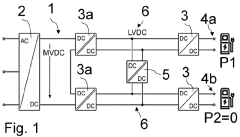
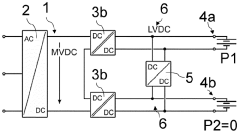
SST system with multiple LVDC outputs
PatentActiveIN202247054943A
Innovation
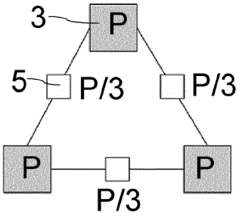
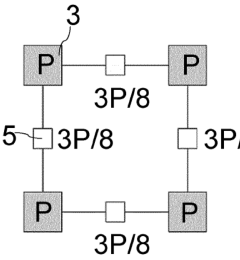
- An electrical interconnection circuit with at least two independent LVDC buses and an interconnecting DC/DC converter that re-routes power to equalize load across MVDC to LVDC converters, reducing the number of conversion stages by using a single interconnecting DC/DC converter to manage power between buses, thereby simplifying the circuit and reducing power ratings.
Grid Integration Standards and Regulatory Framework
The integration of energy storage systems with solid state transformers operates within a complex regulatory landscape that varies significantly across different jurisdictions. In the United States, the Federal Energy Regulatory Commission (FERC) provides overarching guidance through orders such as FERC Order 2222, which facilitates distributed energy resource participation in wholesale markets. The Institute of Electrical and Electronics Engineers (IEEE) has established critical standards including IEEE 1547 for distributed energy resource interconnection and IEEE C57.163 for dry-type transformers, which directly impact SST deployment strategies.
European regulatory frameworks are governed by the European Network of Transmission System Operators for Electricity (ENTSO-E) network codes, particularly the Requirements for Generators (RfG) and Demand Connection Code (DCC). The International Electrotechnical Commission (IEC) 61850 standard for communication protocols in substations becomes crucial when implementing SST-based energy storage systems, as it defines the data exchange requirements between different grid components.
Grid codes impose specific technical requirements that significantly influence SST design parameters. Voltage ride-through capabilities must comply with regional standards, typically requiring systems to remain connected during voltage deviations of ±10% for continuous operation and specific fault ride-through profiles. Frequency response requirements mandate that energy storage systems provide primary frequency response within seconds and secondary response within minutes, directly impacting the control algorithms embedded in SST systems.
Power quality standards such as IEEE 519 and IEC 61000 series establish harmonic distortion limits that SST designs must accommodate. Total harmonic distortion typically must remain below 5% for voltage and 8% for current under normal operating conditions. These requirements influence the selection of switching frequencies, filter designs, and control strategies within the SST architecture.
Emerging regulatory trends focus on grid resilience and cybersecurity requirements. The North American Electric Reliability Corporation (NERC) Critical Infrastructure Protection (CIP) standards mandate specific cybersecurity measures for grid-connected energy storage systems exceeding certain capacity thresholds. These requirements necessitate secure communication protocols, access controls, and monitoring capabilities that must be integrated into SST control systems from the design phase.
Safety certification processes require compliance with standards such as UL 1741 for inverter-based systems and UL 9540 for energy storage systems. The certification timeline typically extends 12-18 months, requiring early engagement with testing laboratories and careful documentation of design compliance throughout the development process.
European regulatory frameworks are governed by the European Network of Transmission System Operators for Electricity (ENTSO-E) network codes, particularly the Requirements for Generators (RfG) and Demand Connection Code (DCC). The International Electrotechnical Commission (IEC) 61850 standard for communication protocols in substations becomes crucial when implementing SST-based energy storage systems, as it defines the data exchange requirements between different grid components.
Grid codes impose specific technical requirements that significantly influence SST design parameters. Voltage ride-through capabilities must comply with regional standards, typically requiring systems to remain connected during voltage deviations of ±10% for continuous operation and specific fault ride-through profiles. Frequency response requirements mandate that energy storage systems provide primary frequency response within seconds and secondary response within minutes, directly impacting the control algorithms embedded in SST systems.
Power quality standards such as IEEE 519 and IEC 61000 series establish harmonic distortion limits that SST designs must accommodate. Total harmonic distortion typically must remain below 5% for voltage and 8% for current under normal operating conditions. These requirements influence the selection of switching frequencies, filter designs, and control strategies within the SST architecture.
Emerging regulatory trends focus on grid resilience and cybersecurity requirements. The North American Electric Reliability Corporation (NERC) Critical Infrastructure Protection (CIP) standards mandate specific cybersecurity measures for grid-connected energy storage systems exceeding certain capacity thresholds. These requirements necessitate secure communication protocols, access controls, and monitoring capabilities that must be integrated into SST control systems from the design phase.
Safety certification processes require compliance with standards such as UL 1741 for inverter-based systems and UL 9540 for energy storage systems. The certification timeline typically extends 12-18 months, requiring early engagement with testing laboratories and careful documentation of design compliance throughout the development process.
Power Quality and System Reliability Considerations
Power quality emerges as a critical consideration when integrating energy storage systems with solid state transformers, as the combination introduces unique challenges that can significantly impact grid stability and equipment performance. The high-frequency switching operations inherent in SST designs generate harmonic distortions that must be carefully managed to prevent interference with sensitive loads and comply with grid codes. These harmonics can propagate through the system, affecting both upstream and downstream equipment, necessitating sophisticated filtering strategies and control algorithms.
Voltage regulation capabilities represent a fundamental advantage of SST-energy storage integration, enabling precise control over voltage levels across different grid conditions. The bidirectional power flow characteristics of energy storage systems, combined with SST's advanced control features, provide enhanced voltage support during grid disturbances. However, this integration requires careful coordination between energy storage management systems and SST controllers to prevent voltage oscillations and ensure stable operation during rapid charge-discharge cycles.
System reliability considerations encompass multiple failure modes that must be addressed through redundant design approaches and robust protection schemes. The increased complexity of integrated SST-energy storage systems introduces additional points of failure compared to conventional transformer-based solutions. Critical components such as power electronic switches, energy storage cells, and control systems require comprehensive monitoring and fault detection capabilities to maintain high availability levels.
Transient response characteristics become particularly important during grid fault conditions, where the integrated system must provide both protective isolation and continued power supply to critical loads. The energy storage component can enhance system resilience by providing backup power during SST maintenance or failure scenarios, but this requires sophisticated islanding detection and seamless transfer capabilities.
Protection coordination presents unique challenges due to the bidirectional power flow and variable impedance characteristics of the integrated system. Traditional protection schemes may not adequately address the dynamic nature of energy storage charging and discharging cycles, requiring adaptive protection algorithms that can respond to changing system conditions while maintaining selectivity and sensitivity requirements for reliable fault clearance.
Voltage regulation capabilities represent a fundamental advantage of SST-energy storage integration, enabling precise control over voltage levels across different grid conditions. The bidirectional power flow characteristics of energy storage systems, combined with SST's advanced control features, provide enhanced voltage support during grid disturbances. However, this integration requires careful coordination between energy storage management systems and SST controllers to prevent voltage oscillations and ensure stable operation during rapid charge-discharge cycles.
System reliability considerations encompass multiple failure modes that must be addressed through redundant design approaches and robust protection schemes. The increased complexity of integrated SST-energy storage systems introduces additional points of failure compared to conventional transformer-based solutions. Critical components such as power electronic switches, energy storage cells, and control systems require comprehensive monitoring and fault detection capabilities to maintain high availability levels.
Transient response characteristics become particularly important during grid fault conditions, where the integrated system must provide both protective isolation and continued power supply to critical loads. The energy storage component can enhance system resilience by providing backup power during SST maintenance or failure scenarios, but this requires sophisticated islanding detection and seamless transfer capabilities.
Protection coordination presents unique challenges due to the bidirectional power flow and variable impedance characteristics of the integrated system. Traditional protection schemes may not adequately address the dynamic nature of energy storage charging and discharging cycles, requiring adaptive protection algorithms that can respond to changing system conditions while maintaining selectivity and sensitivity requirements for reliable fault clearance.
Unlock deeper insights with Patsnap Eureka Quick Research — get a full tech report to explore trends and direct your research. Try now!
Generate Your Research Report Instantly with AI Agent
Supercharge your innovation with Patsnap Eureka AI Agent Platform!