

Solid State Transformers in Island Systems: Dynamic Behavior Assessment
JUN 4, 20269 MIN READ
Generate Your Research Report Instantly with AI Agent
Patsnap Eureka helps you evaluate technical feasibility & market potential.
SST Island System Integration Background and Objectives
Solid State Transformers represent a paradigm shift in power conversion technology, emerging from the convergence of advanced semiconductor devices, high-frequency magnetic components, and sophisticated control algorithms. The evolution of SST technology has been driven by the increasing demand for more efficient, compact, and intelligent power conversion systems that can seamlessly integrate renewable energy sources, energy storage systems, and advanced grid functionalities.
The historical development of SST technology traces back to the early 2000s when researchers began exploring alternatives to conventional transformers for grid applications. Initial developments focused on overcoming the limitations of traditional magnetic transformers, particularly their size, weight, and lack of controllability. The progression from basic power electronic converters to sophisticated multi-stage SST architectures has been marked by significant improvements in semiconductor technology, particularly the advent of wide bandgap devices such as silicon carbide and gallium nitride.
Island systems, characterized by their electrical isolation from main power grids, present unique operational challenges that conventional power infrastructure struggles to address effectively. These systems typically rely on diverse energy sources including diesel generators, renewable energy installations, and battery storage systems, creating complex power management scenarios that require advanced control and coordination capabilities.
The integration of SSTs in island systems aims to address several critical technical objectives. Primary among these is the enhancement of power quality and system stability through advanced voltage and frequency regulation capabilities. SSTs provide bidirectional power flow control, enabling efficient energy management between generation sources, storage systems, and loads while maintaining optimal power quality parameters.
Another fundamental objective involves improving system efficiency and reducing operational costs. Traditional island systems often suffer from poor load matching and inefficient power conversion processes. SSTs offer the capability to optimize power flow paths, implement advanced power factor correction, and provide reactive power support, thereby maximizing overall system efficiency.
The dynamic behavior assessment of SSTs in island systems focuses on understanding transient responses, stability margins, and control system performance under various operating conditions. This includes evaluating system response to load changes, generation variations, fault conditions, and mode transitions between grid-connected and islanded operations.
Furthermore, the integration objectives encompass enhanced system flexibility and scalability. SSTs enable modular system architectures that can accommodate future expansion and technology upgrades while providing standardized interfaces for diverse energy resources and loads.
The historical development of SST technology traces back to the early 2000s when researchers began exploring alternatives to conventional transformers for grid applications. Initial developments focused on overcoming the limitations of traditional magnetic transformers, particularly their size, weight, and lack of controllability. The progression from basic power electronic converters to sophisticated multi-stage SST architectures has been marked by significant improvements in semiconductor technology, particularly the advent of wide bandgap devices such as silicon carbide and gallium nitride.
Island systems, characterized by their electrical isolation from main power grids, present unique operational challenges that conventional power infrastructure struggles to address effectively. These systems typically rely on diverse energy sources including diesel generators, renewable energy installations, and battery storage systems, creating complex power management scenarios that require advanced control and coordination capabilities.
The integration of SSTs in island systems aims to address several critical technical objectives. Primary among these is the enhancement of power quality and system stability through advanced voltage and frequency regulation capabilities. SSTs provide bidirectional power flow control, enabling efficient energy management between generation sources, storage systems, and loads while maintaining optimal power quality parameters.
Another fundamental objective involves improving system efficiency and reducing operational costs. Traditional island systems often suffer from poor load matching and inefficient power conversion processes. SSTs offer the capability to optimize power flow paths, implement advanced power factor correction, and provide reactive power support, thereby maximizing overall system efficiency.
The dynamic behavior assessment of SSTs in island systems focuses on understanding transient responses, stability margins, and control system performance under various operating conditions. This includes evaluating system response to load changes, generation variations, fault conditions, and mode transitions between grid-connected and islanded operations.
Furthermore, the integration objectives encompass enhanced system flexibility and scalability. SSTs enable modular system architectures that can accommodate future expansion and technology upgrades while providing standardized interfaces for diverse energy resources and loads.
Market Demand for Advanced Island Grid Solutions
The global energy landscape is experiencing unprecedented transformation, driven by the urgent need for sustainable and resilient power systems. Island grids, encompassing remote islands, isolated communities, and microgrid installations, represent a critical market segment where advanced grid solutions are not merely advantageous but essential for reliable power delivery. These systems face unique challenges including limited interconnection capabilities, high dependency on imported fossil fuels, and vulnerability to extreme weather events.
Remote island communities worldwide are increasingly seeking energy independence and sustainability. Traditional grid infrastructure often proves inadequate for these environments due to harsh operating conditions, limited maintenance accessibility, and the need for rapid response to dynamic load changes. The demand for sophisticated power management solutions has intensified as these communities pursue renewable energy integration while maintaining grid stability and power quality.
The maritime and offshore industry presents another significant demand driver for advanced island grid technologies. Offshore platforms, floating facilities, and marine vessels require compact, efficient, and highly reliable power conversion systems. These applications demand solutions capable of handling rapid load variations, maintaining power quality under challenging environmental conditions, and providing seamless integration with renewable energy sources such as offshore wind and solar installations.
Industrial microgrids and critical infrastructure facilities represent a rapidly expanding market segment. Data centers, hospitals, military installations, and manufacturing facilities increasingly operate as island systems during grid disturbances or for enhanced energy security. These applications require advanced power electronics capable of providing instantaneous response to load changes, maintaining voltage and frequency stability, and ensuring seamless transitions between grid-connected and islanded operation modes.
The growing emphasis on renewable energy integration in isolated systems has created substantial demand for intelligent power conversion technologies. Solar and wind resources in island environments often exhibit high variability, necessitating sophisticated power management systems capable of maintaining grid stability while maximizing renewable energy utilization. Energy storage integration requirements further amplify the need for advanced power electronics with bidirectional power flow capabilities and dynamic response characteristics.
Regulatory frameworks and environmental policies worldwide are increasingly favoring clean energy solutions for remote and island communities. Government initiatives promoting energy independence, carbon emission reduction, and grid modernization are creating favorable market conditions for advanced island grid technologies. These policy drivers are particularly strong in regions with significant island populations and remote communities seeking sustainable development pathways.
Remote island communities worldwide are increasingly seeking energy independence and sustainability. Traditional grid infrastructure often proves inadequate for these environments due to harsh operating conditions, limited maintenance accessibility, and the need for rapid response to dynamic load changes. The demand for sophisticated power management solutions has intensified as these communities pursue renewable energy integration while maintaining grid stability and power quality.
The maritime and offshore industry presents another significant demand driver for advanced island grid technologies. Offshore platforms, floating facilities, and marine vessels require compact, efficient, and highly reliable power conversion systems. These applications demand solutions capable of handling rapid load variations, maintaining power quality under challenging environmental conditions, and providing seamless integration with renewable energy sources such as offshore wind and solar installations.
Industrial microgrids and critical infrastructure facilities represent a rapidly expanding market segment. Data centers, hospitals, military installations, and manufacturing facilities increasingly operate as island systems during grid disturbances or for enhanced energy security. These applications require advanced power electronics capable of providing instantaneous response to load changes, maintaining voltage and frequency stability, and ensuring seamless transitions between grid-connected and islanded operation modes.
The growing emphasis on renewable energy integration in isolated systems has created substantial demand for intelligent power conversion technologies. Solar and wind resources in island environments often exhibit high variability, necessitating sophisticated power management systems capable of maintaining grid stability while maximizing renewable energy utilization. Energy storage integration requirements further amplify the need for advanced power electronics with bidirectional power flow capabilities and dynamic response characteristics.
Regulatory frameworks and environmental policies worldwide are increasingly favoring clean energy solutions for remote and island communities. Government initiatives promoting energy independence, carbon emission reduction, and grid modernization are creating favorable market conditions for advanced island grid technologies. These policy drivers are particularly strong in regions with significant island populations and remote communities seeking sustainable development pathways.
Current SST Dynamic Behavior Challenges in Island Operations
Solid State Transformers operating in island systems face significant dynamic behavior challenges that stem from the fundamental differences between grid-connected and isolated operation modes. The absence of a strong grid connection eliminates the inherent stability provided by large rotating masses and infinite bus characteristics, forcing SSTs to assume primary responsibility for voltage and frequency regulation within the microgrid.
Voltage regulation presents one of the most critical challenges during dynamic events. Unlike conventional transformers that rely on grid voltage as a reference, SSTs in island mode must maintain stable output voltage despite load variations, renewable energy fluctuations, and system disturbances. The multi-stage power conversion process introduces additional complexity, as voltage control must be coordinated across AC-DC and DC-AC conversion stages while maintaining power quality standards.
Frequency stability becomes particularly problematic when SSTs interface with rotating generators or motor loads within the island system. The electronic nature of SST control systems can create interactions with electromechanical components, potentially leading to oscillatory behavior or instability. The fast response characteristics of power electronics, while advantageous in many scenarios, can sometimes exacerbate frequency deviations if not properly coordinated with slower mechanical systems.
Load transient response represents another significant challenge, especially when dealing with large motor starts or sudden load disconnections. The limited energy storage capability within SST DC-link capacitors constrains the system's ability to handle rapid power changes, potentially causing voltage sags or swells that propagate throughout the island network. This limitation becomes more pronounced in systems with high penetration of constant power loads, which exhibit negative impedance characteristics.
Power sharing among multiple SSTs in island configurations introduces coordination challenges that do not exist in grid-connected operations. Without grid voltage and frequency references, SSTs must rely on communication systems or droop control methods to achieve proper load distribution. Communication delays or failures can lead to circulating currents, uneven loading, and potential system instability.
Renewable energy integration amplifies these challenges by introducing additional variability and uncertainty. Solar photovoltaic and wind generation create rapid power fluctuations that SSTs must accommodate while maintaining system stability. The intermittent nature of these sources requires sophisticated control algorithms to manage energy storage systems and backup generation resources effectively.
Protection coordination becomes increasingly complex in island operations, as fault current levels and characteristics differ significantly from grid-connected scenarios. SSTs must provide adequate fault current for protective device operation while limiting fault magnitudes to prevent equipment damage, creating a delicate balance that requires careful system design and coordination.
Voltage regulation presents one of the most critical challenges during dynamic events. Unlike conventional transformers that rely on grid voltage as a reference, SSTs in island mode must maintain stable output voltage despite load variations, renewable energy fluctuations, and system disturbances. The multi-stage power conversion process introduces additional complexity, as voltage control must be coordinated across AC-DC and DC-AC conversion stages while maintaining power quality standards.
Frequency stability becomes particularly problematic when SSTs interface with rotating generators or motor loads within the island system. The electronic nature of SST control systems can create interactions with electromechanical components, potentially leading to oscillatory behavior or instability. The fast response characteristics of power electronics, while advantageous in many scenarios, can sometimes exacerbate frequency deviations if not properly coordinated with slower mechanical systems.
Load transient response represents another significant challenge, especially when dealing with large motor starts or sudden load disconnections. The limited energy storage capability within SST DC-link capacitors constrains the system's ability to handle rapid power changes, potentially causing voltage sags or swells that propagate throughout the island network. This limitation becomes more pronounced in systems with high penetration of constant power loads, which exhibit negative impedance characteristics.
Power sharing among multiple SSTs in island configurations introduces coordination challenges that do not exist in grid-connected operations. Without grid voltage and frequency references, SSTs must rely on communication systems or droop control methods to achieve proper load distribution. Communication delays or failures can lead to circulating currents, uneven loading, and potential system instability.
Renewable energy integration amplifies these challenges by introducing additional variability and uncertainty. Solar photovoltaic and wind generation create rapid power fluctuations that SSTs must accommodate while maintaining system stability. The intermittent nature of these sources requires sophisticated control algorithms to manage energy storage systems and backup generation resources effectively.
Protection coordination becomes increasingly complex in island operations, as fault current levels and characteristics differ significantly from grid-connected scenarios. SSTs must provide adequate fault current for protective device operation while limiting fault magnitudes to prevent equipment damage, creating a delicate balance that requires careful system design and coordination.
Existing Dynamic Assessment Solutions for Island SSTs
01 Control systems and algorithms for solid state transformers
Advanced control methodologies are employed to manage the dynamic behavior of solid state transformers, including feedback control loops, digital signal processing, and adaptive algorithms. These control systems enable real-time adjustment of transformer parameters to maintain stable operation under varying load conditions and grid disturbances. The control strategies focus on voltage regulation, current control, and power flow management to ensure optimal performance during transient events.- Control systems and algorithms for solid state transformers: Advanced control methodologies are employed to manage the dynamic behavior of solid state transformers, including feedback control loops, digital signal processing techniques, and adaptive algorithms. These control systems enable real-time adjustment of transformer parameters to maintain stable operation under varying load conditions and grid disturbances. The control strategies focus on optimizing power conversion efficiency while ensuring system stability and reliability.
- Power electronic switching and modulation techniques: The dynamic performance of solid state transformers heavily relies on sophisticated switching strategies and modulation techniques implemented in power electronic circuits. These techniques include pulse width modulation, space vector modulation, and advanced switching algorithms that minimize losses and harmonics while maximizing power transfer efficiency. The switching behavior directly impacts the transformer's response time and overall dynamic characteristics.
- Thermal management and protection systems: Effective thermal management is crucial for maintaining optimal dynamic behavior in solid state transformers. Protection systems monitor temperature variations and implement cooling strategies to prevent overheating during transient operations. These systems include thermal sensors, cooling mechanisms, and protective circuits that ensure safe operation under dynamic loading conditions and prevent thermal runaway scenarios.
- Grid integration and power quality management: Solid state transformers require sophisticated grid integration capabilities to handle dynamic grid conditions and maintain power quality. These systems incorporate voltage regulation, frequency control, and harmonic mitigation features that enable seamless integration with smart grids. The dynamic behavior includes rapid response to grid disturbances, voltage sags, and frequency variations while maintaining stable power delivery.
- Fault detection and diagnostic systems: Advanced fault detection and diagnostic capabilities are integrated into solid state transformers to monitor their dynamic behavior and identify potential issues before they lead to system failures. These systems employ real-time monitoring, predictive analytics, and self-diagnostic features that continuously assess transformer performance. The diagnostic systems can detect anomalies in switching patterns, thermal behavior, and electrical parameters during dynamic operation.
02 Power electronics topology and switching behavior
The dynamic characteristics of solid state transformers are fundamentally influenced by their power electronic circuit topologies and switching mechanisms. Various converter configurations, including multi-level inverters and bidirectional converters, determine the transient response and stability margins. The switching frequency, modulation techniques, and semiconductor device characteristics directly impact the dynamic performance, harmonic content, and efficiency during operational transitions.Expand Specific Solutions03 Grid integration and stability analysis
Solid state transformers must maintain stable operation when integrated with power grids, requiring comprehensive analysis of their interaction with grid dynamics. This includes assessment of voltage and frequency variations, grid fault responses, and islanding detection capabilities. The transformers must demonstrate robust performance during grid disturbances while providing ancillary services such as reactive power support and harmonic filtering to enhance overall grid stability.Expand Specific Solutions04 Thermal management and protection systems
Dynamic thermal behavior significantly affects the performance and reliability of solid state transformers during varying operational conditions. Thermal management systems incorporate real-time temperature monitoring, cooling control, and thermal protection algorithms to prevent overheating during transient events. The thermal dynamics influence the switching characteristics of power semiconductors and overall system efficiency, requiring sophisticated thermal modeling and control strategies.Expand Specific Solutions05 Fault detection and diagnostic capabilities
Comprehensive fault detection and diagnostic systems are essential for monitoring the dynamic behavior of solid state transformers and ensuring reliable operation. These systems employ various sensing techniques, signal analysis methods, and machine learning algorithms to identify abnormal operating conditions, predict potential failures, and initiate protective actions. The diagnostic capabilities include monitoring of electrical parameters, vibration analysis, and condition assessment to maintain optimal performance throughout the transformer's operational life.Expand Specific Solutions
Key Players in SST and Island System Industry
The solid state transformer (SST) technology for island systems represents an emerging sector within the broader power electronics and grid modernization market. The industry is currently in its early commercialization phase, transitioning from research and development to practical deployment. Market size remains relatively niche but shows significant growth potential driven by increasing demand for renewable energy integration and microgrid solutions in remote and island applications. Technology maturity varies considerably across market participants, with established industrial giants like ABB Ltd. and Sharp Corp. leveraging decades of power electronics expertise, while specialized companies such as FlexGen Power Systems focus on energy storage integration. Chinese entities including State Grid Corp. of China and multiple research universities like Tianjin University and Shanghai Jiao Tong University are heavily investing in SST research, indicating strong governmental support for grid modernization initiatives. The competitive landscape features a mix of multinational corporations, regional utilities, and academic institutions, suggesting the technology is still in its formative stages with significant opportunities for innovation and market positioning.
State Grid Corp. of China
Technical Solution: State Grid has implemented solid state transformer pilot projects focusing on dynamic stability enhancement in island microgrids through advanced power electronic interfaces. Their SST technology employs dual active bridge (DAB) converters with real-time control systems that provide voltage regulation within ±2% during load transients and frequency stabilization within 49.5-50.5Hz range. The system integrates distributed energy resources coordination algorithms and implements predictive control strategies for renewable energy integration in isolated networks. State Grid's approach emphasizes grid resilience and includes fault detection capabilities with isolation times under 5ms, ensuring continuous power supply during disturbances in island operation scenarios.
Strengths: Extensive grid operation experience, strong R&D capabilities, government support for deployment. Weaknesses: Limited international market presence, technology primarily optimized for domestic grid standards.
FlexGen Power Systems, Inc.
Technical Solution: FlexGen specializes in energy storage integration with solid state transformers for island microgrid applications, developing hybrid systems that combine SST technology with battery energy storage systems (BESS). Their solution provides dynamic grid support through rapid power injection and absorption capabilities, with response times under 4ms for frequency regulation and voltage support. The integrated platform offers seamless black-start capabilities for island systems and incorporates machine learning algorithms for predictive load management and renewable energy forecasting. FlexGen's SST-BESS hybrid systems are designed to handle power fluctuations up to 50% of rated capacity while maintaining stable grid parameters in isolated network configurations.
Strengths: Innovative energy storage integration, fast response times, advanced predictive algorithms. Weaknesses: Relatively new market player, limited large-scale deployment experience compared to established competitors.
Core Innovations in SST Dynamic Behavior Control
Solid-state transformer
PatentPendingUS20250279730A1
Innovation
- A two-stage solid-state transformer design with a first stage operating at a modulation index higher than 1, decoupling the AC/DC and isolated DC/DC stages, reducing insulation requirements and using a medium-frequency transformer for isolation, along with modular multilevel converters and zero-sequence current suppression.


SST system with multiple LVDC outputs
PatentActiveIN202247054943A
Innovation
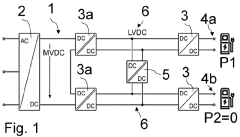
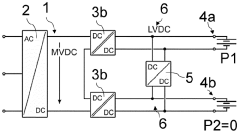
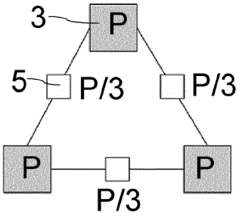
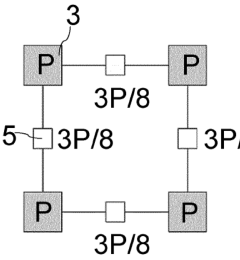
- An electrical interconnection circuit with at least two independent LVDC buses and an interconnecting DC/DC converter that re-routes power to equalize load across MVDC to LVDC converters, reducing the number of conversion stages by using a single interconnecting DC/DC converter to manage power between buses, thereby simplifying the circuit and reducing power ratings.
Grid Code Requirements for Island SST Integration
Grid code requirements for Solid State Transformer integration in island systems represent a critical regulatory framework that governs the technical specifications, operational parameters, and safety standards necessary for successful deployment. These requirements establish the foundation for ensuring reliable, stable, and secure operation of SSTs within isolated electrical networks, where grid stability is paramount due to limited backup resources and interconnection options.
Voltage regulation capabilities constitute a fundamental grid code requirement, mandating that SSTs maintain voltage levels within specified tolerance bands typically ranging from ±5% to ±10% of nominal values. Island systems demand particularly stringent voltage control due to their susceptibility to voltage fluctuations caused by load variations and renewable energy intermittency. SSTs must demonstrate rapid voltage response capabilities, typically within 100-500 milliseconds, to maintain system stability during transient events.
Frequency support requirements establish mandatory participation in frequency regulation services, requiring SSTs to provide both primary and secondary frequency response. Grid codes typically specify frequency deadbands of ±0.1-0.5 Hz and require proportional power output adjustments based on frequency deviations. For island systems, these requirements are often more stringent due to lower system inertia and higher frequency sensitivity to power imbalances.
Fault ride-through capabilities represent another critical requirement, mandating that SSTs remain connected and operational during specified fault conditions. Low voltage ride-through requirements typically require operation down to 15-30% of nominal voltage for durations ranging from 150 milliseconds to several seconds. High voltage ride-through specifications generally require withstanding 110-130% of nominal voltage for similar timeframes.
Power quality standards within grid codes establish limits for harmonic distortion, with total harmonic distortion typically limited to 5-8% for voltage and 3-5% for current. Island systems often impose stricter limits due to reduced filtering capacity and higher sensitivity to power quality disturbances. SSTs must incorporate advanced filtering and control algorithms to meet these stringent requirements.
Communication and monitoring requirements mandate real-time data exchange capabilities, including power flow measurements, operational status, and control parameter adjustments. Grid codes typically specify communication protocols such as IEC 61850 or DNP3, with response times under 100 milliseconds for critical control functions. These requirements ensure proper coordination with island system operators and enable advanced grid management functionalities.
Voltage regulation capabilities constitute a fundamental grid code requirement, mandating that SSTs maintain voltage levels within specified tolerance bands typically ranging from ±5% to ±10% of nominal values. Island systems demand particularly stringent voltage control due to their susceptibility to voltage fluctuations caused by load variations and renewable energy intermittency. SSTs must demonstrate rapid voltage response capabilities, typically within 100-500 milliseconds, to maintain system stability during transient events.
Frequency support requirements establish mandatory participation in frequency regulation services, requiring SSTs to provide both primary and secondary frequency response. Grid codes typically specify frequency deadbands of ±0.1-0.5 Hz and require proportional power output adjustments based on frequency deviations. For island systems, these requirements are often more stringent due to lower system inertia and higher frequency sensitivity to power imbalances.
Fault ride-through capabilities represent another critical requirement, mandating that SSTs remain connected and operational during specified fault conditions. Low voltage ride-through requirements typically require operation down to 15-30% of nominal voltage for durations ranging from 150 milliseconds to several seconds. High voltage ride-through specifications generally require withstanding 110-130% of nominal voltage for similar timeframes.
Power quality standards within grid codes establish limits for harmonic distortion, with total harmonic distortion typically limited to 5-8% for voltage and 3-5% for current. Island systems often impose stricter limits due to reduced filtering capacity and higher sensitivity to power quality disturbances. SSTs must incorporate advanced filtering and control algorithms to meet these stringent requirements.
Communication and monitoring requirements mandate real-time data exchange capabilities, including power flow measurements, operational status, and control parameter adjustments. Grid codes typically specify communication protocols such as IEC 61850 or DNP3, with response times under 100 milliseconds for critical control functions. These requirements ensure proper coordination with island system operators and enable advanced grid management functionalities.
Environmental Impact of SST-Based Island Systems
The deployment of Solid State Transformers in island systems presents significant environmental advantages compared to conventional transformer-based infrastructure. SST technology fundamentally reduces the environmental footprint through enhanced energy efficiency, with conversion efficiencies reaching 95-98% compared to traditional systems operating at 85-90%. This improvement translates to substantial reductions in energy losses, directly decreasing the carbon footprint of island power systems that often rely on fossil fuel generation.
Island systems equipped with SSTs demonstrate superior integration capabilities with renewable energy sources, particularly solar photovoltaic and wind generation systems. The bidirectional power flow control and advanced grid management features enable higher penetration rates of intermittent renewable sources, often exceeding 60% renewable integration compared to 30-40% in conventional systems. This enhanced renewable integration significantly reduces greenhouse gas emissions and dependency on imported fossil fuels, which is particularly crucial for remote island communities.
The environmental benefits extend to material usage and lifecycle considerations. SSTs utilize silicon carbide and gallium nitride semiconductors that, while requiring specialized manufacturing processes, result in substantially smaller and lighter transformer units. This reduction in material usage, combined with the elimination of mineral oil typically required in conventional transformers, minimizes environmental risks associated with oil spills and soil contamination. The compact design also reduces the physical infrastructure footprint, preserving valuable land resources on space-constrained islands.
Waste heat management in SST-based systems contributes to overall environmental performance through improved thermal efficiency and potential heat recovery applications. The precise control capabilities enable optimized power quality, reducing harmonic distortion and electromagnetic interference that can affect local ecosystems. Additionally, the modular design of SST systems facilitates easier maintenance and component replacement, extending system lifespan and reducing electronic waste generation.
The environmental impact assessment reveals that SST-based island systems can achieve 25-35% reduction in overall carbon emissions compared to conventional alternatives, while simultaneously improving grid stability and renewable energy utilization rates.
Island systems equipped with SSTs demonstrate superior integration capabilities with renewable energy sources, particularly solar photovoltaic and wind generation systems. The bidirectional power flow control and advanced grid management features enable higher penetration rates of intermittent renewable sources, often exceeding 60% renewable integration compared to 30-40% in conventional systems. This enhanced renewable integration significantly reduces greenhouse gas emissions and dependency on imported fossil fuels, which is particularly crucial for remote island communities.
The environmental benefits extend to material usage and lifecycle considerations. SSTs utilize silicon carbide and gallium nitride semiconductors that, while requiring specialized manufacturing processes, result in substantially smaller and lighter transformer units. This reduction in material usage, combined with the elimination of mineral oil typically required in conventional transformers, minimizes environmental risks associated with oil spills and soil contamination. The compact design also reduces the physical infrastructure footprint, preserving valuable land resources on space-constrained islands.
Waste heat management in SST-based systems contributes to overall environmental performance through improved thermal efficiency and potential heat recovery applications. The precise control capabilities enable optimized power quality, reducing harmonic distortion and electromagnetic interference that can affect local ecosystems. Additionally, the modular design of SST systems facilitates easier maintenance and component replacement, extending system lifespan and reducing electronic waste generation.
The environmental impact assessment reveals that SST-based island systems can achieve 25-35% reduction in overall carbon emissions compared to conventional alternatives, while simultaneously improving grid stability and renewable energy utilization rates.
Unlock deeper insights with Patsnap Eureka Quick Research — get a full tech report to explore trends and direct your research. Try now!
Generate Your Research Report Instantly with AI Agent
Supercharge your innovation with Patsnap Eureka AI Agent Platform!