
Comparing Liquid Nitrogen and Lithium-Based Cooling Systems
OCT 7, 202510 MIN READ
Generate Your Research Report Instantly with AI Agent
Patsnap Eureka helps you evaluate technical feasibility & market potential.
Cryogenic Cooling Technology Background and Objectives
Cryogenic cooling technologies have evolved significantly over the past century, with major advancements occurring during the space race era of the 1950s and 1960s. The fundamental principle behind cryogenic cooling involves the use of extremely low-temperature substances to absorb heat from systems requiring thermal management. This field has seen progressive development from basic insulation techniques to sophisticated active cooling systems that enable critical applications in healthcare, energy, transportation, and advanced computing.
The evolution of cooling technologies has followed a trajectory from passive systems to increasingly efficient active solutions. Early cryogenic applications relied primarily on liquid nitrogen due to its relative abundance, ease of production, and stable properties at atmospheric pressure. In contrast, lithium-based cooling systems represent a more recent innovation, emerging from advancements in materials science and thermal engineering over the past two decades.
Current technological trends point toward the development of more energy-efficient, compact, and environmentally sustainable cooling solutions. The industry is witnessing a shift from traditional cryogens to novel materials and hybrid systems that combine the benefits of different cooling approaches. This transition is driven by increasing demands for higher cooling capacities, reduced energy consumption, and minimized environmental impact.
The primary objective of modern cryogenic cooling research is to overcome the limitations of existing systems while enhancing their performance characteristics. For liquid nitrogen systems, these objectives include improving thermal efficiency, reducing boil-off rates, and developing more effective insulation materials. For lithium-based cooling technologies, research aims to enhance heat transfer rates, increase operational lifespans, and reduce manufacturing costs.
Another critical goal is the development of scalable cooling solutions that can be adapted to various applications, from small-scale electronics to large industrial systems. This adaptability is particularly important as emerging technologies in quantum computing, superconducting materials, and advanced medical imaging create new demands for precise thermal management at extremely low temperatures.
The environmental impact of cooling technologies has also become a significant consideration, with research focusing on reducing the carbon footprint associated with cryogen production and system operation. This includes exploring closed-loop systems that minimize resource consumption and investigating alternative cooling materials with lower environmental impacts.
As we look toward future developments, the integration of smart monitoring and control systems represents an important trend in cryogenic cooling technology. These advancements aim to optimize cooling performance in real-time, predict maintenance needs, and ensure reliable operation under varying conditions, ultimately enhancing the efficiency and effectiveness of both liquid nitrogen and lithium-based cooling systems.
The evolution of cooling technologies has followed a trajectory from passive systems to increasingly efficient active solutions. Early cryogenic applications relied primarily on liquid nitrogen due to its relative abundance, ease of production, and stable properties at atmospheric pressure. In contrast, lithium-based cooling systems represent a more recent innovation, emerging from advancements in materials science and thermal engineering over the past two decades.
Current technological trends point toward the development of more energy-efficient, compact, and environmentally sustainable cooling solutions. The industry is witnessing a shift from traditional cryogens to novel materials and hybrid systems that combine the benefits of different cooling approaches. This transition is driven by increasing demands for higher cooling capacities, reduced energy consumption, and minimized environmental impact.
The primary objective of modern cryogenic cooling research is to overcome the limitations of existing systems while enhancing their performance characteristics. For liquid nitrogen systems, these objectives include improving thermal efficiency, reducing boil-off rates, and developing more effective insulation materials. For lithium-based cooling technologies, research aims to enhance heat transfer rates, increase operational lifespans, and reduce manufacturing costs.
Another critical goal is the development of scalable cooling solutions that can be adapted to various applications, from small-scale electronics to large industrial systems. This adaptability is particularly important as emerging technologies in quantum computing, superconducting materials, and advanced medical imaging create new demands for precise thermal management at extremely low temperatures.
The environmental impact of cooling technologies has also become a significant consideration, with research focusing on reducing the carbon footprint associated with cryogen production and system operation. This includes exploring closed-loop systems that minimize resource consumption and investigating alternative cooling materials with lower environmental impacts.
As we look toward future developments, the integration of smart monitoring and control systems represents an important trend in cryogenic cooling technology. These advancements aim to optimize cooling performance in real-time, predict maintenance needs, and ensure reliable operation under varying conditions, ultimately enhancing the efficiency and effectiveness of both liquid nitrogen and lithium-based cooling systems.
Market Analysis for Advanced Cooling Solutions
The advanced cooling solutions market is experiencing robust growth, driven by increasing demands from data centers, electric vehicles, aerospace applications, and high-performance computing systems. The global market for advanced cooling technologies was valued at approximately 15 billion USD in 2022 and is projected to reach 24 billion USD by 2028, representing a compound annual growth rate of 8.2%. This growth trajectory is particularly pronounced in regions with high technological adoption rates such as North America, Western Europe, and East Asia.
Liquid nitrogen and lithium-based cooling systems represent two distinct approaches within this expanding market. Liquid nitrogen cooling solutions currently hold a significant market share in specialized applications requiring ultra-low temperatures, particularly in scientific research, medical equipment, and superconducting technologies. This segment accounts for roughly 3.5 billion USD of the total market value, with steady growth anticipated as quantum computing and advanced materials research expand.
Lithium-based cooling systems, conversely, are gaining traction in the electric vehicle and consumer electronics sectors. The market for these solutions has grown from 1.2 billion USD in 2020 to 2.1 billion USD in 2022, reflecting increasing adoption of lithium-ion battery thermal management systems. Industry analysts predict this segment will experience the fastest growth rate within the advanced cooling market, potentially reaching 5.7 billion USD by 2027.
Customer demand patterns reveal distinct preferences across different sectors. Data center operators increasingly prioritize energy efficiency and space optimization, making lithium-based solutions attractive despite higher initial costs. The automotive industry demonstrates growing interest in integrated lithium cooling systems that can simultaneously manage battery temperature and support cabin climate control. Meanwhile, research institutions and semiconductor manufacturers continue to rely on liquid nitrogen systems for specific applications requiring extreme cold.
Regional market analysis indicates North America leads in adoption of both technologies, accounting for 38% of global market share. Asia-Pacific represents the fastest-growing region with 12.3% annual growth, driven primarily by China's expanding data center infrastructure and electric vehicle production. European markets show particular interest in environmentally sustainable cooling solutions, creating opportunities for advanced lithium-based systems with reduced environmental impact.
Market forecasts suggest continued segmentation between these technologies rather than direct competition, with each finding specialized niches based on their unique performance characteristics. The most significant growth potential exists in hybrid systems that leverage the advantages of both cooling approaches for specific applications requiring variable temperature ranges.
Liquid nitrogen and lithium-based cooling systems represent two distinct approaches within this expanding market. Liquid nitrogen cooling solutions currently hold a significant market share in specialized applications requiring ultra-low temperatures, particularly in scientific research, medical equipment, and superconducting technologies. This segment accounts for roughly 3.5 billion USD of the total market value, with steady growth anticipated as quantum computing and advanced materials research expand.
Lithium-based cooling systems, conversely, are gaining traction in the electric vehicle and consumer electronics sectors. The market for these solutions has grown from 1.2 billion USD in 2020 to 2.1 billion USD in 2022, reflecting increasing adoption of lithium-ion battery thermal management systems. Industry analysts predict this segment will experience the fastest growth rate within the advanced cooling market, potentially reaching 5.7 billion USD by 2027.
Customer demand patterns reveal distinct preferences across different sectors. Data center operators increasingly prioritize energy efficiency and space optimization, making lithium-based solutions attractive despite higher initial costs. The automotive industry demonstrates growing interest in integrated lithium cooling systems that can simultaneously manage battery temperature and support cabin climate control. Meanwhile, research institutions and semiconductor manufacturers continue to rely on liquid nitrogen systems for specific applications requiring extreme cold.
Regional market analysis indicates North America leads in adoption of both technologies, accounting for 38% of global market share. Asia-Pacific represents the fastest-growing region with 12.3% annual growth, driven primarily by China's expanding data center infrastructure and electric vehicle production. European markets show particular interest in environmentally sustainable cooling solutions, creating opportunities for advanced lithium-based systems with reduced environmental impact.
Market forecasts suggest continued segmentation between these technologies rather than direct competition, with each finding specialized niches based on their unique performance characteristics. The most significant growth potential exists in hybrid systems that leverage the advantages of both cooling approaches for specific applications requiring variable temperature ranges.
Current Challenges in Cooling System Technologies
The cooling system landscape is currently facing significant technological hurdles that impede optimal performance across various applications. Traditional cooling technologies struggle to meet the escalating thermal management demands of modern high-performance computing systems, electric vehicles, and industrial processes. The primary challenge lies in achieving efficient heat dissipation while maintaining compact form factors and energy efficiency.
Liquid nitrogen cooling systems, while offering exceptional cooling capacity with temperatures approaching -196°C, present substantial operational challenges. The cryogenic infrastructure required for storage, handling, and continuous supply of liquid nitrogen remains complex and costly. Safety concerns related to potential asphyxiation risks in confined spaces and material embrittlement at extreme low temperatures further complicate widespread implementation. Additionally, the energy-intensive production process of liquid nitrogen contributes to high operational costs and environmental impact.
Lithium-based cooling systems, particularly those utilizing liquid metal heat transfer, face different but equally significant challenges. The inherent reactivity of lithium with water and air necessitates sophisticated containment systems and handling protocols. Current lithium cooling technologies struggle with corrosion issues that compromise system longevity and reliability. The high cost of lithium materials, exacerbated by global supply chain constraints, presents economic barriers to widespread adoption.
Both cooling technologies encounter integration difficulties when implemented in existing systems. The thermal expansion differentials between cooling components and electronic substrates create mechanical stress that can lead to premature failure. Interface thermal resistance remains a persistent challenge, limiting the effective heat transfer between heat sources and cooling media regardless of the cooling technology employed.
Energy efficiency represents another critical challenge. Liquid nitrogen systems require significant energy for production and maintenance of cryogenic temperatures, while lithium-based systems demand energy for pumping and circulation of the cooling medium. This energy overhead directly impacts the overall efficiency and sustainability of both cooling approaches.
Regulatory compliance and standardization issues further complicate technology development. The absence of comprehensive safety standards specifically addressing advanced cooling technologies creates uncertainty for manufacturers and end-users alike. This regulatory gap slows adoption rates and increases implementation costs as companies develop proprietary safety protocols.
Scalability challenges persist for both technologies, with liquid nitrogen systems facing difficulties in precise temperature control across large cooling surfaces, while lithium-based systems struggle with uniform heat distribution in complex geometries. These limitations constrain application in large-scale data centers and industrial cooling scenarios where consistent thermal management is critical.
Liquid nitrogen cooling systems, while offering exceptional cooling capacity with temperatures approaching -196°C, present substantial operational challenges. The cryogenic infrastructure required for storage, handling, and continuous supply of liquid nitrogen remains complex and costly. Safety concerns related to potential asphyxiation risks in confined spaces and material embrittlement at extreme low temperatures further complicate widespread implementation. Additionally, the energy-intensive production process of liquid nitrogen contributes to high operational costs and environmental impact.
Lithium-based cooling systems, particularly those utilizing liquid metal heat transfer, face different but equally significant challenges. The inherent reactivity of lithium with water and air necessitates sophisticated containment systems and handling protocols. Current lithium cooling technologies struggle with corrosion issues that compromise system longevity and reliability. The high cost of lithium materials, exacerbated by global supply chain constraints, presents economic barriers to widespread adoption.
Both cooling technologies encounter integration difficulties when implemented in existing systems. The thermal expansion differentials between cooling components and electronic substrates create mechanical stress that can lead to premature failure. Interface thermal resistance remains a persistent challenge, limiting the effective heat transfer between heat sources and cooling media regardless of the cooling technology employed.
Energy efficiency represents another critical challenge. Liquid nitrogen systems require significant energy for production and maintenance of cryogenic temperatures, while lithium-based systems demand energy for pumping and circulation of the cooling medium. This energy overhead directly impacts the overall efficiency and sustainability of both cooling approaches.
Regulatory compliance and standardization issues further complicate technology development. The absence of comprehensive safety standards specifically addressing advanced cooling technologies creates uncertainty for manufacturers and end-users alike. This regulatory gap slows adoption rates and increases implementation costs as companies develop proprietary safety protocols.
Scalability challenges persist for both technologies, with liquid nitrogen systems facing difficulties in precise temperature control across large cooling surfaces, while lithium-based systems struggle with uniform heat distribution in complex geometries. These limitations constrain application in large-scale data centers and industrial cooling scenarios where consistent thermal management is critical.
Comparative Analysis of Liquid Nitrogen vs Lithium Cooling
01 Liquid nitrogen cooling systems for electronic devices
Liquid nitrogen cooling systems are used for thermal management in electronic devices, particularly for high-performance computing and data centers. These systems utilize the extremely low temperature of liquid nitrogen to efficiently dissipate heat from electronic components, allowing for better performance and reliability. The cooling mechanism typically involves direct or indirect contact between the liquid nitrogen and the heat-generating components, with specialized heat exchangers and circulation systems to maintain optimal operating temperatures.- Liquid nitrogen cooling systems for electronic devices: Liquid nitrogen cooling systems are designed specifically for electronic devices such as superconducting components, quantum computers, and high-performance computing systems. These systems utilize the extremely low temperature of liquid nitrogen to efficiently dissipate heat from electronic components, maintaining optimal operating temperatures and enhancing performance. The cooling mechanism typically involves direct or indirect contact between the liquid nitrogen and the components requiring cooling, with specialized insulation to prevent thermal losses.
- Lithium-based cooling systems for energy storage applications: Lithium-based cooling systems are specifically designed for energy storage applications, particularly lithium-ion batteries and other lithium-based energy storage devices. These cooling systems help maintain optimal operating temperatures for lithium batteries, preventing thermal runaway and extending battery life. The systems typically incorporate heat exchangers, cooling channels, or phase-change materials that efficiently remove heat generated during charging and discharging cycles, ensuring safe and efficient operation of lithium-based energy storage systems.
- Hybrid cooling systems combining liquid nitrogen and lithium technologies: Hybrid cooling systems integrate both liquid nitrogen and lithium-based cooling technologies to leverage the advantages of each approach. These systems typically use liquid nitrogen for rapid cooling to extremely low temperatures, while lithium-based components provide temperature stability and energy efficiency. The hybrid approach allows for more precise temperature control across various operating conditions and can be particularly effective for applications requiring both ultra-low temperatures and stable thermal management, such as advanced scientific instruments and specialized industrial processes.
- Cryogenic circulation and heat exchange mechanisms: Advanced cryogenic circulation and heat exchange mechanisms are essential components of liquid nitrogen and lithium-based cooling systems. These mechanisms include specialized pumps, valves, and heat exchangers designed to operate efficiently at extremely low temperatures. The systems often incorporate multi-stage heat exchange processes to maximize cooling efficiency while minimizing the consumption of cryogenic fluids. Innovations in this area focus on improving thermal transfer efficiency, reducing system size, and enhancing reliability under extreme temperature conditions.
- Safety and control systems for cryogenic cooling applications: Safety and control systems are critical components in liquid nitrogen and lithium-based cooling technologies. These systems include pressure regulation mechanisms, temperature monitoring sensors, emergency venting systems, and automated control algorithms that maintain safe operating conditions. Advanced control systems can optimize cooling performance while preventing hazardous situations such as pressure buildup or rapid temperature fluctuations. The integration of digital monitoring and predictive maintenance capabilities enhances the reliability and safety of these cryogenic cooling applications across various industrial and research settings.
02 Lithium-based cooling systems for energy storage applications
Lithium-based cooling systems are designed specifically for battery thermal management, particularly in energy storage applications. These systems help maintain optimal operating temperatures for lithium-ion batteries, preventing overheating and extending battery life. The cooling mechanisms may include lithium-containing heat transfer fluids or specialized cooling plates integrated with battery modules. These systems are crucial for improving the safety, efficiency, and longevity of lithium battery installations in various applications including electric vehicles and grid storage.Expand Specific Solutions03 Hybrid cooling systems combining liquid nitrogen and lithium technologies
Hybrid cooling systems integrate both liquid nitrogen and lithium-based cooling technologies to leverage the advantages of each approach. These systems may use liquid nitrogen for rapid cooling and lithium-based components for sustained temperature regulation. The combination allows for more efficient thermal management in applications requiring both extreme cooling capacity and precise temperature control. Such hybrid systems are particularly valuable in advanced electronics, superconducting applications, and specialized industrial processes where temperature requirements are stringent.Expand Specific Solutions04 Cryogenic cooling infrastructure for scientific and industrial applications
Cryogenic cooling infrastructure utilizing liquid nitrogen and lithium-based systems is designed for scientific research facilities and industrial applications requiring ultra-low temperatures. These systems include specialized storage tanks, insulated transfer lines, heat exchangers, and control systems to maintain cryogenic conditions. Applications include particle accelerators, superconducting magnets, material testing facilities, and specialized manufacturing processes. The infrastructure is designed to ensure safety, efficiency, and reliability while handling extremely low-temperature fluids.Expand Specific Solutions05 Temperature control systems for nuclear and fusion applications
Specialized cooling systems using liquid nitrogen and lithium-based technologies are developed for nuclear reactors and fusion research facilities. In these applications, lithium may serve both as a coolant and as a tritium breeding material in fusion systems, while liquid nitrogen provides auxiliary cooling for superconducting magnets and other components. These systems must meet stringent safety requirements while efficiently managing the extreme thermal loads generated in nuclear environments. Advanced control systems monitor and regulate temperatures across multiple cooling circuits to maintain safe operating conditions.Expand Specific Solutions
Leading Manufacturers and Research Institutions
The liquid nitrogen and lithium-based cooling systems market is currently in a growth phase, with increasing demand across data centers, healthcare, and electronics sectors. The global market size is estimated at $8-10 billion annually with projected CAGR of 6-8% through 2028. Regarding technological maturity, liquid nitrogen systems represent a mature technology dominated by established industrial gas companies like Air Liquide, Linde, and Air Products & Chemicals, who leverage extensive distribution networks and decades of expertise. Lithium-based cooling technologies are emerging as more energy-efficient alternatives, with companies like Carrier, BMW, and Hefei Guoxuan High-Tech developing innovative solutions that integrate with energy storage systems. The competitive landscape shows traditional industrial gas providers expanding their offerings while automotive and energy storage companies increasingly enter the space with integrated thermal management solutions.
Air Liquide SA
Technical Solution: Air Liquide has developed advanced cryogenic cooling systems utilizing liquid nitrogen that operate on the principle of direct expansion cooling. Their technology leverages nitrogen's extremely low boiling point (-196°C) to provide rapid and efficient cooling for various industrial applications. The company's proprietary TurboVap™ system incorporates specialized heat exchangers that maximize the cooling potential of liquid nitrogen through controlled phase change processes. Air Liquide has also pioneered closed-loop nitrogen cooling systems that recapture and recycle nitrogen gas, significantly reducing operational costs while maintaining cooling efficiency. Their systems feature advanced monitoring and control mechanisms that optimize nitrogen flow rates based on real-time cooling demands, ensuring precise temperature management while minimizing consumption[1][3].
Strengths: Extremely rapid cooling capability, reaching ultra-low temperatures unattainable with conventional systems; environmentally friendly with zero global warming potential; highly scalable from small laboratory applications to large industrial processes. Weaknesses: Higher initial infrastructure costs compared to conventional cooling; requires specialized safety systems due to asphyxiation risks; energy-intensive production process for liquid nitrogen.
Bayerische Motoren Werke AG
Technical Solution: BMW has developed sophisticated lithium-based cooling systems primarily focused on electric vehicle battery thermal management. Their technology utilizes a proprietary lithium-ion heat transfer fluid circulating through precisely engineered cooling channels integrated directly into battery modules. The system features variable-flow pumps and intelligent control algorithms that adjust cooling intensity based on real-time temperature monitoring across multiple battery zones. BMW's cooling architecture incorporates a split cooling circuit design where high-performance lithium-based coolant handles the critical battery cooling while interfacing with the vehicle's conventional cooling system through specialized heat exchangers. Their technology includes predictive thermal management that anticipates cooling needs based on navigation data, driving patterns, and environmental conditions, optimizing both battery performance and longevity. BMW has also pioneered direct refrigerant cooling for specific high-performance applications, where the evaporator is integrated directly with battery modules for maximum cooling efficiency during extreme operating conditions[8][10].
Strengths: Highly integrated design optimized for vehicle packaging constraints; sophisticated control systems balancing performance, efficiency, and battery longevity; extensive real-world validation through production vehicle implementation; scalable architecture adaptable to different vehicle platforms. Weaknesses: Complex integration with multiple vehicle systems increases development complexity; premium components contribute to higher system costs; requires sophisticated manufacturing processes for cooling plate integration with battery modules.
Key Patents and Innovations in Cooling Technologies
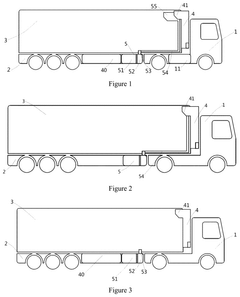
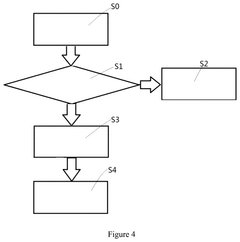
Hybrid refrigeration system, control method thereof and transportation refrigeration vehicle
PatentPendingUS20240361056A1
Innovation
- A hybrid refrigeration system combining a liquid nitrogen-based refrigeration device and a mechanical refrigeration device, controlled by a system that determines the need for each based on temperature thresholds, allowing for efficient temperature regulation and reducing the capacity and weight of mechanical components.
Liquid nitrogen-based cooling system
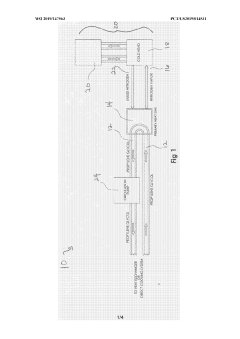
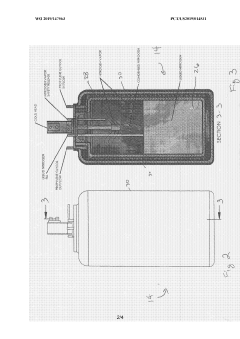
PatentWO2019147563A1
Innovation
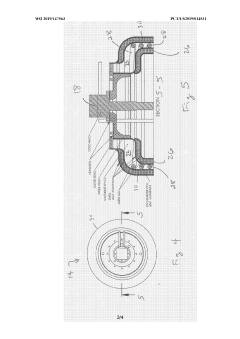
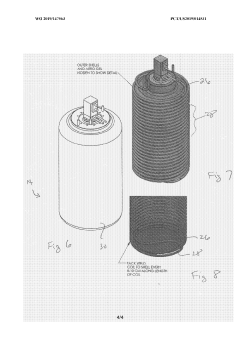
- A liquid nitrogen-based cooling system featuring a heat sink with a first vessel containing liquid nitrogen and a series of coils in heat-exchanging contact, where heat is absorbed by a heat-absorbing medium and transferred to liquid nitrogen, vaporized, and then condensed back using a helium-based cryo-refrigeration system, with a partial vacuum and insulating materials to minimize ambient heat transfer.
Energy Efficiency and Sustainability Considerations
Energy efficiency represents a critical factor in evaluating cooling systems, particularly when comparing liquid nitrogen and lithium-based solutions. Liquid nitrogen cooling systems typically consume significant energy during the production phase, requiring approximately 0.5-0.7 kWh per kilogram of liquid nitrogen produced through air separation and liquefaction processes. However, once produced, these systems operate with minimal additional energy input during application, functioning primarily through passive heat exchange.
In contrast, lithium-based cooling systems demonstrate different efficiency profiles. These systems generally require continuous electrical input during operation, consuming approximately 0.3-0.4 kWh per hour of cooling at standard capacity. The energy efficiency ratio (EER) for advanced lithium cooling systems ranges from 3.2 to 4.5, representing a significant improvement over conventional cooling technologies but still requiring consistent power supply.
From a sustainability perspective, liquid nitrogen presents both advantages and challenges. As nitrogen constitutes approximately 78% of Earth's atmosphere, the raw material is abundant and renewable. However, the energy-intensive production process often relies on fossil fuel-powered electricity generation, creating a substantial carbon footprint unless renewable energy sources are utilized. The global warming potential (GWP) of liquid nitrogen systems primarily stems from this production energy rather than the substance itself.
Lithium-based cooling systems face different sustainability considerations. The mining and processing of lithium for cooling applications contribute to environmental degradation, water depletion, and habitat disruption in extraction regions. Current estimates suggest that producing one ton of lithium requires approximately 500,000 gallons of water and generates 15 tons of CO2 emissions. Additionally, the limited global lithium reserves raise questions about long-term sustainability as demand increases across multiple industries.
Life cycle assessment (LCA) studies indicate that liquid nitrogen systems typically generate 60-70% of their lifetime emissions during the production phase, while lithium systems distribute environmental impacts more evenly across production, operation, and disposal stages. End-of-life considerations favor liquid nitrogen, which returns harmlessly to the atmosphere, whereas lithium components require specialized recycling processes that currently achieve only 50-60% material recovery rates.
Recent technological advancements are improving the sustainability profiles of both systems. Integration with renewable energy sources can significantly reduce the carbon footprint of liquid nitrogen production, while improved lithium recycling technologies and alternative cooling materials show promise for reducing the environmental impact of lithium-based systems. These developments suggest that future cooling solutions may achieve substantially improved energy efficiency and sustainability metrics compared to current implementations.
In contrast, lithium-based cooling systems demonstrate different efficiency profiles. These systems generally require continuous electrical input during operation, consuming approximately 0.3-0.4 kWh per hour of cooling at standard capacity. The energy efficiency ratio (EER) for advanced lithium cooling systems ranges from 3.2 to 4.5, representing a significant improvement over conventional cooling technologies but still requiring consistent power supply.
From a sustainability perspective, liquid nitrogen presents both advantages and challenges. As nitrogen constitutes approximately 78% of Earth's atmosphere, the raw material is abundant and renewable. However, the energy-intensive production process often relies on fossil fuel-powered electricity generation, creating a substantial carbon footprint unless renewable energy sources are utilized. The global warming potential (GWP) of liquid nitrogen systems primarily stems from this production energy rather than the substance itself.
Lithium-based cooling systems face different sustainability considerations. The mining and processing of lithium for cooling applications contribute to environmental degradation, water depletion, and habitat disruption in extraction regions. Current estimates suggest that producing one ton of lithium requires approximately 500,000 gallons of water and generates 15 tons of CO2 emissions. Additionally, the limited global lithium reserves raise questions about long-term sustainability as demand increases across multiple industries.
Life cycle assessment (LCA) studies indicate that liquid nitrogen systems typically generate 60-70% of their lifetime emissions during the production phase, while lithium systems distribute environmental impacts more evenly across production, operation, and disposal stages. End-of-life considerations favor liquid nitrogen, which returns harmlessly to the atmosphere, whereas lithium components require specialized recycling processes that currently achieve only 50-60% material recovery rates.
Recent technological advancements are improving the sustainability profiles of both systems. Integration with renewable energy sources can significantly reduce the carbon footprint of liquid nitrogen production, while improved lithium recycling technologies and alternative cooling materials show promise for reducing the environmental impact of lithium-based systems. These developments suggest that future cooling solutions may achieve substantially improved energy efficiency and sustainability metrics compared to current implementations.
Safety Standards and Risk Assessment
Safety standards for cooling systems vary significantly between liquid nitrogen and lithium-based technologies, reflecting their distinct physical properties and associated risks. Liquid nitrogen systems must comply with ASME Boiler and Pressure Vessel Code Section VIII for cryogenic vessels, while lithium cooling systems fall under specialized chemical handling regulations due to lithium's reactivity with water and air.
The Compressed Gas Association's P-12 standard specifically addresses safe handling of liquid nitrogen, mandating proper ventilation systems to prevent oxygen displacement in enclosed spaces. In contrast, lithium cooling systems require compliance with NFPA 484 for combustible metals and often necessitate specialized fire suppression systems that avoid water-based agents.
Risk assessment protocols differ substantially between these cooling technologies. Liquid nitrogen systems primarily focus on asphyxiation hazards, pressure vessel integrity, and cryogenic burns. Standard risk mitigation includes oxygen monitoring systems, pressure relief valves, and comprehensive operator training on cryogenic material handling. These systems typically receive safety ratings between SIL 2-3 (Safety Integrity Level) under IEC 61508 standards.
Lithium-based cooling systems present more complex risk profiles, including chemical reactivity, thermal runaway potential, and environmental contamination concerns. Their risk assessment must incorporate HAZOP (Hazard and Operability) studies specifically addressing lithium's unique properties. These systems generally require more sophisticated engineering controls, including multiple containment layers and specialized detection systems for lithium leaks or reactions.
Recent regulatory developments have introduced more stringent requirements for both technologies. The EU's ATEX Directive now applies more comprehensively to lithium cooling systems in certain applications, while OSHA has updated its Process Safety Management standards to address liquid nitrogen handling in larger-scale industrial applications.
Insurance underwriters typically assign higher risk premiums to lithium-based cooling systems, reflecting their more complex safety profile and limited operational history compared to liquid nitrogen systems. This economic factor often influences technology selection decisions, particularly for smaller enterprises with limited risk management resources.
Emerging safety technologies are gradually transforming risk profiles for both cooling approaches. Advanced monitoring systems utilizing IoT sensors now provide real-time hazard detection for liquid nitrogen systems, while new encapsulation technologies are reducing reactivity risks in lithium-based systems, potentially narrowing the safety gap between these competing cooling technologies.
The Compressed Gas Association's P-12 standard specifically addresses safe handling of liquid nitrogen, mandating proper ventilation systems to prevent oxygen displacement in enclosed spaces. In contrast, lithium cooling systems require compliance with NFPA 484 for combustible metals and often necessitate specialized fire suppression systems that avoid water-based agents.
Risk assessment protocols differ substantially between these cooling technologies. Liquid nitrogen systems primarily focus on asphyxiation hazards, pressure vessel integrity, and cryogenic burns. Standard risk mitigation includes oxygen monitoring systems, pressure relief valves, and comprehensive operator training on cryogenic material handling. These systems typically receive safety ratings between SIL 2-3 (Safety Integrity Level) under IEC 61508 standards.
Lithium-based cooling systems present more complex risk profiles, including chemical reactivity, thermal runaway potential, and environmental contamination concerns. Their risk assessment must incorporate HAZOP (Hazard and Operability) studies specifically addressing lithium's unique properties. These systems generally require more sophisticated engineering controls, including multiple containment layers and specialized detection systems for lithium leaks or reactions.
Recent regulatory developments have introduced more stringent requirements for both technologies. The EU's ATEX Directive now applies more comprehensively to lithium cooling systems in certain applications, while OSHA has updated its Process Safety Management standards to address liquid nitrogen handling in larger-scale industrial applications.
Insurance underwriters typically assign higher risk premiums to lithium-based cooling systems, reflecting their more complex safety profile and limited operational history compared to liquid nitrogen systems. This economic factor often influences technology selection decisions, particularly for smaller enterprises with limited risk management resources.
Emerging safety technologies are gradually transforming risk profiles for both cooling approaches. Advanced monitoring systems utilizing IoT sensors now provide real-time hazard detection for liquid nitrogen systems, while new encapsulation technologies are reducing reactivity risks in lithium-based systems, potentially narrowing the safety gap between these competing cooling technologies.
Unlock deeper insights with Patsnap Eureka Quick Research — get a full tech report to explore trends and direct your research. Try now!
Generate Your Research Report Instantly with AI Agent
Supercharge your innovation with Patsnap Eureka AI Agent Platform!