

How to Implement Liquid Nitrogen in Controlled Environment Chambers
OCT 7, 20259 MIN READ
Generate Your Research Report Instantly with AI Agent
PatSnap Eureka helps you evaluate technical feasibility & market potential.
Liquid Nitrogen Technology Background and Objectives
Liquid nitrogen has been a cornerstone technology in scientific and industrial applications since its commercial production began in the early 20th century. The evolution of liquid nitrogen technology has been closely tied to advancements in cryogenics, with significant milestones including the development of efficient liquefaction processes and improved storage systems. Today, liquid nitrogen serves as a critical component in various controlled environment applications due to its inert nature and extremely low temperature (-196°C), making it ideal for precise temperature control.
The implementation of liquid nitrogen in controlled environment chambers represents a convergence of cryogenic technology and environmental control systems. Historically, controlled environment chambers relied on mechanical refrigeration systems with limited temperature ranges. The integration of liquid nitrogen expanded these capabilities dramatically, enabling ultra-low temperature applications that were previously unattainable with conventional cooling methods.
Market trends indicate growing demand for precise temperature control across multiple industries, including pharmaceuticals, biotechnology, electronics manufacturing, and materials testing. This demand has driven continuous innovation in liquid nitrogen delivery systems, temperature control algorithms, and safety mechanisms. The technology has evolved from basic manual injection systems to sophisticated automated delivery platforms with real-time monitoring and adjustment capabilities.
Current technological objectives for liquid nitrogen implementation in controlled environment chambers focus on several key areas. First, enhancing energy efficiency through optimized nitrogen consumption and improved insulation technologies. Second, developing more precise temperature control systems capable of maintaining stability within ±0.1°C across the entire chamber volume. Third, integrating advanced safety features to mitigate risks associated with oxygen depletion and extreme cold exposure.
Another significant objective is the development of hybrid systems that combine liquid nitrogen with traditional mechanical cooling to optimize operational costs while maintaining performance. These systems aim to use liquid nitrogen only when temperatures below mechanical cooling capabilities are required, thereby reducing nitrogen consumption and extending the range of operational temperatures.
Future technological goals include the creation of self-regulating systems with predictive algorithms that can anticipate temperature fluctuations and adjust nitrogen flow preemptively. Additionally, there is growing interest in developing more compact and portable controlled environment chambers that maintain the benefits of liquid nitrogen cooling while reducing the footprint and infrastructure requirements.
The evolution of this technology is increasingly focused on sustainability, with objectives to reduce overall nitrogen consumption, implement recovery systems, and minimize the carbon footprint associated with nitrogen production and delivery. These advancements align with broader industry trends toward more environmentally responsible laboratory and manufacturing practices.
The implementation of liquid nitrogen in controlled environment chambers represents a convergence of cryogenic technology and environmental control systems. Historically, controlled environment chambers relied on mechanical refrigeration systems with limited temperature ranges. The integration of liquid nitrogen expanded these capabilities dramatically, enabling ultra-low temperature applications that were previously unattainable with conventional cooling methods.
Market trends indicate growing demand for precise temperature control across multiple industries, including pharmaceuticals, biotechnology, electronics manufacturing, and materials testing. This demand has driven continuous innovation in liquid nitrogen delivery systems, temperature control algorithms, and safety mechanisms. The technology has evolved from basic manual injection systems to sophisticated automated delivery platforms with real-time monitoring and adjustment capabilities.
Current technological objectives for liquid nitrogen implementation in controlled environment chambers focus on several key areas. First, enhancing energy efficiency through optimized nitrogen consumption and improved insulation technologies. Second, developing more precise temperature control systems capable of maintaining stability within ±0.1°C across the entire chamber volume. Third, integrating advanced safety features to mitigate risks associated with oxygen depletion and extreme cold exposure.
Another significant objective is the development of hybrid systems that combine liquid nitrogen with traditional mechanical cooling to optimize operational costs while maintaining performance. These systems aim to use liquid nitrogen only when temperatures below mechanical cooling capabilities are required, thereby reducing nitrogen consumption and extending the range of operational temperatures.
Future technological goals include the creation of self-regulating systems with predictive algorithms that can anticipate temperature fluctuations and adjust nitrogen flow preemptively. Additionally, there is growing interest in developing more compact and portable controlled environment chambers that maintain the benefits of liquid nitrogen cooling while reducing the footprint and infrastructure requirements.
The evolution of this technology is increasingly focused on sustainability, with objectives to reduce overall nitrogen consumption, implement recovery systems, and minimize the carbon footprint associated with nitrogen production and delivery. These advancements align with broader industry trends toward more environmentally responsible laboratory and manufacturing practices.
Market Analysis for Controlled Environment Applications
The controlled environment chamber market utilizing liquid nitrogen technology is experiencing robust growth, driven primarily by increasing demand across pharmaceutical, biotechnology, and advanced materials research sectors. Current market valuation stands at approximately 3.2 billion USD globally, with projected annual growth rates of 6.8% through 2028, significantly outpacing general laboratory equipment markets.
Pharmaceutical applications represent the largest market segment, accounting for nearly 42% of total demand. This dominance stems from stringent regulatory requirements for drug stability testing and the critical need for precise temperature control during development and manufacturing processes. The biotechnology sector follows closely at 27% market share, with particular emphasis on cell preservation and cryogenic storage applications.
Geographically, North America leads market consumption at 38%, followed by Europe (31%) and Asia-Pacific (24%). The Asia-Pacific region demonstrates the highest growth trajectory, particularly in China and India where expanding pharmaceutical manufacturing and research capabilities are driving adoption of advanced controlled environment technologies.
Customer segmentation reveals three primary buyer categories: large pharmaceutical corporations, academic/research institutions, and contract research organizations (CROs). Large corporations typically seek comprehensive systems with advanced automation and monitoring capabilities, while academic institutions prioritize flexibility and cost-effectiveness. CROs generally require systems balancing both considerations.
Key market drivers include increasingly stringent regulatory requirements for pharmaceutical testing, growing complexity of biological samples requiring precise environmental control, and the expansion of personalized medicine research necessitating sophisticated sample preservation techniques. The trend toward laboratory automation has further accelerated demand for integrated liquid nitrogen systems with remote monitoring capabilities.
Price sensitivity varies significantly by market segment. Research institutions demonstrate high price sensitivity, often operating under grant funding constraints, while pharmaceutical manufacturers show greater willingness to invest in premium systems offering enhanced reliability and validation documentation.
Market barriers include high initial capital investment requirements, ongoing operational costs associated with liquid nitrogen supply, and technical expertise needed for system maintenance. Additionally, safety concerns regarding liquid nitrogen handling and potential asphyxiation risks in confined spaces represent significant adoption challenges, particularly in smaller facilities with limited safety infrastructure.
Pharmaceutical applications represent the largest market segment, accounting for nearly 42% of total demand. This dominance stems from stringent regulatory requirements for drug stability testing and the critical need for precise temperature control during development and manufacturing processes. The biotechnology sector follows closely at 27% market share, with particular emphasis on cell preservation and cryogenic storage applications.
Geographically, North America leads market consumption at 38%, followed by Europe (31%) and Asia-Pacific (24%). The Asia-Pacific region demonstrates the highest growth trajectory, particularly in China and India where expanding pharmaceutical manufacturing and research capabilities are driving adoption of advanced controlled environment technologies.
Customer segmentation reveals three primary buyer categories: large pharmaceutical corporations, academic/research institutions, and contract research organizations (CROs). Large corporations typically seek comprehensive systems with advanced automation and monitoring capabilities, while academic institutions prioritize flexibility and cost-effectiveness. CROs generally require systems balancing both considerations.
Key market drivers include increasingly stringent regulatory requirements for pharmaceutical testing, growing complexity of biological samples requiring precise environmental control, and the expansion of personalized medicine research necessitating sophisticated sample preservation techniques. The trend toward laboratory automation has further accelerated demand for integrated liquid nitrogen systems with remote monitoring capabilities.
Price sensitivity varies significantly by market segment. Research institutions demonstrate high price sensitivity, often operating under grant funding constraints, while pharmaceutical manufacturers show greater willingness to invest in premium systems offering enhanced reliability and validation documentation.
Market barriers include high initial capital investment requirements, ongoing operational costs associated with liquid nitrogen supply, and technical expertise needed for system maintenance. Additionally, safety concerns regarding liquid nitrogen handling and potential asphyxiation risks in confined spaces represent significant adoption challenges, particularly in smaller facilities with limited safety infrastructure.
Current Challenges in Cryogenic Implementation
Despite significant advancements in cryogenic technology, implementing liquid nitrogen in controlled environment chambers presents several persistent challenges. The primary difficulty lies in maintaining precise temperature control, as liquid nitrogen's extremely low boiling point (-196°C) creates substantial thermal gradients within chambers. These gradients can lead to inconsistent experimental conditions and potentially compromise research integrity, particularly in sensitive biological or materials science applications.
Safety concerns represent another major challenge, with risks including oxygen displacement, cold burns, and material embrittlement. Current safety systems often struggle to provide adequate protection while maintaining ease of access for researchers. The balance between hermetic sealing for safety and practical usability remains problematic in many laboratory settings.
Material compatibility issues continue to plague cryogenic implementation. Standard materials used in conventional chambers often become brittle or lose structural integrity at extremely low temperatures. While specialized materials exist, they significantly increase costs and may introduce new compatibility challenges with existing laboratory infrastructure. The development of cost-effective materials that maintain performance across wide temperature ranges remains an ongoing research focus.
Energy efficiency presents a substantial obstacle, as maintaining cryogenic temperatures requires considerable power input. Current cooling systems experience significant energy losses during temperature transitions, particularly when chambers need to cycle between ambient and cryogenic conditions. The high operational costs associated with these inefficiencies limit widespread adoption of liquid nitrogen systems in many research and industrial applications.
Automation and control systems face unique challenges in cryogenic environments. Sensors and actuators must function reliably at extreme temperatures, but many conventional electronic components fail under such conditions. Current solutions often involve complex insulation systems or remote sensing arrangements that introduce latency and precision issues into control loops.
Scalability remains problematic, with most successful implementations limited to small or medium-sized chambers. Larger chambers face exponentially greater challenges in maintaining uniform temperatures and managing liquid nitrogen consumption efficiently. This limitation restricts industrial applications where larger controlled environments are necessary.
Regulatory compliance adds another layer of complexity, with varying standards across different regions and industries. Meeting these diverse requirements while maintaining system performance and cost-effectiveness requires significant engineering compromises that often result in suboptimal solutions for specific applications.
Safety concerns represent another major challenge, with risks including oxygen displacement, cold burns, and material embrittlement. Current safety systems often struggle to provide adequate protection while maintaining ease of access for researchers. The balance between hermetic sealing for safety and practical usability remains problematic in many laboratory settings.
Material compatibility issues continue to plague cryogenic implementation. Standard materials used in conventional chambers often become brittle or lose structural integrity at extremely low temperatures. While specialized materials exist, they significantly increase costs and may introduce new compatibility challenges with existing laboratory infrastructure. The development of cost-effective materials that maintain performance across wide temperature ranges remains an ongoing research focus.
Energy efficiency presents a substantial obstacle, as maintaining cryogenic temperatures requires considerable power input. Current cooling systems experience significant energy losses during temperature transitions, particularly when chambers need to cycle between ambient and cryogenic conditions. The high operational costs associated with these inefficiencies limit widespread adoption of liquid nitrogen systems in many research and industrial applications.
Automation and control systems face unique challenges in cryogenic environments. Sensors and actuators must function reliably at extreme temperatures, but many conventional electronic components fail under such conditions. Current solutions often involve complex insulation systems or remote sensing arrangements that introduce latency and precision issues into control loops.
Scalability remains problematic, with most successful implementations limited to small or medium-sized chambers. Larger chambers face exponentially greater challenges in maintaining uniform temperatures and managing liquid nitrogen consumption efficiently. This limitation restricts industrial applications where larger controlled environments are necessary.
Regulatory compliance adds another layer of complexity, with varying standards across different regions and industries. Meeting these diverse requirements while maintaining system performance and cost-effectiveness requires significant engineering compromises that often result in suboptimal solutions for specific applications.
Existing Liquid Nitrogen Delivery Mechanisms
01 Cryogenic storage and transportation systems
Specialized systems designed for the safe storage and transportation of liquid nitrogen, including insulated containers, dewars, and tanks that minimize heat transfer and evaporation. These systems incorporate vacuum insulation technology, pressure relief mechanisms, and specialized materials to maintain the extremely low temperatures required for liquid nitrogen while ensuring safety during handling and transport.- Liquid nitrogen storage and transportation systems: Various systems and methods for storing and transporting liquid nitrogen safely and efficiently. These include specialized containers, vessels, and tanks designed to maintain cryogenic temperatures while minimizing evaporation. The systems incorporate insulation technologies, pressure management mechanisms, and safety features to handle the extremely low temperatures of liquid nitrogen during storage and transportation.
- Cryogenic treatment applications: Applications of liquid nitrogen for cryogenic treatment of materials and products. Liquid nitrogen is used for freezing, cooling, and treating various materials to alter their properties or preserve them. These applications include food freezing, biological sample preservation, medical treatments, and industrial material processing where extremely low temperatures are required to achieve specific outcomes.
- Liquid nitrogen production and liquefaction methods: Methods and systems for producing liquid nitrogen through air separation and liquefaction processes. These include techniques for extracting nitrogen from atmospheric air, purifying it, and cooling it to its liquefaction point. The technologies involve compression systems, heat exchangers, expansion engines, and distillation columns designed to efficiently separate nitrogen from other atmospheric gases and convert it to liquid form.
- Liquid nitrogen-based cooling systems: Cooling systems that utilize liquid nitrogen as a refrigerant or cooling medium. These systems leverage the extremely low temperature of liquid nitrogen to provide cooling for various applications, including electronic equipment, superconducting devices, and industrial processes. The designs include heat exchangers, circulation mechanisms, temperature control systems, and safety features to manage the cryogenic fluid effectively.
- Safety mechanisms for liquid nitrogen handling: Safety devices and protocols designed specifically for handling liquid nitrogen to prevent accidents and injuries. These include pressure relief systems, ventilation mechanisms, personal protective equipment, monitoring devices, and emergency response systems. The technologies address risks such as frostbite, asphyxiation, pressure build-up, and container failure associated with the handling of cryogenic liquids.
02 Cooling and freezing applications
Liquid nitrogen is widely used for rapid cooling and freezing processes across various industries due to its extremely low temperature (-196°C). Applications include food preservation, cryogenic treatment of materials, superconductor cooling, and biological sample preservation. The rapid cooling effect of liquid nitrogen can improve material properties, preserve cellular structures, and enable specialized manufacturing processes.Expand Specific Solutions03 Medical and biological applications
Liquid nitrogen is extensively used in medical fields for cryotherapy, cryosurgery, and preservation of biological samples. It enables the targeted destruction of abnormal tissues, preservation of cells, tissues, and genetic materials for long-term storage, and supports various laboratory procedures requiring ultra-low temperatures. These applications leverage liquid nitrogen's ability to rapidly freeze tissues while minimizing cellular damage.Expand Specific Solutions04 Industrial manufacturing processes
Liquid nitrogen plays a crucial role in various industrial manufacturing processes, including cryogenic grinding, metal treatment, shrink fitting, and as an inert atmosphere for certain chemical reactions. The extreme cold provided by liquid nitrogen can enhance material properties, facilitate precision manufacturing, and enable processes that would be impossible at room temperature.Expand Specific Solutions05 Liquid nitrogen dispensing and control systems
Specialized equipment and systems designed for the precise dispensing, metering, and control of liquid nitrogen flow. These systems incorporate advanced sensors, automated controls, and safety features to ensure accurate delivery of liquid nitrogen for various applications while minimizing waste and preventing hazards associated with cryogenic liquids.Expand Specific Solutions
Leading Manufacturers and Research Institutions
The liquid nitrogen controlled environment chamber market is in a growth phase, characterized by increasing applications across pharmaceutical, research, and industrial sectors. The market size is expanding due to rising demand for cryogenic preservation and controlled testing environments, with projections indicating significant growth over the next decade. Technologically, the field shows varying maturity levels, with established players like Air Liquide SA and Linde GmbH offering comprehensive industrial solutions, while specialized innovation comes from companies like Tianjin CNRO Science-Technology and Tofflon Science & Technology Group. Academic institutions including China University of Mining & Technology and Jilin University contribute to fundamental research, while industrial players such as Mayekawa MFG and Air Products & Chemicals focus on system integration and efficiency improvements for commercial applications.
Air Liquide SA
Technical Solution: Air Liquide has developed advanced cryogenic systems for controlled environment chambers utilizing liquid nitrogen (LN2). Their technology employs precise temperature control mechanisms with programmable cooling rates from ambient to -196°C. The system features vacuum-insulated transfer lines to minimize heat ingress and specialized cryogenic valves that can operate reliably at extreme temperatures. Air Liquide's implementation includes automated pressure management systems that regulate nitrogen vapor pressure to maintain stable temperatures within ±0.5°C. Their solutions incorporate redundant safety features including oxygen monitoring, automatic ventilation systems, and emergency shutdown protocols to prevent asphyxiation risks. The company has also developed specialized spray nozzles that optimize nitrogen distribution for uniform cooling across the chamber volume.
Strengths: Industry-leading temperature uniformity and stability; extensive global service network; integrated safety systems with remote monitoring capabilities. Weaknesses: Higher initial capital investment compared to mechanical refrigeration systems; requires regular liquid nitrogen supply infrastructure; potential for higher operating costs in regions with expensive nitrogen supply.
LINDE GMBH
Technical Solution: Linde has engineered comprehensive liquid nitrogen delivery systems for controlled environment chambers featuring their patented CRYOLINE® technology. Their implementation utilizes precise flow control valves capable of metering LN2 in increments as small as 0.1 L/min to achieve temperature control precision of ±1°C. The system incorporates specialized heat exchangers that maximize cooling efficiency by optimizing the phase change properties of nitrogen. Linde's solution includes their proprietary CRYOCONTROL™ software that enables programmable temperature profiles with multiple ramp/soak cycles and data logging capabilities. Their implementation features dual-mode operation, allowing chambers to utilize either the cooling potential of liquid nitrogen or nitrogen gas for more moderate temperature control, significantly reducing consumption during steady-state operation. The system also incorporates advanced insulation materials that minimize heat transfer and reduce overall nitrogen consumption.
Strengths: Proprietary control software with extensive programming capabilities; dual-mode operation reduces operating costs; modular design allows for customization to specific applications. Weaknesses: Complex installation requirements; higher maintenance needs for specialized components; requires technical expertise for optimal operation and troubleshooting.
Key Innovations in Cryogenic Temperature Control
System and method for liquid nitrogen recycling
PatentPendingTW201923278A
Innovation
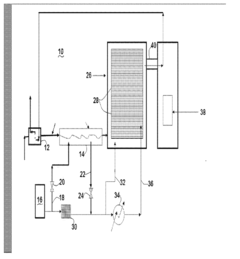
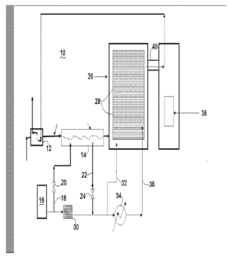
- A cooling assembly that recycles liquid nitrogen by expanding it into nitrogen gas, which is then reused for thermal control, reducing the need for compressed dry air and minimizing venting to the atmosphere.


Liquid nitrogen (LIN) integrated lyophilization system for minimizing a carbon footprint
PatentActiveUS20170328634A1
Innovation
- The system replaces hot oil with liquid nitrogen or similar heat transfer media, allowing for external freezing of products before lyophilization, reducing the need for rotating parts and chamber cooling, and utilizing nitrogen for both freezing and sublimation processes to control ice crystal formation and enhance drying efficiency.
Safety Protocols and Risk Management
The implementation of liquid nitrogen in controlled environment chambers necessitates comprehensive safety protocols and risk management strategies due to the inherent hazards associated with cryogenic materials. Primary risks include oxygen displacement leading to asphyxiation, severe cold burns from direct contact, and potential pressure build-up that could result in explosive decompression. These risks demand a multi-layered safety approach beginning with thorough personnel training programs that cover proper handling procedures, emergency response protocols, and regular certification updates.
Environmental monitoring systems represent a critical safety component, requiring continuous oxygen level detection with automated alarms set to trigger at concentrations below 19.5%. Temperature sensors should be strategically positioned throughout the facility to detect leaks and monitor system performance. Modern implementations increasingly incorporate wireless sensor networks that provide real-time data to centralized monitoring stations, enabling immediate response to developing hazardous conditions.
Personal protective equipment requirements must be strictly enforced, including insulated gloves rated for cryogenic temperatures, face shields, aprons, and closed-toe shoes. Designated safety zones should be clearly marked with appropriate signage, and access to liquid nitrogen handling areas must be restricted to trained personnel only. Emergency equipment including eyewash stations and safety showers should be installed within 10 seconds' travel distance from any potential exposure point.
Ventilation systems demand particular attention, with mechanical ventilation designed to provide 6-10 air changes per hour in enclosed spaces where liquid nitrogen is used. Oxygen depletion sensors should be integrated with ventilation controls to automatically increase airflow rates when oxygen levels decline. Emergency ventilation systems with backup power supplies ensure continued operation during primary system failures.
Standard operating procedures must document detailed step-by-step processes for all liquid nitrogen operations, including filling procedures, transfer protocols, and maintenance requirements. These procedures should incorporate regular inspection schedules for storage vessels, transfer lines, and associated equipment, with particular attention to pressure relief valves and vacuum insulation integrity.
Emergency response planning requires coordination with local emergency services, clearly defined evacuation routes, and regular drills to ensure personnel readiness. Incident reporting systems should facilitate thorough investigation of near-misses and accidents, enabling continuous improvement of safety protocols. The implementation of these comprehensive safety measures significantly reduces risk while enabling the effective utilization of liquid nitrogen in controlled environment applications.
Environmental monitoring systems represent a critical safety component, requiring continuous oxygen level detection with automated alarms set to trigger at concentrations below 19.5%. Temperature sensors should be strategically positioned throughout the facility to detect leaks and monitor system performance. Modern implementations increasingly incorporate wireless sensor networks that provide real-time data to centralized monitoring stations, enabling immediate response to developing hazardous conditions.
Personal protective equipment requirements must be strictly enforced, including insulated gloves rated for cryogenic temperatures, face shields, aprons, and closed-toe shoes. Designated safety zones should be clearly marked with appropriate signage, and access to liquid nitrogen handling areas must be restricted to trained personnel only. Emergency equipment including eyewash stations and safety showers should be installed within 10 seconds' travel distance from any potential exposure point.
Ventilation systems demand particular attention, with mechanical ventilation designed to provide 6-10 air changes per hour in enclosed spaces where liquid nitrogen is used. Oxygen depletion sensors should be integrated with ventilation controls to automatically increase airflow rates when oxygen levels decline. Emergency ventilation systems with backup power supplies ensure continued operation during primary system failures.
Standard operating procedures must document detailed step-by-step processes for all liquid nitrogen operations, including filling procedures, transfer protocols, and maintenance requirements. These procedures should incorporate regular inspection schedules for storage vessels, transfer lines, and associated equipment, with particular attention to pressure relief valves and vacuum insulation integrity.
Emergency response planning requires coordination with local emergency services, clearly defined evacuation routes, and regular drills to ensure personnel readiness. Incident reporting systems should facilitate thorough investigation of near-misses and accidents, enabling continuous improvement of safety protocols. The implementation of these comprehensive safety measures significantly reduces risk while enabling the effective utilization of liquid nitrogen in controlled environment applications.
Environmental Impact and Sustainability Considerations
The implementation of liquid nitrogen in controlled environment chambers necessitates careful consideration of environmental impacts and sustainability factors. Liquid nitrogen production requires significant energy input, primarily through air separation processes that consume approximately 0.5-0.7 kWh per kilogram of nitrogen produced. This energy footprint varies considerably depending on the source of electricity, with renewable energy sources substantially reducing the overall environmental impact compared to fossil fuel-based production.
When evaluating the environmental implications of liquid nitrogen systems, it is essential to consider the complete lifecycle assessment. The production phase accounts for approximately 70% of the total environmental impact, while transportation and storage contribute an additional 20%. The remaining 10% is attributed to end-use applications and eventual release. Modern cryogenic facilities have improved efficiency by 15-20% over the past decade, reducing the carbon footprint of nitrogen production.
Nitrogen itself is environmentally inert, comprising 78% of Earth's atmosphere naturally. However, the rapid evaporation of liquid nitrogen in controlled environments can potentially displace oxygen, creating localized atmospheric imbalances if ventilation systems are inadequate. Best practices mandate oxygen monitoring systems and proper ventilation designs that ensure at least 6-12 air changes per hour in spaces where liquid nitrogen is utilized.
From a sustainability perspective, liquid nitrogen systems offer several advantages when properly implemented. The closed-loop potential of these systems allows for nitrogen recovery and reuse, significantly reducing the need for continuous production. Advanced recovery systems can recapture up to 85% of nitrogen gas for reconversion, substantially improving operational sustainability and reducing long-term environmental impact.
Water consumption represents another critical environmental consideration, as cryogenic cooling towers used in nitrogen production typically require 4-7 gallons of water per kilogram of nitrogen. Implementing water recycling systems can reduce this consumption by 40-60%, addressing water scarcity concerns in regions where these facilities operate.
Regulatory frameworks increasingly mandate environmental impact assessments for facilities utilizing liquid nitrogen at scale. These assessments typically evaluate greenhouse gas emissions, energy efficiency metrics, and potential atmospheric effects. Compliance with ISO 14001 environmental management standards has become standard practice for responsible implementation, with certification processes requiring regular audits and continuous improvement in environmental performance metrics.
When evaluating the environmental implications of liquid nitrogen systems, it is essential to consider the complete lifecycle assessment. The production phase accounts for approximately 70% of the total environmental impact, while transportation and storage contribute an additional 20%. The remaining 10% is attributed to end-use applications and eventual release. Modern cryogenic facilities have improved efficiency by 15-20% over the past decade, reducing the carbon footprint of nitrogen production.
Nitrogen itself is environmentally inert, comprising 78% of Earth's atmosphere naturally. However, the rapid evaporation of liquid nitrogen in controlled environments can potentially displace oxygen, creating localized atmospheric imbalances if ventilation systems are inadequate. Best practices mandate oxygen monitoring systems and proper ventilation designs that ensure at least 6-12 air changes per hour in spaces where liquid nitrogen is utilized.
From a sustainability perspective, liquid nitrogen systems offer several advantages when properly implemented. The closed-loop potential of these systems allows for nitrogen recovery and reuse, significantly reducing the need for continuous production. Advanced recovery systems can recapture up to 85% of nitrogen gas for reconversion, substantially improving operational sustainability and reducing long-term environmental impact.
Water consumption represents another critical environmental consideration, as cryogenic cooling towers used in nitrogen production typically require 4-7 gallons of water per kilogram of nitrogen. Implementing water recycling systems can reduce this consumption by 40-60%, addressing water scarcity concerns in regions where these facilities operate.
Regulatory frameworks increasingly mandate environmental impact assessments for facilities utilizing liquid nitrogen at scale. These assessments typically evaluate greenhouse gas emissions, energy efficiency metrics, and potential atmospheric effects. Compliance with ISO 14001 environmental management standards has become standard practice for responsible implementation, with certification processes requiring regular audits and continuous improvement in environmental performance metrics.
Unlock deeper insights with PatSnap Eureka Quick Research — get a full tech report to explore trends and direct your research. Try now!
Generate Your Research Report Instantly with AI Agent
Supercharge your innovation with PatSnap Eureka AI Agent Platform!