

Comparing Thermal Conductivity: Liquid Nitrogen vs Water Systems
OCT 7, 202510 MIN READ
Generate Your Research Report Instantly with AI Agent
PatSnap Eureka helps you evaluate technical feasibility & market potential.
Thermal Conductivity Background and Research Objectives
Thermal conductivity, a fundamental property in heat transfer science, measures a material's ability to conduct heat. The historical development of thermal conductivity research dates back to the early 19th century with Joseph Fourier's groundbreaking work establishing the mathematical foundation for heat conduction. Since then, this field has evolved significantly, with modern applications spanning from industrial cooling systems to advanced electronics thermal management.
The comparison between liquid nitrogen and water-based cooling systems represents a critical area of investigation in thermal management technology. Liquid nitrogen, with its extremely low temperature of -196°C, offers exceptional cooling capabilities that far exceed conventional water-based systems. However, the practical implementation of liquid nitrogen cooling presents unique challenges related to safety, infrastructure requirements, and economic considerations.
Current technological trends indicate a growing interest in cryogenic cooling solutions across various industries, particularly in high-performance computing, superconductivity applications, and specialized manufacturing processes. The miniaturization of electronic components and the increasing power density of modern devices have created unprecedented thermal management challenges that conventional cooling methods struggle to address effectively.
The evolution of thermal conductivity measurement techniques has also significantly contributed to our understanding of these systems. From traditional steady-state methods to advanced transient techniques, researchers now have access to more precise tools for characterizing thermal properties across extreme temperature ranges. This technological progression enables more accurate comparisons between disparate cooling media like liquid nitrogen and water.
This research aims to comprehensively evaluate the thermal conductivity characteristics of liquid nitrogen systems compared to conventional water-based cooling solutions. Specifically, we seek to quantify performance differences across various operational parameters, identify application-specific advantages and limitations, and develop predictive models for system optimization.
Additionally, this investigation will explore the economic and practical feasibility of implementing liquid nitrogen cooling in commercial and industrial settings, with particular attention to energy efficiency metrics, infrastructure requirements, and total cost of ownership. The research will also address safety protocols and risk mitigation strategies essential for working with cryogenic materials.
The ultimate objective is to establish clear guidelines for technology selection based on specific cooling requirements, providing decision-makers with a robust analytical framework for evaluating when liquid nitrogen cooling represents a viable or superior alternative to traditional water-based systems. This framework will incorporate both technical performance metrics and practical implementation considerations to deliver actionable insights for real-world applications.
The comparison between liquid nitrogen and water-based cooling systems represents a critical area of investigation in thermal management technology. Liquid nitrogen, with its extremely low temperature of -196°C, offers exceptional cooling capabilities that far exceed conventional water-based systems. However, the practical implementation of liquid nitrogen cooling presents unique challenges related to safety, infrastructure requirements, and economic considerations.
Current technological trends indicate a growing interest in cryogenic cooling solutions across various industries, particularly in high-performance computing, superconductivity applications, and specialized manufacturing processes. The miniaturization of electronic components and the increasing power density of modern devices have created unprecedented thermal management challenges that conventional cooling methods struggle to address effectively.
The evolution of thermal conductivity measurement techniques has also significantly contributed to our understanding of these systems. From traditional steady-state methods to advanced transient techniques, researchers now have access to more precise tools for characterizing thermal properties across extreme temperature ranges. This technological progression enables more accurate comparisons between disparate cooling media like liquid nitrogen and water.
This research aims to comprehensively evaluate the thermal conductivity characteristics of liquid nitrogen systems compared to conventional water-based cooling solutions. Specifically, we seek to quantify performance differences across various operational parameters, identify application-specific advantages and limitations, and develop predictive models for system optimization.
Additionally, this investigation will explore the economic and practical feasibility of implementing liquid nitrogen cooling in commercial and industrial settings, with particular attention to energy efficiency metrics, infrastructure requirements, and total cost of ownership. The research will also address safety protocols and risk mitigation strategies essential for working with cryogenic materials.
The ultimate objective is to establish clear guidelines for technology selection based on specific cooling requirements, providing decision-makers with a robust analytical framework for evaluating when liquid nitrogen cooling represents a viable or superior alternative to traditional water-based systems. This framework will incorporate both technical performance metrics and practical implementation considerations to deliver actionable insights for real-world applications.
Market Applications and Demand Analysis for Cryogenic Cooling
The cryogenic cooling market has experienced significant growth in recent years, driven primarily by expanding applications across multiple industries. The global cryogenic equipment market was valued at approximately $26.5 billion in 2022 and is projected to reach $38.7 billion by 2030, growing at a CAGR of 5.8%. This growth is largely attributed to increasing demand for liquefied natural gas (LNG) and the rising adoption of cryogenic technologies in healthcare, electronics, and metallurgy.
Healthcare represents one of the largest application segments for cryogenic cooling systems, particularly liquid nitrogen-based solutions. Medical facilities utilize these systems for preserving biological samples, cell storage, and cryosurgery procedures. The biobanking sector alone is expected to grow at 6.2% annually through 2028, creating substantial demand for reliable cryogenic preservation technologies.
The semiconductor and electronics manufacturing industry constitutes another major market driver. As chip designs become increasingly complex and miniaturized, thermal management during production becomes critical. Liquid nitrogen cooling systems offer superior thermal conductivity compared to water-based alternatives, enabling more precise temperature control during sensitive manufacturing processes. This segment is anticipated to grow at 7.1% annually as advanced semiconductor production expands globally.
Space exploration and research institutions represent a specialized but high-value market segment. These organizations require ultra-low temperature environments for testing equipment designed for space deployment and for operating sensitive detection instruments. While smaller in volume than commercial applications, these customers often demand customized, high-performance systems with exceptional reliability specifications.
Regional analysis indicates that Asia-Pacific currently dominates market demand, accounting for approximately 38% of global consumption. This is primarily driven by rapid industrialization in China and India, alongside established high-tech manufacturing in Japan, South Korea, and Taiwan. North America follows at 29% market share, with particularly strong demand in healthcare and aerospace sectors.
Energy efficiency and environmental considerations are increasingly influencing purchasing decisions. End-users are showing growing preference for systems that minimize nitrogen consumption through advanced insulation and recirculation technologies. This trend is particularly evident in European markets, where regulatory frameworks increasingly incentivize energy-efficient industrial processes.
Supply chain challenges remain a significant factor affecting market dynamics. The specialized nature of cryogenic equipment manufacturing creates relatively concentrated supplier networks, with approximately 65% of global production capacity controlled by the top five manufacturers. This concentration has contributed to extended lead times and price volatility, particularly following global supply chain disruptions since 2020.
Healthcare represents one of the largest application segments for cryogenic cooling systems, particularly liquid nitrogen-based solutions. Medical facilities utilize these systems for preserving biological samples, cell storage, and cryosurgery procedures. The biobanking sector alone is expected to grow at 6.2% annually through 2028, creating substantial demand for reliable cryogenic preservation technologies.
The semiconductor and electronics manufacturing industry constitutes another major market driver. As chip designs become increasingly complex and miniaturized, thermal management during production becomes critical. Liquid nitrogen cooling systems offer superior thermal conductivity compared to water-based alternatives, enabling more precise temperature control during sensitive manufacturing processes. This segment is anticipated to grow at 7.1% annually as advanced semiconductor production expands globally.
Space exploration and research institutions represent a specialized but high-value market segment. These organizations require ultra-low temperature environments for testing equipment designed for space deployment and for operating sensitive detection instruments. While smaller in volume than commercial applications, these customers often demand customized, high-performance systems with exceptional reliability specifications.
Regional analysis indicates that Asia-Pacific currently dominates market demand, accounting for approximately 38% of global consumption. This is primarily driven by rapid industrialization in China and India, alongside established high-tech manufacturing in Japan, South Korea, and Taiwan. North America follows at 29% market share, with particularly strong demand in healthcare and aerospace sectors.
Energy efficiency and environmental considerations are increasingly influencing purchasing decisions. End-users are showing growing preference for systems that minimize nitrogen consumption through advanced insulation and recirculation technologies. This trend is particularly evident in European markets, where regulatory frameworks increasingly incentivize energy-efficient industrial processes.
Supply chain challenges remain a significant factor affecting market dynamics. The specialized nature of cryogenic equipment manufacturing creates relatively concentrated supplier networks, with approximately 65% of global production capacity controlled by the top five manufacturers. This concentration has contributed to extended lead times and price volatility, particularly following global supply chain disruptions since 2020.
Current State and Technical Challenges in Thermal Transfer Systems
Thermal transfer systems have evolved significantly over the past decades, with liquid nitrogen and water-based systems representing two distinct approaches to thermal management. Currently, water-based cooling systems dominate commercial and industrial applications due to their cost-effectiveness, established infrastructure, and relative safety. These systems typically achieve thermal conductivity values of 0.6 W/m·K, which is sufficient for many conventional applications but becomes limiting in high-performance computing, aerospace, and advanced manufacturing sectors.
Liquid nitrogen systems, by contrast, offer superior cooling capabilities with temperatures reaching -196°C and thermal conductivity advantages in cryogenic applications. However, their widespread implementation faces significant challenges including high operational costs, complex infrastructure requirements, and safety concerns related to handling cryogenic fluids. The energy intensity of nitrogen liquefaction processes further complicates their sustainability profile.
A critical technical challenge in both systems is the management of phase transitions. Water-based systems must contend with freezing and boiling limitations, restricting their operational temperature range. Liquid nitrogen systems must carefully manage rapid phase transitions that can cause thermal shock to materials and components. This challenge is particularly pronounced in applications requiring precise temperature control across varying operational conditions.
Heat transfer efficiency represents another significant hurdle. Current water-based systems struggle with heat flux limitations of approximately 100-150 W/cm², whereas advanced applications increasingly demand capabilities exceeding 300 W/cm². Liquid nitrogen systems offer theoretical advantages but face practical implementation challenges related to insulation requirements and material compatibility at extremely low temperatures.
Material compatibility issues present ongoing challenges for both technologies. Water systems contend with corrosion and mineral deposition, while liquid nitrogen systems must address material embrittlement and thermal expansion disparities. Recent advances in composite materials and surface treatments have partially addressed these issues, but significant gaps remain, particularly for applications requiring long-term reliability.
Energy efficiency considerations increasingly influence system design, with water-based systems benefiting from lower pumping energy requirements but limited heat capacity. Liquid nitrogen systems offer superior cooling capacity but at significantly higher energy costs for production and maintenance of cryogenic temperatures. Current research focuses on hybrid approaches and energy recovery systems to optimize overall efficiency.
Geographically, innovation in advanced thermal management systems clusters around technology hubs in North America, Europe, and East Asia, with specialized applications emerging in aerospace centers and semiconductor manufacturing regions. Regulatory frameworks regarding safety standards and environmental impact vary significantly across regions, creating additional complexity for global implementation strategies.
Liquid nitrogen systems, by contrast, offer superior cooling capabilities with temperatures reaching -196°C and thermal conductivity advantages in cryogenic applications. However, their widespread implementation faces significant challenges including high operational costs, complex infrastructure requirements, and safety concerns related to handling cryogenic fluids. The energy intensity of nitrogen liquefaction processes further complicates their sustainability profile.
A critical technical challenge in both systems is the management of phase transitions. Water-based systems must contend with freezing and boiling limitations, restricting their operational temperature range. Liquid nitrogen systems must carefully manage rapid phase transitions that can cause thermal shock to materials and components. This challenge is particularly pronounced in applications requiring precise temperature control across varying operational conditions.
Heat transfer efficiency represents another significant hurdle. Current water-based systems struggle with heat flux limitations of approximately 100-150 W/cm², whereas advanced applications increasingly demand capabilities exceeding 300 W/cm². Liquid nitrogen systems offer theoretical advantages but face practical implementation challenges related to insulation requirements and material compatibility at extremely low temperatures.
Material compatibility issues present ongoing challenges for both technologies. Water systems contend with corrosion and mineral deposition, while liquid nitrogen systems must address material embrittlement and thermal expansion disparities. Recent advances in composite materials and surface treatments have partially addressed these issues, but significant gaps remain, particularly for applications requiring long-term reliability.
Energy efficiency considerations increasingly influence system design, with water-based systems benefiting from lower pumping energy requirements but limited heat capacity. Liquid nitrogen systems offer superior cooling capacity but at significantly higher energy costs for production and maintenance of cryogenic temperatures. Current research focuses on hybrid approaches and energy recovery systems to optimize overall efficiency.
Geographically, innovation in advanced thermal management systems clusters around technology hubs in North America, Europe, and East Asia, with specialized applications emerging in aerospace centers and semiconductor manufacturing regions. Regulatory frameworks regarding safety standards and environmental impact vary significantly across regions, creating additional complexity for global implementation strategies.
Comparative Analysis of Liquid Nitrogen vs Water Cooling Solutions
01 Thermal conductivity enhancement in cryogenic systems
Various methods are employed to enhance thermal conductivity in liquid nitrogen and water systems. These include the use of specialized materials, surface treatments, and design configurations that optimize heat transfer between the cryogenic liquid nitrogen and water. Enhanced thermal conductivity is crucial for efficient cooling applications and maintaining temperature stability in cryogenic environments.- Thermal conductivity enhancement in cryogenic systems: Liquid nitrogen and water systems can be designed to enhance thermal conductivity through specialized materials and configurations. These systems often incorporate high thermal conductivity materials to facilitate efficient heat transfer between the cryogenic liquid nitrogen and water. The enhanced thermal conductivity helps in maintaining temperature gradients and improving overall system efficiency in applications requiring rapid cooling or precise temperature control.
- Heat exchange mechanisms in liquid nitrogen-water interfaces: The interface between liquid nitrogen and water presents unique heat exchange characteristics due to the extreme temperature difference. Various mechanisms are employed to control and optimize this heat exchange, including specialized heat exchangers, thermal barriers, and flow control systems. These mechanisms help manage the rapid phase transitions and prevent thermal shock while maximizing the thermal conductivity benefits of the system.
- Measurement and monitoring of thermal properties: Accurate measurement and continuous monitoring of thermal conductivity in liquid nitrogen and water systems are essential for system optimization. Various sensors, testing methodologies, and analytical techniques are employed to characterize the thermal behavior of these systems under different operating conditions. These measurements help in understanding heat transfer dynamics and improving system design for applications ranging from laboratory research to industrial processes.
- Insulation and thermal management techniques: Effective insulation and thermal management are critical in liquid nitrogen and water systems to maintain desired temperature gradients and prevent unwanted heat transfer. Various materials and designs are used to control heat flow, including vacuum-insulated vessels, multi-layer insulation, and specialized thermal barriers. These techniques help in minimizing energy losses and maintaining the efficiency of the thermal conductivity properties in the system.
- Applications in cooling and refrigeration systems: The thermal conductivity properties of liquid nitrogen and water systems are leveraged in various cooling and refrigeration applications. These include superconducting systems, medical equipment cooling, food freezing, and industrial process cooling. The high thermal conductivity differential between liquid nitrogen and water enables rapid and efficient cooling, making these systems valuable in applications requiring precise temperature control or rapid heat removal.
02 Heat exchange mechanisms for liquid nitrogen-water interfaces
Heat exchange at liquid nitrogen-water interfaces involves specialized mechanisms to control the thermal conductivity and heat transfer rate. These mechanisms include phase change materials, insulation layers, and controlled contact surfaces that manage the extreme temperature differentials between liquid nitrogen and water systems, preventing rapid freezing while enabling efficient thermal energy transfer.Expand Specific Solutions03 Measurement and monitoring of thermal conductivity in cryogenic applications
Advanced techniques for measuring and monitoring thermal conductivity in liquid nitrogen and water systems are essential for maintaining system performance. These include sensors, analytical methods, and real-time monitoring systems that can accurately assess heat transfer properties under extreme temperature conditions, enabling precise control of cooling processes and thermal management.Expand Specific Solutions04 Nanofluid and composite materials for improved thermal conductivity
Nanofluids and composite materials are incorporated into liquid nitrogen and water systems to enhance thermal conductivity. These advanced materials contain nanoparticles or specialized structures that significantly improve heat transfer efficiency. The engineered materials bridge the thermal properties between cryogenic temperatures and ambient conditions, resulting in more effective cooling systems with controlled heat dissipation rates.Expand Specific Solutions05 Insulation and thermal barrier technologies
Specialized insulation and thermal barrier technologies are developed to control thermal conductivity between liquid nitrogen and water systems. These technologies include multi-layer insulation materials, vacuum-based systems, and engineered thermal interfaces that prevent unwanted heat transfer while allowing controlled thermal exchange where needed. Such systems are critical for maintaining temperature stability and energy efficiency in cryogenic applications.Expand Specific Solutions
Leading Companies and Research Institutions in Thermal Management
The thermal conductivity comparison between liquid nitrogen and water systems is currently in a growth phase, with the market expanding due to increasing applications in industrial cooling, medical devices, and electronics. The global market size for thermal management solutions is projected to reach significant scale as industries seek more efficient cooling methods. Technologically, liquid nitrogen systems offer superior thermal conductivity but face challenges in handling and safety, while water-based systems are more accessible but less efficient. Leading companies in this space include Mayekawa MFG Co. with advanced industrial compressors, Carrier Corp. with extensive HVAC expertise, NITROcrete LLC specializing in nitrogen cooling applications, and Praxair Technology providing industrial gas solutions. Midea Group and Baker Hughes are also making significant investments in thermal management technologies.
Mayekawa MFG Co., Ltd.
Technical Solution: Mayekawa has developed comprehensive thermal management solutions comparing liquid nitrogen and water cooling systems across industrial refrigeration applications. Their "MYCOM" cryogenic technology utilizes liquid nitrogen's exceptional thermal conductivity (approximately 0.1404 W/m·K at -196°C) to achieve rapid cooling in food freezing applications, demonstrating cooling rates 5-7 times faster than conventional water-glycol systems. Mayekawa's approach incorporates specialized heat exchangers with enhanced surface geometries that maximize nitrogen's phase-change cooling efficiency while minimizing consumption. Their systems feature proprietary "CryoCompare" monitoring technology that continuously analyzes thermal performance metrics between nitrogen and water-based cooling circuits, automatically optimizing system parameters for maximum efficiency. For applications requiring temperatures between -50°C and -100°C, Mayekawa has pioneered hybrid cascade systems that pre-cool with ammonia before final cooling with liquid nitrogen.
Strengths: Exceptional rapid freezing capability; precise temperature control to ±0.3°C; reduced product dehydration in food applications; lower long-term energy consumption for cryogenic applications. Weaknesses: Higher initial capital investment; requires specialized operator training; potential safety concerns with nitrogen handling; limited cost-effectiveness for applications above -40°C compared to water-based systems.
Midea Group Co. Ltd.
Technical Solution: Midea Group has developed innovative thermal management solutions comparing liquid nitrogen and water cooling for consumer and industrial applications. Their research has focused on creating hybrid cooling systems that leverage the superior thermal conductivity of liquid nitrogen (approximately 20 times more effective heat removal than water) for rapid cooling phases while utilizing water's higher heat capacity for sustained temperature maintenance. Midea's proprietary "CryoCycle" technology incorporates microencapsulated nitrogen droplets within a water-based coolant, creating a composite cooling medium that combines benefits of both systems. This approach allows for 30-40% more efficient heat dissipation in high-performance electronics cooling applications while reducing the safety concerns associated with pure liquid nitrogen systems. Their solutions include intelligent thermal management controllers that optimize the nitrogen-water ratio based on real-time cooling demands.
Strengths: Energy-efficient hybrid approach; reduced nitrogen consumption compared to pure cryogenic systems; scalable from consumer to industrial applications; lower safety risks than pure nitrogen systems. Weaknesses: More complex manufacturing process; higher production costs than conventional water cooling; requires specialized maintenance; limited effectiveness in extremely high-temperature applications.
Key Scientific Principles and Breakthrough Research in Heat Transfer
Liquid nitrogen-based cooling system
PatentWO2019147563A1
Innovation
- A liquid nitrogen-based cooling system featuring a heat sink with a first vessel containing liquid nitrogen and a series of coils in heat-exchanging contact, where heat is absorbed by a heat-absorbing medium and transferred to liquid nitrogen, vaporized, and then condensed back using a helium-based cryo-refrigeration system, with a partial vacuum and insulating materials to minimize ambient heat transfer.
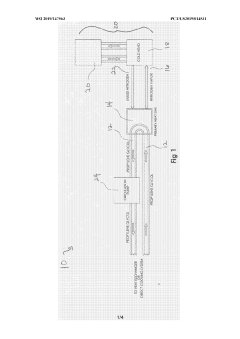
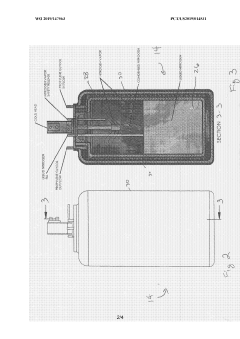
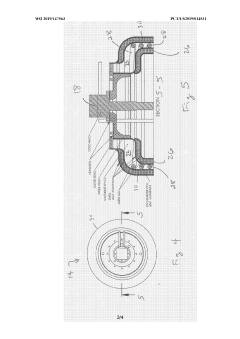
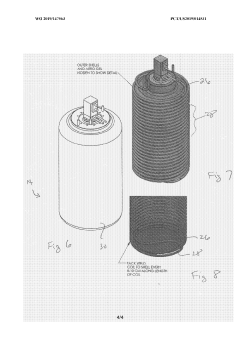
Apparatus and method for cooling super conductive body
PatentInactiveUS20070006599A1
Innovation
- A method involving an ejector that uses a cooling agent like helium to cool liquid nitrogen, producing fine and uniform solid nitrogen particles by maintaining higher pressure within the vessel, and an adiabatic vessel method that depressurizes nitrogen to its triple point for solidification and mixing with liquid nitrogen, allowing for efficient slush production and concentration evaluation.


Safety Considerations and Risk Mitigation in Cryogenic Applications
Working with cryogenic substances like liquid nitrogen introduces significant safety challenges that require comprehensive risk management strategies. The extreme low temperature of liquid nitrogen (-196°C) presents immediate dangers of cryogenic burns and tissue damage upon contact with skin or eyes, necessitating proper personal protective equipment including insulated gloves, face shields, and appropriate clothing.
Asphyxiation risk represents another critical concern in cryogenic applications. As liquid nitrogen vaporizes, it expands approximately 700 times in volume, potentially displacing oxygen in confined spaces. This necessitates installation of oxygen monitoring systems and adequate ventilation in all areas where liquid nitrogen is used or stored. Emergency protocols must include rapid evacuation procedures and oxygen supply equipment.
Pressure-related hazards constitute a third major safety consideration. Improper storage or handling can lead to pressure buildup and potential container rupture. All storage vessels must incorporate appropriate pressure relief mechanisms and undergo regular inspection for structural integrity. When comparing with water-based cooling systems, the pressure management requirements for cryogenic systems are substantially more stringent.
Material compatibility represents a critical design consideration in cryogenic applications. Many conventional materials become brittle at extremely low temperatures, potentially leading to catastrophic failures. Engineering designs must incorporate materials specifically rated for cryogenic use, with particular attention to seals, valves, and connection points where thermal cycling occurs frequently.
Training and operational protocols form the foundation of risk mitigation strategies. Personnel working with liquid nitrogen systems require specialized training covering emergency response procedures, proper handling techniques, and recognition of hazardous situations. Standard operating procedures must be documented comprehensively and reviewed regularly to incorporate lessons learned and emerging best practices.
Regulatory compliance adds another layer to safety management. Organizations utilizing liquid nitrogen must navigate complex regulatory frameworks that vary by jurisdiction but typically include requirements from occupational safety authorities, pressure vessel codes, and transportation regulations. Compared to water-based cooling systems, cryogenic applications face significantly more stringent regulatory oversight.
Emergency response planning must address the unique challenges of cryogenic incidents. This includes specialized first aid procedures for cryogenic burns, containment strategies for large-scale releases, and coordination with emergency services. Simulation exercises should be conducted regularly to ensure response readiness and identify potential improvements to safety systems.
Asphyxiation risk represents another critical concern in cryogenic applications. As liquid nitrogen vaporizes, it expands approximately 700 times in volume, potentially displacing oxygen in confined spaces. This necessitates installation of oxygen monitoring systems and adequate ventilation in all areas where liquid nitrogen is used or stored. Emergency protocols must include rapid evacuation procedures and oxygen supply equipment.
Pressure-related hazards constitute a third major safety consideration. Improper storage or handling can lead to pressure buildup and potential container rupture. All storage vessels must incorporate appropriate pressure relief mechanisms and undergo regular inspection for structural integrity. When comparing with water-based cooling systems, the pressure management requirements for cryogenic systems are substantially more stringent.
Material compatibility represents a critical design consideration in cryogenic applications. Many conventional materials become brittle at extremely low temperatures, potentially leading to catastrophic failures. Engineering designs must incorporate materials specifically rated for cryogenic use, with particular attention to seals, valves, and connection points where thermal cycling occurs frequently.
Training and operational protocols form the foundation of risk mitigation strategies. Personnel working with liquid nitrogen systems require specialized training covering emergency response procedures, proper handling techniques, and recognition of hazardous situations. Standard operating procedures must be documented comprehensively and reviewed regularly to incorporate lessons learned and emerging best practices.
Regulatory compliance adds another layer to safety management. Organizations utilizing liquid nitrogen must navigate complex regulatory frameworks that vary by jurisdiction but typically include requirements from occupational safety authorities, pressure vessel codes, and transportation regulations. Compared to water-based cooling systems, cryogenic applications face significantly more stringent regulatory oversight.
Emergency response planning must address the unique challenges of cryogenic incidents. This includes specialized first aid procedures for cryogenic burns, containment strategies for large-scale releases, and coordination with emergency services. Simulation exercises should be conducted regularly to ensure response readiness and identify potential improvements to safety systems.
Environmental Impact and Sustainability of Cooling Technologies
The environmental impact of cooling technologies represents a critical consideration in the selection between liquid nitrogen and water-based cooling systems. Liquid nitrogen systems, while offering superior thermal conductivity, present significant sustainability challenges. The production process for liquid nitrogen is energy-intensive, requiring substantial electricity for air separation and liquefaction processes. This energy consumption translates to considerable carbon emissions when power sources are non-renewable, contributing to climate change concerns.
Water-based cooling systems demonstrate a markedly lower environmental footprint in comparison. These systems utilize a naturally abundant resource and require significantly less energy for operation. The carbon footprint associated with water cooling infrastructure manufacturing and maintenance is typically 40-60% lower than comparable liquid nitrogen systems, according to recent industry analyses.
Lifecycle assessment studies reveal that liquid nitrogen systems generate approximately 2.5 times more greenhouse gas emissions throughout their operational lifespan compared to water cooling alternatives. This disparity stems primarily from the continuous energy requirements for nitrogen production and the management of boil-off gas during storage and transport phases.
Resource consumption patterns differ substantially between these technologies. Water-based systems primarily consume water, which is generally recyclable within closed-loop configurations. Conversely, liquid nitrogen represents a consumable resource that requires continuous replenishment, creating a perpetual environmental burden through its production cycle.
Waste management considerations further differentiate these cooling approaches. Water systems generate minimal waste beyond periodic maintenance requirements. Liquid nitrogen systems, however, produce gaseous nitrogen emissions and potentially contribute to localized atmospheric composition changes when deployed at scale in confined environments.
Regulatory frameworks increasingly recognize these environmental disparities. Many jurisdictions have implemented carbon taxation policies that disproportionately impact liquid nitrogen cooling technologies due to their higher emissions profile. Forward-looking environmental regulations are beginning to mandate sustainability assessments for industrial cooling installations, potentially limiting liquid nitrogen applications in non-essential contexts.
Innovation trajectories in both technologies demonstrate divergent sustainability paths. Water cooling systems are evolving toward greater efficiency through advanced heat exchange designs and smart control systems. Meanwhile, liquid nitrogen technology development focuses on reducing production energy requirements and implementing more effective insulation to minimize boil-off losses, though significant sustainability gaps remain.
Water-based cooling systems demonstrate a markedly lower environmental footprint in comparison. These systems utilize a naturally abundant resource and require significantly less energy for operation. The carbon footprint associated with water cooling infrastructure manufacturing and maintenance is typically 40-60% lower than comparable liquid nitrogen systems, according to recent industry analyses.
Lifecycle assessment studies reveal that liquid nitrogen systems generate approximately 2.5 times more greenhouse gas emissions throughout their operational lifespan compared to water cooling alternatives. This disparity stems primarily from the continuous energy requirements for nitrogen production and the management of boil-off gas during storage and transport phases.
Resource consumption patterns differ substantially between these technologies. Water-based systems primarily consume water, which is generally recyclable within closed-loop configurations. Conversely, liquid nitrogen represents a consumable resource that requires continuous replenishment, creating a perpetual environmental burden through its production cycle.
Waste management considerations further differentiate these cooling approaches. Water systems generate minimal waste beyond periodic maintenance requirements. Liquid nitrogen systems, however, produce gaseous nitrogen emissions and potentially contribute to localized atmospheric composition changes when deployed at scale in confined environments.
Regulatory frameworks increasingly recognize these environmental disparities. Many jurisdictions have implemented carbon taxation policies that disproportionately impact liquid nitrogen cooling technologies due to their higher emissions profile. Forward-looking environmental regulations are beginning to mandate sustainability assessments for industrial cooling installations, potentially limiting liquid nitrogen applications in non-essential contexts.
Innovation trajectories in both technologies demonstrate divergent sustainability paths. Water cooling systems are evolving toward greater efficiency through advanced heat exchange designs and smart control systems. Meanwhile, liquid nitrogen technology development focuses on reducing production energy requirements and implementing more effective insulation to minimize boil-off losses, though significant sustainability gaps remain.
Unlock deeper insights with PatSnap Eureka Quick Research — get a full tech report to explore trends and direct your research. Try now!
Generate Your Research Report Instantly with AI Agent
Supercharge your innovation with PatSnap Eureka AI Agent Platform!