

Configure Microcontroller Oscillator for Optimal Performance
FEB 25, 20269 MIN READ
Generate Your Research Report Instantly with AI Agent
PatSnap Eureka helps you evaluate technical feasibility & market potential.
Microcontroller Oscillator Background and Performance Goals
Microcontroller oscillators have evolved significantly since the early days of embedded systems, transitioning from simple RC circuits to sophisticated crystal-based timing solutions and modern silicon oscillators. The fundamental role of oscillators in microcontroller systems extends beyond basic clock generation to encompass critical functions including CPU instruction timing, peripheral synchronization, communication protocol timing, and power management coordination.
The historical development trajectory shows a clear progression from external crystal oscillators requiring additional components to integrated solutions that minimize board space and component count. Early microcontrollers relied heavily on external quartz crystals with load capacitors, while contemporary designs increasingly incorporate internal RC oscillators, phase-locked loops, and digitally controlled oscillators that offer greater flexibility and reduced system complexity.
Performance optimization in microcontroller oscillator configuration has become increasingly critical as embedded applications demand higher precision, lower power consumption, and enhanced reliability across diverse operating conditions. The challenge lies in balancing multiple competing requirements including frequency accuracy, temperature stability, startup time, power consumption, and electromagnetic interference characteristics.
Current industry trends indicate a shift toward adaptive oscillator management, where microcontrollers dynamically adjust oscillator parameters based on real-time operating conditions and application requirements. This evolution reflects the growing sophistication of embedded systems and the need for more intelligent power management strategies in battery-powered and energy-harvesting applications.
The primary technical objectives for optimal oscillator configuration encompass achieving target frequency accuracy within specified tolerances, typically ranging from ±1% for general applications to ±50ppm for precision timing applications. Temperature stability represents another crucial goal, requiring oscillator performance to remain consistent across industrial temperature ranges from -40°C to +85°C or extended ranges up to +125°C for automotive applications.
Power efficiency optimization targets include minimizing oscillator current consumption during active operation and achieving rapid startup from low-power modes to support aggressive duty cycling strategies. Additionally, electromagnetic compatibility goals focus on reducing oscillator-generated noise and improving immunity to external interference sources.
Modern performance benchmarks also emphasize jitter minimization for applications requiring precise timing synchronization, particularly in communication interfaces and analog-to-digital conversion processes where timing accuracy directly impacts signal integrity and measurement precision.
The historical development trajectory shows a clear progression from external crystal oscillators requiring additional components to integrated solutions that minimize board space and component count. Early microcontrollers relied heavily on external quartz crystals with load capacitors, while contemporary designs increasingly incorporate internal RC oscillators, phase-locked loops, and digitally controlled oscillators that offer greater flexibility and reduced system complexity.
Performance optimization in microcontroller oscillator configuration has become increasingly critical as embedded applications demand higher precision, lower power consumption, and enhanced reliability across diverse operating conditions. The challenge lies in balancing multiple competing requirements including frequency accuracy, temperature stability, startup time, power consumption, and electromagnetic interference characteristics.
Current industry trends indicate a shift toward adaptive oscillator management, where microcontrollers dynamically adjust oscillator parameters based on real-time operating conditions and application requirements. This evolution reflects the growing sophistication of embedded systems and the need for more intelligent power management strategies in battery-powered and energy-harvesting applications.
The primary technical objectives for optimal oscillator configuration encompass achieving target frequency accuracy within specified tolerances, typically ranging from ±1% for general applications to ±50ppm for precision timing applications. Temperature stability represents another crucial goal, requiring oscillator performance to remain consistent across industrial temperature ranges from -40°C to +85°C or extended ranges up to +125°C for automotive applications.
Power efficiency optimization targets include minimizing oscillator current consumption during active operation and achieving rapid startup from low-power modes to support aggressive duty cycling strategies. Additionally, electromagnetic compatibility goals focus on reducing oscillator-generated noise and improving immunity to external interference sources.
Modern performance benchmarks also emphasize jitter minimization for applications requiring precise timing synchronization, particularly in communication interfaces and analog-to-digital conversion processes where timing accuracy directly impacts signal integrity and measurement precision.
Market Demand for High-Performance MCU Timing Solutions
The global microcontroller market is experiencing unprecedented growth driven by the proliferation of Internet of Things devices, automotive electronics, and industrial automation systems. This expansion has created substantial demand for high-performance MCU timing solutions that can deliver precise oscillator configurations across diverse operating conditions. Modern applications require microcontrollers capable of maintaining timing accuracy while operating in harsh environments, extended temperature ranges, and power-constrained scenarios.
Automotive electronics represents one of the most demanding segments for high-performance MCU timing solutions. Advanced driver assistance systems, engine control units, and infotainment systems require microcontrollers with oscillators that maintain sub-microsecond timing precision across temperature variations from negative forty to positive one hundred twenty-five degrees Celsius. The automotive industry's transition toward electric vehicles and autonomous driving technologies further amplifies the need for reliable timing solutions that can synchronize multiple sensor inputs and control systems simultaneously.
Industrial automation and Industry 4.0 initiatives are driving significant demand for MCUs with optimized oscillator performance. Manufacturing equipment, robotics, and process control systems require precise timing coordination to ensure operational efficiency and safety. These applications often demand microcontrollers capable of maintaining timing accuracy over extended operational periods while minimizing power consumption and electromagnetic interference.
The consumer electronics sector continues to fuel market growth through smart home devices, wearable technology, and portable electronics. These applications require MCUs with flexible oscillator configurations that can balance performance requirements with battery life constraints. The increasing complexity of consumer devices necessitates timing solutions that can support multiple communication protocols while maintaining synchronization across various subsystems.
Emerging applications in edge computing and artificial intelligence are creating new market opportunities for high-performance MCU timing solutions. These applications require microcontrollers with oscillators capable of supporting high-speed data processing while maintaining timing coherence across distributed computing nodes. The growing adoption of machine learning algorithms at the edge demands precise timing coordination between sensors, processors, and communication interfaces.
Market analysis indicates strong growth potential across all major geographic regions, with particular emphasis on Asia-Pacific markets driven by manufacturing expansion and technology adoption. The increasing complexity of electronic systems and the demand for higher performance specifications continue to drive innovation in MCU oscillator design and configuration methodologies.
Automotive electronics represents one of the most demanding segments for high-performance MCU timing solutions. Advanced driver assistance systems, engine control units, and infotainment systems require microcontrollers with oscillators that maintain sub-microsecond timing precision across temperature variations from negative forty to positive one hundred twenty-five degrees Celsius. The automotive industry's transition toward electric vehicles and autonomous driving technologies further amplifies the need for reliable timing solutions that can synchronize multiple sensor inputs and control systems simultaneously.
Industrial automation and Industry 4.0 initiatives are driving significant demand for MCUs with optimized oscillator performance. Manufacturing equipment, robotics, and process control systems require precise timing coordination to ensure operational efficiency and safety. These applications often demand microcontrollers capable of maintaining timing accuracy over extended operational periods while minimizing power consumption and electromagnetic interference.
The consumer electronics sector continues to fuel market growth through smart home devices, wearable technology, and portable electronics. These applications require MCUs with flexible oscillator configurations that can balance performance requirements with battery life constraints. The increasing complexity of consumer devices necessitates timing solutions that can support multiple communication protocols while maintaining synchronization across various subsystems.
Emerging applications in edge computing and artificial intelligence are creating new market opportunities for high-performance MCU timing solutions. These applications require microcontrollers with oscillators capable of supporting high-speed data processing while maintaining timing coherence across distributed computing nodes. The growing adoption of machine learning algorithms at the edge demands precise timing coordination between sensors, processors, and communication interfaces.
Market analysis indicates strong growth potential across all major geographic regions, with particular emphasis on Asia-Pacific markets driven by manufacturing expansion and technology adoption. The increasing complexity of electronic systems and the demand for higher performance specifications continue to drive innovation in MCU oscillator design and configuration methodologies.
Current Oscillator Configuration Challenges and Limitations
Microcontroller oscillator configuration faces significant challenges in achieving optimal performance across diverse application scenarios. Traditional configuration approaches often rely on generic settings that fail to account for specific operational requirements, environmental conditions, and power constraints. This one-size-fits-all methodology frequently results in suboptimal performance, increased power consumption, and reduced system reliability.
Temperature stability represents one of the most critical limitations in current oscillator configurations. Crystal oscillators exhibit frequency drift across temperature ranges, with typical variations reaching 20-100 ppm over industrial temperature ranges. This drift directly impacts timing-critical applications such as communication protocols, real-time control systems, and precision measurement devices. Existing compensation mechanisms often prove inadequate or consume excessive power resources.
Power consumption optimization remains a persistent challenge, particularly in battery-powered and energy-harvesting applications. Current configuration methods struggle to balance frequency accuracy with power efficiency. High-frequency oscillators provide better performance but consume significantly more power, while low-power alternatives sacrifice timing precision. The lack of dynamic configuration capabilities prevents systems from adapting oscillator settings based on real-time operational demands.
Load capacitance matching presents another significant limitation in contemporary oscillator configurations. Improper load capacitance selection leads to frequency errors, startup reliability issues, and increased aging effects. PCB layout variations, component tolerances, and parasitic capacitances further complicate accurate load matching, making it difficult to achieve consistent performance across production units.
Electromagnetic interference susceptibility poses increasing challenges as electronic systems become more densely packed and operate at higher frequencies. Current oscillator configurations often lack adequate protection against EMI, resulting in phase noise degradation, frequency pulling, and intermittent timing errors. Traditional shielding approaches add cost and complexity while providing limited effectiveness against modern interference sources.
Aging and long-term stability issues continue to plague oscillator configurations, particularly in applications requiring extended operational lifespans. Crystal aging rates vary significantly based on manufacturing processes, operating conditions, and stress factors. Current configuration methodologies provide insufficient mechanisms for predicting or compensating for long-term frequency drift, leading to system performance degradation over time.
Manufacturing variability and component tolerances create additional configuration challenges. Crystal parameters, load capacitances, and oscillator circuit characteristics exhibit variations that impact overall system performance. Existing configuration approaches often require extensive characterization and calibration processes, increasing production costs and time-to-market pressures while still failing to guarantee optimal performance across all units.
Temperature stability represents one of the most critical limitations in current oscillator configurations. Crystal oscillators exhibit frequency drift across temperature ranges, with typical variations reaching 20-100 ppm over industrial temperature ranges. This drift directly impacts timing-critical applications such as communication protocols, real-time control systems, and precision measurement devices. Existing compensation mechanisms often prove inadequate or consume excessive power resources.
Power consumption optimization remains a persistent challenge, particularly in battery-powered and energy-harvesting applications. Current configuration methods struggle to balance frequency accuracy with power efficiency. High-frequency oscillators provide better performance but consume significantly more power, while low-power alternatives sacrifice timing precision. The lack of dynamic configuration capabilities prevents systems from adapting oscillator settings based on real-time operational demands.
Load capacitance matching presents another significant limitation in contemporary oscillator configurations. Improper load capacitance selection leads to frequency errors, startup reliability issues, and increased aging effects. PCB layout variations, component tolerances, and parasitic capacitances further complicate accurate load matching, making it difficult to achieve consistent performance across production units.
Electromagnetic interference susceptibility poses increasing challenges as electronic systems become more densely packed and operate at higher frequencies. Current oscillator configurations often lack adequate protection against EMI, resulting in phase noise degradation, frequency pulling, and intermittent timing errors. Traditional shielding approaches add cost and complexity while providing limited effectiveness against modern interference sources.
Aging and long-term stability issues continue to plague oscillator configurations, particularly in applications requiring extended operational lifespans. Crystal aging rates vary significantly based on manufacturing processes, operating conditions, and stress factors. Current configuration methodologies provide insufficient mechanisms for predicting or compensating for long-term frequency drift, leading to system performance degradation over time.
Manufacturing variability and component tolerances create additional configuration challenges. Crystal parameters, load capacitances, and oscillator circuit characteristics exhibit variations that impact overall system performance. Existing configuration approaches often require extensive characterization and calibration processes, increasing production costs and time-to-market pressures while still failing to guarantee optimal performance across all units.
Existing MCU Oscillator Configuration Solutions
01 Oscillator circuit design and configuration for microcontrollers
Various oscillator circuit designs and configurations can be implemented to optimize microcontroller performance. These designs focus on the arrangement of oscillator components, feedback mechanisms, and coupling methods to achieve stable and accurate clock signals. The circuits may incorporate specific topologies that enhance signal integrity and reduce noise interference, ensuring reliable operation across different operating conditions.- Oscillator circuit design and configuration for microcontrollers: Various oscillator circuit designs and configurations can be implemented to optimize microcontroller performance. These designs focus on circuit topology, component selection, and connection methods to achieve stable oscillation. The configurations may include different types of oscillators such as crystal oscillators, RC oscillators, or LC oscillators, each offering specific advantages in terms of accuracy, power consumption, and cost. Proper circuit design ensures reliable clock signal generation for microcontroller operation.
- Oscillator frequency stability and accuracy control: Maintaining frequency stability and accuracy is crucial for microcontroller oscillator performance. Techniques include temperature compensation, voltage regulation, and calibration methods to minimize frequency drift and variations. Advanced control mechanisms can automatically adjust oscillator parameters to maintain consistent frequency output across different operating conditions. These methods ensure that the microcontroller maintains precise timing for critical applications requiring high accuracy.
- Power consumption optimization in oscillator circuits: Reducing power consumption in oscillator circuits is essential for battery-powered and energy-efficient microcontroller applications. Techniques include implementing low-power oscillator modes, dynamic frequency scaling, and selective oscillator activation. Circuit designs may incorporate power management features that allow the oscillator to operate in different power states depending on system requirements. These optimizations extend battery life and reduce overall system power consumption while maintaining adequate performance.
- Oscillator startup and settling time improvement: Fast and reliable oscillator startup is important for microcontroller responsiveness and system initialization. Methods to improve startup performance include optimized biasing circuits, startup acceleration techniques, and settling time reduction mechanisms. These approaches ensure that the oscillator reaches stable operation quickly after power-up or wake-up from low-power modes. Reduced startup time contributes to faster system response and lower overall power consumption in applications with frequent sleep-wake cycles.
- Oscillator testing and performance monitoring: Testing and monitoring oscillator performance ensures reliable microcontroller operation throughout its lifecycle. Techniques include built-in self-test circuits, frequency monitoring systems, and diagnostic capabilities that detect oscillator failures or degradation. Performance monitoring can provide real-time feedback on oscillator characteristics such as frequency accuracy, amplitude, and stability. These features enable early detection of potential issues and support quality assurance in manufacturing and field operation.
02 Oscillator frequency stability and accuracy control
Maintaining frequency stability and accuracy is critical for microcontroller oscillator performance. Techniques include temperature compensation, voltage regulation, and calibration methods to minimize frequency drift and variations. Advanced control mechanisms can dynamically adjust oscillator parameters to maintain precise timing under varying environmental conditions, ensuring consistent microcontroller operation.Expand Specific Solutions03 Power consumption optimization in oscillator circuits
Reducing power consumption in oscillator circuits is essential for energy-efficient microcontroller designs. Methods include implementing low-power oscillator modes, duty cycling, and adaptive power management strategies. These approaches allow the oscillator to operate efficiently during active periods while minimizing energy usage during idle or sleep modes, extending battery life in portable applications.Expand Specific Solutions04 Oscillator startup and settling time improvement
Fast and reliable oscillator startup is crucial for microcontroller initialization and wake-up operations. Techniques focus on reducing settling time through optimized biasing, enhanced drive strength, and startup acceleration circuits. These improvements ensure that the oscillator reaches stable operation quickly, minimizing delays in system initialization and improving overall responsiveness.Expand Specific Solutions05 External crystal and resonator integration methods
Integration of external crystals and resonators with microcontroller oscillator circuits requires careful consideration of matching networks, load capacitance, and drive levels. Proper integration techniques ensure optimal oscillation conditions, minimize spurious modes, and achieve desired frequency accuracy. Design considerations include PCB layout, component selection, and impedance matching to maximize oscillator performance and reliability.Expand Specific Solutions
Key Players in Microcontroller and Oscillator Industry
The microcontroller oscillator configuration market represents a mature technology sector within the broader semiconductor industry, currently valued at several billion dollars globally and experiencing steady growth driven by IoT expansion and automotive electronics demand. The competitive landscape is dominated by established semiconductor giants including Texas Instruments, STMicroelectronics, NXP Semiconductors, Microchip Technology, and Renesas Electronics, who collectively control significant market share through comprehensive microcontroller portfolios. Technology maturity varies across segments, with traditional crystal oscillator solutions being highly mature while newer silicon-based and MEMS oscillators represent emerging growth areas. Asian players like Huawei Technologies, Samsung Electronics, and MediaTek are increasingly competitive, particularly in consumer and mobile applications, while European companies such as Infineon Technologies and ams-OSRAM maintain strong positions in automotive and industrial segments, creating a globally distributed but technologically concentrated competitive environment.
STMicroelectronics A/S
Technical Solution: STMicroelectronics offers sophisticated oscillator management through their STM32 microcontroller series, implementing advanced Reset and Clock Control (RCC) units that support frequencies up to 480MHz with integrated fractional PLLs[2]. Their High-Speed External (HSE) and Low-Speed External (LSE) oscillator configurations provide crystal oscillator support with automatic gain control and amplitude regulation for stable operation[4]. The company's Clock Security System (CSS) monitors oscillator health and automatically switches to backup clocks during failures, ensuring system reliability[6]. Their STM32CubeMX configuration tool provides graphical oscillator setup with real-time parameter validation and power consumption estimation[8].
Strengths: Exceptional high-frequency performance capabilities and robust fault-tolerance mechanisms with comprehensive development tools. Weaknesses: Steeper learning curve due to complex clock tree architecture and higher power consumption at maximum frequencies.
Texas Instruments Incorporated
Technical Solution: Texas Instruments delivers optimized oscillator solutions across their MSP430 and C2000 microcontroller portfolios, featuring ultra-low-power internal digitally controlled oscillators (DCO) that can achieve frequency accuracy within ±0.5% without external components[1]. Their Unified Clock System (UCS) enables seamless switching between multiple clock sources including XT1, XT2, and internal references with automatic frequency locked loop (FLL) stabilization[3]. The company's oscillator fault detection mechanisms provide automatic failsafe operation with configurable timeout periods and interrupt generation capabilities[5]. TI's Code Composer Studio includes specialized oscillator calibration routines and frequency measurement tools for precision timing applications[7].
Strengths: Outstanding ultra-low-power oscillator technology with excellent frequency accuracy and comprehensive fault detection. Weaknesses: Limited high-frequency capabilities compared to competitors and fewer advanced PLL options for complex applications.
Core Innovations in Oscillator Performance Optimization
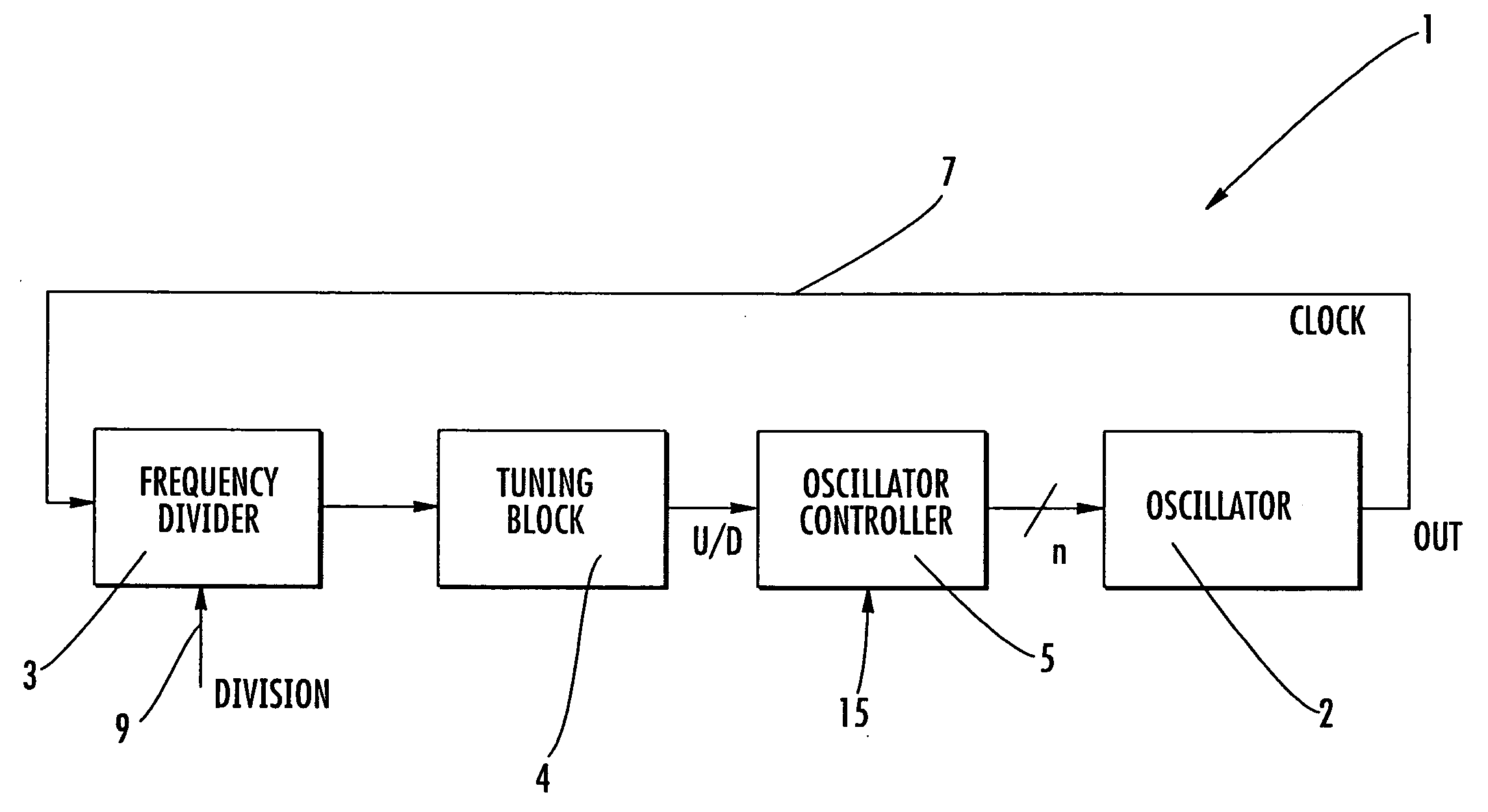
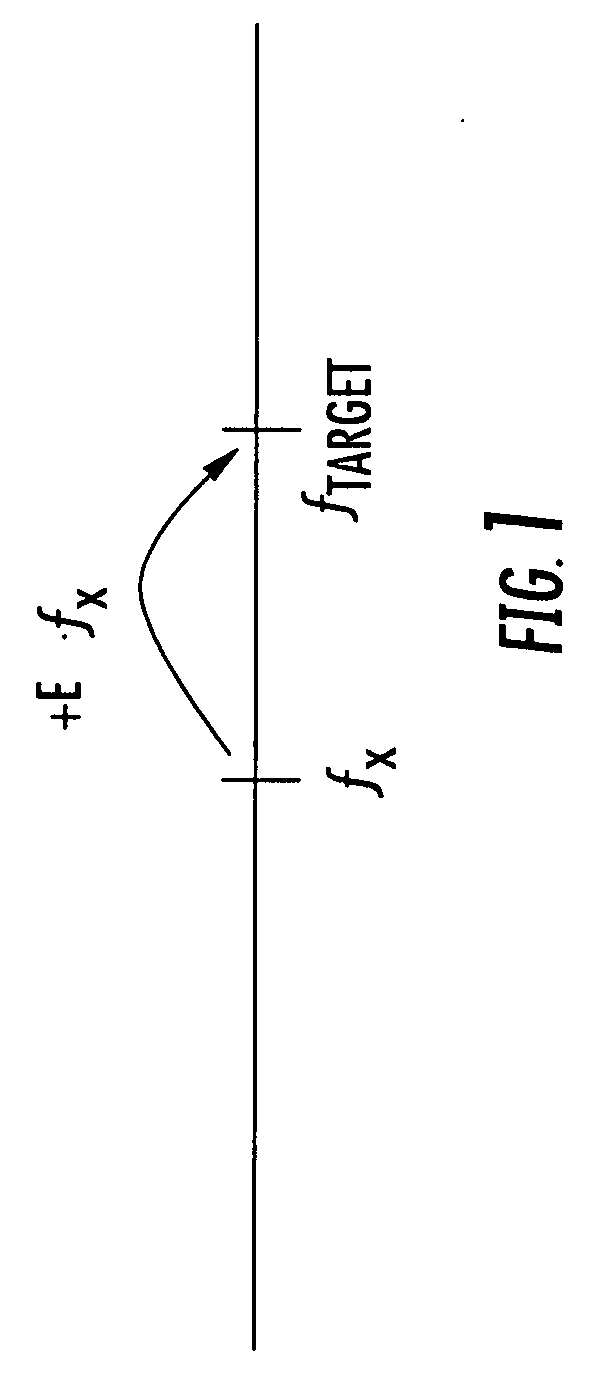
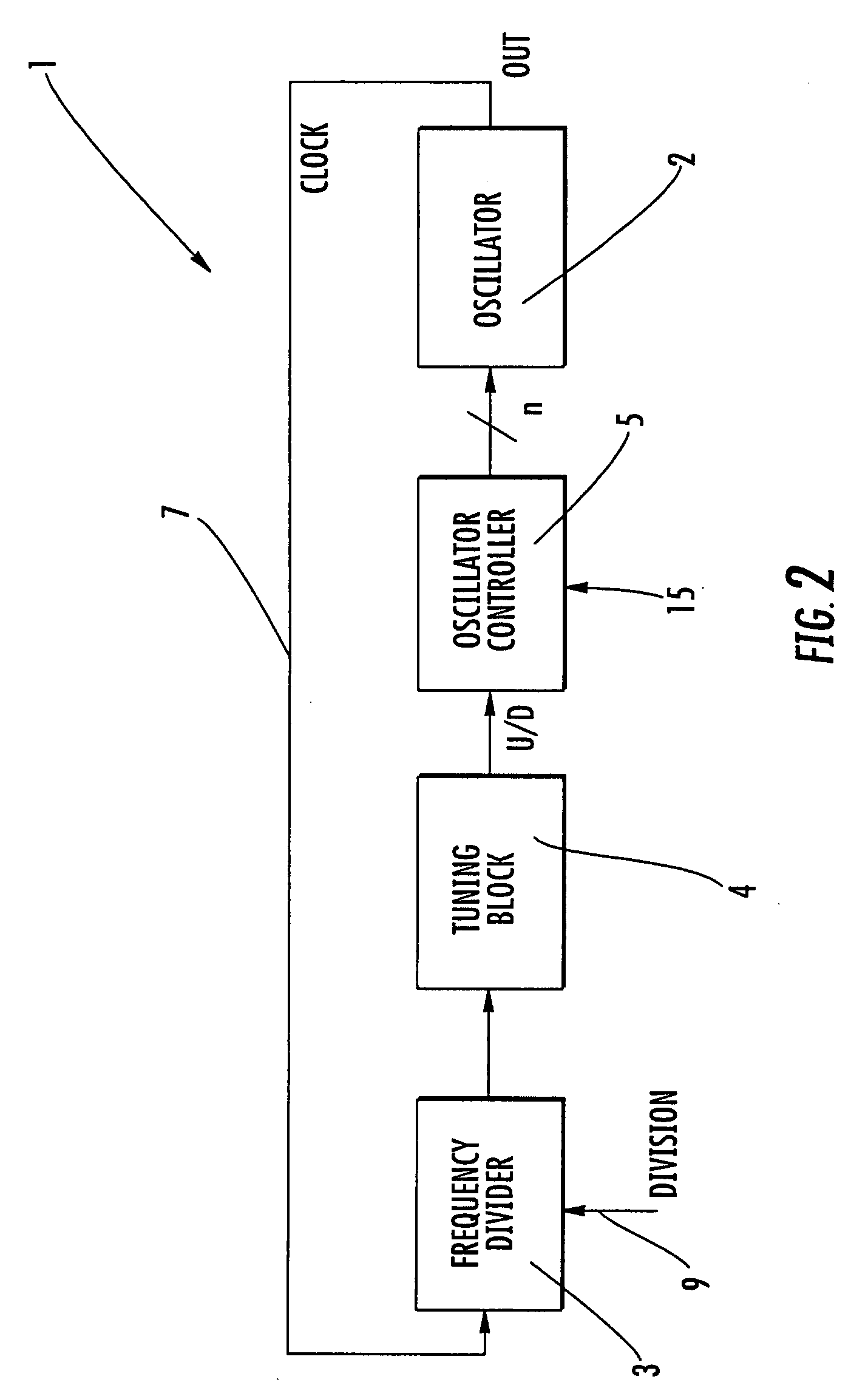
Method for dynamically tuning the clock frequency of an oscillator and corresponding oscillating system
PatentActiveUS20080042720A1
Innovation
- An oscillator system with a frequency divider, tuning block, and control block that dynamically adjusts the clock frequency by converting the frequency into an electric magnitude signal for comparison with a reference, using an Up/Down counter to regulate the oscillator inputs, thereby minimizing errors from process, temperature, and voltage variations.

Communications device with adaptive clock frequency
PatentInactiveUS20120093268A1
Innovation
- A communications device with a tuneable on-chip RC oscillator circuit that adjusts its frequency based on error rates in received messages, iteratively refining the frequency to maintain stability within tolerance ranges without temperature measurement, using digital control of resistor or capacitor arrangements.


Power Efficiency Standards for MCU Oscillators
Power efficiency standards for microcontroller oscillators have become increasingly critical as embedded systems demand longer battery life and reduced energy consumption. The IEEE 802.11 standard and IEC 62430 provide foundational guidelines for power management in electronic devices, while emerging standards like JEDEC JESD79-5 specifically address low-power oscillator requirements in battery-operated applications.
Current industry benchmarks establish that high-performance MCU oscillators should achieve power consumption below 100 microamperes during active operation and less than 1 microampere in standby mode. These standards are particularly stringent for IoT devices and wearable electronics, where power budgets are severely constrained. The Energy Star program has extended its certification criteria to include embedded systems, requiring oscillators to demonstrate at least 40% power reduction compared to conventional designs.
International standards organizations have developed comprehensive testing methodologies to evaluate oscillator power efficiency. The IEC 60747-14-4 standard defines measurement protocols for crystal oscillator power consumption across different operating frequencies and temperature ranges. These protocols ensure consistent evaluation criteria across manufacturers and enable fair comparison of competing technologies.
Regulatory compliance frameworks in major markets impose additional constraints on oscillator power efficiency. The European Union's ErP Directive 2009/125/EC mandates specific power consumption limits for electronic components in consumer devices. Similarly, the US Department of Energy's appliance standards indirectly influence MCU oscillator specifications through system-level efficiency requirements.
Emerging standards focus on dynamic power scaling capabilities, requiring oscillators to adjust their power consumption based on real-time processing demands. The ARM Power State Coordination Interface specification defines standardized protocols for coordinating power states between oscillators and processing cores. These standards enable sophisticated power management strategies that can reduce overall system power consumption by up to 60% in typical applications.
Future standard developments anticipate integration with artificial intelligence-driven power management systems, where oscillators will need to support predictive power scaling based on application workload patterns and user behavior analysis.
Current industry benchmarks establish that high-performance MCU oscillators should achieve power consumption below 100 microamperes during active operation and less than 1 microampere in standby mode. These standards are particularly stringent for IoT devices and wearable electronics, where power budgets are severely constrained. The Energy Star program has extended its certification criteria to include embedded systems, requiring oscillators to demonstrate at least 40% power reduction compared to conventional designs.
International standards organizations have developed comprehensive testing methodologies to evaluate oscillator power efficiency. The IEC 60747-14-4 standard defines measurement protocols for crystal oscillator power consumption across different operating frequencies and temperature ranges. These protocols ensure consistent evaluation criteria across manufacturers and enable fair comparison of competing technologies.
Regulatory compliance frameworks in major markets impose additional constraints on oscillator power efficiency. The European Union's ErP Directive 2009/125/EC mandates specific power consumption limits for electronic components in consumer devices. Similarly, the US Department of Energy's appliance standards indirectly influence MCU oscillator specifications through system-level efficiency requirements.
Emerging standards focus on dynamic power scaling capabilities, requiring oscillators to adjust their power consumption based on real-time processing demands. The ARM Power State Coordination Interface specification defines standardized protocols for coordinating power states between oscillators and processing cores. These standards enable sophisticated power management strategies that can reduce overall system power consumption by up to 60% in typical applications.
Future standard developments anticipate integration with artificial intelligence-driven power management systems, where oscillators will need to support predictive power scaling based on application workload patterns and user behavior analysis.
EMI Compliance in High-Frequency Oscillator Design
Electromagnetic interference compliance represents a critical design consideration when configuring microcontroller oscillators for high-frequency applications. As oscillator frequencies increase to meet performance demands, the potential for EMI generation grows exponentially, creating challenges that must be addressed through careful design methodology and regulatory adherence.
High-frequency oscillators inherently generate harmonic content that can interfere with sensitive electronic systems and violate electromagnetic compatibility standards such as FCC Part 15, CISPR 22, and EN 55022. The fundamental oscillation frequency, combined with its harmonics, can create interference patterns extending well beyond the intended operating frequency range. This phenomenon becomes particularly pronounced in crystal oscillators operating above 50 MHz, where harmonic energy can propagate through both conducted and radiated paths.
Circuit board layout plays a pivotal role in EMI mitigation for high-frequency oscillator designs. Ground plane integrity, trace routing, and component placement directly influence electromagnetic emissions. Proper grounding techniques, including the use of dedicated analog and digital ground planes, help contain high-frequency currents and reduce loop areas that act as unintentional antennas. Strategic placement of decoupling capacitors near oscillator pins provides local energy storage and reduces current spikes that contribute to EMI generation.
Spread spectrum clocking techniques offer an effective approach to EMI reduction without compromising oscillator performance. By introducing controlled frequency modulation to the oscillator output, the electromagnetic energy becomes distributed across a wider frequency spectrum rather than concentrated at discrete harmonic frequencies. This technique can achieve 10-20 dB reduction in peak emissions while maintaining timing accuracy requirements for most microcontroller applications.
Shielding and filtering strategies provide additional layers of EMI protection for high-frequency oscillator circuits. Localized shielding around oscillator components can contain near-field emissions, while series ferrite beads and parallel bypass capacitors create effective low-pass filters for conducted emissions. The selection of appropriate ferrite materials and capacitor values requires careful consideration of the oscillator's frequency characteristics and load requirements.
Compliance testing methodologies must be integrated into the design process to ensure regulatory adherence. Pre-compliance testing using near-field probes and spectrum analyzers enables early identification of potential EMI issues, allowing for design modifications before formal certification testing. Understanding the specific requirements of target markets and applications guides the selection of appropriate EMI mitigation strategies and helps optimize the balance between performance and compliance.
High-frequency oscillators inherently generate harmonic content that can interfere with sensitive electronic systems and violate electromagnetic compatibility standards such as FCC Part 15, CISPR 22, and EN 55022. The fundamental oscillation frequency, combined with its harmonics, can create interference patterns extending well beyond the intended operating frequency range. This phenomenon becomes particularly pronounced in crystal oscillators operating above 50 MHz, where harmonic energy can propagate through both conducted and radiated paths.
Circuit board layout plays a pivotal role in EMI mitigation for high-frequency oscillator designs. Ground plane integrity, trace routing, and component placement directly influence electromagnetic emissions. Proper grounding techniques, including the use of dedicated analog and digital ground planes, help contain high-frequency currents and reduce loop areas that act as unintentional antennas. Strategic placement of decoupling capacitors near oscillator pins provides local energy storage and reduces current spikes that contribute to EMI generation.
Spread spectrum clocking techniques offer an effective approach to EMI reduction without compromising oscillator performance. By introducing controlled frequency modulation to the oscillator output, the electromagnetic energy becomes distributed across a wider frequency spectrum rather than concentrated at discrete harmonic frequencies. This technique can achieve 10-20 dB reduction in peak emissions while maintaining timing accuracy requirements for most microcontroller applications.
Shielding and filtering strategies provide additional layers of EMI protection for high-frequency oscillator circuits. Localized shielding around oscillator components can contain near-field emissions, while series ferrite beads and parallel bypass capacitors create effective low-pass filters for conducted emissions. The selection of appropriate ferrite materials and capacitor values requires careful consideration of the oscillator's frequency characteristics and load requirements.
Compliance testing methodologies must be integrated into the design process to ensure regulatory adherence. Pre-compliance testing using near-field probes and spectrum analyzers enables early identification of potential EMI issues, allowing for design modifications before formal certification testing. Understanding the specific requirements of target markets and applications guides the selection of appropriate EMI mitigation strategies and helps optimize the balance between performance and compliance.
Unlock deeper insights with PatSnap Eureka Quick Research — get a full tech report to explore trends and direct your research. Try now!
Generate Your Research Report Instantly with AI Agent
Supercharge your innovation with PatSnap Eureka AI Agent Platform!