Configure Notch Filter Settings for Optimal Range
MAR 17, 20269 MIN READ
Generate Your Research Report Instantly with AI Agent
Patsnap Eureka helps you evaluate technical feasibility & market potential.
Notch Filter Technology Background and Optimization Goals
Notch filters represent a specialized category of electronic filters designed to attenuate or eliminate specific frequency components while preserving the integrity of surrounding frequency bands. These filters, also known as band-stop or band-reject filters, have evolved from simple passive LC circuits in the early 20th century to sophisticated digital signal processing implementations in modern applications. The fundamental principle involves creating a sharp null at a predetermined frequency, effectively "notching out" unwanted signals such as power line interference, harmonics, or specific noise components.
The historical development of notch filter technology traces back to analog implementations using resistor-inductor-capacitor networks, progressing through active analog designs incorporating operational amplifiers, and culminating in today's advanced digital filter architectures. This evolution has been driven by the increasing demand for precise frequency selectivity in applications ranging from audio processing and telecommunications to biomedical instrumentation and radar systems.
Contemporary notch filter applications face mounting challenges in achieving optimal performance across diverse operational scenarios. The primary technical objective centers on maximizing the filter's quality factor while maintaining stability across varying environmental conditions and signal characteristics. This involves balancing the depth of the notch, the sharpness of the frequency response, and the filter's ability to adapt to dynamic signal conditions without introducing unwanted artifacts or phase distortions.
The optimization goals for notch filter configurations encompass several critical parameters that directly impact system performance. Achieving optimal range requires precise calibration of the center frequency accuracy, typically demanding tolerances within 0.1% of the target frequency. The notch depth must be sufficient to provide adequate attenuation, often exceeding 40dB for effective interference suppression, while maintaining minimal impact on adjacent frequency components.
Bandwidth optimization represents another crucial objective, where the filter's selectivity must be tailored to the specific application requirements. Narrow bandwidth filters offer superior selectivity but may suffer from sensitivity to component variations and temperature drift. Conversely, wider bandwidth implementations provide greater stability but may compromise the precision of interference rejection.
Modern optimization strategies increasingly focus on adaptive filtering techniques that can dynamically adjust filter parameters based on real-time signal analysis. These approaches aim to maintain optimal performance across varying operational conditions, automatically compensating for component aging, temperature variations, and changing interference patterns. The integration of machine learning algorithms and predictive modeling techniques represents the frontier of notch filter optimization, promising enhanced performance and reduced manual calibration requirements.
The historical development of notch filter technology traces back to analog implementations using resistor-inductor-capacitor networks, progressing through active analog designs incorporating operational amplifiers, and culminating in today's advanced digital filter architectures. This evolution has been driven by the increasing demand for precise frequency selectivity in applications ranging from audio processing and telecommunications to biomedical instrumentation and radar systems.
Contemporary notch filter applications face mounting challenges in achieving optimal performance across diverse operational scenarios. The primary technical objective centers on maximizing the filter's quality factor while maintaining stability across varying environmental conditions and signal characteristics. This involves balancing the depth of the notch, the sharpness of the frequency response, and the filter's ability to adapt to dynamic signal conditions without introducing unwanted artifacts or phase distortions.
The optimization goals for notch filter configurations encompass several critical parameters that directly impact system performance. Achieving optimal range requires precise calibration of the center frequency accuracy, typically demanding tolerances within 0.1% of the target frequency. The notch depth must be sufficient to provide adequate attenuation, often exceeding 40dB for effective interference suppression, while maintaining minimal impact on adjacent frequency components.
Bandwidth optimization represents another crucial objective, where the filter's selectivity must be tailored to the specific application requirements. Narrow bandwidth filters offer superior selectivity but may suffer from sensitivity to component variations and temperature drift. Conversely, wider bandwidth implementations provide greater stability but may compromise the precision of interference rejection.
Modern optimization strategies increasingly focus on adaptive filtering techniques that can dynamically adjust filter parameters based on real-time signal analysis. These approaches aim to maintain optimal performance across varying operational conditions, automatically compensating for component aging, temperature variations, and changing interference patterns. The integration of machine learning algorithms and predictive modeling techniques represents the frontier of notch filter optimization, promising enhanced performance and reduced manual calibration requirements.
Market Demand for Advanced Notch Filter Solutions
The market demand for advanced notch filter solutions is experiencing significant growth driven by the increasing complexity of modern electronic systems and the proliferation of wireless communication technologies. Industries ranging from telecommunications to aerospace are seeking sophisticated filtering solutions that can effectively eliminate unwanted frequencies while maintaining signal integrity across optimal operational ranges.
Telecommunications infrastructure represents one of the largest demand drivers, as network operators require precise notch filtering to mitigate interference in densely populated frequency spectrums. The deployment of 5G networks has intensified this need, as these systems operate across multiple frequency bands simultaneously and require exceptional selectivity to prevent cross-channel interference. Base station equipment manufacturers are particularly focused on configurable notch filter solutions that can adapt to varying environmental conditions and regulatory requirements.
The aerospace and defense sector demonstrates substantial demand for high-performance notch filters capable of operating across extended frequency ranges. Military communication systems, radar applications, and electronic warfare equipment require filters with exceptional rejection characteristics and minimal insertion loss. These applications often demand custom-configured solutions that can maintain performance under extreme environmental conditions while providing precise frequency selectivity.
Consumer electronics markets are driving demand for miniaturized notch filter solutions that can be integrated into compact devices. Smartphone manufacturers, IoT device producers, and wearable technology companies require cost-effective filtering solutions that can handle multiple frequency bands while occupying minimal board space. The trend toward software-defined radio architectures has created additional demand for electronically tunable notch filters.
Industrial automation and measurement equipment sectors are increasingly adopting advanced notch filtering technologies to improve system reliability and measurement accuracy. Power electronics applications, motor drive systems, and precision instrumentation require specialized filtering solutions to eliminate power line harmonics and electromagnetic interference that can compromise system performance.
The medical device industry represents an emerging high-value market segment, where notch filters are essential for eliminating power line interference in sensitive diagnostic equipment. MRI systems, patient monitoring devices, and implantable medical devices require highly specialized filtering solutions with stringent safety and reliability requirements.
Market growth is further accelerated by the increasing adoption of electric vehicles and renewable energy systems, which generate complex electromagnetic environments requiring sophisticated filtering solutions. These applications demand robust notch filter configurations that can maintain performance across wide temperature ranges and varying load conditions.
Telecommunications infrastructure represents one of the largest demand drivers, as network operators require precise notch filtering to mitigate interference in densely populated frequency spectrums. The deployment of 5G networks has intensified this need, as these systems operate across multiple frequency bands simultaneously and require exceptional selectivity to prevent cross-channel interference. Base station equipment manufacturers are particularly focused on configurable notch filter solutions that can adapt to varying environmental conditions and regulatory requirements.
The aerospace and defense sector demonstrates substantial demand for high-performance notch filters capable of operating across extended frequency ranges. Military communication systems, radar applications, and electronic warfare equipment require filters with exceptional rejection characteristics and minimal insertion loss. These applications often demand custom-configured solutions that can maintain performance under extreme environmental conditions while providing precise frequency selectivity.
Consumer electronics markets are driving demand for miniaturized notch filter solutions that can be integrated into compact devices. Smartphone manufacturers, IoT device producers, and wearable technology companies require cost-effective filtering solutions that can handle multiple frequency bands while occupying minimal board space. The trend toward software-defined radio architectures has created additional demand for electronically tunable notch filters.
Industrial automation and measurement equipment sectors are increasingly adopting advanced notch filtering technologies to improve system reliability and measurement accuracy. Power electronics applications, motor drive systems, and precision instrumentation require specialized filtering solutions to eliminate power line harmonics and electromagnetic interference that can compromise system performance.
The medical device industry represents an emerging high-value market segment, where notch filters are essential for eliminating power line interference in sensitive diagnostic equipment. MRI systems, patient monitoring devices, and implantable medical devices require highly specialized filtering solutions with stringent safety and reliability requirements.
Market growth is further accelerated by the increasing adoption of electric vehicles and renewable energy systems, which generate complex electromagnetic environments requiring sophisticated filtering solutions. These applications demand robust notch filter configurations that can maintain performance across wide temperature ranges and varying load conditions.
Current State and Challenges in Notch Filter Configuration
Notch filter configuration for optimal range performance represents a critical challenge in modern electronic systems, particularly in applications requiring precise frequency rejection while maintaining signal integrity across desired frequency bands. Current implementations face significant complexity in balancing filter selectivity, bandwidth requirements, and dynamic range optimization.
The primary challenge lies in achieving adequate rejection depth at target frequencies without compromising adjacent frequency response. Traditional notch filter designs often exhibit insufficient rejection ratios, typically achieving only 20-40 dB attenuation, which proves inadequate for applications requiring 60 dB or higher rejection levels. This limitation stems from component tolerances, parasitic effects, and inherent circuit topology constraints.
Bandwidth control presents another substantial obstacle in contemporary notch filter implementations. Achieving narrow notch widths while maintaining stable performance across temperature and process variations requires sophisticated compensation mechanisms. Current analog implementations struggle with Q-factor stability, often experiencing 15-25% variation across operating conditions, significantly impacting filter performance predictability.
Digital notch filter configurations face distinct challenges related to computational complexity and real-time processing requirements. Adaptive algorithms for automatic notch frequency tracking consume considerable processing resources, limiting implementation feasibility in resource-constrained systems. Current digital signal processing approaches require substantial memory allocation and introduce latency concerns in time-critical applications.
Tuning methodology represents a persistent challenge across both analog and digital implementations. Manual calibration procedures are time-intensive and require specialized expertise, while automated tuning systems often lack sufficient precision for demanding applications. The absence of standardized configuration protocols leads to inconsistent performance across different implementation platforms.
Temperature stability and aging effects significantly impact long-term notch filter performance. Current passive component technologies exhibit drift characteristics that degrade filter precision over operational lifetime. Active compensation circuits introduce additional complexity and power consumption, creating trade-offs between performance stability and system efficiency.
Integration challenges emerge when implementing notch filters within complex system architectures. Interference from adjacent circuitry, power supply noise coupling, and electromagnetic compatibility issues frequently compromise filter effectiveness. Current isolation techniques add substantial board area and cost penalties while providing limited improvement in rejection performance.
The primary challenge lies in achieving adequate rejection depth at target frequencies without compromising adjacent frequency response. Traditional notch filter designs often exhibit insufficient rejection ratios, typically achieving only 20-40 dB attenuation, which proves inadequate for applications requiring 60 dB or higher rejection levels. This limitation stems from component tolerances, parasitic effects, and inherent circuit topology constraints.
Bandwidth control presents another substantial obstacle in contemporary notch filter implementations. Achieving narrow notch widths while maintaining stable performance across temperature and process variations requires sophisticated compensation mechanisms. Current analog implementations struggle with Q-factor stability, often experiencing 15-25% variation across operating conditions, significantly impacting filter performance predictability.
Digital notch filter configurations face distinct challenges related to computational complexity and real-time processing requirements. Adaptive algorithms for automatic notch frequency tracking consume considerable processing resources, limiting implementation feasibility in resource-constrained systems. Current digital signal processing approaches require substantial memory allocation and introduce latency concerns in time-critical applications.
Tuning methodology represents a persistent challenge across both analog and digital implementations. Manual calibration procedures are time-intensive and require specialized expertise, while automated tuning systems often lack sufficient precision for demanding applications. The absence of standardized configuration protocols leads to inconsistent performance across different implementation platforms.
Temperature stability and aging effects significantly impact long-term notch filter performance. Current passive component technologies exhibit drift characteristics that degrade filter precision over operational lifetime. Active compensation circuits introduce additional complexity and power consumption, creating trade-offs between performance stability and system efficiency.
Integration challenges emerge when implementing notch filters within complex system architectures. Interference from adjacent circuitry, power supply noise coupling, and electromagnetic compatibility issues frequently compromise filter effectiveness. Current isolation techniques add substantial board area and cost penalties while providing limited improvement in rejection performance.
Existing Notch Filter Configuration Methodologies
01 Tunable notch filter with adjustable frequency range
Notch filters can be designed with tunable capabilities to adjust the center frequency and bandwidth of the rejection band. These filters utilize variable components such as varactors, adjustable capacitors, or digitally controlled elements to modify the notch frequency range. The tuning mechanism allows the filter to adapt to different interference frequencies and provides flexibility in various applications requiring dynamic frequency rejection.- Tunable notch filter with adjustable frequency range: Notch filters can be designed with tunable capabilities to adjust the center frequency and bandwidth of the rejection band. These filters utilize variable components such as varactors, adjustable capacitors, or digitally controlled elements to modify the notch frequency range. The tuning mechanism allows the filter to adapt to different interference frequencies and provides flexibility in various applications requiring dynamic frequency rejection.
- Wide-band notch filter design: Wide-band notch filters are configured to reject signals over a broader frequency range compared to narrow-band designs. These filters employ cascaded filter stages, multiple resonant circuits, or distributed element structures to achieve extended rejection bandwidth. The wide-band characteristic is particularly useful in applications where multiple interfering signals need to be suppressed simultaneously or where the interference frequency may vary within a known range.
- Multi-band notch filter configuration: Multi-band notch filters are designed to provide rejection at multiple discrete frequency ranges simultaneously. These filters incorporate parallel resonant circuits tuned to different frequencies or utilize coupled resonator structures to create multiple notches. This configuration is advantageous in communication systems where several known interference sources at different frequencies need to be eliminated without affecting the desired signal bands.
- Narrow-band high-Q notch filter: Narrow-band notch filters with high quality factor are designed to provide sharp and deep rejection at a specific frequency with minimal impact on adjacent frequencies. These filters utilize high-Q resonators, precision components, and optimized circuit topologies to achieve steep roll-off characteristics. The narrow rejection bandwidth makes them ideal for eliminating single-frequency interference such as power line harmonics or specific carrier frequencies while preserving signal integrity in nearby frequency bands.
- Active notch filter with programmable range: Active notch filters incorporate amplifiers and active components to achieve programmable frequency range control and enhanced performance characteristics. These filters can be digitally controlled to set the notch frequency, bandwidth, and rejection depth through software or microcontroller interfaces. The active design provides advantages such as low insertion loss, high isolation, and the ability to compensate for component variations, making them suitable for adaptive filtering applications in modern communication and signal processing systems.
02 Wide-band notch filter design
Wide-band notch filters are configured to reject signals over a broader frequency range compared to narrow-band designs. These filters employ cascaded filter stages, multiple resonant circuits, or distributed element structures to achieve extended rejection bandwidth. The wide-band characteristic is particularly useful in applications where multiple interfering signals need to be suppressed simultaneously or where the interference frequency may vary within a known range.Expand Specific Solutions03 Multi-band notch filter configuration
Multi-band notch filters are designed to provide rejection at multiple discrete frequency ranges simultaneously. These filters incorporate parallel resonant circuits tuned to different frequencies or utilize coupled resonator structures to create multiple notches. This configuration is advantageous in communication systems where several known interference frequencies need to be eliminated while preserving desired signal bands.Expand Specific Solutions04 Narrow-band high-Q notch filter
Narrow-band notch filters with high quality factor are designed to provide sharp and deep rejection at a specific frequency with minimal impact on adjacent frequencies. These filters utilize high-Q resonators, precision components, and optimized circuit topologies to achieve steep roll-off characteristics. The narrow rejection bandwidth makes them suitable for eliminating specific interference tones while maintaining signal integrity in nearby frequency bands.Expand Specific Solutions05 Integrated notch filter with programmable range
Integrated notch filters incorporate programmable elements that allow digital control of the rejection frequency range. These filters use switched capacitor arrays, digital-to-analog converters, or microcontroller-based tuning systems to adjust filter parameters. The programmable nature enables automatic frequency tracking, adaptive interference cancellation, and software-defined filter characteristics suitable for modern communication and signal processing systems.Expand Specific Solutions
Key Players in Notch Filter and Signal Processing Industry
The notch filter configuration technology market is experiencing rapid growth driven by increasing demand for precision signal processing across telecommunications, aerospace, and medical device sectors. The industry is in a mature development stage with established players like Boeing, Mitsubishi Electric, and Telefonaktiebolaget LM Ericsson leading large-scale implementations, while specialized companies such as pSemi Corp., Nanohmics, and IDEX Health & Science drive innovation in niche applications. Technology maturity varies significantly, with semiconductor giants like NXP Semiconductors and STMicroelectronics offering standardized solutions, whereas research institutions like University of Electronic Science & Technology of China and Xi'an Jiaotong University are advancing next-generation adaptive filtering algorithms. The competitive landscape shows consolidation among major players while emerging companies focus on application-specific optimization, indicating a market transitioning from broad-spectrum solutions to highly specialized, performance-optimized implementations.
STMicroelectronics International NV
Technical Solution: STMicroelectronics offers comprehensive notch filter solutions through their advanced signal processing ICs and embedded software libraries. Their approach combines hardware-accelerated digital signal processors with configurable analog front-ends to implement high-performance notch filtering. The company provides automated calibration routines that optimize filter parameters including center frequency, bandwidth, and attenuation depth based on system requirements. Their solutions feature real-time adaptation capabilities, temperature compensation, and support for multiple simultaneous notch frequencies. The technology is integrated into their automotive, industrial, and consumer electronics product lines with specific emphasis on EMI suppression and signal conditioning applications.
Strengths: Strong semiconductor manufacturing capabilities and extensive product portfolio across multiple markets. Weaknesses: May require significant integration effort for custom applications outside their standard product offerings.
The Boeing Co.
Technical Solution: Boeing has implemented advanced notch filter configurations for aerospace and defense applications, particularly in radar and communication systems. Their approach utilizes high-precision digital filtering techniques with adaptive algorithms designed to operate in challenging electromagnetic environments. The system employs multi-stage notch filtering with real-time frequency tracking capabilities, enabling effective suppression of jamming signals and interference while maintaining optimal detection range. Their implementation includes temperature-compensated components, radiation-hardened electronics, and fail-safe mechanisms for critical mission applications. The technology supports both narrowband and wideband notch filtering with programmable parameters optimized for various aircraft and satellite communication systems.
Strengths: Exceptional expertise in aerospace applications with stringent reliability and performance requirements. Weaknesses: Solutions are highly specialized for aerospace/defense markets and may not be cost-effective for commercial applications.
Core Innovations in Optimal Notch Filter Design
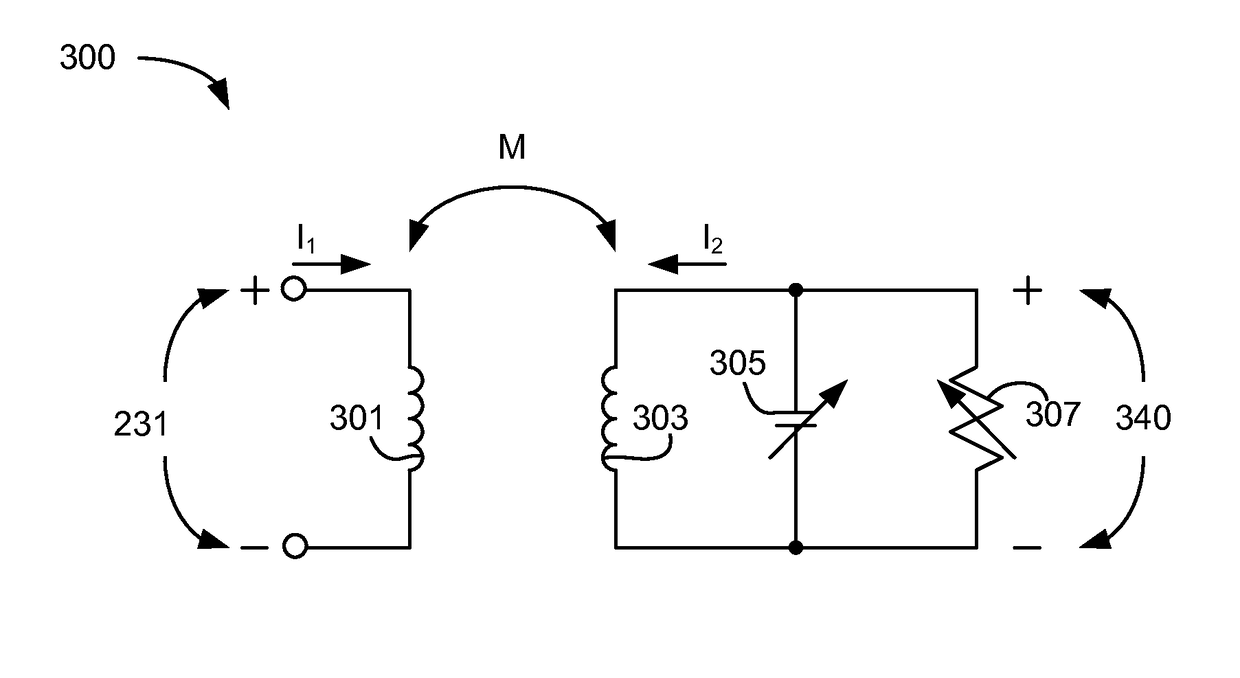
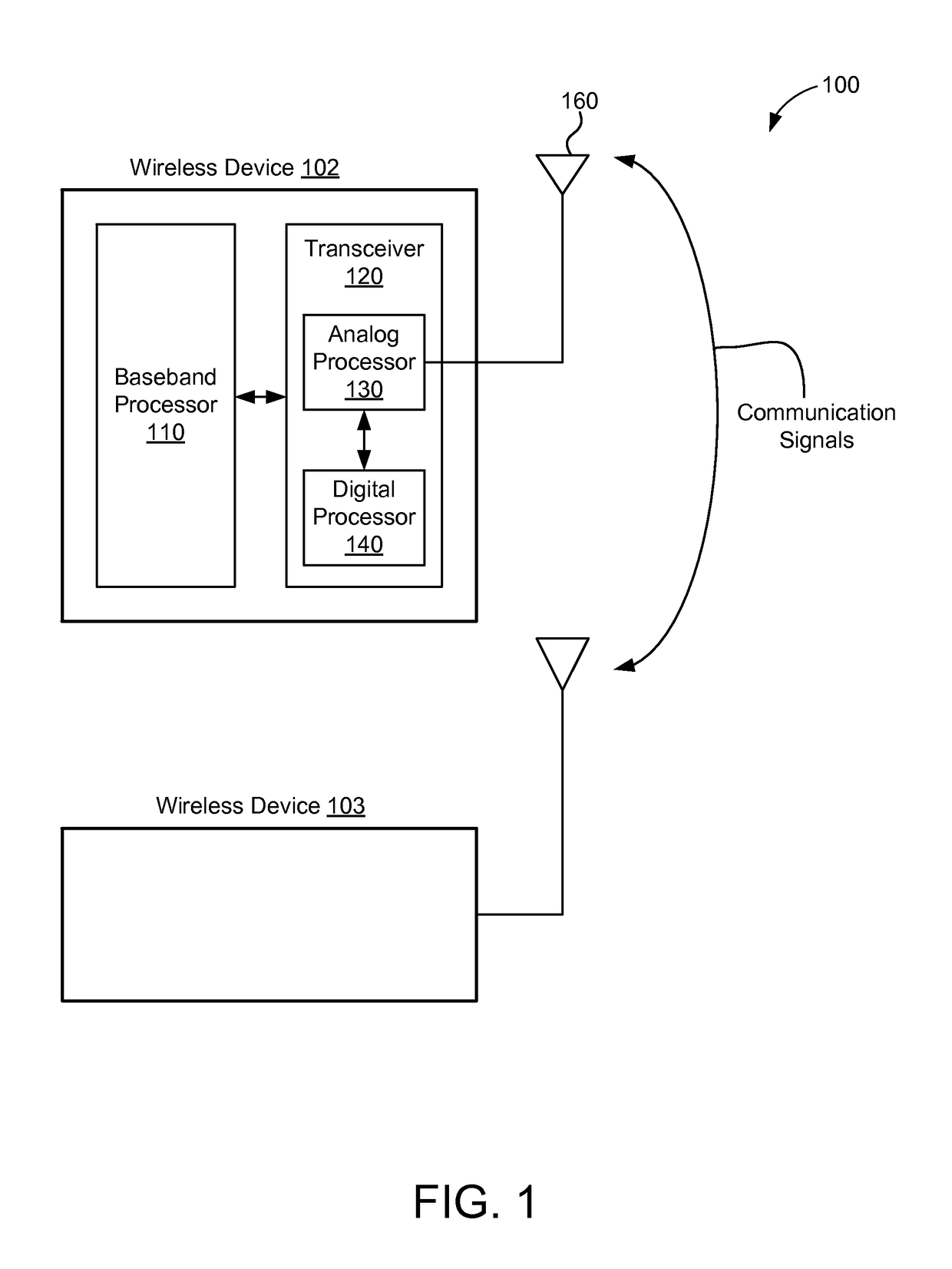
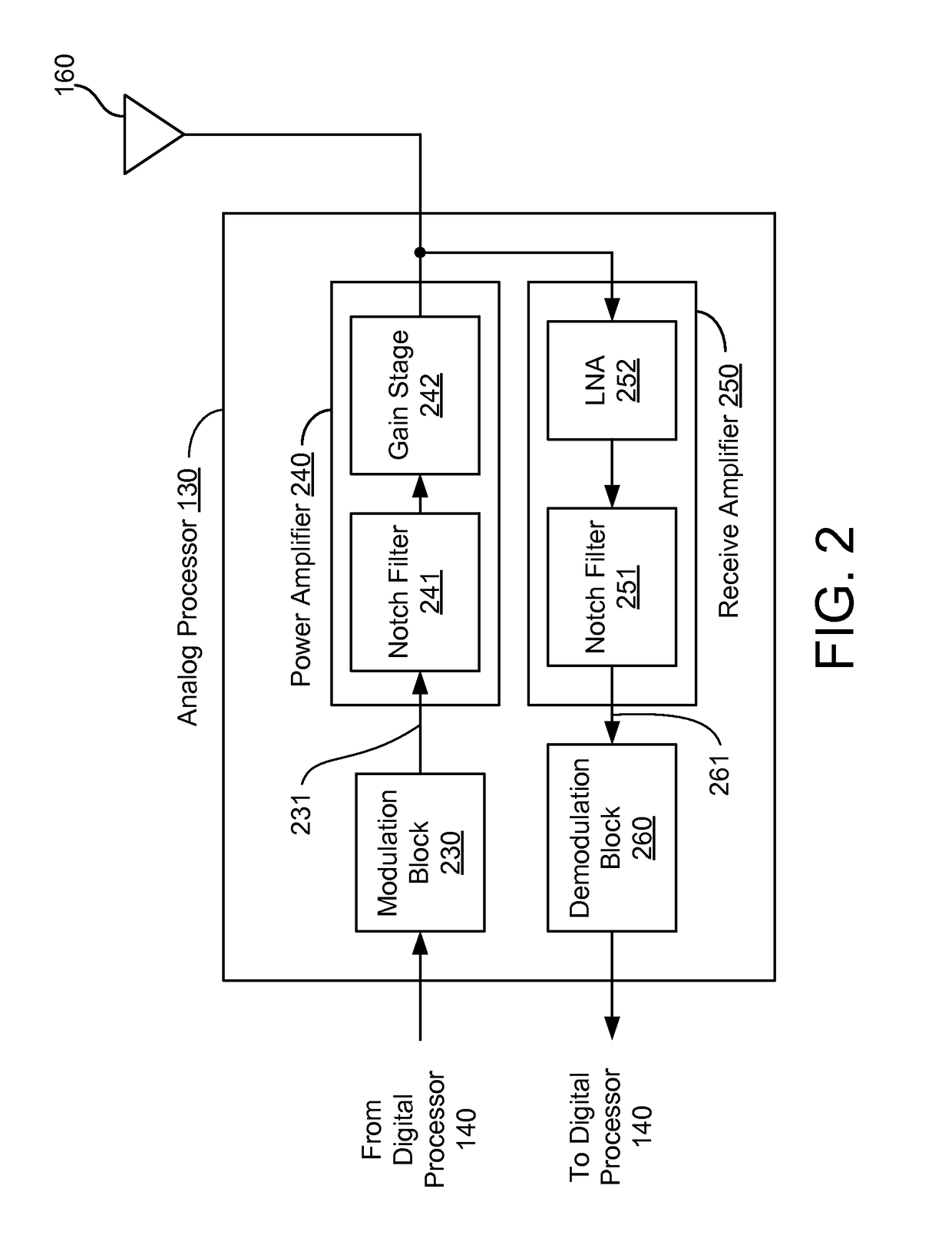
Active notch filter
PatentActiveUS9595935B2
Innovation
- A configurable notch filter is introduced, comprising a first inductive element and a second inductively coupled element, along with a variable capacitor, where the capacitance is directly proportional to the first inductive element's inductance and inversely proportional to the second's, forming a mutual inductor to attenuate specific frequencies based on signal content.

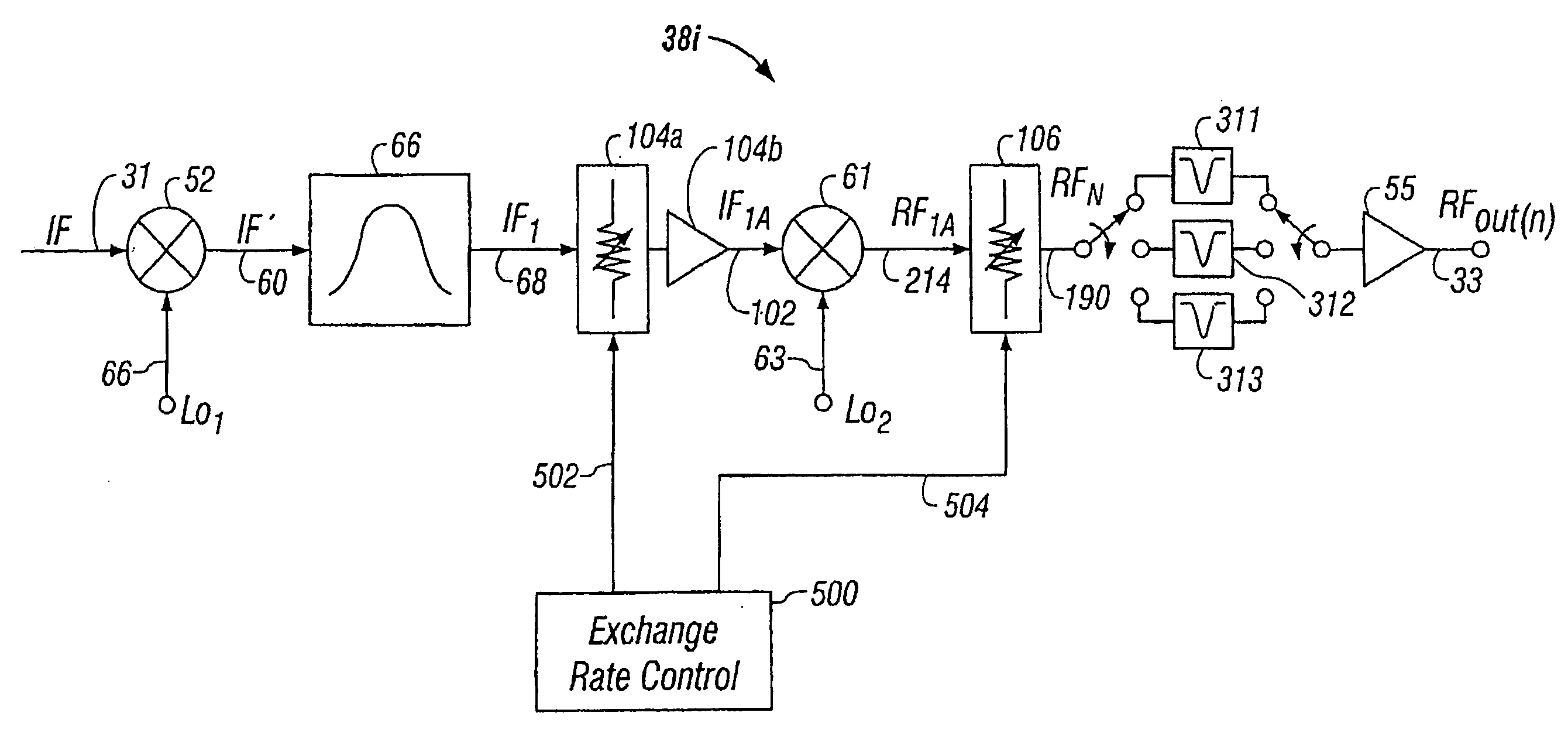
Varactor tunable RF filters having low distortion and high signal level capability
PatentInactiveUS20060128339A1
Innovation
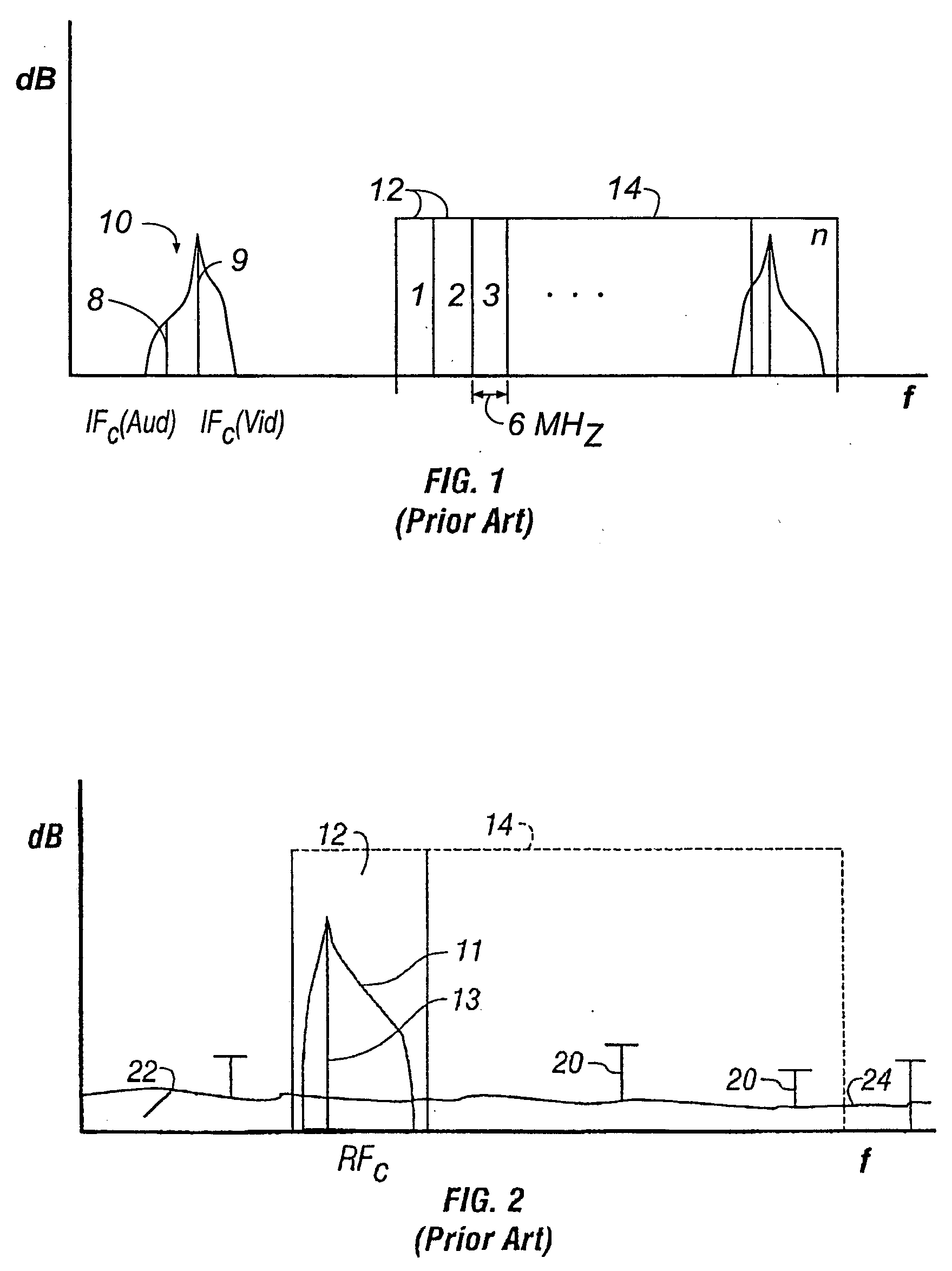
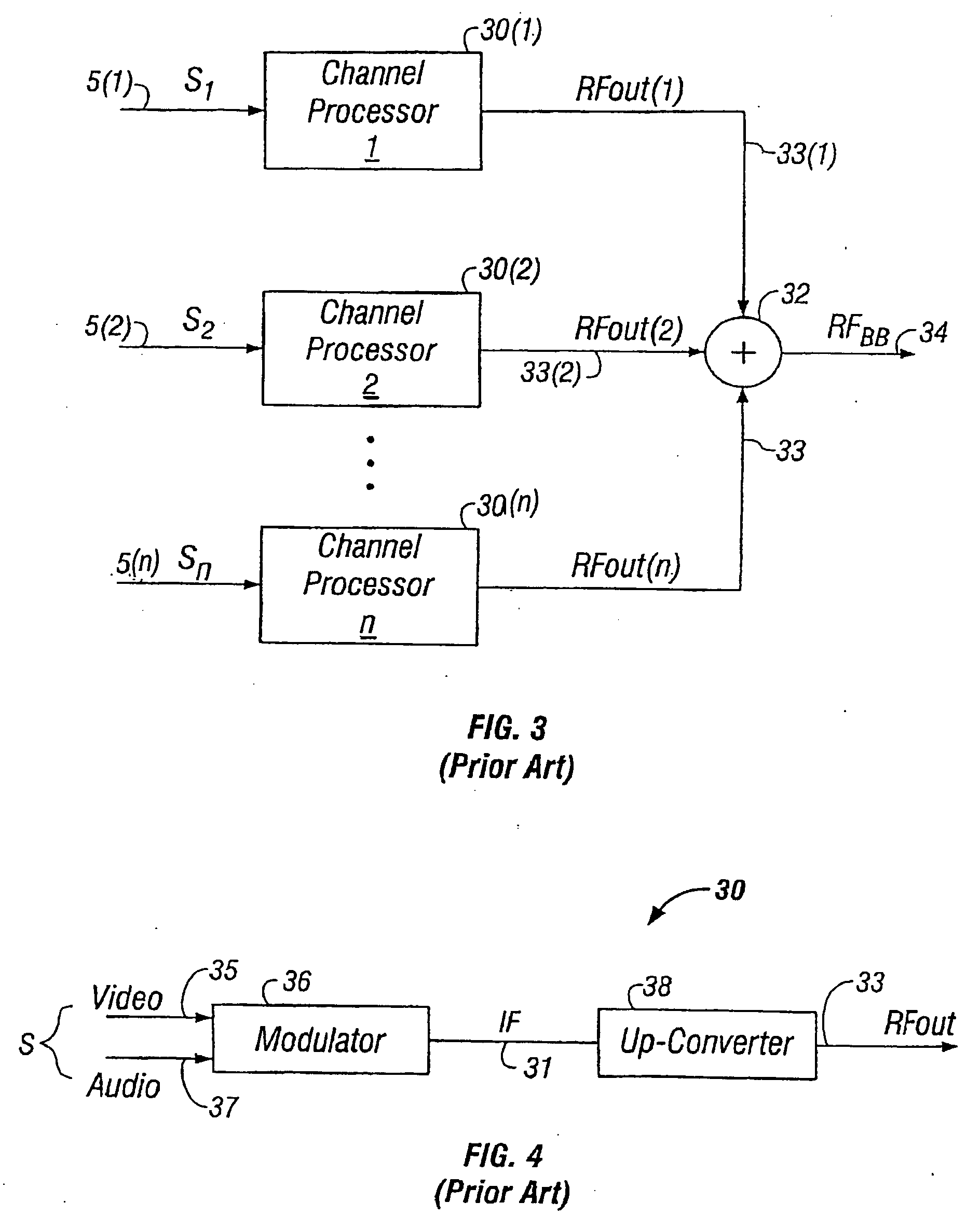
- An improved frequency up-conversion method employing an IF-RF level exchange and tunable notch filters to adjust power levels and filter distortion components on a channel-by-channel basis, optimizing noise attenuation and maintaining C/N and C/D ratios without the need for large numbers of costly filters and power-hungry amplifiers.

Signal Processing Standards and Compliance Requirements
Signal processing applications involving notch filters must adhere to stringent regulatory standards and compliance frameworks that govern electromagnetic compatibility, safety, and performance characteristics. The IEEE 802.11 standard series establishes fundamental requirements for wireless communication systems, mandating specific spectral mask compliance and adjacent channel rejection ratios that directly impact notch filter design parameters. These standards define acceptable levels of spurious emissions and interference suppression, requiring notch filters to achieve minimum attenuation depths of 40-60 dB within specified frequency bands.
Federal Communications Commission regulations, particularly Part 15 and Part 97, impose strict limitations on unwanted emissions and harmonic content in radio frequency applications. Compliance with these regulations necessitates careful consideration of notch filter Q-factor settings and center frequency accuracy to ensure adequate suppression of out-of-band signals. The European Telecommunications Standards Institute has established complementary requirements through the EN 300 series, which mandate similar performance criteria for equipment operating within European markets.
Military and aerospace applications must conform to MIL-STD-461 electromagnetic interference standards, which specify more rigorous testing procedures and performance thresholds. These standards require notch filters to maintain stable performance across extended temperature ranges and under various environmental stresses, influencing component selection and circuit topology decisions. The standard defines specific test methodologies for conducted and radiated emissions, directly affecting filter implementation strategies.
International Electrotechnical Commission standards, particularly IEC 61000 series covering electromagnetic compatibility, establish global benchmarks for electronic equipment performance. These standards address immunity requirements and emission limits that influence notch filter bandwidth and rejection characteristics. Compliance testing protocols defined within these frameworks require documented verification of filter performance across specified frequency ranges and operating conditions.
Medical device applications operating under FDA 510(k) clearance requirements must demonstrate compliance with IEC 60601 standards for medical electrical equipment. These regulations impose additional constraints on signal processing implementations, requiring enhanced isolation and safety margins that affect notch filter design parameters and validation procedures.
Federal Communications Commission regulations, particularly Part 15 and Part 97, impose strict limitations on unwanted emissions and harmonic content in radio frequency applications. Compliance with these regulations necessitates careful consideration of notch filter Q-factor settings and center frequency accuracy to ensure adequate suppression of out-of-band signals. The European Telecommunications Standards Institute has established complementary requirements through the EN 300 series, which mandate similar performance criteria for equipment operating within European markets.
Military and aerospace applications must conform to MIL-STD-461 electromagnetic interference standards, which specify more rigorous testing procedures and performance thresholds. These standards require notch filters to maintain stable performance across extended temperature ranges and under various environmental stresses, influencing component selection and circuit topology decisions. The standard defines specific test methodologies for conducted and radiated emissions, directly affecting filter implementation strategies.
International Electrotechnical Commission standards, particularly IEC 61000 series covering electromagnetic compatibility, establish global benchmarks for electronic equipment performance. These standards address immunity requirements and emission limits that influence notch filter bandwidth and rejection characteristics. Compliance testing protocols defined within these frameworks require documented verification of filter performance across specified frequency ranges and operating conditions.
Medical device applications operating under FDA 510(k) clearance requirements must demonstrate compliance with IEC 60601 standards for medical electrical equipment. These regulations impose additional constraints on signal processing implementations, requiring enhanced isolation and safety margins that affect notch filter design parameters and validation procedures.
Performance Metrics and Validation Frameworks
Establishing comprehensive performance metrics for notch filter configuration requires a multi-dimensional approach that encompasses both quantitative and qualitative assessment parameters. The primary metrics include frequency response accuracy, measured through the precise positioning of the notch frequency and the depth of attenuation achieved at the target frequency. Signal-to-noise ratio improvement serves as a critical indicator, quantifying the filter's effectiveness in eliminating unwanted interference while preserving desired signal components.
Bandwidth characteristics represent another essential metric, evaluating the filter's selectivity through Q-factor measurements and the steepness of the transition bands. Phase response linearity must be assessed to ensure minimal signal distortion, particularly in applications requiring phase coherence. Dynamic range performance metrics evaluate the filter's behavior under varying input signal amplitudes and its ability to maintain consistent notch characteristics across different operating conditions.
Validation frameworks for notch filter optimization incorporate both simulation-based and hardware-in-the-loop testing methodologies. Monte Carlo simulations provide statistical validation of filter performance across parameter variations, while swept frequency analysis validates the filter's response characteristics across the entire operational bandwidth. Real-time performance validation requires continuous monitoring of key performance indicators during actual system operation.
Standardized test protocols ensure reproducible and comparable results across different filter implementations. These protocols define specific test signal characteristics, measurement procedures, and acceptance criteria for various performance parameters. Automated validation systems enable rapid assessment of multiple filter configurations, facilitating optimization processes through iterative testing and parameter adjustment.
Cross-validation techniques compare theoretical predictions with measured performance data, identifying discrepancies that may indicate implementation issues or modeling limitations. Statistical analysis of validation results provides confidence intervals and reliability assessments, supporting decision-making processes for filter deployment in critical applications where performance guarantees are essential.
Bandwidth characteristics represent another essential metric, evaluating the filter's selectivity through Q-factor measurements and the steepness of the transition bands. Phase response linearity must be assessed to ensure minimal signal distortion, particularly in applications requiring phase coherence. Dynamic range performance metrics evaluate the filter's behavior under varying input signal amplitudes and its ability to maintain consistent notch characteristics across different operating conditions.
Validation frameworks for notch filter optimization incorporate both simulation-based and hardware-in-the-loop testing methodologies. Monte Carlo simulations provide statistical validation of filter performance across parameter variations, while swept frequency analysis validates the filter's response characteristics across the entire operational bandwidth. Real-time performance validation requires continuous monitoring of key performance indicators during actual system operation.
Standardized test protocols ensure reproducible and comparable results across different filter implementations. These protocols define specific test signal characteristics, measurement procedures, and acceptance criteria for various performance parameters. Automated validation systems enable rapid assessment of multiple filter configurations, facilitating optimization processes through iterative testing and parameter adjustment.
Cross-validation techniques compare theoretical predictions with measured performance data, identifying discrepancies that may indicate implementation issues or modeling limitations. Statistical analysis of validation results provides confidence intervals and reliability assessments, supporting decision-making processes for filter deployment in critical applications where performance guarantees are essential.
Unlock deeper insights with Patsnap Eureka Quick Research — get a full tech report to explore trends and direct your research. Try now!
Generate Your Research Report Instantly with AI Agent
Supercharge your innovation with Patsnap Eureka AI Agent Platform!