Configure Pulse Width Modulator for Microcontroller Applications
FEB 25, 20269 MIN READ
Generate Your Research Report Instantly with AI Agent
Patsnap Eureka helps you evaluate technical feasibility & market potential.
PWM Technology Background and Microcontroller Goals
Pulse Width Modulation (PWM) technology emerged in the early 1960s as a fundamental technique for controlling power delivery to electrical devices through rapid switching mechanisms. The concept originated from the need to efficiently regulate motor speeds and power supplies without the significant energy losses associated with linear control methods. PWM operates by varying the duty cycle of a square wave signal while maintaining a constant frequency, effectively controlling the average power delivered to the load.
The evolution of PWM technology has been closely intertwined with advances in semiconductor technology and digital control systems. Early implementations relied on analog circuits and discrete components, making them bulky and limited in precision. The introduction of integrated circuits in the 1970s enabled more compact and reliable PWM generators, while the advent of microcontrollers in the 1980s revolutionized the field by providing programmable, precise, and cost-effective PWM generation capabilities.
Modern microcontroller-based PWM systems have transformed from simple on-off switching mechanisms to sophisticated control platforms capable of generating multiple synchronized channels with sub-microsecond resolution. Contemporary microcontrollers integrate dedicated PWM peripherals that can operate independently of the main processor, enabling real-time control applications with minimal computational overhead.
The primary technical objectives for PWM implementation in microcontroller applications center around achieving precise timing control, minimizing electromagnetic interference, and maximizing energy efficiency. Key performance targets include duty cycle resolution typically ranging from 8-bit to 16-bit precision, frequency stability within 0.1% tolerance, and rise/fall times under 100 nanoseconds for high-speed switching applications.
Current development trends focus on advanced PWM techniques such as space vector modulation for three-phase motor control, adaptive frequency scaling for EMI reduction, and synchronized multi-channel operation for complex power management systems. These objectives drive the continuous evolution of microcontroller PWM capabilities toward higher resolution, greater flexibility, and enhanced integration with other peripheral systems.
The evolution of PWM technology has been closely intertwined with advances in semiconductor technology and digital control systems. Early implementations relied on analog circuits and discrete components, making them bulky and limited in precision. The introduction of integrated circuits in the 1970s enabled more compact and reliable PWM generators, while the advent of microcontrollers in the 1980s revolutionized the field by providing programmable, precise, and cost-effective PWM generation capabilities.
Modern microcontroller-based PWM systems have transformed from simple on-off switching mechanisms to sophisticated control platforms capable of generating multiple synchronized channels with sub-microsecond resolution. Contemporary microcontrollers integrate dedicated PWM peripherals that can operate independently of the main processor, enabling real-time control applications with minimal computational overhead.
The primary technical objectives for PWM implementation in microcontroller applications center around achieving precise timing control, minimizing electromagnetic interference, and maximizing energy efficiency. Key performance targets include duty cycle resolution typically ranging from 8-bit to 16-bit precision, frequency stability within 0.1% tolerance, and rise/fall times under 100 nanoseconds for high-speed switching applications.
Current development trends focus on advanced PWM techniques such as space vector modulation for three-phase motor control, adaptive frequency scaling for EMI reduction, and synchronized multi-channel operation for complex power management systems. These objectives drive the continuous evolution of microcontroller PWM capabilities toward higher resolution, greater flexibility, and enhanced integration with other peripheral systems.
Market Demand for Advanced PWM Control Solutions
The global market for advanced PWM control solutions is experiencing unprecedented growth driven by the rapid expansion of electric vehicles, renewable energy systems, and industrial automation applications. Electric vehicle manufacturers are increasingly demanding sophisticated PWM controllers that can deliver precise motor control, enhanced energy efficiency, and improved thermal management. The automotive sector's transition toward electrification has created substantial demand for microcontroller-based PWM systems capable of handling high-frequency switching operations while maintaining reliability under harsh operating conditions.
Industrial automation represents another significant demand driver, where manufacturers require PWM solutions for variable frequency drives, servo motor control, and precision positioning systems. The Industry 4.0 revolution has intensified the need for intelligent PWM controllers that can integrate seamlessly with IoT networks and provide real-time feedback for predictive maintenance applications. Manufacturing facilities are seeking PWM solutions that offer enhanced resolution, reduced electromagnetic interference, and adaptive control algorithms to optimize production efficiency.
The renewable energy sector has emerged as a critical market segment, particularly in solar inverter applications and wind turbine control systems. Grid-tied inverters require advanced PWM techniques such as space vector modulation and multilevel PWM to achieve high power quality and comply with stringent grid codes. Energy storage systems also demand sophisticated PWM controllers for battery management and power conversion applications, driving innovation in bidirectional power flow control and grid stabilization technologies.
Consumer electronics continue to fuel demand for compact, energy-efficient PWM solutions in applications ranging from LED lighting control to power supply management. The proliferation of smart home devices and portable electronics has created requirements for PWM controllers that can operate at ultra-low power consumption while maintaining precise control characteristics. Display backlighting, motor control in appliances, and wireless charging systems represent growing application areas.
Emerging applications in robotics, drone technology, and medical devices are creating new market opportunities for specialized PWM control solutions. These applications often require custom PWM configurations with specific timing requirements, fault detection capabilities, and safety-critical operation modes. The increasing complexity of these systems demands PWM controllers with advanced features such as synchronized multi-channel operation, programmable dead-time control, and integrated protection mechanisms.
Market demand is also shifting toward PWM solutions that offer greater flexibility and configurability, enabling manufacturers to adapt quickly to changing requirements without hardware modifications. Software-defined PWM controllers and field-programmable solutions are gaining traction as they provide the agility needed in rapidly evolving technology landscapes.
Industrial automation represents another significant demand driver, where manufacturers require PWM solutions for variable frequency drives, servo motor control, and precision positioning systems. The Industry 4.0 revolution has intensified the need for intelligent PWM controllers that can integrate seamlessly with IoT networks and provide real-time feedback for predictive maintenance applications. Manufacturing facilities are seeking PWM solutions that offer enhanced resolution, reduced electromagnetic interference, and adaptive control algorithms to optimize production efficiency.
The renewable energy sector has emerged as a critical market segment, particularly in solar inverter applications and wind turbine control systems. Grid-tied inverters require advanced PWM techniques such as space vector modulation and multilevel PWM to achieve high power quality and comply with stringent grid codes. Energy storage systems also demand sophisticated PWM controllers for battery management and power conversion applications, driving innovation in bidirectional power flow control and grid stabilization technologies.
Consumer electronics continue to fuel demand for compact, energy-efficient PWM solutions in applications ranging from LED lighting control to power supply management. The proliferation of smart home devices and portable electronics has created requirements for PWM controllers that can operate at ultra-low power consumption while maintaining precise control characteristics. Display backlighting, motor control in appliances, and wireless charging systems represent growing application areas.
Emerging applications in robotics, drone technology, and medical devices are creating new market opportunities for specialized PWM control solutions. These applications often require custom PWM configurations with specific timing requirements, fault detection capabilities, and safety-critical operation modes. The increasing complexity of these systems demands PWM controllers with advanced features such as synchronized multi-channel operation, programmable dead-time control, and integrated protection mechanisms.
Market demand is also shifting toward PWM solutions that offer greater flexibility and configurability, enabling manufacturers to adapt quickly to changing requirements without hardware modifications. Software-defined PWM controllers and field-programmable solutions are gaining traction as they provide the agility needed in rapidly evolving technology landscapes.
Current PWM Implementation Challenges in MCU Systems
PWM implementation in microcontroller systems faces significant timing precision challenges that directly impact system performance. Traditional software-based PWM generation suffers from jitter and inconsistent pulse timing due to interrupt latency variations and CPU load fluctuations. This becomes particularly problematic in applications requiring precise motor control or audio signal generation, where timing deviations as small as microseconds can cause audible artifacts or mechanical vibrations.
Resource allocation constraints represent another critical challenge in modern MCU systems. Most microcontrollers offer limited hardware PWM channels, typically ranging from 2 to 16 channels depending on the device family. However, contemporary applications often demand significantly more PWM outputs for multi-motor control systems, LED matrix displays, or complex servo arrangements. This scarcity forces developers to implement software PWM solutions that consume substantial CPU cycles and memory resources.
Frequency range limitations pose substantial obstacles for diverse application requirements. Many MCU PWM peripherals struggle to achieve both high-frequency operation for switching power supplies and ultra-low frequencies needed for certain actuator control applications within the same system. The typical frequency range of 1Hz to 100kHz often proves insufficient for advanced applications requiring frequencies up to several MHz or precise sub-Hz control.
Resolution and accuracy trade-offs create complex design decisions for engineers. Higher PWM resolution demands increased timer clock frequencies, which can introduce electromagnetic interference and increase power consumption. Conversely, lower resolution limits the granularity of control, particularly problematic in precision applications like audio DACs or fine motor positioning systems. Achieving 16-bit resolution while maintaining high switching frequencies remains challenging on resource-constrained microcontrollers.
Synchronization complexities emerge when multiple PWM channels must operate in coordinated patterns. Phase-shifted PWM generation for three-phase motor control or interleaved switching power supplies requires precise timing relationships between channels. Many MCU PWM peripherals lack sophisticated synchronization capabilities, forcing developers to implement complex software coordination mechanisms that introduce additional timing uncertainties and system complexity.
Power consumption optimization presents ongoing challenges, particularly in battery-powered applications. Continuous PWM operation, especially at high frequencies, significantly impacts system power budgets. Balancing PWM performance requirements with energy efficiency demands sophisticated power management strategies that many existing MCU architectures struggle to support effectively.
Resource allocation constraints represent another critical challenge in modern MCU systems. Most microcontrollers offer limited hardware PWM channels, typically ranging from 2 to 16 channels depending on the device family. However, contemporary applications often demand significantly more PWM outputs for multi-motor control systems, LED matrix displays, or complex servo arrangements. This scarcity forces developers to implement software PWM solutions that consume substantial CPU cycles and memory resources.
Frequency range limitations pose substantial obstacles for diverse application requirements. Many MCU PWM peripherals struggle to achieve both high-frequency operation for switching power supplies and ultra-low frequencies needed for certain actuator control applications within the same system. The typical frequency range of 1Hz to 100kHz often proves insufficient for advanced applications requiring frequencies up to several MHz or precise sub-Hz control.
Resolution and accuracy trade-offs create complex design decisions for engineers. Higher PWM resolution demands increased timer clock frequencies, which can introduce electromagnetic interference and increase power consumption. Conversely, lower resolution limits the granularity of control, particularly problematic in precision applications like audio DACs or fine motor positioning systems. Achieving 16-bit resolution while maintaining high switching frequencies remains challenging on resource-constrained microcontrollers.
Synchronization complexities emerge when multiple PWM channels must operate in coordinated patterns. Phase-shifted PWM generation for three-phase motor control or interleaved switching power supplies requires precise timing relationships between channels. Many MCU PWM peripherals lack sophisticated synchronization capabilities, forcing developers to implement complex software coordination mechanisms that introduce additional timing uncertainties and system complexity.
Power consumption optimization presents ongoing challenges, particularly in battery-powered applications. Continuous PWM operation, especially at high frequencies, significantly impacts system power budgets. Balancing PWM performance requirements with energy efficiency demands sophisticated power management strategies that many existing MCU architectures struggle to support effectively.
Existing PWM Configuration Solutions
01 Digital pulse width modulation circuits and control methods
Digital pulse width modulators utilize digital circuits and logic gates to generate PWM signals with precise control over duty cycle and frequency. These circuits often employ counters, comparators, and digital control logic to achieve accurate pulse width modulation. Digital implementations offer advantages in terms of programmability, noise immunity, and integration with microcontrollers or digital signal processors.- Digital pulse width modulation circuits and control methods: Digital pulse width modulation circuits utilize digital logic and control signals to generate PWM outputs with precise duty cycle control. These circuits typically employ counters, comparators, and digital control logic to produce modulated pulse signals. The digital approach allows for programmable and flexible PWM generation with high accuracy and stability, making them suitable for various applications requiring precise timing control.
- Analog pulse width modulation using comparator-based circuits: Analog pulse width modulation techniques employ comparator circuits that compare reference signals with carrier waveforms to generate PWM outputs. These circuits typically use operational amplifiers, voltage comparators, and triangle or sawtooth wave generators. The analog approach provides continuous modulation capability and can achieve high-frequency operation with relatively simple circuit designs, suitable for power conversion and motor control applications.
- Multi-phase and interleaved pulse width modulation systems: Multi-phase pulse width modulation systems generate multiple PWM signals with controlled phase relationships to improve performance characteristics. These systems utilize phase-shifted carrier signals or multiple modulation channels to reduce output ripple, increase effective switching frequency, and improve power quality. The interleaved approach is particularly beneficial in high-power applications where current sharing and thermal management are critical considerations.
- Adaptive and feedback-controlled pulse width modulation: Adaptive pulse width modulation incorporates feedback mechanisms and control algorithms to dynamically adjust modulation parameters based on operating conditions. These systems monitor output characteristics and automatically modify duty cycle, frequency, or other parameters to maintain desired performance. The adaptive approach enables improved efficiency, reduced distortion, and enhanced stability across varying load conditions and environmental factors.
- Integrated pulse width modulator circuits with protection features: Integrated pulse width modulator circuits combine PWM generation with built-in protection and monitoring functions on a single chip or module. These integrated solutions include features such as overcurrent protection, thermal shutdown, fault detection, and diagnostic capabilities. The integration approach reduces component count, improves reliability, and simplifies system design while providing comprehensive control and protection for power electronics applications.
02 Analog pulse width modulation techniques
Analog pulse width modulators use continuous-time circuits including operational amplifiers, comparators, and ramp generators to produce PWM signals. These modulators compare a reference signal with a carrier waveform to generate output pulses with varying widths. Analog PWM circuits are commonly used in power conversion applications and motor control systems where simple implementation and fast response times are required.Expand Specific Solutions03 Adaptive and feedback-controlled pulse width modulation
Advanced pulse width modulation systems incorporate feedback mechanisms and adaptive control algorithms to optimize performance under varying load conditions. These systems monitor output parameters and dynamically adjust the PWM signal characteristics to maintain desired performance metrics. Feedback control enables improved efficiency, reduced distortion, and enhanced stability in applications such as power supplies and audio amplifiers.Expand Specific Solutions04 Multi-phase and interleaved pulse width modulation
Multi-phase pulse width modulation techniques employ multiple PWM channels operating with phase shifts relative to each other. This approach reduces output ripple, improves power density, and enables higher switching frequencies in power conversion applications. Interleaved PWM is particularly beneficial in high-current applications where parallel operation of multiple converters is required to handle increased power levels while maintaining efficiency.Expand Specific Solutions05 Pulse width modulation for specific applications
Specialized pulse width modulation techniques are designed for particular applications including motor drives, LED lighting, audio amplification, and power factor correction. These implementations optimize PWM characteristics such as switching frequency, dead time, and modulation schemes to meet specific performance requirements. Application-specific PWM controllers often integrate protection features, communication interfaces, and diagnostic capabilities tailored to their intended use cases.Expand Specific Solutions
Key Players in Microcontroller and PWM Industry
The pulse width modulation (PWM) technology for microcontroller applications represents a mature market in the growth-to-maturity transition phase, with substantial market penetration across automotive, industrial automation, and consumer electronics sectors. The global PWM controller market demonstrates steady expansion driven by increasing demand for energy-efficient power management solutions. Technology maturity varies significantly among key players, with established semiconductor leaders like Microchip Technology, Infineon Technologies, and NXP Semiconductors offering highly sophisticated PWM solutions with advanced integration capabilities. Power management specialists such as Power Integrations and Cirrus Logic provide cutting-edge analog PWM controllers, while automotive giants like Robert Bosch and Continental's Conti Temic division focus on specialized automotive PWM applications. Industrial conglomerates including Siemens and Mitsubishi Electric leverage PWM technology for comprehensive automation solutions, indicating a competitive landscape characterized by both specialized innovation and broad-based integration strategies across diverse application domains.
Microchip Technology, Inc.
Technical Solution: Microchip provides comprehensive PWM solutions through their PIC microcontrollers and dsPIC digital signal controllers. Their PWM modules feature multiple independent channels, variable duty cycle control from 0-100%, and frequencies ranging from sub-Hz to several MHz. The company offers enhanced PWM (EPWM) modules with advanced features including dead-time insertion for motor control applications, fault protection inputs, and synchronized operation across multiple channels. Their MPLAB development environment provides integrated PWM configuration tools and code generation capabilities, enabling rapid prototyping and deployment.
Strengths: Comprehensive development ecosystem, wide frequency range support, integrated fault protection. Weaknesses: Higher cost compared to basic solutions, complex configuration for simple applications.
Robert Bosch GmbH
Technical Solution: Bosch develops PWM control systems primarily for automotive applications, focusing on engine management, transmission control, and electric vehicle powertrains. Their PWM solutions feature adaptive control algorithms that adjust pulse width based on real-time sensor feedback, enabling precise control of fuel injection timing, ignition systems, and electric motor drives. The company's PWM implementations incorporate machine learning algorithms for predictive control and optimization. Their systems support multi-channel synchronization for complex automotive subsystems and include built-in diagnostic capabilities for fault detection and system health monitoring in harsh automotive environments.
Strengths: Automotive-specific optimization, adaptive control algorithms, robust diagnostic capabilities. Weaknesses: Limited availability for non-automotive applications, proprietary development tools.
Core PWM Configuration Patents and Innovations
Pulse-width modular circuit and method for controlling a pulse-width modular circuit
PatentInactiveEP1586156A2
Innovation
- A pulse width modulator circuit with a setting unit comprising a memory register and counter allows for generating a reference signal with higher resolution by adjusting the duty cycle through a weighted average of two values, effectively increasing the effective resolution beyond the fixed register width.
Microcontroller with a user configurable pulse width modulator
PatentInactiveUS20020007467A1
Innovation
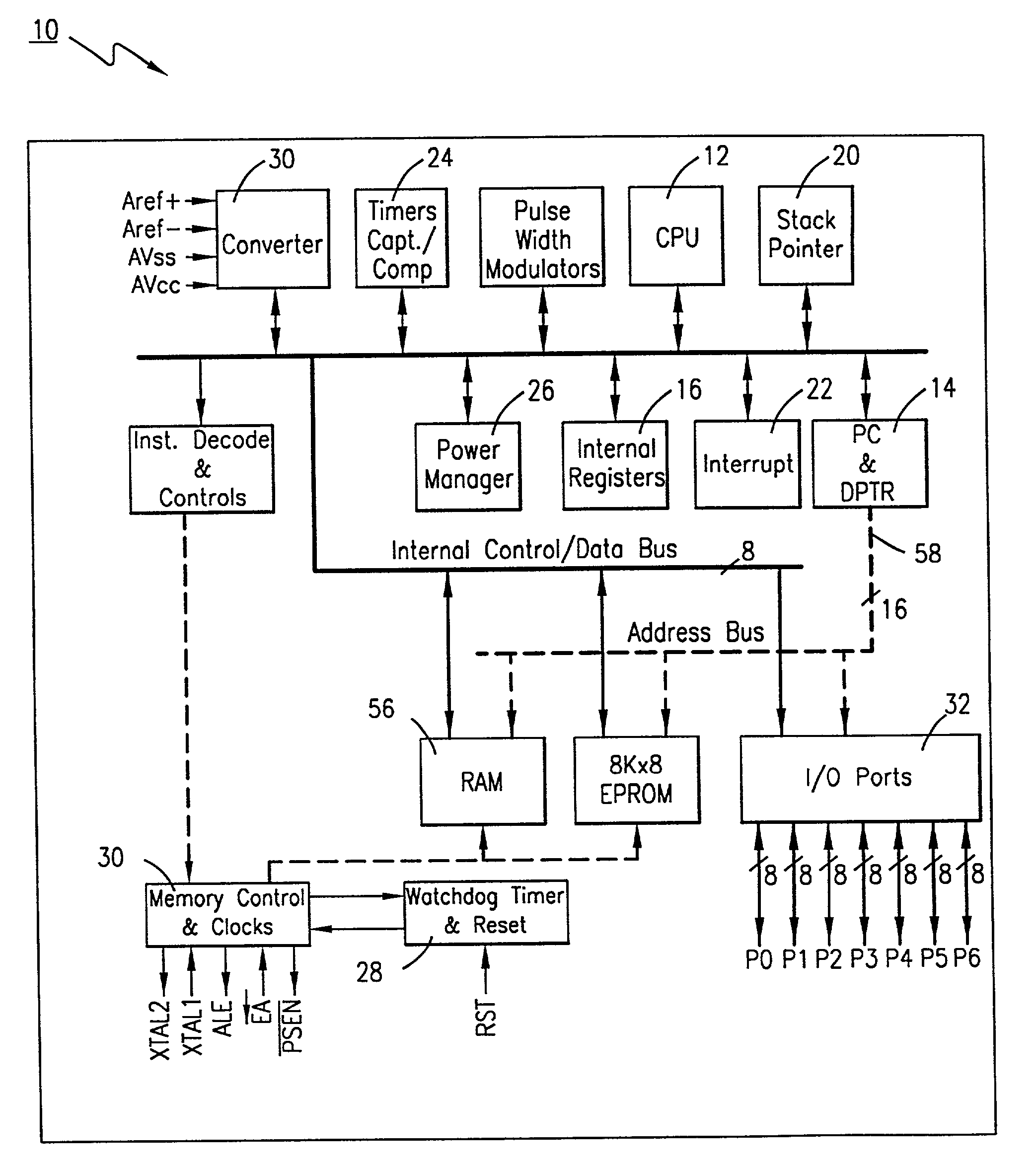
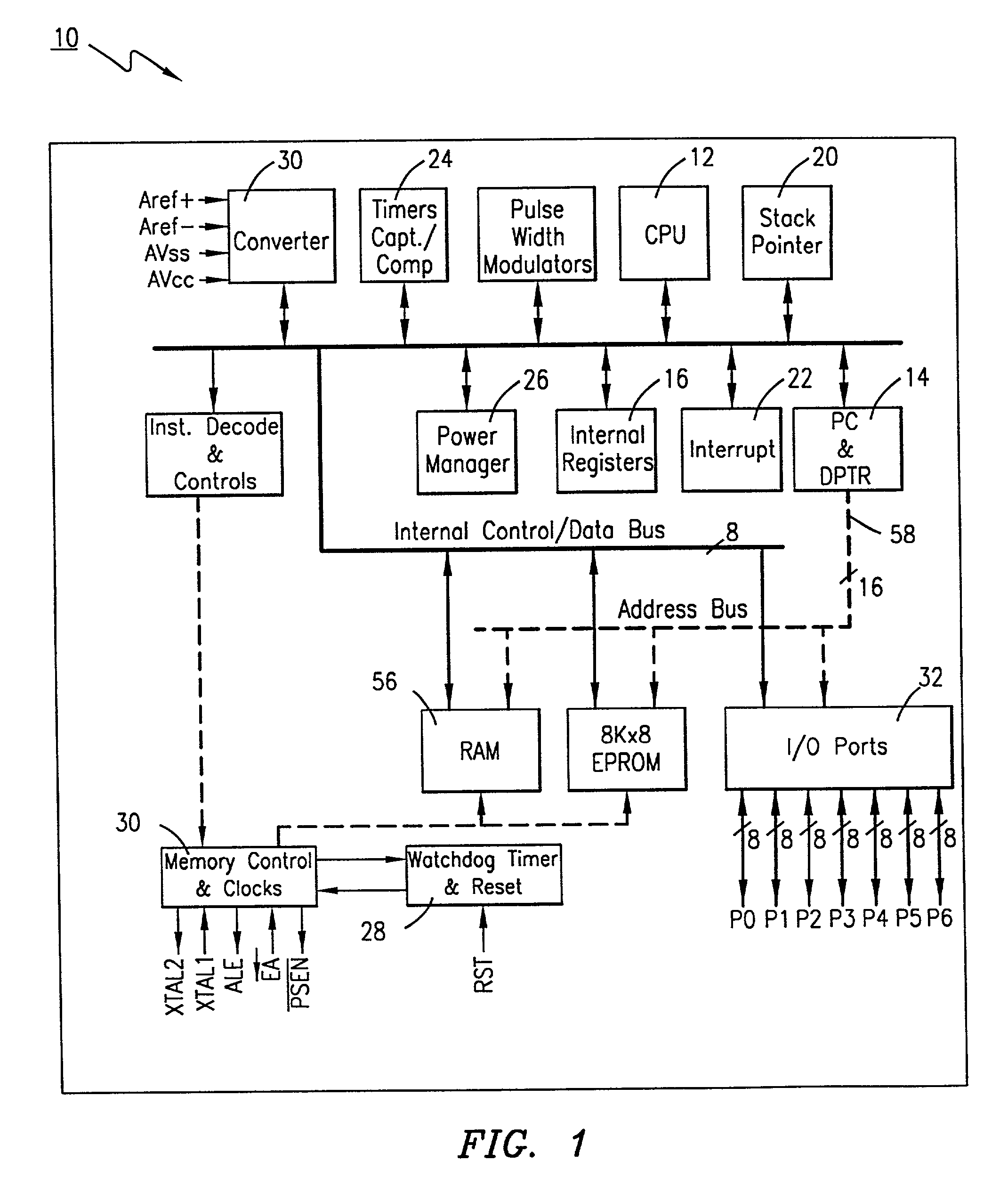
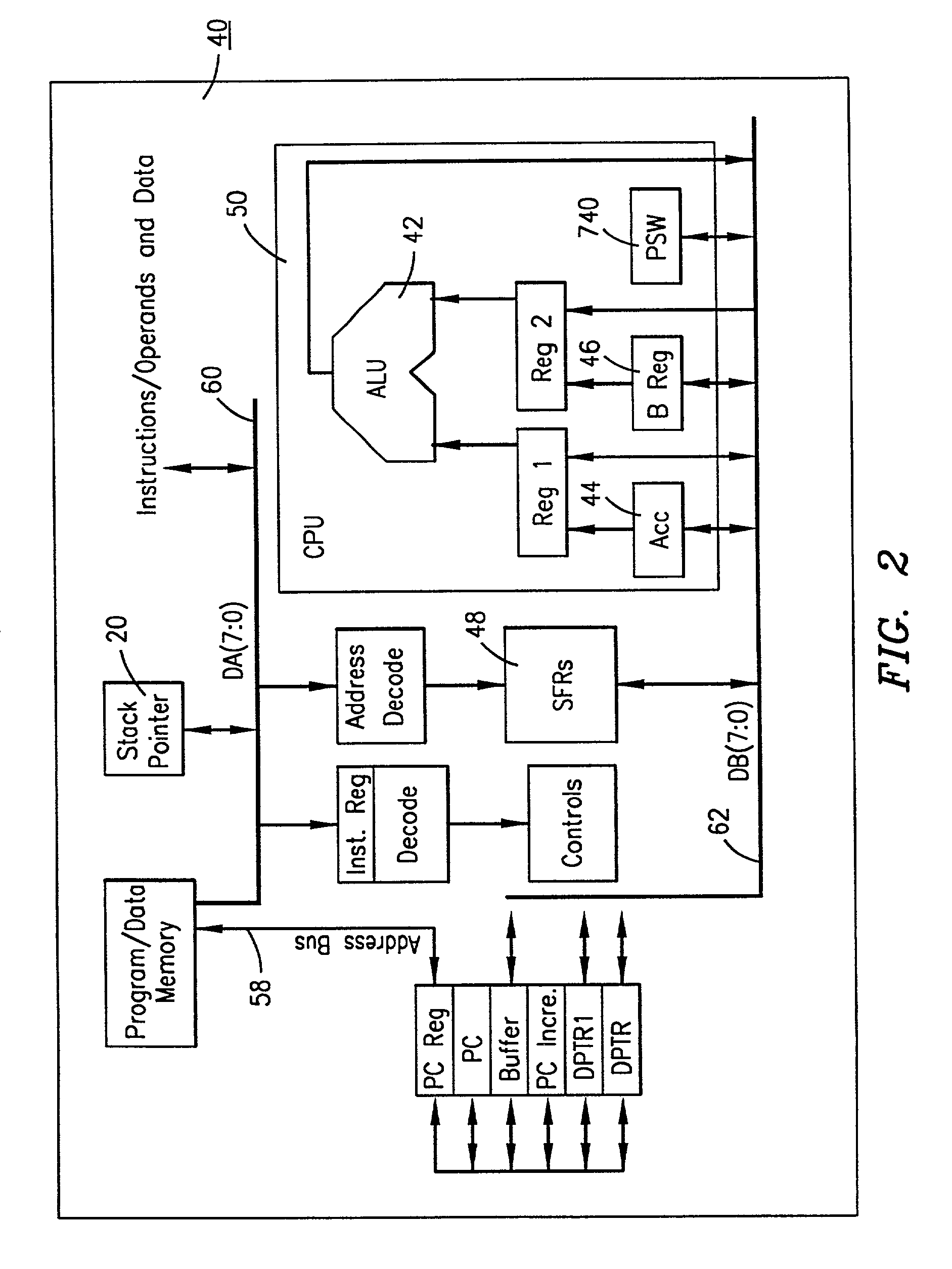
- A high-speed 8-bit microcontroller with user configurable pulse width modulator circuitry that can be configured to provide 16-bit, two 8-bit, or four 4-bit pulse width modulators, allowing for programmable bit-width and the ability to concatenate or divide pulse width modulators for various applications.

Real-time Performance Optimization Strategies
Real-time performance optimization in PWM-based microcontroller applications requires systematic approaches to minimize latency, reduce jitter, and ensure deterministic timing behavior. The fundamental challenge lies in balancing computational efficiency with precise timing control, particularly when multiple PWM channels operate simultaneously or when complex control algorithms demand rapid execution cycles.
Hardware-level optimization strategies focus on leveraging dedicated PWM peripherals and timer modules to offload computational burden from the main processor core. Modern microcontrollers incorporate specialized PWM units with independent clock domains, enabling autonomous operation with minimal CPU intervention. Direct Memory Access (DMA) integration allows seamless data transfer between memory and PWM registers without processor involvement, significantly reducing interrupt overhead and maintaining consistent timing performance.
Software optimization techniques emphasize efficient interrupt service routine design and strategic use of hardware abstraction layers. Implementing priority-based interrupt schemes ensures critical PWM updates receive immediate attention while less time-sensitive tasks operate at lower priority levels. Code optimization includes minimizing floating-point operations within interrupt contexts, utilizing lookup tables for complex mathematical calculations, and employing fixed-point arithmetic to accelerate computational processes.
Advanced optimization approaches incorporate predictive algorithms and adaptive control mechanisms that anticipate system behavior and pre-calculate PWM parameters. These strategies reduce real-time computational requirements by shifting complex calculations to background processes or idle periods. Multi-core architectures enable dedicated processor allocation for PWM control tasks, isolating timing-critical operations from general-purpose computing activities.
System-level considerations include careful selection of operating frequencies, strategic memory allocation to minimize cache misses, and implementation of deterministic scheduling algorithms. Power management strategies must balance energy efficiency with performance requirements, ensuring PWM accuracy remains uncompromised during dynamic frequency scaling operations. Thermal management also plays a crucial role, as temperature variations can affect timing precision and require compensation mechanisms to maintain optimal performance across operating conditions.
Hardware-level optimization strategies focus on leveraging dedicated PWM peripherals and timer modules to offload computational burden from the main processor core. Modern microcontrollers incorporate specialized PWM units with independent clock domains, enabling autonomous operation with minimal CPU intervention. Direct Memory Access (DMA) integration allows seamless data transfer between memory and PWM registers without processor involvement, significantly reducing interrupt overhead and maintaining consistent timing performance.
Software optimization techniques emphasize efficient interrupt service routine design and strategic use of hardware abstraction layers. Implementing priority-based interrupt schemes ensures critical PWM updates receive immediate attention while less time-sensitive tasks operate at lower priority levels. Code optimization includes minimizing floating-point operations within interrupt contexts, utilizing lookup tables for complex mathematical calculations, and employing fixed-point arithmetic to accelerate computational processes.
Advanced optimization approaches incorporate predictive algorithms and adaptive control mechanisms that anticipate system behavior and pre-calculate PWM parameters. These strategies reduce real-time computational requirements by shifting complex calculations to background processes or idle periods. Multi-core architectures enable dedicated processor allocation for PWM control tasks, isolating timing-critical operations from general-purpose computing activities.
System-level considerations include careful selection of operating frequencies, strategic memory allocation to minimize cache misses, and implementation of deterministic scheduling algorithms. Power management strategies must balance energy efficiency with performance requirements, ensuring PWM accuracy remains uncompromised during dynamic frequency scaling operations. Thermal management also plays a crucial role, as temperature variations can affect timing precision and require compensation mechanisms to maintain optimal performance across operating conditions.
Power Efficiency Enhancement Techniques
Power efficiency enhancement in PWM-configured microcontroller applications represents a critical optimization domain that directly impacts system performance, battery life, and thermal management. Modern embedded systems increasingly demand sophisticated power management strategies that leverage PWM capabilities to achieve optimal energy utilization while maintaining functional requirements.
Dynamic frequency scaling emerges as a fundamental technique where PWM controllers adjust switching frequencies based on real-time load conditions. This approach enables microcontrollers to operate at lower frequencies during light-load scenarios, significantly reducing dynamic power consumption. Advanced implementations incorporate predictive algorithms that anticipate load changes, preemptively adjusting PWM parameters to maintain efficiency across varying operational states.
Adaptive duty cycle optimization represents another crucial enhancement methodology. Smart PWM systems continuously monitor output voltage ripple and load current variations, automatically adjusting duty cycles to minimize switching losses while maintaining regulation accuracy. This technique proves particularly effective in battery-powered applications where extending operational lifetime remains paramount.
Multi-phase PWM architectures offer substantial efficiency improvements through current sharing and reduced input/output ripple. By distributing switching events across multiple phases with controlled phase shifts, these systems achieve lower RMS currents in input capacitors and reduced electromagnetic interference. The interleaved switching pattern also enables higher effective switching frequencies without proportional increases in switching losses.
Sleep mode integration with PWM controllers provides significant power savings during idle periods. Advanced microcontrollers implement intelligent wake-up mechanisms that can resume PWM operations within microseconds, enabling aggressive power gating strategies without compromising system responsiveness. These implementations often incorporate dedicated low-power oscillators that maintain essential timing functions while primary clock domains remain disabled.
Synchronous rectification techniques eliminate the forward voltage drops associated with traditional diode rectification in PWM applications. By replacing rectifier diodes with actively controlled MOSFETs, systems achieve substantial efficiency improvements, particularly in low-voltage, high-current applications where diode losses represent significant portions of total power dissipation.
Resonant switching methodologies, including zero-voltage switching and zero-current switching implementations, minimize switching losses by timing transitions to occur when voltage or current naturally approaches zero. These techniques require careful design of auxiliary resonant circuits but can achieve efficiency improvements exceeding ten percent in high-frequency PWM applications.
Dynamic frequency scaling emerges as a fundamental technique where PWM controllers adjust switching frequencies based on real-time load conditions. This approach enables microcontrollers to operate at lower frequencies during light-load scenarios, significantly reducing dynamic power consumption. Advanced implementations incorporate predictive algorithms that anticipate load changes, preemptively adjusting PWM parameters to maintain efficiency across varying operational states.
Adaptive duty cycle optimization represents another crucial enhancement methodology. Smart PWM systems continuously monitor output voltage ripple and load current variations, automatically adjusting duty cycles to minimize switching losses while maintaining regulation accuracy. This technique proves particularly effective in battery-powered applications where extending operational lifetime remains paramount.
Multi-phase PWM architectures offer substantial efficiency improvements through current sharing and reduced input/output ripple. By distributing switching events across multiple phases with controlled phase shifts, these systems achieve lower RMS currents in input capacitors and reduced electromagnetic interference. The interleaved switching pattern also enables higher effective switching frequencies without proportional increases in switching losses.
Sleep mode integration with PWM controllers provides significant power savings during idle periods. Advanced microcontrollers implement intelligent wake-up mechanisms that can resume PWM operations within microseconds, enabling aggressive power gating strategies without compromising system responsiveness. These implementations often incorporate dedicated low-power oscillators that maintain essential timing functions while primary clock domains remain disabled.
Synchronous rectification techniques eliminate the forward voltage drops associated with traditional diode rectification in PWM applications. By replacing rectifier diodes with actively controlled MOSFETs, systems achieve substantial efficiency improvements, particularly in low-voltage, high-current applications where diode losses represent significant portions of total power dissipation.
Resonant switching methodologies, including zero-voltage switching and zero-current switching implementations, minimize switching losses by timing transitions to occur when voltage or current naturally approaches zero. These techniques require careful design of auxiliary resonant circuits but can achieve efficiency improvements exceeding ten percent in high-frequency PWM applications.
Unlock deeper insights with Patsnap Eureka Quick Research — get a full tech report to explore trends and direct your research. Try now!
Generate Your Research Report Instantly with AI Agent
Supercharge your innovation with Patsnap Eureka AI Agent Platform!