

Design Compact Reflectarray Antennas for Portable Satellite Terminals
MAY 12, 20269 MIN READ
Generate Your Research Report Instantly with AI Agent
Patsnap Eureka helps you evaluate technical feasibility & market potential.
Reflectarray Antenna Technology Background and Objectives
Reflectarray antenna technology emerged in the 1960s as a revolutionary approach to combine the advantages of both parabolic reflectors and phased arrays. This innovative antenna concept utilizes a planar array of reflecting elements, each designed to provide specific phase shifts to incoming electromagnetic waves, thereby creating a focused beam without the need for complex feed networks. The technology represents a significant departure from traditional antenna designs by offering the beam-forming capabilities of phased arrays while maintaining the simplicity and cost-effectiveness of reflector antennas.
The evolution of reflectarray technology has been driven by the increasing demand for lightweight, low-profile antenna solutions in satellite communication systems. Early implementations faced significant challenges in achieving broadband operation and maintaining stable performance across different frequencies. However, advances in computational electromagnetics, materials science, and manufacturing techniques have progressively addressed these limitations, leading to more sophisticated and practical designs.
Modern reflectarray antennas have found particular relevance in portable satellite terminal applications, where traditional parabolic dishes prove impractical due to size, weight, and deployment constraints. The planar geometry of reflectarrays enables conformal integration with vehicle surfaces, portable equipment housings, and deployable structures, making them ideal candidates for mobile satellite communications, emergency response systems, and military applications.
The primary objective of developing compact reflectarray antennas for portable satellite terminals centers on achieving optimal performance within stringent size and weight limitations. Key technical goals include maximizing gain efficiency while minimizing antenna aperture, ensuring stable beam characteristics across operational frequency bands, and maintaining acceptable sidelobe levels for interference mitigation. Additionally, the design must accommodate mechanical robustness for field deployment, cost-effective manufacturing processes, and simplified installation procedures.
Contemporary research efforts focus on advanced element designs, multi-layer configurations, and novel materials to enhance bandwidth performance and reduce overall antenna thickness. The integration of active components and reconfigurable elements represents an emerging frontier, enabling adaptive beam steering and frequency agility without mechanical repositioning systems.
The evolution of reflectarray technology has been driven by the increasing demand for lightweight, low-profile antenna solutions in satellite communication systems. Early implementations faced significant challenges in achieving broadband operation and maintaining stable performance across different frequencies. However, advances in computational electromagnetics, materials science, and manufacturing techniques have progressively addressed these limitations, leading to more sophisticated and practical designs.
Modern reflectarray antennas have found particular relevance in portable satellite terminal applications, where traditional parabolic dishes prove impractical due to size, weight, and deployment constraints. The planar geometry of reflectarrays enables conformal integration with vehicle surfaces, portable equipment housings, and deployable structures, making them ideal candidates for mobile satellite communications, emergency response systems, and military applications.
The primary objective of developing compact reflectarray antennas for portable satellite terminals centers on achieving optimal performance within stringent size and weight limitations. Key technical goals include maximizing gain efficiency while minimizing antenna aperture, ensuring stable beam characteristics across operational frequency bands, and maintaining acceptable sidelobe levels for interference mitigation. Additionally, the design must accommodate mechanical robustness for field deployment, cost-effective manufacturing processes, and simplified installation procedures.
Contemporary research efforts focus on advanced element designs, multi-layer configurations, and novel materials to enhance bandwidth performance and reduce overall antenna thickness. The integration of active components and reconfigurable elements represents an emerging frontier, enabling adaptive beam steering and frequency agility without mechanical repositioning systems.
Market Demand for Portable Satellite Communication Systems
The global satellite communication market has experienced unprecedented growth driven by increasing demand for ubiquitous connectivity across diverse applications. Traditional terrestrial communication infrastructure faces limitations in remote areas, maritime environments, and disaster-stricken regions where conventional networks become unavailable. This connectivity gap has created substantial market opportunities for portable satellite communication systems that can provide reliable, high-speed data transmission regardless of geographical constraints.
Emergency response and disaster recovery operations represent critical market segments requiring immediate deployment of communication capabilities. First responders, humanitarian organizations, and military personnel increasingly rely on portable satellite terminals to establish communication links in areas where infrastructure has been compromised. The growing frequency of natural disasters and the need for rapid response capabilities have intensified demand for compact, easily deployable satellite communication solutions.
The maritime industry constitutes another significant market driver, with commercial shipping, offshore oil and gas operations, and recreational boating sectors requiring reliable communication systems. Modern vessels demand high-bandwidth connectivity for operational efficiency, crew welfare, and regulatory compliance. Portable satellite terminals offer flexibility for smaller vessels and backup communication capabilities for larger ships.
Remote industrial operations, including mining, construction, and energy exploration, generate substantial demand for portable satellite communication systems. These sectors operate in locations where terrestrial infrastructure is either unavailable or unreliable, making satellite connectivity essential for operational coordination, safety monitoring, and data transmission. The expansion of remote industrial activities globally continues to drive market growth.
Consumer applications have emerged as a rapidly expanding market segment, particularly among outdoor enthusiasts, remote workers, and travelers seeking connectivity in underserved areas. The proliferation of remote work arrangements and digital nomad lifestyles has created new demand patterns for portable, high-performance satellite communication devices that can support professional activities from virtually any location.
Government and defense applications maintain steady demand for secure, portable satellite communication capabilities. Military operations, border security, and intelligence gathering activities require reliable communication systems that can be rapidly deployed and relocated as operational requirements change. These applications often demand enhanced security features and ruggedized designs capable of operating in harsh environments.
The market trajectory indicates continued expansion driven by technological advancements that reduce system costs while improving performance capabilities. Increasing satellite constellation deployments and evolving regulatory frameworks support broader adoption of portable satellite communication systems across multiple market segments.
Emergency response and disaster recovery operations represent critical market segments requiring immediate deployment of communication capabilities. First responders, humanitarian organizations, and military personnel increasingly rely on portable satellite terminals to establish communication links in areas where infrastructure has been compromised. The growing frequency of natural disasters and the need for rapid response capabilities have intensified demand for compact, easily deployable satellite communication solutions.
The maritime industry constitutes another significant market driver, with commercial shipping, offshore oil and gas operations, and recreational boating sectors requiring reliable communication systems. Modern vessels demand high-bandwidth connectivity for operational efficiency, crew welfare, and regulatory compliance. Portable satellite terminals offer flexibility for smaller vessels and backup communication capabilities for larger ships.
Remote industrial operations, including mining, construction, and energy exploration, generate substantial demand for portable satellite communication systems. These sectors operate in locations where terrestrial infrastructure is either unavailable or unreliable, making satellite connectivity essential for operational coordination, safety monitoring, and data transmission. The expansion of remote industrial activities globally continues to drive market growth.
Consumer applications have emerged as a rapidly expanding market segment, particularly among outdoor enthusiasts, remote workers, and travelers seeking connectivity in underserved areas. The proliferation of remote work arrangements and digital nomad lifestyles has created new demand patterns for portable, high-performance satellite communication devices that can support professional activities from virtually any location.
Government and defense applications maintain steady demand for secure, portable satellite communication capabilities. Military operations, border security, and intelligence gathering activities require reliable communication systems that can be rapidly deployed and relocated as operational requirements change. These applications often demand enhanced security features and ruggedized designs capable of operating in harsh environments.
The market trajectory indicates continued expansion driven by technological advancements that reduce system costs while improving performance capabilities. Increasing satellite constellation deployments and evolving regulatory frameworks support broader adoption of portable satellite communication systems across multiple market segments.
Current State and Challenges of Compact Reflectarray Design
The current landscape of compact reflectarray antenna design for portable satellite terminals presents a complex interplay of technological achievements and persistent challenges. Modern reflectarray antennas have evolved significantly from their initial conceptualization in the 1960s, with contemporary designs achieving impressive miniaturization while maintaining acceptable performance levels. Current state-of-the-art compact reflectarrays typically operate in Ku-band and Ka-band frequencies, with aperture sizes ranging from 20cm to 50cm for portable applications.
The primary technical challenge lies in achieving optimal trade-offs between antenna size, gain, and bandwidth. Conventional reflectarray designs suffer from inherent bandwidth limitations due to the differential spatial phase delay across the aperture, which becomes more pronounced as the antenna size decreases. This fundamental constraint significantly impacts the performance of compact designs, where maintaining broadband operation while preserving gain characteristics remains problematic.
Element design complexity represents another critical challenge in compact reflectarray development. Traditional patch-based elements require precise phase control across a wide frequency range, necessitating sophisticated geometries that often conflict with manufacturing constraints. The integration of active components for reconfigurable operation introduces additional complexity, particularly in terms of power consumption, thermal management, and reliability for portable applications.
Manufacturing tolerances pose significant obstacles for compact reflectarray implementation. As antenna dimensions shrink, the sensitivity to fabrication errors increases exponentially, making it difficult to achieve predicted performance levels in production environments. Surface accuracy requirements become more stringent, demanding advanced manufacturing techniques that may not be cost-effective for commercial portable terminals.
Beam steering capabilities in compact reflectarrays face substantial limitations compared to their larger counterparts. The reduced aperture size constrains the achievable steering range and introduces higher side lobe levels, particularly at extreme scan angles. This limitation directly impacts the operational flexibility of portable satellite terminals, especially in mobile or temporary deployment scenarios.
Current research efforts focus on novel element topologies, including multi-layer structures, metamaterial-inspired designs, and hybrid approaches combining different radiating elements. However, these solutions often introduce additional complexity in terms of design optimization, manufacturing processes, and cost considerations, creating new challenges while attempting to resolve existing limitations in compact reflectarray antenna systems.
The primary technical challenge lies in achieving optimal trade-offs between antenna size, gain, and bandwidth. Conventional reflectarray designs suffer from inherent bandwidth limitations due to the differential spatial phase delay across the aperture, which becomes more pronounced as the antenna size decreases. This fundamental constraint significantly impacts the performance of compact designs, where maintaining broadband operation while preserving gain characteristics remains problematic.
Element design complexity represents another critical challenge in compact reflectarray development. Traditional patch-based elements require precise phase control across a wide frequency range, necessitating sophisticated geometries that often conflict with manufacturing constraints. The integration of active components for reconfigurable operation introduces additional complexity, particularly in terms of power consumption, thermal management, and reliability for portable applications.
Manufacturing tolerances pose significant obstacles for compact reflectarray implementation. As antenna dimensions shrink, the sensitivity to fabrication errors increases exponentially, making it difficult to achieve predicted performance levels in production environments. Surface accuracy requirements become more stringent, demanding advanced manufacturing techniques that may not be cost-effective for commercial portable terminals.
Beam steering capabilities in compact reflectarrays face substantial limitations compared to their larger counterparts. The reduced aperture size constrains the achievable steering range and introduces higher side lobe levels, particularly at extreme scan angles. This limitation directly impacts the operational flexibility of portable satellite terminals, especially in mobile or temporary deployment scenarios.
Current research efforts focus on novel element topologies, including multi-layer structures, metamaterial-inspired designs, and hybrid approaches combining different radiating elements. However, these solutions often introduce additional complexity in terms of design optimization, manufacturing processes, and cost considerations, creating new challenges while attempting to resolve existing limitations in compact reflectarray antenna systems.
Existing Solutions for Miniaturizing Reflectarray Antennas
01 Miniaturization techniques for reflectarray elements
Various miniaturization techniques are employed to reduce the size of reflectarray antenna elements while maintaining performance. These techniques include the use of fractal geometries, meandering structures, and multi-layer configurations to achieve compact designs. The miniaturization allows for smaller overall antenna dimensions and enables integration into space-constrained applications.- Miniaturization techniques for reflectarray elements: Various miniaturization techniques are employed to reduce the size of reflectarray antenna elements while maintaining performance. These techniques include the use of fractal geometries, meandering structures, and multi-layer configurations to achieve compact designs. The miniaturization allows for smaller overall antenna dimensions and enables integration into space-constrained applications.
- Multi-band and wideband compact reflectarray designs: Compact reflectarray antennas are designed to operate across multiple frequency bands or wide bandwidths using innovative element structures and feeding mechanisms. These designs incorporate dual-polarized elements, stacked patches, or frequency selective surfaces to achieve multi-band operation while maintaining compact form factors. The wideband capability enhances versatility for various communication applications.
- Phase control mechanisms for compact configurations: Advanced phase control techniques are implemented in compact reflectarray antennas to achieve precise beam steering and shaping capabilities. These mechanisms include variable-sized elements, rotating elements, or electronically tunable components that provide the necessary phase distribution across the aperture. The phase control enables beam scanning and adaptive radiation patterns in compact antenna systems.
- Substrate and material optimization for size reduction: Specialized substrate materials and configurations are utilized to achieve compact reflectarray designs with enhanced performance characteristics. High-permittivity substrates, thin film technologies, and metamaterial structures are employed to reduce the physical dimensions while maintaining or improving electrical performance. These material innovations enable significant size reduction compared to conventional designs.
- Integration and packaging solutions for compact systems: Innovative integration and packaging approaches are developed to create compact reflectarray antenna systems suitable for various applications. These solutions include conformal designs, integrated feed networks, and modular architectures that optimize space utilization. The packaging techniques enable deployment in mobile platforms, satellite systems, and other size-critical applications while maintaining robust performance.
02 Multi-band and wideband compact reflectarray designs
Compact reflectarray antennas are designed to operate across multiple frequency bands or wide bandwidths to maximize functionality while minimizing physical footprint. These designs incorporate specialized element structures and feeding mechanisms that enable simultaneous operation at different frequencies without significantly increasing the antenna size.Expand Specific Solutions03 Substrate and material optimization for size reduction
Advanced substrate materials and dielectric configurations are utilized to achieve compact reflectarray designs. High permittivity materials, thin substrates, and innovative material combinations help reduce the overall antenna dimensions while maintaining desired electrical characteristics and performance parameters.Expand Specific Solutions04 Beam steering and reconfigurable compact architectures
Compact reflectarray antennas incorporate beam steering capabilities and reconfigurable elements to provide adaptive functionality without increasing physical size. These systems use electronic switching, variable impedance elements, or mechanical adjustments to dynamically control beam direction and shape while maintaining compact form factors.Expand Specific Solutions05 Integration and packaging solutions for compact systems
Specialized integration and packaging techniques are developed to create compact reflectarray antenna systems suitable for various applications. These solutions include conformal designs, integrated feed networks, and modular architectures that optimize space utilization and enable easy deployment in size-constrained environments.Expand Specific Solutions
Key Players in Satellite Terminal and Antenna Industry
The compact reflectarray antenna technology for portable satellite terminals represents a rapidly evolving market segment driven by increasing demand for mobile satellite communications. The industry is transitioning from early development to commercial maturity, with significant growth potential as satellite constellations expand and portable connectivity becomes essential. Market size is expanding due to defense modernization, emergency communications, and commercial mobility applications. Technology maturity varies significantly among key players: established aerospace giants like Thales SA, Mitsubishi Electric, and Samsung Electronics demonstrate advanced capabilities through extensive R&D investments, while specialized firms like AvL Technologies focus on niche applications. Government entities including NASA, US Air Force, and research institutions like Xiamen University and Fuzhou University contribute fundamental research. The competitive landscape shows convergence between traditional satellite equipment manufacturers and consumer electronics companies, indicating technology democratization and cost reduction trends essential for widespread portable terminal adoption.
Thales SA
Technical Solution: Thales has developed advanced reflectarray antenna solutions for portable satellite terminals, featuring innovative phase-shifting elements and compact feeding networks. Their designs incorporate metamaterial-based unit cells that enable wide-angle beam steering capabilities while maintaining low profile characteristics essential for mobile applications. The company's reflectarray technology utilizes variable-sized patch elements with optimized spacing to achieve desired phase distributions, resulting in antennas that are 60% more compact than traditional parabolic dishes while delivering comparable gain performance. Their solutions integrate advanced materials and manufacturing processes to ensure durability in harsh environmental conditions typical of portable satellite communications.
Strengths: Extensive aerospace heritage and proven track record in satellite communications systems. Weaknesses: Higher manufacturing costs due to complex metamaterial structures and limited bandwidth compared to traditional solutions.
NEC Corp.
Technical Solution: NEC has pioneered compact reflectarray antenna designs specifically targeting portable satellite terminal applications through their advanced beamforming technologies. Their approach combines printed circuit board fabrication techniques with sophisticated phase control algorithms to create lightweight, low-profile antennas suitable for mobile deployment. The company's reflectarray solutions feature digitally controlled phase shifters integrated into each unit cell, enabling electronic beam steering without mechanical movement. Their designs achieve significant size reduction through innovative element arrangements and optimized feed horn positioning, resulting in portable terminals that maintain high-efficiency satellite links while being easily transportable. NEC's manufacturing expertise ensures cost-effective production scalability for commercial applications.
Strengths: Strong electronics manufacturing capabilities and established presence in telecommunications infrastructure. Weaknesses: Limited experience in harsh environment applications and potential reliability concerns in extreme weather conditions.
Core Innovations in Compact Reflectarray Design Patents
Antenna having reflectors
PatentWO2011101471A1
Innovation
- A compact reflector antenna configuration where the reflector array is positioned within the main reflector's interception cone, with primary sources arranged to ensure a maximum angle of incidence that allows more than 80% of wave power to be reflected, distinct from traditional mirror configurations, optimizing layout freedom on satellites.


Antenna for compact satellite terminal
PatentActiveUS7859479B2
Innovation
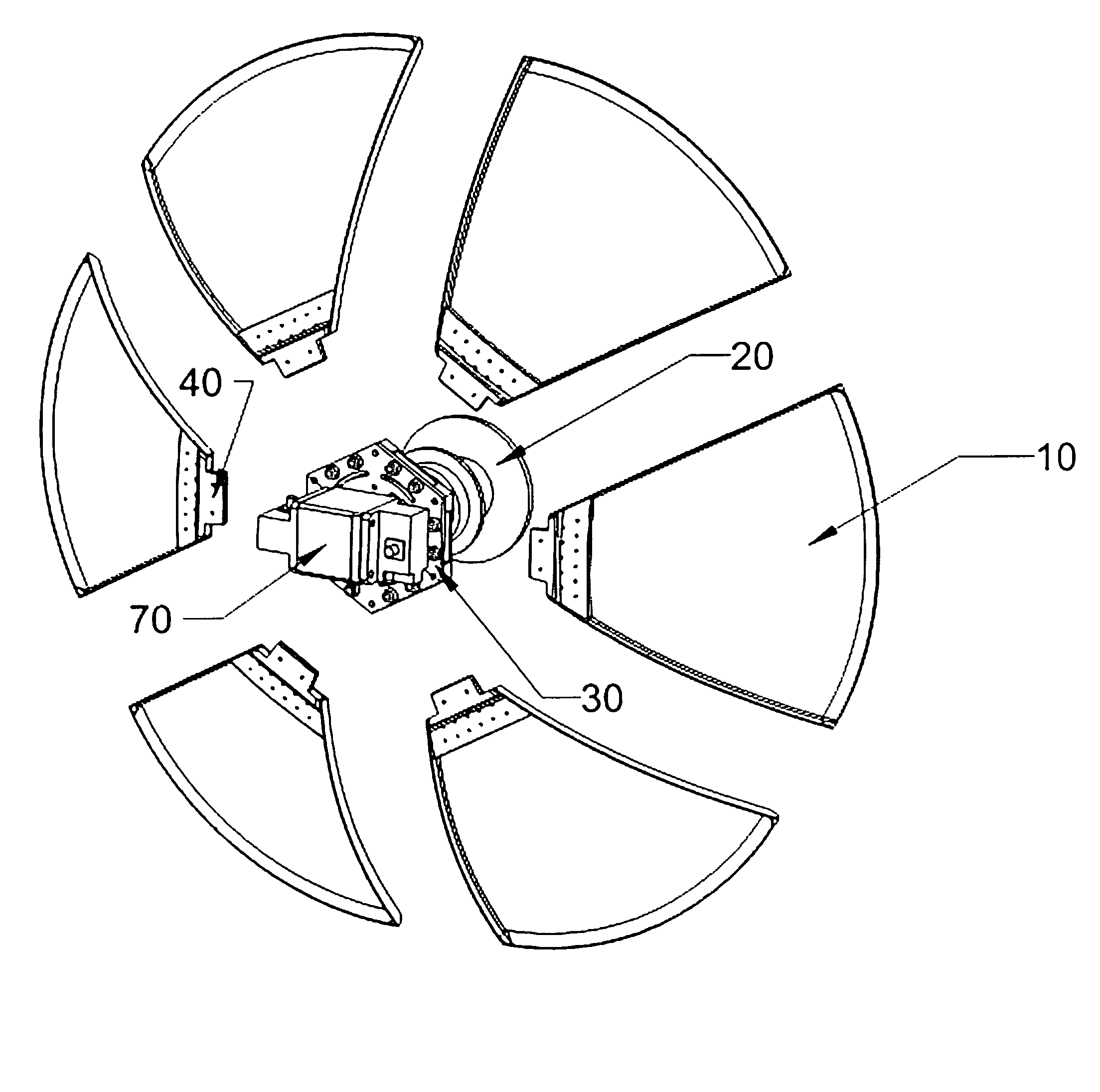
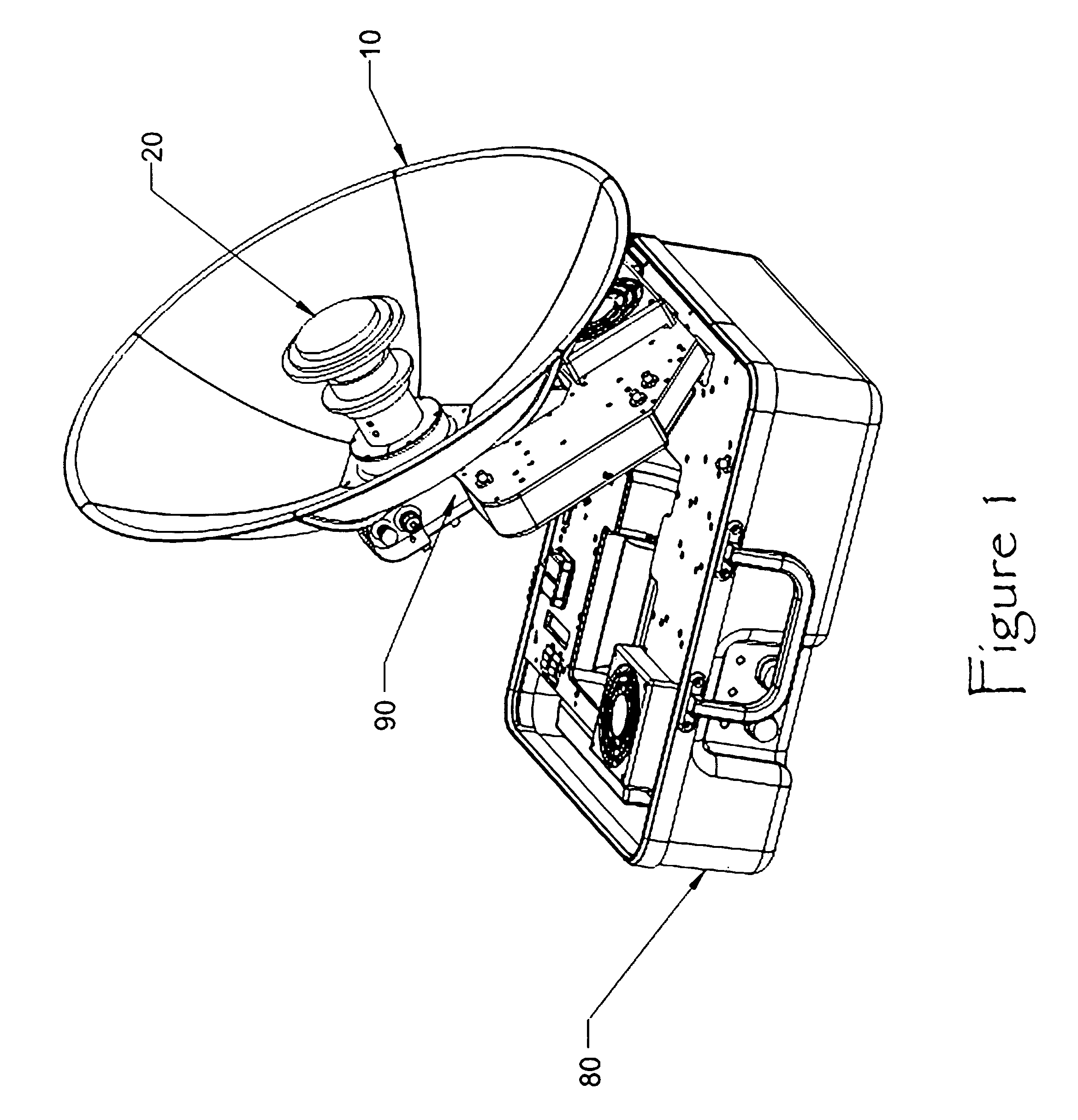
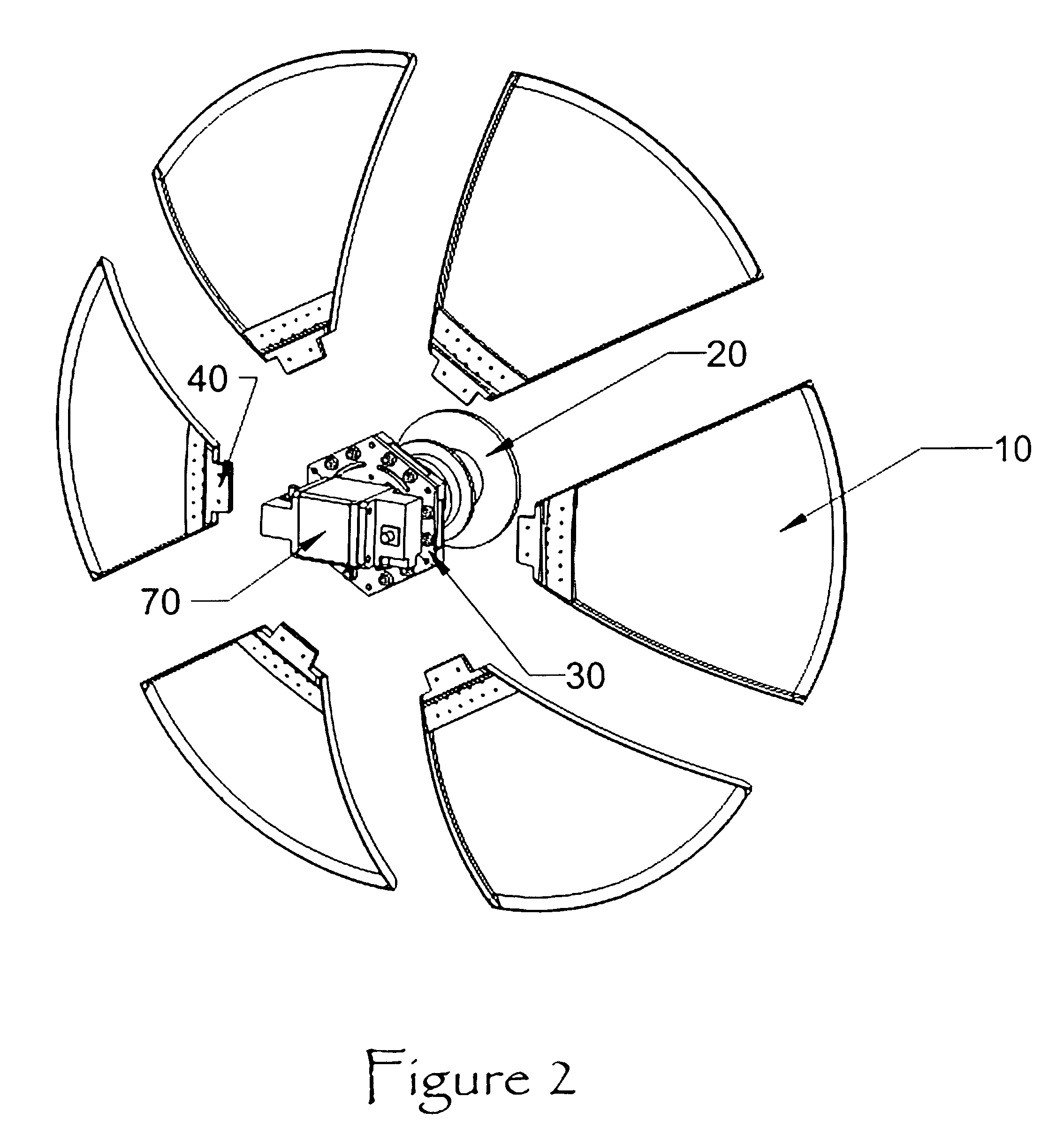
- A compact, rigid parabolic antenna structure made of metal matrix composite, disassembling into segments with a hub and quick-release mechanism, featuring a shallow feed horn assembly and orthomode transducer for easy assembly, disassembly, and polarization change without tools, using nickel nanostrand material for segments.

Spectrum Regulations for Satellite Communication Systems
The regulatory landscape for satellite communication systems presents a complex framework that directly impacts the design and deployment of compact reflectarray antennas for portable terminals. International spectrum allocation is primarily governed by the International Telecommunication Union (ITU), which divides the world into three regions and establishes frequency bands for satellite services. The most relevant bands for portable satellite terminals include Ku-band (12-18 GHz), Ka-band (26.5-40 GHz), and emerging Q/V-band allocations (40-75 GHz).
Regional regulatory bodies such as the Federal Communications Commission (FCC) in the United States, the European Communications Committee (ECC) in Europe, and similar organizations worldwide implement ITU recommendations while addressing local spectrum management needs. These agencies establish specific technical requirements for antenna performance, including gain patterns, sidelobe suppression levels, and cross-polarization discrimination that directly influence reflectarray design parameters.
Portable satellite terminals face unique regulatory challenges due to their mobility and potential for interference with terrestrial services. Earth Station on Mobile Platform (ESIM) regulations require sophisticated beam steering capabilities and interference mitigation techniques. The compact reflectarray antennas must demonstrate compliance with stringent off-axis emission limits, typically requiring sidelobe levels below -10 dB within specific angular ranges and -20 dB in critical interference zones.
Recent regulatory developments emphasize dynamic spectrum sharing and cognitive radio techniques, particularly relevant for next-generation portable terminals. The introduction of Non-Geostationary Satellite Orbit (NGSO) constellations has prompted new coordination procedures and interference protection criteria. These regulations mandate advanced antenna technologies capable of rapid beam switching and null steering to avoid interference with both geostationary satellites and terrestrial networks.
Emerging regulatory frameworks for Very High Throughput Satellites (VHTS) and High Altitude Platform Systems (HAPS) are creating new opportunities and constraints for portable terminal design. The trend toward higher frequency bands and increased bandwidth allocations necessitates reflectarray antennas with enhanced precision and stability, while maintaining the compact form factor essential for portable applications.
Regional regulatory bodies such as the Federal Communications Commission (FCC) in the United States, the European Communications Committee (ECC) in Europe, and similar organizations worldwide implement ITU recommendations while addressing local spectrum management needs. These agencies establish specific technical requirements for antenna performance, including gain patterns, sidelobe suppression levels, and cross-polarization discrimination that directly influence reflectarray design parameters.
Portable satellite terminals face unique regulatory challenges due to their mobility and potential for interference with terrestrial services. Earth Station on Mobile Platform (ESIM) regulations require sophisticated beam steering capabilities and interference mitigation techniques. The compact reflectarray antennas must demonstrate compliance with stringent off-axis emission limits, typically requiring sidelobe levels below -10 dB within specific angular ranges and -20 dB in critical interference zones.
Recent regulatory developments emphasize dynamic spectrum sharing and cognitive radio techniques, particularly relevant for next-generation portable terminals. The introduction of Non-Geostationary Satellite Orbit (NGSO) constellations has prompted new coordination procedures and interference protection criteria. These regulations mandate advanced antenna technologies capable of rapid beam switching and null steering to avoid interference with both geostationary satellites and terrestrial networks.
Emerging regulatory frameworks for Very High Throughput Satellites (VHTS) and High Altitude Platform Systems (HAPS) are creating new opportunities and constraints for portable terminal design. The trend toward higher frequency bands and increased bandwidth allocations necessitates reflectarray antennas with enhanced precision and stability, while maintaining the compact form factor essential for portable applications.
Manufacturing Considerations for Portable Antenna Production
Manufacturing compact reflectarray antennas for portable satellite terminals presents unique challenges that require careful consideration of materials, processes, and scalability factors. The production methodology must balance performance requirements with cost-effectiveness while maintaining the precision necessary for optimal electromagnetic characteristics.
Substrate material selection represents a critical manufacturing decision that directly impacts both performance and production feasibility. Low-loss dielectric materials such as Rogers RT/duroid or PTFE-based substrates offer excellent electrical properties but require specialized handling and processing equipment. Alternative materials like FR-4 provide cost advantages for high-volume production but may compromise performance at higher frequencies. The substrate thickness tolerance must be maintained within ±0.025mm to ensure consistent phase response across the array elements.
Fabrication techniques for reflectarray elements demand high precision in both dimensional accuracy and surface finish quality. Photolithographic processes enable precise pattern definition for complex element geometries, with minimum feature sizes typically limited to 0.1mm for standard PCB manufacturing. Advanced techniques such as electron beam lithography can achieve finer resolution but significantly increase production costs. The metallization process requires careful control of copper thickness uniformity, typically maintained within ±10% variation across the substrate surface.
Assembly considerations become particularly challenging when integrating multiple layers or incorporating tunable elements. Mechanical alignment tolerances between layers must be controlled within ±0.05mm to prevent performance degradation. Bonding processes using adhesive films or direct lamination require temperature and pressure control to avoid substrate warpage or delamination. The integration of active components for reconfigurable arrays introduces additional complexity in terms of thermal management and electrical interconnections.
Quality control and testing protocols must address both individual element performance and array-level characteristics. Automated optical inspection systems can verify dimensional accuracy and detect manufacturing defects at the element level. However, comprehensive electromagnetic testing requires specialized anechoic chamber facilities and vector network analyzers capable of measuring the full radiation pattern. Statistical process control methods help maintain consistent production quality while identifying potential manufacturing drift.
Scalability factors significantly influence the choice of manufacturing approach, with different techniques optimal for prototype, small-batch, and high-volume production scenarios. Roll-to-roll processing offers potential for cost reduction in high-volume applications but requires substantial capital investment and process development. Modular design approaches can facilitate manufacturing by enabling parallel production of sub-arrays that are subsequently assembled into larger configurations.
Substrate material selection represents a critical manufacturing decision that directly impacts both performance and production feasibility. Low-loss dielectric materials such as Rogers RT/duroid or PTFE-based substrates offer excellent electrical properties but require specialized handling and processing equipment. Alternative materials like FR-4 provide cost advantages for high-volume production but may compromise performance at higher frequencies. The substrate thickness tolerance must be maintained within ±0.025mm to ensure consistent phase response across the array elements.
Fabrication techniques for reflectarray elements demand high precision in both dimensional accuracy and surface finish quality. Photolithographic processes enable precise pattern definition for complex element geometries, with minimum feature sizes typically limited to 0.1mm for standard PCB manufacturing. Advanced techniques such as electron beam lithography can achieve finer resolution but significantly increase production costs. The metallization process requires careful control of copper thickness uniformity, typically maintained within ±10% variation across the substrate surface.
Assembly considerations become particularly challenging when integrating multiple layers or incorporating tunable elements. Mechanical alignment tolerances between layers must be controlled within ±0.05mm to prevent performance degradation. Bonding processes using adhesive films or direct lamination require temperature and pressure control to avoid substrate warpage or delamination. The integration of active components for reconfigurable arrays introduces additional complexity in terms of thermal management and electrical interconnections.
Quality control and testing protocols must address both individual element performance and array-level characteristics. Automated optical inspection systems can verify dimensional accuracy and detect manufacturing defects at the element level. However, comprehensive electromagnetic testing requires specialized anechoic chamber facilities and vector network analyzers capable of measuring the full radiation pattern. Statistical process control methods help maintain consistent production quality while identifying potential manufacturing drift.
Scalability factors significantly influence the choice of manufacturing approach, with different techniques optimal for prototype, small-batch, and high-volume production scenarios. Roll-to-roll processing offers potential for cost reduction in high-volume applications but requires substantial capital investment and process development. Modular design approaches can facilitate manufacturing by enabling parallel production of sub-arrays that are subsequently assembled into larger configurations.
Unlock deeper insights with Patsnap Eureka Quick Research — get a full tech report to explore trends and direct your research. Try now!
Generate Your Research Report Instantly with AI Agent
Supercharge your innovation with Patsnap Eureka AI Agent Platform!