Designing Intelligent Message Filters For Specific User Needs
MAR 2, 20269 MIN READ
Generate Your Research Report Instantly with AI Agent
PatSnap Eureka helps you evaluate technical feasibility & market potential.
Intelligent Message Filter Background and Objectives
The evolution of digital communication has fundamentally transformed how individuals and organizations manage information flow. From the early days of email systems in the 1970s to today's multi-platform messaging ecosystem, the volume and complexity of digital messages have grown exponentially. Traditional filtering mechanisms, primarily based on simple keyword matching and rule-based systems, have proven inadequate in addressing the nuanced requirements of modern communication environments.
The emergence of artificial intelligence and machine learning technologies has opened new possibilities for developing sophisticated message filtering systems. These intelligent filters represent a paradigm shift from static, one-size-fits-all solutions to dynamic, personalized filtering mechanisms that can adapt to individual user preferences and behavioral patterns. The integration of natural language processing, sentiment analysis, and contextual understanding capabilities has enabled filters to comprehend not just the content but also the intent and relevance of messages.
Current market demands reflect an urgent need for more sophisticated filtering solutions. Users across various sectors face information overload, with professionals receiving an average of 120 emails daily and countless messages across multiple platforms. The challenge extends beyond volume management to include privacy concerns, security threats, and the need for maintaining productivity while ensuring important communications are not overlooked.
The primary objective of intelligent message filtering technology is to create adaptive systems that can learn from user behavior and preferences to automatically categorize, prioritize, and route messages according to specific individual or organizational needs. These systems aim to reduce cognitive load while maintaining high accuracy in message classification and ensuring minimal false positives that could result in missed critical communications.
Secondary objectives include enhancing security through advanced threat detection, improving collaboration efficiency by intelligently routing messages to appropriate recipients, and providing analytics insights that help users understand their communication patterns. The technology also seeks to address accessibility requirements and support multilingual environments, ensuring inclusive communication management across diverse user bases.
The ultimate goal is to develop context-aware filtering systems that can understand the semantic meaning of messages, recognize temporal urgency, identify relationship dynamics between senders and recipients, and adapt to changing user priorities in real-time. This represents a significant advancement from traditional filtering approaches toward truly intelligent communication management systems.
The emergence of artificial intelligence and machine learning technologies has opened new possibilities for developing sophisticated message filtering systems. These intelligent filters represent a paradigm shift from static, one-size-fits-all solutions to dynamic, personalized filtering mechanisms that can adapt to individual user preferences and behavioral patterns. The integration of natural language processing, sentiment analysis, and contextual understanding capabilities has enabled filters to comprehend not just the content but also the intent and relevance of messages.
Current market demands reflect an urgent need for more sophisticated filtering solutions. Users across various sectors face information overload, with professionals receiving an average of 120 emails daily and countless messages across multiple platforms. The challenge extends beyond volume management to include privacy concerns, security threats, and the need for maintaining productivity while ensuring important communications are not overlooked.
The primary objective of intelligent message filtering technology is to create adaptive systems that can learn from user behavior and preferences to automatically categorize, prioritize, and route messages according to specific individual or organizational needs. These systems aim to reduce cognitive load while maintaining high accuracy in message classification and ensuring minimal false positives that could result in missed critical communications.
Secondary objectives include enhancing security through advanced threat detection, improving collaboration efficiency by intelligently routing messages to appropriate recipients, and providing analytics insights that help users understand their communication patterns. The technology also seeks to address accessibility requirements and support multilingual environments, ensuring inclusive communication management across diverse user bases.
The ultimate goal is to develop context-aware filtering systems that can understand the semantic meaning of messages, recognize temporal urgency, identify relationship dynamics between senders and recipients, and adapt to changing user priorities in real-time. This represents a significant advancement from traditional filtering approaches toward truly intelligent communication management systems.
Market Demand for Personalized Message Filtering Solutions
The global messaging landscape has experienced unprecedented growth, with billions of users generating massive volumes of digital communications daily across email, social media, instant messaging, and enterprise collaboration platforms. This exponential increase in message volume has created significant challenges for users who struggle to manage information overload and identify relevant content efficiently.
Consumer behavior studies reveal a growing frustration with generic filtering systems that fail to adapt to individual preferences and contextual needs. Users increasingly demand sophisticated filtering capabilities that can understand nuanced communication patterns, distinguish between urgent and routine messages, and automatically categorize content based on personal priorities and professional requirements.
Enterprise markets demonstrate particularly strong demand for intelligent message filtering solutions, as organizations seek to improve employee productivity and reduce communication overhead. Companies report substantial productivity losses due to employees spending excessive time sorting through irrelevant messages, missing critical communications, and experiencing decision fatigue from information overload.
The rise of remote work and distributed teams has further amplified market demand for personalized filtering solutions. Organizations require systems that can intelligently route messages based on project relevance, team membership, urgency levels, and individual role responsibilities, while maintaining security and compliance standards.
Market research indicates strong willingness among both individual consumers and enterprise customers to invest in advanced filtering technologies that demonstrate measurable improvements in communication efficiency. The demand spans multiple sectors including healthcare, finance, legal services, and technology companies, each with specific regulatory and operational requirements.
Emerging market segments include small and medium enterprises seeking affordable yet sophisticated filtering solutions, as well as specialized industries requiring domain-specific message classification capabilities. The growing adoption of artificial intelligence and machine learning technologies has created market expectations for increasingly intelligent and adaptive filtering systems.
Consumer surveys consistently highlight key desired features including contextual awareness, learning from user behavior, integration with existing workflows, and the ability to handle multiple communication channels through unified filtering rules. This market demand continues to drive innovation and investment in personalized message filtering technologies.
Consumer behavior studies reveal a growing frustration with generic filtering systems that fail to adapt to individual preferences and contextual needs. Users increasingly demand sophisticated filtering capabilities that can understand nuanced communication patterns, distinguish between urgent and routine messages, and automatically categorize content based on personal priorities and professional requirements.
Enterprise markets demonstrate particularly strong demand for intelligent message filtering solutions, as organizations seek to improve employee productivity and reduce communication overhead. Companies report substantial productivity losses due to employees spending excessive time sorting through irrelevant messages, missing critical communications, and experiencing decision fatigue from information overload.
The rise of remote work and distributed teams has further amplified market demand for personalized filtering solutions. Organizations require systems that can intelligently route messages based on project relevance, team membership, urgency levels, and individual role responsibilities, while maintaining security and compliance standards.
Market research indicates strong willingness among both individual consumers and enterprise customers to invest in advanced filtering technologies that demonstrate measurable improvements in communication efficiency. The demand spans multiple sectors including healthcare, finance, legal services, and technology companies, each with specific regulatory and operational requirements.
Emerging market segments include small and medium enterprises seeking affordable yet sophisticated filtering solutions, as well as specialized industries requiring domain-specific message classification capabilities. The growing adoption of artificial intelligence and machine learning technologies has created market expectations for increasingly intelligent and adaptive filtering systems.
Consumer surveys consistently highlight key desired features including contextual awareness, learning from user behavior, integration with existing workflows, and the ability to handle multiple communication channels through unified filtering rules. This market demand continues to drive innovation and investment in personalized message filtering technologies.
Current State and Challenges of Smart Message Filtering
Smart message filtering technology has evolved significantly over the past decade, driven by the exponential growth in digital communication volumes and the increasing sophistication of spam and malicious content. Current filtering systems primarily rely on rule-based approaches, machine learning algorithms, and hybrid solutions that combine multiple detection methodologies. These systems have achieved considerable success in blocking obvious spam and malware, with major email providers reporting spam detection rates exceeding 99%.
However, the landscape of message filtering faces unprecedented challenges as communication patterns become more complex and personalized. Traditional keyword-based filters and static rule sets struggle to adapt to the nuanced preferences of individual users, often resulting in either overly aggressive filtering that blocks legitimate messages or insufficient protection that allows unwanted content to reach users. The rise of sophisticated social engineering attacks and AI-generated content has further complicated the filtering process.
Machine learning-based approaches, while more adaptive than rule-based systems, encounter significant obstacles in achieving true personalization. These systems typically require substantial training data and computational resources, making real-time adaptation to individual user preferences technically challenging. Additionally, the dynamic nature of communication threats means that models trained on historical data may quickly become obsolete when faced with novel attack vectors or emerging communication trends.
Privacy concerns represent another critical challenge in the current smart filtering ecosystem. Effective personalization requires deep analysis of user communication patterns and content preferences, raising significant questions about data collection, storage, and processing practices. Regulatory frameworks such as GDPR and CCPA have imposed strict limitations on how personal communication data can be utilized, creating tension between filtering effectiveness and privacy compliance.
The heterogeneity of communication platforms and message formats presents additional technical hurdles. Modern users interact across multiple channels including email, instant messaging, social media, and collaborative platforms, each with distinct characteristics and threat profiles. Current filtering solutions often operate in silos, lacking the comprehensive view necessary to provide consistent protection across all communication channels.
Furthermore, the subjective nature of message relevance poses a fundamental challenge to intelligent filtering systems. What constitutes spam or unwanted content varies significantly among users based on their professional roles, personal interests, cultural backgrounds, and communication contexts. Existing solutions struggle to capture and adapt to these individual nuances while maintaining acceptable performance levels across diverse user populations.
However, the landscape of message filtering faces unprecedented challenges as communication patterns become more complex and personalized. Traditional keyword-based filters and static rule sets struggle to adapt to the nuanced preferences of individual users, often resulting in either overly aggressive filtering that blocks legitimate messages or insufficient protection that allows unwanted content to reach users. The rise of sophisticated social engineering attacks and AI-generated content has further complicated the filtering process.
Machine learning-based approaches, while more adaptive than rule-based systems, encounter significant obstacles in achieving true personalization. These systems typically require substantial training data and computational resources, making real-time adaptation to individual user preferences technically challenging. Additionally, the dynamic nature of communication threats means that models trained on historical data may quickly become obsolete when faced with novel attack vectors or emerging communication trends.
Privacy concerns represent another critical challenge in the current smart filtering ecosystem. Effective personalization requires deep analysis of user communication patterns and content preferences, raising significant questions about data collection, storage, and processing practices. Regulatory frameworks such as GDPR and CCPA have imposed strict limitations on how personal communication data can be utilized, creating tension between filtering effectiveness and privacy compliance.
The heterogeneity of communication platforms and message formats presents additional technical hurdles. Modern users interact across multiple channels including email, instant messaging, social media, and collaborative platforms, each with distinct characteristics and threat profiles. Current filtering solutions often operate in silos, lacking the comprehensive view necessary to provide consistent protection across all communication channels.
Furthermore, the subjective nature of message relevance poses a fundamental challenge to intelligent filtering systems. What constitutes spam or unwanted content varies significantly among users based on their professional roles, personal interests, cultural backgrounds, and communication contexts. Existing solutions struggle to capture and adapt to these individual nuances while maintaining acceptable performance levels across diverse user populations.
Existing Intelligent Message Filtering Solutions
01 Machine learning and adaptive filtering techniques
Intelligent message filters can employ machine learning algorithms to improve filtering accuracy over time. These systems learn from user feedback and message characteristics to automatically classify messages as legitimate or spam. Adaptive filtering techniques continuously update filtering rules based on new patterns and behaviors, enabling the system to recognize emerging spam tactics and reduce false positives. Neural networks and statistical models can be trained on large datasets to identify subtle patterns that distinguish spam from legitimate messages.- Machine learning and adaptive filtering techniques: Intelligent message filters can employ machine learning algorithms to improve filtering accuracy over time. These systems analyze patterns in message content, sender behavior, and user feedback to automatically adjust filtering rules. Adaptive filtering techniques enable the system to learn from false positives and false negatives, continuously refining the classification model to better distinguish between legitimate messages and unwanted content such as spam or phishing attempts.
- Content-based analysis and keyword detection: Message filtering systems utilize content-based analysis to examine the text, headers, and metadata of messages. This approach involves keyword detection, phrase matching, and pattern recognition to identify characteristics commonly associated with spam or malicious content. Advanced systems may incorporate natural language processing to understand context and semantic meaning, reducing false positives while maintaining high detection rates for unwanted messages.
- Reputation-based filtering and sender authentication: Filtering accuracy can be enhanced through reputation-based systems that evaluate the trustworthiness of message senders. These systems maintain databases of sender reputations based on historical behavior, authentication protocols, and feedback from multiple users. By incorporating sender authentication mechanisms and reputation scoring, filters can more accurately identify legitimate senders and flag suspicious sources, thereby improving overall filtering precision.
- User feedback and personalized filtering: Intelligent filters incorporate user feedback mechanisms to personalize filtering rules according to individual preferences and needs. Users can mark messages as spam or not spam, which trains the system to better understand specific user requirements. This personalized approach allows the filter to adapt to unique communication patterns and preferences, significantly improving accuracy by reducing both false positives and false negatives for individual users.
- Multi-layer filtering and hybrid approaches: Advanced message filtering systems employ multi-layer architectures that combine multiple filtering techniques to maximize accuracy. These hybrid approaches integrate various methods such as statistical analysis, heuristic rules, blacklists, whitelists, and behavioral analysis. By applying multiple filtering layers sequentially or in parallel, the system can cross-validate results and achieve higher accuracy rates than single-method approaches, while also providing redundancy and robustness against evolving threats.
02 Multi-layer filtering and hybrid approaches
Advanced message filtering systems utilize multiple filtering layers to enhance accuracy. These approaches combine various filtering methods such as content analysis, header inspection, sender reputation checking, and behavioral analysis. By integrating multiple filtering techniques, the system can cross-validate results and make more accurate decisions. Hybrid filtering approaches leverage the strengths of different methods to compensate for individual weaknesses, resulting in improved overall filtering performance and reduced error rates.Expand Specific Solutions03 User feedback and personalized filtering
Filtering accuracy can be significantly improved by incorporating user feedback mechanisms. Systems that allow users to mark messages as spam or legitimate help train the filter to match individual preferences and communication patterns. Personalized filtering adapts to specific user behaviors and contact lists, reducing false positives for known correspondents. User-driven training enables the filter to understand context-specific requirements and adjust filtering thresholds accordingly, creating a customized filtering experience that balances security with usability.Expand Specific Solutions04 Real-time threat intelligence and database updates
Message filtering accuracy benefits from real-time threat intelligence and continuously updated spam databases. Systems that connect to cloud-based threat intelligence networks can access the latest information about spam sources, malicious URLs, and emerging attack patterns. Regular database updates ensure that filters recognize new spam signatures and phishing attempts. Collaborative filtering approaches share threat data across multiple users and organizations, enabling faster detection of new threats and improving overall filtering effectiveness across the network.Expand Specific Solutions05 Content analysis and natural language processing
Sophisticated content analysis techniques enhance filtering accuracy by examining message structure, language patterns, and semantic meaning. Natural language processing algorithms can detect subtle indicators of spam such as unusual grammar, suspicious keywords, and deceptive phrasing. Advanced systems analyze message context, tone, and intent to distinguish between legitimate marketing communications and spam. These techniques can identify obfuscation attempts where spammers deliberately misspell words or use special characters to evade simple keyword filters, thereby improving detection rates while minimizing false positives.Expand Specific Solutions
Key Players in Message Filtering and AI Communication
The intelligent message filtering technology landscape is in a mature growth phase, with the market experiencing significant expansion driven by increasing data volumes and personalization demands. The competitive environment is dominated by established technology giants including IBM, Microsoft, Tencent, Huawei, and Alibaba, who leverage their extensive AI and machine learning capabilities to develop sophisticated filtering algorithms. These companies, alongside telecommunications leaders like Qualcomm, Samsung, and Nokia Technologies, are advancing the technical maturity through patent portfolios and integrated solutions. Specialized players such as Barracuda Networks and SEVEN Networks focus on niche applications, while cloud providers like Tianyi Cloud Technology enable scalable deployment. The technology has reached commercial viability with proven implementations across enterprise and consumer segments, indicating a competitive but established market ready for next-generation intelligent filtering innovations.
International Business Machines Corp.
Technical Solution: IBM develops advanced intelligent message filtering systems leveraging Watson AI technology and natural language processing capabilities. Their solution incorporates machine learning algorithms that analyze message content, sender reputation, user behavior patterns, and contextual information to automatically categorize and filter messages based on specific user preferences. The system utilizes deep learning models trained on vast datasets to understand semantic meaning, detect spam, phishing attempts, and prioritize important communications. IBM's approach includes real-time adaptive filtering that learns from user feedback and continuously improves accuracy through reinforcement learning mechanisms.
Strengths: Robust AI infrastructure, extensive enterprise experience, strong security features. Weaknesses: Complex implementation, high cost for small-scale deployments, requires significant computational resources.
Microsoft Technology Licensing LLC
Technical Solution: Microsoft implements intelligent message filtering through Microsoft 365 Defender and Exchange Online Protection, utilizing advanced threat intelligence and machine learning algorithms. Their solution employs multi-layered filtering mechanisms including content analysis, sender authentication, behavioral analytics, and user-specific customization options. The system integrates with Microsoft Graph API to understand user communication patterns and automatically adjust filtering rules based on organizational policies and individual preferences. Advanced features include zero-hour auto purge, safe attachments scanning, and dynamic delivery mechanisms that ensure legitimate messages reach users while blocking malicious content.
Strengths: Seamless integration with Microsoft ecosystem, comprehensive threat protection, user-friendly interface. Weaknesses: Limited customization for non-Microsoft environments, dependency on cloud infrastructure, potential privacy concerns.
Core AI Algorithms for Personalized Message Processing
System and method for dynamic adaptive user-based prioritization and display of electronic messages
PatentInactiveUS20110178962A1
Innovation
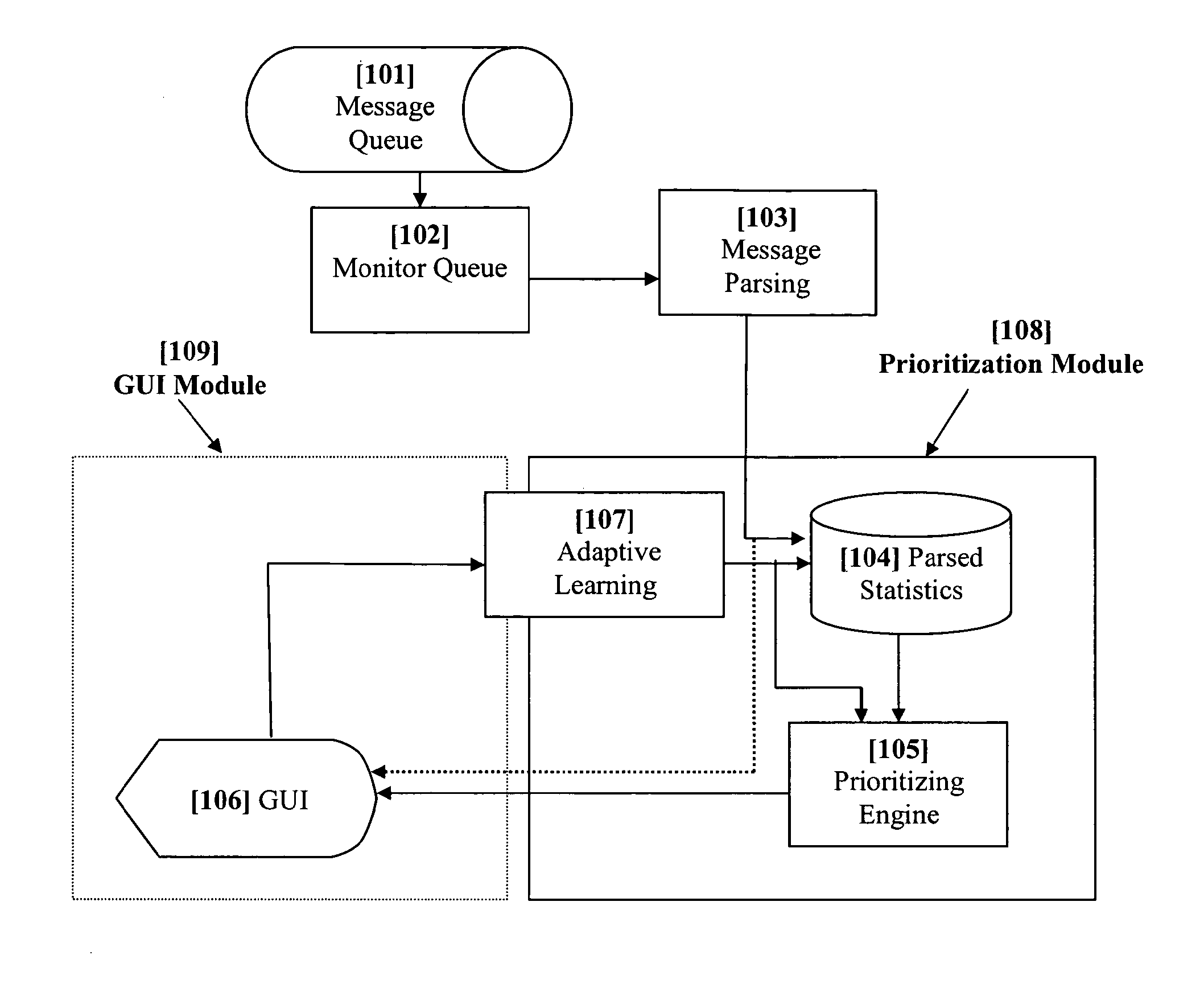
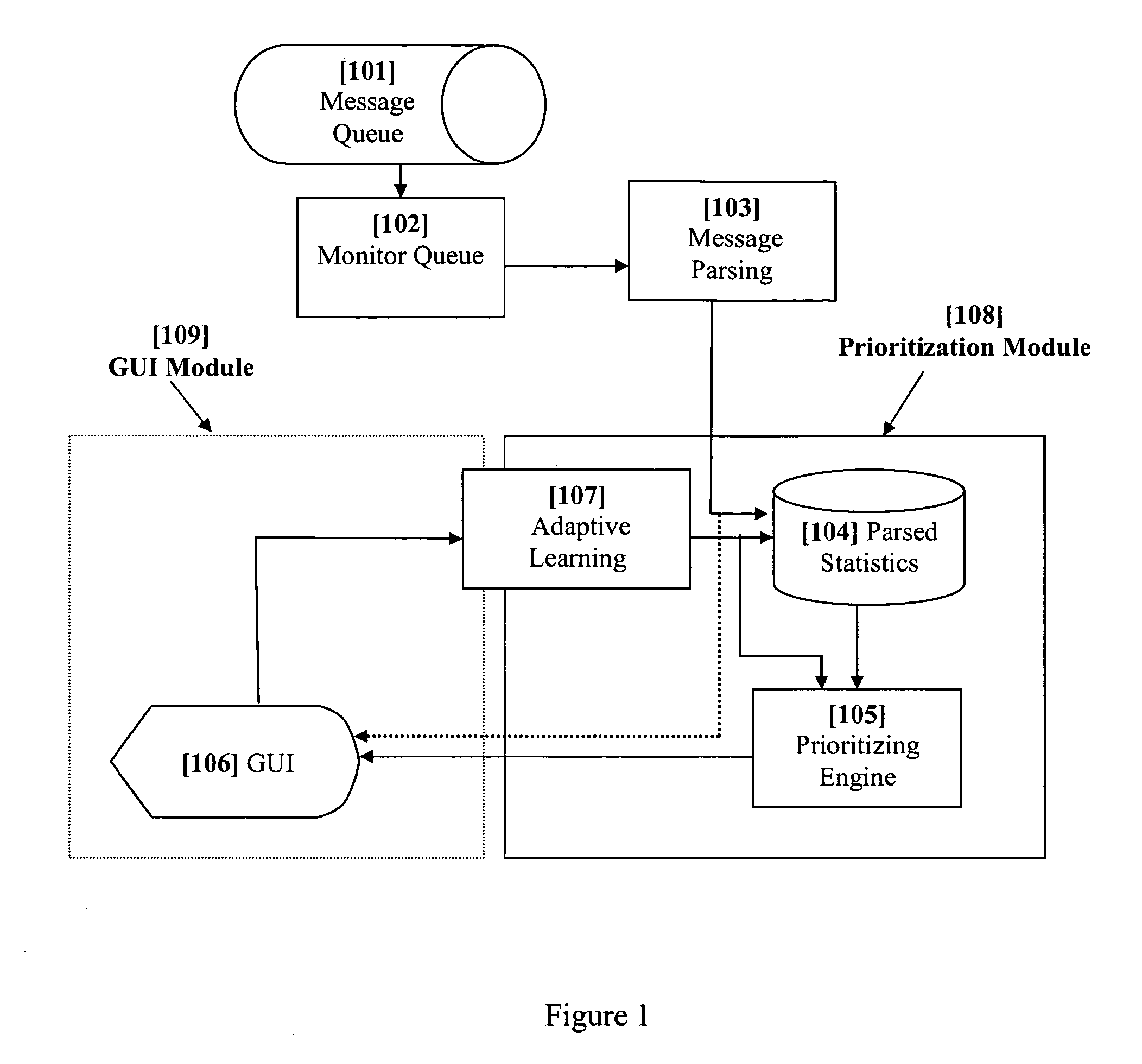
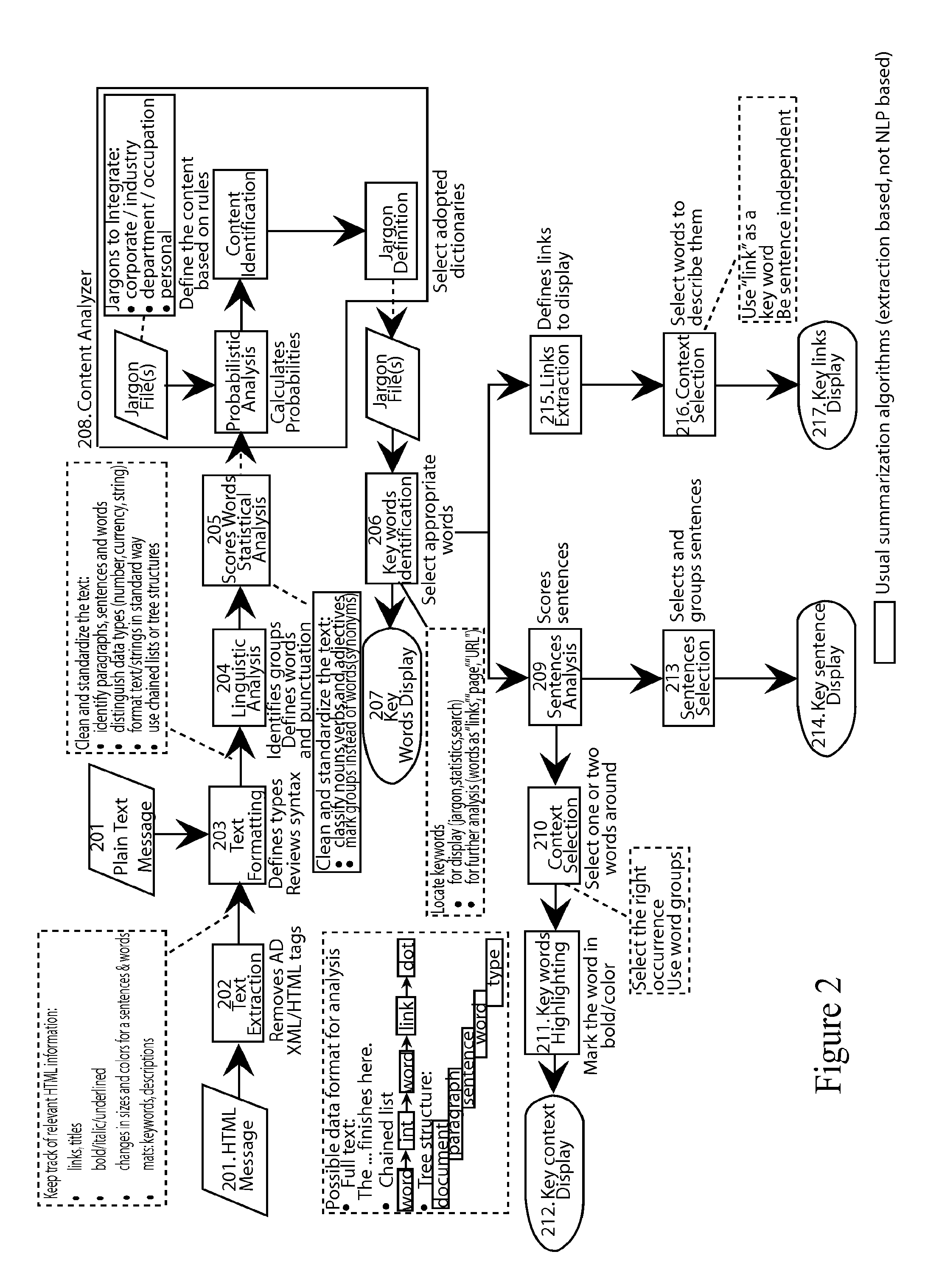
- A dynamic, user-based prioritization system that monitors message queues, analyzes historical and content data, and adapts to user behavior by calculating a prioritization score using statistical and contextual analysis, integrating with existing message clients to rank messages based on their importance and relevance.

System and method for generating user-specific interfaces
PatentPendingUS20240422118A1
Innovation
- A user-specific machine learning model is trained based on user interactions to generate customized interfaces for messages, providing tailored content and actions specific to each user's preferences, reducing the need for manual navigation and enhancing interaction efficiency.


Privacy Regulations for Message Processing Systems
The regulatory landscape for message processing systems has evolved significantly in response to growing concerns about data privacy and user protection. The General Data Protection Regulation (GDPR) in Europe, the California Consumer Privacy Act (CCPA), and similar legislation worldwide have established comprehensive frameworks governing how personal data within messages can be collected, processed, and stored. These regulations mandate explicit user consent for data processing, require transparent disclosure of filtering algorithms, and grant users fundamental rights including data access, portability, and deletion.
Intelligent message filtering systems must navigate complex compliance requirements that vary across jurisdictions. The GDPR's principle of data minimization requires that filtering algorithms process only the minimum necessary data to achieve their intended purpose. This creates technical challenges for AI-driven filters that traditionally rely on extensive data analysis to improve accuracy. Organizations must implement privacy-by-design principles, ensuring that data protection measures are integrated into the system architecture from the initial development phase rather than added as an afterthought.
Cross-border data transfer regulations present additional complexity for global message filtering platforms. The invalidation of Privacy Shield and subsequent implementation of Standard Contractual Clauses have created uncertainty around international data flows. Message processing systems must establish adequate safeguards when transferring personal data across borders, often requiring data localization strategies or sophisticated encryption protocols that maintain filtering effectiveness while ensuring regulatory compliance.
Emerging regulations specifically targeting algorithmic decision-making are reshaping the message filtering landscape. The EU's proposed AI Act introduces risk-based classifications for AI systems, potentially categorizing certain message filters as high-risk applications subject to stringent oversight requirements. These regulations demand algorithmic transparency, bias testing, and human oversight mechanisms that may conflict with the proprietary nature of advanced filtering technologies.
The enforcement landscape continues to evolve with substantial financial penalties for non-compliance. Recent regulatory actions have resulted in multi-million dollar fines for improper message data handling, creating strong incentives for organizations to prioritize privacy compliance in their filtering system designs. This regulatory pressure is driving innovation in privacy-preserving technologies such as federated learning and differential privacy, which enable effective message filtering while minimizing privacy risks and ensuring sustainable compliance frameworks.
Intelligent message filtering systems must navigate complex compliance requirements that vary across jurisdictions. The GDPR's principle of data minimization requires that filtering algorithms process only the minimum necessary data to achieve their intended purpose. This creates technical challenges for AI-driven filters that traditionally rely on extensive data analysis to improve accuracy. Organizations must implement privacy-by-design principles, ensuring that data protection measures are integrated into the system architecture from the initial development phase rather than added as an afterthought.
Cross-border data transfer regulations present additional complexity for global message filtering platforms. The invalidation of Privacy Shield and subsequent implementation of Standard Contractual Clauses have created uncertainty around international data flows. Message processing systems must establish adequate safeguards when transferring personal data across borders, often requiring data localization strategies or sophisticated encryption protocols that maintain filtering effectiveness while ensuring regulatory compliance.
Emerging regulations specifically targeting algorithmic decision-making are reshaping the message filtering landscape. The EU's proposed AI Act introduces risk-based classifications for AI systems, potentially categorizing certain message filters as high-risk applications subject to stringent oversight requirements. These regulations demand algorithmic transparency, bias testing, and human oversight mechanisms that may conflict with the proprietary nature of advanced filtering technologies.
The enforcement landscape continues to evolve with substantial financial penalties for non-compliance. Recent regulatory actions have resulted in multi-million dollar fines for improper message data handling, creating strong incentives for organizations to prioritize privacy compliance in their filtering system designs. This regulatory pressure is driving innovation in privacy-preserving technologies such as federated learning and differential privacy, which enable effective message filtering while minimizing privacy risks and ensuring sustainable compliance frameworks.
User Experience Design for Adaptive Message Interfaces
User experience design for adaptive message interfaces represents a critical intersection of human-computer interaction principles and intelligent filtering technologies. The fundamental challenge lies in creating interfaces that can dynamically adjust to individual user preferences while maintaining intuitive usability across diverse user populations. Modern adaptive interfaces must balance automation with user control, ensuring that intelligent filtering enhances rather than restricts user agency in message management.
The core design philosophy centers on progressive disclosure and contextual relevance. Adaptive interfaces should present information hierarchically, with the most relevant messages prominently displayed while less critical communications remain accessible through secondary navigation paths. This approach requires sophisticated understanding of user behavior patterns, temporal preferences, and contextual factors that influence message priority perception.
Personalization mechanisms form the backbone of effective adaptive message interfaces. These systems must learn from implicit user behaviors such as reading patterns, response times, and deletion habits, while also incorporating explicit feedback mechanisms. The interface design should make the learning process transparent, allowing users to understand why certain messages receive priority treatment and providing easy correction mechanisms when the system misinterprets user preferences.
Visual hierarchy and information architecture play crucial roles in adaptive interface effectiveness. Dynamic layout systems that can reorganize content based on predicted user needs require careful consideration of cognitive load and visual consistency. The interface must maintain familiar navigation patterns while adapting content presentation, ensuring users can develop muscle memory despite the system's adaptive nature.
Accessibility considerations become particularly complex in adaptive interfaces, as personalization features must accommodate diverse user capabilities and preferences. Universal design principles must be embedded throughout the adaptation algorithms, ensuring that intelligent filtering enhances accessibility rather than creating new barriers for users with different interaction modalities or cognitive processing styles.
Trust and transparency emerge as fundamental user experience requirements for adaptive message interfaces. Users need clear understanding of how filtering decisions are made and confidence that important communications will not be inadvertently suppressed. Interface design must incorporate appropriate feedback mechanisms and override capabilities that preserve user autonomy while leveraging intelligent automation benefits.
The core design philosophy centers on progressive disclosure and contextual relevance. Adaptive interfaces should present information hierarchically, with the most relevant messages prominently displayed while less critical communications remain accessible through secondary navigation paths. This approach requires sophisticated understanding of user behavior patterns, temporal preferences, and contextual factors that influence message priority perception.
Personalization mechanisms form the backbone of effective adaptive message interfaces. These systems must learn from implicit user behaviors such as reading patterns, response times, and deletion habits, while also incorporating explicit feedback mechanisms. The interface design should make the learning process transparent, allowing users to understand why certain messages receive priority treatment and providing easy correction mechanisms when the system misinterprets user preferences.
Visual hierarchy and information architecture play crucial roles in adaptive interface effectiveness. Dynamic layout systems that can reorganize content based on predicted user needs require careful consideration of cognitive load and visual consistency. The interface must maintain familiar navigation patterns while adapting content presentation, ensuring users can develop muscle memory despite the system's adaptive nature.
Accessibility considerations become particularly complex in adaptive interfaces, as personalization features must accommodate diverse user capabilities and preferences. Universal design principles must be embedded throughout the adaptation algorithms, ensuring that intelligent filtering enhances accessibility rather than creating new barriers for users with different interaction modalities or cognitive processing styles.
Trust and transparency emerge as fundamental user experience requirements for adaptive message interfaces. Users need clear understanding of how filtering decisions are made and confidence that important communications will not be inadvertently suppressed. Interface design must incorporate appropriate feedback mechanisms and override capabilities that preserve user autonomy while leveraging intelligent automation benefits.
Unlock deeper insights with PatSnap Eureka Quick Research — get a full tech report to explore trends and direct your research. Try now!
Generate Your Research Report Instantly with AI Agent
Supercharge your innovation with PatSnap Eureka AI Agent Platform!