How To Manage Intelligent Message Filter Update Cycles
MAR 2, 20269 MIN READ
Generate Your Research Report Instantly with AI Agent
PatSnap Eureka helps you evaluate technical feasibility & market potential.
Intelligent Message Filter Background and Objectives
Intelligent message filtering has emerged as a critical technology in the digital communication landscape, evolving from simple rule-based systems to sophisticated machine learning-driven solutions. The exponential growth of digital communications, with billions of messages processed daily across email platforms, social media, and enterprise communication systems, has necessitated advanced filtering mechanisms to combat spam, malware, phishing attempts, and other unwanted content.
The historical development of message filtering began with basic keyword matching and blacklist approaches in the 1990s, progressing through statistical methods like Bayesian filtering in the early 2000s, and ultimately advancing to today's neural network-based systems that can understand context, sentiment, and behavioral patterns. This evolution reflects the continuous arms race between malicious actors developing increasingly sophisticated attack vectors and security systems adapting to counter these threats.
Modern intelligent message filters face unprecedented challenges due to the dynamic nature of threats and the vast scale of communications. Traditional static filtering approaches prove inadequate against rapidly evolving spam techniques, zero-day attacks, and context-aware social engineering attempts. The complexity increases exponentially when considering multilingual content, multimedia attachments, and the need for real-time processing without impacting user experience.
The primary objective of managing intelligent message filter update cycles is to establish a systematic approach that ensures filters remain effective against emerging threats while maintaining optimal performance and minimizing false positives. This involves creating automated mechanisms for threat detection, model retraining, and deployment of updates across distributed systems. The goal extends beyond mere threat mitigation to encompass user experience optimization, ensuring legitimate communications flow seamlessly while malicious content is intercepted.
Key technical objectives include developing adaptive learning algorithms that can identify new threat patterns without extensive manual intervention, implementing efficient data pipeline architectures for continuous model improvement, and establishing robust testing frameworks to validate filter updates before deployment. The ultimate aim is to create self-evolving filtering systems that maintain high accuracy rates while adapting to the constantly changing threat landscape in real-time.
The historical development of message filtering began with basic keyword matching and blacklist approaches in the 1990s, progressing through statistical methods like Bayesian filtering in the early 2000s, and ultimately advancing to today's neural network-based systems that can understand context, sentiment, and behavioral patterns. This evolution reflects the continuous arms race between malicious actors developing increasingly sophisticated attack vectors and security systems adapting to counter these threats.
Modern intelligent message filters face unprecedented challenges due to the dynamic nature of threats and the vast scale of communications. Traditional static filtering approaches prove inadequate against rapidly evolving spam techniques, zero-day attacks, and context-aware social engineering attempts. The complexity increases exponentially when considering multilingual content, multimedia attachments, and the need for real-time processing without impacting user experience.
The primary objective of managing intelligent message filter update cycles is to establish a systematic approach that ensures filters remain effective against emerging threats while maintaining optimal performance and minimizing false positives. This involves creating automated mechanisms for threat detection, model retraining, and deployment of updates across distributed systems. The goal extends beyond mere threat mitigation to encompass user experience optimization, ensuring legitimate communications flow seamlessly while malicious content is intercepted.
Key technical objectives include developing adaptive learning algorithms that can identify new threat patterns without extensive manual intervention, implementing efficient data pipeline architectures for continuous model improvement, and establishing robust testing frameworks to validate filter updates before deployment. The ultimate aim is to create self-evolving filtering systems that maintain high accuracy rates while adapting to the constantly changing threat landscape in real-time.
Market Demand for Smart Message Filtering Solutions
The global market for intelligent message filtering solutions has experienced substantial growth driven by the exponential increase in digital communications across enterprise and consumer segments. Organizations worldwide face mounting pressure to manage overwhelming volumes of emails, instant messages, and other digital communications while maintaining security and productivity standards.
Enterprise demand represents the largest market segment, with businesses seeking sophisticated filtering systems to combat spam, phishing attacks, and malicious content. Financial services, healthcare, and government sectors demonstrate particularly strong demand due to stringent regulatory compliance requirements and heightened security concerns. These organizations require advanced filtering capabilities that can adapt to evolving threat landscapes while minimizing false positives that could disrupt critical business communications.
Consumer market demand continues expanding as individuals seek protection from unwanted communications across multiple platforms including email, SMS, and social media messaging. The proliferation of mobile devices and messaging applications has created new attack vectors, driving demand for comprehensive filtering solutions that can operate seamlessly across different communication channels and device types.
The rise of remote work and digital transformation initiatives has accelerated market growth significantly. Organizations now require filtering solutions that can protect distributed workforces while maintaining consistent security policies across various communication platforms and geographic locations. This shift has created demand for cloud-based filtering services that offer scalability and centralized management capabilities.
Emerging markets in Asia-Pacific and Latin America show particularly strong growth potential as digital adoption rates increase and cybersecurity awareness grows. These regions present opportunities for filtering solution providers to establish market presence and develop localized offerings that address specific regional communication patterns and threat profiles.
Regulatory compliance requirements continue driving market demand, with data protection laws and industry-specific regulations mandating robust message filtering capabilities. Organizations must implement solutions that not only filter unwanted content but also provide audit trails and compliance reporting features to meet regulatory obligations.
The integration of artificial intelligence and machine learning technologies has created new market opportunities for advanced filtering solutions that can learn from user behavior and adapt to emerging threats autonomously. This technological evolution has increased market expectations for more sophisticated and intelligent filtering capabilities.
Enterprise demand represents the largest market segment, with businesses seeking sophisticated filtering systems to combat spam, phishing attacks, and malicious content. Financial services, healthcare, and government sectors demonstrate particularly strong demand due to stringent regulatory compliance requirements and heightened security concerns. These organizations require advanced filtering capabilities that can adapt to evolving threat landscapes while minimizing false positives that could disrupt critical business communications.
Consumer market demand continues expanding as individuals seek protection from unwanted communications across multiple platforms including email, SMS, and social media messaging. The proliferation of mobile devices and messaging applications has created new attack vectors, driving demand for comprehensive filtering solutions that can operate seamlessly across different communication channels and device types.
The rise of remote work and digital transformation initiatives has accelerated market growth significantly. Organizations now require filtering solutions that can protect distributed workforces while maintaining consistent security policies across various communication platforms and geographic locations. This shift has created demand for cloud-based filtering services that offer scalability and centralized management capabilities.
Emerging markets in Asia-Pacific and Latin America show particularly strong growth potential as digital adoption rates increase and cybersecurity awareness grows. These regions present opportunities for filtering solution providers to establish market presence and develop localized offerings that address specific regional communication patterns and threat profiles.
Regulatory compliance requirements continue driving market demand, with data protection laws and industry-specific regulations mandating robust message filtering capabilities. Organizations must implement solutions that not only filter unwanted content but also provide audit trails and compliance reporting features to meet regulatory obligations.
The integration of artificial intelligence and machine learning technologies has created new market opportunities for advanced filtering solutions that can learn from user behavior and adapt to emerging threats autonomously. This technological evolution has increased market expectations for more sophisticated and intelligent filtering capabilities.
Current State and Challenges of Filter Update Management
The current landscape of intelligent message filter update management reveals a complex ecosystem where traditional approaches struggle to meet modern demands. Most existing systems rely on periodic batch updates that occur at fixed intervals, typically ranging from daily to weekly cycles. This approach, while predictable, often leaves systems vulnerable during the gap between updates when new threats emerge or communication patterns shift rapidly.
Contemporary filter management architectures predominantly utilize centralized update distribution models. Major email service providers and enterprise security vendors deploy updates through centralized servers that push new filter rules, machine learning models, and threat signatures to client systems. However, this centralized approach creates bottlenecks during peak update periods and introduces single points of failure that can compromise entire networks of protected systems.
The integration of machine learning models into message filtering has introduced unprecedented complexity to update management. Unlike traditional rule-based filters that require simple parameter adjustments, ML-based systems demand comprehensive model retraining, validation, and deployment processes. Current systems often struggle with version control of these models, leading to inconsistencies across distributed deployments and difficulties in rollback procedures when updates introduce false positives.
Real-time adaptation capabilities remain severely limited in most current implementations. While threat landscapes evolve continuously, existing update mechanisms typically operate on predetermined schedules that cannot respond to emerging threats within acceptable timeframes. This temporal disconnect between threat emergence and filter adaptation creates windows of vulnerability that sophisticated attackers increasingly exploit.
Resource management presents another significant challenge in current filter update systems. The computational overhead of processing and applying updates often conflicts with system performance requirements, particularly in high-volume messaging environments. Many organizations report degraded message processing speeds during update cycles, forcing them to schedule updates during off-peak hours and potentially extending exposure periods.
Coordination between multiple filter layers adds complexity to update management. Modern messaging systems typically employ multiple filtering stages including spam detection, malware scanning, and content policy enforcement. Current approaches often lack sophisticated orchestration mechanisms to ensure these diverse filter types update cohesively, leading to conflicts between different filtering rules and inconsistent user experiences.
The geographical distribution of messaging infrastructure further complicates update management. Organizations with global operations face challenges in synchronizing updates across different time zones and regulatory environments while maintaining consistent protection levels. Current systems often struggle to balance the need for uniform security policies with local compliance requirements and network latency considerations.
Contemporary filter management architectures predominantly utilize centralized update distribution models. Major email service providers and enterprise security vendors deploy updates through centralized servers that push new filter rules, machine learning models, and threat signatures to client systems. However, this centralized approach creates bottlenecks during peak update periods and introduces single points of failure that can compromise entire networks of protected systems.
The integration of machine learning models into message filtering has introduced unprecedented complexity to update management. Unlike traditional rule-based filters that require simple parameter adjustments, ML-based systems demand comprehensive model retraining, validation, and deployment processes. Current systems often struggle with version control of these models, leading to inconsistencies across distributed deployments and difficulties in rollback procedures when updates introduce false positives.
Real-time adaptation capabilities remain severely limited in most current implementations. While threat landscapes evolve continuously, existing update mechanisms typically operate on predetermined schedules that cannot respond to emerging threats within acceptable timeframes. This temporal disconnect between threat emergence and filter adaptation creates windows of vulnerability that sophisticated attackers increasingly exploit.
Resource management presents another significant challenge in current filter update systems. The computational overhead of processing and applying updates often conflicts with system performance requirements, particularly in high-volume messaging environments. Many organizations report degraded message processing speeds during update cycles, forcing them to schedule updates during off-peak hours and potentially extending exposure periods.
Coordination between multiple filter layers adds complexity to update management. Modern messaging systems typically employ multiple filtering stages including spam detection, malware scanning, and content policy enforcement. Current approaches often lack sophisticated orchestration mechanisms to ensure these diverse filter types update cohesively, leading to conflicts between different filtering rules and inconsistent user experiences.
The geographical distribution of messaging infrastructure further complicates update management. Organizations with global operations face challenges in synchronizing updates across different time zones and regulatory environments while maintaining consistent protection levels. Current systems often struggle to balance the need for uniform security policies with local compliance requirements and network latency considerations.
Existing Solutions for Filter Update Cycle Management
01 Adaptive filter update mechanisms based on message characteristics
Intelligent message filtering systems can employ adaptive update mechanisms that adjust filter parameters based on the characteristics of incoming messages. These systems analyze message patterns, content types, and user behavior to dynamically modify filtering rules. The update cycles can be triggered by detecting changes in message volume, spam patterns, or user feedback, allowing the filter to continuously improve its accuracy and effectiveness in identifying unwanted messages.- Adaptive filter update based on user feedback and behavior: Intelligent message filters can be updated dynamically based on user feedback and behavioral patterns. The system monitors user actions such as marking messages as spam or legitimate, and adjusts filtering rules accordingly. Machine learning algorithms analyze these patterns to improve filter accuracy over time. The update cycle can be triggered by accumulated feedback reaching certain thresholds or at predetermined intervals to ensure the filter remains effective against evolving message patterns.
- Periodic scheduled filter updates with configurable intervals: Message filtering systems can implement scheduled update cycles at configurable time intervals such as daily, weekly, or monthly. These periodic updates allow the filter to incorporate new spam signatures, threat intelligence, and pattern recognition rules. Administrators can customize the update frequency based on organizational needs and message volume. The system may also support manual triggering of updates outside the regular schedule when immediate filter adjustments are required.
- Real-time continuous filter learning and updating: Advanced intelligent filters employ continuous learning mechanisms that update filtering parameters in real-time as new messages are processed. This approach eliminates fixed update cycles by constantly refining the filter model based on incoming message characteristics. The system maintains a dynamic knowledge base that evolves with each message evaluation, enabling immediate adaptation to new spam techniques and emerging threats without waiting for scheduled updates.
- Centralized filter update distribution to multiple endpoints: In distributed messaging environments, filter updates can be managed centrally and propagated to multiple endpoints or client devices. A central server generates updated filter rules, signatures, and classification models based on aggregated data from all connected systems. These updates are then distributed to individual message filtering components according to defined update cycles. The distribution mechanism ensures consistency across the network while allowing for bandwidth-efficient incremental updates rather than complete filter replacements.
- Event-triggered filter updates based on threat detection: Message filters can implement event-driven update cycles that are triggered by specific conditions rather than fixed time intervals. When the system detects a significant increase in spam messages, new attack patterns, or a drop in filter effectiveness, it automatically initiates an update cycle. This responsive approach ensures timely filter adjustments during active spam campaigns or security incidents. The system may also coordinate with external threat intelligence sources to trigger updates when new widespread threats are identified.
02 Scheduled periodic filter updates with machine learning models
Message filtering systems can implement scheduled periodic updates where machine learning models are retrained at regular intervals. These update cycles involve collecting new training data from classified messages, retraining classification algorithms, and deploying updated models to improve detection accuracy. The frequency of updates can be configured based on system requirements, ranging from daily to weekly cycles, ensuring that filters remain effective against evolving spam and phishing techniques.Expand Specific Solutions03 Real-time incremental filter updates using feedback loops
Advanced filtering systems utilize real-time incremental update mechanisms that incorporate user feedback and system-detected patterns immediately. These systems employ feedback loops where user actions such as marking messages as spam or legitimate are used to continuously refine filtering rules without waiting for scheduled update cycles. This approach enables rapid adaptation to new threats and reduces false positives by learning from actual user preferences and behaviors in near real-time.Expand Specific Solutions04 Distributed filter update synchronization across multiple nodes
In distributed messaging systems, filter updates need to be synchronized across multiple processing nodes to maintain consistency. These systems implement update cycles that coordinate the deployment of new filtering rules and models across all nodes in the network. The synchronization mechanisms ensure that all nodes operate with the same filtering criteria while managing update propagation delays and handling version conflicts. This approach is particularly important for large-scale email systems and enterprise messaging platforms.Expand Specific Solutions05 Hybrid update strategies combining scheduled and event-driven updates
Modern intelligent message filters employ hybrid update strategies that combine both scheduled periodic updates and event-driven updates. These systems maintain baseline update cycles for regular model refreshes while also implementing triggers for immediate updates when significant events occur, such as detecting new spam campaigns or security threats. The hybrid approach balances computational efficiency with responsiveness, allowing filters to maintain high accuracy while managing system resources effectively.Expand Specific Solutions
Key Players in Message Filtering and AI Industry
The intelligent message filter update cycle management landscape represents a mature technology domain within the broader cybersecurity and communication infrastructure market, valued at approximately $15 billion globally. The industry has reached an advanced maturity stage, characterized by established protocols and standardized approaches across enterprise and consumer applications. Technology maturity is evidenced by sophisticated implementations from major players including Microsoft Corp. and IBM, who have developed comprehensive filtering frameworks, while telecommunications giants like Huawei Technologies, ZTE Corp., and Nokia Solutions & Networks have integrated advanced filtering mechanisms into their network infrastructure solutions. European industrial leaders such as Siemens AG and Bosch have contributed specialized filtering technologies for IoT and industrial applications. The competitive landscape shows consolidation around platform-based approaches, with companies like Meta Platforms and Oracle focusing on scalable, AI-driven filtering systems that can adapt to evolving threat patterns and communication volumes.
Microsoft Technology Licensing LLC
Technical Solution: Microsoft implements intelligent message filtering through Exchange Online Protection (EOP) and Microsoft Defender for Office 365, utilizing machine learning algorithms that continuously update threat intelligence databases. The system employs real-time analysis of message patterns, sender reputation, and content analysis to identify spam, phishing, and malware. Updates are managed through cloud-based services with automatic policy synchronization across tenant environments, ensuring consistent protection levels while minimizing administrative overhead through centralized management consoles.
Strengths: Comprehensive cloud-based infrastructure with automatic updates and extensive threat intelligence network. Weaknesses: Dependency on cloud connectivity and potential over-filtering in highly customized environments.
Huawei Technologies Co., Ltd.
Technical Solution: Huawei's intelligent message filtering solution is part of their enterprise communication security suite, incorporating AI-powered threat detection with edge computing capabilities. The system utilizes distributed intelligence across network infrastructure to process filtering updates locally while maintaining centralized policy management. Update cycles are optimized for telecommunications environments, supporting both cloud-based and on-premises deployment models. The solution includes adaptive learning mechanisms that adjust filtering sensitivity based on network traffic patterns and regional threat landscapes, ensuring optimal performance across diverse geographical deployments.
Strengths: Edge computing integration with telecommunications infrastructure optimization and flexible deployment options. Weaknesses: Geopolitical restrictions may limit adoption in certain markets and regulatory compliance challenges.
Core Innovations in Adaptive Filter Update Mechanisms
Incremental anti-spam query and update systems
PatentInactiveEP1613010B1
Innovation
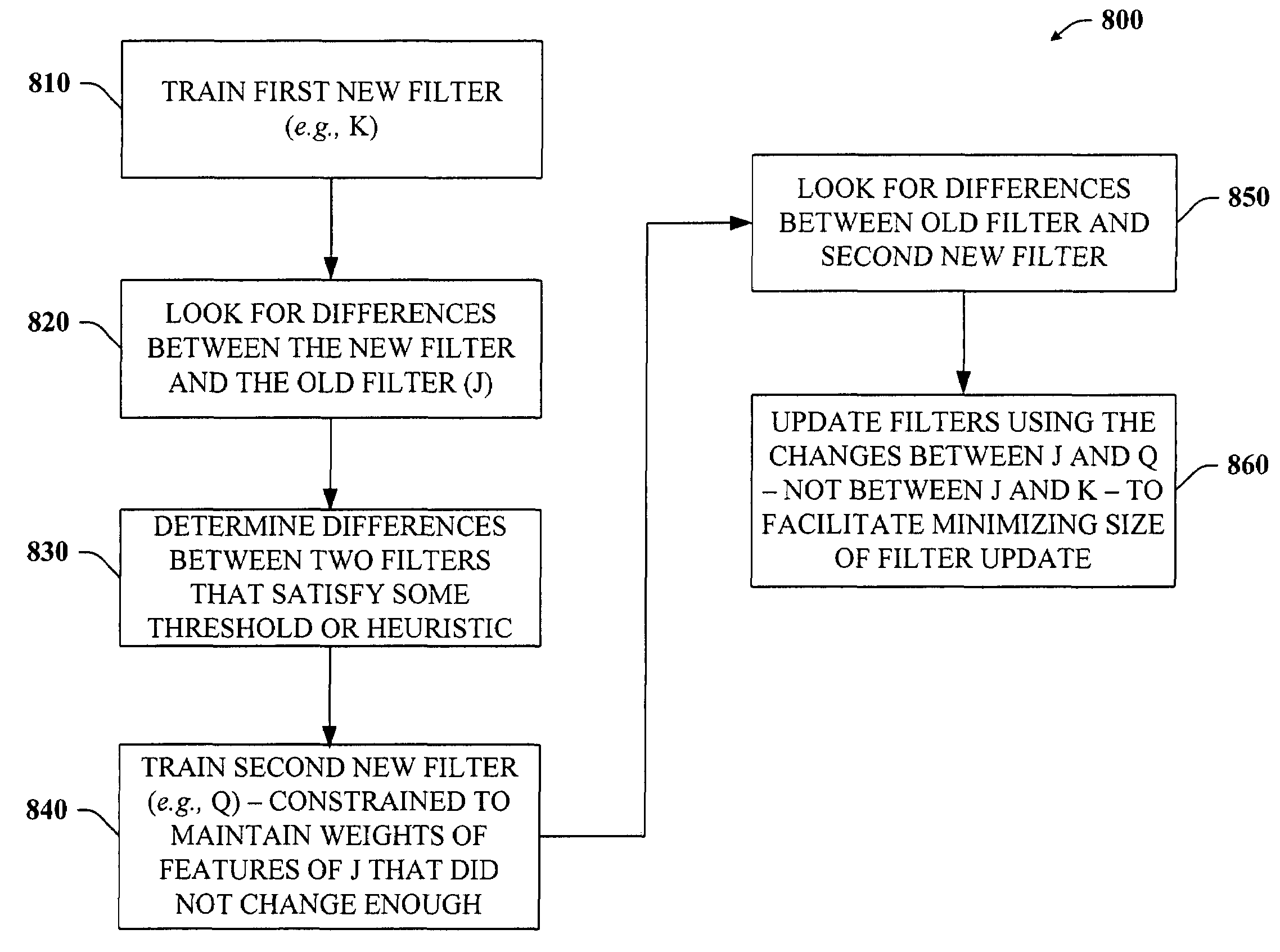
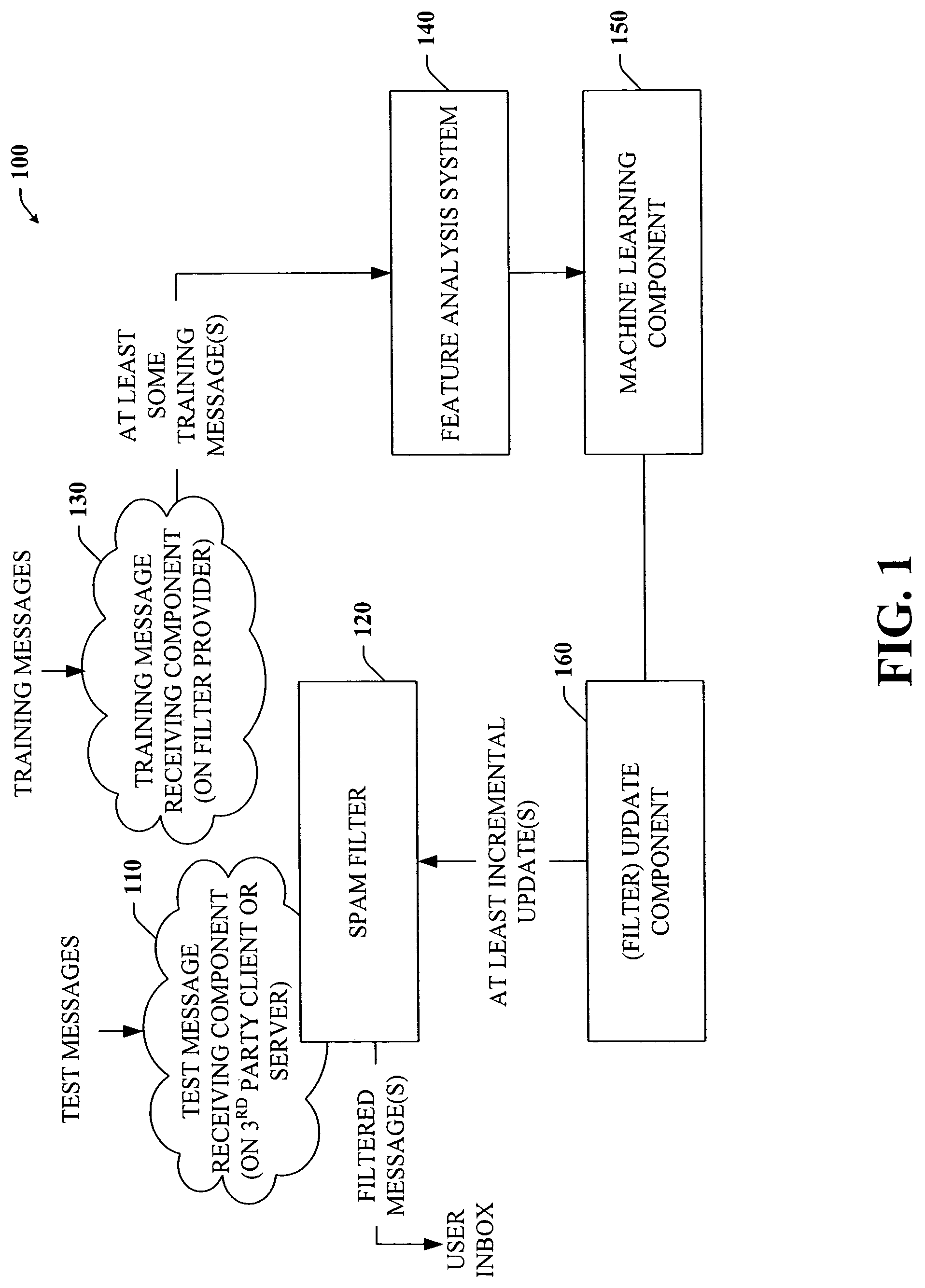
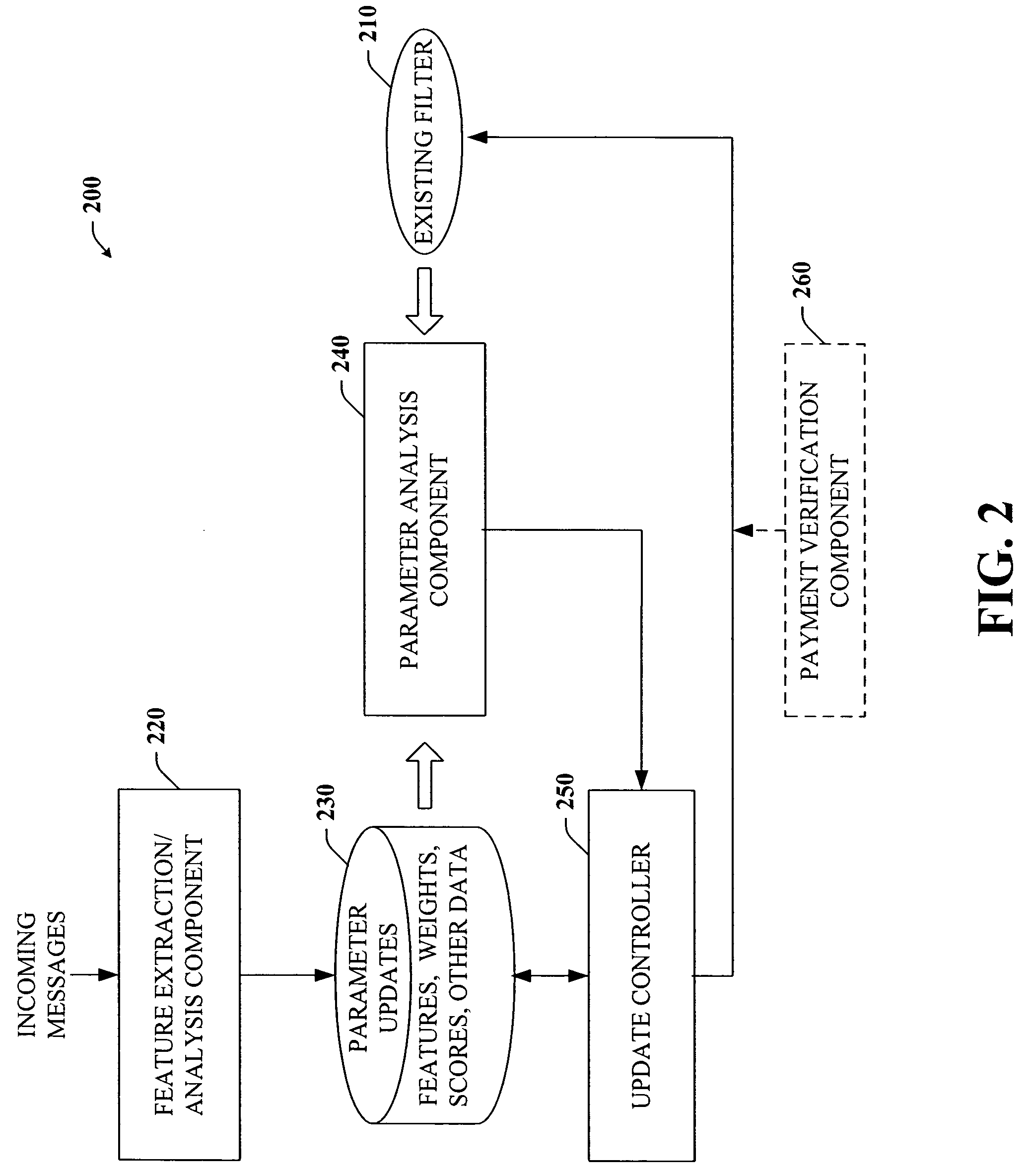
- Implementing incremental updates by comparing and sending only the differences between existing and new filters, utilizing a web-based service for clients to query and receive updates based on specific message features, and prioritizing parameter changes that significantly impact spam classification.


Incremental anti-spam lookup and update service
PatentActiveUS7664819B2
Innovation
- Implementing incremental updates that compare and differ from existing filters, focusing on parameters that have changed, allowing for real-time or near real-time updates of spam filters by communicating only the necessary changes, which can be determined by servers or clients through web-based services.

Privacy Regulations Impact on Message Filtering
Privacy regulations have fundamentally transformed the landscape of intelligent message filtering systems, introducing complex compliance requirements that directly impact filter update cycles and operational methodologies. The implementation of comprehensive data protection frameworks such as GDPR, CCPA, and emerging regional privacy laws has created a regulatory environment where message filtering technologies must balance effectiveness with strict privacy preservation mandates.
The principle of data minimization, central to most privacy regulations, significantly constrains how intelligent filters collect, process, and retain message data for learning purposes. Traditional machine learning approaches that relied on extensive data collection and long-term storage for model training now face substantial limitations. Filter systems must implement privacy-by-design architectures that minimize data exposure while maintaining filtering accuracy, often requiring more frequent model updates with smaller, anonymized datasets.
Consent management requirements have introduced additional complexity to filter update cycles, particularly in scenarios where user data contributes to model improvement. Organizations must establish clear consent mechanisms for data usage in filter training, implement granular opt-out capabilities, and ensure that withdrawal of consent triggers appropriate data purging from existing models. This dynamic consent landscape necessitates more agile update mechanisms that can accommodate real-time privacy preference changes.
Cross-border data transfer restrictions have created significant operational challenges for global message filtering deployments. Regulations requiring data localization force organizations to maintain region-specific filtering models, complicating centralized update strategies and requiring sophisticated data governance frameworks. The inability to freely transfer training data across jurisdictions has led to the development of federated learning approaches and differential privacy techniques in filter systems.
Regulatory requirements for algorithmic transparency and explainability have pushed filter systems toward more interpretable models, often at the expense of performance optimization. Organizations must now document decision-making processes, provide user access to filtering logic, and implement audit trails for regulatory compliance. These transparency requirements influence update cycle design, as changes must be thoroughly documented and potentially subject to regulatory review before deployment.
The evolving nature of privacy regulations creates ongoing uncertainty for filter system development, requiring organizations to build adaptive architectures capable of accommodating future regulatory changes while maintaining operational effectiveness and user trust.
The principle of data minimization, central to most privacy regulations, significantly constrains how intelligent filters collect, process, and retain message data for learning purposes. Traditional machine learning approaches that relied on extensive data collection and long-term storage for model training now face substantial limitations. Filter systems must implement privacy-by-design architectures that minimize data exposure while maintaining filtering accuracy, often requiring more frequent model updates with smaller, anonymized datasets.
Consent management requirements have introduced additional complexity to filter update cycles, particularly in scenarios where user data contributes to model improvement. Organizations must establish clear consent mechanisms for data usage in filter training, implement granular opt-out capabilities, and ensure that withdrawal of consent triggers appropriate data purging from existing models. This dynamic consent landscape necessitates more agile update mechanisms that can accommodate real-time privacy preference changes.
Cross-border data transfer restrictions have created significant operational challenges for global message filtering deployments. Regulations requiring data localization force organizations to maintain region-specific filtering models, complicating centralized update strategies and requiring sophisticated data governance frameworks. The inability to freely transfer training data across jurisdictions has led to the development of federated learning approaches and differential privacy techniques in filter systems.
Regulatory requirements for algorithmic transparency and explainability have pushed filter systems toward more interpretable models, often at the expense of performance optimization. Organizations must now document decision-making processes, provide user access to filtering logic, and implement audit trails for regulatory compliance. These transparency requirements influence update cycle design, as changes must be thoroughly documented and potentially subject to regulatory review before deployment.
The evolving nature of privacy regulations creates ongoing uncertainty for filter system development, requiring organizations to build adaptive architectures capable of accommodating future regulatory changes while maintaining operational effectiveness and user trust.
Real-time Performance Optimization Strategies
Real-time performance optimization in intelligent message filtering systems requires a multi-layered approach that balances accuracy with processing speed. The primary challenge lies in maintaining filter effectiveness while minimizing latency during update cycles, particularly when handling high-volume message streams that demand immediate classification decisions.
Memory-efficient caching strategies form the foundation of real-time optimization. Implementing hierarchical cache structures allows frequently accessed filter rules and patterns to remain in high-speed memory, while less critical components can be stored in secondary cache layers. This approach reduces lookup times for common message patterns and ensures that the most relevant filtering criteria are immediately available during peak processing periods.
Parallel processing architectures significantly enhance real-time performance by distributing filtering tasks across multiple processing units. By implementing asynchronous update mechanisms, systems can continue processing incoming messages using existing filter configurations while simultaneously updating rules in background threads. This prevents processing bottlenecks that typically occur during traditional synchronous update cycles.
Adaptive threshold management represents another critical optimization strategy. Dynamic adjustment of filtering sensitivity based on real-time system load ensures consistent performance even during traffic spikes. When processing capacity approaches limits, the system can temporarily adjust filtering granularity to maintain throughput while preserving essential security and relevance functions.
Incremental update protocols minimize the performance impact of filter modifications. Rather than replacing entire filter sets, these protocols identify and update only changed components, reducing both processing overhead and memory allocation requirements. This approach is particularly effective for machine learning-based filters where model parameters undergo frequent but localized adjustments.
Load balancing mechanisms distribute filtering workloads across available resources based on real-time performance metrics. Advanced implementations incorporate predictive algorithms that anticipate traffic patterns and pre-allocate resources accordingly, preventing performance degradation before it occurs.
Database optimization techniques, including indexed rule storage and optimized query structures, ensure rapid access to filtering criteria. Implementing read-optimized data structures specifically designed for real-time access patterns can reduce database query times by significant margins, directly improving overall system responsiveness during update cycles.
Memory-efficient caching strategies form the foundation of real-time optimization. Implementing hierarchical cache structures allows frequently accessed filter rules and patterns to remain in high-speed memory, while less critical components can be stored in secondary cache layers. This approach reduces lookup times for common message patterns and ensures that the most relevant filtering criteria are immediately available during peak processing periods.
Parallel processing architectures significantly enhance real-time performance by distributing filtering tasks across multiple processing units. By implementing asynchronous update mechanisms, systems can continue processing incoming messages using existing filter configurations while simultaneously updating rules in background threads. This prevents processing bottlenecks that typically occur during traditional synchronous update cycles.
Adaptive threshold management represents another critical optimization strategy. Dynamic adjustment of filtering sensitivity based on real-time system load ensures consistent performance even during traffic spikes. When processing capacity approaches limits, the system can temporarily adjust filtering granularity to maintain throughput while preserving essential security and relevance functions.
Incremental update protocols minimize the performance impact of filter modifications. Rather than replacing entire filter sets, these protocols identify and update only changed components, reducing both processing overhead and memory allocation requirements. This approach is particularly effective for machine learning-based filters where model parameters undergo frequent but localized adjustments.
Load balancing mechanisms distribute filtering workloads across available resources based on real-time performance metrics. Advanced implementations incorporate predictive algorithms that anticipate traffic patterns and pre-allocate resources accordingly, preventing performance degradation before it occurs.
Database optimization techniques, including indexed rule storage and optimized query structures, ensure rapid access to filtering criteria. Implementing read-optimized data structures specifically designed for real-time access patterns can reduce database query times by significant margins, directly improving overall system responsiveness during update cycles.
Unlock deeper insights with PatSnap Eureka Quick Research — get a full tech report to explore trends and direct your research. Try now!
Generate Your Research Report Instantly with AI Agent
Supercharge your innovation with PatSnap Eureka AI Agent Platform!