Develop ECM Models for Advanced Emission Controls
MAR 27, 20269 MIN READ
Generate Your Research Report Instantly with AI Agent
Patsnap Eureka helps you evaluate technical feasibility & market potential.
ECM Emission Control Background and Objectives
Engine Control Module (ECM) emission control systems have evolved significantly since the introduction of electronic fuel injection in the 1980s. Initially designed for basic fuel management, ECMs have transformed into sophisticated computational platforms capable of real-time optimization of multiple emission control strategies. The integration of advanced sensors, actuators, and control algorithms has enabled modern ECMs to achieve unprecedented levels of emission reduction while maintaining engine performance and fuel efficiency.
The automotive industry faces increasingly stringent emission regulations worldwide, with standards such as Euro 7, China VI, and Tier 3 driving the need for more advanced control strategies. These regulations target not only traditional pollutants like NOx, CO, and hydrocarbons but also particulate matter and greenhouse gas emissions. The complexity of modern powertrains, including hybrid and electrified systems, further amplifies the challenges in emission control modeling.
Current ECM systems must coordinate multiple emission control technologies simultaneously, including selective catalytic reduction (SCR), diesel particulate filters (DPF), exhaust gas recirculation (EGR), and variable valve timing systems. The interdependencies between these systems create a complex optimization problem that requires sophisticated modeling approaches to achieve optimal performance across diverse operating conditions.
The primary objective of developing advanced ECM models for emission controls is to create predictive algorithms that can anticipate and proactively manage emission control system behavior. These models must accurately predict catalyst temperatures, conversion efficiencies, and system degradation patterns while adapting to real-world driving conditions and component aging effects.
A critical goal involves implementing model-based control strategies that can optimize emission control system performance in real-time. This includes developing algorithms for precise dosing of diesel exhaust fluid in SCR systems, optimal regeneration timing for particulate filters, and coordinated control of multiple emission control devices to minimize overall emissions while preserving fuel economy.
The development objectives also encompass creating robust diagnostic capabilities within ECM models to detect system malfunctions, component degradation, and performance deviations. These diagnostic functions must provide early warning of potential failures while minimizing false positive detections that could impact vehicle availability and customer satisfaction.
Furthermore, the models must be designed to accommodate future regulatory requirements and emerging emission control technologies. This forward-compatibility ensures that ECM systems can be updated through software modifications rather than requiring complete hardware redesigns, providing cost-effective compliance pathways for evolving emission standards.
The automotive industry faces increasingly stringent emission regulations worldwide, with standards such as Euro 7, China VI, and Tier 3 driving the need for more advanced control strategies. These regulations target not only traditional pollutants like NOx, CO, and hydrocarbons but also particulate matter and greenhouse gas emissions. The complexity of modern powertrains, including hybrid and electrified systems, further amplifies the challenges in emission control modeling.
Current ECM systems must coordinate multiple emission control technologies simultaneously, including selective catalytic reduction (SCR), diesel particulate filters (DPF), exhaust gas recirculation (EGR), and variable valve timing systems. The interdependencies between these systems create a complex optimization problem that requires sophisticated modeling approaches to achieve optimal performance across diverse operating conditions.
The primary objective of developing advanced ECM models for emission controls is to create predictive algorithms that can anticipate and proactively manage emission control system behavior. These models must accurately predict catalyst temperatures, conversion efficiencies, and system degradation patterns while adapting to real-world driving conditions and component aging effects.
A critical goal involves implementing model-based control strategies that can optimize emission control system performance in real-time. This includes developing algorithms for precise dosing of diesel exhaust fluid in SCR systems, optimal regeneration timing for particulate filters, and coordinated control of multiple emission control devices to minimize overall emissions while preserving fuel economy.
The development objectives also encompass creating robust diagnostic capabilities within ECM models to detect system malfunctions, component degradation, and performance deviations. These diagnostic functions must provide early warning of potential failures while minimizing false positive detections that could impact vehicle availability and customer satisfaction.
Furthermore, the models must be designed to accommodate future regulatory requirements and emerging emission control technologies. This forward-compatibility ensures that ECM systems can be updated through software modifications rather than requiring complete hardware redesigns, providing cost-effective compliance pathways for evolving emission standards.
Market Demand for Advanced ECM Emission Solutions
The global automotive industry faces unprecedented pressure to reduce emissions as environmental regulations become increasingly stringent worldwide. The European Union's Euro 7 standards, California's Advanced Clean Cars II program, and China's National VI emission standards represent a new generation of regulatory frameworks that demand sophisticated emission control technologies. These regulations are driving substantial market demand for advanced Engine Control Module solutions that can precisely manage combustion processes and aftertreatment systems.
Commercial vehicle segments, particularly heavy-duty trucks and construction equipment, represent the largest growth opportunity for advanced ECM emission solutions. Fleet operators are increasingly prioritizing vehicles that can meet current and anticipated future emission standards while maintaining operational efficiency. The transition toward electrification in light-duty vehicles has intensified focus on optimizing internal combustion engines for commercial applications where electric alternatives remain limited by range and payload constraints.
The aftermarket sector presents significant demand for ECM upgrades and retrofits, particularly in regions with aging vehicle fleets. Operators of older commercial vehicles seek cost-effective solutions to extend equipment life while achieving compliance with evolving emission standards. This creates opportunities for modular ECM systems that can be integrated with existing engine platforms without requiring complete powertrain replacement.
Marine and off-highway equipment markets are experiencing accelerated adoption of advanced emission control technologies as regulatory coverage expands beyond traditional automotive applications. Construction, mining, and agricultural equipment manufacturers require ECM solutions capable of managing complex emission control strategies while operating in harsh environmental conditions and variable duty cycles.
The integration of connectivity and data analytics capabilities into ECM systems has created new value propositions for fleet management and predictive maintenance applications. Operators increasingly demand systems that provide real-time emission performance monitoring, diagnostic capabilities, and optimization recommendations to minimize total cost of ownership while ensuring regulatory compliance.
Emerging markets present substantial growth potential as local emission standards align with international benchmarks. Countries implementing new emission regulations require ECM solutions that can be adapted to local fuel quality variations and operating conditions while meeting international performance standards.
Commercial vehicle segments, particularly heavy-duty trucks and construction equipment, represent the largest growth opportunity for advanced ECM emission solutions. Fleet operators are increasingly prioritizing vehicles that can meet current and anticipated future emission standards while maintaining operational efficiency. The transition toward electrification in light-duty vehicles has intensified focus on optimizing internal combustion engines for commercial applications where electric alternatives remain limited by range and payload constraints.
The aftermarket sector presents significant demand for ECM upgrades and retrofits, particularly in regions with aging vehicle fleets. Operators of older commercial vehicles seek cost-effective solutions to extend equipment life while achieving compliance with evolving emission standards. This creates opportunities for modular ECM systems that can be integrated with existing engine platforms without requiring complete powertrain replacement.
Marine and off-highway equipment markets are experiencing accelerated adoption of advanced emission control technologies as regulatory coverage expands beyond traditional automotive applications. Construction, mining, and agricultural equipment manufacturers require ECM solutions capable of managing complex emission control strategies while operating in harsh environmental conditions and variable duty cycles.
The integration of connectivity and data analytics capabilities into ECM systems has created new value propositions for fleet management and predictive maintenance applications. Operators increasingly demand systems that provide real-time emission performance monitoring, diagnostic capabilities, and optimization recommendations to minimize total cost of ownership while ensuring regulatory compliance.
Emerging markets present substantial growth potential as local emission standards align with international benchmarks. Countries implementing new emission regulations require ECM solutions that can be adapted to local fuel quality variations and operating conditions while meeting international performance standards.
Current ECM Technology Status and Challenges
Current ECM technology has evolved significantly from basic open-loop systems to sophisticated closed-loop control architectures. Modern ECMs utilize advanced microprocessors capable of executing complex algorithms in real-time, processing inputs from dozens of sensors including oxygen sensors, NOx sensors, particulate matter sensors, and temperature probes. These systems employ model-based control strategies that predict engine behavior and optimize combustion parameters to minimize emissions while maintaining performance and fuel efficiency.
The integration of machine learning algorithms into ECM systems represents a major advancement, enabling adaptive control strategies that learn from operating conditions and adjust parameters dynamically. Current ECMs can process over 100 million calculations per second, managing fuel injection timing, air-fuel ratios, exhaust gas recirculation rates, and aftertreatment system operations with microsecond precision.
Despite these technological advances, several critical challenges persist in ECM development for advanced emission controls. Computational limitations remain a significant constraint, as the increasing complexity of emission control algorithms demands greater processing power while maintaining cost-effectiveness and reliability in harsh automotive environments. The challenge intensifies with the need to process multiple sensor inputs simultaneously while executing predictive models for various operating scenarios.
Sensor accuracy and durability present ongoing technical hurdles. Current NOx sensors, while improved, still exhibit drift over time and sensitivity to temperature variations, affecting the precision of emission control strategies. Particulate matter sensors face similar challenges with fouling and calibration stability, impacting the effectiveness of diesel particulate filter regeneration strategies.
Real-time optimization represents another major challenge, particularly in transient operating conditions. Current ECMs struggle to maintain optimal emission control during rapid acceleration, deceleration, and load changes, where traditional steady-state calibration maps prove insufficient. The complexity increases exponentially when considering the interaction between multiple aftertreatment systems, such as coordinating selective catalytic reduction with diesel particulate filters.
Regulatory compliance adds another layer of complexity, as ECMs must adapt to increasingly stringent emission standards while avoiding defeat device classifications. The challenge lies in developing robust control strategies that maintain emission performance across diverse operating conditions, altitudes, and fuel qualities without compromising durability or creating excessive maintenance requirements for end users.
The integration of machine learning algorithms into ECM systems represents a major advancement, enabling adaptive control strategies that learn from operating conditions and adjust parameters dynamically. Current ECMs can process over 100 million calculations per second, managing fuel injection timing, air-fuel ratios, exhaust gas recirculation rates, and aftertreatment system operations with microsecond precision.
Despite these technological advances, several critical challenges persist in ECM development for advanced emission controls. Computational limitations remain a significant constraint, as the increasing complexity of emission control algorithms demands greater processing power while maintaining cost-effectiveness and reliability in harsh automotive environments. The challenge intensifies with the need to process multiple sensor inputs simultaneously while executing predictive models for various operating scenarios.
Sensor accuracy and durability present ongoing technical hurdles. Current NOx sensors, while improved, still exhibit drift over time and sensitivity to temperature variations, affecting the precision of emission control strategies. Particulate matter sensors face similar challenges with fouling and calibration stability, impacting the effectiveness of diesel particulate filter regeneration strategies.
Real-time optimization represents another major challenge, particularly in transient operating conditions. Current ECMs struggle to maintain optimal emission control during rapid acceleration, deceleration, and load changes, where traditional steady-state calibration maps prove insufficient. The complexity increases exponentially when considering the interaction between multiple aftertreatment systems, such as coordinating selective catalytic reduction with diesel particulate filters.
Regulatory compliance adds another layer of complexity, as ECMs must adapt to increasingly stringent emission standards while avoiding defeat device classifications. The challenge lies in developing robust control strategies that maintain emission performance across diverse operating conditions, altitudes, and fuel qualities without compromising durability or creating excessive maintenance requirements for end users.
Existing ECM Modeling Solutions and Approaches
01 Three-dimensional ECM scaffolds for tissue engineering
Extracellular matrix models can be developed as three-dimensional scaffolds that mimic the natural tissue environment. These scaffolds provide structural support and biochemical cues for cell attachment, proliferation, and differentiation. The scaffolds can be fabricated from natural or synthetic materials and designed with specific porosity and mechanical properties to support tissue regeneration and organ development.- Three-dimensional ECM scaffolds for tissue engineering: Extracellular matrix models can be developed as three-dimensional scaffolds that mimic the natural tissue environment. These scaffolds provide structural support and biochemical cues for cell attachment, proliferation, and differentiation. The scaffolds can be fabricated from natural or synthetic materials and designed with specific porosity and mechanical properties to support tissue regeneration and organ development.
- Decellularized ECM-based biomaterials: Decellularized extracellular matrix materials are derived from native tissues through removal of cellular components while preserving the natural ECM structure and composition. These biomaterials retain important biological signals and mechanical properties that promote cell infiltration and tissue remodeling. They can be processed into various forms including hydrogels, sheets, or particulate materials for different biomedical applications.
- ECM protein-based hydrogel systems: Hydrogel models incorporating extracellular matrix proteins such as collagen, fibronectin, or laminin provide a tunable platform for studying cell-matrix interactions. These hydrogels can be engineered with controlled stiffness, degradation rates, and bioactive molecule presentation. The systems allow for dynamic remodeling by cells and can be used for drug screening, disease modeling, and regenerative medicine applications.
- In vitro ECM models for disease research: Extracellular matrix models can be designed to replicate pathological tissue conditions for disease study and drug testing. These models incorporate disease-specific ECM compositions, mechanical properties, and cellular components to simulate conditions such as fibrosis, cancer microenvironments, or inflammatory states. They provide physiologically relevant platforms for understanding disease mechanisms and evaluating therapeutic interventions.
- Bioprinted ECM constructs: Bioprinting technologies enable the fabrication of complex extracellular matrix structures with precise spatial control of composition and architecture. These constructs can incorporate multiple ECM components, cells, and growth factors in defined patterns to create functional tissue models. The approach allows for customization of tissue geometry and cellular organization for personalized medicine and organ-on-chip applications.
02 Decellularized ECM-based biomaterials
Decellularization techniques can be used to remove cellular components from native tissues while preserving the extracellular matrix structure and composition. These decellularized matrices retain important biological signals and can be used as biomaterials for regenerative medicine applications. The resulting ECM models maintain the natural architecture and biochemical properties that promote cell infiltration and tissue remodeling.Expand Specific Solutions03 In vitro disease modeling using ECM constructs
ECM models can be engineered to replicate pathological tissue conditions for disease research and drug testing. These constructs incorporate specific matrix components and mechanical properties that simulate diseased tissue environments. Such models enable researchers to study disease progression, cell-matrix interactions, and therapeutic responses in controlled laboratory settings without animal testing.Expand Specific Solutions04 ECM hydrogels for cell culture applications
Hydrogel-based ECM models provide a soft, hydrated environment that closely mimics natural tissue conditions. These hydrogels can be formulated with tunable mechanical properties and can encapsulate cells in three dimensions. The gel format allows for easy handling and can be customized with various ECM proteins and growth factors to support specific cell types and research applications.Expand Specific Solutions05 Bioprinted ECM structures with controlled architecture
Advanced bioprinting technologies enable the fabrication of ECM models with precise spatial control over composition and architecture. These printed constructs can incorporate multiple cell types and matrix components in defined patterns to recreate complex tissue structures. The layer-by-layer fabrication approach allows for the creation of heterogeneous models that better represent native tissue organization and functionality.Expand Specific Solutions
Major ECM and Emission Control Industry Players
The ECM (Engine Control Module) models for advanced emission controls market represents a mature technology sector experiencing significant growth driven by stringent global emission regulations. The industry is in an advanced development stage, with market size expanding rapidly as automotive and industrial sectors prioritize environmental compliance. Technology maturity varies across players, with established automotive suppliers like Bosch, Continental Automotive Systems, and Cummins leading through decades of expertise in engine management and aftertreatment systems. Major OEMs including GM Global Technology Operations, Ford Global Technologies, and Caterpillar drive innovation through proprietary ECM development for their vehicle platforms. Tier-1 suppliers such as BorgWarner and Delphi Technology provide specialized emission control solutions, while companies like HORIBA Instruments offer critical testing and validation equipment. The competitive landscape shows high technical barriers to entry, with leading players investing heavily in AI-driven control algorithms, real-time optimization, and integration with hybrid/electric powertrains to meet increasingly complex emission standards.
GM Global Technology Operations LLC
Technical Solution: GM develops ECM models with focus on integrated vehicle-level emission control strategies, particularly for their electric and hybrid vehicle portfolios. Their approach includes advanced thermal management for rapid catalyst activation, coordinated control of engine start-stop systems with emission considerations, and predictive emission control strategies based on route planning and driving pattern recognition. The ECM incorporates cloud-based analytics for continuous optimization of emission control parameters and features advanced OBD systems with remote diagnostics capabilities. Their system emphasizes integration with vehicle connectivity features for proactive emission system maintenance and compliance monitoring.
Strengths: Strong integration with vehicle connectivity and telematics systems, advanced predictive control based on driving patterns and route optimization. Weaknesses: Primarily focused on light-duty applications, limited heavy-duty commercial vehicle expertise compared to specialized engine manufacturers.
Cummins, Inc.
Technical Solution: Cummins develops comprehensive ECM models integrating advanced aftertreatment systems including selective catalytic reduction (SCR), diesel particulate filters (DPF), and exhaust gas recirculation (EGR) technologies. Their ECM architecture employs real-time NOx sensor feedback control algorithms to optimize urea injection timing and dosing rates, achieving NOx reduction efficiency exceeding 95% while maintaining fuel economy. The system incorporates predictive thermal management strategies for DPF regeneration cycles and utilizes machine learning algorithms to adapt control parameters based on operating conditions and aging characteristics of emission control components.
Strengths: Industry-leading SCR technology with proven NOx reduction performance, extensive field validation across diverse applications. Weaknesses: Higher system complexity increases maintenance requirements and potential failure points.
Core ECM Algorithm and Control Strategy Innovations
Method for recreating valid calibration data for an engine control module
PatentInactiveUS6941219B2
Innovation
- The engine control module partitions its memory into user-changeable and non-user-changeable portions, copying only the changeable portion to non-volatile memory upon changes, with optional data compression for backup, allowing for reduced memory size and cost while maintaining functionality in case of memory failure.
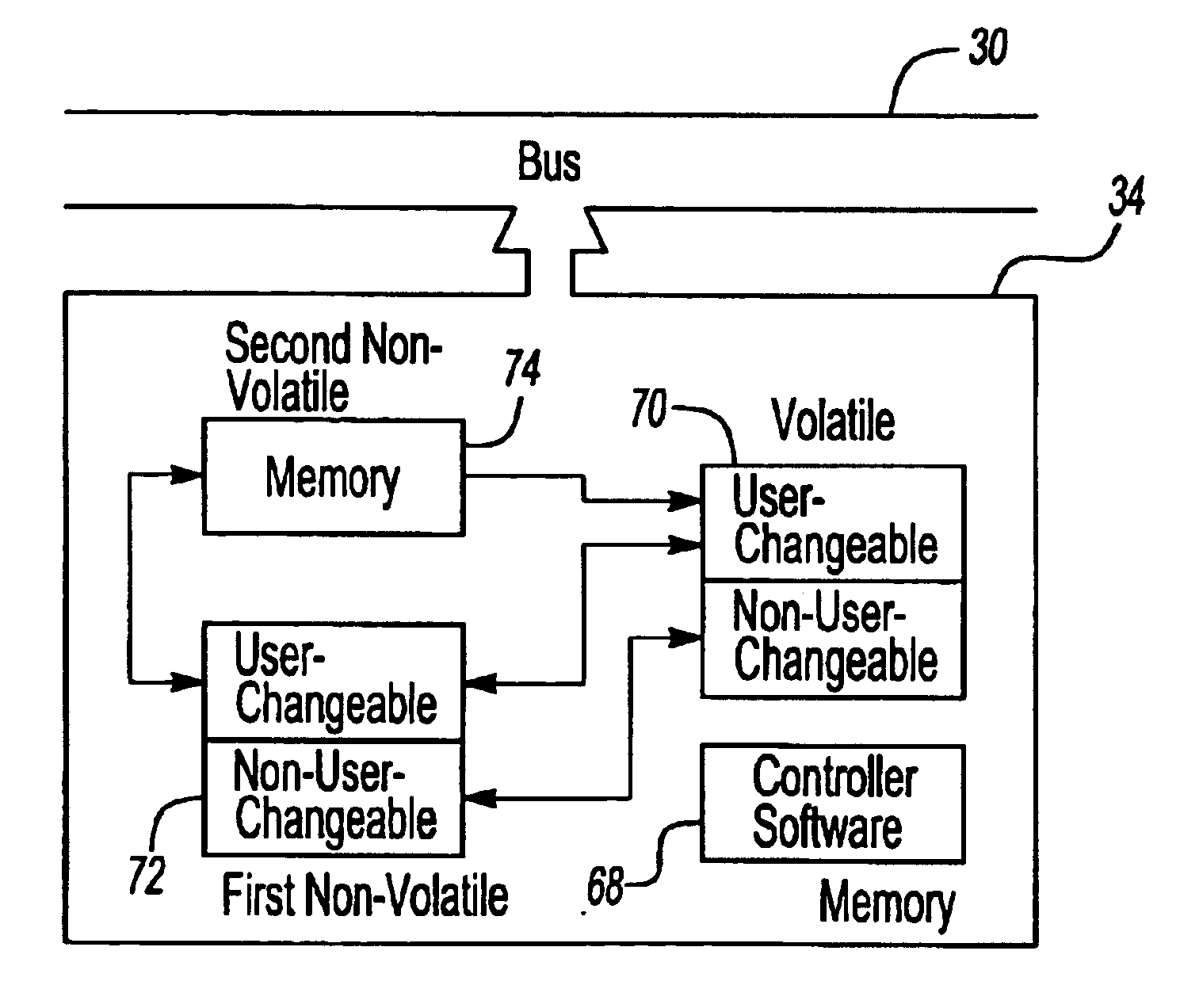
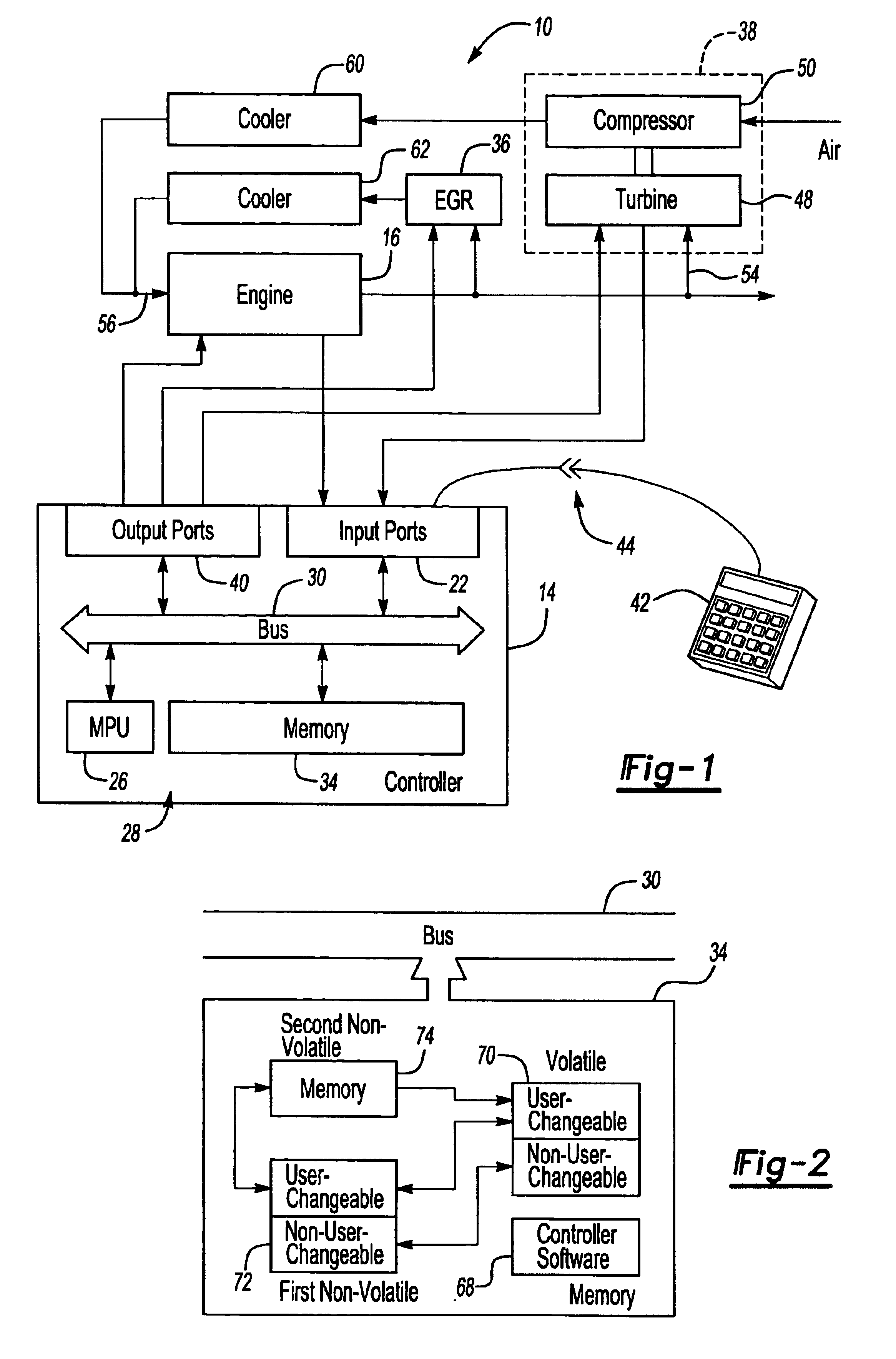
Configuring an engine control module
PatentInactiveUS7945370B2
Innovation
- A system and method that allows users to configure ECM operations by receiving configuration parameters and determining their compliance with performance requirements, using configuration hardware and software to interact with the ECM and governor, enabling user-defined settings without requiring new code, and converting signals between different vendors' systems.


Emission Regulations and Compliance Requirements
The global automotive industry operates under an increasingly stringent regulatory framework designed to minimize vehicular emissions and their environmental impact. The European Union's Euro 7 standards, scheduled for implementation in 2025, represent the most comprehensive emission regulations to date, establishing unprecedented limits for nitrogen oxides (NOx), particulate matter (PM), carbon monoxide (CO), and hydrocarbon emissions. These regulations extend beyond traditional pollutants to include ammonia (NH3) emissions and introduce real-world driving emission (RDE) testing requirements that challenge conventional certification approaches.
In the United States, the Environmental Protection Agency (EPA) has implemented Tier 3 standards with progressively tightening fleet-average NOx limits, requiring manufacturers to achieve 30 mg/mile by 2025. California's Advanced Clean Cars II program further accelerates these requirements, mandating zero-emission vehicle sales percentages while simultaneously tightening combustion engine emission standards. The Corporate Average Fuel Economy (CAFE) standards add complexity by requiring simultaneous optimization of fuel efficiency and emission performance.
China's National VI emission standards have aligned with European regulations while introducing unique testing protocols adapted to local driving conditions and fuel quality specifications. The China 6b standards, effective since 2023, incorporate cold-start emission limits and extended durability requirements that necessitate advanced ECM modeling capabilities for accurate prediction and control across diverse operating scenarios.
Compliance verification has evolved beyond laboratory testing to include portable emission measurement systems (PEMS) for real-world validation. Regulatory authorities now require demonstration of emission performance across extended temperature ranges, altitude variations, and aggressive driving patterns that traditional test cycles cannot capture. This shift demands ECM models capable of real-time adaptation to dynamic operating conditions while maintaining regulatory compliance margins.
The regulatory landscape also encompasses on-board diagnostics (OBD) requirements that mandate continuous monitoring of emission control system performance. Modern ECM models must integrate diagnostic capabilities that can detect system degradation before emission thresholds are exceeded, requiring predictive algorithms that account for component aging, fuel quality variations, and environmental factors. These compliance requirements drive the need for sophisticated modeling approaches that can balance emission performance, fuel economy, and system durability across the entire vehicle lifecycle.
In the United States, the Environmental Protection Agency (EPA) has implemented Tier 3 standards with progressively tightening fleet-average NOx limits, requiring manufacturers to achieve 30 mg/mile by 2025. California's Advanced Clean Cars II program further accelerates these requirements, mandating zero-emission vehicle sales percentages while simultaneously tightening combustion engine emission standards. The Corporate Average Fuel Economy (CAFE) standards add complexity by requiring simultaneous optimization of fuel efficiency and emission performance.
China's National VI emission standards have aligned with European regulations while introducing unique testing protocols adapted to local driving conditions and fuel quality specifications. The China 6b standards, effective since 2023, incorporate cold-start emission limits and extended durability requirements that necessitate advanced ECM modeling capabilities for accurate prediction and control across diverse operating scenarios.
Compliance verification has evolved beyond laboratory testing to include portable emission measurement systems (PEMS) for real-world validation. Regulatory authorities now require demonstration of emission performance across extended temperature ranges, altitude variations, and aggressive driving patterns that traditional test cycles cannot capture. This shift demands ECM models capable of real-time adaptation to dynamic operating conditions while maintaining regulatory compliance margins.
The regulatory landscape also encompasses on-board diagnostics (OBD) requirements that mandate continuous monitoring of emission control system performance. Modern ECM models must integrate diagnostic capabilities that can detect system degradation before emission thresholds are exceeded, requiring predictive algorithms that account for component aging, fuel quality variations, and environmental factors. These compliance requirements drive the need for sophisticated modeling approaches that can balance emission performance, fuel economy, and system durability across the entire vehicle lifecycle.
Environmental Impact Assessment of ECM Technologies
The environmental impact assessment of ECM technologies reveals significant positive implications for air quality improvement and ecosystem preservation. Advanced emission control models demonstrate substantial reductions in harmful pollutants, including nitrogen oxides, particulate matter, and volatile organic compounds. These reductions translate directly into measurable improvements in ambient air quality, particularly in urban environments where vehicular emissions constitute a primary pollution source.
Life cycle assessment studies indicate that ECM technologies exhibit favorable environmental profiles when evaluated from cradle-to-grave perspectives. The manufacturing phase of ECM components requires energy-intensive processes and rare earth materials, contributing to initial environmental footprints. However, operational benefits significantly outweigh these initial impacts through sustained emission reductions over extended service periods.
Water resource impacts associated with ECM technologies remain minimal, with selective catalytic reduction systems requiring periodic urea solution replenishment. The biodegradable nature of urea-based reducing agents ensures minimal groundwater contamination risks. Waste generation primarily consists of spent catalyst materials, which increasingly undergo recycling processes to recover precious metals and reduce landfill burdens.
Carbon footprint analyses demonstrate net positive environmental outcomes for ECM implementations. While manufacturing and installation phases generate initial carbon emissions, operational efficiency improvements and reduced fuel consumption patterns result in substantial long-term carbon dioxide reductions. Advanced ECM systems contribute to overall vehicle efficiency optimization, further enhancing environmental benefits.
Ecosystem impact assessments reveal reduced acid rain formation potential through decreased sulfur dioxide and nitrogen oxide emissions. This reduction benefits forest ecosystems, aquatic environments, and agricultural productivity. Additionally, particulate matter reductions improve visibility and reduce respiratory health risks for both human populations and wildlife species.
Regional environmental benefits vary based on implementation scales and local atmospheric conditions. Urban areas experience the most pronounced air quality improvements, while rural regions benefit from reduced long-range pollutant transport. Cumulative environmental benefits increase proportionally with widespread ECM technology adoption across transportation fleets.
Life cycle assessment studies indicate that ECM technologies exhibit favorable environmental profiles when evaluated from cradle-to-grave perspectives. The manufacturing phase of ECM components requires energy-intensive processes and rare earth materials, contributing to initial environmental footprints. However, operational benefits significantly outweigh these initial impacts through sustained emission reductions over extended service periods.
Water resource impacts associated with ECM technologies remain minimal, with selective catalytic reduction systems requiring periodic urea solution replenishment. The biodegradable nature of urea-based reducing agents ensures minimal groundwater contamination risks. Waste generation primarily consists of spent catalyst materials, which increasingly undergo recycling processes to recover precious metals and reduce landfill burdens.
Carbon footprint analyses demonstrate net positive environmental outcomes for ECM implementations. While manufacturing and installation phases generate initial carbon emissions, operational efficiency improvements and reduced fuel consumption patterns result in substantial long-term carbon dioxide reductions. Advanced ECM systems contribute to overall vehicle efficiency optimization, further enhancing environmental benefits.
Ecosystem impact assessments reveal reduced acid rain formation potential through decreased sulfur dioxide and nitrogen oxide emissions. This reduction benefits forest ecosystems, aquatic environments, and agricultural productivity. Additionally, particulate matter reductions improve visibility and reduce respiratory health risks for both human populations and wildlife species.
Regional environmental benefits vary based on implementation scales and local atmospheric conditions. Urban areas experience the most pronounced air quality improvements, while rural regions benefit from reduced long-range pollutant transport. Cumulative environmental benefits increase proportionally with widespread ECM technology adoption across transportation fleets.
Unlock deeper insights with Patsnap Eureka Quick Research — get a full tech report to explore trends and direct your research. Try now!
Generate Your Research Report Instantly with AI Agent
Supercharge your innovation with Patsnap Eureka AI Agent Platform!