Diagnose Communication Failures in Engine Control Module Networks
MAR 27, 20268 MIN READ
Generate Your Research Report Instantly with AI Agent
Patsnap Eureka helps you evaluate technical feasibility & market potential.
Engine Control Module Communication Challenges and Goals
Engine Control Module (ECM) networks represent the backbone of modern automotive powertrain management systems, where multiple electronic control units communicate through sophisticated protocols to ensure optimal engine performance, emissions control, and fuel efficiency. The evolution of automotive electronics has transformed from simple mechanical systems to complex distributed networks featuring dozens of interconnected modules that must operate with millisecond precision and absolute reliability.
The primary challenge in ECM communication lies in maintaining seamless data exchange across heterogeneous network architectures while operating under extreme environmental conditions including temperature fluctuations, electromagnetic interference, and mechanical vibrations. Modern vehicles integrate multiple communication protocols such as CAN (Controller Area Network), LIN (Local Interconnect Network), FlexRay, and emerging Ethernet-based solutions, creating complex multi-layered communication ecosystems that demand sophisticated diagnostic capabilities.
Communication failures in ECM networks manifest through various symptoms including intermittent signal loss, data corruption, timing synchronization issues, and complete network segment isolation. These failures can result from hardware degradation, software bugs, electromagnetic interference, connector corrosion, or protocol conflicts between different system generations. The increasing complexity of hybrid and electric powertrains further amplifies these challenges by introducing high-voltage systems and additional communication requirements.
The fundamental goal of ECM communication diagnostic systems is to achieve real-time fault detection, isolation, and recovery capabilities that can identify failure root causes within microseconds while maintaining system operational integrity. Advanced diagnostic frameworks must provide comprehensive network visibility, enabling predictive maintenance strategies that prevent catastrophic failures before they impact vehicle performance or safety.
Future diagnostic objectives focus on implementing artificial intelligence-driven anomaly detection systems capable of learning normal communication patterns and identifying subtle deviations that precede major failures. Integration of cloud-based diagnostic platforms will enable fleet-wide communication health monitoring, allowing manufacturers to identify systemic issues and deploy preventive solutions proactively across entire vehicle populations.
The primary challenge in ECM communication lies in maintaining seamless data exchange across heterogeneous network architectures while operating under extreme environmental conditions including temperature fluctuations, electromagnetic interference, and mechanical vibrations. Modern vehicles integrate multiple communication protocols such as CAN (Controller Area Network), LIN (Local Interconnect Network), FlexRay, and emerging Ethernet-based solutions, creating complex multi-layered communication ecosystems that demand sophisticated diagnostic capabilities.
Communication failures in ECM networks manifest through various symptoms including intermittent signal loss, data corruption, timing synchronization issues, and complete network segment isolation. These failures can result from hardware degradation, software bugs, electromagnetic interference, connector corrosion, or protocol conflicts between different system generations. The increasing complexity of hybrid and electric powertrains further amplifies these challenges by introducing high-voltage systems and additional communication requirements.
The fundamental goal of ECM communication diagnostic systems is to achieve real-time fault detection, isolation, and recovery capabilities that can identify failure root causes within microseconds while maintaining system operational integrity. Advanced diagnostic frameworks must provide comprehensive network visibility, enabling predictive maintenance strategies that prevent catastrophic failures before they impact vehicle performance or safety.
Future diagnostic objectives focus on implementing artificial intelligence-driven anomaly detection systems capable of learning normal communication patterns and identifying subtle deviations that precede major failures. Integration of cloud-based diagnostic platforms will enable fleet-wide communication health monitoring, allowing manufacturers to identify systemic issues and deploy preventive solutions proactively across entire vehicle populations.
Market Demand for Reliable ECM Network Diagnostics
The automotive industry's transition toward increasingly sophisticated electronic systems has created substantial market demand for reliable Engine Control Module (ECM) network diagnostics. Modern vehicles integrate dozens of ECUs communicating through complex network architectures including CAN, LIN, FlexRay, and emerging Ethernet-based protocols. This interconnected ecosystem generates critical dependencies where communication failures can cascade into system-wide malfunctions, directly impacting vehicle safety, performance, and regulatory compliance.
Fleet operators represent a primary market segment driving demand for advanced ECM diagnostic capabilities. Commercial transportation companies managing hundreds or thousands of vehicles face significant operational costs when communication failures lead to unexpected breakdowns. Unplanned maintenance events can cost fleet operators substantial revenue through vehicle downtime, emergency repair expenses, and schedule disruptions. The ability to predict and prevent ECM network failures before they occur has become a competitive advantage in fleet management operations.
Automotive manufacturers increasingly recognize ECM network reliability as a critical quality differentiator. Consumer expectations for vehicle reliability continue rising while regulatory frameworks impose stricter requirements for diagnostic capabilities and failure reporting. OEMs must demonstrate comprehensive network monitoring capabilities to meet emerging cybersecurity regulations and functional safety standards. The cost of warranty claims and recalls related to ECM communication failures provides strong economic incentives for investing in robust diagnostic solutions.
The aftermarket automotive service sector presents another significant demand driver. Independent repair facilities and dealership service centers require sophisticated diagnostic tools capable of identifying intermittent communication failures that traditional scan tools cannot detect. These facilities need solutions that can efficiently isolate network faults across multiple vehicle platforms and model years, reducing diagnostic time and improving repair accuracy.
Emerging autonomous and semi-autonomous vehicle technologies amplify the criticality of ECM network reliability. Advanced driver assistance systems depend on real-time communication between multiple ECUs for safety-critical functions. Any communication degradation or failure in these networks can compromise system performance and passenger safety. This technological evolution creates premium market segments willing to invest in advanced diagnostic capabilities that ensure network integrity and system reliability throughout the vehicle lifecycle.
Fleet operators represent a primary market segment driving demand for advanced ECM diagnostic capabilities. Commercial transportation companies managing hundreds or thousands of vehicles face significant operational costs when communication failures lead to unexpected breakdowns. Unplanned maintenance events can cost fleet operators substantial revenue through vehicle downtime, emergency repair expenses, and schedule disruptions. The ability to predict and prevent ECM network failures before they occur has become a competitive advantage in fleet management operations.
Automotive manufacturers increasingly recognize ECM network reliability as a critical quality differentiator. Consumer expectations for vehicle reliability continue rising while regulatory frameworks impose stricter requirements for diagnostic capabilities and failure reporting. OEMs must demonstrate comprehensive network monitoring capabilities to meet emerging cybersecurity regulations and functional safety standards. The cost of warranty claims and recalls related to ECM communication failures provides strong economic incentives for investing in robust diagnostic solutions.
The aftermarket automotive service sector presents another significant demand driver. Independent repair facilities and dealership service centers require sophisticated diagnostic tools capable of identifying intermittent communication failures that traditional scan tools cannot detect. These facilities need solutions that can efficiently isolate network faults across multiple vehicle platforms and model years, reducing diagnostic time and improving repair accuracy.
Emerging autonomous and semi-autonomous vehicle technologies amplify the criticality of ECM network reliability. Advanced driver assistance systems depend on real-time communication between multiple ECUs for safety-critical functions. Any communication degradation or failure in these networks can compromise system performance and passenger safety. This technological evolution creates premium market segments willing to invest in advanced diagnostic capabilities that ensure network integrity and system reliability throughout the vehicle lifecycle.
Current State and Limitations of ECM Communication Systems
Engine Control Module (ECM) communication systems have evolved significantly over the past decades, transitioning from simple point-to-point connections to sophisticated networked architectures. Modern automotive systems predominantly rely on Controller Area Network (CAN) protocols, including CAN 2.0A, CAN 2.0B, and the emerging CAN-FD standards. These networks facilitate real-time data exchange between ECMs and other vehicle subsystems, enabling coordinated engine management, emissions control, and performance optimization.
Current ECM networks typically operate on multiple communication layers, with CAN bus serving as the primary backbone for critical engine functions. The systems support data transmission rates ranging from 125 kbps to 1 Mbps for traditional CAN, while CAN-FD implementations can achieve speeds up to 8 Mbps. Additionally, newer vehicles incorporate Ethernet-based protocols such as 100BASE-T1 for high-bandwidth applications and Local Interconnect Network (LIN) for cost-sensitive, low-speed communications with sensors and actuators.
Despite technological advances, ECM communication systems face substantial limitations in failure diagnosis capabilities. Traditional diagnostic approaches rely heavily on standardized trouble codes and basic network monitoring, which often provide insufficient granularity for identifying intermittent communication failures. The current diagnostic infrastructure struggles with detecting subtle signal degradation, electromagnetic interference effects, and timing-related issues that may not immediately trigger fault codes but can compromise system reliability.
Network complexity presents another significant challenge, as modern vehicles may contain 50-100 ECUs interconnected through multiple communication protocols. This complexity makes it increasingly difficult to isolate communication failures to specific network segments or individual modules. Existing diagnostic tools often lack the sophisticated analysis capabilities needed to correlate communication patterns across different network layers and identify root causes of intermittent failures.
Furthermore, current systems exhibit limited real-time monitoring capabilities for communication quality metrics such as bit error rates, message latency variations, and signal integrity parameters. Most existing diagnostic approaches are reactive rather than predictive, detecting failures only after they have already impacted vehicle performance. The lack of comprehensive communication health monitoring prevents proactive maintenance strategies and may result in unexpected vehicle breakdowns or reduced operational efficiency.
Current ECM networks typically operate on multiple communication layers, with CAN bus serving as the primary backbone for critical engine functions. The systems support data transmission rates ranging from 125 kbps to 1 Mbps for traditional CAN, while CAN-FD implementations can achieve speeds up to 8 Mbps. Additionally, newer vehicles incorporate Ethernet-based protocols such as 100BASE-T1 for high-bandwidth applications and Local Interconnect Network (LIN) for cost-sensitive, low-speed communications with sensors and actuators.
Despite technological advances, ECM communication systems face substantial limitations in failure diagnosis capabilities. Traditional diagnostic approaches rely heavily on standardized trouble codes and basic network monitoring, which often provide insufficient granularity for identifying intermittent communication failures. The current diagnostic infrastructure struggles with detecting subtle signal degradation, electromagnetic interference effects, and timing-related issues that may not immediately trigger fault codes but can compromise system reliability.
Network complexity presents another significant challenge, as modern vehicles may contain 50-100 ECUs interconnected through multiple communication protocols. This complexity makes it increasingly difficult to isolate communication failures to specific network segments or individual modules. Existing diagnostic tools often lack the sophisticated analysis capabilities needed to correlate communication patterns across different network layers and identify root causes of intermittent failures.
Furthermore, current systems exhibit limited real-time monitoring capabilities for communication quality metrics such as bit error rates, message latency variations, and signal integrity parameters. Most existing diagnostic approaches are reactive rather than predictive, detecting failures only after they have already impacted vehicle performance. The lack of comprehensive communication health monitoring prevents proactive maintenance strategies and may result in unexpected vehicle breakdowns or reduced operational efficiency.
Existing Solutions for ECM Communication Failure Detection
01 Diagnostic systems for detecting communication failures in vehicle networks
Diagnostic systems can be implemented to monitor and detect communication failures between engine control modules and other vehicle network components. These systems utilize various detection methods including monitoring message transmission rates, analyzing signal integrity, and tracking response times between modules. The diagnostic systems can identify specific failure modes such as bus-off conditions, message timeouts, and protocol violations, enabling quick identification and resolution of network communication issues.- Diagnostic systems for detecting communication failures in vehicle networks: Diagnostic systems can be implemented to monitor and detect communication failures between engine control modules and other vehicle network components. These systems utilize various detection methods including monitoring message transmission rates, analyzing signal integrity, and tracking response times between modules. The diagnostic systems can identify specific failure modes such as bus-off conditions, message loss, and protocol violations, enabling timely identification and resolution of network communication issues.
- Redundant communication pathways and failsafe mechanisms: Implementation of redundant communication channels and failsafe mechanisms ensures continued operation when primary communication paths fail. These systems employ backup communication routes, alternative data transmission methods, and fault-tolerant architectures that allow critical engine control functions to continue even during network failures. The redundancy can include duplicate physical connections, alternative communication protocols, or emergency operating modes that maintain essential vehicle functions.
- Error detection and correction protocols for network communication: Advanced error detection and correction protocols can be integrated into engine control module networks to identify and rectify communication errors. These protocols include cyclic redundancy checks, parity verification, acknowledgment mechanisms, and automatic retransmission schemes. The implementation of robust error handling ensures data integrity and reduces the impact of transient communication failures on engine control operations.
- Network gateway and bridge technologies for module interconnection: Gateway and bridge technologies facilitate communication between different network protocols and standards used in engine control systems. These devices translate messages between various communication buses, manage data flow between modules operating on different protocols, and provide isolation to prevent failures in one network segment from propagating to others. This approach enables integration of diverse control modules while maintaining communication reliability.
- Real-time monitoring and alert systems for communication status: Real-time monitoring systems continuously track the health and performance of engine control module network communications. These systems provide immediate alerts when communication degradation or failures are detected, log failure events for analysis, and can trigger automatic recovery procedures. The monitoring includes tracking of message latency, bandwidth utilization, error rates, and module responsiveness to ensure optimal network performance and quick identification of potential issues.
02 Redundant communication pathways and failsafe mechanisms
Implementation of redundant communication channels and backup pathways ensures continued operation when primary communication links fail. These systems employ multiple communication buses, alternative routing protocols, and failover mechanisms that automatically switch to backup channels when failures are detected. The redundancy architecture allows critical engine control functions to maintain operation even during partial network failures, improving overall system reliability and safety.Expand Specific Solutions03 Error detection and correction protocols for network communication
Advanced error detection and correction protocols are employed to identify and rectify communication errors in real-time. These protocols include cyclic redundancy checks, parity verification, acknowledgment mechanisms, and automatic retransmission schemes. The systems can detect corrupted data packets, missing messages, and timing errors, then implement appropriate correction strategies to maintain reliable communication between control modules without requiring system shutdown or reset.Expand Specific Solutions04 Network gateway and bridge controllers for multi-protocol communication
Gateway and bridge controllers facilitate communication between different network protocols and bus systems within the vehicle architecture. These controllers translate messages between various communication standards, manage data flow between different network segments, and provide isolation to prevent failures in one network from propagating to others. The gateway systems enable integration of multiple control modules operating on different protocols while maintaining communication integrity and preventing cross-network interference.Expand Specific Solutions05 Real-time monitoring and alert systems for communication status
Real-time monitoring systems continuously track the health and performance of network communications between engine control modules. These systems measure parameters such as bus load, message latency, error rates, and node availability. When communication anomalies or failures are detected, the monitoring systems generate alerts and diagnostic codes that inform operators or maintenance systems of the specific nature and location of the failure, enabling rapid troubleshooting and repair.Expand Specific Solutions
Key Players in ECM and Automotive Diagnostics Industry
The engine control module (ECM) network diagnostics market represents a mature automotive technology sector experiencing steady growth driven by increasing vehicle electrification and connectivity demands. The competitive landscape spans established automotive OEMs like Toyota, GM, Mercedes-Benz, Hyundai, and Renault, alongside specialized tier-1 suppliers including Robert Bosch, DENSO, and Astemo who dominate ECM manufacturing and diagnostic solutions. Technology maturity varies significantly across players, with German suppliers like Bosch and automotive giants demonstrating advanced diagnostic capabilities, while emerging Chinese manufacturers like Geely and SAIC-GM are rapidly developing competitive solutions. The market also includes telecommunications companies like Ericsson and NEC expanding into automotive connectivity, and academic institutions contributing fundamental research, creating a diverse ecosystem where traditional automotive expertise intersects with modern digital diagnostic technologies.
Toyota Motor Corp.
Technical Solution: Toyota has developed an integrated diagnostic approach for ECM network communication failures, leveraging their extensive experience in hybrid and electric vehicle technologies. Their system incorporates advanced network topology mapping and dynamic fault detection algorithms specifically designed for complex multi-ECU environments. The solution features hierarchical diagnostic procedures that can isolate failures at different network levels, from individual node malfunctions to complete network segment failures. Toyota's approach emphasizes preventive diagnostics through continuous monitoring of communication parameters and statistical analysis of network performance trends. The system supports both traditional CAN networks and newer automotive Ethernet implementations.
Strengths: Extensive automotive manufacturing experience, proven reliability in complex vehicle systems, strong focus on preventive maintenance. Weaknesses: Primarily designed for Toyota vehicles, limited third-party compatibility, may require proprietary diagnostic equipment.
Robert Bosch GmbH
Technical Solution: Bosch has developed comprehensive diagnostic solutions for Engine Control Module (ECM) networks, featuring advanced CAN bus diagnostic protocols and multi-layer communication failure detection systems. Their approach includes real-time monitoring of network traffic patterns, automatic fault isolation algorithms, and predictive maintenance capabilities. The system utilizes machine learning algorithms to identify communication anomalies before they lead to complete network failures. Bosch's diagnostic tools can detect various failure modes including bus-off conditions, message corruption, timing violations, and node disconnections. Their solution integrates seamlessly with existing automotive diagnostic standards like UDS and OBD protocols, providing comprehensive coverage for both development and production environments.
Strengths: Market-leading expertise in automotive electronics, comprehensive diagnostic coverage, strong integration with industry standards. Weaknesses: High implementation costs, complexity may require specialized training for technicians.
Core Innovations in ECM Network Diagnostic Technologies
Methods and systems for loss of communication detection in a vehicle network
PatentActiveCN105807755A
Innovation
- The time threshold for the communication loss diagnostic trouble code is determined by estimating the duration of vehicle operation loss, and the activation time of the communication loss DTC is adjusted to detect and activate the communication loss DTC before the vehicle enters fault mode.


Controller Area Network Condition Monitoring and Bus Health on In-Vehicle Communications Networks
PatentActiveUS20080186870A1
Innovation
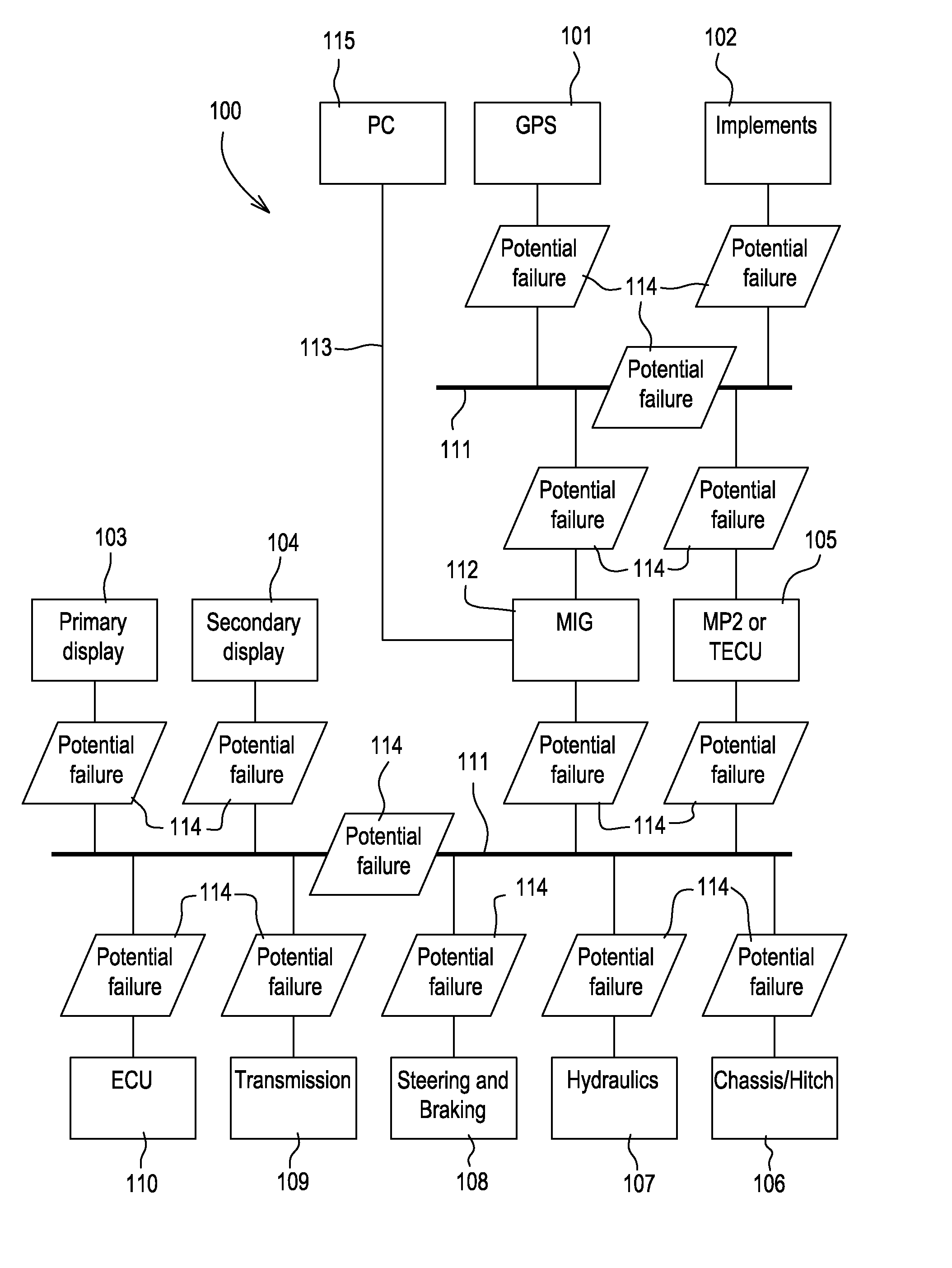
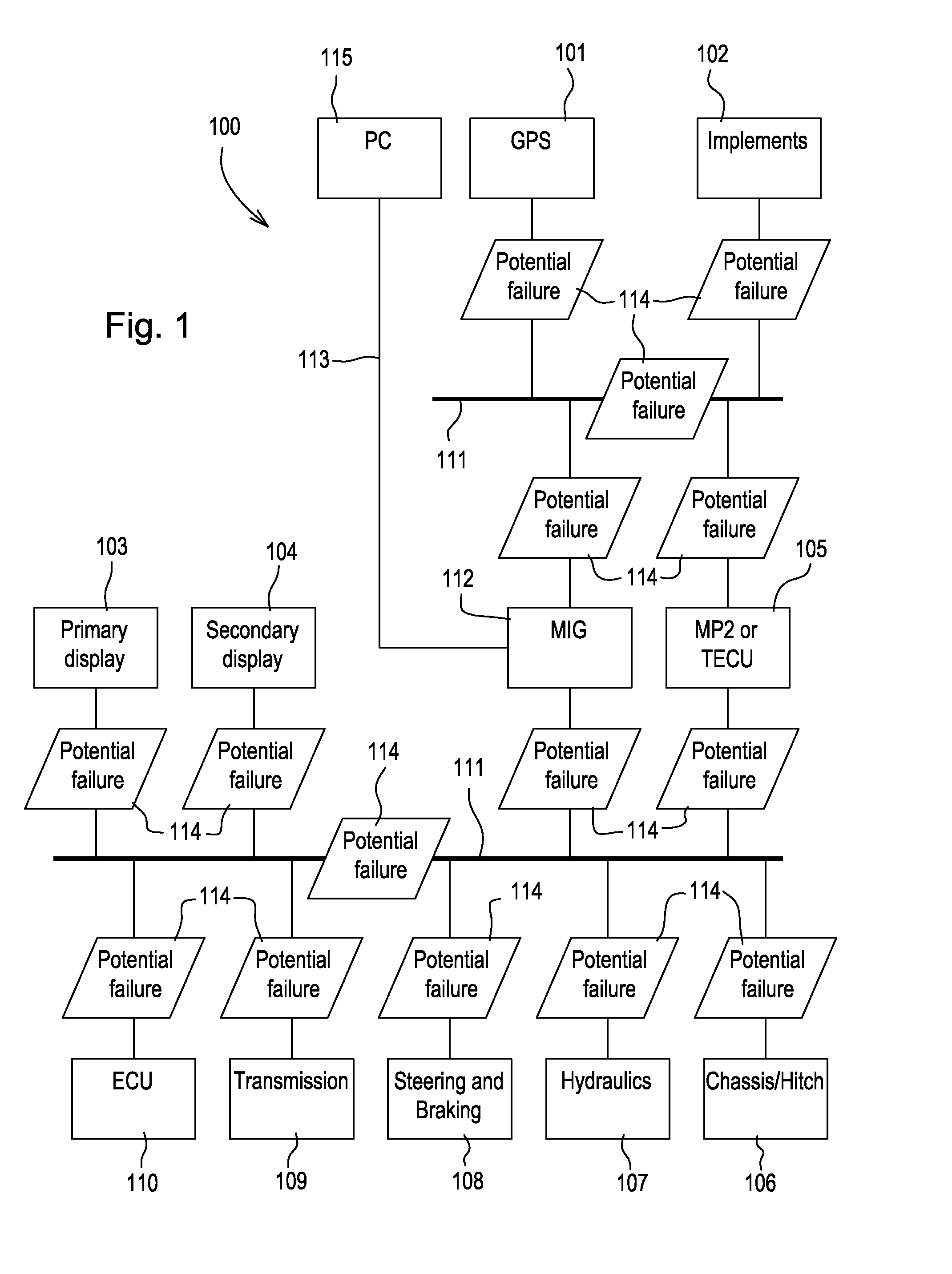
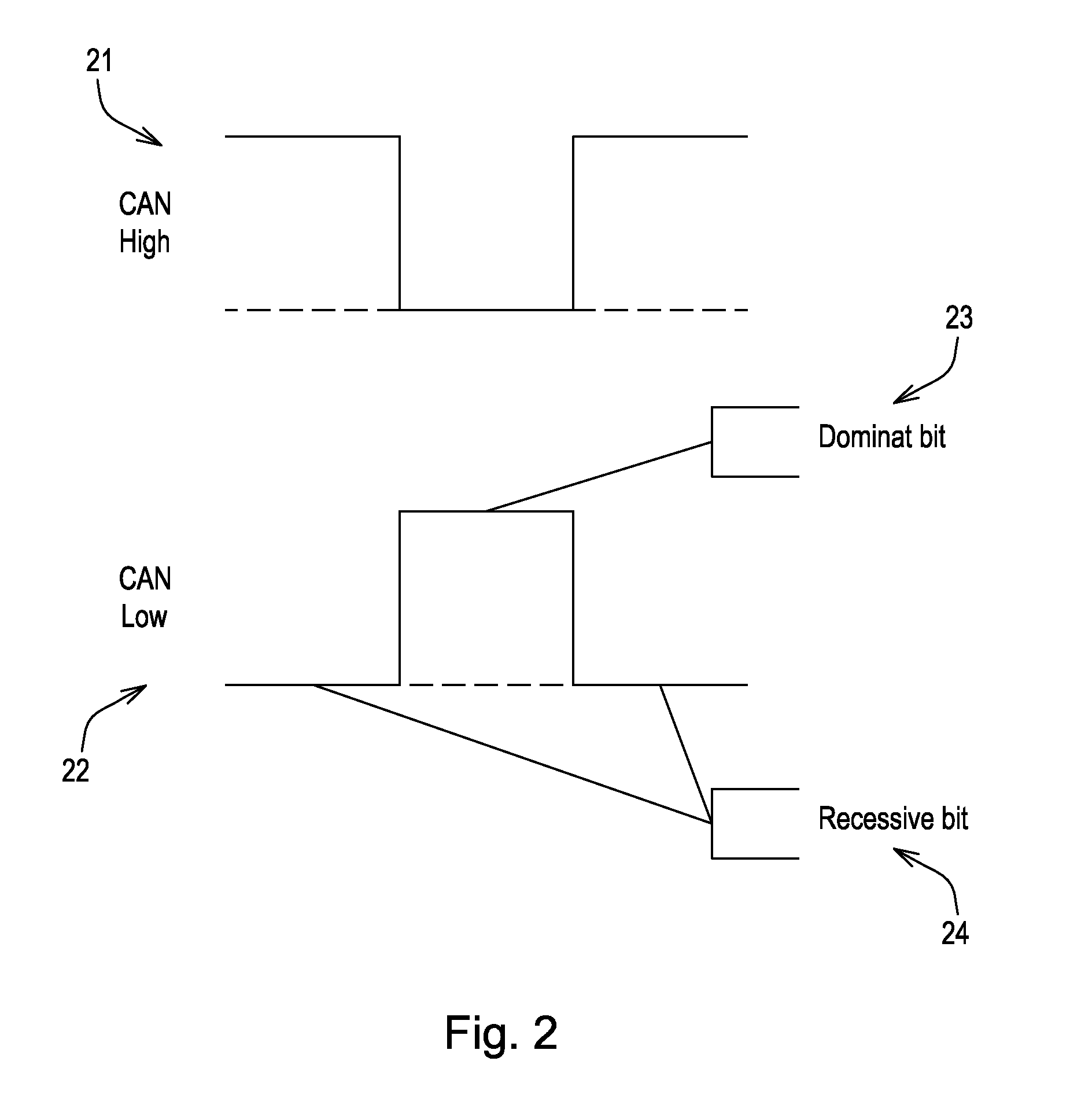
- A system and method that utilizes advanced diagnostics to monitor the controller area network (CAN) bus, detecting errors in real-time, predicting component failures, and reporting issues to service personnel, by maintaining error code counts and histograms across controllers, and presenting a CAN bus health index to identify potential problems before they cause vehicle dysfunction.

Automotive Safety Standards and ECM Compliance Requirements
Engine Control Module (ECM) networks in modern vehicles must adhere to stringent automotive safety standards to ensure reliable operation and prevent catastrophic failures. The ISO 26262 functional safety standard serves as the primary framework governing ECM design and implementation, establishing Safety Integrity Levels (SIL) that dictate the required reliability and fault tolerance capabilities for critical engine control functions.
Communication failure diagnosis within ECM networks falls under the scope of ASIL-C and ASIL-D classifications, demanding robust diagnostic capabilities and fail-safe mechanisms. The standard mandates that ECM systems implement comprehensive monitoring of communication channels, including CAN bus integrity checks, message validation protocols, and timeout detection mechanisms to identify potential network failures before they compromise vehicle safety.
ISO 14229 (Unified Diagnostic Services) and ISO 15765 (Diagnostic Communication over Controller Area Network) establish the technical requirements for diagnostic communication protocols within ECM networks. These standards define specific diagnostic trouble codes (DTCs) for communication failures, standardized diagnostic procedures, and mandatory response times for fault detection and reporting.
The SAE J1939 standard governs heavy-duty vehicle ECM communication protocols, while ISO 11898 defines the physical and data link layer specifications for CAN networks. Compliance with these standards ensures interoperability between different ECM manufacturers and enables standardized diagnostic approaches across vehicle platforms.
Regulatory compliance extends beyond technical specifications to include documentation requirements, validation testing protocols, and traceability measures. ECM manufacturers must demonstrate compliance through rigorous testing procedures, including Hardware-in-the-Loop (HIL) testing, fault injection testing, and electromagnetic compatibility assessments to verify diagnostic system performance under various failure scenarios.
The emerging ISO 21448 (Safety of the Intended Functionality) standard addresses additional safety considerations for increasingly complex ECM networks, particularly those incorporating artificial intelligence and machine learning algorithms for predictive diagnostics. This standard emphasizes the importance of validation testing in real-world scenarios and continuous monitoring of diagnostic system performance throughout the vehicle lifecycle.
Communication failure diagnosis within ECM networks falls under the scope of ASIL-C and ASIL-D classifications, demanding robust diagnostic capabilities and fail-safe mechanisms. The standard mandates that ECM systems implement comprehensive monitoring of communication channels, including CAN bus integrity checks, message validation protocols, and timeout detection mechanisms to identify potential network failures before they compromise vehicle safety.
ISO 14229 (Unified Diagnostic Services) and ISO 15765 (Diagnostic Communication over Controller Area Network) establish the technical requirements for diagnostic communication protocols within ECM networks. These standards define specific diagnostic trouble codes (DTCs) for communication failures, standardized diagnostic procedures, and mandatory response times for fault detection and reporting.
The SAE J1939 standard governs heavy-duty vehicle ECM communication protocols, while ISO 11898 defines the physical and data link layer specifications for CAN networks. Compliance with these standards ensures interoperability between different ECM manufacturers and enables standardized diagnostic approaches across vehicle platforms.
Regulatory compliance extends beyond technical specifications to include documentation requirements, validation testing protocols, and traceability measures. ECM manufacturers must demonstrate compliance through rigorous testing procedures, including Hardware-in-the-Loop (HIL) testing, fault injection testing, and electromagnetic compatibility assessments to verify diagnostic system performance under various failure scenarios.
The emerging ISO 21448 (Safety of the Intended Functionality) standard addresses additional safety considerations for increasingly complex ECM networks, particularly those incorporating artificial intelligence and machine learning algorithms for predictive diagnostics. This standard emphasizes the importance of validation testing in real-world scenarios and continuous monitoring of diagnostic system performance throughout the vehicle lifecycle.
Cost-Benefit Analysis of Advanced ECM Diagnostic Systems
The implementation of advanced ECM diagnostic systems requires substantial upfront investment in hardware, software, and infrastructure development. Initial costs typically range from $50,000 to $200,000 per diagnostic station, depending on the sophistication level and coverage capabilities. These systems demand specialized diagnostic interfaces, high-performance computing units, and comprehensive software suites capable of interpreting complex communication protocols across multiple network architectures.
Personnel training represents another significant cost component, as technicians must acquire expertise in advanced diagnostic methodologies and interpretation of sophisticated fault detection algorithms. Training programs typically require 40-80 hours per technician, with ongoing education needs as systems evolve. Additionally, maintenance costs for advanced diagnostic equipment average 15-20% of initial investment annually.
The financial benefits manifest through dramatically reduced diagnostic time and improved accuracy rates. Advanced systems can identify communication failures in ECM networks within 2-5 minutes compared to 30-60 minutes using traditional methods. This efficiency translates to labor cost savings of approximately $75-150 per diagnostic session, considering average technician hourly rates and reduced vehicle downtime.
Warranty claim reductions provide substantial long-term benefits, as accurate fault identification prevents unnecessary component replacements. Studies indicate 25-40% reduction in misdiagnosed warranty claims when implementing advanced diagnostic systems. For manufacturers processing thousands of warranty cases annually, this represents millions in cost avoidance.
The return on investment typically occurs within 18-24 months for high-volume service centers, while smaller operations may require 36-48 months. Enhanced customer satisfaction through faster, more accurate diagnostics creates additional value through improved brand loyalty and reduced repeat visits for unresolved issues.
Risk mitigation benefits include reduced liability exposure from safety-critical communication failures and improved compliance with regulatory diagnostic requirements. These factors, while difficult to quantify precisely, contribute significantly to the overall value proposition of advanced ECM diagnostic system investments.
Personnel training represents another significant cost component, as technicians must acquire expertise in advanced diagnostic methodologies and interpretation of sophisticated fault detection algorithms. Training programs typically require 40-80 hours per technician, with ongoing education needs as systems evolve. Additionally, maintenance costs for advanced diagnostic equipment average 15-20% of initial investment annually.
The financial benefits manifest through dramatically reduced diagnostic time and improved accuracy rates. Advanced systems can identify communication failures in ECM networks within 2-5 minutes compared to 30-60 minutes using traditional methods. This efficiency translates to labor cost savings of approximately $75-150 per diagnostic session, considering average technician hourly rates and reduced vehicle downtime.
Warranty claim reductions provide substantial long-term benefits, as accurate fault identification prevents unnecessary component replacements. Studies indicate 25-40% reduction in misdiagnosed warranty claims when implementing advanced diagnostic systems. For manufacturers processing thousands of warranty cases annually, this represents millions in cost avoidance.
The return on investment typically occurs within 18-24 months for high-volume service centers, while smaller operations may require 36-48 months. Enhanced customer satisfaction through faster, more accurate diagnostics creates additional value through improved brand loyalty and reduced repeat visits for unresolved issues.
Risk mitigation benefits include reduced liability exposure from safety-critical communication failures and improved compliance with regulatory diagnostic requirements. These factors, while difficult to quantify precisely, contribute significantly to the overall value proposition of advanced ECM diagnostic system investments.
Unlock deeper insights with Patsnap Eureka Quick Research — get a full tech report to explore trends and direct your research. Try now!
Generate Your Research Report Instantly with AI Agent
Supercharge your innovation with Patsnap Eureka AI Agent Platform!