

Dissecting Microscope vs Boom Stand Microscope: Stability Under Vibration
JUL 16, 20269 MIN READ
Generate Your Research Report Instantly with AI Agent
Patsnap Eureka helps you evaluate technical feasibility & market potential.
Microscope Stability Technology Background and Objectives
Microscopy has been fundamental to scientific research and industrial applications for centuries, evolving from simple optical systems to sophisticated instruments capable of revealing intricate details at cellular and subcellular levels. The development of specialized microscope configurations, particularly dissecting microscopes and boom stand microscopes, emerged from distinct operational requirements in fields ranging from biological research to precision manufacturing and quality control.
Dissecting microscopes, also known as stereo microscopes, were designed to provide three-dimensional visualization of specimens at relatively low magnifications, typically ranging from 5x to 50x. Their compact, integrated design features dual optical paths that create stereoscopic vision, making them ideal for manipulation tasks such as dissection, assembly, and inspection. The inherent structural rigidity of these systems, with optical components housed within a unified frame directly mounted to a stable base, provides natural resistance to environmental disturbances.
Boom stand microscopes represent a different design philosophy, prioritizing operational flexibility and workspace accessibility. These systems mount the optical head on an articulated arm that can be positioned freely across a large working area, making them invaluable in surgical environments, industrial inspection stations, and collaborative research settings where multiple users require access to specimens from various angles. However, this extended mechanical linkage introduces potential vulnerabilities to vibrational interference.
The challenge of maintaining optical stability under vibrational conditions has become increasingly critical as microscopy applications expand into environments with unavoidable mechanical disturbances. Manufacturing facilities with operating machinery, surgical suites with ventilation systems, and research laboratories with shared equipment all generate vibrations that can compromise image quality, reduce measurement accuracy, and impair operator performance during delicate procedures.
The primary objective of this technical investigation is to systematically compare the vibrational stability characteristics of dissecting microscopes versus boom stand microscopes under controlled and real-world conditions. This research aims to quantify performance differences, identify design factors that influence stability, and establish evidence-based selection criteria for specific application environments. Understanding these stability dynamics will enable organizations to optimize their microscopy investments and ensure reliable performance in vibration-prone settings.
Dissecting microscopes, also known as stereo microscopes, were designed to provide three-dimensional visualization of specimens at relatively low magnifications, typically ranging from 5x to 50x. Their compact, integrated design features dual optical paths that create stereoscopic vision, making them ideal for manipulation tasks such as dissection, assembly, and inspection. The inherent structural rigidity of these systems, with optical components housed within a unified frame directly mounted to a stable base, provides natural resistance to environmental disturbances.
Boom stand microscopes represent a different design philosophy, prioritizing operational flexibility and workspace accessibility. These systems mount the optical head on an articulated arm that can be positioned freely across a large working area, making them invaluable in surgical environments, industrial inspection stations, and collaborative research settings where multiple users require access to specimens from various angles. However, this extended mechanical linkage introduces potential vulnerabilities to vibrational interference.
The challenge of maintaining optical stability under vibrational conditions has become increasingly critical as microscopy applications expand into environments with unavoidable mechanical disturbances. Manufacturing facilities with operating machinery, surgical suites with ventilation systems, and research laboratories with shared equipment all generate vibrations that can compromise image quality, reduce measurement accuracy, and impair operator performance during delicate procedures.
The primary objective of this technical investigation is to systematically compare the vibrational stability characteristics of dissecting microscopes versus boom stand microscopes under controlled and real-world conditions. This research aims to quantify performance differences, identify design factors that influence stability, and establish evidence-based selection criteria for specific application environments. Understanding these stability dynamics will enable organizations to optimize their microscopy investments and ensure reliable performance in vibration-prone settings.
Market Demand for Vibration-Resistant Microscopy Solutions
The demand for vibration-resistant microscopy solutions has experienced substantial growth across multiple industrial and research sectors, driven by the increasing need for precision imaging in challenging operational environments. Manufacturing facilities, particularly those engaged in semiconductor fabrication, electronics assembly, and precision machining, represent a significant market segment where ambient vibrations from machinery and equipment can severely compromise microscopic inspection quality. These industries require stable imaging systems capable of maintaining optical clarity despite continuous environmental disturbances, making vibration resistance a critical purchasing criterion rather than an optional feature.
Medical and surgical applications constitute another rapidly expanding market segment for vibration-resistant microscopy. Operating theaters and clinical laboratories frequently experience vibrations from HVAC systems, foot traffic, and adjacent medical equipment. Microsurgical procedures, particularly in ophthalmology, neurosurgery, and reconstructive surgery, demand unwavering image stability to ensure surgical precision and patient safety. The growing adoption of minimally invasive surgical techniques has further intensified the need for microscopes that can deliver stable visualization under less-than-ideal conditions, as these procedures often occur in mobile surgical units or multi-purpose facilities with higher vibration levels.
Research institutions and academic laboratories face similar challenges, particularly in fields such as materials science, biology, and nanotechnology where high-magnification imaging is essential. Many research facilities operate in urban environments or multi-story buildings where structural vibrations are unavoidable. The increasing complexity of experimental setups, which often involve multiple instruments operating simultaneously, has created additional vibration sources that can interfere with microscopic observations. Researchers increasingly prioritize equipment that can maintain imaging stability without requiring expensive vibration isolation infrastructure.
The market trend shows a clear shift toward integrated vibration compensation solutions rather than reliance solely on external isolation systems. End-users demonstrate growing preference for microscopy systems with inherent stability features, as these offer greater flexibility in equipment placement and reduce total cost of ownership. This demand pattern has prompted manufacturers to innovate in mechanical design, incorporating features such as low center of gravity configurations, dampening materials, and optimized weight distribution to enhance natural vibration resistance while maintaining operational versatility.
Medical and surgical applications constitute another rapidly expanding market segment for vibration-resistant microscopy. Operating theaters and clinical laboratories frequently experience vibrations from HVAC systems, foot traffic, and adjacent medical equipment. Microsurgical procedures, particularly in ophthalmology, neurosurgery, and reconstructive surgery, demand unwavering image stability to ensure surgical precision and patient safety. The growing adoption of minimally invasive surgical techniques has further intensified the need for microscopes that can deliver stable visualization under less-than-ideal conditions, as these procedures often occur in mobile surgical units or multi-purpose facilities with higher vibration levels.
Research institutions and academic laboratories face similar challenges, particularly in fields such as materials science, biology, and nanotechnology where high-magnification imaging is essential. Many research facilities operate in urban environments or multi-story buildings where structural vibrations are unavoidable. The increasing complexity of experimental setups, which often involve multiple instruments operating simultaneously, has created additional vibration sources that can interfere with microscopic observations. Researchers increasingly prioritize equipment that can maintain imaging stability without requiring expensive vibration isolation infrastructure.
The market trend shows a clear shift toward integrated vibration compensation solutions rather than reliance solely on external isolation systems. End-users demonstrate growing preference for microscopy systems with inherent stability features, as these offer greater flexibility in equipment placement and reduce total cost of ownership. This demand pattern has prompted manufacturers to innovate in mechanical design, incorporating features such as low center of gravity configurations, dampening materials, and optimized weight distribution to enhance natural vibration resistance while maintaining operational versatility.
Current Stability Challenges in Dissecting vs Boom Microscopes
Dissecting microscopes and boom stand microscopes face distinct stability challenges rooted in their fundamental structural designs. Dissecting microscopes typically feature a compact, fixed-base configuration where the optical column is directly mounted on a stable platform. However, their primary vulnerability lies in the transmission of vibrations through the work surface. When placed on laboratory benches or workstations, these microscopes are susceptible to environmental vibrations from adjacent equipment, foot traffic, and building infrastructure. The rigid coupling between the base and working surface creates a direct pathway for vibrational energy transfer, which can significantly degrade image quality during precision observation tasks.
Boom stand microscopes present a fundamentally different stability profile due to their cantilevered arm design. The extended horizontal reach, while offering exceptional workspace flexibility, introduces mechanical leverage that amplifies even minor vibrations at the mounting point. The boom arm acts as a mechanical amplifier, where vibrations originating at the base or mounting column are magnified at the optical head position. This amplification effect increases proportionally with arm extension length, creating a trade-off between workspace accessibility and optical stability. The multiple articulation points in boom systems also introduce potential sources of mechanical play and resonance frequencies that can be excited by ambient vibrations.
Both microscope types encounter challenges from internal vibration sources. Integrated illumination systems generate heat-induced air currents that cause localized thermal instability, while cooling fans in LED or fiber optic light sources introduce periodic mechanical vibrations. These internal disturbances are particularly problematic in high-magnification applications where even sub-micron movements become visible as image drift or blur.
The frequency spectrum of problematic vibrations differs between the two configurations. Dissecting microscopes are more sensitive to higher-frequency vibrations transmitted through solid surfaces, typically in the range of 50-200 Hz from mechanical equipment. Boom microscopes exhibit greater sensitivity to lower-frequency oscillations, generally between 5-50 Hz, which correspond to the natural resonance frequencies of their extended mechanical structures. Environmental factors such as HVAC systems, building sway, and acoustic pressure waves affect both types but manifest differently based on their structural characteristics and mounting methods.
Boom stand microscopes present a fundamentally different stability profile due to their cantilevered arm design. The extended horizontal reach, while offering exceptional workspace flexibility, introduces mechanical leverage that amplifies even minor vibrations at the mounting point. The boom arm acts as a mechanical amplifier, where vibrations originating at the base or mounting column are magnified at the optical head position. This amplification effect increases proportionally with arm extension length, creating a trade-off between workspace accessibility and optical stability. The multiple articulation points in boom systems also introduce potential sources of mechanical play and resonance frequencies that can be excited by ambient vibrations.
Both microscope types encounter challenges from internal vibration sources. Integrated illumination systems generate heat-induced air currents that cause localized thermal instability, while cooling fans in LED or fiber optic light sources introduce periodic mechanical vibrations. These internal disturbances are particularly problematic in high-magnification applications where even sub-micron movements become visible as image drift or blur.
The frequency spectrum of problematic vibrations differs between the two configurations. Dissecting microscopes are more sensitive to higher-frequency vibrations transmitted through solid surfaces, typically in the range of 50-200 Hz from mechanical equipment. Boom microscopes exhibit greater sensitivity to lower-frequency oscillations, generally between 5-50 Hz, which correspond to the natural resonance frequencies of their extended mechanical structures. Environmental factors such as HVAC systems, building sway, and acoustic pressure waves affect both types but manifest differently based on their structural characteristics and mounting methods.
Existing Anti-Vibration Solutions for Microscope Platforms
01 Counterbalance and articulated arm mechanisms for boom stand stability
Boom stand microscopes utilize counterbalance systems and articulated arm mechanisms to maintain stability during operation. These systems employ springs, weights, or pneumatic cylinders to balance the weight of the microscope head, allowing smooth positioning while preventing drift or unwanted movement. The articulated arms typically feature multiple joints with friction or locking mechanisms that can be adjusted to hold the microscope in the desired position without requiring continuous manual support.- Counterbalance and articulated arm mechanisms for boom stand stability: Boom stand microscopes utilize counterbalance systems and articulated arm mechanisms to maintain stability during positioning and operation. These systems employ springs, weights, or pneumatic cylinders to balance the weight of the microscope head, allowing smooth movement while maintaining position when released. The articulated arms typically feature multiple joints with friction or locking mechanisms to prevent drift and ensure the microscope remains stable at any desired position.
- Base weight distribution and mounting systems: The stability of boom stand microscopes is enhanced through optimized base design featuring increased weight distribution and secure mounting options. Heavy bases with low center of gravity prevent tipping during arm extension. Mounting systems include clamp-type attachments, bolt-down configurations, and weighted pedestals that provide stable foundations for the boom arm assembly. Some designs incorporate adjustable feet or leveling mechanisms to ensure stability on uneven surfaces.
- Damping and vibration reduction mechanisms: Advanced boom stand designs incorporate damping systems to reduce vibrations and oscillations that can affect microscope stability and image quality. These mechanisms include hydraulic dampers, friction dampers, and elastomeric isolators positioned at joints and connection points. The damping systems absorb shock and prevent resonance, ensuring the microscope head remains steady during observation and when the stand is repositioned.
- Locking and positioning mechanisms for boom arms: Boom stand microscopes feature various locking mechanisms to secure the arm position and prevent unintended movement. These include brake systems, ratchet locks, cam locks, and electromagnetic holding devices that can be engaged to fix the boom arm at specific positions. Quick-release mechanisms allow operators to easily reposition the microscope while maintaining stability during use. Some systems provide incremental locking at predetermined positions for repeatable positioning.
- Modular and adjustable boom stand configurations: Modern boom stand designs feature modular construction allowing customization of arm length, reach, and configuration to suit different applications while maintaining stability. Adjustable components include telescoping arms, interchangeable mounting brackets, and variable height columns. The modular approach enables users to optimize the stand configuration for specific workspace requirements while ensuring structural integrity and stability through reinforced connection points and balanced load distribution.
02 Base design and weight distribution for enhanced stability
The stability of boom stand microscopes is significantly improved through optimized base designs that incorporate heavy weighted bases, wide footprints, or mounting systems. These designs lower the center of gravity and increase the moment of inertia, reducing the likelihood of tipping or vibration during use. Some designs feature adjustable leveling feet or anti-slip materials to ensure stable positioning on various work surfaces.Expand Specific Solutions03 Damping and vibration reduction systems
Advanced boom stand microscopes incorporate damping mechanisms and vibration isolation systems to minimize unwanted movement and oscillation. These systems may include elastomeric dampers, hydraulic shock absorbers, or vibration-isolating materials positioned at critical joints and connection points. Such features are particularly important for high-magnification applications where even minor vibrations can significantly affect image quality and observation accuracy.Expand Specific Solutions04 Locking and positioning mechanisms for boom arms
Boom stand microscopes employ various locking and positioning mechanisms to secure the microscope head in place once the desired position is achieved. These mechanisms include friction locks, ratchet systems, electromagnetic brakes, or mechanical clamps that can be engaged and released as needed. The locking systems are designed to provide sufficient holding force to maintain position under the weight of the microscope while allowing easy repositioning when unlocked.Expand Specific Solutions05 Modular and adjustable boom stand configurations
Modern boom stand designs feature modular and adjustable configurations that allow users to customize the setup according to specific application requirements. These systems include interchangeable arm segments, adjustable reach distances, and variable height options. The modular approach enables users to optimize stability by selecting appropriate arm lengths and configurations that minimize cantilever effects and maintain proper weight distribution throughout the range of motion.Expand Specific Solutions
Key Manufacturers in Precision Microscopy Equipment Market
The microscopy industry addressing vibration stability challenges is in a mature consolidation phase, characterized by established global leaders competing on precision engineering and specialized applications. The market demonstrates strong growth driven by expanding life sciences research, semiconductor manufacturing, and surgical applications, with estimated valuations exceeding several billion dollars annually. Technology maturity varies significantly across segments: companies like Leica Microsystems, Carl Zeiss Meditec, Nikon, and Olympus (now Evident Corp.) have achieved advanced stabilization through sophisticated optical designs and vibration-dampening systems, while emerging players like Infinitesima are pioneering rapid probe microscopy innovations. Traditional leaders including FUJIFILM, Hitachi High-Tech, and ASML Netherlands leverage decades of optical expertise, whereas newer entrants focus on AI-enhanced imaging and modular configurations. The competitive landscape reflects both horizontal integration among major manufacturers and vertical specialization in surgical, industrial, and research microscopy segments, with ongoing innovation in boom stand designs and dissecting microscope platforms addressing specific vibration mitigation requirements across diverse operational environments.
Leica Microsystems (Schweiz) AG
Technical Solution: Leica Microsystems has developed advanced dissecting microscope systems with integrated vibration dampening technology. Their M-series stereomicroscopes incorporate heavy-duty boom stands with counterbalanced arm mechanisms and precision ball-bearing joints that minimize vibration transmission from external sources. The optical design features apochromatic correction and high numerical aperture objectives that maintain image stability even under moderate vibration conditions. Their FusionOptics technology combines high resolution and depth of field, which is particularly beneficial when working in environments with unavoidable vibrations. The boom stand configurations utilize rigid aluminum construction with vibration-absorbing materials at critical mounting points, providing superior stability compared to traditional pillar stands. The company's ErgoModule system allows flexible positioning while maintaining optical axis stability through mechanical isolation of the observation path from the support structure.
Strengths: Industry-leading optical quality with excellent vibration isolation in boom stand designs; modular ergonomic systems provide flexibility without compromising stability. Weaknesses: Premium pricing may limit accessibility; complex boom stand systems require more installation space and careful setup.
Olympus Corp.
Technical Solution: Olympus has engineered their SZ-series stereomicroscopes with proprietary Stability Enhancement Architecture (SEA) that addresses vibration challenges in both benchtop and boom stand configurations. Their boom stand microscopes feature a unique dual-axis dampening system that isolates the optical head from mechanical vibrations transmitted through the articulating arm. The company employs high-rigidity cast aluminum frames combined with strategic placement of elastomeric dampers at pivot points to absorb shock and vibration energy. Their Galilean optical system with long working distances maintains focus stability under vibration by reducing the sensitivity of the optical path to mechanical disturbances. Olympus boom stands incorporate electromagnetic braking systems that can be engaged to lock the microscope position, further enhancing stability during critical observations. The modular design allows users to select appropriate counterweight configurations based on their specific vibration environment and microscope head weight.
Strengths: Innovative dual-axis dampening provides excellent vibration isolation; electromagnetic locking system offers on-demand stability enhancement. Weaknesses: Electromagnetic systems require power supply which may limit portability; dampening effectiveness decreases with very low-frequency vibrations.
Core Vibration Damping Technologies and Patents
Method and device for image stabilization in an optical observation or measurement instrument
PatentInactiveUS20130070339A1
Innovation
- A method and device that use an optical element with adjustable refractive power to compensate for unintended movements along the optical axis by determining and adjusting the refractive power based on movement data, allowing for continuous optical compensation to maintain image sharpness, even with vibrations or movements of the observation optics or objects.
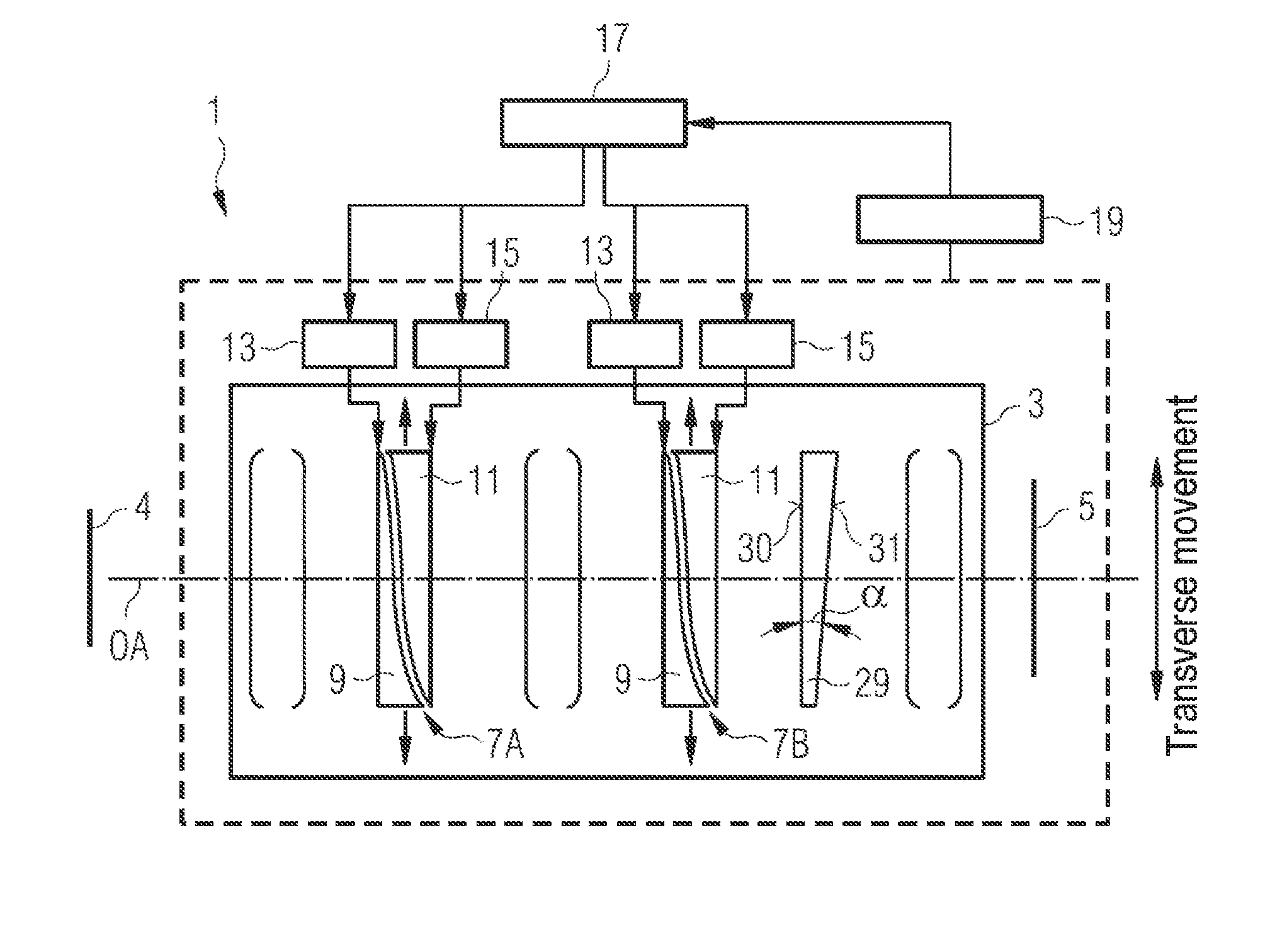
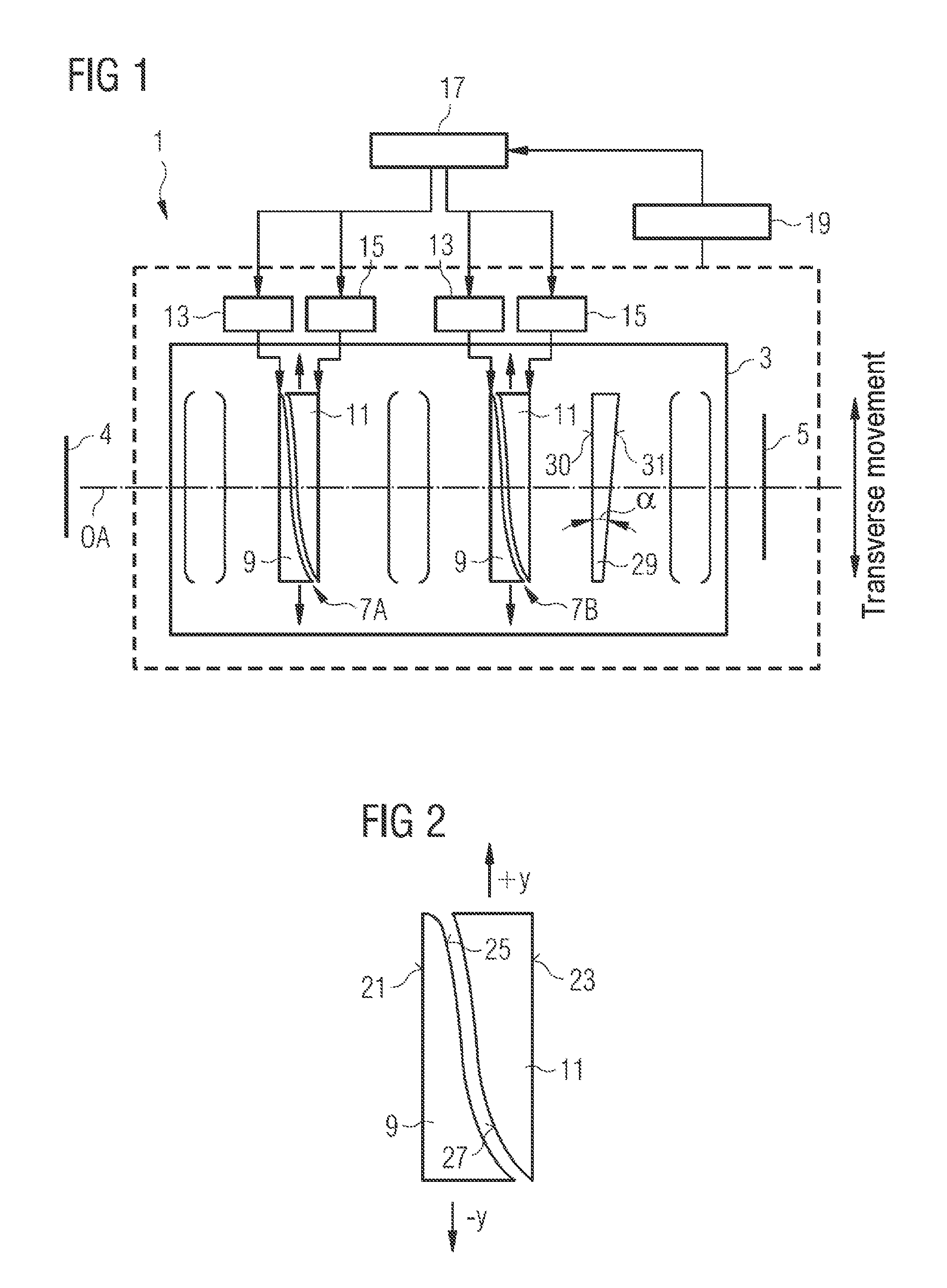
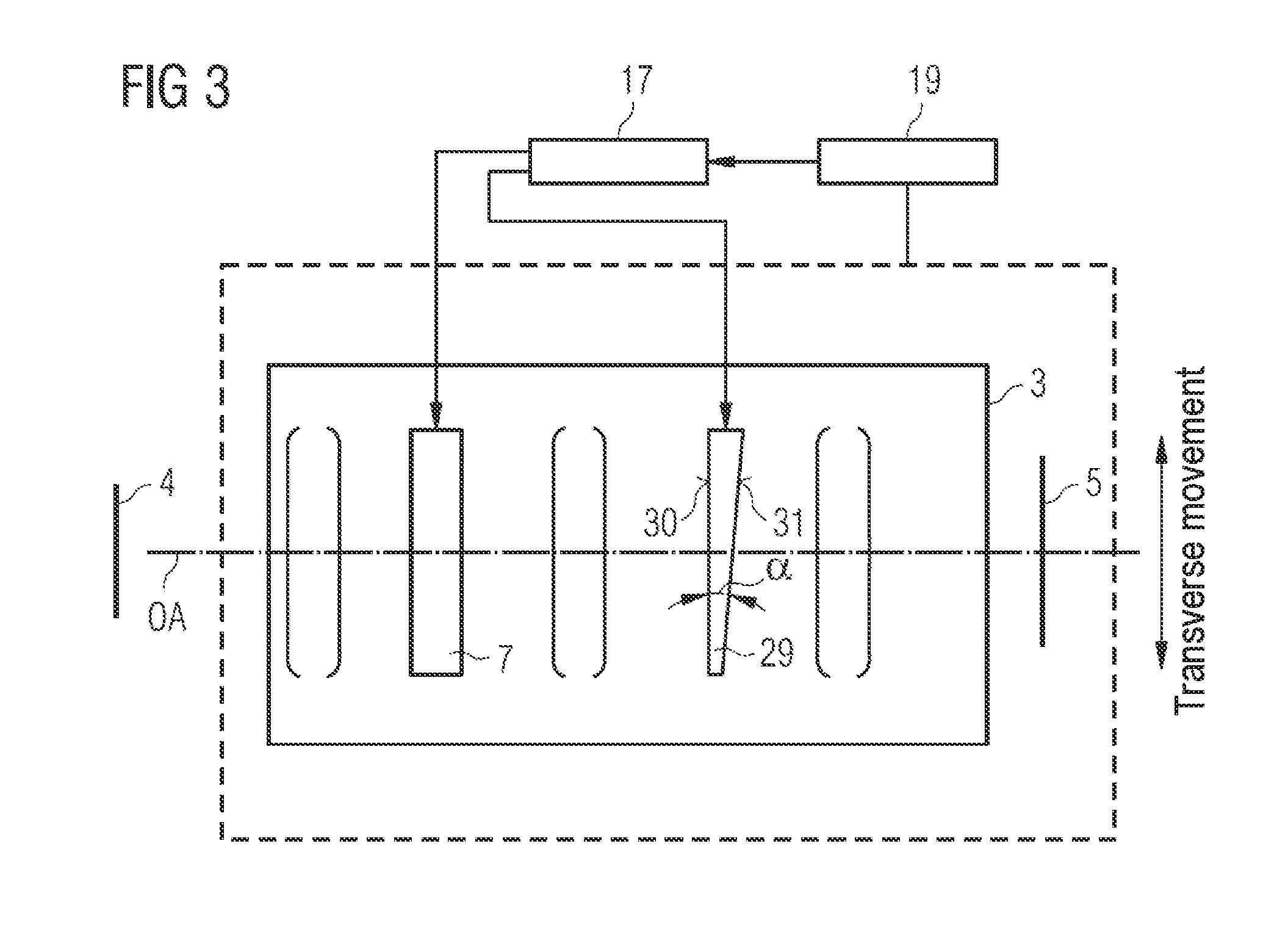

Microscope with stand and vibration compensating system
PatentInactiveEP1447700A2
Innovation
- An Actively Reacting Flexible Structure (ARES) component is integrated into the microscope stand to measure and actively compensate for vibrations in the XYZ directions, replacing traditional support arms and reducing the need for bulky motors and additional optical elements.


Laboratory Environment Standards and Vibration Specifications
Laboratory environments where dissecting and boom stand microscopes operate are subject to various vibration sources that can significantly impact imaging quality and measurement accuracy. International standards organizations have established comprehensive guidelines to quantify and control environmental vibrations in precision instrumentation settings. The ISO 10811 series and IEST-RP-CC012 standards provide foundational frameworks for classifying vibration levels in laboratories, defining acceptable thresholds based on equipment sensitivity and operational requirements.
Vibration specifications are typically categorized using velocity criteria measured in micrometers per second (μm/s) across frequency ranges from 1 Hz to 100 Hz. Generic laboratory environments are classified into several categories, with VC-A representing extremely quiet spaces with vibration velocities below 50 μm/s, suitable for the most sensitive metrology equipment. Standard microscopy laboratories typically fall within VC-C to VC-E classifications, where vibration velocities range from 125 to 500 μm/s. These specifications directly influence the performance differential between dissecting microscopes with rigid column designs and boom stand configurations with extended cantilever arms.
Environmental compliance testing protocols require continuous monitoring of floor vibrations using triaxial accelerometers positioned at equipment mounting locations. The frequency spectrum analysis reveals that most laboratory vibrations originate from HVAC systems (5-20 Hz), building structural resonances (2-8 Hz), and nearby traffic or machinery (10-50 Hz). Boom stand microscopes demonstrate particular sensitivity to low-frequency vibrations below 15 Hz, where their mechanical amplification characteristics become pronounced.
Regulatory frameworks also address airborne vibrations and acoustic coupling effects, which can transmit through microscope structures. Standards specify maximum sound pressure levels and require isolation measures when ambient noise exceeds 65 dBA. Modern laboratory design incorporates floating floors, isolated foundations, and active vibration cancellation systems to maintain compliance with these stringent specifications, ensuring both microscope types can achieve their theoretical performance limits under controlled conditions.
Vibration specifications are typically categorized using velocity criteria measured in micrometers per second (μm/s) across frequency ranges from 1 Hz to 100 Hz. Generic laboratory environments are classified into several categories, with VC-A representing extremely quiet spaces with vibration velocities below 50 μm/s, suitable for the most sensitive metrology equipment. Standard microscopy laboratories typically fall within VC-C to VC-E classifications, where vibration velocities range from 125 to 500 μm/s. These specifications directly influence the performance differential between dissecting microscopes with rigid column designs and boom stand configurations with extended cantilever arms.
Environmental compliance testing protocols require continuous monitoring of floor vibrations using triaxial accelerometers positioned at equipment mounting locations. The frequency spectrum analysis reveals that most laboratory vibrations originate from HVAC systems (5-20 Hz), building structural resonances (2-8 Hz), and nearby traffic or machinery (10-50 Hz). Boom stand microscopes demonstrate particular sensitivity to low-frequency vibrations below 15 Hz, where their mechanical amplification characteristics become pronounced.
Regulatory frameworks also address airborne vibrations and acoustic coupling effects, which can transmit through microscope structures. Standards specify maximum sound pressure levels and require isolation measures when ambient noise exceeds 65 dBA. Modern laboratory design incorporates floating floors, isolated foundations, and active vibration cancellation systems to maintain compliance with these stringent specifications, ensuring both microscope types can achieve their theoretical performance limits under controlled conditions.
Ergonomic Design Trade-offs in Microscope Stand Selection
When selecting between dissecting microscopes and boom stand microscopes, ergonomic considerations fundamentally shape operational efficiency and user comfort, particularly in environments where vibration stability is critical. The physical configuration of each system presents distinct ergonomic advantages and limitations that directly influence long-term usability and operator fatigue patterns.
Dissecting microscopes with fixed stands offer superior ergonomic predictability through their compact footprint and stable positioning. Users can establish consistent working postures with adjustable eyepiece angles and interpupillary distances that remain constant throughout extended observation sessions. However, this configuration constrains workspace flexibility, requiring operators to position specimens within a limited working envelope. The fixed geometry may necessitate awkward neck angles or sustained forward lean when examining larger objects, potentially contributing to musculoskeletal strain during prolonged use.
Boom stand microscopes introduce significant ergonomic flexibility through their articulated arm systems, enabling operators to position optical heads across expansive work areas without repositioning specimens or adjusting body posture. This mobility reduces repetitive reaching movements and allows natural working positions across varied task requirements. The counterbalanced design permits effortless repositioning with minimal physical effort, theoretically reducing operator fatigue.
Nevertheless, this flexibility introduces ergonomic compromises. The extended cantilever structure inherently amplifies vibration transmission from environmental sources and operator contact, potentially degrading image stability during critical observations. Users must develop careful manipulation techniques to minimize disturbance, which can paradoxically increase cognitive load and physical tension. The variable positioning capability also eliminates the postural consistency available with fixed stands, requiring continuous micro-adjustments that may accumulate into fatigue over extended sessions.
The ergonomic trade-off fundamentally centers on workspace adaptability versus postural consistency. Applications requiring frequent specimen repositioning or examination of large assemblies benefit from boom stand mobility despite vibration sensitivity. Conversely, tasks demanding sustained observation of small specimens favor the ergonomic stability and repeatable positioning of fixed dissecting microscope configurations, where vibration control directly enhances both image quality and operator comfort through reduced visual strain.
Dissecting microscopes with fixed stands offer superior ergonomic predictability through their compact footprint and stable positioning. Users can establish consistent working postures with adjustable eyepiece angles and interpupillary distances that remain constant throughout extended observation sessions. However, this configuration constrains workspace flexibility, requiring operators to position specimens within a limited working envelope. The fixed geometry may necessitate awkward neck angles or sustained forward lean when examining larger objects, potentially contributing to musculoskeletal strain during prolonged use.
Boom stand microscopes introduce significant ergonomic flexibility through their articulated arm systems, enabling operators to position optical heads across expansive work areas without repositioning specimens or adjusting body posture. This mobility reduces repetitive reaching movements and allows natural working positions across varied task requirements. The counterbalanced design permits effortless repositioning with minimal physical effort, theoretically reducing operator fatigue.
Nevertheless, this flexibility introduces ergonomic compromises. The extended cantilever structure inherently amplifies vibration transmission from environmental sources and operator contact, potentially degrading image stability during critical observations. Users must develop careful manipulation techniques to minimize disturbance, which can paradoxically increase cognitive load and physical tension. The variable positioning capability also eliminates the postural consistency available with fixed stands, requiring continuous micro-adjustments that may accumulate into fatigue over extended sessions.
The ergonomic trade-off fundamentally centers on workspace adaptability versus postural consistency. Applications requiring frequent specimen repositioning or examination of large assemblies benefit from boom stand mobility despite vibration sensitivity. Conversely, tasks demanding sustained observation of small specimens favor the ergonomic stability and repeatable positioning of fixed dissecting microscope configurations, where vibration control directly enhances both image quality and operator comfort through reduced visual strain.
Unlock deeper insights with Patsnap Eureka Quick Research — get a full tech report to explore trends and direct your research. Try now!
Generate Your Research Report Instantly with AI Agent
Supercharge your innovation with Patsnap Eureka AI Agent Platform!