

How to Optimize Working Distance on a Dissecting Microscope for Tool Access
JUL 16, 20269 MIN READ
Generate Your Research Report Instantly with AI Agent
Patsnap Eureka helps you evaluate technical feasibility & market potential.
Dissecting Microscope Working Distance Evolution and Objectives
The evolution of dissecting microscope working distance represents a critical trajectory in microscopy development, fundamentally shaped by the competing demands of optical performance and practical accessibility. Early dissecting microscopes in the mid-20th century typically featured working distances of 50-70mm, constrained by the optical design principles of the era. These instruments prioritized magnification and resolution over operational flexibility, limiting their utility in applications requiring tool manipulation.
The 1970s and 1980s marked a significant transition period as manufacturers began recognizing the importance of extended working distances for biological research and industrial inspection. Innovations in objective lens design, particularly the development of long working distance objectives, enabled working distances to reach 90-110mm while maintaining acceptable optical quality. This advancement was driven primarily by the needs of microsurgery, entomology, and electronics assembly sectors where instrument access became paramount.
Contemporary dissecting microscopes have achieved working distances exceeding 120mm, with some specialized models reaching 150-200mm. This progression has been facilitated by advances in optical coatings, aberration correction technologies, and computer-aided lens design. Modern objectives employ sophisticated multi-element configurations that balance working distance extension with numerical aperture optimization, minimizing the traditional trade-off between these parameters.
The primary objective of current working distance optimization efforts centers on maximizing tool accessibility without compromising image quality. This involves achieving sufficient clearance for micromanipulators, surgical instruments, soldering tools, and other implements while maintaining adequate resolution and depth of field. Secondary objectives include preserving ergonomic viewing angles, ensuring uniform illumination across the extended working space, and accommodating various specimen sizes and containment vessels.
Recent developments focus on modular objective systems that allow users to select working distance configurations based on specific application requirements. Objectives with working distances of 100mm have become the industry standard for general-purpose dissecting microscopy, representing an optimal balance point. However, specialized applications continue to drive demand for even longer working distances, pushing the boundaries of optical engineering and defining future development trajectories in this technology domain.
The 1970s and 1980s marked a significant transition period as manufacturers began recognizing the importance of extended working distances for biological research and industrial inspection. Innovations in objective lens design, particularly the development of long working distance objectives, enabled working distances to reach 90-110mm while maintaining acceptable optical quality. This advancement was driven primarily by the needs of microsurgery, entomology, and electronics assembly sectors where instrument access became paramount.
Contemporary dissecting microscopes have achieved working distances exceeding 120mm, with some specialized models reaching 150-200mm. This progression has been facilitated by advances in optical coatings, aberration correction technologies, and computer-aided lens design. Modern objectives employ sophisticated multi-element configurations that balance working distance extension with numerical aperture optimization, minimizing the traditional trade-off between these parameters.
The primary objective of current working distance optimization efforts centers on maximizing tool accessibility without compromising image quality. This involves achieving sufficient clearance for micromanipulators, surgical instruments, soldering tools, and other implements while maintaining adequate resolution and depth of field. Secondary objectives include preserving ergonomic viewing angles, ensuring uniform illumination across the extended working space, and accommodating various specimen sizes and containment vessels.
Recent developments focus on modular objective systems that allow users to select working distance configurations based on specific application requirements. Objectives with working distances of 100mm have become the industry standard for general-purpose dissecting microscopy, representing an optimal balance point. However, specialized applications continue to drive demand for even longer working distances, pushing the boundaries of optical engineering and defining future development trajectories in this technology domain.
Market Demand for Enhanced Tool Access in Microscopy
The dissecting microscopy market is experiencing significant growth driven by expanding applications across biological research, medical diagnostics, materials science, and precision manufacturing sectors. Research laboratories and educational institutions represent traditional strongholds for dissecting microscopes, yet emerging applications in microelectronics assembly, forensic analysis, and quality control are creating new demand channels. The convergence of miniaturization trends across multiple industries has intensified requirements for microscopy systems that accommodate sophisticated manipulation tools while maintaining optimal optical performance.
A critical pain point identified across user segments involves the inherent trade-off between magnification power and working distance. Researchers conducting micromanipulation procedures, such as embryo handling, microsurgery, or precision assembly tasks, consistently report frustration with inadequate clearance for tool access. This limitation directly impacts workflow efficiency and experimental outcomes, particularly in applications requiring simultaneous observation and manipulation. Survey data from laboratory equipment procurement departments indicates that working distance specifications have become a primary selection criterion, often outweighing traditional optical parameters.
The semiconductor and electronics manufacturing sectors demonstrate particularly acute demand for enhanced tool access capabilities. As component dimensions shrink and assembly precision requirements tighten, operators require microscopy solutions that permit access for tweezers, probes, soldering equipment, and automated manipulation systems without compromising visual clarity. Similar requirements emerge in medical device manufacturing, where intricate assembly processes demand both high-resolution imaging and unobstructed tool maneuverability.
Educational institutions represent another significant demand driver, as hands-on training programs in biology, materials science, and engineering require equipment that accommodates student manipulation activities. Budget constraints in this segment create demand for cost-effective solutions that balance optical performance with practical usability. The growing emphasis on experiential learning methodologies has elevated the importance of microscope systems designed explicitly for interactive manipulation tasks rather than passive observation alone.
Geographic demand patterns reveal concentrated interest in regions with robust research infrastructure and advanced manufacturing capabilities. However, emerging markets are demonstrating accelerated adoption rates as local industries upgrade quality control capabilities and research institutions expand experimental capacities. This global demand diversification is prompting manufacturers to develop solutions addressing varied application requirements and price sensitivities while maintaining core functionality for enhanced tool access.
A critical pain point identified across user segments involves the inherent trade-off between magnification power and working distance. Researchers conducting micromanipulation procedures, such as embryo handling, microsurgery, or precision assembly tasks, consistently report frustration with inadequate clearance for tool access. This limitation directly impacts workflow efficiency and experimental outcomes, particularly in applications requiring simultaneous observation and manipulation. Survey data from laboratory equipment procurement departments indicates that working distance specifications have become a primary selection criterion, often outweighing traditional optical parameters.
The semiconductor and electronics manufacturing sectors demonstrate particularly acute demand for enhanced tool access capabilities. As component dimensions shrink and assembly precision requirements tighten, operators require microscopy solutions that permit access for tweezers, probes, soldering equipment, and automated manipulation systems without compromising visual clarity. Similar requirements emerge in medical device manufacturing, where intricate assembly processes demand both high-resolution imaging and unobstructed tool maneuverability.
Educational institutions represent another significant demand driver, as hands-on training programs in biology, materials science, and engineering require equipment that accommodates student manipulation activities. Budget constraints in this segment create demand for cost-effective solutions that balance optical performance with practical usability. The growing emphasis on experiential learning methodologies has elevated the importance of microscope systems designed explicitly for interactive manipulation tasks rather than passive observation alone.
Geographic demand patterns reveal concentrated interest in regions with robust research infrastructure and advanced manufacturing capabilities. However, emerging markets are demonstrating accelerated adoption rates as local industries upgrade quality control capabilities and research institutions expand experimental capacities. This global demand diversification is prompting manufacturers to develop solutions addressing varied application requirements and price sensitivities while maintaining core functionality for enhanced tool access.
Current Working Distance Limitations and Technical Challenges
Dissecting microscopes face fundamental constraints in working distance that directly impact operational efficiency during precision manipulation tasks. Traditional stereo microscopes typically offer working distances ranging from 60mm to 120mm at standard magnifications, creating a critical bottleneck when operators need to introduce surgical instruments, micromanipulation tools, or specialized probes into the workspace. This limited clearance between the objective lens and specimen stage forces compromises between optical performance and practical accessibility.
The primary technical challenge stems from the inverse relationship between magnification power and working distance. Higher magnification objectives require shorter focal lengths, which inherently reduce the physical space available for tool insertion. When operators attempt to work at magnifications above 40x, the working distance often shrinks below 50mm, making it nearly impossible to maneuver standard surgical instruments or precision tools without risking collision with the optical components. This constraint becomes particularly acute in applications such as microsurgery, electronics assembly, and biological specimen preparation where simultaneous visualization and manipulation are essential.
Optical design limitations further compound these challenges. Conventional microscope architectures prioritize numerical aperture and resolution over working distance, as extending the focal length typically degrades image quality through increased aberrations and reduced light gathering capability. The physical dimensions of objective lens housings also contribute to workspace congestion, with bulky lens barrels occupying valuable vertical clearance even when the optical working distance might theoretically accommodate tool access.
Ergonomic factors introduce additional complexity to this technical problem. Operators frequently report fatigue and reduced precision when forced to work at awkward angles to navigate tools around microscope components. The restricted approach angles limit the types of procedures that can be performed effectively, often requiring workflow interruptions to reposition either the specimen or the optical system. Vibration sensitivity increases as tools make contact near the optical path, potentially compromising image stability during critical manipulation steps.
Current market solutions attempt to address these limitations through auxiliary working distance extenders or specialized long-working-distance objectives, yet these approaches introduce trade-offs in optical performance, cost, and system complexity that remain unresolved in mainstream applications.
The primary technical challenge stems from the inverse relationship between magnification power and working distance. Higher magnification objectives require shorter focal lengths, which inherently reduce the physical space available for tool insertion. When operators attempt to work at magnifications above 40x, the working distance often shrinks below 50mm, making it nearly impossible to maneuver standard surgical instruments or precision tools without risking collision with the optical components. This constraint becomes particularly acute in applications such as microsurgery, electronics assembly, and biological specimen preparation where simultaneous visualization and manipulation are essential.
Optical design limitations further compound these challenges. Conventional microscope architectures prioritize numerical aperture and resolution over working distance, as extending the focal length typically degrades image quality through increased aberrations and reduced light gathering capability. The physical dimensions of objective lens housings also contribute to workspace congestion, with bulky lens barrels occupying valuable vertical clearance even when the optical working distance might theoretically accommodate tool access.
Ergonomic factors introduce additional complexity to this technical problem. Operators frequently report fatigue and reduced precision when forced to work at awkward angles to navigate tools around microscope components. The restricted approach angles limit the types of procedures that can be performed effectively, often requiring workflow interruptions to reposition either the specimen or the optical system. Vibration sensitivity increases as tools make contact near the optical path, potentially compromising image stability during critical manipulation steps.
Current market solutions attempt to address these limitations through auxiliary working distance extenders or specialized long-working-distance objectives, yet these approaches introduce trade-offs in optical performance, cost, and system complexity that remain unresolved in mainstream applications.
Existing Working Distance Optimization Solutions
01 Adjustable working distance mechanisms in dissecting microscopes
Dissecting microscopes can be equipped with adjustable mechanisms that allow users to modify the working distance between the objective lens and the specimen. These mechanisms may include movable lens assemblies, focusing systems, or adjustable stages that enable precise control over the distance. Such adjustability is crucial for accommodating specimens of varying heights and sizes while maintaining optimal image quality and magnification.- Adjustable working distance mechanisms in dissecting microscopes: Dissecting microscopes can be equipped with adjustable mechanisms that allow users to modify the working distance between the objective lens and the specimen. These mechanisms may include movable lens systems, adjustable stages, or telescopic components that enable flexible positioning. Such adjustability is crucial for accommodating specimens of varying heights and sizes while maintaining optimal focus and magnification.
- Extended working distance optical designs: Specialized optical configurations can be implemented to achieve extended working distances in dissecting microscopes. These designs incorporate long focal length objectives, modified lens arrangements, and optimized optical paths that maintain image quality while providing greater clearance between the lens and specimen. Extended working distance is particularly beneficial for manipulation tasks and observing larger specimens.
- Zoom systems with variable working distance: Zoom-based dissecting microscopes feature optical systems that maintain or adjust working distance across different magnification levels. These systems utilize complex lens groups that move in coordinated patterns to change magnification while preserving the working distance or adjusting it proportionally. This capability allows users to switch between magnifications without repositioning the specimen or refocusing significantly.
- Illumination systems optimized for working distance: Illumination configurations in dissecting microscopes are designed to work effectively within specific working distance ranges. These systems include adjustable light sources, fiber optic illuminators, and ring lights positioned to provide optimal lighting at the working distance. Proper illumination design ensures adequate specimen visibility while accommodating the spatial requirements imposed by the working distance.
- Ergonomic designs considering working distance constraints: Microscope designs incorporate ergonomic features that account for working distance requirements, including adjustable viewing angles, tilting heads, and positioning systems that allow comfortable operation while maintaining appropriate working distance. These designs balance the need for adequate clearance with user comfort and accessibility, enabling prolonged observation and manipulation tasks without strain.
02 Extended working distance optical designs
Specialized optical designs can be implemented to achieve extended working distances in dissecting microscopes. These designs incorporate specific lens configurations, optical path arrangements, and objective lens systems that maximize the space between the lens and the specimen while preserving image resolution and clarity. Extended working distance is particularly beneficial for manipulation tasks and observing larger specimens.Expand Specific Solutions03 Zoom systems with variable working distance
Zoom optical systems in dissecting microscopes can provide variable working distances across different magnification levels. These systems utilize multiple lens groups that move relative to each other to change magnification while maintaining or adjusting the working distance. The integration of zoom capabilities allows users to switch between different observation modes without significantly compromising the working space.Expand Specific Solutions04 Ergonomic designs for optimal working distance
Ergonomic considerations in dissecting microscope design focus on providing comfortable working distances that reduce user fatigue during extended observation periods. These designs incorporate adjustable viewing angles, tilting mechanisms, and positioning systems that allow users to maintain natural postures while working. The optimal working distance balances accessibility to the specimen with comfortable viewing positions.Expand Specific Solutions05 Illumination systems adapted for working distance
Illumination systems in dissecting microscopes are specifically designed to accommodate the working distance requirements. These systems include adjustable light sources, fiber optic illuminators, and LED arrays positioned to provide optimal lighting at various working distances. Proper illumination design ensures uniform specimen lighting without interference from the light source, even when working distances are extended or adjusted.Expand Specific Solutions
Major Microscope Manufacturers and Market Competition
The dissecting microscope working distance optimization market operates in a mature yet evolving stage, driven by increasing demands for precision in microsurgery and minimally invasive procedures. The market demonstrates substantial growth potential, particularly within surgical and medical device sectors, with established players like Carl Zeiss Meditec AG, Leica Microsystems CMS GmbH, and Stryker Corp. dominating through advanced optical technologies. Technology maturity varies significantly: traditional microscopy leaders such as Carl Zeiss Microscopy GmbH and Leica Instruments demonstrate high technical sophistication in ergonomic design and modular systems, while surgical innovators including Intuitive Surgical Operations, Inc., Boston Scientific Scimed, Inc., and Karl Storz SE integrate microscopy with robotic and endoscopic platforms. Competition intensifies as companies like AtriCure, Inc., DePuy Synthes Products, Inc., and Globus Medical, Inc. develop specialized solutions for specific surgical applications, pushing boundaries in tool accessibility and surgeon workflow optimization.
Carl Zeiss Meditec AG
Technical Solution: Carl Zeiss Meditec has developed advanced optical systems for surgical microscopes that optimize working distance through variable focal length technology and modular objective lens designs. Their solutions incorporate adjustable magnification systems ranging from 6x to 40x with working distances extending from 150mm to 400mm, allowing surgeons to maintain optimal tool access while preserving visualization quality. The company's OPMI series features motorized focus adjustment and tilt mechanisms that enable real-time working distance modification without compromising sterility. Their proprietary optical design utilizes apochromatic correction and extended depth of field technology to maintain sharp imaging across the entire working range, while integrated illumination systems with adjustable spot size ensure consistent brightness regardless of working distance settings.
Strengths: Industry-leading optical quality with superior depth of field, extensive working distance range (150-400mm), motorized adjustment for precise control. Weaknesses: High cost of equipment and maintenance, complex system requiring specialized training, larger footprint may limit use in confined surgical spaces.
Leica Microsystems CMS GmbH
Technical Solution: Leica Microsystems addresses working distance optimization through their M-Series surgical microscopes featuring FusionOptics technology and modular objective configurations. Their approach combines stereoscopic viewing with extended working distances up to 350mm through interchangeable objective lenses (f=200mm, f=250mm, f=300mm options). The system employs a unique optical path design that maintains high resolution and contrast across variable working distances while providing unobstructed access for surgical instruments. Leica's CaptiView technology integrates digital imaging with traditional optics, allowing surgeons to switch between direct viewing and monitor-based visualization to further increase working space. Their tilt and swivel mechanisms enable angular adjustments up to 180 degrees, facilitating tool access from multiple approach vectors while maintaining focal plane stability.
Strengths: FusionOptics provides exceptional depth perception with extended focus range, flexible objective options for customized working distances, excellent ergonomic design with multi-axis positioning. Weaknesses: Premium pricing structure, integration with existing surgical workflows may require infrastructure upgrades, limited compatibility with third-party accessories.
Key Patents in Extended Working Distance Technology
Surgical Microscope with Enlarged Working Distance
PatentActiveUS20140340500A1
Innovation
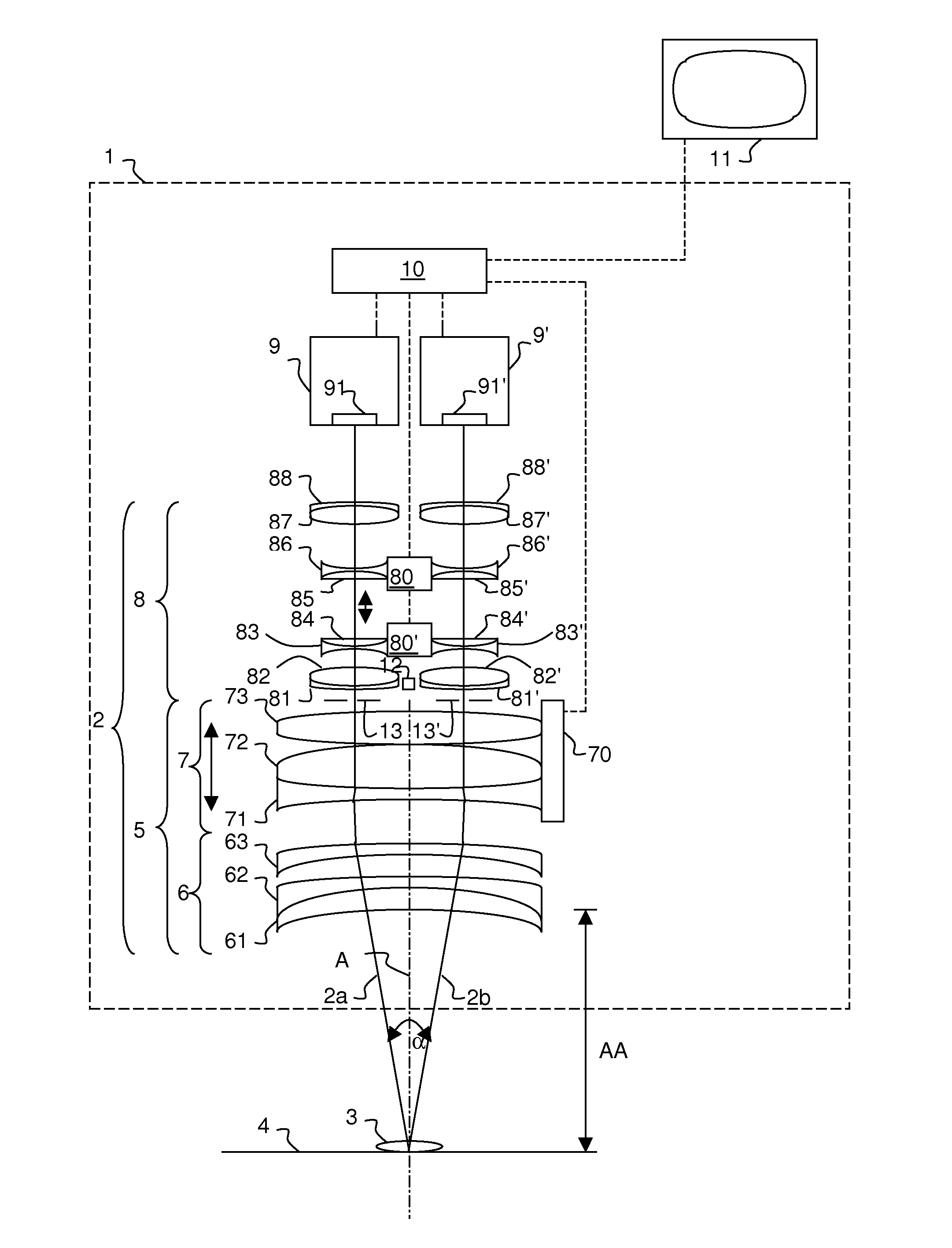
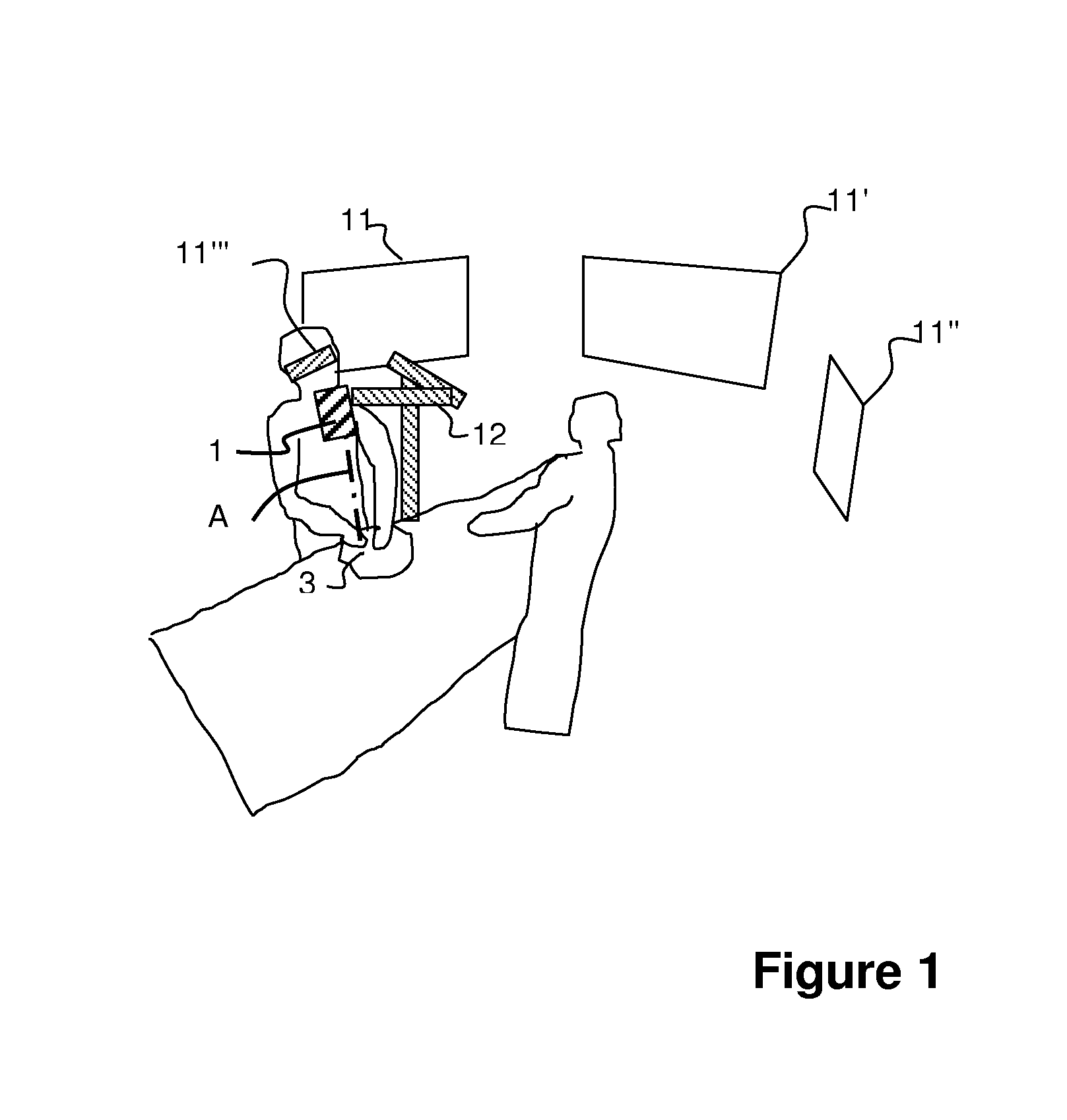
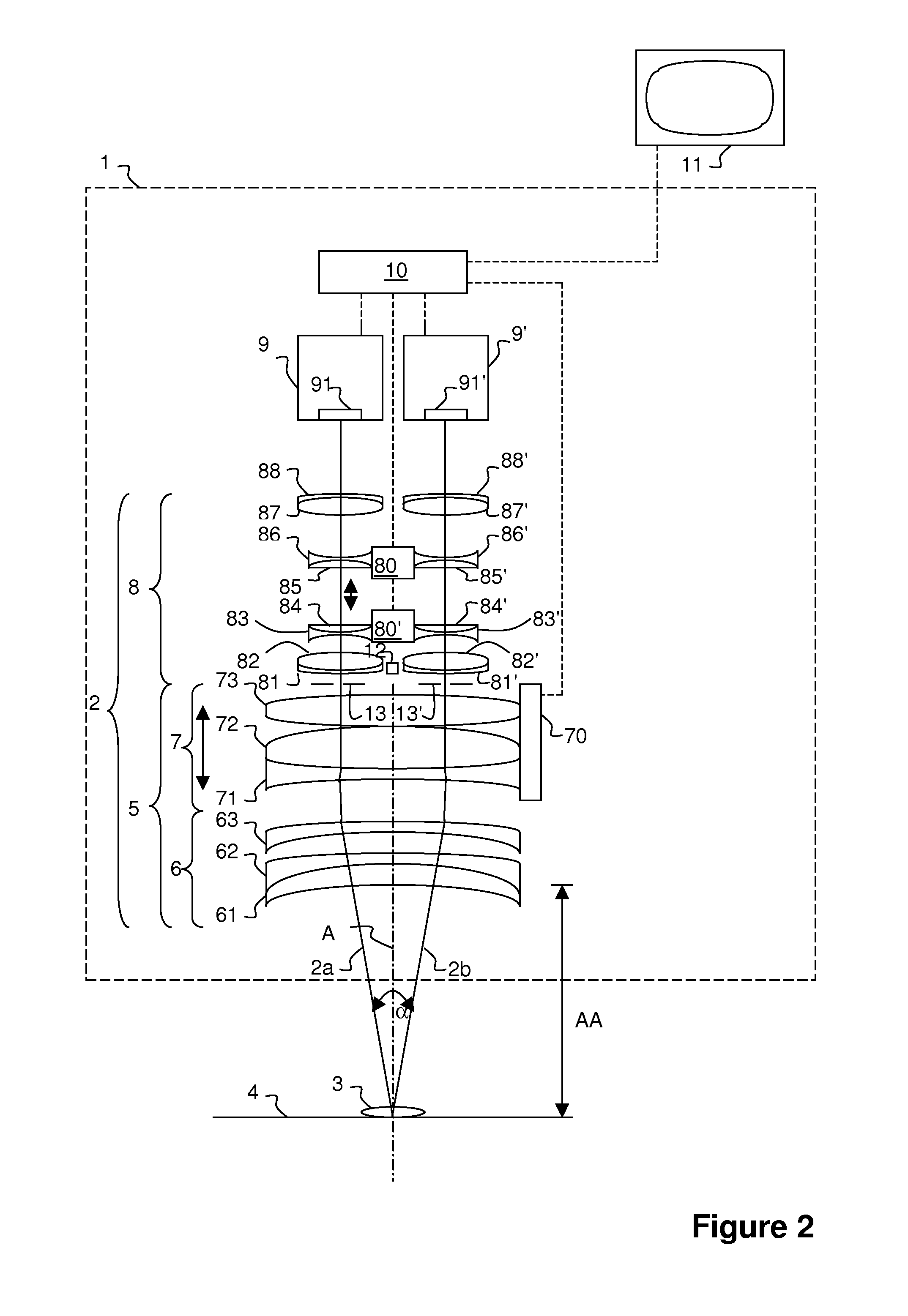
- A surgical microscope with an objective system comprising two lens groups, where one group has a negative optical power and is moveable along the optical axis, allowing for a wide variation of working distance from 200 mm to 5,000 mm, enabling a larger and adjustable working distance beyond typical ranges.

Microscopic objective having a long working distance
PatentInactiveUS6069744A
Innovation
- The design of a microscope objective with a long working distance, comprising a lens group with positive refractive power and another with negative refractive power, satisfying specific conditions to enhance magnification and correct aberrations, including the use of a positive meniscus lens and cemented lenses to achieve a converging light beam and reduce Petzval's sum.


Optical Design Trade-offs in Working Distance Extension
Extending working distance in dissecting microscopes involves fundamental optical compromises that must be carefully balanced against operational requirements. The primary trade-off exists between working distance and numerical aperture, as increasing the former typically necessitates reducing the latter, which directly impacts resolution and light-gathering capability. This relationship is governed by the basic optical principle that larger working distances require either larger objective lens diameters or acceptance of reduced angular aperture, both of which present distinct engineering challenges.
The magnification-working distance relationship represents another critical consideration. Traditional optical designs demonstrate an inverse correlation between these parameters, where higher magnification objectives inherently possess shorter working distances due to their steeper light cone angles. To maintain adequate working distance while preserving magnification, designers must implement complex multi-element objective configurations, which introduce additional aberration correction requirements and increase system complexity. These extended optical paths can compromise image quality through increased chromatic and spherical aberrations unless sophisticated correction mechanisms are incorporated.
Depth of field constitutes a third significant trade-off dimension. Extended working distance designs often employ reduced numerical apertures to achieve the necessary clearance, which paradoxically increases depth of field. While this may benefit certain applications requiring simultaneous focus across varying specimen heights, it can reduce the microscope's ability to optically section specimens, potentially limiting its utility in applications requiring precise focal plane discrimination.
Illumination efficiency presents additional challenges in extended working distance configurations. Greater distances between light source and specimen result in reduced illumination intensity following inverse square law principles, necessitating either higher-powered light sources or more sophisticated illumination delivery systems. Oblique illumination angles, often employed to maintain adequate lighting at extended distances, can introduce unwanted shadows and reduce contrast, particularly when manipulating tools within the working space.
The physical constraints of objective lens design further complicate optimization efforts. Achieving extended working distances while maintaining acceptable optical performance requires larger front lens elements and longer barrel assemblies, which increase weight and potentially reduce mechanical stability. These dimensional increases must be balanced against ergonomic considerations and the practical limitations of microscope stand architecture, creating additional constraints on the achievable optical performance envelope.
The magnification-working distance relationship represents another critical consideration. Traditional optical designs demonstrate an inverse correlation between these parameters, where higher magnification objectives inherently possess shorter working distances due to their steeper light cone angles. To maintain adequate working distance while preserving magnification, designers must implement complex multi-element objective configurations, which introduce additional aberration correction requirements and increase system complexity. These extended optical paths can compromise image quality through increased chromatic and spherical aberrations unless sophisticated correction mechanisms are incorporated.
Depth of field constitutes a third significant trade-off dimension. Extended working distance designs often employ reduced numerical apertures to achieve the necessary clearance, which paradoxically increases depth of field. While this may benefit certain applications requiring simultaneous focus across varying specimen heights, it can reduce the microscope's ability to optically section specimens, potentially limiting its utility in applications requiring precise focal plane discrimination.
Illumination efficiency presents additional challenges in extended working distance configurations. Greater distances between light source and specimen result in reduced illumination intensity following inverse square law principles, necessitating either higher-powered light sources or more sophisticated illumination delivery systems. Oblique illumination angles, often employed to maintain adequate lighting at extended distances, can introduce unwanted shadows and reduce contrast, particularly when manipulating tools within the working space.
The physical constraints of objective lens design further complicate optimization efforts. Achieving extended working distances while maintaining acceptable optical performance requires larger front lens elements and longer barrel assemblies, which increase weight and potentially reduce mechanical stability. These dimensional increases must be balanced against ergonomic considerations and the practical limitations of microscope stand architecture, creating additional constraints on the achievable optical performance envelope.
Application-Specific Working Distance Requirements Analysis
Working distance requirements in dissecting microscopy vary significantly across different application domains, each presenting unique operational constraints and performance expectations. In biological research laboratories, typical working distances range from 60mm to 120mm, accommodating standard dissection tools such as forceps, scissors, and micromanipulators. These applications prioritize sufficient clearance for bilateral hand movements while maintaining adequate magnification for tissue manipulation and specimen observation.
Industrial quality control and electronics manufacturing environments demand different specifications. Circuit board inspection and micro-soldering operations typically require working distances between 80mm and 150mm to accommodate soldering irons, tweezers, and testing probes. The thermal management considerations in these settings necessitate greater clearance to prevent heat transfer from tools affecting optical components or specimen integrity.
Educational institutions present another distinct requirement profile. Student training applications benefit from extended working distances of 100mm to 140mm, allowing novice users to maneuver tools with reduced risk of objective lens contact. This extended range compensates for less refined motor skills while maintaining adequate magnification for learning objectives. Group demonstration setups may require even greater distances to accommodate auxiliary lighting equipment and recording devices.
Surgical and clinical applications impose the most stringent requirements. Microsurgical procedures demand working distances exceeding 150mm to accommodate specialized instruments including microsutures, cauterization tools, and irrigation systems. These applications must balance optical performance with ergonomic considerations for extended procedure durations, often requiring customized objective lens configurations.
Material science and geological sample preparation represent specialized cases where working distances must accommodate hardness testing equipment, diamond scribes, and sample mounting apparatus. These applications typically specify 90mm to 130mm working distances, with additional considerations for debris management and sample stability during manipulation. The diversity of tool geometries and operational techniques across these domains underscores the necessity for flexible working distance optimization strategies rather than universal solutions.
Industrial quality control and electronics manufacturing environments demand different specifications. Circuit board inspection and micro-soldering operations typically require working distances between 80mm and 150mm to accommodate soldering irons, tweezers, and testing probes. The thermal management considerations in these settings necessitate greater clearance to prevent heat transfer from tools affecting optical components or specimen integrity.
Educational institutions present another distinct requirement profile. Student training applications benefit from extended working distances of 100mm to 140mm, allowing novice users to maneuver tools with reduced risk of objective lens contact. This extended range compensates for less refined motor skills while maintaining adequate magnification for learning objectives. Group demonstration setups may require even greater distances to accommodate auxiliary lighting equipment and recording devices.
Surgical and clinical applications impose the most stringent requirements. Microsurgical procedures demand working distances exceeding 150mm to accommodate specialized instruments including microsutures, cauterization tools, and irrigation systems. These applications must balance optical performance with ergonomic considerations for extended procedure durations, often requiring customized objective lens configurations.
Material science and geological sample preparation represent specialized cases where working distances must accommodate hardness testing equipment, diamond scribes, and sample mounting apparatus. These applications typically specify 90mm to 130mm working distances, with additional considerations for debris management and sample stability during manipulation. The diversity of tool geometries and operational techniques across these domains underscores the necessity for flexible working distance optimization strategies rather than universal solutions.
Unlock deeper insights with Patsnap Eureka Quick Research — get a full tech report to explore trends and direct your research. Try now!
Generate Your Research Report Instantly with AI Agent
Supercharge your innovation with Patsnap Eureka AI Agent Platform!