

Electrochemical Compression: Assessing Variable Pressure Output
APR 24, 202610 MIN READ
Generate Your Research Report Instantly with AI Agent
PatSnap Eureka helps you evaluate technical feasibility & market potential.
Electrochemical Compression Background and Technical Objectives
Electrochemical compression represents a paradigm shift in gas compression technology, emerging from the convergence of electrochemical engineering and fluid mechanics principles. This innovative approach leverages electrochemical reactions to achieve gas compression without traditional mechanical components, offering potential advantages in energy efficiency, noise reduction, and maintenance requirements. The technology builds upon decades of fuel cell and electrolyzer research, adapting electrochemical cell architectures for compression applications.
The fundamental principle involves utilizing electrochemical reactions to create pressure differentials across specialized membrane electrode assemblies. Unlike conventional mechanical compressors that rely on pistons, rotors, or centrifugal forces, electrochemical compression harnesses the inherent pressure-generating capabilities of electrochemical processes. This approach has gained significant attention in hydrogen economy applications, where traditional compression methods face efficiency and durability challenges.
Historical development traces back to early fuel cell research in the 1960s, where researchers observed pressure buildup phenomena in electrochemical cells. The concept evolved through various iterations, with significant breakthroughs occurring in the 1990s when advanced membrane materials enabled more practical implementations. Recent advances in proton exchange membranes, catalyst materials, and cell design have accelerated commercial viability assessments.
The primary technical objective centers on achieving variable pressure output capabilities while maintaining system efficiency and reliability. This involves developing sophisticated control mechanisms that can modulate electrochemical reaction rates to produce desired pressure profiles. Key performance targets include achieving pressure ratios comparable to mechanical systems, typically ranging from 2:1 to 10:1, while maintaining energy conversion efficiencies above 70%.
Secondary objectives encompass system integration challenges, including thermal management, water balance control, and electrode durability optimization. The technology must demonstrate stable operation across varying load conditions, temperature ranges, and gas compositions. Long-term durability targets typically specify operational lifetimes exceeding 40,000 hours with minimal performance degradation.
Advanced control algorithms represent a critical technical objective, requiring real-time monitoring and adjustment of multiple parameters including current density, temperature, humidity, and reactant flow rates. These systems must respond dynamically to pressure demand variations while preventing operational conditions that could damage membrane electrode assemblies or compromise system efficiency.
The fundamental principle involves utilizing electrochemical reactions to create pressure differentials across specialized membrane electrode assemblies. Unlike conventional mechanical compressors that rely on pistons, rotors, or centrifugal forces, electrochemical compression harnesses the inherent pressure-generating capabilities of electrochemical processes. This approach has gained significant attention in hydrogen economy applications, where traditional compression methods face efficiency and durability challenges.
Historical development traces back to early fuel cell research in the 1960s, where researchers observed pressure buildup phenomena in electrochemical cells. The concept evolved through various iterations, with significant breakthroughs occurring in the 1990s when advanced membrane materials enabled more practical implementations. Recent advances in proton exchange membranes, catalyst materials, and cell design have accelerated commercial viability assessments.
The primary technical objective centers on achieving variable pressure output capabilities while maintaining system efficiency and reliability. This involves developing sophisticated control mechanisms that can modulate electrochemical reaction rates to produce desired pressure profiles. Key performance targets include achieving pressure ratios comparable to mechanical systems, typically ranging from 2:1 to 10:1, while maintaining energy conversion efficiencies above 70%.
Secondary objectives encompass system integration challenges, including thermal management, water balance control, and electrode durability optimization. The technology must demonstrate stable operation across varying load conditions, temperature ranges, and gas compositions. Long-term durability targets typically specify operational lifetimes exceeding 40,000 hours with minimal performance degradation.
Advanced control algorithms represent a critical technical objective, requiring real-time monitoring and adjustment of multiple parameters including current density, temperature, humidity, and reactant flow rates. These systems must respond dynamically to pressure demand variations while preventing operational conditions that could damage membrane electrode assemblies or compromise system efficiency.
Market Demand for Variable Pressure Electrochemical Systems
The global hydrogen economy is experiencing unprecedented growth, driving substantial demand for advanced electrochemical compression systems with variable pressure capabilities. Traditional mechanical compressors face significant limitations in efficiency and maintenance requirements, particularly when handling hydrogen across diverse pressure ranges. This gap has created a compelling market opportunity for electrochemical compression technologies that can dynamically adjust output pressures based on application requirements.
Industrial hydrogen applications represent the largest demand segment for variable pressure electrochemical systems. Refineries, chemical processing plants, and steel manufacturing facilities require hydrogen at different pressure levels throughout their operations. These industries are increasingly seeking compression solutions that can eliminate the need for multiple compression stages while maintaining high efficiency across varying pressure outputs. The ability to modulate pressure output electrochemically offers significant operational advantages over conventional multi-stage mechanical systems.
The emerging hydrogen mobility sector presents another critical demand driver. Fuel cell vehicle refueling stations require precise pressure control to accommodate different vehicle tank specifications and filling protocols. Variable pressure electrochemical compressors can potentially streamline station design by providing on-demand pressure adjustment without complex mechanical systems. This capability becomes particularly valuable as the automotive industry transitions toward standardized but diverse hydrogen storage pressures.
Energy storage applications are generating increasing interest in variable pressure electrochemical compression. Grid-scale hydrogen storage systems require flexible pressure management to optimize storage density and retrieval efficiency based on energy demand cycles. The ability to compress hydrogen to different pressures electrochemically enables more sophisticated energy management strategies and improved overall system economics.
Research institutions and pilot projects represent an important early-adopter market segment. These organizations require flexible compression systems for experimental work involving different pressure conditions and hydrogen purity levels. Variable pressure electrochemical compressors offer the precision and controllability needed for research applications while providing valuable operational data for technology validation.
The semiconductor and electronics manufacturing industries are emerging as potential high-value market segments. These sectors require ultra-pure hydrogen at specific pressures for various manufacturing processes. Variable pressure electrochemical systems can potentially provide both the purity and pressure flexibility required while minimizing contamination risks associated with mechanical compression systems.
Market demand is further amplified by increasing regulatory pressure for cleaner industrial processes and growing investment in hydrogen infrastructure development. Government incentives and carbon reduction mandates are accelerating adoption of hydrogen technologies, creating sustained demand for advanced compression solutions that can support diverse applications within integrated hydrogen ecosystems.
Industrial hydrogen applications represent the largest demand segment for variable pressure electrochemical systems. Refineries, chemical processing plants, and steel manufacturing facilities require hydrogen at different pressure levels throughout their operations. These industries are increasingly seeking compression solutions that can eliminate the need for multiple compression stages while maintaining high efficiency across varying pressure outputs. The ability to modulate pressure output electrochemically offers significant operational advantages over conventional multi-stage mechanical systems.
The emerging hydrogen mobility sector presents another critical demand driver. Fuel cell vehicle refueling stations require precise pressure control to accommodate different vehicle tank specifications and filling protocols. Variable pressure electrochemical compressors can potentially streamline station design by providing on-demand pressure adjustment without complex mechanical systems. This capability becomes particularly valuable as the automotive industry transitions toward standardized but diverse hydrogen storage pressures.
Energy storage applications are generating increasing interest in variable pressure electrochemical compression. Grid-scale hydrogen storage systems require flexible pressure management to optimize storage density and retrieval efficiency based on energy demand cycles. The ability to compress hydrogen to different pressures electrochemically enables more sophisticated energy management strategies and improved overall system economics.
Research institutions and pilot projects represent an important early-adopter market segment. These organizations require flexible compression systems for experimental work involving different pressure conditions and hydrogen purity levels. Variable pressure electrochemical compressors offer the precision and controllability needed for research applications while providing valuable operational data for technology validation.
The semiconductor and electronics manufacturing industries are emerging as potential high-value market segments. These sectors require ultra-pure hydrogen at specific pressures for various manufacturing processes. Variable pressure electrochemical systems can potentially provide both the purity and pressure flexibility required while minimizing contamination risks associated with mechanical compression systems.
Market demand is further amplified by increasing regulatory pressure for cleaner industrial processes and growing investment in hydrogen infrastructure development. Government incentives and carbon reduction mandates are accelerating adoption of hydrogen technologies, creating sustained demand for advanced compression solutions that can support diverse applications within integrated hydrogen ecosystems.
Current State and Challenges of Electrochemical Compression
Electrochemical compression technology has emerged as a promising alternative to conventional mechanical compression systems, particularly for hydrogen applications. Current implementations primarily focus on hydrogen compression for fuel cell systems and energy storage applications. The technology operates by utilizing electrochemical cells that combine hydrogen oxidation and reduction reactions to achieve compression without moving mechanical parts. Leading research institutions and companies have developed prototypes capable of achieving compression ratios between 10:1 to 100:1, with some advanced systems reaching pressures up to 700 bar.
The global landscape of electrochemical compression development is concentrated in regions with strong hydrogen economy initiatives. North America leads in commercial development, with companies like HyET Hydrogen and Sustainable Innovations actively deploying systems. Europe follows closely with significant research activities in Germany, Netherlands, and the UK, supported by substantial government funding for hydrogen infrastructure. Asian markets, particularly Japan and South Korea, are investing heavily in this technology as part of their national hydrogen strategies.
Current electrochemical compression systems face several critical technical challenges that limit widespread adoption. Membrane degradation remains a primary concern, as proton exchange membranes experience accelerated aging under high-pressure differentials and temperature variations. This degradation directly impacts system reliability and operational lifespan, typically limiting continuous operation to 2000-5000 hours before major maintenance requirements.
Variable pressure output capability represents one of the most significant technical hurdles. Existing systems struggle to maintain consistent compression performance across varying input pressures and flow rates. The electrochemical reaction kinetics are highly sensitive to operating conditions, leading to pressure fluctuations that can compromise downstream applications. Temperature management compounds this challenge, as heat generation during compression affects both efficiency and membrane stability.
Manufacturing scalability poses additional constraints on technology adoption. Current production methods for specialized membranes and electrode assemblies remain expensive and limited to small-scale operations. Quality control across larger production volumes presents technical difficulties, particularly in maintaining uniform membrane properties and electrode catalyst distribution. These manufacturing challenges directly translate to higher system costs compared to conventional mechanical compressors.
System integration complexities further limit practical deployment. Electrochemical compressors require sophisticated control systems to manage variable operating conditions while maintaining safety standards. The technology's sensitivity to impurities in the gas stream necessitates additional purification equipment, increasing overall system complexity and cost. Power supply requirements and electrical efficiency optimization remain active areas of development, as current systems typically achieve 60-75% electrical efficiency under optimal conditions.
The global landscape of electrochemical compression development is concentrated in regions with strong hydrogen economy initiatives. North America leads in commercial development, with companies like HyET Hydrogen and Sustainable Innovations actively deploying systems. Europe follows closely with significant research activities in Germany, Netherlands, and the UK, supported by substantial government funding for hydrogen infrastructure. Asian markets, particularly Japan and South Korea, are investing heavily in this technology as part of their national hydrogen strategies.
Current electrochemical compression systems face several critical technical challenges that limit widespread adoption. Membrane degradation remains a primary concern, as proton exchange membranes experience accelerated aging under high-pressure differentials and temperature variations. This degradation directly impacts system reliability and operational lifespan, typically limiting continuous operation to 2000-5000 hours before major maintenance requirements.
Variable pressure output capability represents one of the most significant technical hurdles. Existing systems struggle to maintain consistent compression performance across varying input pressures and flow rates. The electrochemical reaction kinetics are highly sensitive to operating conditions, leading to pressure fluctuations that can compromise downstream applications. Temperature management compounds this challenge, as heat generation during compression affects both efficiency and membrane stability.
Manufacturing scalability poses additional constraints on technology adoption. Current production methods for specialized membranes and electrode assemblies remain expensive and limited to small-scale operations. Quality control across larger production volumes presents technical difficulties, particularly in maintaining uniform membrane properties and electrode catalyst distribution. These manufacturing challenges directly translate to higher system costs compared to conventional mechanical compressors.
System integration complexities further limit practical deployment. Electrochemical compressors require sophisticated control systems to manage variable operating conditions while maintaining safety standards. The technology's sensitivity to impurities in the gas stream necessitates additional purification equipment, increasing overall system complexity and cost. Power supply requirements and electrical efficiency optimization remain active areas of development, as current systems typically achieve 60-75% electrical efficiency under optimal conditions.
Existing Variable Pressure Output Solutions
01 Electrochemical compression systems with variable pressure control mechanisms
Systems that utilize electrochemical processes to generate compression with integrated variable pressure control mechanisms. These systems can dynamically adjust output pressure based on operational requirements through electrochemical actuation methods, providing precise control over compression parameters in various applications.- Electrochemical cell design for variable pressure systems: Electrochemical cells can be designed with specialized configurations to enable variable pressure output capabilities. These designs incorporate pressure-sensitive components and electrochemical reactions that respond to changing pressure conditions, allowing for controlled pressure modulation in various applications.
- Compression mechanisms integrated with electrochemical processes: Integration of mechanical compression systems with electrochemical processes enables dynamic pressure control. These mechanisms utilize electrochemical reactions to drive compression cycles, providing variable output pressures through controlled electrochemical activation and deactivation sequences.
- Pressure regulation through electrochemical actuators: Electrochemical actuators serve as pressure regulation devices that can modulate output pressure based on electrical input signals. These systems employ electrochemical expansion and contraction principles to achieve precise pressure control with variable output characteristics.
- Variable output control systems for electrochemical compression: Control systems designed for electrochemical compression applications enable variable pressure output through sophisticated feedback mechanisms. These systems monitor pressure conditions and adjust electrochemical parameters to maintain desired output levels across different operating conditions.
- Electrochemical energy conversion for pressure generation: Energy conversion systems that transform electrochemical energy into mechanical pressure output with variable characteristics. These systems utilize electrochemical reactions to generate controlled pressure variations, enabling applications requiring dynamic pressure modulation capabilities.
02 Variable pressure output control in electrochemical devices
Methods and apparatus for controlling variable pressure outputs in electrochemical devices through electronic control systems. These technologies enable real-time adjustment of pressure parameters using feedback control mechanisms and sensor integration to maintain optimal performance across different operating conditions.Expand Specific Solutions03 Electrochemical actuators for compression applications
Electrochemical actuator systems specifically designed for compression applications that can generate variable force and pressure outputs. These actuators convert electrical energy into mechanical compression through electrochemical reactions, offering advantages in terms of response time and energy efficiency.Expand Specific Solutions04 Pressure regulation systems in electrochemical compression devices
Advanced pressure regulation and monitoring systems integrated into electrochemical compression devices. These systems incorporate sophisticated control algorithms and pressure sensing technologies to maintain stable output pressures while accommodating varying load conditions and operational demands.Expand Specific Solutions05 Multi-stage electrochemical compression with variable output
Multi-stage compression systems that employ electrochemical principles to achieve variable pressure outputs across different stages. These systems optimize compression efficiency by utilizing cascaded electrochemical processes and can be configured to deliver different pressure levels simultaneously or sequentially.Expand Specific Solutions
Key Players in Electrochemical Compression Industry
The electrochemical compression technology for variable pressure output represents an emerging field within the broader energy storage and conversion industry, currently in its early development stage with significant growth potential. The market is experiencing nascent expansion as companies recognize the technology's applications in hydrogen compression, energy storage systems, and industrial gas processing. Technology maturity varies considerably across market participants, with established industrial giants like Robert Bosch GmbH, ABB Ltd., and Danfoss A/S leveraging their extensive engineering capabilities to advance electrochemical compression solutions. Automotive leaders including GM Global Technology Operations LLC, Ford Global Technologies LLC, and Suzuki Motor Corp. are exploring applications for fuel cell vehicles and hydrogen infrastructure. Meanwhile, specialized battery manufacturers such as Sion Power Corp. and Ningde Amperex Technology Ltd. are investigating integration opportunities with energy storage systems. Research institutions like Southwest Research Institute and Zhejiang University are contributing fundamental research, while materials companies including BASF Corp. and 3M Innovative Properties Co. are developing supporting components and materials, collectively driving technological advancement across this promising but still maturing sector.
GM Global Technology Operations LLC
Technical Solution: GM has developed electrochemical compression systems for hydrogen fuel cell applications, focusing on variable pressure output capabilities for automotive applications. Their technology integrates electrochemical compression with fuel cell stack management systems, enabling dynamic pressure control from 5 to 700 bar depending on operational requirements. The system utilizes proton exchange membrane technology with advanced control algorithms to optimize compression efficiency while maintaining consistent hydrogen purity levels above 99.9%. GM's approach emphasizes compact design suitable for vehicle integration, with power consumption optimization features that reduce energy requirements by approximately 15% compared to conventional mechanical compressors.
Strengths: Automotive integration expertise, proven fuel cell technology, compact design. Weaknesses: Limited to hydrogen applications, high development costs.
Robert Bosch GmbH
Technical Solution: Bosch has developed electrochemical compression technology primarily for hydrogen applications in mobility and industrial sectors. Their system features variable pressure output ranging from 30 to 875 bar, utilizing advanced membrane electrode assemblies with proprietary catalyst materials. The technology incorporates intelligent pressure control systems that can adjust output pressure in real-time based on downstream demand, achieving compression efficiency rates of up to 85%. Bosch's electrochemical compressors are designed with modular architecture, allowing scalable deployment from small automotive applications to large industrial installations. The system includes integrated safety features and diagnostic capabilities for predictive maintenance.
Strengths: Modular scalable design, high efficiency rates, comprehensive safety systems. Weaknesses: Complex control systems, significant initial investment requirements.
Core Patents in Electrochemical Pressure Generation
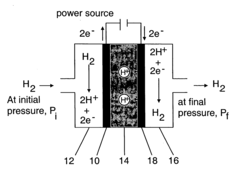
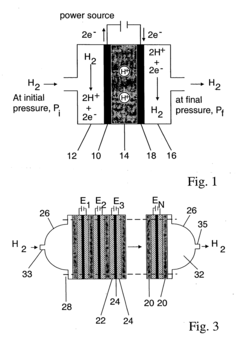
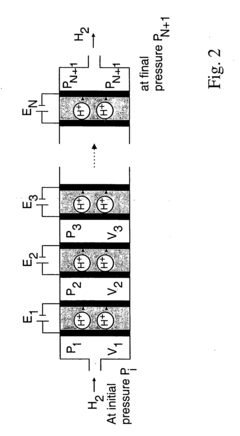
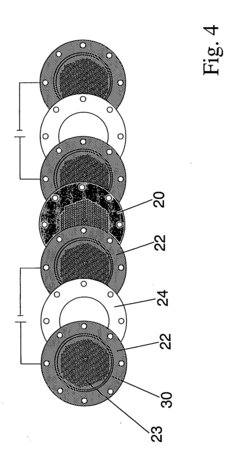
Electrochemical hydrogen compressor
PatentInactiveUS20040211679A1
Innovation
- An electrochemical hydrogen compression apparatus and process using a membrane electrolyte cell assembly with a proton-conducting electrolyte membrane, anode, and cathode, along with planar gas distribution and support plates, connected in series to achieve high-pressure differentials up to 12,000 psi, leveraging electrochemical reactions to oxidize and reduce hydrogen across the membrane.
Solid-State Electro-Chemical Compressor
PatentInactiveUS20220002885A1
Innovation
- A solid-state electrochemical compressor design featuring multiple cell packages connected in parallel, with each cell having a common electric power supply and fluid inlet/outlet system, allowing for independent operation and optimization of each cell, including separate power supplies and check valves to prevent backflow, and monitoring systems for optimal performance and reconditioning.

Safety Standards for Electrochemical Pressure Devices
The development of comprehensive safety standards for electrochemical pressure devices represents a critical regulatory framework essential for the widespread adoption of electrochemical compression technology. Current safety protocols primarily derive from traditional mechanical compression systems and hydrogen handling standards, creating significant gaps in addressing the unique operational characteristics and failure modes specific to electrochemical compression devices.
International standardization bodies, including the International Electrotechnical Commission (IEC) and the American Society of Mechanical Engineers (ASME), are actively developing specialized safety codes for electrochemical pressure systems. These emerging standards focus on three primary safety domains: electrical safety protocols for high-current electrochemical operations, pressure vessel integrity under variable output conditions, and hydrogen gas handling procedures specific to electrochemical generation and compression processes.
The variable pressure output capability of electrochemical compression systems introduces novel safety considerations not adequately addressed by existing mechanical compressor standards. Key safety parameters include maximum allowable working pressure limits, pressure cycling fatigue analysis, and emergency depressurization procedures. Standards must account for the dynamic pressure response characteristics inherent to electrochemical systems, where pressure output directly correlates with electrical input parameters and can change rapidly during operational transitions.
Material compatibility standards represent another crucial safety aspect, particularly regarding membrane degradation, electrode corrosion, and electrolyte containment under varying pressure conditions. Safety protocols must establish minimum material specifications, regular inspection intervals, and replacement criteria for critical components exposed to both electrochemical reactions and mechanical stress from pressure variations.
Electrical safety requirements encompass protection against electrical faults, proper grounding procedures, and fail-safe shutdown mechanisms. Given the high current densities typical in electrochemical compression systems, standards must address arc flash protection, electrical isolation during maintenance, and integration with existing facility electrical safety systems.
Emergency response protocols specific to electrochemical pressure devices require specialized training and equipment. Safety standards must define leak detection systems, emergency venting procedures, and coordination between electrical and mechanical safety systems during fault conditions, ensuring comprehensive protection throughout all operational scenarios.
International standardization bodies, including the International Electrotechnical Commission (IEC) and the American Society of Mechanical Engineers (ASME), are actively developing specialized safety codes for electrochemical pressure systems. These emerging standards focus on three primary safety domains: electrical safety protocols for high-current electrochemical operations, pressure vessel integrity under variable output conditions, and hydrogen gas handling procedures specific to electrochemical generation and compression processes.
The variable pressure output capability of electrochemical compression systems introduces novel safety considerations not adequately addressed by existing mechanical compressor standards. Key safety parameters include maximum allowable working pressure limits, pressure cycling fatigue analysis, and emergency depressurization procedures. Standards must account for the dynamic pressure response characteristics inherent to electrochemical systems, where pressure output directly correlates with electrical input parameters and can change rapidly during operational transitions.
Material compatibility standards represent another crucial safety aspect, particularly regarding membrane degradation, electrode corrosion, and electrolyte containment under varying pressure conditions. Safety protocols must establish minimum material specifications, regular inspection intervals, and replacement criteria for critical components exposed to both electrochemical reactions and mechanical stress from pressure variations.
Electrical safety requirements encompass protection against electrical faults, proper grounding procedures, and fail-safe shutdown mechanisms. Given the high current densities typical in electrochemical compression systems, standards must address arc flash protection, electrical isolation during maintenance, and integration with existing facility electrical safety systems.
Emergency response protocols specific to electrochemical pressure devices require specialized training and equipment. Safety standards must define leak detection systems, emergency venting procedures, and coordination between electrical and mechanical safety systems during fault conditions, ensuring comprehensive protection throughout all operational scenarios.
Energy Efficiency Optimization in Electrochemical Systems
Energy efficiency optimization represents a critical performance parameter in electrochemical compression systems, particularly when addressing variable pressure output requirements. The inherent electrochemical processes involved in gas compression present unique opportunities for efficiency enhancement compared to traditional mechanical compression methods, as they operate through direct electrochemical reactions rather than mechanical work transfer.
The primary energy efficiency challenges in electrochemical compression systems stem from several interconnected factors. Ohmic losses within the electrochemical cell constitute a significant portion of energy dissipation, occurring due to resistance in the electrolyte, electrodes, and current collectors. These losses become particularly pronounced under variable pressure conditions, as changing operational parameters affect the ionic conductivity and current distribution within the system.
Activation overpotentials represent another substantial efficiency barrier, especially during pressure transitions. The kinetic limitations of electrochemical reactions at electrode surfaces create voltage penalties that directly translate to energy losses. When operating under variable pressure conditions, these overpotentials fluctuate dynamically, requiring sophisticated control strategies to maintain optimal efficiency across the operational envelope.
Mass transport limitations further compound efficiency challenges in variable pressure electrochemical compression. As pressure output requirements change, the concentration gradients and diffusion rates within the electrochemical cell vary significantly. This variation affects the local current density distribution and can lead to concentration overpotentials that reduce overall system efficiency.
Advanced optimization strategies focus on dynamic cell voltage management and adaptive current control algorithms. These approaches utilize real-time monitoring of electrochemical impedance and pressure feedback to adjust operational parameters continuously. By implementing predictive control models that anticipate pressure demand changes, systems can pre-optimize their electrochemical conditions to minimize efficiency losses during transitions.
Temperature management emerges as a crucial optimization vector, as electrochemical reaction kinetics and ionic conductivity exhibit strong temperature dependencies. Integrated thermal management systems that maintain optimal operating temperatures while recovering waste heat can significantly improve overall energy efficiency, particularly during variable load operations where thermal cycling would otherwise occur.
The primary energy efficiency challenges in electrochemical compression systems stem from several interconnected factors. Ohmic losses within the electrochemical cell constitute a significant portion of energy dissipation, occurring due to resistance in the electrolyte, electrodes, and current collectors. These losses become particularly pronounced under variable pressure conditions, as changing operational parameters affect the ionic conductivity and current distribution within the system.
Activation overpotentials represent another substantial efficiency barrier, especially during pressure transitions. The kinetic limitations of electrochemical reactions at electrode surfaces create voltage penalties that directly translate to energy losses. When operating under variable pressure conditions, these overpotentials fluctuate dynamically, requiring sophisticated control strategies to maintain optimal efficiency across the operational envelope.
Mass transport limitations further compound efficiency challenges in variable pressure electrochemical compression. As pressure output requirements change, the concentration gradients and diffusion rates within the electrochemical cell vary significantly. This variation affects the local current density distribution and can lead to concentration overpotentials that reduce overall system efficiency.
Advanced optimization strategies focus on dynamic cell voltage management and adaptive current control algorithms. These approaches utilize real-time monitoring of electrochemical impedance and pressure feedback to adjust operational parameters continuously. By implementing predictive control models that anticipate pressure demand changes, systems can pre-optimize their electrochemical conditions to minimize efficiency losses during transitions.
Temperature management emerges as a crucial optimization vector, as electrochemical reaction kinetics and ionic conductivity exhibit strong temperature dependencies. Integrated thermal management systems that maintain optimal operating temperatures while recovering waste heat can significantly improve overall energy efficiency, particularly during variable load operations where thermal cycling would otherwise occur.
Unlock deeper insights with PatSnap Eureka Quick Research — get a full tech report to explore trends and direct your research. Try now!
Generate Your Research Report Instantly with AI Agent
Supercharge your innovation with PatSnap Eureka AI Agent Platform!