

Electrochemical Compression in Heavy Industries: Evaluating Efficiency
APR 24, 20269 MIN READ
Generate Your Research Report Instantly with AI Agent
PatSnap Eureka helps you evaluate technical feasibility & market potential.
Electrochemical Compression Background and Industrial Goals
Electrochemical compression represents a paradigm shift in gas compression technology, emerging from the convergence of electrochemical engineering and industrial process optimization. This technology leverages electrochemical reactions to achieve gas compression without traditional mechanical components, offering a fundamentally different approach to pressure elevation in industrial applications. The concept builds upon decades of fuel cell and electrolyzer research, where controlled electrochemical processes have demonstrated remarkable efficiency in gas handling operations.
The historical development of electrochemical compression traces back to early fuel cell research in the mid-20th century, where scientists observed that electrochemical cells could inherently compress gases during operation. This phenomenon was initially considered a secondary effect, but subsequent research revealed its potential as a primary compression mechanism. The technology gained momentum in the 1990s when environmental regulations began driving demand for more efficient and cleaner industrial processes.
Heavy industries face mounting pressure to reduce energy consumption and carbon emissions while maintaining operational efficiency. Traditional mechanical compressors, despite continuous improvements, are approaching theoretical efficiency limits and require significant maintenance due to moving parts. The industrial landscape demands compression solutions that can operate continuously with minimal downtime, reduced energy consumption, and lower environmental impact.
The primary technical objectives for electrochemical compression in heavy industries center on achieving compression ratios comparable to or exceeding conventional systems while maintaining superior energy efficiency. Target compression ratios typically range from 10:1 to 100:1, depending on specific industrial applications. Energy efficiency goals aim for 85-95% electrical-to-compression efficiency, significantly higher than the 70-80% efficiency of traditional mechanical compressors.
Industrial implementation goals focus on scalability and integration with existing infrastructure. The technology must demonstrate reliable operation under continuous duty cycles, withstand harsh industrial environments, and provide predictable performance across varying load conditions. Long-term objectives include achieving operational lifespans exceeding 20 years with minimal maintenance requirements, making the technology economically viable for large-scale industrial deployment.
Environmental objectives align with global sustainability initiatives, targeting significant reductions in greenhouse gas emissions and energy consumption. The technology aims to eliminate the need for lubricants and reduce noise pollution associated with mechanical compression systems, contributing to cleaner industrial operations and improved workplace environments.
The historical development of electrochemical compression traces back to early fuel cell research in the mid-20th century, where scientists observed that electrochemical cells could inherently compress gases during operation. This phenomenon was initially considered a secondary effect, but subsequent research revealed its potential as a primary compression mechanism. The technology gained momentum in the 1990s when environmental regulations began driving demand for more efficient and cleaner industrial processes.
Heavy industries face mounting pressure to reduce energy consumption and carbon emissions while maintaining operational efficiency. Traditional mechanical compressors, despite continuous improvements, are approaching theoretical efficiency limits and require significant maintenance due to moving parts. The industrial landscape demands compression solutions that can operate continuously with minimal downtime, reduced energy consumption, and lower environmental impact.
The primary technical objectives for electrochemical compression in heavy industries center on achieving compression ratios comparable to or exceeding conventional systems while maintaining superior energy efficiency. Target compression ratios typically range from 10:1 to 100:1, depending on specific industrial applications. Energy efficiency goals aim for 85-95% electrical-to-compression efficiency, significantly higher than the 70-80% efficiency of traditional mechanical compressors.
Industrial implementation goals focus on scalability and integration with existing infrastructure. The technology must demonstrate reliable operation under continuous duty cycles, withstand harsh industrial environments, and provide predictable performance across varying load conditions. Long-term objectives include achieving operational lifespans exceeding 20 years with minimal maintenance requirements, making the technology economically viable for large-scale industrial deployment.
Environmental objectives align with global sustainability initiatives, targeting significant reductions in greenhouse gas emissions and energy consumption. The technology aims to eliminate the need for lubricants and reduce noise pollution associated with mechanical compression systems, contributing to cleaner industrial operations and improved workplace environments.
Heavy Industry Market Demand for Advanced Compression
The heavy industry sector is experiencing unprecedented pressure to modernize compression technologies as global sustainability mandates intensify and operational efficiency requirements become more stringent. Traditional mechanical compression systems, while reliable, are increasingly viewed as energy-intensive bottlenecks that limit overall industrial productivity and environmental compliance. This paradigm shift has created substantial market demand for advanced compression solutions that can deliver superior energy efficiency, reduced maintenance requirements, and enhanced operational flexibility.
Steel manufacturing, chemical processing, and petrochemical industries represent the primary demand drivers for electrochemical compression technologies. These sectors require continuous, high-pressure gas handling for various applications including hydrogen processing, ammonia synthesis, and gas separation processes. The inherent limitations of conventional compressors in these applications have created market gaps that electrochemical compression can potentially address through its isothermal operation characteristics and reduced mechanical complexity.
Energy cost optimization has emerged as a critical market driver, particularly in regions with high electricity prices or carbon taxation policies. Heavy industries are actively seeking compression technologies that can reduce their overall energy consumption footprint while maintaining or improving process reliability. The ability of electrochemical compression to operate at near-ambient temperatures presents significant thermodynamic advantages that translate directly into operational cost savings.
The hydrogen economy expansion has created particularly strong demand for advanced compression solutions. As heavy industries integrate hydrogen production, storage, and utilization into their operations, the need for efficient hydrogen compression has become paramount. Electrochemical compression offers unique advantages in hydrogen applications due to its ability to achieve high compression ratios without the contamination risks associated with mechanical systems.
Regulatory compliance requirements are driving additional market demand as environmental standards become more restrictive globally. Heavy industries must demonstrate measurable improvements in energy efficiency and emissions reduction, creating market opportunities for technologies that can deliver quantifiable environmental benefits. The solid-state nature of electrochemical compression systems aligns well with these regulatory trends by eliminating lubricant contamination and reducing fugitive emissions.
Market research indicates growing interest from industrial end-users in modular, scalable compression solutions that can be integrated into existing process infrastructure without extensive modifications. This demand pattern favors electrochemical compression technologies due to their inherent modularity and reduced auxiliary system requirements compared to traditional mechanical compressors.
Steel manufacturing, chemical processing, and petrochemical industries represent the primary demand drivers for electrochemical compression technologies. These sectors require continuous, high-pressure gas handling for various applications including hydrogen processing, ammonia synthesis, and gas separation processes. The inherent limitations of conventional compressors in these applications have created market gaps that electrochemical compression can potentially address through its isothermal operation characteristics and reduced mechanical complexity.
Energy cost optimization has emerged as a critical market driver, particularly in regions with high electricity prices or carbon taxation policies. Heavy industries are actively seeking compression technologies that can reduce their overall energy consumption footprint while maintaining or improving process reliability. The ability of electrochemical compression to operate at near-ambient temperatures presents significant thermodynamic advantages that translate directly into operational cost savings.
The hydrogen economy expansion has created particularly strong demand for advanced compression solutions. As heavy industries integrate hydrogen production, storage, and utilization into their operations, the need for efficient hydrogen compression has become paramount. Electrochemical compression offers unique advantages in hydrogen applications due to its ability to achieve high compression ratios without the contamination risks associated with mechanical systems.
Regulatory compliance requirements are driving additional market demand as environmental standards become more restrictive globally. Heavy industries must demonstrate measurable improvements in energy efficiency and emissions reduction, creating market opportunities for technologies that can deliver quantifiable environmental benefits. The solid-state nature of electrochemical compression systems aligns well with these regulatory trends by eliminating lubricant contamination and reducing fugitive emissions.
Market research indicates growing interest from industrial end-users in modular, scalable compression solutions that can be integrated into existing process infrastructure without extensive modifications. This demand pattern favors electrochemical compression technologies due to their inherent modularity and reduced auxiliary system requirements compared to traditional mechanical compressors.
Current State of Electrochemical Compression Technology
Electrochemical compression technology has emerged as a promising alternative to conventional mechanical compression systems, particularly in heavy industrial applications where efficiency and reliability are paramount. This technology leverages electrochemical reactions to achieve gas compression without moving mechanical parts, offering potential advantages in terms of energy efficiency, maintenance requirements, and operational flexibility.
Current electrochemical compression systems primarily operate through proton exchange membrane (PEM) technology, where hydrogen gas is compressed via electrochemical cells similar to fuel cells operating in reverse. The process involves hydrogen oxidation at the anode, proton transport through the membrane, and hydrogen reduction at the cathode under elevated pressure. Leading manufacturers have developed systems capable of achieving compression ratios up to 200:1 with efficiencies ranging from 85% to 95% under optimal conditions.
Industrial deployment remains limited but is gaining momentum across several sectors. The hydrogen production and storage industry represents the largest application area, with facilities utilizing electrochemical compressors for high-purity hydrogen compression in semiconductor manufacturing and fuel cell applications. Chemical processing plants have begun integrating these systems for specialized gas handling operations where contamination risks from traditional lubricants pose significant concerns.
Geographic distribution of electrochemical compression technology shows concentration in developed industrial regions. North America leads in commercial deployment, particularly in California's hydrogen infrastructure projects and industrial gas facilities across the Gulf Coast. European adoption is accelerating through Germany's hydrogen economy initiatives and Scandinavia's renewable energy integration projects. Asia-Pacific markets, led by Japan and South Korea, focus primarily on fuel cell vehicle infrastructure and industrial hydrogen applications.
Technical maturity varies significantly across different compression applications. Hydrogen compression technology has reached commercial viability for specific use cases, with several manufacturers offering standardized products. However, compression of other gases remains largely in development phases, with ongoing research addressing membrane selectivity, durability, and cost-effectiveness challenges.
The technology faces several operational constraints that limit widespread adoption. Current systems demonstrate optimal performance within narrow operating windows, requiring precise temperature and humidity control. Membrane degradation remains a significant concern, with typical lifespans ranging from 2-5 years depending on operating conditions and gas purity levels. Additionally, capital costs remain substantially higher than conventional mechanical compressors, though operational cost advantages may offset initial investments in specific applications.
Recent technological advances focus on improving membrane materials, enhancing system integration, and expanding operational envelopes. Advanced polymer membranes and catalyst developments show promise for extending operational life and improving efficiency across broader operating conditions, positioning electrochemical compression as an increasingly viable solution for heavy industrial applications.
Current electrochemical compression systems primarily operate through proton exchange membrane (PEM) technology, where hydrogen gas is compressed via electrochemical cells similar to fuel cells operating in reverse. The process involves hydrogen oxidation at the anode, proton transport through the membrane, and hydrogen reduction at the cathode under elevated pressure. Leading manufacturers have developed systems capable of achieving compression ratios up to 200:1 with efficiencies ranging from 85% to 95% under optimal conditions.
Industrial deployment remains limited but is gaining momentum across several sectors. The hydrogen production and storage industry represents the largest application area, with facilities utilizing electrochemical compressors for high-purity hydrogen compression in semiconductor manufacturing and fuel cell applications. Chemical processing plants have begun integrating these systems for specialized gas handling operations where contamination risks from traditional lubricants pose significant concerns.
Geographic distribution of electrochemical compression technology shows concentration in developed industrial regions. North America leads in commercial deployment, particularly in California's hydrogen infrastructure projects and industrial gas facilities across the Gulf Coast. European adoption is accelerating through Germany's hydrogen economy initiatives and Scandinavia's renewable energy integration projects. Asia-Pacific markets, led by Japan and South Korea, focus primarily on fuel cell vehicle infrastructure and industrial hydrogen applications.
Technical maturity varies significantly across different compression applications. Hydrogen compression technology has reached commercial viability for specific use cases, with several manufacturers offering standardized products. However, compression of other gases remains largely in development phases, with ongoing research addressing membrane selectivity, durability, and cost-effectiveness challenges.
The technology faces several operational constraints that limit widespread adoption. Current systems demonstrate optimal performance within narrow operating windows, requiring precise temperature and humidity control. Membrane degradation remains a significant concern, with typical lifespans ranging from 2-5 years depending on operating conditions and gas purity levels. Additionally, capital costs remain substantially higher than conventional mechanical compressors, though operational cost advantages may offset initial investments in specific applications.
Recent technological advances focus on improving membrane materials, enhancing system integration, and expanding operational envelopes. Advanced polymer membranes and catalyst developments show promise for extending operational life and improving efficiency across broader operating conditions, positioning electrochemical compression as an increasingly viable solution for heavy industrial applications.
Existing Electrochemical Compression Solutions
01 Electrochemical cell design optimization for compression efficiency
Advanced electrochemical cell configurations and designs that optimize the compression process through improved electrode arrangements, cell geometry, and internal structure modifications. These designs focus on maximizing the electrochemical reaction efficiency while minimizing energy losses during compression operations.- Electrochemical compression system design and optimization: Advanced system architectures and design methodologies for electrochemical compression devices that focus on optimizing overall system performance. These approaches involve integrated design considerations for electrode configurations, cell arrangements, and system-level optimization to maximize compression efficiency through electrochemical processes.
- Electrode materials and surface modifications for enhanced efficiency: Development of specialized electrode materials and surface treatment techniques that improve the electrochemical compression process. These innovations focus on catalyst materials, electrode coatings, and surface engineering approaches that enhance the electrochemical reactions responsible for compression, leading to improved energy conversion efficiency.
- Process control and operational parameter optimization: Methods and systems for controlling and optimizing operational parameters in electrochemical compression processes. These techniques involve monitoring and adjusting various process variables such as pressure, temperature, current density, and flow rates to achieve maximum compression efficiency and maintain stable operation.
- Energy management and power conversion systems: Technologies focused on improving energy utilization and power management in electrochemical compression systems. These solutions address power supply optimization, energy recovery mechanisms, and electrical system integration to minimize energy losses and maximize the overall efficiency of the compression process.
- Heat and mass transfer enhancement techniques: Approaches for improving heat and mass transfer characteristics within electrochemical compression systems. These methods involve innovative cell designs, flow distribution systems, and thermal management strategies that enhance the transport phenomena critical to achieving high compression efficiency in electrochemical processes.
02 Electrode materials and surface treatments for enhanced compression performance
Specialized electrode materials and surface modification techniques that improve the electrochemical compression efficiency. These include novel catalyst compositions, surface coatings, and electrode structures that enhance ion transport and reduce resistance during compression cycles.Expand Specific Solutions03 Electrolyte composition and management systems
Optimized electrolyte formulations and management systems designed to improve compression efficiency in electrochemical processes. These systems focus on electrolyte circulation, concentration control, and chemical composition optimization to enhance overall system performance.Expand Specific Solutions04 Control systems and operational parameters for compression optimization
Advanced control methodologies and operational parameter optimization techniques for electrochemical compression systems. These include feedback control mechanisms, pressure regulation systems, and automated process control strategies that maximize compression efficiency under varying operating conditions.Expand Specific Solutions05 Energy recovery and thermal management in electrochemical compression
Systems and methods for energy recovery and thermal management in electrochemical compression applications. These technologies focus on heat dissipation, energy recycling, and temperature control mechanisms that improve overall system efficiency and reduce energy consumption during compression operations.Expand Specific Solutions
Major Players in Electrochemical Compression Industry
The electrochemical compression technology in heavy industries represents an emerging market segment currently in its early development stage, with significant growth potential driven by industrial decarbonization demands. The market remains relatively small but is expanding rapidly as heavy industries seek energy-efficient compression solutions. Technology maturity varies considerably across key players, with established industrial giants like ABB Ltd., Robert Bosch GmbH, and Baker Hughes Co. leveraging their extensive engineering capabilities to develop commercial applications. Automotive leaders including BMW, Honda Motor, and Renault's Ampere SAS are advancing the technology through fuel cell and hydrogen infrastructure investments. Research institutions such as Tsinghua University, Deutsches Zentrum für Luft- und Raumfahrt, and Southwest Research Institute are driving fundamental innovations, while battery specialists like Ningde Amperex Technology and VARTA Microbattery contribute electrochemical expertise. The competitive landscape indicates a technology transitioning from laboratory research to pilot-scale implementations, with commercialization expected within the next five years.
ABB Ltd.
Technical Solution: ABB has developed advanced electrochemical compression systems for industrial hydrogen applications, featuring integrated power electronics and control systems that optimize compression efficiency through real-time monitoring and adaptive control algorithms. Their technology incorporates proprietary membrane electrode assemblies (MEAs) with enhanced durability for continuous industrial operation, achieving compression ratios up to 200:1 with energy efficiency improvements of 15-20% compared to mechanical compressors. The system includes advanced thermal management and modular design for scalable deployment in heavy industrial environments.
Strengths: Strong industrial automation expertise and global service network. Weaknesses: Higher initial capital costs and complex system integration requirements.
Robert Bosch GmbH
Technical Solution: Bosch has developed electrochemical hydrogen compression technology utilizing advanced proton exchange membrane (PEM) systems specifically designed for heavy industrial applications. Their solution features multi-stage compression architecture with integrated cooling systems and smart control algorithms that maintain optimal operating conditions. The technology achieves high compression ratios while minimizing energy consumption through innovative membrane materials and electrode designs. Bosch's system incorporates predictive maintenance capabilities and modular construction for easy scalability in industrial settings.
Strengths: Extensive automotive and industrial experience with robust manufacturing capabilities. Weaknesses: Limited track record in large-scale electrochemical compression deployments.
Core Patents in Electrochemical Compression Efficiency
Electrochemical hydrogen compressor
PatentInactiveUS20040211679A1
Innovation
- An electrochemical hydrogen compression apparatus and process using a membrane electrolyte cell assembly with a proton-conducting electrolyte membrane, anode, and cathode, along with planar gas distribution and support plates, connected in series to achieve high-pressure differentials up to 12,000 psi, leveraging electrochemical reactions to oxidize and reduce hydrogen across the membrane.
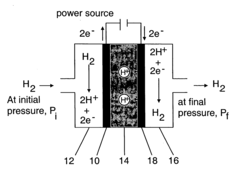
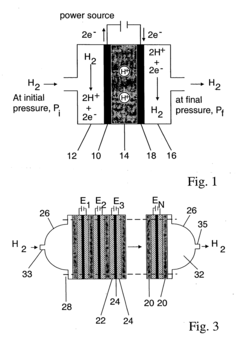
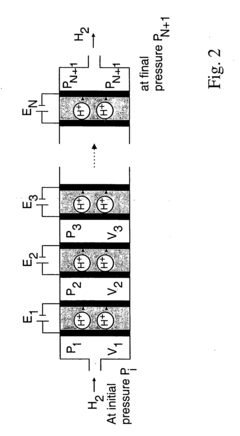
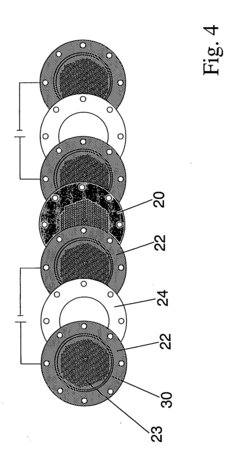
Compression device
PatentWO2023100583A1
Innovation
- The compression device incorporates an electrochemical cell with a voltage applier and metal plates resistant to hydrogen embrittlement, where the first terminal has a lower resistance than the second terminal, and the second terminal is directly connected to the voltage applier, reducing terminal resistance and voltage increase.


Environmental Impact and Sustainability Assessment
Electrochemical compression technology in heavy industries presents significant environmental advantages compared to conventional mechanical compression systems. The elimination of moving parts and reduced energy consumption directly translates to lower carbon emissions and decreased environmental footprint. Studies indicate that electrochemical compressors can achieve up to 40% reduction in energy consumption compared to traditional reciprocating compressors, particularly in hydrogen compression applications where efficiency gains are most pronounced.
The sustainability profile of electrochemical compression is enhanced by its compatibility with renewable energy sources. The technology's ability to operate efficiently at variable power inputs makes it ideal for integration with solar and wind power systems, enabling heavy industries to reduce their reliance on fossil fuel-based electricity. This characteristic is particularly valuable for industrial facilities pursuing carbon neutrality goals and seeking to minimize their Scope 2 emissions.
Lifecycle assessment considerations reveal that electrochemical compressors demonstrate superior environmental performance across multiple impact categories. The absence of lubricants eliminates potential soil and water contamination risks, while the reduced maintenance requirements decrease the generation of industrial waste. Additionally, the longer operational lifespan of electrochemical systems, typically exceeding 20 years with proper maintenance, reduces the frequency of equipment replacement and associated manufacturing emissions.
Water consumption represents another critical sustainability factor, as electrochemical compression systems require minimal water for operation compared to traditional cooling-intensive mechanical compressors. This advantage is particularly significant in water-stressed regions where heavy industries face increasing pressure to optimize water usage. The technology's lower noise emissions also contribute to reduced environmental impact in industrial settings.
However, sustainability challenges exist in the manufacturing phase, particularly regarding the production of specialized membrane materials and catalysts required for electrochemical cells. The environmental impact of these components, including rare earth elements and platinum group metals, must be carefully evaluated against the operational benefits. Recycling strategies for end-of-life electrochemical compressor components are essential for maintaining the technology's overall sustainability credentials and supporting circular economy principles in heavy industrial applications.
The sustainability profile of electrochemical compression is enhanced by its compatibility with renewable energy sources. The technology's ability to operate efficiently at variable power inputs makes it ideal for integration with solar and wind power systems, enabling heavy industries to reduce their reliance on fossil fuel-based electricity. This characteristic is particularly valuable for industrial facilities pursuing carbon neutrality goals and seeking to minimize their Scope 2 emissions.
Lifecycle assessment considerations reveal that electrochemical compressors demonstrate superior environmental performance across multiple impact categories. The absence of lubricants eliminates potential soil and water contamination risks, while the reduced maintenance requirements decrease the generation of industrial waste. Additionally, the longer operational lifespan of electrochemical systems, typically exceeding 20 years with proper maintenance, reduces the frequency of equipment replacement and associated manufacturing emissions.
Water consumption represents another critical sustainability factor, as electrochemical compression systems require minimal water for operation compared to traditional cooling-intensive mechanical compressors. This advantage is particularly significant in water-stressed regions where heavy industries face increasing pressure to optimize water usage. The technology's lower noise emissions also contribute to reduced environmental impact in industrial settings.
However, sustainability challenges exist in the manufacturing phase, particularly regarding the production of specialized membrane materials and catalysts required for electrochemical cells. The environmental impact of these components, including rare earth elements and platinum group metals, must be carefully evaluated against the operational benefits. Recycling strategies for end-of-life electrochemical compressor components are essential for maintaining the technology's overall sustainability credentials and supporting circular economy principles in heavy industrial applications.
Energy Efficiency Standards and Industrial Policy
Energy efficiency standards for electrochemical compression systems in heavy industries are evolving rapidly as governments worldwide implement stricter environmental regulations. Current international frameworks, including the ISO 50001 energy management standard and the European Union's Energy Efficiency Directive, are being adapted to address the unique characteristics of electrochemical compression technologies. These standards typically mandate minimum efficiency thresholds of 75-85% for industrial compression systems, though electrochemical variants often exceed these benchmarks.
Industrial policy frameworks are increasingly recognizing electrochemical compression as a strategic technology for decarbonization. The United States Industrial Decarbonization Roadmap specifically identifies advanced compression technologies as critical for achieving net-zero emissions in heavy industries by 2050. Similarly, China's 14th Five-Year Plan allocates substantial funding for electrochemical technology development, with compression applications receiving priority status in steel, petrochemical, and cement sectors.
Regulatory compliance mechanisms are becoming more sophisticated, incorporating real-time monitoring requirements and performance-based incentives. The European Green Deal's Carbon Border Adjustment Mechanism will likely favor industries employing high-efficiency electrochemical compression systems, creating competitive advantages for early adopters. These policies establish mandatory energy auditing protocols and require detailed efficiency reporting for compression systems exceeding 500 kW capacity.
Financial incentive structures are being redesigned to accelerate electrochemical compression adoption. Tax credit programs in major industrial economies now offer 20-40% investment incentives for qualifying systems that demonstrate superior efficiency metrics. Additionally, carbon pricing mechanisms are making traditional mechanical compression increasingly expensive, while electrochemical alternatives benefit from lower operational costs and reduced carbon footprints.
Future policy developments indicate a shift toward technology-neutral performance standards that favor electrochemical solutions. Proposed regulations in key markets suggest mandatory efficiency improvements of 15-25% over current baselines by 2030, targets that electrochemical compression can readily achieve while conventional technologies struggle to meet these requirements.
Industrial policy frameworks are increasingly recognizing electrochemical compression as a strategic technology for decarbonization. The United States Industrial Decarbonization Roadmap specifically identifies advanced compression technologies as critical for achieving net-zero emissions in heavy industries by 2050. Similarly, China's 14th Five-Year Plan allocates substantial funding for electrochemical technology development, with compression applications receiving priority status in steel, petrochemical, and cement sectors.
Regulatory compliance mechanisms are becoming more sophisticated, incorporating real-time monitoring requirements and performance-based incentives. The European Green Deal's Carbon Border Adjustment Mechanism will likely favor industries employing high-efficiency electrochemical compression systems, creating competitive advantages for early adopters. These policies establish mandatory energy auditing protocols and require detailed efficiency reporting for compression systems exceeding 500 kW capacity.
Financial incentive structures are being redesigned to accelerate electrochemical compression adoption. Tax credit programs in major industrial economies now offer 20-40% investment incentives for qualifying systems that demonstrate superior efficiency metrics. Additionally, carbon pricing mechanisms are making traditional mechanical compression increasingly expensive, while electrochemical alternatives benefit from lower operational costs and reduced carbon footprints.
Future policy developments indicate a shift toward technology-neutral performance standards that favor electrochemical solutions. Proposed regulations in key markets suggest mandatory efficiency improvements of 15-25% over current baselines by 2030, targets that electrochemical compression can readily achieve while conventional technologies struggle to meet these requirements.
Unlock deeper insights with PatSnap Eureka Quick Research — get a full tech report to explore trends and direct your research. Try now!
Generate Your Research Report Instantly with AI Agent
Supercharge your innovation with PatSnap Eureka AI Agent Platform!