Electrochemical Compression for Advanced Power Analytics
APR 24, 20269 MIN READ
Generate Your Research Report Instantly with AI Agent
PatSnap Eureka helps you evaluate technical feasibility & market potential.
Electrochemical Compression Background and Technical Objectives
Electrochemical compression represents a paradigm shift in gas compression technology, emerging from the convergence of electrochemical engineering and advanced materials science. This innovative approach leverages electrochemical reactions to achieve gas compression without traditional mechanical components, offering unprecedented precision and efficiency for power system applications. The technology builds upon decades of fuel cell and electrolyzer research, adapting electrochemical principles to create compact, silent, and highly controllable compression systems.
The evolution of electrochemical compression has been driven by the increasing demand for sophisticated power analytics in modern energy systems. Traditional mechanical compressors face limitations in precision control, noise generation, and integration complexity when deployed in sensitive analytical environments. These constraints have necessitated the development of alternative compression methodologies that can meet the stringent requirements of advanced power monitoring and diagnostic systems.
Current power analytics applications require precise gas handling capabilities for various diagnostic procedures, including dissolved gas analysis in transformers, gas chromatography for insulation monitoring, and breath gas analysis in fuel cell systems. The ability to compress and manipulate gas samples with electrochemical precision enables more accurate measurements and enhanced system reliability. This technological foundation supports the growing complexity of modern power infrastructure monitoring.
The primary technical objective centers on developing electrochemical compression systems capable of achieving compression ratios suitable for power analytics applications while maintaining sample integrity. Target specifications include compression ratios between 2:1 and 10:1, with precise pressure control within ±1% accuracy. The system must operate silently to avoid interference with sensitive analytical equipment and demonstrate long-term stability under continuous operation conditions.
Secondary objectives encompass miniaturization and integration capabilities, enabling deployment in space-constrained environments typical of power system monitoring installations. The technology aims to eliminate mechanical wear components, reducing maintenance requirements and extending operational lifespan beyond traditional compression systems. Energy efficiency optimization represents another critical objective, targeting overall system efficiency improvements of 15-25% compared to conventional mechanical alternatives.
Advanced control integration constitutes a fundamental objective, requiring seamless interface capabilities with existing power analytics infrastructure. The electrochemical compression system must provide real-time pressure feedback, automated flow control, and predictive maintenance indicators. These features enable enhanced diagnostic capabilities and support the transition toward autonomous power system monitoring platforms.
The evolution of electrochemical compression has been driven by the increasing demand for sophisticated power analytics in modern energy systems. Traditional mechanical compressors face limitations in precision control, noise generation, and integration complexity when deployed in sensitive analytical environments. These constraints have necessitated the development of alternative compression methodologies that can meet the stringent requirements of advanced power monitoring and diagnostic systems.
Current power analytics applications require precise gas handling capabilities for various diagnostic procedures, including dissolved gas analysis in transformers, gas chromatography for insulation monitoring, and breath gas analysis in fuel cell systems. The ability to compress and manipulate gas samples with electrochemical precision enables more accurate measurements and enhanced system reliability. This technological foundation supports the growing complexity of modern power infrastructure monitoring.
The primary technical objective centers on developing electrochemical compression systems capable of achieving compression ratios suitable for power analytics applications while maintaining sample integrity. Target specifications include compression ratios between 2:1 and 10:1, with precise pressure control within ±1% accuracy. The system must operate silently to avoid interference with sensitive analytical equipment and demonstrate long-term stability under continuous operation conditions.
Secondary objectives encompass miniaturization and integration capabilities, enabling deployment in space-constrained environments typical of power system monitoring installations. The technology aims to eliminate mechanical wear components, reducing maintenance requirements and extending operational lifespan beyond traditional compression systems. Energy efficiency optimization represents another critical objective, targeting overall system efficiency improvements of 15-25% compared to conventional mechanical alternatives.
Advanced control integration constitutes a fundamental objective, requiring seamless interface capabilities with existing power analytics infrastructure. The electrochemical compression system must provide real-time pressure feedback, automated flow control, and predictive maintenance indicators. These features enable enhanced diagnostic capabilities and support the transition toward autonomous power system monitoring platforms.
Market Demand for Advanced Power Analytics Solutions
The global power analytics market is experiencing unprecedented growth driven by the increasing complexity of modern electrical grids and the urgent need for enhanced energy efficiency. Traditional power systems face mounting challenges from renewable energy integration, distributed generation, and smart grid implementations, creating substantial demand for advanced analytical solutions that can provide real-time insights and predictive capabilities.
Industrial sectors represent the largest consumer segment for advanced power analytics solutions, particularly manufacturing facilities, data centers, and chemical processing plants where power quality directly impacts operational efficiency and equipment longevity. These industries require sophisticated monitoring systems capable of detecting power anomalies, predicting equipment failures, and optimizing energy consumption patterns to reduce operational costs and minimize downtime.
The utility sector demonstrates strong demand for next-generation power analytics platforms that can handle the complexities of modern grid operations. Electric utilities are investing heavily in solutions that enable better load forecasting, fault detection, and grid stability management. The integration of renewable energy sources has created new challenges in power quality management, driving demand for advanced compression and analysis technologies that can process vast amounts of real-time data efficiently.
Commercial building operators and facility managers constitute another significant market segment, seeking power analytics solutions to comply with energy efficiency regulations and reduce operational expenses. The growing emphasis on sustainability and carbon footprint reduction has intensified demand for comprehensive power monitoring and optimization systems.
Emerging applications in electric vehicle charging infrastructure and energy storage systems are creating new market opportunities for advanced power analytics solutions. These applications require sophisticated algorithms capable of managing complex power flows and ensuring optimal system performance under varying load conditions.
The market demand is further amplified by regulatory requirements for power quality monitoring and reporting across various industries. Compliance with international standards and environmental regulations necessitates deployment of advanced analytics platforms capable of continuous monitoring and detailed reporting capabilities.
Geographic demand patterns show strong growth in developed markets with aging infrastructure requiring modernization, while emerging economies demonstrate increasing adoption driven by rapid industrialization and grid expansion initiatives.
Industrial sectors represent the largest consumer segment for advanced power analytics solutions, particularly manufacturing facilities, data centers, and chemical processing plants where power quality directly impacts operational efficiency and equipment longevity. These industries require sophisticated monitoring systems capable of detecting power anomalies, predicting equipment failures, and optimizing energy consumption patterns to reduce operational costs and minimize downtime.
The utility sector demonstrates strong demand for next-generation power analytics platforms that can handle the complexities of modern grid operations. Electric utilities are investing heavily in solutions that enable better load forecasting, fault detection, and grid stability management. The integration of renewable energy sources has created new challenges in power quality management, driving demand for advanced compression and analysis technologies that can process vast amounts of real-time data efficiently.
Commercial building operators and facility managers constitute another significant market segment, seeking power analytics solutions to comply with energy efficiency regulations and reduce operational expenses. The growing emphasis on sustainability and carbon footprint reduction has intensified demand for comprehensive power monitoring and optimization systems.
Emerging applications in electric vehicle charging infrastructure and energy storage systems are creating new market opportunities for advanced power analytics solutions. These applications require sophisticated algorithms capable of managing complex power flows and ensuring optimal system performance under varying load conditions.
The market demand is further amplified by regulatory requirements for power quality monitoring and reporting across various industries. Compliance with international standards and environmental regulations necessitates deployment of advanced analytics platforms capable of continuous monitoring and detailed reporting capabilities.
Geographic demand patterns show strong growth in developed markets with aging infrastructure requiring modernization, while emerging economies demonstrate increasing adoption driven by rapid industrialization and grid expansion initiatives.
Current State and Challenges in Electrochemical Compression
Electrochemical compression technology has emerged as a promising solution for hydrogen compression in power systems, yet its current development status reveals significant disparities across global markets. Leading nations including the United States, Germany, Japan, and South Korea have established substantial research foundations, with companies like HyET Hydrogen, Skyre, and Nuvera Fuel Cells pioneering commercial applications. However, the technology remains predominantly in pilot-scale demonstrations rather than widespread industrial deployment.
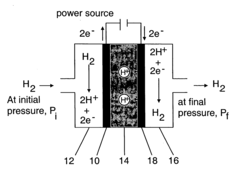
The fundamental principle of electrochemical compression involves using proton exchange membranes to selectively transport hydrogen ions while rejecting other gases, enabling compression without traditional mechanical components. Current systems typically achieve compression ratios of 10:1 to 100:1 with energy efficiencies ranging from 2-4 kWh/kg of hydrogen, representing improvements over conventional mechanical compressors in specific applications.
Despite these advantages, several critical technical challenges impede broader adoption. Membrane durability represents the most significant obstacle, with current proton exchange membranes experiencing degradation under high differential pressures and temperature cycling. Most commercial membranes demonstrate operational lifespans of 2,000-5,000 hours before requiring replacement, substantially limiting economic viability for continuous industrial applications.
Stack design optimization presents another major challenge, particularly regarding pressure management and gas distribution uniformity. Current designs struggle with maintaining consistent compression performance across multiple cells while managing thermal gradients and preventing membrane deformation. Sealing technologies for high-pressure differentials remain inadequate, leading to hydrogen crossover and reduced system efficiency.
Material compatibility issues further constrain system performance, as traditional fuel cell components often prove unsuitable for compression applications. Catalyst poisoning from impurities in feed gas streams significantly impacts long-term operation, while current purification systems add substantial complexity and cost to overall system architecture.
Economic barriers remain substantial, with capital costs for electrochemical compression systems currently 3-5 times higher than conventional mechanical alternatives. Limited manufacturing scale and specialized component requirements contribute to elevated costs, while uncertain return on investment timelines discourage industrial adoption.
The geographic distribution of technological capabilities shows concentration in developed markets with established hydrogen infrastructure. European initiatives, particularly in Germany and the Netherlands, focus on renewable energy integration applications. North American developments emphasize fuel cell vehicle infrastructure, while Asian markets prioritize industrial hydrogen applications and export-oriented production systems.
The fundamental principle of electrochemical compression involves using proton exchange membranes to selectively transport hydrogen ions while rejecting other gases, enabling compression without traditional mechanical components. Current systems typically achieve compression ratios of 10:1 to 100:1 with energy efficiencies ranging from 2-4 kWh/kg of hydrogen, representing improvements over conventional mechanical compressors in specific applications.
Despite these advantages, several critical technical challenges impede broader adoption. Membrane durability represents the most significant obstacle, with current proton exchange membranes experiencing degradation under high differential pressures and temperature cycling. Most commercial membranes demonstrate operational lifespans of 2,000-5,000 hours before requiring replacement, substantially limiting economic viability for continuous industrial applications.
Stack design optimization presents another major challenge, particularly regarding pressure management and gas distribution uniformity. Current designs struggle with maintaining consistent compression performance across multiple cells while managing thermal gradients and preventing membrane deformation. Sealing technologies for high-pressure differentials remain inadequate, leading to hydrogen crossover and reduced system efficiency.
Material compatibility issues further constrain system performance, as traditional fuel cell components often prove unsuitable for compression applications. Catalyst poisoning from impurities in feed gas streams significantly impacts long-term operation, while current purification systems add substantial complexity and cost to overall system architecture.
Economic barriers remain substantial, with capital costs for electrochemical compression systems currently 3-5 times higher than conventional mechanical alternatives. Limited manufacturing scale and specialized component requirements contribute to elevated costs, while uncertain return on investment timelines discourage industrial adoption.
The geographic distribution of technological capabilities shows concentration in developed markets with established hydrogen infrastructure. European initiatives, particularly in Germany and the Netherlands, focus on renewable energy integration applications. North American developments emphasize fuel cell vehicle infrastructure, while Asian markets prioritize industrial hydrogen applications and export-oriented production systems.
Current Electrochemical Compression Technical Solutions
01 Electrochemical compression systems and apparatus
Systems and apparatus designed for electrochemical compression processes, incorporating specialized components and configurations to achieve efficient compression through electrochemical mechanisms. These systems typically include electrodes, electrolytes, and control mechanisms to facilitate the compression process.- Electrochemical compression systems and apparatus: Systems and apparatus designed for electrochemical compression processes, incorporating specialized components and configurations to achieve efficient compression through electrochemical means. These systems typically include electrodes, electrolytes, and control mechanisms to facilitate the compression process while maintaining optimal performance parameters.
- Electrochemical compression methods and processes: Various methods and processes for implementing electrochemical compression, including operational procedures, control strategies, and optimization techniques. These approaches focus on the sequential steps and conditions required to achieve effective compression through electrochemical reactions and mechanisms.
- Electrode configurations for electrochemical compression: Specialized electrode designs and configurations optimized for electrochemical compression applications. These include novel electrode materials, structures, and arrangements that enhance the efficiency and effectiveness of the compression process through improved electrochemical interactions.
- Control and monitoring systems for electrochemical compression: Advanced control systems and monitoring technologies for managing electrochemical compression processes. These systems provide real-time feedback, automated control mechanisms, and safety features to ensure optimal operation and performance of electrochemical compression equipment.
- Applications and integration of electrochemical compression: Various applications and integration methods for electrochemical compression technology in different industrial and commercial contexts. These encompass the practical implementation of electrochemical compression in specific use cases and its integration with other systems and processes.
02 Electrochemical compression methods and processes
Various methods and processes for implementing electrochemical compression, including operational parameters, control strategies, and optimization techniques. These approaches focus on the procedural aspects of achieving compression through electrochemical reactions and energy conversion.Expand Specific Solutions03 Materials and components for electrochemical compression
Specialized materials, electrodes, membranes, and other components used in electrochemical compression applications. These materials are designed to withstand the operating conditions and facilitate efficient electrochemical reactions while maintaining structural integrity during compression processes.Expand Specific Solutions04 Control and monitoring systems for electrochemical compression
Advanced control systems, monitoring devices, and feedback mechanisms used to regulate and optimize electrochemical compression operations. These systems ensure proper operation, safety, and efficiency by monitoring various parameters and adjusting operational conditions accordingly.Expand Specific Solutions05 Applications and integration of electrochemical compression technology
Various applications and integration methods for electrochemical compression technology in different industrial and commercial settings. These implementations demonstrate the versatility and practical utility of electrochemical compression in energy storage, gas processing, and other specialized applications.Expand Specific Solutions
Key Players in Electrochemical Compression Industry
The electrochemical compression technology for advanced power analytics represents an emerging field at the intersection of energy storage and power system monitoring, currently in its early development stage with significant growth potential. The market demonstrates moderate fragmentation with diverse players spanning industrial giants, academic institutions, and specialized technology companies. Key industrial participants include Panasonic Intellectual Property Management, LG Electronics, and Haier Smart Home focusing on consumer applications, while power sector leaders like State Grid Corp. of China, NARI Technology, and Schneider Electric USA drive utility-scale implementations. The technology maturity varies significantly across applications, with basic electrochemical compression showing commercial readiness in companies like Toyota Industries and Hanon Systems for automotive applications, while advanced power analytics integration remains largely in research phases at institutions like MIT, Tsinghua University, and Colorado School of Mines, indicating substantial innovation opportunities ahead.
Panasonic Intellectual Property Management Co. Ltd.
Technical Solution: Panasonic has developed advanced electrochemical compression systems integrated with their battery management technologies for power analytics applications. Their approach combines lithium-ion battery compression monitoring with real-time electrochemical impedance spectroscopy (EIS) to analyze power performance degradation. The system utilizes proprietary algorithms to correlate mechanical compression forces with electrochemical parameters, enabling predictive maintenance and optimization of energy storage systems. Their technology incorporates multi-frequency impedance analysis coupled with machine learning models to predict battery health and power delivery capabilities under various compression states, providing comprehensive power analytics for industrial and automotive applications.
Strengths: Strong integration with existing battery technologies, proven industrial applications. Weaknesses: Limited to battery-focused applications, may lack broader electrochemical system coverage.
Schneider Electric USA, Inc.
Technical Solution: Schneider Electric has developed electrochemical compression monitoring systems for advanced power grid analytics, focusing on energy storage and distribution optimization. Their solution integrates electrochemical sensors with compression monitoring in large-scale battery energy storage systems (BESS) to enhance grid stability and power quality analysis. The technology employs real-time electrochemical parameter tracking under mechanical stress conditions, utilizing IoT connectivity and cloud-based analytics platforms. Their system provides comprehensive power flow analysis, fault detection, and predictive maintenance capabilities for utility-scale applications, incorporating machine learning algorithms to optimize power distribution efficiency based on electrochemical compression data.
Strengths: Extensive grid infrastructure experience, scalable industrial solutions. Weaknesses: Focus primarily on utility applications, limited research in novel electrochemical materials.
Core Patents in Advanced Electrochemical Analytics
Electrochemical hydrogen compressor
PatentInactiveUS20040211679A1
Innovation
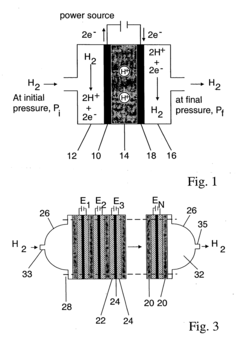
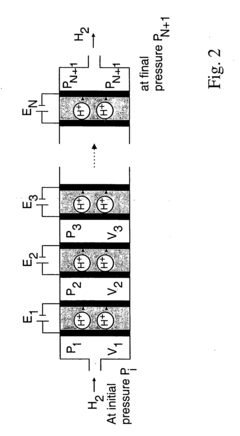
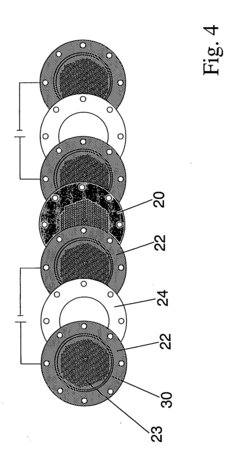
- An electrochemical hydrogen compression apparatus and process using a membrane electrolyte cell assembly with a proton-conducting electrolyte membrane, anode, and cathode, along with planar gas distribution and support plates, connected in series to achieve high-pressure differentials up to 12,000 psi, leveraging electrochemical reactions to oxidize and reduce hydrogen across the membrane.
Solid-State Electro-Chemical Compressor
PatentInactiveUS20220002885A1
Innovation
- A solid-state electrochemical compressor design featuring multiple cell packages connected in parallel, with each cell having a common electric power supply and fluid inlet/outlet system, allowing for independent operation and optimization of each cell, including separate power supplies and check valves to prevent backflow, and monitoring systems for optimal performance and reconditioning.

Energy Storage Safety and Regulatory Standards
Energy storage systems incorporating electrochemical compression technology face increasingly stringent safety requirements as their deployment scales across power grid applications. Current regulatory frameworks primarily address conventional battery technologies, creating gaps in standards specific to electrochemical compression systems used in advanced power analytics applications.
The International Electrotechnical Commission (IEC) 62619 standard provides foundational safety requirements for lithium-ion batteries in industrial applications, while IEEE 1547 governs grid interconnection standards. However, these existing frameworks inadequately address the unique safety considerations of electrochemical compression systems, particularly regarding pressure vessel integrity, gas management, and thermal runaway prevention in compressed electrolyte environments.
Regulatory bodies across major markets are developing specialized standards for advanced energy storage technologies. The European Union's Battery Regulation 2023/1542 introduces lifecycle safety requirements that impact electrochemical compression systems, mandating comprehensive risk assessment protocols for novel storage technologies. Similarly, UL 9540A testing standards in North America are expanding to encompass thermal propagation risks in high-pressure electrochemical systems.
Critical safety considerations for electrochemical compression systems include containment integrity under varying pressure conditions, electrolyte compatibility with compression mechanisms, and fail-safe pressure relief systems. Regulatory compliance requires demonstration of safe operation across temperature ranges from -40°C to 85°C, with pressure cycling capabilities exceeding 10,000 cycles without degradation of safety margins.
Emerging regulatory trends emphasize predictive safety analytics, requiring real-time monitoring systems capable of detecting precursor events to thermal runaway or pressure vessel failure. These requirements align with advanced power analytics capabilities, creating synergies between safety compliance and system optimization objectives.
Future regulatory developments will likely mandate integration of artificial intelligence-based safety monitoring systems, establishing new certification pathways for electrochemical compression technologies in grid-scale applications while ensuring compatibility with existing power system protection schemes.
The International Electrotechnical Commission (IEC) 62619 standard provides foundational safety requirements for lithium-ion batteries in industrial applications, while IEEE 1547 governs grid interconnection standards. However, these existing frameworks inadequately address the unique safety considerations of electrochemical compression systems, particularly regarding pressure vessel integrity, gas management, and thermal runaway prevention in compressed electrolyte environments.
Regulatory bodies across major markets are developing specialized standards for advanced energy storage technologies. The European Union's Battery Regulation 2023/1542 introduces lifecycle safety requirements that impact electrochemical compression systems, mandating comprehensive risk assessment protocols for novel storage technologies. Similarly, UL 9540A testing standards in North America are expanding to encompass thermal propagation risks in high-pressure electrochemical systems.
Critical safety considerations for electrochemical compression systems include containment integrity under varying pressure conditions, electrolyte compatibility with compression mechanisms, and fail-safe pressure relief systems. Regulatory compliance requires demonstration of safe operation across temperature ranges from -40°C to 85°C, with pressure cycling capabilities exceeding 10,000 cycles without degradation of safety margins.
Emerging regulatory trends emphasize predictive safety analytics, requiring real-time monitoring systems capable of detecting precursor events to thermal runaway or pressure vessel failure. These requirements align with advanced power analytics capabilities, creating synergies between safety compliance and system optimization objectives.
Future regulatory developments will likely mandate integration of artificial intelligence-based safety monitoring systems, establishing new certification pathways for electrochemical compression technologies in grid-scale applications while ensuring compatibility with existing power system protection schemes.
Environmental Impact of Electrochemical Systems
Electrochemical compression systems present both significant environmental opportunities and challenges that must be carefully evaluated for sustainable implementation in advanced power analytics applications. The environmental footprint of these systems encompasses multiple dimensions, from manufacturing processes to operational impacts and end-of-life considerations.
The primary environmental advantage of electrochemical compression lies in its potential to eliminate traditional mechanical compressors that rely on refrigerants with high global warming potential. By utilizing electrochemical processes for gas compression, these systems can significantly reduce greenhouse gas emissions associated with conventional compression technologies. The absence of moving parts also translates to reduced noise pollution and lower maintenance requirements, minimizing the environmental burden throughout the operational lifecycle.
Energy consumption patterns represent a critical environmental consideration for electrochemical compression systems. While these technologies offer superior efficiency in specific operating ranges, their environmental benefits are directly tied to the carbon intensity of the electrical grid powering them. In regions with high renewable energy penetration, electrochemical compression can achieve substantial carbon footprint reductions compared to conventional alternatives.
Material selection and manufacturing processes significantly influence the environmental profile of electrochemical compression systems. The production of specialized electrodes, membranes, and electrolytes often involves rare earth elements and complex chemical processes that can generate environmental impacts. However, the longer operational lifespan and reduced maintenance requirements of electrochemical systems can offset these initial manufacturing impacts over time.
Water usage and electrolyte management present additional environmental considerations. Many electrochemical compression systems require water-based electrolytes, necessitating careful water resource management and treatment protocols. The development of closed-loop systems and advanced electrolyte recycling technologies is essential for minimizing water consumption and preventing contamination.
End-of-life management poses unique challenges for electrochemical compression systems due to the specialized materials involved. Establishing comprehensive recycling programs for electrodes, membranes, and electrolytes is crucial for achieving circular economy principles. The recovery of valuable materials such as platinum group metals from electrodes can provide economic incentives for proper disposal and recycling practices.
The scalability of electrochemical compression technology also influences its overall environmental impact. Large-scale deployment can achieve economies of scale in manufacturing and material utilization, potentially reducing per-unit environmental impacts while enabling broader adoption of cleaner compression technologies across various industrial applications.
The primary environmental advantage of electrochemical compression lies in its potential to eliminate traditional mechanical compressors that rely on refrigerants with high global warming potential. By utilizing electrochemical processes for gas compression, these systems can significantly reduce greenhouse gas emissions associated with conventional compression technologies. The absence of moving parts also translates to reduced noise pollution and lower maintenance requirements, minimizing the environmental burden throughout the operational lifecycle.
Energy consumption patterns represent a critical environmental consideration for electrochemical compression systems. While these technologies offer superior efficiency in specific operating ranges, their environmental benefits are directly tied to the carbon intensity of the electrical grid powering them. In regions with high renewable energy penetration, electrochemical compression can achieve substantial carbon footprint reductions compared to conventional alternatives.
Material selection and manufacturing processes significantly influence the environmental profile of electrochemical compression systems. The production of specialized electrodes, membranes, and electrolytes often involves rare earth elements and complex chemical processes that can generate environmental impacts. However, the longer operational lifespan and reduced maintenance requirements of electrochemical systems can offset these initial manufacturing impacts over time.
Water usage and electrolyte management present additional environmental considerations. Many electrochemical compression systems require water-based electrolytes, necessitating careful water resource management and treatment protocols. The development of closed-loop systems and advanced electrolyte recycling technologies is essential for minimizing water consumption and preventing contamination.
End-of-life management poses unique challenges for electrochemical compression systems due to the specialized materials involved. Establishing comprehensive recycling programs for electrodes, membranes, and electrolytes is crucial for achieving circular economy principles. The recovery of valuable materials such as platinum group metals from electrodes can provide economic incentives for proper disposal and recycling practices.
The scalability of electrochemical compression technology also influences its overall environmental impact. Large-scale deployment can achieve economies of scale in manufacturing and material utilization, potentially reducing per-unit environmental impacts while enabling broader adoption of cleaner compression technologies across various industrial applications.
Unlock deeper insights with PatSnap Eureka Quick Research — get a full tech report to explore trends and direct your research. Try now!
Generate Your Research Report Instantly with AI Agent
Supercharge your innovation with PatSnap Eureka AI Agent Platform!