

How to Leverage Electrochemical Compression for Energy Security
APR 24, 20269 MIN READ
Generate Your Research Report Instantly with AI Agent
PatSnap Eureka helps you evaluate technical feasibility & market potential.
Electrochemical Compression Background and Energy Security Goals
Electrochemical compression represents a paradigm shift in gas compression technology, fundamentally altering how we approach energy storage and distribution systems. Unlike conventional mechanical compressors that rely on moving parts and consume substantial electrical energy, electrochemical compression utilizes electrochemical reactions to achieve gas compression at significantly lower energy costs. This technology operates through selective ion transport across specialized membranes, enabling compression ratios that can exceed 1000:1 while maintaining high efficiency rates above 80%.
The historical development of electrochemical compression traces back to early fuel cell research in the 1960s, where scientists observed that hydrogen could be compressed as a byproduct of electrochemical processes. Initial applications focused primarily on space missions where weight and reliability were critical factors. The technology remained largely experimental until the 2000s when advances in membrane materials and catalyst development made commercial applications feasible.
Recent technological evolution has been driven by the urgent need for efficient energy storage solutions and the global transition toward renewable energy systems. Modern electrochemical compressors can operate at ambient temperatures, eliminate the need for lubricants, and provide silent operation compared to traditional mechanical systems. These advantages have positioned the technology as a cornerstone solution for hydrogen economy infrastructure and grid-scale energy storage applications.
The primary energy security goals achievable through electrochemical compression encompass multiple strategic objectives. Enhanced energy storage capacity represents the foremost goal, enabling large-scale storage of renewable energy through hydrogen production and compression. This capability directly addresses the intermittency challenges associated with solar and wind power generation, providing a pathway to achieve energy independence from fossil fuel imports.
Grid stability and resilience constitute another critical objective, as electrochemical compression systems can rapidly respond to demand fluctuations and provide backup power during emergencies. The technology enables distributed energy storage networks that reduce vulnerability to centralized infrastructure failures and cyber attacks. Additionally, the ability to compress various gases including hydrogen, carbon dioxide, and natural gas creates opportunities for carbon capture utilization and strategic fuel reserves.
Long-term energy security benefits include reduced dependence on volatile fossil fuel markets, enhanced national energy sovereignty, and the establishment of sustainable energy supply chains. The technology supports the development of hydrogen highways for transportation fuel and enables seasonal energy storage capabilities that can bridge supply-demand gaps across extended periods.
The historical development of electrochemical compression traces back to early fuel cell research in the 1960s, where scientists observed that hydrogen could be compressed as a byproduct of electrochemical processes. Initial applications focused primarily on space missions where weight and reliability were critical factors. The technology remained largely experimental until the 2000s when advances in membrane materials and catalyst development made commercial applications feasible.
Recent technological evolution has been driven by the urgent need for efficient energy storage solutions and the global transition toward renewable energy systems. Modern electrochemical compressors can operate at ambient temperatures, eliminate the need for lubricants, and provide silent operation compared to traditional mechanical systems. These advantages have positioned the technology as a cornerstone solution for hydrogen economy infrastructure and grid-scale energy storage applications.
The primary energy security goals achievable through electrochemical compression encompass multiple strategic objectives. Enhanced energy storage capacity represents the foremost goal, enabling large-scale storage of renewable energy through hydrogen production and compression. This capability directly addresses the intermittency challenges associated with solar and wind power generation, providing a pathway to achieve energy independence from fossil fuel imports.
Grid stability and resilience constitute another critical objective, as electrochemical compression systems can rapidly respond to demand fluctuations and provide backup power during emergencies. The technology enables distributed energy storage networks that reduce vulnerability to centralized infrastructure failures and cyber attacks. Additionally, the ability to compress various gases including hydrogen, carbon dioxide, and natural gas creates opportunities for carbon capture utilization and strategic fuel reserves.
Long-term energy security benefits include reduced dependence on volatile fossil fuel markets, enhanced national energy sovereignty, and the establishment of sustainable energy supply chains. The technology supports the development of hydrogen highways for transportation fuel and enables seasonal energy storage capabilities that can bridge supply-demand gaps across extended periods.
Market Demand for Advanced Energy Storage and Compression
The global energy landscape is experiencing unprecedented transformation driven by the urgent need for decarbonization and energy independence. Traditional energy storage and compression technologies face significant limitations in efficiency, scalability, and environmental impact, creating substantial market opportunities for advanced solutions like electrochemical compression systems.
Current energy storage markets are dominated by lithium-ion batteries and mechanical compression systems, yet these technologies struggle with energy density limitations, degradation issues, and high maintenance costs. The growing penetration of renewable energy sources has intensified demand for more efficient storage and compression solutions that can handle intermittent power generation while maintaining grid stability.
Industrial sectors including chemical processing, hydrogen production, and natural gas distribution are actively seeking alternatives to conventional mechanical compressors. These industries face mounting pressure to reduce energy consumption and operational costs while meeting stricter environmental regulations. Electrochemical compression presents compelling advantages including higher efficiency rates, reduced mechanical complexity, and lower noise emissions compared to traditional compression methods.
The hydrogen economy emergence has created particularly strong demand for advanced compression technologies. Hydrogen storage and transportation require compression to extremely high pressures, where electrochemical methods can potentially offer superior energy efficiency and reduced infrastructure complexity. This market segment shows robust growth potential as governments worldwide implement hydrogen strategies for industrial decarbonization.
Energy security concerns have intensified following recent geopolitical disruptions, driving increased investment in domestic energy infrastructure and storage capabilities. Nations are prioritizing technologies that enhance energy independence while reducing reliance on fossil fuel imports. Electrochemical compression systems align with these strategic objectives by enabling more efficient utilization of renewable energy resources and improving overall system resilience.
Market research indicates growing interest from utility companies and industrial operators in integrated energy storage and compression solutions. These stakeholders require technologies that can simultaneously address multiple operational challenges including peak load management, grid balancing, and process optimization. The convergence of storage and compression functionalities represents a significant market opportunity for electrochemical systems that can deliver both capabilities within unified platforms.
Current energy storage markets are dominated by lithium-ion batteries and mechanical compression systems, yet these technologies struggle with energy density limitations, degradation issues, and high maintenance costs. The growing penetration of renewable energy sources has intensified demand for more efficient storage and compression solutions that can handle intermittent power generation while maintaining grid stability.
Industrial sectors including chemical processing, hydrogen production, and natural gas distribution are actively seeking alternatives to conventional mechanical compressors. These industries face mounting pressure to reduce energy consumption and operational costs while meeting stricter environmental regulations. Electrochemical compression presents compelling advantages including higher efficiency rates, reduced mechanical complexity, and lower noise emissions compared to traditional compression methods.
The hydrogen economy emergence has created particularly strong demand for advanced compression technologies. Hydrogen storage and transportation require compression to extremely high pressures, where electrochemical methods can potentially offer superior energy efficiency and reduced infrastructure complexity. This market segment shows robust growth potential as governments worldwide implement hydrogen strategies for industrial decarbonization.
Energy security concerns have intensified following recent geopolitical disruptions, driving increased investment in domestic energy infrastructure and storage capabilities. Nations are prioritizing technologies that enhance energy independence while reducing reliance on fossil fuel imports. Electrochemical compression systems align with these strategic objectives by enabling more efficient utilization of renewable energy resources and improving overall system resilience.
Market research indicates growing interest from utility companies and industrial operators in integrated energy storage and compression solutions. These stakeholders require technologies that can simultaneously address multiple operational challenges including peak load management, grid balancing, and process optimization. The convergence of storage and compression functionalities represents a significant market opportunity for electrochemical systems that can deliver both capabilities within unified platforms.
Current State and Challenges of Electrochemical Compression
Electrochemical compression represents a paradigm shift in gas compression technology, utilizing electrochemical reactions to achieve compression without traditional mechanical components. This technology has gained significant attention for its potential applications in hydrogen storage, carbon dioxide capture, and various industrial gas processing applications. The fundamental principle involves using electrochemical cells to drive gas molecules through selective membranes under electrical potential, achieving compression ratios that can exceed conventional mechanical compressors.
Current technological implementations primarily focus on hydrogen compression systems, where proton exchange membrane fuel cell technology has been adapted for compression purposes. Several pilot-scale systems have demonstrated compression ratios ranging from 10:1 to 100:1, with efficiencies approaching 70-80% under optimal conditions. These systems operate at relatively low temperatures compared to traditional compression methods, typically between 60-80°C, which reduces energy losses and material stress.
The geographical distribution of electrochemical compression development shows concentrated activity in North America, Europe, and East Asia. Leading research institutions and companies in the United States, Germany, Japan, and South Korea have established significant intellectual property portfolios and demonstration facilities. However, commercial deployment remains limited, with most systems still in prototype or early demonstration phases.
Major technical challenges currently impede widespread adoption of electrochemical compression technology. Membrane durability represents the most critical bottleneck, as current proton exchange membranes suffer from degradation under continuous compression cycles, limiting operational lifespans to 2,000-5,000 hours compared to the 40,000+ hours required for commercial viability. Membrane fouling from impurities in feed gases further exacerbates this challenge, requiring expensive pre-treatment systems.
Cost competitiveness remains another significant barrier, with current electrochemical compression systems exhibiting capital costs 3-5 times higher than conventional mechanical compressors. The high cost of specialized membranes, precious metal catalysts, and power electronics contributes to this economic disadvantage. Additionally, the technology faces scalability challenges, as most demonstrated systems operate at laboratory or small pilot scales, with limited evidence of successful scaling to industrial capacities.
Performance limitations also constrain current applications. While electrochemical compressors excel in specific scenarios requiring oil-free compression and precise pressure control, they struggle with variable feed compositions and fluctuating power supplies. The technology's sensitivity to contaminants and requirement for consistent electrical power make integration with renewable energy sources challenging, despite the apparent synergy for energy security applications.
Current technological implementations primarily focus on hydrogen compression systems, where proton exchange membrane fuel cell technology has been adapted for compression purposes. Several pilot-scale systems have demonstrated compression ratios ranging from 10:1 to 100:1, with efficiencies approaching 70-80% under optimal conditions. These systems operate at relatively low temperatures compared to traditional compression methods, typically between 60-80°C, which reduces energy losses and material stress.
The geographical distribution of electrochemical compression development shows concentrated activity in North America, Europe, and East Asia. Leading research institutions and companies in the United States, Germany, Japan, and South Korea have established significant intellectual property portfolios and demonstration facilities. However, commercial deployment remains limited, with most systems still in prototype or early demonstration phases.
Major technical challenges currently impede widespread adoption of electrochemical compression technology. Membrane durability represents the most critical bottleneck, as current proton exchange membranes suffer from degradation under continuous compression cycles, limiting operational lifespans to 2,000-5,000 hours compared to the 40,000+ hours required for commercial viability. Membrane fouling from impurities in feed gases further exacerbates this challenge, requiring expensive pre-treatment systems.
Cost competitiveness remains another significant barrier, with current electrochemical compression systems exhibiting capital costs 3-5 times higher than conventional mechanical compressors. The high cost of specialized membranes, precious metal catalysts, and power electronics contributes to this economic disadvantage. Additionally, the technology faces scalability challenges, as most demonstrated systems operate at laboratory or small pilot scales, with limited evidence of successful scaling to industrial capacities.
Performance limitations also constrain current applications. While electrochemical compressors excel in specific scenarios requiring oil-free compression and precise pressure control, they struggle with variable feed compositions and fluctuating power supplies. The technology's sensitivity to contaminants and requirement for consistent electrical power make integration with renewable energy sources challenging, despite the apparent synergy for energy security applications.
Existing Electrochemical Compression Solutions
01 Electrochemical compression systems for energy storage
Advanced electrochemical compression technologies that integrate energy storage capabilities with compression mechanisms. These systems utilize electrochemical processes to achieve efficient compression while simultaneously storing energy for later use. The technology combines traditional compression methods with electrochemical cells to enhance overall system efficiency and provide dual functionality for both compression and energy management applications.- Electrochemical compression systems for energy storage: Advanced electrochemical compression technologies that integrate energy storage capabilities with compression mechanisms. These systems utilize electrochemical processes to achieve efficient compression while simultaneously storing energy, providing dual functionality for enhanced energy security applications.
- Battery integration with compression energy systems: Integration of battery technologies with compression-based energy systems to enhance overall energy security and reliability. These approaches combine electrochemical energy storage with mechanical compression systems to create hybrid solutions that provide backup power and improved energy management capabilities.
- Electrochemical fuel cell compression applications: Fuel cell technologies specifically designed for compression applications in energy security systems. These solutions utilize electrochemical reactions to generate power while managing compressed gases or fluids, offering clean energy alternatives for critical infrastructure protection and energy independence.
- Smart grid electrochemical compression control: Intelligent control systems that manage electrochemical compression processes within smart grid infrastructures. These technologies enable automated optimization of energy distribution, load balancing, and security protocols through advanced electrochemical compression management and real-time monitoring capabilities.
- Security protocols for electrochemical energy systems: Comprehensive security frameworks and protection mechanisms designed specifically for electrochemical compression energy systems. These protocols address cybersecurity threats, physical protection measures, and operational safety standards to ensure reliable and secure energy infrastructure operation under various threat scenarios.
02 Security protocols for electrochemical energy systems
Implementation of security measures and protocols specifically designed for electrochemical energy systems to prevent unauthorized access and ensure safe operation. These protocols include authentication mechanisms, encryption methods, and fail-safe procedures that protect the integrity of the electrochemical compression systems. The security frameworks address both physical and cyber security concerns in energy storage and compression applications.Expand Specific Solutions03 Compression efficiency optimization in electrochemical devices
Methods and techniques for optimizing compression efficiency in electrochemical devices through advanced control algorithms and system design improvements. These approaches focus on maximizing the compression ratio while minimizing energy consumption and maintaining system stability. The optimization strategies involve real-time monitoring, adaptive control systems, and intelligent feedback mechanisms to achieve optimal performance under varying operating conditions.Expand Specific Solutions04 Energy recovery and management systems
Integrated energy recovery and management systems that capture and utilize waste energy from electrochemical compression processes. These systems implement sophisticated energy management strategies to recover energy that would otherwise be lost during compression cycles. The technology includes energy harvesting mechanisms, power conditioning circuits, and intelligent distribution systems that enhance overall system efficiency and reduce operational costs.Expand Specific Solutions05 Hybrid electrochemical compression architectures
Novel hybrid architectures that combine multiple electrochemical compression technologies to achieve enhanced performance and reliability. These systems integrate different compression mechanisms and electrochemical processes to create synergistic effects that improve overall system capabilities. The hybrid approach allows for flexible operation modes, improved fault tolerance, and optimized performance across a wide range of operating conditions and applications.Expand Specific Solutions
Key Players in Electrochemical Compression Industry
The electrochemical compression technology for energy security represents an emerging field in the early development stage, with significant growth potential driven by increasing demand for efficient energy storage and conversion solutions. The market remains relatively nascent but shows promising expansion as energy security concerns intensify globally. Technology maturity varies considerably across key players, with established industrial giants like BMW, Mitsubishi Corp., Robert Bosch GmbH, and BASF Corp. leveraging their extensive R&D capabilities and manufacturing expertise to advance practical applications. Academic institutions including Tsinghua University, Xi'an Jiaotong University, and Duke University contribute fundamental research breakthroughs, while specialized companies like VINATECH, VARTA Microbattery, and Blue Solutions focus on targeted electrochemical solutions. Chinese state enterprises such as State Grid Corp. and China Three Gorges Corp. drive large-scale implementation initiatives. The competitive landscape indicates a technology transitioning from laboratory research to commercial viability, with diverse stakeholders positioning themselves across the value chain from basic research to industrial deployment.
Bayerische Motoren Werke AG
Technical Solution: BMW has integrated electrochemical compression technology into their hydrogen fuel cell vehicle development program and stationary energy storage solutions. Their approach utilizes polymer electrolyte membrane (PEM) based electrochemical compressors operating at moderate temperatures (80-120°C) for automotive applications. The system enables on-board hydrogen compression for extended driving range and supports vehicle-to-grid energy transfer capabilities. BMW's technology focuses on compact, lightweight designs suitable for mobile applications while maintaining high reliability and safety standards for consumer use.
Strengths: Automotive-grade reliability, compact lightweight design, vehicle integration expertise. Weaknesses: Limited to moderate compression ratios, dependency on platinum catalysts increasing costs.
State Grid Corp. of China
Technical Solution: State Grid has implemented electrochemical compression technology for large-scale grid energy storage and renewable energy integration projects. Their approach utilizes advanced battery energy storage systems combined with electrochemical hydrogen production and compression for long-duration energy storage. The technology operates at grid scale with power ratings exceeding 100MW, providing frequency regulation, peak shaving, and renewable energy smoothing services. State Grid's systems incorporate smart grid integration capabilities enabling real-time energy management and optimization across multiple compression and storage facilities to enhance national energy security.
Strengths: Massive scale deployment capability, grid integration expertise, government policy support. Weaknesses: Technology dependency on international suppliers, high infrastructure investment requirements.
Core Patents in Electrochemical Compression Technology
Electrochemical hydrogen compressor
PatentInactiveUS20040211679A1
Innovation
- An electrochemical hydrogen compression apparatus and process using a membrane electrolyte cell assembly with a proton-conducting electrolyte membrane, anode, and cathode, along with planar gas distribution and support plates, connected in series to achieve high-pressure differentials up to 12,000 psi, leveraging electrochemical reactions to oxidize and reduce hydrogen across the membrane.
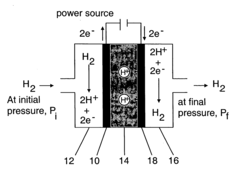
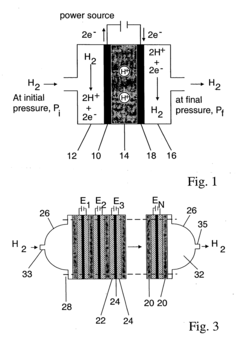
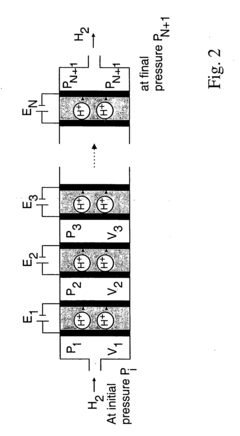
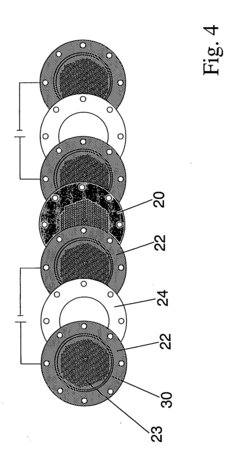
Method and device for the electrochemical compression of gaseous hydrogen
PatentPendingEP3773991A1
Innovation
- Implements a polarity reversal mechanism in electrochemical hydrogen compression, enabling alternating oxidation-reduction cycles that prevent water accumulation while maintaining continuous compression operation.
- Utilizes an intermediate redox vector (A/B couple) in the electrolyte system that facilitates hydrogen compression through controlled electrochemical reactions, eliminating the need for traditional mechanical compression components.
- Achieves ultra-high pressure compression ratios from low input pressures (1-30 bar) to target pressures (700-900 bar) through electrochemical means, suitable for hydrogen vehicle refueling applications.


Policy Framework for Energy Security Technologies
The development of a comprehensive policy framework for energy security technologies, particularly electrochemical compression, requires coordinated efforts across multiple governmental levels and regulatory domains. Current policy landscapes in major economies demonstrate varying approaches to supporting emerging energy technologies, with some nations prioritizing direct subsidies while others focus on regulatory sandboxes and tax incentives.
Federal and state-level policies must address the unique characteristics of electrochemical compression systems, including their dual role in energy storage and hydrogen production. Existing renewable energy standards and clean technology mandates provide foundational support, but specific provisions for electrochemical compression technologies remain limited. The integration of these systems into existing energy infrastructure requires updated grid codes and interconnection standards that accommodate their operational characteristics.
Regulatory frameworks need to evolve beyond traditional energy sector boundaries, as electrochemical compression technologies intersect with environmental regulations, industrial safety standards, and emerging hydrogen economy policies. Current gaps in regulatory clarity create uncertainty for technology developers and investors, particularly regarding certification processes and performance standards for commercial deployment.
International coordination mechanisms play a crucial role in establishing consistent technical standards and facilitating technology transfer. Bilateral and multilateral agreements on clean energy technologies provide pathways for sharing research and development costs while accelerating global deployment of electrochemical compression solutions.
Financial policy instruments, including research grants, loan guarantees, and public-private partnerships, require strategic alignment with technology development timelines. Current funding mechanisms often favor shorter-term projects, while electrochemical compression technologies may require sustained investment over extended development periods to achieve commercial viability.
The establishment of clear intellectual property frameworks and technology sharing agreements becomes essential for fostering innovation while ensuring energy security benefits reach diverse geographic regions and economic sectors.
Federal and state-level policies must address the unique characteristics of electrochemical compression systems, including their dual role in energy storage and hydrogen production. Existing renewable energy standards and clean technology mandates provide foundational support, but specific provisions for electrochemical compression technologies remain limited. The integration of these systems into existing energy infrastructure requires updated grid codes and interconnection standards that accommodate their operational characteristics.
Regulatory frameworks need to evolve beyond traditional energy sector boundaries, as electrochemical compression technologies intersect with environmental regulations, industrial safety standards, and emerging hydrogen economy policies. Current gaps in regulatory clarity create uncertainty for technology developers and investors, particularly regarding certification processes and performance standards for commercial deployment.
International coordination mechanisms play a crucial role in establishing consistent technical standards and facilitating technology transfer. Bilateral and multilateral agreements on clean energy technologies provide pathways for sharing research and development costs while accelerating global deployment of electrochemical compression solutions.
Financial policy instruments, including research grants, loan guarantees, and public-private partnerships, require strategic alignment with technology development timelines. Current funding mechanisms often favor shorter-term projects, while electrochemical compression technologies may require sustained investment over extended development periods to achieve commercial viability.
The establishment of clear intellectual property frameworks and technology sharing agreements becomes essential for fostering innovation while ensuring energy security benefits reach diverse geographic regions and economic sectors.
Safety Standards for Electrochemical Systems
Safety standards for electrochemical compression systems represent a critical framework for ensuring the secure deployment of this emerging technology in energy infrastructure applications. The development of comprehensive safety protocols has become increasingly urgent as electrochemical compression gains traction for hydrogen storage, grid-scale energy management, and industrial gas processing applications.
Current safety standards primarily draw from established electrochemical device regulations, including IEC 62282 series for fuel cell technologies and IEC 61427 for secondary batteries. However, electrochemical compression systems present unique safety challenges that require specialized protocols. The high-pressure operation combined with electrochemical processes creates potential risks including gas leakage, electrical hazards, thermal runaway, and material degradation under cyclic loading conditions.
International standardization bodies are actively developing specific guidelines for electrochemical compression systems. The International Electrotechnical Commission has initiated working groups to address safety requirements for high-pressure electrochemical devices, while ASME and ISO are establishing pressure vessel standards adapted for electrochemical compression applications. These standards focus on material compatibility, pressure containment integrity, and fail-safe operational protocols.
Key safety considerations include membrane durability under pressure cycling, electrolyte containment systems, and emergency shutdown procedures. Standards mandate redundant pressure monitoring, automated leak detection systems, and thermal management protocols to prevent overheating during compression cycles. Material selection criteria emphasize hydrogen embrittlement resistance and long-term chemical stability in electrochemical environments.
Certification processes require extensive testing protocols including accelerated aging studies, pressure cycling endurance tests, and failure mode analysis. Safety standards also address installation requirements, maintenance procedures, and operator training protocols to ensure safe operation throughout the system lifecycle.
The harmonization of safety standards across different jurisdictions remains a priority for widespread commercial deployment. Regulatory alignment between North American, European, and Asian markets will facilitate technology transfer and reduce certification costs, ultimately accelerating the adoption of electrochemical compression for enhanced energy security applications.
Current safety standards primarily draw from established electrochemical device regulations, including IEC 62282 series for fuel cell technologies and IEC 61427 for secondary batteries. However, electrochemical compression systems present unique safety challenges that require specialized protocols. The high-pressure operation combined with electrochemical processes creates potential risks including gas leakage, electrical hazards, thermal runaway, and material degradation under cyclic loading conditions.
International standardization bodies are actively developing specific guidelines for electrochemical compression systems. The International Electrotechnical Commission has initiated working groups to address safety requirements for high-pressure electrochemical devices, while ASME and ISO are establishing pressure vessel standards adapted for electrochemical compression applications. These standards focus on material compatibility, pressure containment integrity, and fail-safe operational protocols.
Key safety considerations include membrane durability under pressure cycling, electrolyte containment systems, and emergency shutdown procedures. Standards mandate redundant pressure monitoring, automated leak detection systems, and thermal management protocols to prevent overheating during compression cycles. Material selection criteria emphasize hydrogen embrittlement resistance and long-term chemical stability in electrochemical environments.
Certification processes require extensive testing protocols including accelerated aging studies, pressure cycling endurance tests, and failure mode analysis. Safety standards also address installation requirements, maintenance procedures, and operator training protocols to ensure safe operation throughout the system lifecycle.
The harmonization of safety standards across different jurisdictions remains a priority for widespread commercial deployment. Regulatory alignment between North American, European, and Asian markets will facilitate technology transfer and reduce certification costs, ultimately accelerating the adoption of electrochemical compression for enhanced energy security applications.
Unlock deeper insights with PatSnap Eureka Quick Research — get a full tech report to explore trends and direct your research. Try now!
Generate Your Research Report Instantly with AI Agent
Supercharge your innovation with PatSnap Eureka AI Agent Platform!