Evaluate Lithium Mine Ore Characterization Using Automated Mineralogy
OCT 8, 202510 MIN READ
Generate Your Research Report Instantly with AI Agent
PatSnap Eureka helps you evaluate technical feasibility & market potential.
Lithium Mineralogy Background and Objectives
Lithium has emerged as a critical element in the global transition towards sustainable energy systems, primarily due to its essential role in lithium-ion batteries that power electric vehicles and energy storage solutions. The historical development of lithium mineralogy traces back to the early 19th century when it was first discovered in petalite ore. However, it wasn't until the late 20th century that lithium gained significant industrial importance, coinciding with advancements in battery technology.
The evolution of lithium extraction technologies has progressed from traditional mining methods to more sophisticated approaches. Initially, lithium was predominantly extracted from hard rock sources such as spodumene, lepidolite, and petalite. The 1950s saw the emergence of brine extraction methods, which currently account for approximately 60% of global lithium production. Recent technological trends indicate a growing interest in direct lithium extraction (DLE) technologies and the exploration of unconventional sources like geothermal brines and recycled batteries.
Automated mineralogy represents a transformative approach to lithium ore characterization, combining advanced imaging techniques with sophisticated data analysis to provide comprehensive mineralogical information. This technology has evolved from basic optical microscopy to sophisticated systems integrating scanning electron microscopy (SEM) with energy-dispersive X-ray spectroscopy (EDS) and artificial intelligence algorithms for mineral identification and quantification.
The primary objective of evaluating lithium mine ore characterization using automated mineralogy is to enhance the efficiency and accuracy of lithium resource assessment. Specifically, this technology aims to provide detailed mineralogical information including mineral assemblages, grain size distributions, mineral associations, and liberation characteristics of lithium-bearing minerals. Such information is crucial for optimizing extraction processes, reducing energy consumption, and minimizing environmental impact.
Additionally, automated mineralogy seeks to address the challenges associated with the heterogeneous nature of lithium deposits, which often contain complex mineral assemblages with varying lithium concentrations. By providing rapid and accurate characterization of ore samples, this technology enables more precise resource estimation, improved process design, and better prediction of metallurgical performance.
The long-term technological goal is to develop fully integrated systems that combine automated mineralogy with real-time process monitoring and control, creating a closed-loop system for optimized lithium extraction. This would represent a significant advancement in sustainable mining practices, aligning with global efforts to secure lithium supplies while minimizing environmental footprint in the face of exponentially growing demand for this critical element.
The evolution of lithium extraction technologies has progressed from traditional mining methods to more sophisticated approaches. Initially, lithium was predominantly extracted from hard rock sources such as spodumene, lepidolite, and petalite. The 1950s saw the emergence of brine extraction methods, which currently account for approximately 60% of global lithium production. Recent technological trends indicate a growing interest in direct lithium extraction (DLE) technologies and the exploration of unconventional sources like geothermal brines and recycled batteries.
Automated mineralogy represents a transformative approach to lithium ore characterization, combining advanced imaging techniques with sophisticated data analysis to provide comprehensive mineralogical information. This technology has evolved from basic optical microscopy to sophisticated systems integrating scanning electron microscopy (SEM) with energy-dispersive X-ray spectroscopy (EDS) and artificial intelligence algorithms for mineral identification and quantification.
The primary objective of evaluating lithium mine ore characterization using automated mineralogy is to enhance the efficiency and accuracy of lithium resource assessment. Specifically, this technology aims to provide detailed mineralogical information including mineral assemblages, grain size distributions, mineral associations, and liberation characteristics of lithium-bearing minerals. Such information is crucial for optimizing extraction processes, reducing energy consumption, and minimizing environmental impact.
Additionally, automated mineralogy seeks to address the challenges associated with the heterogeneous nature of lithium deposits, which often contain complex mineral assemblages with varying lithium concentrations. By providing rapid and accurate characterization of ore samples, this technology enables more precise resource estimation, improved process design, and better prediction of metallurgical performance.
The long-term technological goal is to develop fully integrated systems that combine automated mineralogy with real-time process monitoring and control, creating a closed-loop system for optimized lithium extraction. This would represent a significant advancement in sustainable mining practices, aligning with global efforts to secure lithium supplies while minimizing environmental footprint in the face of exponentially growing demand for this critical element.
Market Analysis for Lithium Resources
The global lithium market has experienced unprecedented growth in recent years, primarily driven by the rapid expansion of electric vehicle (EV) production and renewable energy storage systems. The market value reached approximately $7.5 billion in 2022, with projections indicating a compound annual growth rate (CAGR) of 12.3% through 2030. This remarkable growth trajectory underscores the critical importance of efficient lithium resource characterization and extraction methodologies.
Demand for lithium has intensified across multiple sectors, with the automotive industry representing the largest consumer segment. EV manufacturers have significantly increased their lithium requirements, with major players like Tesla, BYD, and Volkswagen securing long-term supply agreements to mitigate potential shortages. Energy storage systems constitute the second-largest application segment, growing at 15.7% annually as grid-scale battery installations proliferate worldwide.
Supply constraints have emerged as a significant market challenge, with traditional extraction methods proving insufficient to meet escalating demand. This supply-demand imbalance has triggered price volatility, with lithium carbonate prices surging by over 400% between 2020 and 2022 before experiencing a correction in 2023. These market dynamics have intensified the focus on improving resource characterization techniques to optimize extraction efficiency and reduce production costs.
Geographically, the lithium triangle of Argentina, Bolivia, and Chile contains approximately 58% of global lithium resources, while Australia leads production volume through hard-rock mining operations. China dominates the processing and refining segment, controlling over 60% of global lithium processing capacity. North American and European markets are actively developing domestic supply chains to reduce dependency on foreign sources, creating new opportunities for advanced characterization technologies.
Automated mineralogy represents a potentially transformative approach to lithium resource evaluation, offering significant advantages over conventional methods. Market analysis indicates that mining operations implementing advanced characterization technologies achieve 18-24% higher resource recovery rates and 15-20% reduction in processing costs. These efficiency gains translate to substantial competitive advantages in a market where production economics increasingly determine commercial viability.
Investment in lithium exploration and production technologies has accelerated dramatically, with venture capital and corporate R&D expenditures exceeding $2.1 billion in 2022. Companies specializing in automated mineralogy solutions for lithium characterization have attracted particular interest, with several securing significant funding rounds to commercialize their technologies. This investment trend reflects growing recognition of the strategic importance of advanced characterization methods in addressing market supply challenges.
Demand for lithium has intensified across multiple sectors, with the automotive industry representing the largest consumer segment. EV manufacturers have significantly increased their lithium requirements, with major players like Tesla, BYD, and Volkswagen securing long-term supply agreements to mitigate potential shortages. Energy storage systems constitute the second-largest application segment, growing at 15.7% annually as grid-scale battery installations proliferate worldwide.
Supply constraints have emerged as a significant market challenge, with traditional extraction methods proving insufficient to meet escalating demand. This supply-demand imbalance has triggered price volatility, with lithium carbonate prices surging by over 400% between 2020 and 2022 before experiencing a correction in 2023. These market dynamics have intensified the focus on improving resource characterization techniques to optimize extraction efficiency and reduce production costs.
Geographically, the lithium triangle of Argentina, Bolivia, and Chile contains approximately 58% of global lithium resources, while Australia leads production volume through hard-rock mining operations. China dominates the processing and refining segment, controlling over 60% of global lithium processing capacity. North American and European markets are actively developing domestic supply chains to reduce dependency on foreign sources, creating new opportunities for advanced characterization technologies.
Automated mineralogy represents a potentially transformative approach to lithium resource evaluation, offering significant advantages over conventional methods. Market analysis indicates that mining operations implementing advanced characterization technologies achieve 18-24% higher resource recovery rates and 15-20% reduction in processing costs. These efficiency gains translate to substantial competitive advantages in a market where production economics increasingly determine commercial viability.
Investment in lithium exploration and production technologies has accelerated dramatically, with venture capital and corporate R&D expenditures exceeding $2.1 billion in 2022. Companies specializing in automated mineralogy solutions for lithium characterization have attracted particular interest, with several securing significant funding rounds to commercialize their technologies. This investment trend reflects growing recognition of the strategic importance of advanced characterization methods in addressing market supply challenges.
Current Automated Mineralogy Technologies and Limitations
Automated mineralogy has revolutionized the characterization of lithium mine ores by enabling rapid, accurate, and comprehensive analysis of mineral compositions. Current technologies primarily include Scanning Electron Microscopy-based systems (SEM-EDS/WDS), Quantitative Evaluation of Minerals by Scanning Electron Microscopy (QEMSCAN), Mineral Liberation Analysis (MLA), and TESCAN Integrated Mineral Analyzer (TIMA). These systems combine high-resolution imaging with elemental analysis to identify mineral phases, quantify their abundance, and determine their spatial relationships.
SEM-based automated mineralogy systems operate by scanning a polished sample surface with an electron beam, generating backscattered electron (BSE) images where brightness correlates with average atomic number. This allows discrimination between different mineral phases based on their compositional contrast. Simultaneously, Energy Dispersive X-ray Spectroscopy (EDS) or Wavelength Dispersive Spectroscopy (WDS) collect elemental data from each analysis point, which is then matched against mineral reference databases for identification.
QEMSCAN technology, developed by CSIRO and now offered by Thermo Fisher Scientific, utilizes BSE brightness and EDS spectra to create detailed mineral maps. It excels in analyzing complex lithium ore samples with fine-grained mineralogy, providing quantitative data on mineral abundance, grain size distribution, and mineral associations. This information is crucial for optimizing lithium extraction processes.
MLA, another prominent technology, offers various measurement modes optimized for different analytical requirements. It is particularly effective for liberation analysis, which determines how lithium-bearing minerals are associated with gangue minerals—critical information for designing efficient beneficiation processes. The system's particle delineation capabilities enable accurate assessment of mineral textures and intergrowths.
Despite these technological advances, significant limitations persist in automated mineralogy for lithium ore characterization. The most notable challenge is the difficulty in distinguishing lithium-bearing minerals due to lithium's low atomic number, which results in poor contrast in BSE images and weak X-ray signals in EDS analysis. This often necessitates complementary analytical techniques such as X-ray Diffraction (XRD) or Laser-Induced Breakdown Spectroscopy (LIBS).
Resolution limitations also affect the analysis of fine-grained lithium minerals, which are common in many deposits. Current systems typically have practical resolution limits around 1-2 μm, potentially missing critical fine-grained lithium mineralization. Additionally, sample preparation is crucial yet challenging, as lithium minerals can be water-soluble or soft, leading to preparation artifacts that compromise analytical accuracy.
Data processing represents another significant challenge, with massive datasets requiring sophisticated algorithms and substantial computational resources. The interpretation of results demands expert knowledge of both the analytical technique and lithium ore geology, creating a bottleneck in the analytical workflow.
SEM-based automated mineralogy systems operate by scanning a polished sample surface with an electron beam, generating backscattered electron (BSE) images where brightness correlates with average atomic number. This allows discrimination between different mineral phases based on their compositional contrast. Simultaneously, Energy Dispersive X-ray Spectroscopy (EDS) or Wavelength Dispersive Spectroscopy (WDS) collect elemental data from each analysis point, which is then matched against mineral reference databases for identification.
QEMSCAN technology, developed by CSIRO and now offered by Thermo Fisher Scientific, utilizes BSE brightness and EDS spectra to create detailed mineral maps. It excels in analyzing complex lithium ore samples with fine-grained mineralogy, providing quantitative data on mineral abundance, grain size distribution, and mineral associations. This information is crucial for optimizing lithium extraction processes.
MLA, another prominent technology, offers various measurement modes optimized for different analytical requirements. It is particularly effective for liberation analysis, which determines how lithium-bearing minerals are associated with gangue minerals—critical information for designing efficient beneficiation processes. The system's particle delineation capabilities enable accurate assessment of mineral textures and intergrowths.
Despite these technological advances, significant limitations persist in automated mineralogy for lithium ore characterization. The most notable challenge is the difficulty in distinguishing lithium-bearing minerals due to lithium's low atomic number, which results in poor contrast in BSE images and weak X-ray signals in EDS analysis. This often necessitates complementary analytical techniques such as X-ray Diffraction (XRD) or Laser-Induced Breakdown Spectroscopy (LIBS).
Resolution limitations also affect the analysis of fine-grained lithium minerals, which are common in many deposits. Current systems typically have practical resolution limits around 1-2 μm, potentially missing critical fine-grained lithium mineralization. Additionally, sample preparation is crucial yet challenging, as lithium minerals can be water-soluble or soft, leading to preparation artifacts that compromise analytical accuracy.
Data processing represents another significant challenge, with massive datasets requiring sophisticated algorithms and substantial computational resources. The interpretation of results demands expert knowledge of both the analytical technique and lithium ore geology, creating a bottleneck in the analytical workflow.
Current Lithium Ore Analysis Solutions
01 Spectroscopic methods for lithium ore characterization
Various spectroscopic techniques are employed to characterize lithium-bearing minerals and ores. These methods include X-ray diffraction (XRD), infrared spectroscopy, Raman spectroscopy, and laser-induced breakdown spectroscopy (LIBS). These techniques provide information about the crystalline structure, mineral composition, and elemental distribution within lithium ores, allowing for rapid and non-destructive analysis of ore samples to determine lithium content and mineral associations.- Spectroscopic techniques for lithium ore analysis: Various spectroscopic methods are employed for characterizing lithium-bearing minerals in ore samples. These techniques include X-ray diffraction (XRD), infrared spectroscopy, and laser-induced breakdown spectroscopy (LIBS), which can identify mineral phases, determine elemental composition, and quantify lithium content in ore samples. These non-destructive analytical methods provide rapid assessment of lithium concentration and distribution within ore bodies, enabling efficient resource evaluation and extraction planning.
- Imaging and microscopy methods for lithium ore characterization: Advanced imaging techniques are crucial for detailed characterization of lithium ore microstructure and mineral associations. These methods include scanning electron microscopy (SEM), hyperspectral imaging, and digital microscopy systems that can visualize mineral grain boundaries, textures, and spatial relationships between lithium-bearing and gangue minerals. These imaging approaches help in understanding ore genesis, predicting processing behavior, and optimizing extraction methods based on detailed microstructural information.
- Geophysical methods for lithium deposit characterization: Geophysical techniques provide valuable information about lithium deposits at various scales. Methods such as electrical resistivity tomography, gravity surveys, and electromagnetic methods can map subsurface lithium brine concentrations and identify lithium-bearing geological structures. These non-invasive approaches help in delineating deposit boundaries, estimating resource volumes, and identifying optimal drilling locations for further exploration and extraction of lithium resources.
- Automated systems for lithium ore quality control and sorting: Automated systems employ sensors, machine vision, and artificial intelligence to characterize and sort lithium ore in real-time during mining and processing operations. These systems can detect lithium-bearing minerals based on optical, radiometric, or density properties, enabling continuous monitoring of ore quality and automated separation of high-grade material from waste. Such technologies improve resource recovery efficiency and reduce processing costs through early-stage gangue rejection.
- Portable and field-deployable lithium analysis technologies: Field-deployable technologies enable rapid on-site characterization of lithium ore without requiring laboratory facilities. These include portable XRF analyzers, handheld spectroscopic devices, and mobile testing units that can perform preliminary lithium content assessment during exploration campaigns. Such technologies accelerate the decision-making process during mineral exploration and mining operations by providing immediate feedback on lithium concentration and ore quality directly at the mining site.
02 Imaging and microscopy techniques for lithium ore analysis
Advanced imaging and microscopy techniques are used to visualize and analyze the microstructure and spatial distribution of lithium minerals within ore samples. These include scanning electron microscopy (SEM), transmission electron microscopy (TEM), and hyperspectral imaging. These methods provide high-resolution images of mineral grains, textures, and associations, helping to understand the physical characteristics of lithium ores and optimize extraction processes.Expand Specific Solutions03 Geophysical methods for lithium deposit exploration
Geophysical techniques are applied to characterize lithium deposits at the field scale. These methods include electrical resistivity surveys, gravity measurements, magnetic surveys, and seismic imaging. By measuring physical properties of subsurface materials, these techniques help identify potential lithium-bearing formations, estimate deposit size and depth, and guide drilling programs for resource evaluation and mine planning.Expand Specific Solutions04 Automated and AI-based characterization systems
Advanced computational methods and artificial intelligence are increasingly used for lithium ore characterization. These include machine learning algorithms for mineral identification, automated mineralogy systems, and digital core logging. These technologies enable rapid processing of large datasets, pattern recognition in complex mineral assemblages, and predictive modeling of ore quality, significantly improving the efficiency and accuracy of lithium resource assessment.Expand Specific Solutions05 Chemical and elemental analysis methods
Various analytical techniques are employed to determine the chemical composition and elemental distribution in lithium ores. These include inductively coupled plasma mass spectrometry (ICP-MS), X-ray fluorescence (XRF), atomic absorption spectroscopy, and wet chemical methods. These techniques provide quantitative data on lithium content and associated elements, helping to assess ore grade, identify impurities, and optimize processing methods for lithium extraction.Expand Specific Solutions
Key Industry Players in Automated Mineralogy
The lithium mine ore characterization market using automated mineralogy is currently in a growth phase, with increasing demand driven by the global push for electric vehicles and renewable energy storage. The market size is expanding rapidly, projected to reach significant value as lithium remains critical for battery production. Technologically, the field is advancing from early-stage development toward maturity, with key players demonstrating varying levels of expertise. Baker Hughes and Schlumberger lead with established analytical capabilities from oil and gas sectors, while Chinese institutions like Bgrimm Technology Group and the Institute of Mineral Resources are making significant advancements. Academic players including Tsinghua University and The University of Queensland contribute valuable research. Mining companies such as Freeport-McMoRan and Poseidon Nickel are implementing these technologies to optimize extraction processes, creating a competitive landscape that spans technology providers, research institutions, and end-users.
Schlumberger Technologies, Inc.
Technical Solution: Schlumberger has adapted its extensive experience in oil field characterization to develop specialized automated mineralogy solutions for lithium resource evaluation. Their technology combines high-resolution SEM imaging with advanced EDS detectors capable of light element detection, crucial for lithium mineral identification. Schlumberger's proprietary ESTM (Elemental Spectral Tomography Mapping) system creates 3D mineralogical models of lithium ore samples by sequential grinding and imaging, providing unprecedented insights into spatial distribution of lithium-bearing phases. Their automated workflow incorporates specialized algorithms that can distinguish between lithium-bearing minerals and similar aluminosilicates based on subtle spectral differences. The system features an advanced sample preparation module that minimizes contamination and preserves delicate clay minerals often associated with lithium deposits. Schlumberger has reported identification accuracy rates exceeding 95% for major lithium minerals in complex matrices[3]. Their technology also incorporates automated porosity analysis particularly valuable for evaluating lithium brine deposits, where understanding flow characteristics is critical. Recent enhancements include AI-driven pattern recognition that improves processing speed by approximately 60% while maintaining analytical precision.
Strengths: Exceptional detection capabilities for light elements including lithium; seamless integration with other characterization technologies; robust data management systems allowing integration with resource modeling software. Weaknesses: Higher operational costs compared to conventional methods; requires specialized training; system calibration can be time-consuming for new deposit types.
Bgrimm Technology Group Co. Ltd.
Technical Solution: Bgrimm Technology Group has developed a comprehensive automated mineralogy system specifically tailored for lithium ore characterization. Their MLA-650 platform combines high-resolution SEM imaging with multiple EDS detectors optimized for light element detection. Bgrimm's innovation includes specialized sample preparation protocols that preserve delicate lithium minerals while providing optimal surface quality for automated analysis. Their system employs proprietary classification algorithms that can differentiate between lithium-bearing minerals with similar backscatter coefficients, a common challenge in automated mineralogy of lithium ores. Bgrimm has created extensive reference libraries specifically for Asian lithium deposits, including both pegmatite and sedimentary types, improving identification accuracy by up to 35% compared to generic mineral databases[5]. Their technology incorporates automated liberation analysis that quantifies the degree to which valuable lithium minerals are separated from gangue, providing critical information for processing optimization. Bgrimm's system features integrated workflow management that tracks samples from preparation through analysis and reporting, ensuring data integrity. Recent enhancements include AI-assisted image processing that reduces analysis time by approximately 40% while maintaining or improving accuracy. The platform also offers specialized modules for clay-hosted lithium deposits, addressing the unique challenges of fine-grained, poorly crystalline materials.
Strengths: Specialized expertise in Asian lithium deposit types; comprehensive integration of sample preparation and analysis; strong focus on translating mineralogical data into processing parameters. Weaknesses: Less extensive global experience compared to some Western competitors; system optimization may be required for non-Asian deposit types; some proprietary aspects limit integration with third-party software.
Critical Technologies in Automated Lithium Mineralogy
Methods for quantitative lithological and mineralogical evaluation of subsurface formations
PatentActiveUS20070246649A1
Innovation
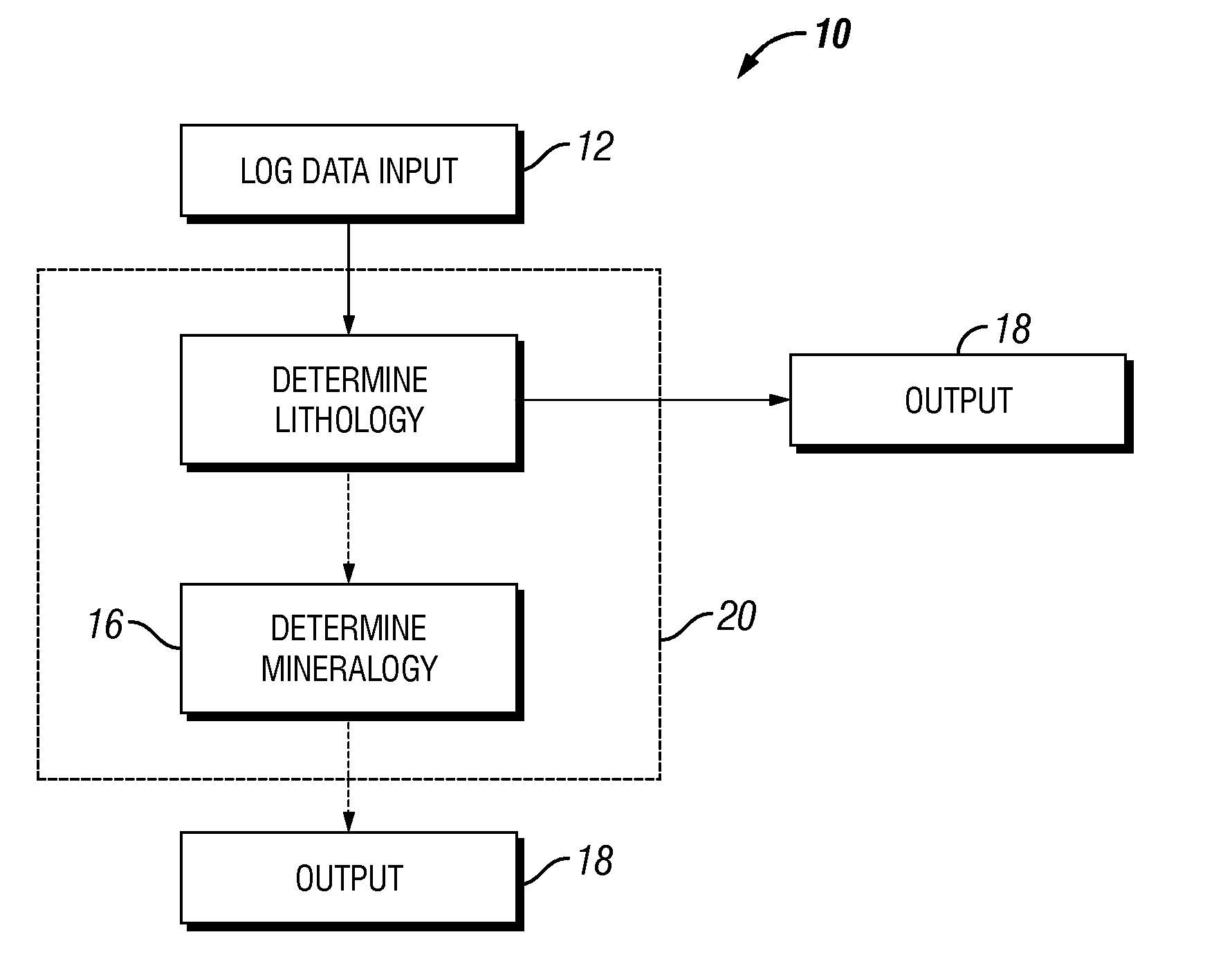
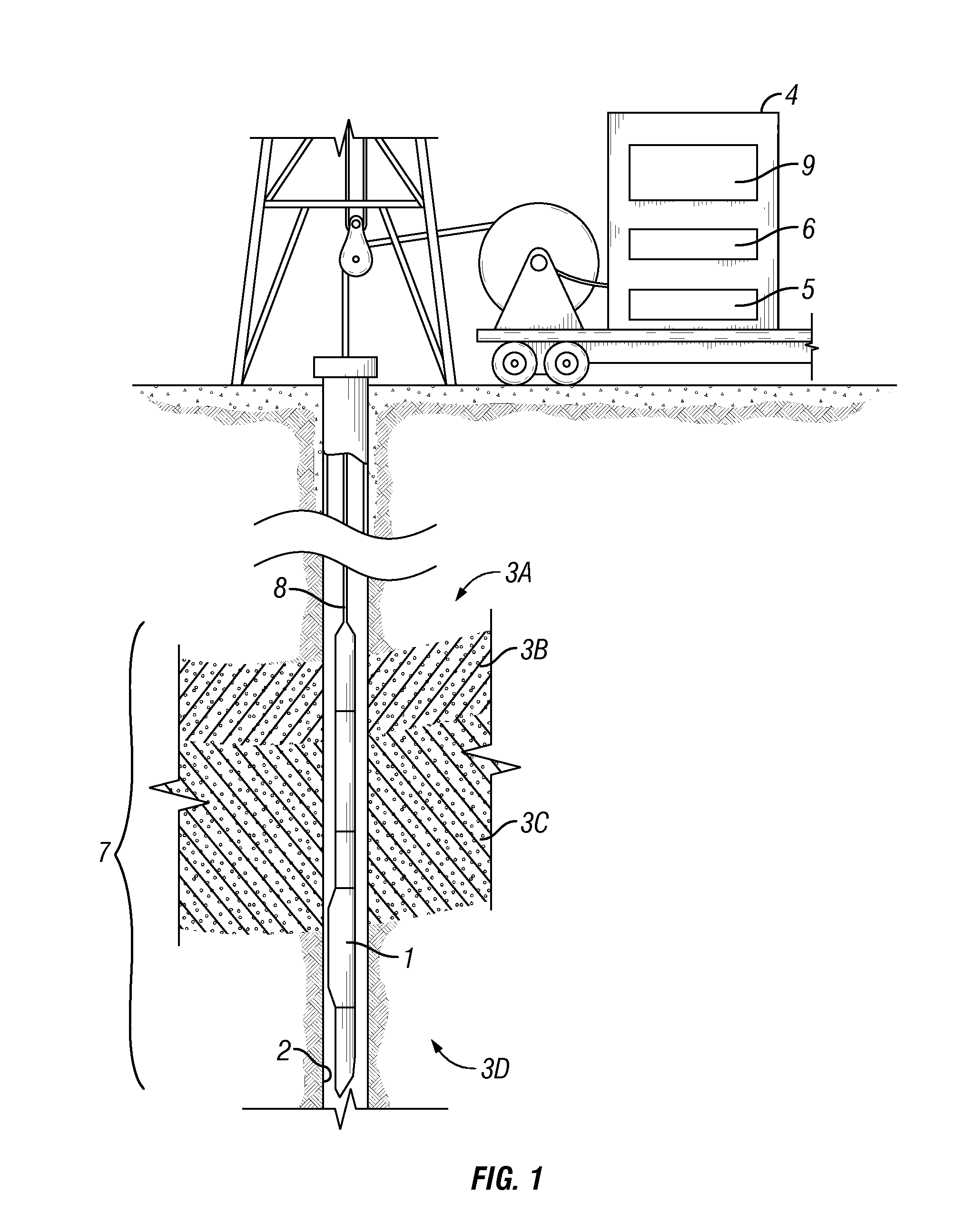
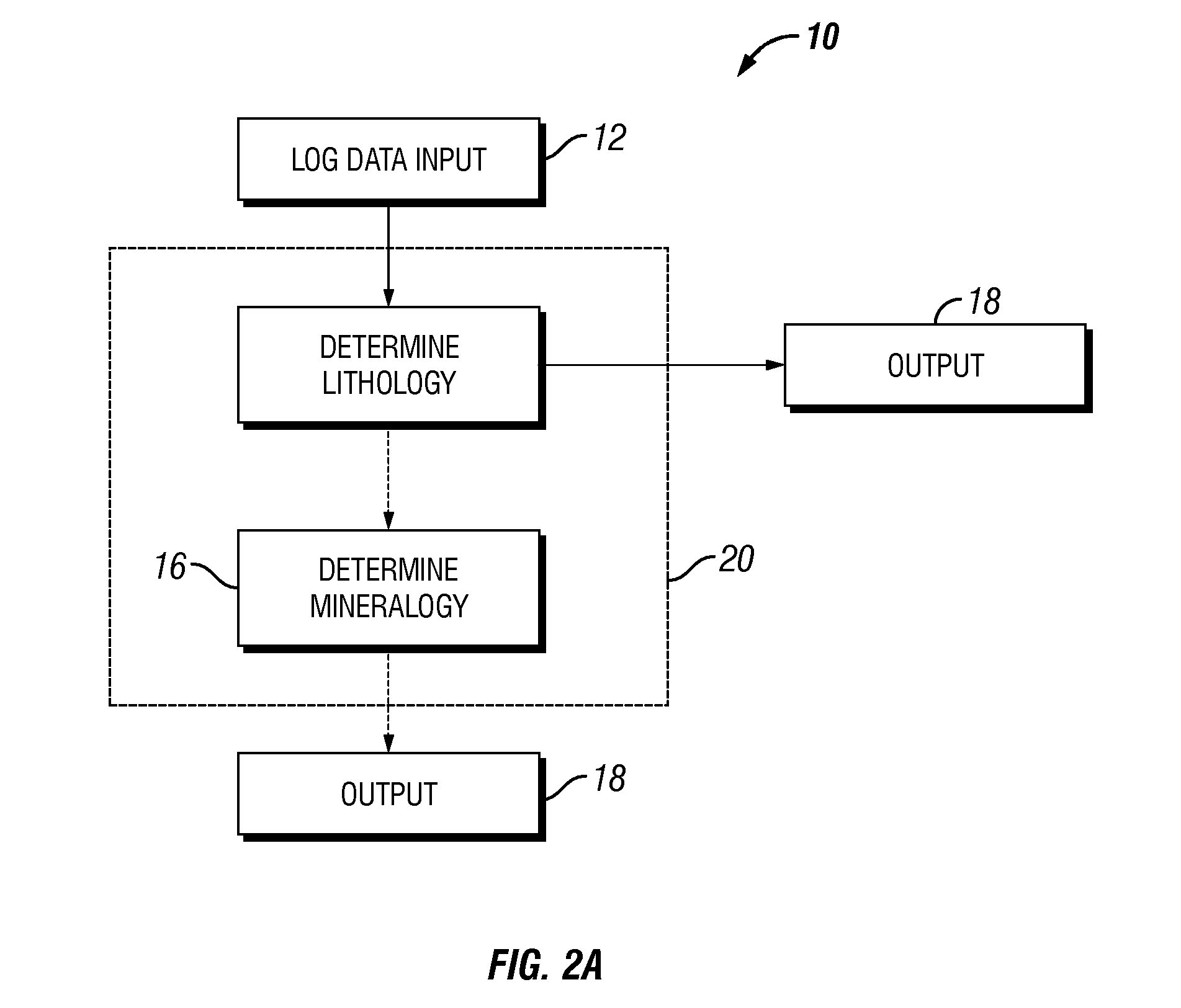
- The use of an artificial intelligence system that generates lithology and mineralogy compositional models from elemental measurements obtained by downhole tools, such as pulsed neutron devices, to define the general and specific lithology and mineralogy of a subterranean formation, incorporating additional data sources like NMR, resistivity, and gamma-ray data.

Environmental Impact Assessment of Lithium Mining
The environmental impact of lithium mining operations is a critical consideration in the sustainable development of lithium resources. Traditional lithium extraction methods, particularly from hard rock mining and brine evaporation, have significant environmental footprints. These impacts include extensive land disturbance, high water consumption, potential groundwater contamination, and substantial energy requirements leading to greenhouse gas emissions.
Automated mineralogy techniques offer promising approaches to mitigate these environmental concerns through more precise ore characterization. By employing advanced imaging and spectroscopic methods such as SEM-EDS (Scanning Electron Microscopy with Energy Dispersive X-ray Spectroscopy), XRD (X-ray Diffraction), and QEMSCAN (Quantitative Evaluation of Minerals by Scanning Electron Microscopy), mining operations can achieve more targeted extraction with reduced waste generation.
Water usage represents one of the most significant environmental challenges in lithium mining, particularly in brine operations where evaporation ponds can consume up to 500,000 gallons of water per ton of lithium produced. Automated mineralogy enables more efficient water management by providing detailed characterization of ore hydration states and mineral associations, potentially reducing water requirements by 30-40% compared to conventional methods.
Chemical contamination risks can also be better managed through precise identification of potentially harmful elements associated with lithium deposits. Automated systems can detect trace concentrations of elements such as arsenic, fluoride, and heavy metals, allowing for preemptive mitigation strategies before these contaminants enter the environment.
Energy efficiency improvements represent another environmental benefit of automated mineralogy. By precisely identifying valuable mineral phases and their liberation characteristics, processing pathways can be optimized to reduce energy consumption. Studies indicate potential energy savings of 15-25% when automated mineralogy data informs crushing, grinding, and separation processes.
Biodiversity protection can be enhanced through more targeted land disturbance based on high-resolution ore body models developed from automated mineralogy data. This approach minimizes the mining footprint and allows for more effective rehabilitation planning by characterizing both ore and waste materials in detail.
The carbon footprint of lithium production—estimated at 5-15 tons of CO2 equivalent per ton of lithium carbonate—can be reduced through more efficient processing enabled by automated mineralogy. By optimizing extraction and processing parameters based on precise mineralogical data, greenhouse gas emissions can potentially be reduced by 10-20% compared to conventional approaches.
Automated mineralogy techniques offer promising approaches to mitigate these environmental concerns through more precise ore characterization. By employing advanced imaging and spectroscopic methods such as SEM-EDS (Scanning Electron Microscopy with Energy Dispersive X-ray Spectroscopy), XRD (X-ray Diffraction), and QEMSCAN (Quantitative Evaluation of Minerals by Scanning Electron Microscopy), mining operations can achieve more targeted extraction with reduced waste generation.
Water usage represents one of the most significant environmental challenges in lithium mining, particularly in brine operations where evaporation ponds can consume up to 500,000 gallons of water per ton of lithium produced. Automated mineralogy enables more efficient water management by providing detailed characterization of ore hydration states and mineral associations, potentially reducing water requirements by 30-40% compared to conventional methods.
Chemical contamination risks can also be better managed through precise identification of potentially harmful elements associated with lithium deposits. Automated systems can detect trace concentrations of elements such as arsenic, fluoride, and heavy metals, allowing for preemptive mitigation strategies before these contaminants enter the environment.
Energy efficiency improvements represent another environmental benefit of automated mineralogy. By precisely identifying valuable mineral phases and their liberation characteristics, processing pathways can be optimized to reduce energy consumption. Studies indicate potential energy savings of 15-25% when automated mineralogy data informs crushing, grinding, and separation processes.
Biodiversity protection can be enhanced through more targeted land disturbance based on high-resolution ore body models developed from automated mineralogy data. This approach minimizes the mining footprint and allows for more effective rehabilitation planning by characterizing both ore and waste materials in detail.
The carbon footprint of lithium production—estimated at 5-15 tons of CO2 equivalent per ton of lithium carbonate—can be reduced through more efficient processing enabled by automated mineralogy. By optimizing extraction and processing parameters based on precise mineralogical data, greenhouse gas emissions can potentially be reduced by 10-20% compared to conventional approaches.
Regulatory Framework for Lithium Resource Extraction
The regulatory landscape governing lithium extraction operations has become increasingly complex as global demand for this critical mineral continues to surge. At the international level, several frameworks influence lithium mining practices, including the United Nations Framework Classification for Resources (UNFC) and the International Council on Mining and Metals (ICMM) Sustainable Development Framework, which provide guidelines for responsible resource management and environmental stewardship.
National regulations vary significantly across major lithium-producing countries. Chile, Argentina, and Australia have established comprehensive regulatory frameworks that address mining rights, environmental impact assessments, and water usage limitations—particularly crucial for lithium brine operations. The United States has recently strengthened its regulatory approach through the Critical Minerals Executive Order and subsequent policy initiatives aimed at securing domestic lithium supply chains while maintaining environmental standards.
Environmental compliance represents a significant regulatory hurdle for lithium extraction projects. Automated mineralogy technologies must align with increasingly stringent requirements for water conservation, particularly in arid regions where many lithium deposits are located. Regulations typically mandate detailed baseline studies of local ecosystems before mining operations can commence, with continuous monitoring throughout the project lifecycle.
Indigenous rights and community consultation processes have become integral components of regulatory frameworks in many jurisdictions. In countries like Chile and Argentina, mining companies must engage with local communities and obtain social licenses to operate. These requirements often include benefit-sharing agreements and commitments to local employment and development initiatives.
Permitting processes for lithium extraction typically involve multiple regulatory agencies with oversight responsibilities for different aspects of operations. The integration of automated mineralogy into ore characterization workflows must satisfy regulatory requirements for accuracy, reliability, and transparency in resource estimation and environmental impact assessment.
Emerging regulatory trends include increased focus on full lifecycle assessment of lithium projects, from exploration through closure and reclamation. Regulations increasingly require companies to demonstrate plans for minimizing waste, reducing carbon footprints, and implementing sustainable water management practices. The European Union's Battery Directive and similar initiatives in other regions are extending regulatory oversight beyond extraction to encompass the entire lithium value chain.
Compliance with these diverse regulatory frameworks necessitates sophisticated ore characterization methodologies that can provide accurate, consistent data to satisfy reporting requirements across multiple jurisdictions. Automated mineralogy systems must therefore be designed and implemented with regulatory compliance as a core consideration, ensuring that data collection and analysis protocols meet or exceed applicable standards.
National regulations vary significantly across major lithium-producing countries. Chile, Argentina, and Australia have established comprehensive regulatory frameworks that address mining rights, environmental impact assessments, and water usage limitations—particularly crucial for lithium brine operations. The United States has recently strengthened its regulatory approach through the Critical Minerals Executive Order and subsequent policy initiatives aimed at securing domestic lithium supply chains while maintaining environmental standards.
Environmental compliance represents a significant regulatory hurdle for lithium extraction projects. Automated mineralogy technologies must align with increasingly stringent requirements for water conservation, particularly in arid regions where many lithium deposits are located. Regulations typically mandate detailed baseline studies of local ecosystems before mining operations can commence, with continuous monitoring throughout the project lifecycle.
Indigenous rights and community consultation processes have become integral components of regulatory frameworks in many jurisdictions. In countries like Chile and Argentina, mining companies must engage with local communities and obtain social licenses to operate. These requirements often include benefit-sharing agreements and commitments to local employment and development initiatives.
Permitting processes for lithium extraction typically involve multiple regulatory agencies with oversight responsibilities for different aspects of operations. The integration of automated mineralogy into ore characterization workflows must satisfy regulatory requirements for accuracy, reliability, and transparency in resource estimation and environmental impact assessment.
Emerging regulatory trends include increased focus on full lifecycle assessment of lithium projects, from exploration through closure and reclamation. Regulations increasingly require companies to demonstrate plans for minimizing waste, reducing carbon footprints, and implementing sustainable water management practices. The European Union's Battery Directive and similar initiatives in other regions are extending regulatory oversight beyond extraction to encompass the entire lithium value chain.
Compliance with these diverse regulatory frameworks necessitates sophisticated ore characterization methodologies that can provide accurate, consistent data to satisfy reporting requirements across multiple jurisdictions. Automated mineralogy systems must therefore be designed and implemented with regulatory compliance as a core consideration, ensuring that data collection and analysis protocols meet or exceed applicable standards.
Unlock deeper insights with PatSnap Eureka Quick Research — get a full tech report to explore trends and direct your research. Try now!
Generate Your Research Report Instantly with AI Agent
Supercharge your innovation with PatSnap Eureka AI Agent Platform!