

Evaluate Racetrack Memory for Secure Blockchain Data Retention
MAY 14, 20269 MIN READ
Generate Your Research Report Instantly with AI Agent
Patsnap Eureka helps you evaluate technical feasibility & market potential.
Racetrack Memory Background and Blockchain Security Goals
Racetrack memory represents a revolutionary non-volatile memory technology that leverages the principles of spintronics to achieve high-density data storage with exceptional performance characteristics. This emerging memory architecture utilizes magnetic domain walls within nanoscale magnetic strips, where data bits are encoded as magnetic domains that can be shifted along the racetrack using spin-polarized currents. The technology was initially conceptualized by IBM Research and has since evolved through extensive academic and industrial research efforts.
The fundamental operation of racetrack memory involves three primary mechanisms: writing data through localized magnetic field manipulation, reading data via magnetic tunnel junctions positioned along the track, and shifting data domains through spin-transfer torque effects. This unique approach enables ultra-high storage density by eliminating the need for individual access transistors for each memory cell, potentially achieving storage densities exceeding traditional DRAM and NAND flash technologies by orders of magnitude.
From a performance perspective, racetrack memory exhibits characteristics that bridge the gap between volatile and non-volatile memory technologies. The technology offers nanosecond-level access times comparable to DRAM while maintaining data persistence without power supply, similar to flash memory. Additionally, racetrack memory demonstrates exceptional endurance capabilities, with theoretical write/erase cycles exceeding 10^15 operations, far surpassing conventional flash memory limitations.
Blockchain technology fundamentally relies on cryptographic security mechanisms and distributed consensus protocols to ensure data integrity, immutability, and transparency across decentralized networks. The security architecture of blockchain systems encompasses multiple layers, including cryptographic hash functions, digital signatures, merkle tree structures, and consensus algorithms such as Proof of Work or Proof of Stake.
Critical security objectives for blockchain data retention include maintaining cryptographic key integrity, ensuring transaction data immutability, protecting against side-channel attacks, and preserving data availability across network disruptions. Traditional memory technologies face significant challenges in meeting these stringent security requirements, particularly regarding data persistence, tamper resistance, and protection against physical attacks.
The convergence of racetrack memory technology with blockchain security requirements presents compelling opportunities for enhanced data protection mechanisms. Racetrack memory's inherent physical properties, including magnetic domain isolation and nanoscale architecture, offer potential advantages for implementing hardware-level security features that could significantly strengthen blockchain data retention capabilities while addressing current limitations in existing memory technologies.
The fundamental operation of racetrack memory involves three primary mechanisms: writing data through localized magnetic field manipulation, reading data via magnetic tunnel junctions positioned along the track, and shifting data domains through spin-transfer torque effects. This unique approach enables ultra-high storage density by eliminating the need for individual access transistors for each memory cell, potentially achieving storage densities exceeding traditional DRAM and NAND flash technologies by orders of magnitude.
From a performance perspective, racetrack memory exhibits characteristics that bridge the gap between volatile and non-volatile memory technologies. The technology offers nanosecond-level access times comparable to DRAM while maintaining data persistence without power supply, similar to flash memory. Additionally, racetrack memory demonstrates exceptional endurance capabilities, with theoretical write/erase cycles exceeding 10^15 operations, far surpassing conventional flash memory limitations.
Blockchain technology fundamentally relies on cryptographic security mechanisms and distributed consensus protocols to ensure data integrity, immutability, and transparency across decentralized networks. The security architecture of blockchain systems encompasses multiple layers, including cryptographic hash functions, digital signatures, merkle tree structures, and consensus algorithms such as Proof of Work or Proof of Stake.
Critical security objectives for blockchain data retention include maintaining cryptographic key integrity, ensuring transaction data immutability, protecting against side-channel attacks, and preserving data availability across network disruptions. Traditional memory technologies face significant challenges in meeting these stringent security requirements, particularly regarding data persistence, tamper resistance, and protection against physical attacks.
The convergence of racetrack memory technology with blockchain security requirements presents compelling opportunities for enhanced data protection mechanisms. Racetrack memory's inherent physical properties, including magnetic domain isolation and nanoscale architecture, offer potential advantages for implementing hardware-level security features that could significantly strengthen blockchain data retention capabilities while addressing current limitations in existing memory technologies.
Market Demand for Secure Blockchain Storage Solutions
The global blockchain infrastructure market is experiencing unprecedented growth driven by increasing demands for data security, immutability, and decentralized storage solutions. Financial institutions, healthcare organizations, and government agencies are actively seeking robust storage technologies that can maintain blockchain data integrity while providing enhanced security features against emerging cyber threats.
Enterprise adoption of blockchain technology has created substantial demand for storage solutions that can handle massive data volumes while ensuring long-term retention capabilities. Traditional storage methods face significant challenges in meeting the stringent security requirements of blockchain applications, particularly in sectors dealing with sensitive financial transactions, medical records, and intellectual property protection.
The cryptocurrency and digital asset management sector represents a rapidly expanding market segment requiring secure storage solutions for blockchain data. As digital currencies gain mainstream acceptance, the need for reliable, tamper-resistant storage technologies has become critical for exchanges, wallet providers, and institutional investors managing large-scale blockchain operations.
Supply chain management and traceability applications are driving substantial demand for secure blockchain storage solutions across manufacturing, pharmaceutical, and food industries. These sectors require storage technologies capable of maintaining immutable records while providing rapid access to historical data for compliance and audit purposes.
Government and regulatory bodies worldwide are increasingly implementing blockchain-based systems for identity management, voting systems, and public record keeping. These applications demand storage solutions that can guarantee data integrity over extended periods while meeting strict security standards and regulatory compliance requirements.
The Internet of Things ecosystem integration with blockchain technology is creating new market opportunities for secure storage solutions. Smart cities, autonomous vehicles, and industrial IoT applications require storage technologies that can handle continuous data streams while maintaining blockchain security protocols and ensuring data availability for real-time decision-making processes.
Cloud service providers and data center operators are recognizing the growing market demand for blockchain-optimized storage infrastructure. The shift toward hybrid cloud environments and edge computing architectures is driving requirements for storage solutions that can seamlessly integrate with existing blockchain networks while providing enhanced security features and improved performance characteristics.
Enterprise adoption of blockchain technology has created substantial demand for storage solutions that can handle massive data volumes while ensuring long-term retention capabilities. Traditional storage methods face significant challenges in meeting the stringent security requirements of blockchain applications, particularly in sectors dealing with sensitive financial transactions, medical records, and intellectual property protection.
The cryptocurrency and digital asset management sector represents a rapidly expanding market segment requiring secure storage solutions for blockchain data. As digital currencies gain mainstream acceptance, the need for reliable, tamper-resistant storage technologies has become critical for exchanges, wallet providers, and institutional investors managing large-scale blockchain operations.
Supply chain management and traceability applications are driving substantial demand for secure blockchain storage solutions across manufacturing, pharmaceutical, and food industries. These sectors require storage technologies capable of maintaining immutable records while providing rapid access to historical data for compliance and audit purposes.
Government and regulatory bodies worldwide are increasingly implementing blockchain-based systems for identity management, voting systems, and public record keeping. These applications demand storage solutions that can guarantee data integrity over extended periods while meeting strict security standards and regulatory compliance requirements.
The Internet of Things ecosystem integration with blockchain technology is creating new market opportunities for secure storage solutions. Smart cities, autonomous vehicles, and industrial IoT applications require storage technologies that can handle continuous data streams while maintaining blockchain security protocols and ensuring data availability for real-time decision-making processes.
Cloud service providers and data center operators are recognizing the growing market demand for blockchain-optimized storage infrastructure. The shift toward hybrid cloud environments and edge computing architectures is driving requirements for storage solutions that can seamlessly integrate with existing blockchain networks while providing enhanced security features and improved performance characteristics.
Current State of Racetrack Memory and Storage Challenges
Racetrack memory represents a revolutionary approach to data storage that leverages the magnetic properties of domain walls in ferromagnetic nanowires. This emerging technology utilizes spin-polarized currents to manipulate magnetic domains along nanoscale tracks, enabling high-density, non-volatile memory storage with potentially superior performance characteristics compared to conventional storage solutions.
Current implementations of racetrack memory face significant technical hurdles that limit widespread adoption. The primary challenge lies in achieving precise control over domain wall motion, which requires sophisticated current pulse timing and amplitude management. Variations in nanowire fabrication processes lead to inconsistent domain wall velocities, creating reliability issues that must be addressed before commercial viability can be achieved.
Power consumption remains a critical concern for racetrack memory systems. While the technology promises lower static power compared to DRAM due to its non-volatile nature, the dynamic power required for domain wall manipulation can be substantial. Current research indicates that optimizing pulse sequences and developing more efficient spin-torque mechanisms are essential for reducing overall energy consumption to competitive levels.
Scalability presents another fundamental challenge in racetrack memory development. Manufacturing uniform nanowires at the required dimensions while maintaining consistent magnetic properties across large arrays proves technically demanding. Current fabrication techniques struggle with yield rates and cost-effectiveness when scaling to production volumes necessary for enterprise storage applications.
Data integrity and error correction mechanisms in racetrack memory systems require substantial advancement. Unlike traditional storage technologies, racetrack memory exhibits unique failure modes related to domain wall pinning, thermal fluctuations, and magnetic field interference. Existing error correction codes may not adequately address these specific failure patterns, necessitating the development of specialized protection schemes.
Endurance characteristics of racetrack memory show promise but remain incompletely understood. Current experimental data suggests potential for high write-erase cycles, yet long-term degradation mechanisms in nanowire structures require further investigation. The interaction between repeated current pulses and material properties over extended operational periods presents ongoing research challenges that directly impact the technology's suitability for critical data retention applications.
Integration challenges with existing computing architectures compound the technical difficulties. Current racetrack memory prototypes require specialized control circuits and interface protocols that differ significantly from established storage standards. Developing compatible controllers and ensuring seamless integration with existing systems represents a significant engineering challenge that affects adoption timelines and implementation costs.
Current implementations of racetrack memory face significant technical hurdles that limit widespread adoption. The primary challenge lies in achieving precise control over domain wall motion, which requires sophisticated current pulse timing and amplitude management. Variations in nanowire fabrication processes lead to inconsistent domain wall velocities, creating reliability issues that must be addressed before commercial viability can be achieved.
Power consumption remains a critical concern for racetrack memory systems. While the technology promises lower static power compared to DRAM due to its non-volatile nature, the dynamic power required for domain wall manipulation can be substantial. Current research indicates that optimizing pulse sequences and developing more efficient spin-torque mechanisms are essential for reducing overall energy consumption to competitive levels.
Scalability presents another fundamental challenge in racetrack memory development. Manufacturing uniform nanowires at the required dimensions while maintaining consistent magnetic properties across large arrays proves technically demanding. Current fabrication techniques struggle with yield rates and cost-effectiveness when scaling to production volumes necessary for enterprise storage applications.
Data integrity and error correction mechanisms in racetrack memory systems require substantial advancement. Unlike traditional storage technologies, racetrack memory exhibits unique failure modes related to domain wall pinning, thermal fluctuations, and magnetic field interference. Existing error correction codes may not adequately address these specific failure patterns, necessitating the development of specialized protection schemes.
Endurance characteristics of racetrack memory show promise but remain incompletely understood. Current experimental data suggests potential for high write-erase cycles, yet long-term degradation mechanisms in nanowire structures require further investigation. The interaction between repeated current pulses and material properties over extended operational periods presents ongoing research challenges that directly impact the technology's suitability for critical data retention applications.
Integration challenges with existing computing architectures compound the technical difficulties. Current racetrack memory prototypes require specialized control circuits and interface protocols that differ significantly from established storage standards. Developing compatible controllers and ensuring seamless integration with existing systems represents a significant engineering challenge that affects adoption timelines and implementation costs.
Existing Solutions for Secure Blockchain Data Retention
01 Domain wall motion control for data retention
Techniques for controlling domain wall motion in racetrack memory devices to improve data retention. This involves managing the movement of magnetic domain walls along nanowires through precise current control, magnetic field application, and structural modifications to prevent unwanted data migration during storage periods.- Domain wall motion control for data retention: Techniques for controlling domain wall motion in racetrack memory devices to improve data retention. This involves managing the movement of magnetic domain walls along nanowires through precise current control, magnetic field application, and structural modifications. The control mechanisms help maintain stable data storage by preventing unwanted domain wall drift that could lead to data corruption or loss over time.
- Magnetic anisotropy enhancement for stable data storage: Methods to enhance magnetic anisotropy in racetrack memory structures to achieve better data retention characteristics. This includes material engineering approaches, crystalline structure optimization, and interface modifications that increase the energy barrier for magnetic domain switching. Enhanced anisotropy helps maintain data integrity by making stored magnetic states more resistant to thermal fluctuations and external disturbances.
- Error correction and refresh mechanisms: Implementation of error correction codes and refresh mechanisms specifically designed for racetrack memory systems to maintain data integrity over extended periods. These systems monitor data degradation, detect errors before they become uncorrectable, and perform selective refresh operations to restore weakened magnetic states. The mechanisms account for the unique failure modes of racetrack memory technology.
- Temperature compensation and thermal management: Approaches for managing temperature effects on racetrack memory data retention through compensation circuits and thermal management techniques. These methods address temperature-dependent variations in magnetic properties, domain wall mobility, and coercivity that can affect data stability. Solutions include adaptive control algorithms, temperature sensing, and thermal isolation structures to maintain consistent performance across operating temperature ranges.
- Write current optimization and programming techniques: Optimization of write current parameters and programming sequences to maximize data retention in racetrack memory devices. This involves determining optimal current pulse shapes, durations, and amplitudes that ensure complete domain wall positioning while minimizing stress on the magnetic materials. Advanced programming techniques help establish well-defined magnetic domains that maintain their states for extended periods without degradation.
02 Magnetic anisotropy enhancement methods
Approaches to enhance magnetic anisotropy in racetrack memory structures to maintain stable data storage. These methods include material composition optimization, crystalline structure control, and interface engineering to increase the energy barrier for spontaneous magnetization switching and improve long-term data retention.Expand Specific Solutions03 Temperature compensation and thermal stability
Solutions for maintaining data integrity across varying temperature conditions in racetrack memory systems. These include thermal compensation circuits, temperature-resistant magnetic materials, and adaptive control algorithms that adjust operating parameters based on environmental conditions to preserve stored information.Expand Specific Solutions04 Error correction and refresh mechanisms
Implementation of error detection, correction, and periodic refresh operations to maintain data reliability in racetrack memory. These mechanisms include redundant encoding schemes, background data verification processes, and selective refresh algorithms that restore degraded magnetic states before data loss occurs.Expand Specific Solutions05 Structural design for retention optimization
Physical and architectural design modifications to racetrack memory devices that inherently improve data retention characteristics. This encompasses nanowire geometry optimization, pinning site engineering, and multi-layer stack configurations that provide enhanced magnetic stability and reduced susceptibility to external disturbances.Expand Specific Solutions
Key Players in Racetrack Memory and Blockchain Storage
The racetrack memory technology for secure blockchain data retention represents an emerging field in the early development stage, characterized by limited market penetration but significant growth potential. The market remains nascent with substantial technical barriers requiring advanced semiconductor expertise and blockchain integration capabilities. Technology maturity varies significantly among key players, with established semiconductor giants like IBM, Samsung Electronics, and STMicroelectronics leading fundamental racetrack memory development, while companies such as Tencent, Ping An Technology, and SAP focus on blockchain security applications. Academic institutions including Tsinghua University and Politecnico di Torino contribute foundational research, creating a competitive landscape where traditional memory manufacturers compete alongside blockchain specialists and cloud service providers to establish dominance in this convergent technology space.
International Business Machines Corp.
Technical Solution: IBM has developed comprehensive racetrack memory solutions leveraging domain wall motion in magnetic nanowires for high-density data storage. Their approach utilizes spin-orbit torque mechanisms to control magnetic domain walls, enabling non-volatile memory with nanosecond access times. For blockchain applications, IBM integrates racetrack memory with their enterprise blockchain platforms, providing tamper-resistant data retention through hardware-level security features. The technology offers 100x density improvement over traditional DRAM while maintaining compatibility with existing processor architectures. IBM's implementation includes error correction codes and cryptographic acceleration units specifically designed for blockchain hash computations and merkle tree operations.
Strengths: Mature technology with proven scalability, strong enterprise integration capabilities, robust security features. Weaknesses: Higher manufacturing complexity, limited commercial availability, power consumption concerns for mobile applications.
Tencent Technology (Shenzhen) Co., Ltd.
Technical Solution: Tencent has developed blockchain-optimized storage solutions incorporating emerging memory technologies including racetrack memory for their TrustSQL blockchain platform. Their approach focuses on hybrid storage architectures that combine racetrack memory with traditional storage for optimal performance in distributed ledger systems. The implementation includes specialized data structures for blockchain state management, utilizing the high-speed random access capabilities of racetrack memory for frequently accessed blockchain data such as account balances and smart contract states. Tencent's solution emphasizes energy efficiency and cost-effectiveness for large-scale blockchain deployments, with particular attention to consensus algorithm optimization and transaction throughput enhancement.
Strengths: Strong software integration expertise, large-scale deployment experience, cost-effective solutions. Weaknesses: Limited hardware development capabilities, dependency on third-party memory suppliers, less mature than established memory technologies.
Core Innovations in Racetrack Memory Security Features
Data encryption/decryption method and system based on racetrack memory
PatentActiveCN105426786A
Innovation
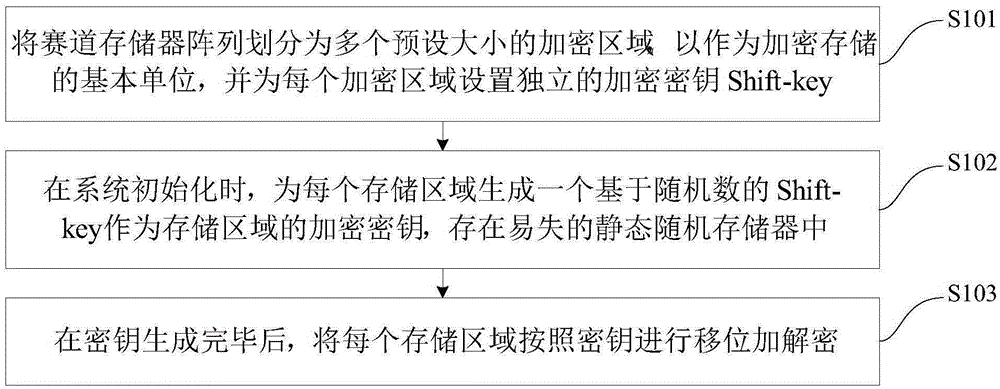
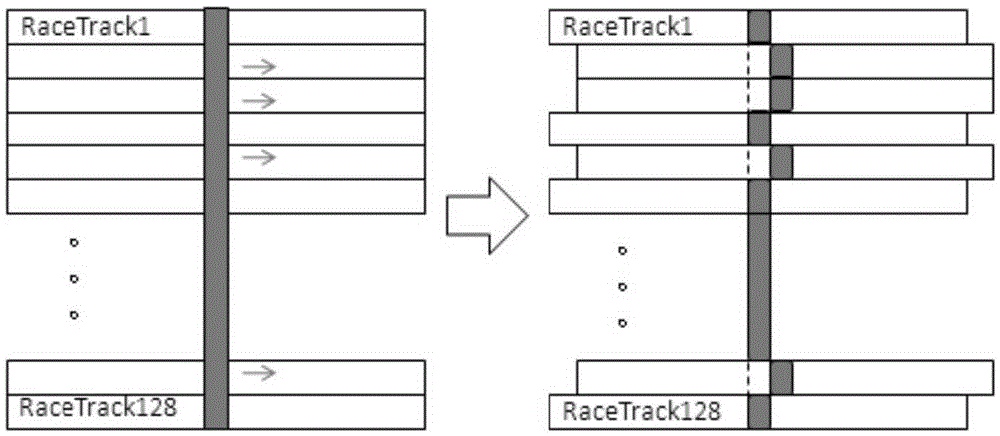
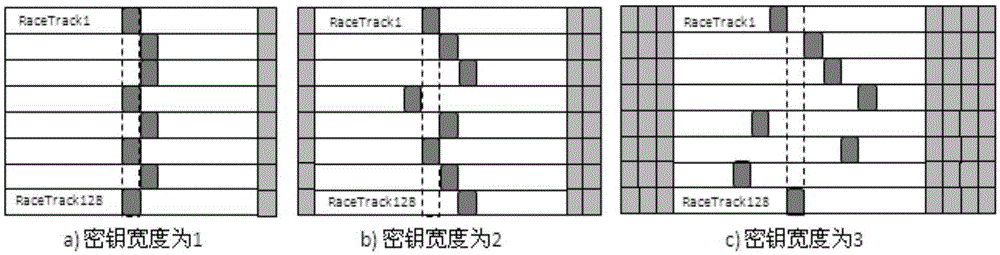
- By dividing the track memory array into multiple encryption areas of preset size, setting an independent encryption key Shift-key, and generating a random number-based Shift-key for each storage area during system initialization, there is a volatile In static random access memory, the shift characteristics of track memory are used for data encryption and decryption.

Array architecture and operation for magnetic racetrack memory
PatentInactiveUS20110051490A1
Innovation
- A high-density memory system comprising an array of Magnetic Racetrack Memory structures with associated sensing and decoder devices, allowing for bit read and storage operations by forming and advancing magnetic domains along the racetrack, enabling efficient storage and retrieval of data bits.


Regulatory Framework for Blockchain Data Protection
The regulatory landscape for blockchain data protection presents a complex framework that directly impacts the implementation of advanced storage technologies like racetrack memory in blockchain systems. Current regulations primarily focus on data privacy, cross-border data transfers, and the immutable nature of blockchain records, creating both opportunities and constraints for innovative storage solutions.
The General Data Protection Regulation (GDPR) in Europe establishes stringent requirements for data processing and storage, including the controversial "right to be forgotten" which conflicts with blockchain's immutable characteristics. This regulation mandates that organizations demonstrate technical and organizational measures to ensure data protection by design and by default. For racetrack memory implementations in blockchain systems, these requirements necessitate careful consideration of data encryption, access controls, and potential data modification capabilities.
In the United States, sector-specific regulations such as the Health Insurance Portability and Accountability Act (HIPAA) for healthcare data and the Gramm-Leach-Bliley Act for financial services impose additional constraints on blockchain data storage. These frameworks require specific security measures, audit trails, and data retention policies that must be compatible with racetrack memory's operational characteristics and performance parameters.
Emerging regulatory frameworks in Asia-Pacific regions, including China's Cybersecurity Law and Singapore's Personal Data Protection Act, emphasize data localization requirements and cross-border transfer restrictions. These regulations impact the geographical distribution of blockchain nodes and storage systems, potentially affecting the deployment strategies for racetrack memory-based solutions.
The regulatory uncertainty surrounding blockchain technology creates challenges for long-term technology adoption. Many jurisdictions are developing blockchain-specific regulations that may impose new requirements on data storage technologies, including energy efficiency standards, data recovery capabilities, and compliance reporting mechanisms that could influence racetrack memory implementation decisions.
Financial regulators worldwide are increasingly focusing on blockchain applications in banking and cryptocurrency sectors, establishing frameworks that require enhanced security measures, transaction monitoring, and data retention capabilities. These regulatory developments create both compliance obligations and market opportunities for advanced storage technologies that can meet stringent security and performance requirements while maintaining regulatory compliance.
The General Data Protection Regulation (GDPR) in Europe establishes stringent requirements for data processing and storage, including the controversial "right to be forgotten" which conflicts with blockchain's immutable characteristics. This regulation mandates that organizations demonstrate technical and organizational measures to ensure data protection by design and by default. For racetrack memory implementations in blockchain systems, these requirements necessitate careful consideration of data encryption, access controls, and potential data modification capabilities.
In the United States, sector-specific regulations such as the Health Insurance Portability and Accountability Act (HIPAA) for healthcare data and the Gramm-Leach-Bliley Act for financial services impose additional constraints on blockchain data storage. These frameworks require specific security measures, audit trails, and data retention policies that must be compatible with racetrack memory's operational characteristics and performance parameters.
Emerging regulatory frameworks in Asia-Pacific regions, including China's Cybersecurity Law and Singapore's Personal Data Protection Act, emphasize data localization requirements and cross-border transfer restrictions. These regulations impact the geographical distribution of blockchain nodes and storage systems, potentially affecting the deployment strategies for racetrack memory-based solutions.
The regulatory uncertainty surrounding blockchain technology creates challenges for long-term technology adoption. Many jurisdictions are developing blockchain-specific regulations that may impose new requirements on data storage technologies, including energy efficiency standards, data recovery capabilities, and compliance reporting mechanisms that could influence racetrack memory implementation decisions.
Financial regulators worldwide are increasingly focusing on blockchain applications in banking and cryptocurrency sectors, establishing frameworks that require enhanced security measures, transaction monitoring, and data retention capabilities. These regulatory developments create both compliance obligations and market opportunities for advanced storage technologies that can meet stringent security and performance requirements while maintaining regulatory compliance.
Energy Efficiency Considerations in Blockchain Storage
Energy efficiency represents a critical consideration when evaluating racetrack memory for blockchain data retention applications. Traditional blockchain storage mechanisms consume substantial power through continuous read-write operations and data verification processes. Racetrack memory technology offers significant advantages in this domain due to its non-volatile nature and reduced power requirements for data persistence.
The fundamental energy efficiency of racetrack memory stems from its magnetic domain wall manipulation mechanism, which requires minimal power for data storage operations compared to conventional DRAM or flash memory systems. Unlike traditional memory technologies that demand constant power to maintain data integrity, racetrack memory retains information without continuous energy input, making it particularly suitable for blockchain applications where data permanence is paramount.
Power consumption analysis reveals that racetrack memory can achieve up to 100 times lower standby power compared to DRAM while maintaining comparable access speeds. This characteristic becomes especially valuable in blockchain networks where nodes must maintain continuous operation while minimizing operational costs. The reduced energy footprint directly translates to lower infrastructure costs and improved sustainability metrics for blockchain deployments.
Dynamic power consumption during blockchain operations presents another optimization opportunity. Racetrack memory's ability to perform in-place data manipulation reduces the energy overhead associated with data movement between storage hierarchies. This efficiency gain becomes amplified in blockchain scenarios involving frequent cryptographic operations and merkle tree updates, where traditional storage systems incur significant energy penalties.
Thermal management considerations further enhance the energy efficiency proposition. Racetrack memory operates effectively across wider temperature ranges while generating less heat during operation. This characteristic reduces cooling requirements in data centers hosting blockchain infrastructure, contributing to overall system energy efficiency and operational cost reduction.
The scalability implications of energy efficiency become particularly relevant as blockchain networks expand. Racetrack memory's linear scaling of power consumption with capacity contrasts favorably with the exponential power growth patterns observed in some traditional storage technologies, making it an attractive solution for large-scale blockchain deployments requiring extensive data retention capabilities.
The fundamental energy efficiency of racetrack memory stems from its magnetic domain wall manipulation mechanism, which requires minimal power for data storage operations compared to conventional DRAM or flash memory systems. Unlike traditional memory technologies that demand constant power to maintain data integrity, racetrack memory retains information without continuous energy input, making it particularly suitable for blockchain applications where data permanence is paramount.
Power consumption analysis reveals that racetrack memory can achieve up to 100 times lower standby power compared to DRAM while maintaining comparable access speeds. This characteristic becomes especially valuable in blockchain networks where nodes must maintain continuous operation while minimizing operational costs. The reduced energy footprint directly translates to lower infrastructure costs and improved sustainability metrics for blockchain deployments.
Dynamic power consumption during blockchain operations presents another optimization opportunity. Racetrack memory's ability to perform in-place data manipulation reduces the energy overhead associated with data movement between storage hierarchies. This efficiency gain becomes amplified in blockchain scenarios involving frequent cryptographic operations and merkle tree updates, where traditional storage systems incur significant energy penalties.
Thermal management considerations further enhance the energy efficiency proposition. Racetrack memory operates effectively across wider temperature ranges while generating less heat during operation. This characteristic reduces cooling requirements in data centers hosting blockchain infrastructure, contributing to overall system energy efficiency and operational cost reduction.
The scalability implications of energy efficiency become particularly relevant as blockchain networks expand. Racetrack memory's linear scaling of power consumption with capacity contrasts favorably with the exponential power growth patterns observed in some traditional storage technologies, making it an attractive solution for large-scale blockchain deployments requiring extensive data retention capabilities.
Unlock deeper insights with Patsnap Eureka Quick Research — get a full tech report to explore trends and direct your research. Try now!
Generate Your Research Report Instantly with AI Agent
Supercharge your innovation with Patsnap Eureka AI Agent Platform!