

Feedback Linearization for Optical Systems: Achieving Clarity
MAR 27, 20269 MIN READ
Generate Your Research Report Instantly with AI Agent
PatSnap Eureka helps you evaluate technical feasibility & market potential.
Optical Feedback Linearization Background and Objectives
Optical systems have undergone remarkable evolution since the inception of basic lens-based instruments centuries ago. From simple magnifying glasses to sophisticated adaptive optics systems in modern telescopes, the pursuit of optical clarity has driven continuous innovation. The fundamental challenge has consistently been managing and correcting various forms of optical aberrations and distortions that degrade image quality and system performance.
Traditional optical systems relied primarily on passive correction methods, utilizing carefully designed lens combinations and mechanical adjustments to minimize aberrations. However, these approaches proved insufficient for applications requiring extreme precision or operating under dynamic conditions. The emergence of active optical control systems in the late 20th century marked a paradigm shift, introducing real-time correction capabilities through deformable mirrors and adaptive elements.
Feedback linearization represents a sophisticated control theory approach that has found increasing application in optical systems over the past two decades. This methodology addresses the inherent nonlinearities present in optical systems, which arise from factors such as atmospheric turbulence, thermal effects, mechanical vibrations, and component aging. Unlike conventional linear control methods, feedback linearization transforms nonlinear system dynamics into equivalent linear forms, enabling more precise and robust control.
The primary objective of implementing feedback linearization in optical systems centers on achieving unprecedented levels of optical clarity and stability. This involves real-time compensation for dynamic disturbances while maintaining optimal system performance across varying operational conditions. The approach aims to eliminate or significantly reduce wavefront errors, pointing instabilities, and focus variations that traditionally compromise optical system effectiveness.
Contemporary applications span diverse fields including astronomical observation, laser communication systems, high-precision manufacturing, medical imaging, and defense applications. Each domain presents unique challenges requiring tailored feedback linearization strategies. For instance, ground-based telescopes must contend with atmospheric turbulence, while space-based systems face thermal cycling and micro-vibration issues.
The strategic importance of this technology lies in its potential to unlock new capabilities in optical system performance, enabling applications previously considered technically unfeasible and establishing competitive advantages in precision-dependent industries.
Traditional optical systems relied primarily on passive correction methods, utilizing carefully designed lens combinations and mechanical adjustments to minimize aberrations. However, these approaches proved insufficient for applications requiring extreme precision or operating under dynamic conditions. The emergence of active optical control systems in the late 20th century marked a paradigm shift, introducing real-time correction capabilities through deformable mirrors and adaptive elements.
Feedback linearization represents a sophisticated control theory approach that has found increasing application in optical systems over the past two decades. This methodology addresses the inherent nonlinearities present in optical systems, which arise from factors such as atmospheric turbulence, thermal effects, mechanical vibrations, and component aging. Unlike conventional linear control methods, feedback linearization transforms nonlinear system dynamics into equivalent linear forms, enabling more precise and robust control.
The primary objective of implementing feedback linearization in optical systems centers on achieving unprecedented levels of optical clarity and stability. This involves real-time compensation for dynamic disturbances while maintaining optimal system performance across varying operational conditions. The approach aims to eliminate or significantly reduce wavefront errors, pointing instabilities, and focus variations that traditionally compromise optical system effectiveness.
Contemporary applications span diverse fields including astronomical observation, laser communication systems, high-precision manufacturing, medical imaging, and defense applications. Each domain presents unique challenges requiring tailored feedback linearization strategies. For instance, ground-based telescopes must contend with atmospheric turbulence, while space-based systems face thermal cycling and micro-vibration issues.
The strategic importance of this technology lies in its potential to unlock new capabilities in optical system performance, enabling applications previously considered technically unfeasible and establishing competitive advantages in precision-dependent industries.
Market Demand for High-Clarity Optical Systems
The global optical systems market is experiencing unprecedented growth driven by the increasing demand for high-precision imaging and measurement applications across multiple industries. Traditional optical systems face significant limitations in achieving optimal clarity due to nonlinear distortions, aberrations, and environmental factors that degrade image quality and system performance.
Healthcare and medical imaging sectors represent one of the most critical demand drivers for high-clarity optical systems. Advanced surgical microscopes, endoscopic equipment, and diagnostic imaging devices require exceptional optical precision to enable accurate medical procedures and diagnoses. The growing aging population and increasing prevalence of chronic diseases are fueling investments in sophisticated medical optical technologies that can deliver superior image clarity and resolution.
The aerospace and defense industries constitute another major market segment demanding ultra-high clarity optical systems. Satellite imaging, reconnaissance systems, surveillance equipment, and precision targeting systems require optical solutions capable of maintaining clarity under extreme environmental conditions. Military applications particularly emphasize the need for adaptive optical systems that can compensate for atmospheric disturbances and mechanical vibrations in real-time.
Manufacturing and industrial automation sectors are increasingly adopting high-clarity optical systems for quality control, precision measurement, and automated inspection processes. Machine vision systems, coordinate measuring machines, and optical metrology equipment require exceptional clarity to detect microscopic defects and ensure product quality standards. The Industry 4.0 revolution is accelerating demand for intelligent optical systems that can adapt to varying operational conditions.
Consumer electronics and automotive industries are driving demand for compact, high-performance optical systems in smartphones, cameras, autonomous vehicles, and advanced driver assistance systems. These applications require optical solutions that can maintain clarity while operating in challenging environments with varying lighting conditions, temperatures, and mechanical stresses.
Scientific research and academic institutions represent a specialized but significant market segment requiring ultra-precise optical systems for microscopy, spectroscopy, and astronomical observations. These applications demand the highest levels of optical clarity and stability for accurate scientific measurements and discoveries.
The market trend indicates a shift toward intelligent optical systems that can automatically adjust and optimize performance parameters to maintain optimal clarity under varying conditions, creating substantial opportunities for feedback linearization technologies in optical system design.
Healthcare and medical imaging sectors represent one of the most critical demand drivers for high-clarity optical systems. Advanced surgical microscopes, endoscopic equipment, and diagnostic imaging devices require exceptional optical precision to enable accurate medical procedures and diagnoses. The growing aging population and increasing prevalence of chronic diseases are fueling investments in sophisticated medical optical technologies that can deliver superior image clarity and resolution.
The aerospace and defense industries constitute another major market segment demanding ultra-high clarity optical systems. Satellite imaging, reconnaissance systems, surveillance equipment, and precision targeting systems require optical solutions capable of maintaining clarity under extreme environmental conditions. Military applications particularly emphasize the need for adaptive optical systems that can compensate for atmospheric disturbances and mechanical vibrations in real-time.
Manufacturing and industrial automation sectors are increasingly adopting high-clarity optical systems for quality control, precision measurement, and automated inspection processes. Machine vision systems, coordinate measuring machines, and optical metrology equipment require exceptional clarity to detect microscopic defects and ensure product quality standards. The Industry 4.0 revolution is accelerating demand for intelligent optical systems that can adapt to varying operational conditions.
Consumer electronics and automotive industries are driving demand for compact, high-performance optical systems in smartphones, cameras, autonomous vehicles, and advanced driver assistance systems. These applications require optical solutions that can maintain clarity while operating in challenging environments with varying lighting conditions, temperatures, and mechanical stresses.
Scientific research and academic institutions represent a specialized but significant market segment requiring ultra-precise optical systems for microscopy, spectroscopy, and astronomical observations. These applications demand the highest levels of optical clarity and stability for accurate scientific measurements and discoveries.
The market trend indicates a shift toward intelligent optical systems that can automatically adjust and optimize performance parameters to maintain optimal clarity under varying conditions, creating substantial opportunities for feedback linearization technologies in optical system design.
Current Nonlinearity Challenges in Optical Systems
Optical systems face significant nonlinearity challenges that fundamentally limit their performance and clarity. These nonlinearities manifest across multiple domains, creating complex interactions that degrade system output quality and introduce unwanted distortions. The primary sources of nonlinearity include material properties, geometric aberrations, and environmental factors that collectively compromise the linear relationship between input and output signals.
Material-induced nonlinearities represent one of the most pervasive challenges in optical systems. Refractive index variations caused by temperature fluctuations, mechanical stress, and electromagnetic field interactions create unpredictable optical path changes. These variations are particularly problematic in high-precision applications where even minute deviations can significantly impact system performance. Additionally, chromatic dispersion effects introduce wavelength-dependent nonlinearities that become increasingly severe in broadband optical systems.
Geometric aberrations constitute another critical category of nonlinearity challenges. Spherical aberration, coma, astigmatism, and field curvature create position-dependent distortions that vary nonlinearly across the optical field. These aberrations become more pronounced at larger apertures and field angles, creating complex spatial dependencies that traditional linear correction methods cannot adequately address. The coupling between different aberration types further complicates the correction process.
Thermal effects introduce time-varying nonlinearities that pose significant challenges for system stability. Temperature gradients within optical components create refractive index variations that change dynamically with operating conditions. These thermal nonlinearities are particularly problematic in high-power laser systems and space-based applications where temperature control is limited. The thermal time constants often create delayed responses that complicate real-time correction strategies.
Mechanical vibrations and structural deformations introduce additional nonlinear disturbances that affect optical alignment and surface quality. These perturbations often exhibit complex frequency dependencies and can couple with other system nonlinearities to create unpredictable behavior patterns. The random nature of many mechanical disturbances makes them particularly challenging to model and compensate using traditional linear control approaches.
Environmental factors such as atmospheric turbulence, humidity variations, and electromagnetic interference create external nonlinear disturbances that further degrade system performance. These factors are often beyond direct system control but significantly impact optical clarity and stability. The stochastic nature of environmental disturbances requires adaptive correction strategies that can respond to rapidly changing conditions while maintaining system stability and performance.
Material-induced nonlinearities represent one of the most pervasive challenges in optical systems. Refractive index variations caused by temperature fluctuations, mechanical stress, and electromagnetic field interactions create unpredictable optical path changes. These variations are particularly problematic in high-precision applications where even minute deviations can significantly impact system performance. Additionally, chromatic dispersion effects introduce wavelength-dependent nonlinearities that become increasingly severe in broadband optical systems.
Geometric aberrations constitute another critical category of nonlinearity challenges. Spherical aberration, coma, astigmatism, and field curvature create position-dependent distortions that vary nonlinearly across the optical field. These aberrations become more pronounced at larger apertures and field angles, creating complex spatial dependencies that traditional linear correction methods cannot adequately address. The coupling between different aberration types further complicates the correction process.
Thermal effects introduce time-varying nonlinearities that pose significant challenges for system stability. Temperature gradients within optical components create refractive index variations that change dynamically with operating conditions. These thermal nonlinearities are particularly problematic in high-power laser systems and space-based applications where temperature control is limited. The thermal time constants often create delayed responses that complicate real-time correction strategies.
Mechanical vibrations and structural deformations introduce additional nonlinear disturbances that affect optical alignment and surface quality. These perturbations often exhibit complex frequency dependencies and can couple with other system nonlinearities to create unpredictable behavior patterns. The random nature of many mechanical disturbances makes them particularly challenging to model and compensate using traditional linear control approaches.
Environmental factors such as atmospheric turbulence, humidity variations, and electromagnetic interference create external nonlinear disturbances that further degrade system performance. These factors are often beyond direct system control but significantly impact optical clarity and stability. The stochastic nature of environmental disturbances requires adaptive correction strategies that can respond to rapidly changing conditions while maintaining system stability and performance.
Existing Feedback Linearization Solutions for Optics
01 Feedback linearization control for motor drive systems
Feedback linearization techniques are applied to motor control systems to improve dynamic performance and stability. The method transforms nonlinear motor dynamics into linear systems through coordinate transformation and state feedback, enabling precise control of torque and speed. This approach compensates for system nonlinearities and enhances robustness against parameter variations and disturbances in electric motor applications.- Feedback linearization control for motor drive systems: Feedback linearization techniques are applied to motor control systems to improve dynamic performance and stability. The method transforms nonlinear motor dynamics into linear systems through coordinate transformation and state feedback, enabling precise control of torque and speed. This approach compensates for system nonlinearities and enhances robustness against parameter variations and disturbances in electric motor applications.
- Feedback linearization for power conversion and inverter control: Power electronic converters and inverters utilize feedback linearization to achieve improved voltage and current regulation. The technique linearizes the inherently nonlinear behavior of switching converters, enabling better transient response and steady-state accuracy. Applications include grid-connected inverters, DC-DC converters, and active power filters where precise output control is essential.
- Nonlinear control with feedback linearization for robotic systems: Robotic manipulators and mechanical systems employ feedback linearization to handle complex nonlinear dynamics and achieve accurate trajectory tracking. The method cancels nonlinear terms in the system equations through appropriate control inputs, resulting in simplified linear dynamics. This enables precise position and velocity control in multi-degree-of-freedom robotic applications.
- Adaptive feedback linearization with parameter estimation: Adaptive control strategies combine feedback linearization with online parameter estimation to handle system uncertainties and time-varying parameters. The approach adjusts control parameters in real-time based on system identification algorithms, maintaining linearization accuracy despite model uncertainties. This technique is particularly useful when exact system parameters are unknown or change during operation.
- Observer-based feedback linearization for state estimation: State observers are integrated with feedback linearization controllers to estimate unmeasured system states from available sensor outputs. The observer reconstructs full state information required for linearization when direct measurement is impractical or costly. This combination enables implementation of feedback linearization in systems with limited sensing capabilities while maintaining control performance.
02 Feedback linearization for power conversion and inverter control
Power electronic converters and inverters utilize feedback linearization to achieve improved voltage and current regulation. The technique linearizes the inherent nonlinear behavior of switching converters, enabling better transient response and steady-state accuracy. Applications include grid-connected inverters, DC-DC converters, and active power filters where precise output control is required despite load variations and input disturbances.Expand Specific Solutions03 Nonlinear control with feedback linearization for robotic systems
Robotic manipulators and autonomous systems employ feedback linearization to handle complex nonlinear dynamics and achieve accurate trajectory tracking. The method cancels nonlinear terms in the system equations through appropriate control inputs, resulting in simplified linear dynamics that are easier to control. This enables precise positioning and motion control in industrial robots, mobile robots, and multi-degree-of-freedom mechanical systems.Expand Specific Solutions04 Adaptive feedback linearization with parameter estimation
Adaptive control schemes combine feedback linearization with online parameter estimation to handle system uncertainties and time-varying parameters. The approach continuously updates controller parameters based on measured system responses, maintaining linearization accuracy even when system characteristics change. This is particularly useful in applications where exact system models are unavailable or parameters drift over time due to wear, temperature changes, or other environmental factors.Expand Specific Solutions05 Observer-based feedback linearization for state estimation
State observers are integrated with feedback linearization controllers to estimate unmeasured system states from available sensor outputs. This combination enables implementation of feedback linearization when not all states are directly measurable, reducing sensor requirements and system cost. The observer reconstructs internal states while the linearizing controller uses these estimates to achieve desired system performance, applicable in various control systems where full state measurement is impractical.Expand Specific Solutions
Key Players in Optical Control and Linearization
The feedback linearization technology for optical systems represents a mature field within the broader optical control systems market, which has reached a substantial scale of several billion dollars globally. The industry is currently in a consolidation phase, characterized by established players leveraging advanced control algorithms to enhance optical clarity and precision. Technology maturity varies significantly across market segments, with companies like Nikon Corp., Samsung Electronics, and Seiko Epson demonstrating high-level implementation in consumer and industrial applications, while specialized firms such as Lumentum Operations, Teledyne Scientific & Imaging, and Mitutoyo Corp. focus on precision optical measurement and control systems. The competitive landscape shows strong presence from Japanese manufacturers (Nikon, Seiko Epson, Mitutoyo, OMRON) and diversified technology giants (Samsung, Siemens, Lockheed Martin), indicating both specialized expertise and broad technological integration capabilities across different application domains.
Nikon Corp.
Technical Solution: Nikon implements advanced feedback linearization techniques in their high-precision optical systems, particularly in semiconductor lithography equipment and camera autofocus systems. Their approach utilizes real-time wavefront sensing combined with adaptive optics control loops to compensate for optical aberrations and thermal distortions. The system employs sophisticated algorithms that continuously monitor optical performance parameters and apply corrective feedback to maintain optimal image quality across varying environmental conditions and operational states.
Strengths: Industry-leading precision in optical correction, extensive experience in high-end optical systems. Weaknesses: High cost implementation, complex system integration requirements.
Samsung Electronics Co., Ltd.
Technical Solution: Samsung applies feedback linearization in their display technologies and smartphone camera systems, focusing on dynamic optical correction for OLED displays and computational photography. Their solution integrates machine learning algorithms with traditional feedback control to optimize display uniformity and camera image stabilization. The system continuously adjusts optical parameters based on real-time performance metrics, enabling superior visual quality in consumer electronics applications with adaptive brightness and color correction capabilities.
Strengths: Mass production capabilities, integration with consumer electronics, cost-effective solutions. Weaknesses: Limited to consumer-grade applications, less precision compared to specialized optical companies.
Core Patents in Optical Feedback Control Methods
Linearized Optical Transmitter Using Feedback Control
PatentInactiveUS20040218931A1
Innovation
- A linearized optical transmitter is developed, incorporating an electro-absorption modulator (EAM) and a feedback circuit that actively measures and minimizes distortion by adjusting the modulator's bias point, reducing the complexity and dynamic range requirements of predistortion circuitry and eliminating in-band residual signals.


Systems and methods for real-time compensation for non-linearity in optical sources for analog signal transmission
PatentActiveUS7505496B2
Innovation
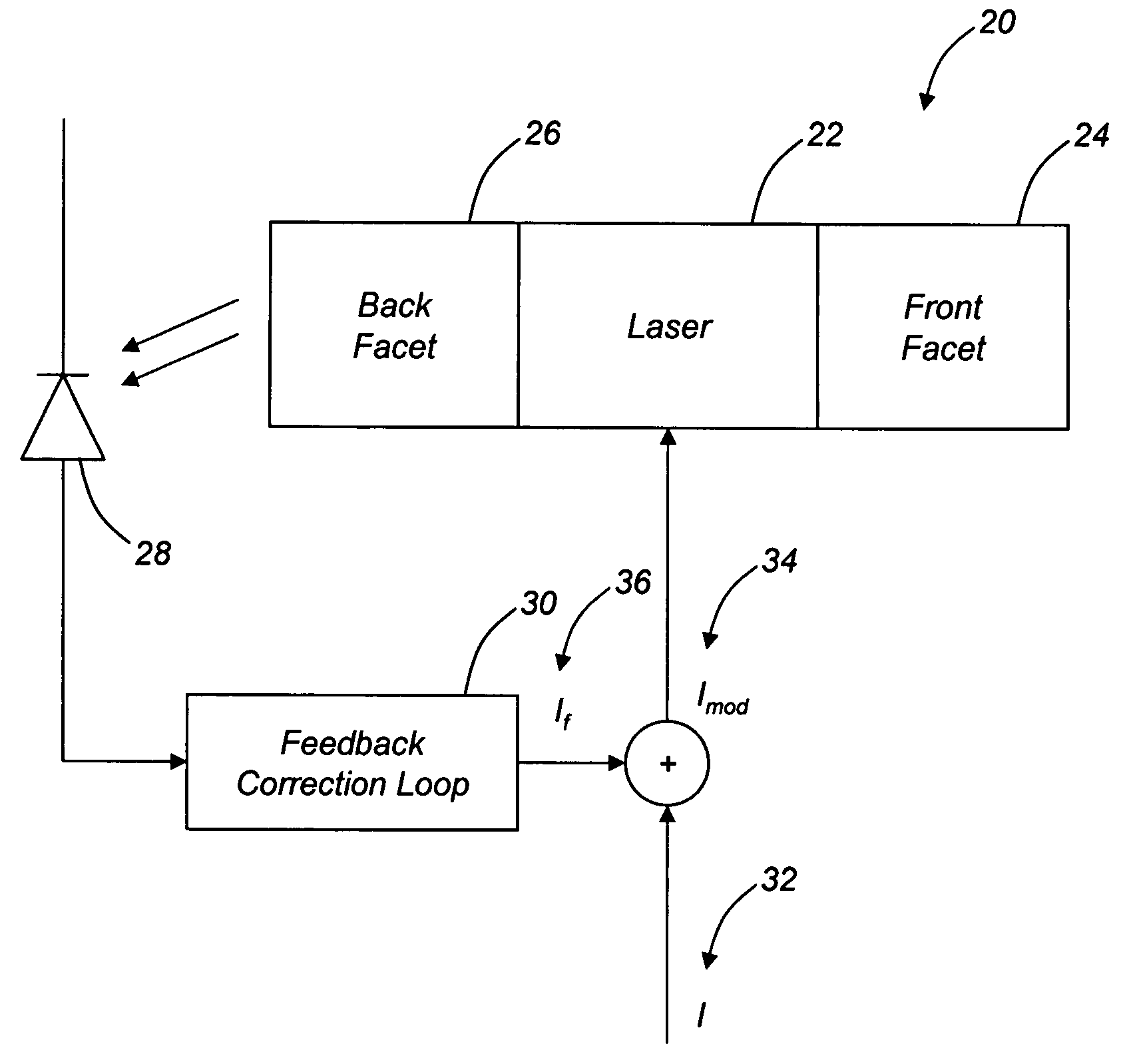
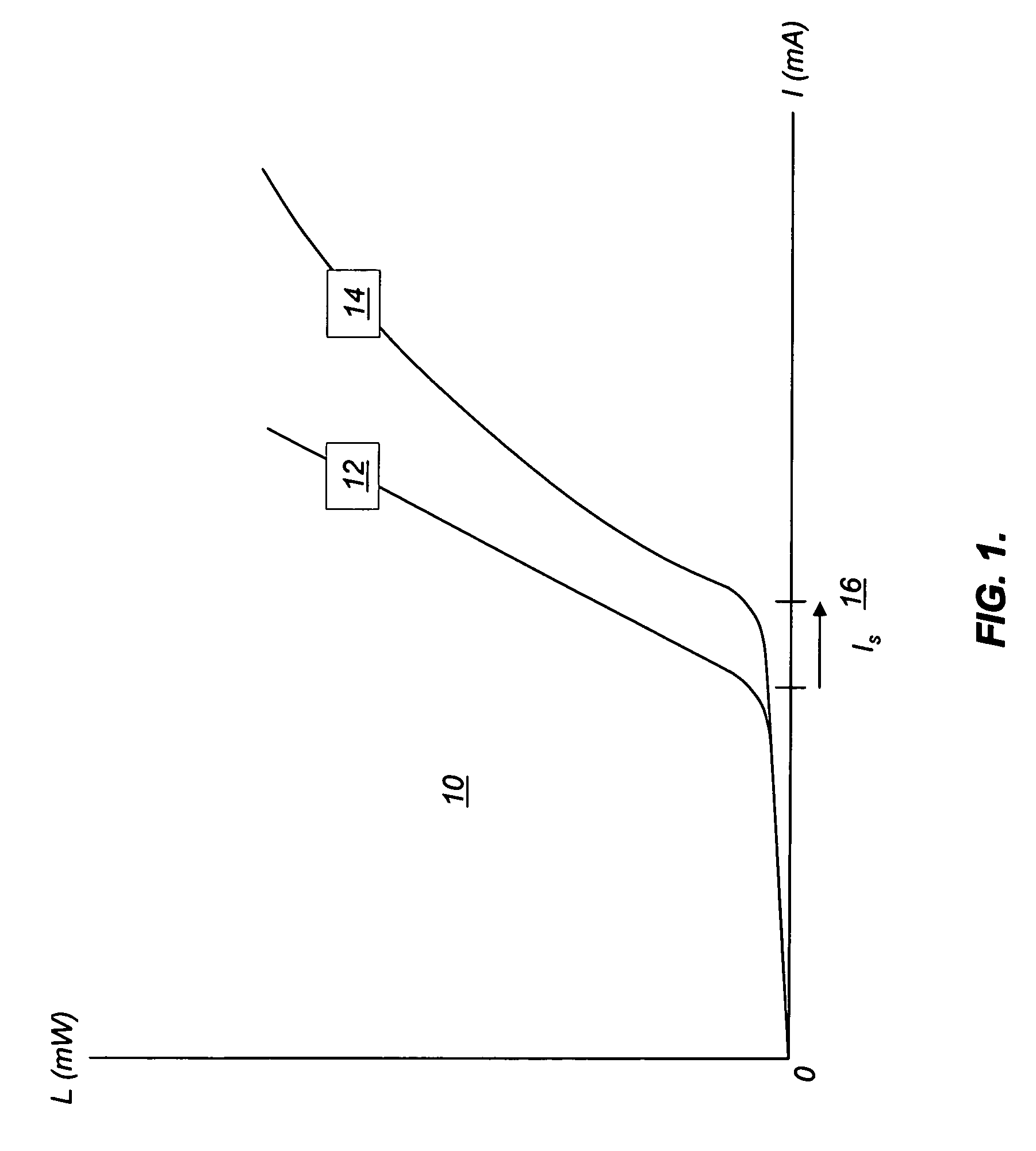
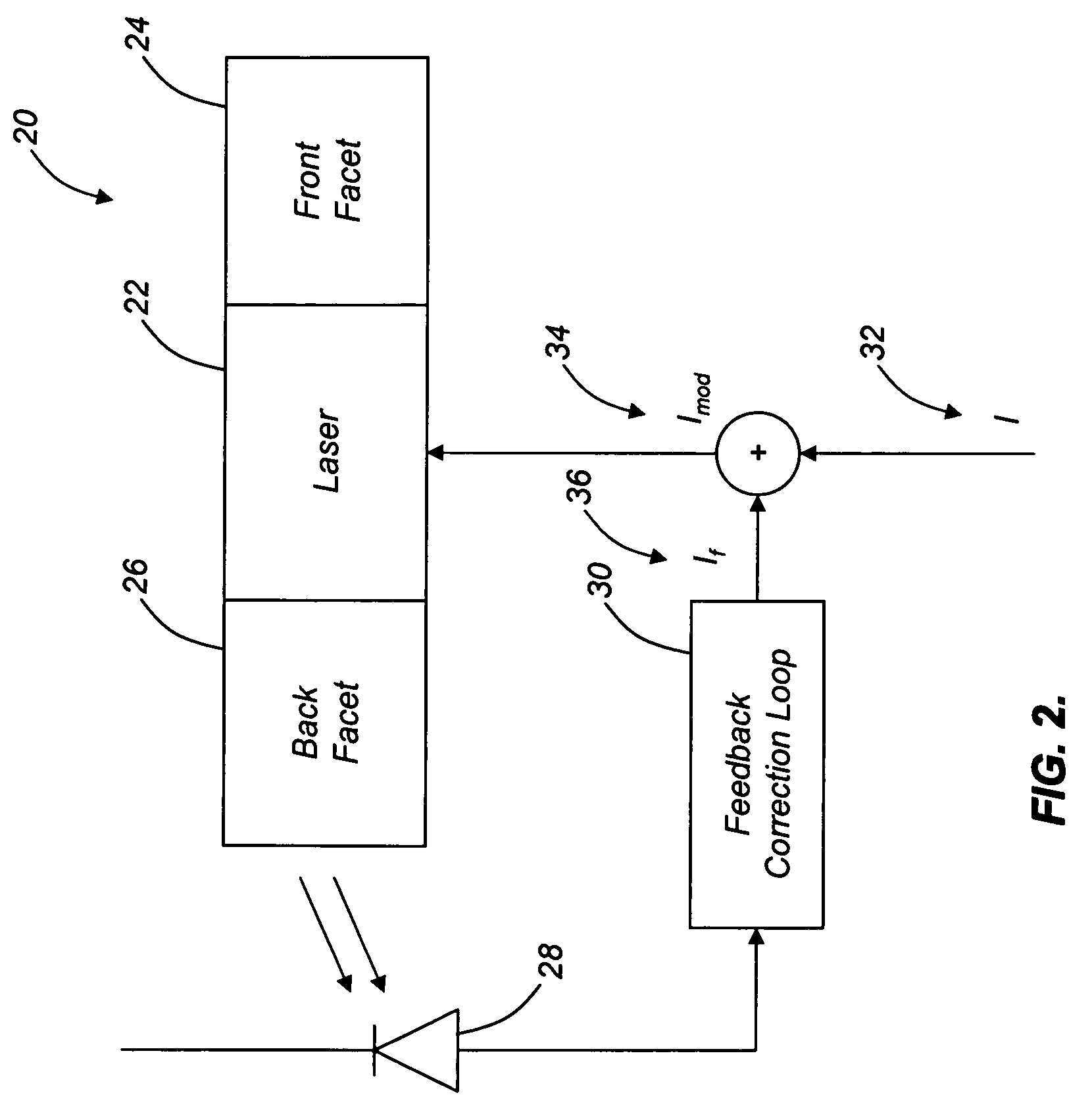
- A compact analog directly modulated laser configuration using electrical feedback to compensate for non-linearity in real-time, incorporating a large bandwidth photo-detector at the back facet to monitor output power and provide feedback for linearization, thereby eliminating the need for regular laser replacement.

Performance Standards for Optical System Clarity
Establishing comprehensive performance standards for optical system clarity requires a multi-dimensional framework that addresses both quantitative metrics and qualitative assessment criteria. These standards serve as benchmarks for evaluating the effectiveness of feedback linearization techniques in achieving optimal optical performance across diverse applications.
The primary quantitative metrics include modulation transfer function (MTF) measurements, which quantify the system's ability to reproduce spatial frequencies with high fidelity. Industry standards typically require MTF values exceeding 0.8 at Nyquist frequency for high-performance optical systems. Point spread function (PSF) analysis provides another critical metric, measuring the system's response to point sources and indicating aberration correction effectiveness.
Wavefront error specifications constitute fundamental clarity standards, with root-mean-square (RMS) wavefront errors typically maintained below λ/14 for diffraction-limited performance. Advanced systems implementing feedback linearization often achieve λ/20 or better, demonstrating superior aberration correction capabilities. Strehl ratio measurements complement wavefront analysis, with values above 0.8 indicating excellent optical quality.
Dynamic performance standards address temporal stability and response characteristics. Bandwidth requirements vary by application, with adaptive optics systems demanding correction frequencies from 100Hz to several kilohertz. Settling time specifications ensure rapid convergence to optimal correction states, typically within 1-2 milliseconds for real-time applications.
Environmental robustness standards encompass temperature stability, vibration resistance, and atmospheric turbulence compensation. Systems must maintain specified performance across operational temperature ranges while compensating for thermal-induced aberrations. Vibration isolation requirements ensure stable operation in mobile or industrial environments.
Application-specific standards vary significantly across domains. Astronomical telescopes prioritize long-exposure stability and faint object detection capabilities. Medical imaging systems emphasize resolution consistency and patient safety considerations. Industrial inspection applications focus on measurement accuracy and repeatability under varying illumination conditions.
Calibration and verification protocols establish standardized testing procedures for performance validation. These include laboratory-based measurements using artificial targets and field testing under operational conditions. Regular performance monitoring ensures sustained compliance with established clarity standards throughout system lifecycle.
The primary quantitative metrics include modulation transfer function (MTF) measurements, which quantify the system's ability to reproduce spatial frequencies with high fidelity. Industry standards typically require MTF values exceeding 0.8 at Nyquist frequency for high-performance optical systems. Point spread function (PSF) analysis provides another critical metric, measuring the system's response to point sources and indicating aberration correction effectiveness.
Wavefront error specifications constitute fundamental clarity standards, with root-mean-square (RMS) wavefront errors typically maintained below λ/14 for diffraction-limited performance. Advanced systems implementing feedback linearization often achieve λ/20 or better, demonstrating superior aberration correction capabilities. Strehl ratio measurements complement wavefront analysis, with values above 0.8 indicating excellent optical quality.
Dynamic performance standards address temporal stability and response characteristics. Bandwidth requirements vary by application, with adaptive optics systems demanding correction frequencies from 100Hz to several kilohertz. Settling time specifications ensure rapid convergence to optimal correction states, typically within 1-2 milliseconds for real-time applications.
Environmental robustness standards encompass temperature stability, vibration resistance, and atmospheric turbulence compensation. Systems must maintain specified performance across operational temperature ranges while compensating for thermal-induced aberrations. Vibration isolation requirements ensure stable operation in mobile or industrial environments.
Application-specific standards vary significantly across domains. Astronomical telescopes prioritize long-exposure stability and faint object detection capabilities. Medical imaging systems emphasize resolution consistency and patient safety considerations. Industrial inspection applications focus on measurement accuracy and repeatability under varying illumination conditions.
Calibration and verification protocols establish standardized testing procedures for performance validation. These include laboratory-based measurements using artificial targets and field testing under operational conditions. Regular performance monitoring ensures sustained compliance with established clarity standards throughout system lifecycle.
Integration Challenges in Real-time Optical Control
The integration of feedback linearization techniques into real-time optical control systems presents multifaceted challenges that span computational, hardware, and algorithmic domains. These challenges fundamentally stem from the stringent timing requirements inherent in optical applications, where system responses must occur within microsecond or even nanosecond timeframes to maintain effective control performance.
Computational complexity represents the primary bottleneck in real-time implementation. Feedback linearization algorithms require continuous calculation of nonlinear transformations and Jacobian matrices, which demand substantial processing power. Traditional digital signal processors often struggle to execute these computations within the required time constraints, particularly when dealing with high-dimensional optical systems or multiple-input-multiple-output configurations.
Hardware synchronization poses another critical challenge, as optical control systems typically involve diverse components operating at different frequencies and response times. Integrating feedback linearization controllers with existing optical hardware requires careful consideration of signal propagation delays, actuator bandwidth limitations, and sensor sampling rates. The mismatch between theoretical control algorithms and physical hardware capabilities often necessitates significant design compromises.
Sensor integration complexity emerges from the need for high-speed, high-precision measurement systems capable of providing real-time feedback. Optical systems require specialized sensors such as wavefront sensors, photodiodes, or CCD arrays, each with unique interface requirements and data processing needs. The linearization algorithm must accommodate varying sensor characteristics while maintaining computational efficiency.
System stability during real-time operation presents additional concerns, as feedback linearization techniques can exhibit sensitivity to model uncertainties and external disturbances. Ensuring robust performance under varying operating conditions requires sophisticated error handling mechanisms and adaptive control strategies that can operate within real-time constraints.
Memory management and data throughput limitations further complicate integration efforts. Real-time optical control systems generate substantial data streams that must be processed, stored, and transmitted efficiently. The feedback linearization algorithms must be optimized to minimize memory usage while maintaining computational accuracy, often requiring specialized programming techniques and hardware architectures designed for high-throughput applications.
Computational complexity represents the primary bottleneck in real-time implementation. Feedback linearization algorithms require continuous calculation of nonlinear transformations and Jacobian matrices, which demand substantial processing power. Traditional digital signal processors often struggle to execute these computations within the required time constraints, particularly when dealing with high-dimensional optical systems or multiple-input-multiple-output configurations.
Hardware synchronization poses another critical challenge, as optical control systems typically involve diverse components operating at different frequencies and response times. Integrating feedback linearization controllers with existing optical hardware requires careful consideration of signal propagation delays, actuator bandwidth limitations, and sensor sampling rates. The mismatch between theoretical control algorithms and physical hardware capabilities often necessitates significant design compromises.
Sensor integration complexity emerges from the need for high-speed, high-precision measurement systems capable of providing real-time feedback. Optical systems require specialized sensors such as wavefront sensors, photodiodes, or CCD arrays, each with unique interface requirements and data processing needs. The linearization algorithm must accommodate varying sensor characteristics while maintaining computational efficiency.
System stability during real-time operation presents additional concerns, as feedback linearization techniques can exhibit sensitivity to model uncertainties and external disturbances. Ensuring robust performance under varying operating conditions requires sophisticated error handling mechanisms and adaptive control strategies that can operate within real-time constraints.
Memory management and data throughput limitations further complicate integration efforts. Real-time optical control systems generate substantial data streams that must be processed, stored, and transmitted efficiently. The feedback linearization algorithms must be optimized to minimize memory usage while maintaining computational accuracy, often requiring specialized programming techniques and hardware architectures designed for high-throughput applications.
Unlock deeper insights with PatSnap Eureka Quick Research — get a full tech report to explore trends and direct your research. Try now!
Generate Your Research Report Instantly with AI Agent
Supercharge your innovation with PatSnap Eureka AI Agent Platform!