Graph-Constrained Reasoning: Best Applications for Tech Innovation
MAR 17, 20269 MIN READ
Generate Your Research Report Instantly with AI Agent
Patsnap Eureka helps you evaluate technical feasibility & market potential.
Graph-Constrained Reasoning Background and Innovation Goals
Graph-constrained reasoning represents a paradigm shift in artificial intelligence and computational problem-solving, emerging from the intersection of graph theory, constraint satisfaction, and logical inference systems. This approach leverages the structural properties of graphs to encode domain knowledge, relationships, and constraints, enabling more sophisticated reasoning capabilities that mirror human cognitive processes. The foundational concept builds upon decades of research in knowledge representation, where graphs serve as natural abstractions for modeling complex real-world scenarios.
The evolution of graph-constrained reasoning stems from limitations observed in traditional rule-based systems and linear reasoning approaches. Early expert systems struggled with scalability and context-awareness, prompting researchers to explore graph-based representations that could capture intricate dependencies and multi-dimensional relationships. The integration of constraint programming with graph neural networks has created unprecedented opportunities for solving complex optimization problems while maintaining interpretability and logical consistency.
Current technological drivers include the exponential growth of interconnected data, the need for explainable AI systems, and the demand for robust decision-making frameworks in critical applications. Graph-constrained reasoning addresses these challenges by providing structured approaches to knowledge integration, enabling systems to reason about partial information while respecting domain-specific constraints and maintaining logical coherence throughout the inference process.
The primary innovation goals center on developing scalable algorithms that can efficiently navigate large-scale graph structures while satisfying multiple constraints simultaneously. Key objectives include enhancing reasoning accuracy through improved constraint propagation mechanisms, reducing computational complexity through advanced graph partitioning strategies, and establishing standardized frameworks for cross-domain knowledge transfer.
Strategic technical targets encompass the development of hybrid architectures that combine symbolic reasoning with neural computation, enabling systems to learn from data while maintaining logical rigor. Innovation efforts focus on creating adaptive constraint satisfaction algorithms that can dynamically adjust to changing problem contexts, supporting real-time decision-making in dynamic environments.
Long-term aspirations involve establishing graph-constrained reasoning as a foundational technology for next-generation AI systems, particularly in domains requiring high reliability and interpretability. The ultimate goal is to create reasoning frameworks that can seamlessly integrate heterogeneous knowledge sources, support collaborative problem-solving across distributed systems, and provide transparent explanations for complex decisions while maintaining computational efficiency at enterprise scale.
The evolution of graph-constrained reasoning stems from limitations observed in traditional rule-based systems and linear reasoning approaches. Early expert systems struggled with scalability and context-awareness, prompting researchers to explore graph-based representations that could capture intricate dependencies and multi-dimensional relationships. The integration of constraint programming with graph neural networks has created unprecedented opportunities for solving complex optimization problems while maintaining interpretability and logical consistency.
Current technological drivers include the exponential growth of interconnected data, the need for explainable AI systems, and the demand for robust decision-making frameworks in critical applications. Graph-constrained reasoning addresses these challenges by providing structured approaches to knowledge integration, enabling systems to reason about partial information while respecting domain-specific constraints and maintaining logical coherence throughout the inference process.
The primary innovation goals center on developing scalable algorithms that can efficiently navigate large-scale graph structures while satisfying multiple constraints simultaneously. Key objectives include enhancing reasoning accuracy through improved constraint propagation mechanisms, reducing computational complexity through advanced graph partitioning strategies, and establishing standardized frameworks for cross-domain knowledge transfer.
Strategic technical targets encompass the development of hybrid architectures that combine symbolic reasoning with neural computation, enabling systems to learn from data while maintaining logical rigor. Innovation efforts focus on creating adaptive constraint satisfaction algorithms that can dynamically adjust to changing problem contexts, supporting real-time decision-making in dynamic environments.
Long-term aspirations involve establishing graph-constrained reasoning as a foundational technology for next-generation AI systems, particularly in domains requiring high reliability and interpretability. The ultimate goal is to create reasoning frameworks that can seamlessly integrate heterogeneous knowledge sources, support collaborative problem-solving across distributed systems, and provide transparent explanations for complex decisions while maintaining computational efficiency at enterprise scale.
Market Demand for Graph-Based AI Solutions
The market demand for graph-based AI solutions is experiencing unprecedented growth across multiple industry verticals, driven by the increasing complexity of data relationships and the need for more sophisticated reasoning capabilities. Organizations are recognizing that traditional AI approaches often fall short when dealing with interconnected data structures, creating substantial opportunities for graph-constrained reasoning technologies.
Financial services represent one of the most lucrative markets for graph-based AI solutions. Banks and financial institutions are actively seeking advanced fraud detection systems that can analyze complex transaction networks and identify suspicious patterns across multiple entities. The regulatory compliance requirements in this sector further amplify demand, as institutions need to demonstrate sophisticated risk assessment capabilities that can trace relationships between various financial actors.
Healthcare and pharmaceutical industries are driving significant demand for graph-based reasoning solutions, particularly in drug discovery and personalized medicine applications. The ability to model complex biological networks, protein interactions, and patient relationship data has become critical for accelerating research and improving treatment outcomes. Medical institutions are increasingly investing in AI systems that can reason across interconnected health data while maintaining privacy and regulatory compliance.
Supply chain management across manufacturing and retail sectors presents another high-growth market segment. Companies are seeking solutions that can optimize complex multi-tier supplier networks, predict disruptions, and enhance logistics efficiency through graph-based modeling of supplier relationships, transportation networks, and inventory dependencies.
The technology sector itself represents a substantial market, with companies requiring graph-based solutions for recommendation systems, knowledge graphs, and social network analysis. The growing emphasis on explainable AI is particularly driving demand for graph-constrained reasoning systems that can provide transparent decision-making processes.
Enterprise knowledge management is emerging as a critical application area, with organizations seeking to leverage their vast data repositories through intelligent graph-based systems that can understand and reason about complex business relationships, processes, and organizational structures.
Financial services represent one of the most lucrative markets for graph-based AI solutions. Banks and financial institutions are actively seeking advanced fraud detection systems that can analyze complex transaction networks and identify suspicious patterns across multiple entities. The regulatory compliance requirements in this sector further amplify demand, as institutions need to demonstrate sophisticated risk assessment capabilities that can trace relationships between various financial actors.
Healthcare and pharmaceutical industries are driving significant demand for graph-based reasoning solutions, particularly in drug discovery and personalized medicine applications. The ability to model complex biological networks, protein interactions, and patient relationship data has become critical for accelerating research and improving treatment outcomes. Medical institutions are increasingly investing in AI systems that can reason across interconnected health data while maintaining privacy and regulatory compliance.
Supply chain management across manufacturing and retail sectors presents another high-growth market segment. Companies are seeking solutions that can optimize complex multi-tier supplier networks, predict disruptions, and enhance logistics efficiency through graph-based modeling of supplier relationships, transportation networks, and inventory dependencies.
The technology sector itself represents a substantial market, with companies requiring graph-based solutions for recommendation systems, knowledge graphs, and social network analysis. The growing emphasis on explainable AI is particularly driving demand for graph-constrained reasoning systems that can provide transparent decision-making processes.
Enterprise knowledge management is emerging as a critical application area, with organizations seeking to leverage their vast data repositories through intelligent graph-based systems that can understand and reason about complex business relationships, processes, and organizational structures.
Current State of Graph Neural Networks and Reasoning Challenges
Graph Neural Networks have emerged as a transformative paradigm in machine learning, demonstrating remarkable capabilities in processing structured data across diverse domains. The current landscape reveals significant progress in fundamental architectures, with Graph Convolutional Networks, Graph Attention Networks, and GraphSAGE establishing themselves as cornerstone methodologies. These frameworks have successfully addressed traditional limitations in handling non-Euclidean data structures, enabling effective representation learning on complex relational datasets.
Contemporary GNN implementations showcase impressive performance in node classification, link prediction, and graph-level tasks. Major technology companies and research institutions have deployed these systems in recommendation engines, social network analysis, and molecular property prediction. The integration of attention mechanisms and transformer architectures has further enhanced the expressive power of graph-based models, allowing for more sophisticated pattern recognition and feature extraction capabilities.
However, significant reasoning challenges persist within the current technological framework. Traditional GNNs struggle with long-range dependencies and multi-hop reasoning tasks, often exhibiting performance degradation as graph depth increases. The over-smoothing phenomenon remains a critical bottleneck, where node representations become increasingly similar across layers, limiting the model's discriminative capacity for complex reasoning scenarios.
Scalability constraints present another substantial challenge, particularly when processing large-scale graphs with millions of nodes and edges. Current memory limitations and computational complexity issues restrict the practical deployment of GNNs in real-world applications requiring extensive graph traversal and reasoning operations. The lack of standardized benchmarks for evaluating reasoning capabilities further complicates performance assessment across different methodologies.
Interpretability and explainability represent emerging concerns as GNN applications expand into critical domains such as healthcare and financial services. The black-box nature of current graph reasoning systems limits their adoption in scenarios requiring transparent decision-making processes. Additionally, the integration of symbolic reasoning with neural graph processing remains an active area of investigation, with existing approaches showing limited success in combining logical inference with learned representations.
The geographical distribution of GNN research and development reveals concentration in North American and European institutions, with emerging contributions from Asian research centers. This distribution reflects varying levels of computational infrastructure and research investment, influencing the pace of technological advancement across different regions.
Contemporary GNN implementations showcase impressive performance in node classification, link prediction, and graph-level tasks. Major technology companies and research institutions have deployed these systems in recommendation engines, social network analysis, and molecular property prediction. The integration of attention mechanisms and transformer architectures has further enhanced the expressive power of graph-based models, allowing for more sophisticated pattern recognition and feature extraction capabilities.
However, significant reasoning challenges persist within the current technological framework. Traditional GNNs struggle with long-range dependencies and multi-hop reasoning tasks, often exhibiting performance degradation as graph depth increases. The over-smoothing phenomenon remains a critical bottleneck, where node representations become increasingly similar across layers, limiting the model's discriminative capacity for complex reasoning scenarios.
Scalability constraints present another substantial challenge, particularly when processing large-scale graphs with millions of nodes and edges. Current memory limitations and computational complexity issues restrict the practical deployment of GNNs in real-world applications requiring extensive graph traversal and reasoning operations. The lack of standardized benchmarks for evaluating reasoning capabilities further complicates performance assessment across different methodologies.
Interpretability and explainability represent emerging concerns as GNN applications expand into critical domains such as healthcare and financial services. The black-box nature of current graph reasoning systems limits their adoption in scenarios requiring transparent decision-making processes. Additionally, the integration of symbolic reasoning with neural graph processing remains an active area of investigation, with existing approaches showing limited success in combining logical inference with learned representations.
The geographical distribution of GNN research and development reveals concentration in North American and European institutions, with emerging contributions from Asian research centers. This distribution reflects varying levels of computational infrastructure and research investment, influencing the pace of technological advancement across different regions.
Existing Graph-Constrained Reasoning Frameworks
01 Knowledge graph construction and reasoning methods
Methods for constructing knowledge graphs with constrained reasoning capabilities, including techniques for building graph structures that incorporate logical constraints and rules. These approaches enable systematic organization of entities and relationships while maintaining consistency through constraint enforcement during graph construction and updates.- Knowledge graph construction and reasoning methods: Methods for constructing knowledge graphs with constrained reasoning capabilities, including techniques for building graph structures that incorporate logical constraints and rules. These approaches enable more accurate inference and reasoning by enforcing structural and semantic constraints during graph construction and query processing.
- Graph neural networks with constraint mechanisms: Neural network architectures designed for graph-structured data that incorporate constraint mechanisms to guide the reasoning process. These models integrate constraints into the learning and inference phases, enabling the network to respect domain-specific rules and relationships while performing predictions or classifications on graph data.
- Constraint satisfaction in graph-based reasoning systems: Techniques for implementing constraint satisfaction problems within graph-based reasoning frameworks. These methods ensure that reasoning outcomes comply with predefined constraints, such as temporal, spatial, or logical restrictions, improving the reliability and validity of inferences drawn from graph structures.
- Multi-hop reasoning with graph constraints: Approaches for performing multi-hop reasoning over knowledge graphs while maintaining structural and semantic constraints. These techniques enable traversal of multiple graph edges to derive complex inferences while ensuring that intermediate and final results satisfy specified constraints and consistency requirements.
- Optimization algorithms for constrained graph reasoning: Optimization methods specifically designed for graph reasoning tasks under various constraints. These algorithms balance computational efficiency with reasoning accuracy by incorporating constraint handling mechanisms into search and inference procedures, enabling scalable solutions for large-scale graph reasoning problems.
02 Graph neural networks with constraint integration
Neural network architectures designed to perform reasoning over graph-structured data while respecting predefined constraints. These systems combine deep learning approaches with graph-based representations, allowing models to learn patterns while adhering to structural or logical constraints embedded in the graph topology.Expand Specific Solutions03 Constraint satisfaction in graph-based inference
Techniques for performing inference and reasoning tasks on graphs while satisfying multiple constraints simultaneously. These methods address optimization problems where solutions must respect graph structure limitations, resource constraints, or logical rules during the reasoning process.Expand Specific Solutions04 Multi-hop reasoning with graph constraints
Approaches for conducting multi-step reasoning across graph structures while maintaining constraint compliance at each reasoning step. These techniques enable complex query answering and inference tasks that require traversing multiple nodes and edges while respecting predefined limitations and rules.Expand Specific Solutions05 Semantic reasoning with structured graph representations
Methods for performing semantic-level reasoning using graph-based knowledge representations with embedded constraints. These systems leverage structured graph formats to encode domain knowledge and apply reasoning algorithms that respect semantic relationships and constraints to derive new insights or validate existing information.Expand Specific Solutions
Key Players in Graph AI and Reasoning Systems
The graph-constrained reasoning technology landscape represents an emerging field in early development stages, characterized by significant research activity but limited commercial maturity. The market remains nascent with substantial growth potential as organizations increasingly recognize the value of structured reasoning approaches for complex problem-solving. Technology maturity varies considerably across players, with established tech giants like IBM, Oracle, and Microsoft Technology Licensing leveraging their existing AI and data infrastructure to integrate graph-constrained reasoning capabilities into broader platforms. Specialized quantum computing companies such as D-Wave Systems are exploring novel applications, while research institutions including Tianjin University, Zhejiang University, and École Polytechnique Fédérale de Lausanne are advancing foundational algorithms. Corporate research labs like NEC Laboratories America and Mitsubishi Electric Research Laboratories are bridging academic research with practical applications, indicating a competitive landscape where traditional enterprise software providers, emerging quantum specialists, and academic institutions are collectively driving innovation in this promising but still-maturing technological domain.
International Business Machines Corp.
Technical Solution: IBM has developed advanced graph-constrained reasoning capabilities through its Watson AI platform and IBM Research initiatives. Their approach combines knowledge graphs with neural networks to enable contextual reasoning within defined graph structures. The company leverages graph neural networks (GNNs) and symbolic reasoning to process complex relationships in enterprise data, particularly for supply chain optimization, fraud detection, and regulatory compliance scenarios. IBM's graph reasoning framework incorporates constraint satisfaction algorithms that ensure logical consistency while maintaining computational efficiency. Their solution integrates with existing enterprise systems through APIs and supports real-time decision making with graph-based constraints that reflect business rules and regulatory requirements.
Strengths: Strong enterprise integration capabilities and proven scalability in complex business environments. Weaknesses: Higher implementation costs and complexity compared to simpler alternatives.
Oracle International Corp.
Technical Solution: Oracle has developed graph-constrained reasoning capabilities through Oracle Graph Database and Oracle Machine Learning platforms. Their solution combines property graph models with advanced analytics to enable reasoning within structured data relationships. Oracle's approach leverages parallel graph algorithms and in-memory processing to handle large-scale graph reasoning tasks while maintaining ACID properties and enterprise-grade security. The platform supports complex queries that incorporate business rules as graph constraints, enabling applications in financial services, healthcare, and telecommunications. Oracle's graph reasoning engine integrates with their autonomous database technology to provide self-optimizing performance and automated constraint validation for mission-critical applications.
Strengths: Enterprise-grade reliability and performance with strong database integration capabilities. Weaknesses: High licensing costs and steep learning curve for implementation teams.
Core Patents in Graph Neural Reasoning Methods
System for creating a reasoning graph and for ranking of its nodes
PatentActiveUS10503791B2
Innovation
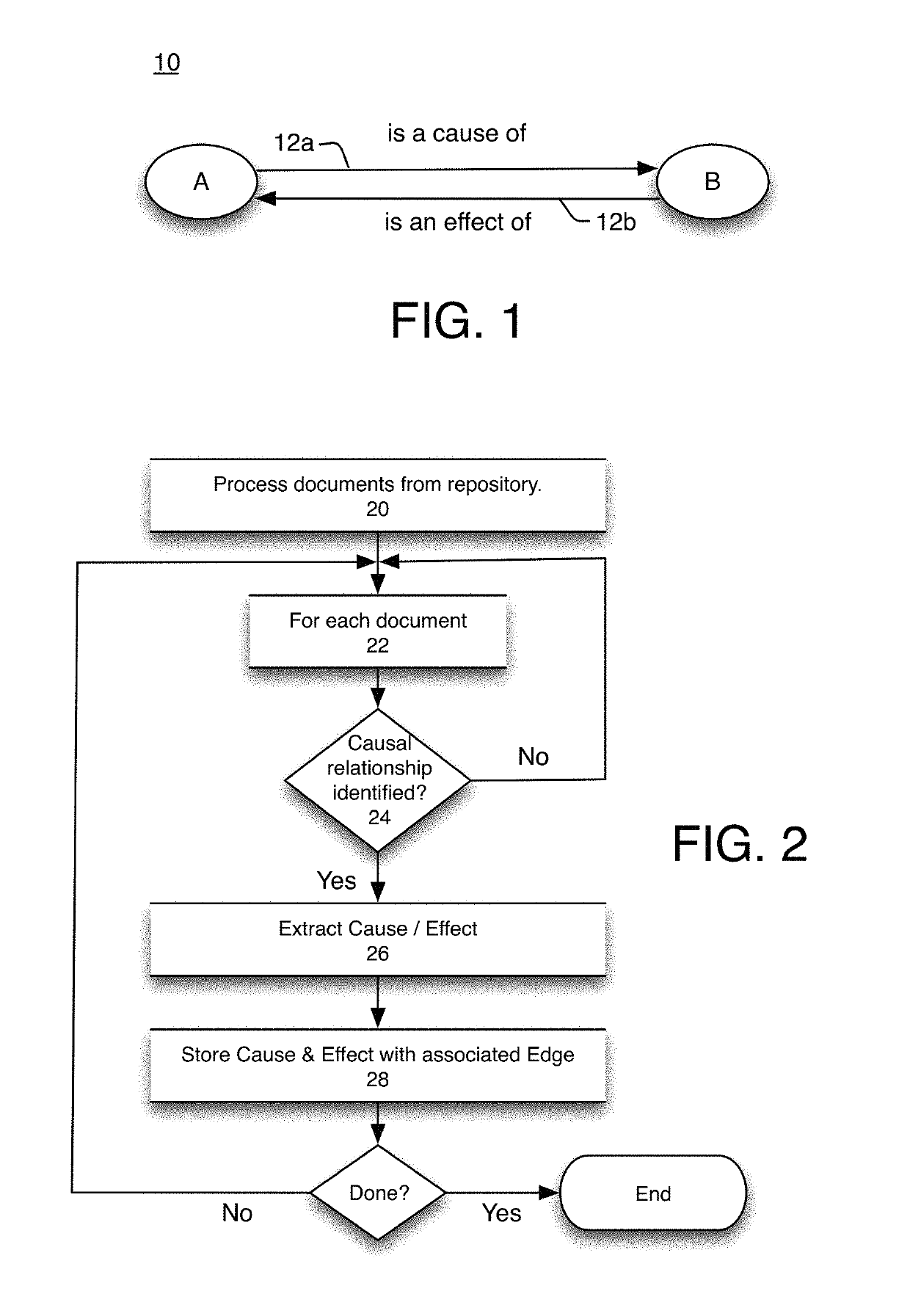
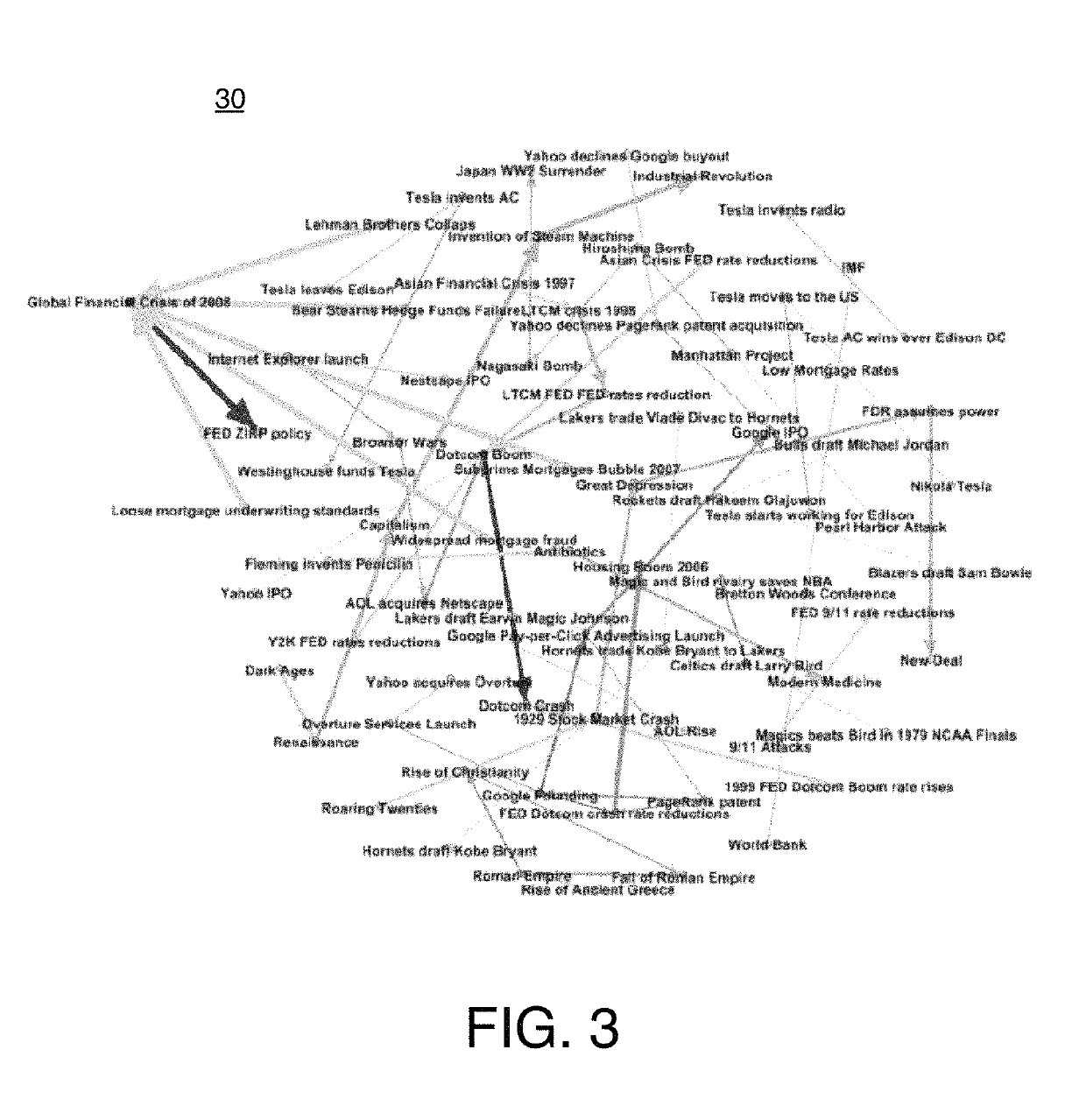
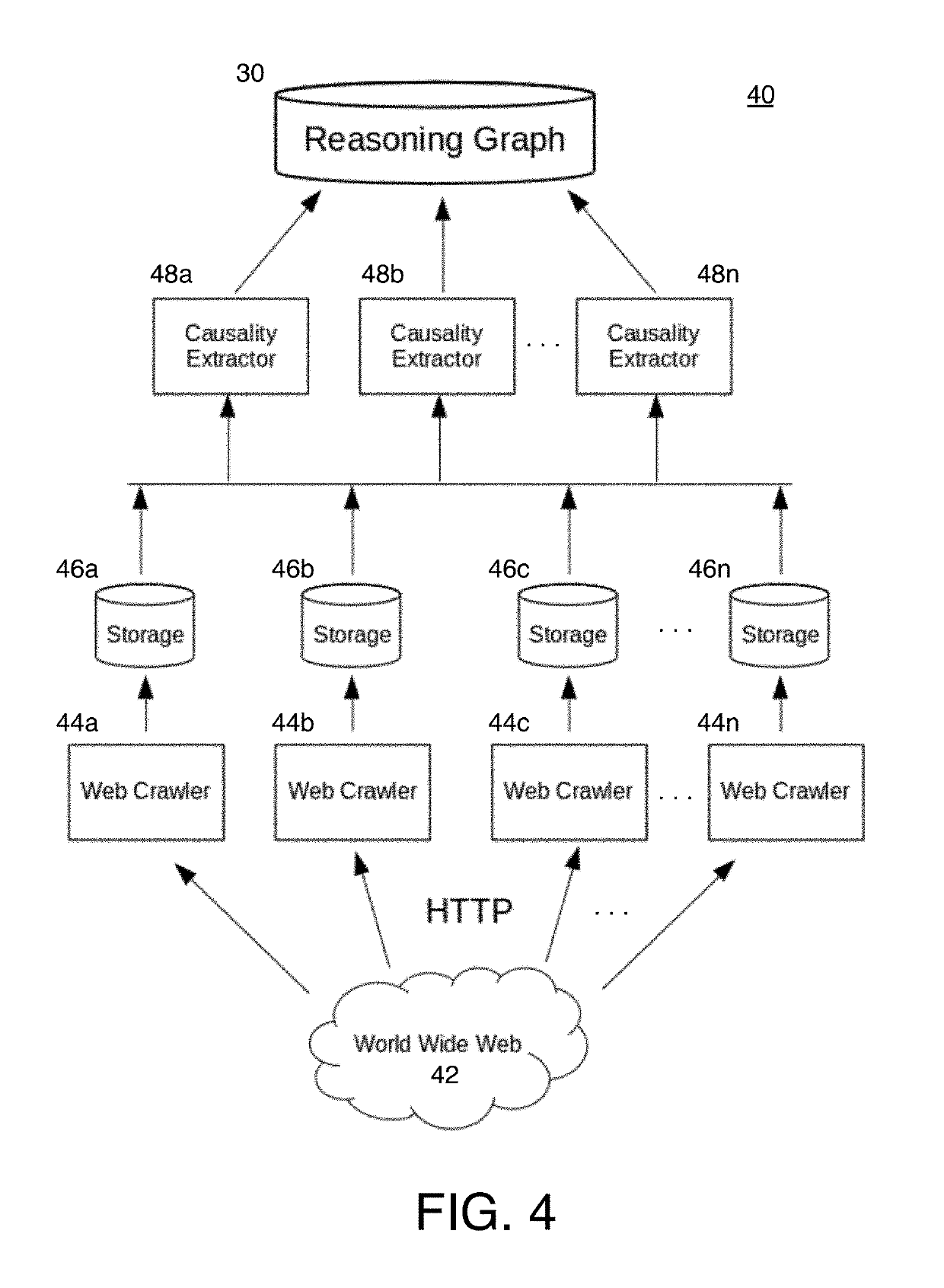
- The creation of a Reasoning Graph that collects and aggregates inferences and causality relationships from vast quantities of text, allowing computers to reason by analyzing and ranking nodes representing concepts, conditions, events, and properties, using crawlers, causality extractors, and deep learning networks to identify and extract cause/effect pairs and derive logical inferences.
Knowledge Graph Completion and Multi-Hop Reasoning in Knowledge Graphs at Scale
PatentPendingUS20230289626A1
Innovation
- The method involves generating a query computation graph with anchor nodes, a root node, and intermediate nodes, and using bidirectional rejection sampling to identify optimal node cuts for efficient negative sampling, allowing for scalable multi-hop reasoning by reducing computational complexity and memory usage through asynchronous GPU processing.


Data Privacy Regulations for Graph-Based Systems
The regulatory landscape for graph-based systems has evolved significantly as governments worldwide recognize the unique privacy challenges posed by interconnected data structures. Unlike traditional databases, graph systems inherently reveal relationships and patterns that can expose sensitive information about individuals and organizations, necessitating specialized regulatory frameworks.
The European Union's General Data Protection Regulation (GDPR) serves as the foundational framework, establishing principles of data minimization, purpose limitation, and explicit consent that directly impact graph-based reasoning systems. Article 22 specifically addresses automated decision-making, which is particularly relevant for graph-constrained reasoning applications in areas such as credit scoring, hiring, and healthcare diagnostics.
In the United States, sector-specific regulations create a complex compliance environment. The Health Insurance Portability and Accountability Act (HIPAA) governs healthcare graph systems, while the Fair Credit Reporting Act (FCRA) impacts financial graph applications. The California Consumer Privacy Act (CCPA) and its amendment, the California Privacy Rights Act (CPRA), introduce additional requirements for businesses processing personal information through graph structures.
China's Personal Information Protection Law (PIPL) and Cybersecurity Law establish strict data localization requirements and consent mechanisms that significantly affect cross-border graph data processing. These regulations mandate that sensitive personal information processed through graph systems must remain within Chinese borders, creating operational challenges for global graph-based platforms.
Emerging regulations specifically target algorithmic transparency and explainability in graph systems. The EU's proposed AI Act includes provisions for high-risk AI systems that utilize graph-constrained reasoning, requiring comprehensive risk assessments and human oversight mechanisms. Similarly, several US states are developing algorithmic accountability laws that mandate disclosure of graph-based decision-making processes.
The intersection of data protection and graph technology creates unique compliance challenges, particularly regarding data subject rights such as erasure and portability. Graph systems' interconnected nature makes it technically complex to completely remove individual data points without affecting the integrity of remaining relationships and derived insights.
The European Union's General Data Protection Regulation (GDPR) serves as the foundational framework, establishing principles of data minimization, purpose limitation, and explicit consent that directly impact graph-based reasoning systems. Article 22 specifically addresses automated decision-making, which is particularly relevant for graph-constrained reasoning applications in areas such as credit scoring, hiring, and healthcare diagnostics.
In the United States, sector-specific regulations create a complex compliance environment. The Health Insurance Portability and Accountability Act (HIPAA) governs healthcare graph systems, while the Fair Credit Reporting Act (FCRA) impacts financial graph applications. The California Consumer Privacy Act (CCPA) and its amendment, the California Privacy Rights Act (CPRA), introduce additional requirements for businesses processing personal information through graph structures.
China's Personal Information Protection Law (PIPL) and Cybersecurity Law establish strict data localization requirements and consent mechanisms that significantly affect cross-border graph data processing. These regulations mandate that sensitive personal information processed through graph systems must remain within Chinese borders, creating operational challenges for global graph-based platforms.
Emerging regulations specifically target algorithmic transparency and explainability in graph systems. The EU's proposed AI Act includes provisions for high-risk AI systems that utilize graph-constrained reasoning, requiring comprehensive risk assessments and human oversight mechanisms. Similarly, several US states are developing algorithmic accountability laws that mandate disclosure of graph-based decision-making processes.
The intersection of data protection and graph technology creates unique compliance challenges, particularly regarding data subject rights such as erasure and portability. Graph systems' interconnected nature makes it technically complex to completely remove individual data points without affecting the integrity of remaining relationships and derived insights.
Computational Ethics in Graph Reasoning Applications
The integration of computational ethics into graph-constrained reasoning systems represents a critical frontier in responsible AI development. As graph-based reasoning applications increasingly influence decision-making processes across healthcare, finance, criminal justice, and social networks, the ethical implications of these systems demand systematic examination and proactive governance frameworks.
Graph reasoning systems inherently encode relationships and dependencies that can perpetuate or amplify existing societal biases. When knowledge graphs incorporate historical data reflecting discriminatory practices, the reasoning algorithms may inadvertently reinforce these patterns in their outputs. This challenge becomes particularly acute in applications involving human subjects, where biased graph structures can lead to unfair treatment recommendations or resource allocation decisions.
Privacy preservation emerges as another fundamental ethical concern in graph reasoning applications. The interconnected nature of graph data structures makes traditional anonymization techniques insufficient, as individuals can often be re-identified through their relationship patterns and network positions. Advanced privacy-preserving techniques such as differential privacy for graphs and federated graph learning are becoming essential components of ethical graph reasoning systems.
Transparency and explainability pose unique challenges in graph-constrained reasoning environments. While the graph structure itself may appear interpretable, the complex reasoning paths and multi-hop inferences can create opacity in decision-making processes. Developing explainable graph reasoning mechanisms that can articulate the logical pathways and relationship dependencies underlying specific conclusions is crucial for maintaining accountability and user trust.
The concept of algorithmic fairness in graph reasoning requires careful consideration of both individual and group-level equity. Graph-based systems must balance competing fairness criteria while accounting for the network effects that can propagate unfair outcomes across connected entities. This necessitates the development of fairness-aware graph algorithms that can detect and mitigate discriminatory patterns in reasoning processes.
Governance frameworks for ethical graph reasoning must address the dynamic nature of graph data and the evolving relationships within these systems. Continuous monitoring mechanisms, ethical impact assessments, and adaptive governance structures are essential for maintaining ethical standards as graph reasoning applications scale and evolve in real-world deployments.
Graph reasoning systems inherently encode relationships and dependencies that can perpetuate or amplify existing societal biases. When knowledge graphs incorporate historical data reflecting discriminatory practices, the reasoning algorithms may inadvertently reinforce these patterns in their outputs. This challenge becomes particularly acute in applications involving human subjects, where biased graph structures can lead to unfair treatment recommendations or resource allocation decisions.
Privacy preservation emerges as another fundamental ethical concern in graph reasoning applications. The interconnected nature of graph data structures makes traditional anonymization techniques insufficient, as individuals can often be re-identified through their relationship patterns and network positions. Advanced privacy-preserving techniques such as differential privacy for graphs and federated graph learning are becoming essential components of ethical graph reasoning systems.
Transparency and explainability pose unique challenges in graph-constrained reasoning environments. While the graph structure itself may appear interpretable, the complex reasoning paths and multi-hop inferences can create opacity in decision-making processes. Developing explainable graph reasoning mechanisms that can articulate the logical pathways and relationship dependencies underlying specific conclusions is crucial for maintaining accountability and user trust.
The concept of algorithmic fairness in graph reasoning requires careful consideration of both individual and group-level equity. Graph-based systems must balance competing fairness criteria while accounting for the network effects that can propagate unfair outcomes across connected entities. This necessitates the development of fairness-aware graph algorithms that can detect and mitigate discriminatory patterns in reasoning processes.
Governance frameworks for ethical graph reasoning must address the dynamic nature of graph data and the evolving relationships within these systems. Continuous monitoring mechanisms, ethical impact assessments, and adaptive governance structures are essential for maintaining ethical standards as graph reasoning applications scale and evolve in real-world deployments.
Unlock deeper insights with Patsnap Eureka Quick Research — get a full tech report to explore trends and direct your research. Try now!
Generate Your Research Report Instantly with AI Agent
Supercharge your innovation with Patsnap Eureka AI Agent Platform!