How Calorimetry Aids in Optimizing Viniculture Processes
AUG 5, 20259 MIN READ
Generate Your Research Report Instantly with AI Agent
PatSnap Eureka helps you evaluate technical feasibility & market potential.
Calorimetry in Viniculture: Background and Objectives
Calorimetry, the science of measuring heat transfer during physical and chemical processes, has emerged as a powerful tool in optimizing viniculture processes. The application of calorimetric techniques in winemaking dates back to the early 20th century, with significant advancements occurring in recent decades. As the global wine industry continues to grow and face new challenges, the role of calorimetry in enhancing wine quality and production efficiency has become increasingly important.
The evolution of calorimetry in viniculture has been driven by the need for more precise control over fermentation processes, which are critical to wine quality. Early methods relied on simple temperature measurements, but modern calorimetric techniques offer real-time, high-resolution data on heat production and consumption during various stages of winemaking. This progression has enabled winemakers to gain deeper insights into the complex biochemical reactions that occur during fermentation and aging.
The primary objective of applying calorimetry in viniculture is to optimize the fermentation process, which is the cornerstone of winemaking. By monitoring heat generation and dissipation, winemakers can better control fermentation kinetics, leading to improved consistency and quality in wine production. Additionally, calorimetry aids in understanding and managing the microbial ecology of wine fermentation, allowing for more precise control over yeast activity and metabolic processes.
Another key goal is to enhance energy efficiency in winemaking operations. Calorimetric data can be used to optimize heating and cooling systems in wineries, reducing energy consumption and operational costs. This aligns with the growing emphasis on sustainability in the wine industry, as producers seek to minimize their environmental impact while maintaining product quality.
Calorimetry also plays a crucial role in studying the effects of climate change on grape cultivation and wine production. As global temperatures rise, understanding heat-related stress on grapevines and its impact on wine quality becomes increasingly important. Calorimetric techniques provide valuable data for developing adaptive strategies in vineyard management and winemaking processes.
The integration of calorimetry with other analytical methods, such as spectroscopy and chromatography, represents a significant trend in viniculture research. This multidisciplinary approach aims to provide a more comprehensive understanding of the complex chemical and biological processes involved in winemaking, from grape ripening to bottle aging.
As the wine industry continues to evolve, the objectives of calorimetric applications in viniculture are expanding. Current research focuses on using calorimetry to develop new fermentation strategies, improve wine stability, and enhance flavor profiles. The ultimate goal is to leverage calorimetric data to produce wines that consistently meet consumer preferences while adapting to changing environmental conditions and market demands.
The evolution of calorimetry in viniculture has been driven by the need for more precise control over fermentation processes, which are critical to wine quality. Early methods relied on simple temperature measurements, but modern calorimetric techniques offer real-time, high-resolution data on heat production and consumption during various stages of winemaking. This progression has enabled winemakers to gain deeper insights into the complex biochemical reactions that occur during fermentation and aging.
The primary objective of applying calorimetry in viniculture is to optimize the fermentation process, which is the cornerstone of winemaking. By monitoring heat generation and dissipation, winemakers can better control fermentation kinetics, leading to improved consistency and quality in wine production. Additionally, calorimetry aids in understanding and managing the microbial ecology of wine fermentation, allowing for more precise control over yeast activity and metabolic processes.
Another key goal is to enhance energy efficiency in winemaking operations. Calorimetric data can be used to optimize heating and cooling systems in wineries, reducing energy consumption and operational costs. This aligns with the growing emphasis on sustainability in the wine industry, as producers seek to minimize their environmental impact while maintaining product quality.
Calorimetry also plays a crucial role in studying the effects of climate change on grape cultivation and wine production. As global temperatures rise, understanding heat-related stress on grapevines and its impact on wine quality becomes increasingly important. Calorimetric techniques provide valuable data for developing adaptive strategies in vineyard management and winemaking processes.
The integration of calorimetry with other analytical methods, such as spectroscopy and chromatography, represents a significant trend in viniculture research. This multidisciplinary approach aims to provide a more comprehensive understanding of the complex chemical and biological processes involved in winemaking, from grape ripening to bottle aging.
As the wine industry continues to evolve, the objectives of calorimetric applications in viniculture are expanding. Current research focuses on using calorimetry to develop new fermentation strategies, improve wine stability, and enhance flavor profiles. The ultimate goal is to leverage calorimetric data to produce wines that consistently meet consumer preferences while adapting to changing environmental conditions and market demands.
Market Demand for Precision Winemaking
The wine industry has witnessed a significant shift towards precision winemaking in recent years, driven by increasing consumer demand for high-quality, consistent wines and the need for more efficient production processes. This trend has created a robust market for advanced technologies that can optimize various aspects of viniculture, including the use of calorimetry in winemaking processes.
The global wine market is projected to grow steadily, with premium and ultra-premium segments showing particularly strong growth potential. This growth is fueled by consumers' increasing sophistication and willingness to pay for higher quality wines. As a result, winemakers are under pressure to deliver superior products consistently, driving the demand for precision winemaking technologies.
Calorimetry, as a tool for optimizing viniculture processes, addresses several key market needs. Firstly, it enables winemakers to monitor and control fermentation processes more accurately, leading to improved wine quality and consistency. This is crucial in meeting the expectations of discerning consumers and maintaining brand reputation in a competitive market.
Secondly, calorimetry aids in reducing production costs and minimizing waste. By providing real-time data on fermentation kinetics, it allows winemakers to optimize resource utilization, including energy consumption and fermentation time. This efficiency gain is particularly valuable in an industry where margins can be tight and sustainability is becoming increasingly important.
The market for precision winemaking technologies is also driven by the need for traceability and quality control. Calorimetry provides detailed data on the fermentation process, which can be used for quality assurance and regulatory compliance. This is especially important in export markets where stringent quality standards must be met.
Furthermore, the growing trend of organic and biodynamic winemaking has created a niche market for technologies that can help maintain quality without relying on chemical additives. Calorimetry's ability to provide non-invasive monitoring aligns well with these natural winemaking philosophies.
The adoption of precision winemaking technologies, including calorimetry, is not limited to large-scale producers. Small and medium-sized wineries are also showing interest in these technologies as they seek to differentiate their products and compete in a crowded market. This broadens the potential customer base for calorimetry solutions in the wine industry.
In conclusion, the market demand for precision winemaking technologies, particularly those involving calorimetry, is strong and growing. Driven by consumer preferences, production efficiency needs, and quality control requirements, this demand is likely to continue expanding across different segments of the wine industry, from boutique wineries to large-scale producers.
The global wine market is projected to grow steadily, with premium and ultra-premium segments showing particularly strong growth potential. This growth is fueled by consumers' increasing sophistication and willingness to pay for higher quality wines. As a result, winemakers are under pressure to deliver superior products consistently, driving the demand for precision winemaking technologies.
Calorimetry, as a tool for optimizing viniculture processes, addresses several key market needs. Firstly, it enables winemakers to monitor and control fermentation processes more accurately, leading to improved wine quality and consistency. This is crucial in meeting the expectations of discerning consumers and maintaining brand reputation in a competitive market.
Secondly, calorimetry aids in reducing production costs and minimizing waste. By providing real-time data on fermentation kinetics, it allows winemakers to optimize resource utilization, including energy consumption and fermentation time. This efficiency gain is particularly valuable in an industry where margins can be tight and sustainability is becoming increasingly important.
The market for precision winemaking technologies is also driven by the need for traceability and quality control. Calorimetry provides detailed data on the fermentation process, which can be used for quality assurance and regulatory compliance. This is especially important in export markets where stringent quality standards must be met.
Furthermore, the growing trend of organic and biodynamic winemaking has created a niche market for technologies that can help maintain quality without relying on chemical additives. Calorimetry's ability to provide non-invasive monitoring aligns well with these natural winemaking philosophies.
The adoption of precision winemaking technologies, including calorimetry, is not limited to large-scale producers. Small and medium-sized wineries are also showing interest in these technologies as they seek to differentiate their products and compete in a crowded market. This broadens the potential customer base for calorimetry solutions in the wine industry.
In conclusion, the market demand for precision winemaking technologies, particularly those involving calorimetry, is strong and growing. Driven by consumer preferences, production efficiency needs, and quality control requirements, this demand is likely to continue expanding across different segments of the wine industry, from boutique wineries to large-scale producers.
Current Calorimetric Techniques in Viniculture
Calorimetry plays a crucial role in modern viniculture processes, offering precise measurements of heat changes during various stages of wine production. Current calorimetric techniques in viniculture encompass a range of methods tailored to optimize different aspects of winemaking.
One of the primary applications is in fermentation monitoring. Differential scanning calorimetry (DSC) is widely used to track the heat released during alcoholic fermentation, providing real-time data on yeast activity and fermentation kinetics. This allows winemakers to make informed decisions about temperature control and nutrient addition, ensuring optimal fermentation conditions.
Isothermal titration calorimetry (ITC) has gained prominence in studying wine protein interactions and stability. This technique helps winemakers predict and prevent protein haze formation in white wines by measuring the thermodynamics of protein-tannin interactions. ITC data guides the selection of fining agents and informs stabilization processes.
Microcalorimetry is employed to investigate microbial activity in wines. By measuring the heat produced by microorganisms, winemakers can detect spoilage bacteria or unwanted yeast strains early in the production process. This technique is particularly valuable in quality control and ensuring microbial stability of the final product.
Flow calorimetry has found applications in continuous monitoring of wine aging processes. By measuring the heat exchange during oak barrel aging or micro-oxygenation, winemakers can fine-tune these processes to achieve desired flavor profiles and tannin structures.
Reaction calorimetry is utilized in studying the kinetics of malolactic fermentation. This secondary fermentation process, crucial for many red wines and some white wines, can be optimized by monitoring the heat released during the conversion of malic acid to lactic acid.
Thermal activity monitoring (TAM) is emerging as a powerful tool for assessing wine oxidation susceptibility. By measuring the heat generated during controlled oxidation experiments, winemakers can predict a wine's shelf life and develop strategies to enhance its longevity.
Calorimetric techniques are also being applied to vineyard management. Soil calorimetry is used to study the thermal properties of vineyard soils, informing irrigation strategies and helping to predict the impact of climate variations on grape quality.
These current calorimetric techniques collectively contribute to a more precise and data-driven approach to winemaking, enabling vintners to optimize processes, enhance quality, and maintain consistency across vintages.
One of the primary applications is in fermentation monitoring. Differential scanning calorimetry (DSC) is widely used to track the heat released during alcoholic fermentation, providing real-time data on yeast activity and fermentation kinetics. This allows winemakers to make informed decisions about temperature control and nutrient addition, ensuring optimal fermentation conditions.
Isothermal titration calorimetry (ITC) has gained prominence in studying wine protein interactions and stability. This technique helps winemakers predict and prevent protein haze formation in white wines by measuring the thermodynamics of protein-tannin interactions. ITC data guides the selection of fining agents and informs stabilization processes.
Microcalorimetry is employed to investigate microbial activity in wines. By measuring the heat produced by microorganisms, winemakers can detect spoilage bacteria or unwanted yeast strains early in the production process. This technique is particularly valuable in quality control and ensuring microbial stability of the final product.
Flow calorimetry has found applications in continuous monitoring of wine aging processes. By measuring the heat exchange during oak barrel aging or micro-oxygenation, winemakers can fine-tune these processes to achieve desired flavor profiles and tannin structures.
Reaction calorimetry is utilized in studying the kinetics of malolactic fermentation. This secondary fermentation process, crucial for many red wines and some white wines, can be optimized by monitoring the heat released during the conversion of malic acid to lactic acid.
Thermal activity monitoring (TAM) is emerging as a powerful tool for assessing wine oxidation susceptibility. By measuring the heat generated during controlled oxidation experiments, winemakers can predict a wine's shelf life and develop strategies to enhance its longevity.
Calorimetric techniques are also being applied to vineyard management. Soil calorimetry is used to study the thermal properties of vineyard soils, informing irrigation strategies and helping to predict the impact of climate variations on grape quality.
These current calorimetric techniques collectively contribute to a more precise and data-driven approach to winemaking, enabling vintners to optimize processes, enhance quality, and maintain consistency across vintages.
Existing Calorimetric Solutions for Viniculture
01 Improved calorimeter design
Optimization of calorimeter design focuses on enhancing accuracy and efficiency. This includes improvements in thermal insulation, sensor placement, and sample chamber configuration. Advanced materials and manufacturing techniques are employed to minimize heat loss and increase sensitivity. These design enhancements contribute to more precise measurements and better overall performance in calorimetry experiments.- Improved calorimeter design: Optimization of calorimeter design focuses on enhancing accuracy and efficiency. This includes improvements in thermal insulation, sensor placement, and sample chamber configuration. Advanced materials and manufacturing techniques are employed to minimize heat loss and increase sensitivity.
- Data analysis and processing techniques: Advanced algorithms and software solutions are developed to optimize data analysis in calorimetry. These techniques include noise reduction, signal processing, and automated peak detection. Machine learning and artificial intelligence are increasingly used to improve data interpretation and extract meaningful results from complex calorimetric measurements.
- Miniaturization and portability: Efforts are made to develop smaller, more portable calorimeters without compromising performance. This involves innovative designs that integrate multiple components into compact units, use of microfluidics, and development of lab-on-a-chip solutions for calorimetric measurements.
- Integration with other analytical techniques: Calorimetry optimization includes combining calorimetric measurements with other analytical methods such as spectroscopy, chromatography, or microscopy. This integration allows for more comprehensive analysis and provides complementary data to enhance the overall understanding of sample properties and reactions.
- Automation and high-throughput systems: Development of automated calorimetry systems for high-throughput screening and analysis. This includes robotic sample handling, parallel measurement capabilities, and integration with laboratory information management systems. Such optimizations significantly increase efficiency and reduce human error in calorimetric experiments.
02 Integration of data analysis and automation
Calorimetry optimization involves the integration of advanced data analysis techniques and automation. This includes the development of software algorithms for real-time data processing, pattern recognition, and error correction. Automated systems for sample handling and measurement sequencing are implemented to increase throughput and reduce human error. These advancements lead to more efficient and accurate calorimetric measurements.Expand Specific Solutions03 Miniaturization and portability
Efforts in calorimetry optimization focus on miniaturization and increased portability of calorimetric devices. This involves the development of compact, lightweight designs that maintain high accuracy and precision. Miniaturized calorimeters enable on-site measurements and expand the range of applications, particularly in field research and point-of-care diagnostics. These advancements make calorimetry more accessible and versatile.Expand Specific Solutions04 Multi-functional calorimetry systems
Optimization in calorimetry includes the development of multi-functional systems that combine calorimetric measurements with other analytical techniques. These integrated systems may incorporate spectroscopy, chromatography, or other complementary methods. By combining multiple analytical capabilities in a single instrument, researchers can obtain more comprehensive data and insights from a single sample, improving efficiency and reducing analysis time.Expand Specific Solutions05 Enhanced temperature control and measurement
Calorimetry optimization focuses on improving temperature control and measurement precision. This includes the development of advanced temperature sensors, precise heating and cooling systems, and innovative methods for temperature calibration. Enhanced temperature control allows for more accurate determination of thermal properties and reaction kinetics. These improvements contribute to higher reliability and reproducibility in calorimetric experiments.Expand Specific Solutions
Key Players in Oenological Calorimetry
The calorimetry-aided optimization of viniculture processes is in a growth phase, with increasing market size and technological advancements. The industry is experiencing a shift towards precision viticulture, driven by the need for improved wine quality and production efficiency. Key players like Northwest A&F University, Institut National de Recherche Agronomique SA, and Jiangnan University are contributing to the technological maturity through research and development. Companies such as Endress+Hauser Messtechnik GmbH+Co. KG and Sartorius Stedim Data Analytics AB are providing innovative solutions, while established wineries like Sino-French Joint Venture Dynasty Winery Ltd. and Suntory Holdings Ltd. are adopting these technologies to enhance their production processes.
Institut National de Recherche Agronomique SA
Technical Solution: INRA has developed advanced calorimetric techniques for optimizing viniculture processes. They utilize differential scanning calorimetry (DSC) to analyze grape composition and wine quality. Their method involves measuring the heat flow during controlled temperature changes, providing insights into sugar content, phenolic compounds, and fermentation kinetics[1]. INRA's calorimetric approach allows for real-time monitoring of fermentation processes, enabling winemakers to make timely adjustments to temperature and yeast activity. They have also integrated this technology with spectroscopic methods for comprehensive wine analysis, enhancing quality control throughout the production cycle[3].
Strengths: Precise measurement of thermal properties in grapes and wine, real-time fermentation monitoring, integration with other analytical techniques. Weaknesses: Requires specialized equipment and expertise, may be cost-prohibitive for smaller wineries.
Endress+Hauser Messtechnik GmbH+Co. KG
Technical Solution: Endress+Hauser has developed specialized calorimetric sensors for the wine industry. Their technology focuses on in-line measurement of heat capacity and thermal conductivity in wine production processes. These sensors can be integrated directly into fermentation tanks and pipelines, providing real-time data on fluid properties and process conditions. Endress+Hauser's calorimetric sensors use a heated element and temperature sensors to detect changes in heat transfer, which correlate with fluid composition and flow characteristics[5]. This allows for continuous monitoring of fermentation progress, detection of phase changes, and quality control during wine production and bottling processes.
Strengths: In-line measurement capability, real-time process monitoring, robust sensors suitable for industrial environments. Weaknesses: May require regular calibration and maintenance, initial installation costs can be high.
Innovative Calorimetric Methods in Winemaking
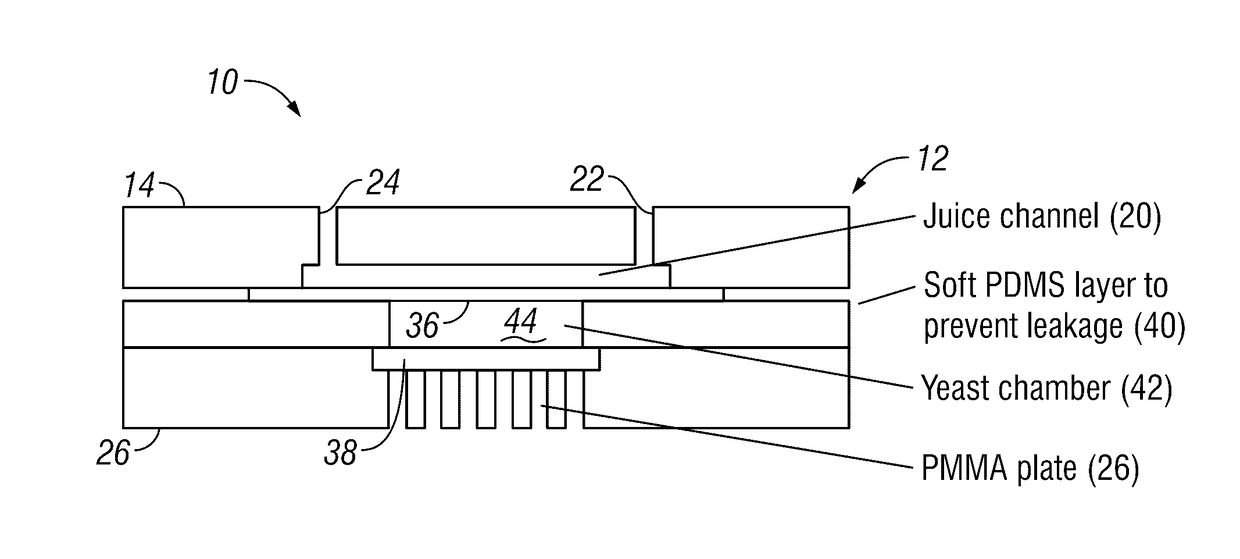
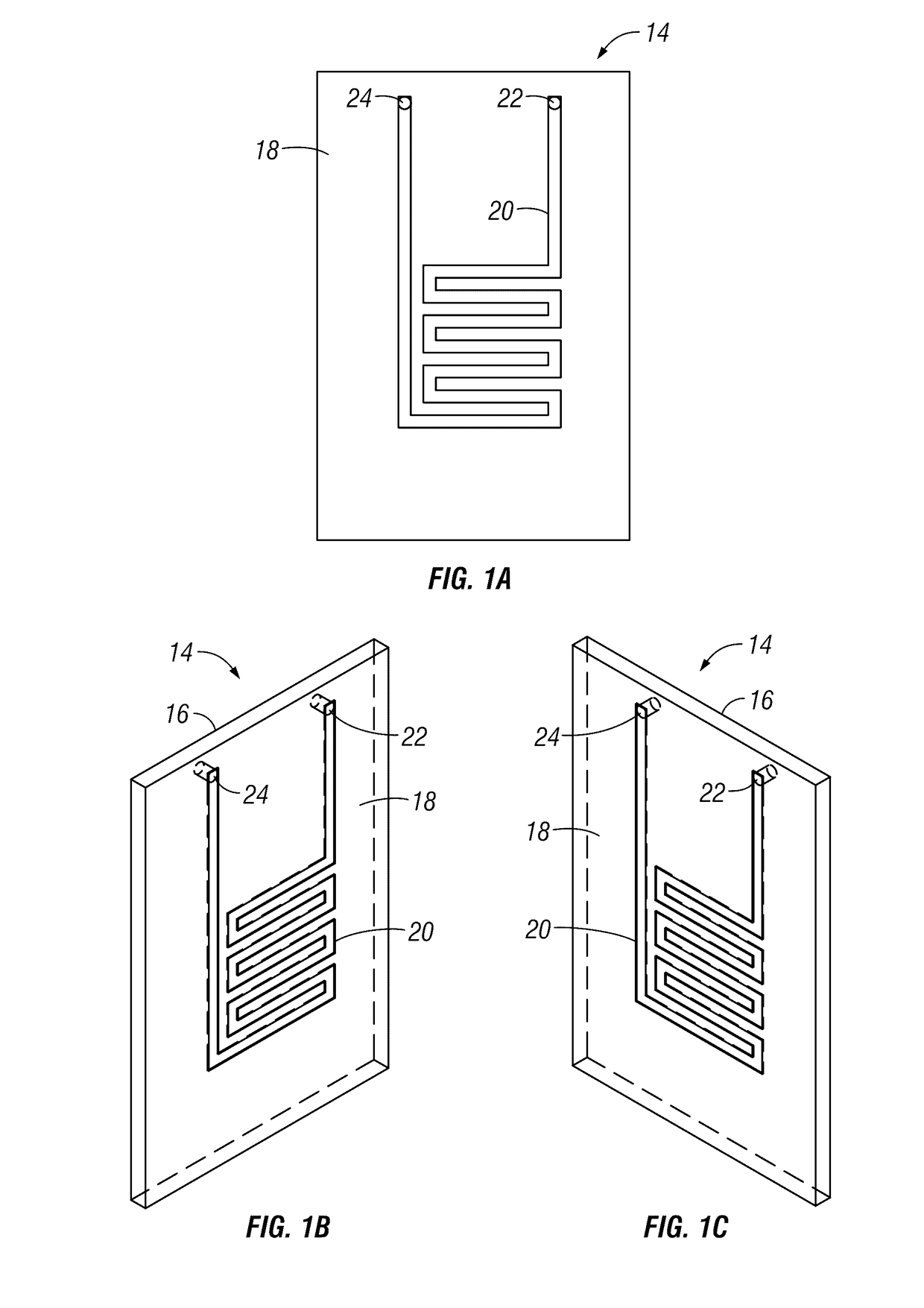
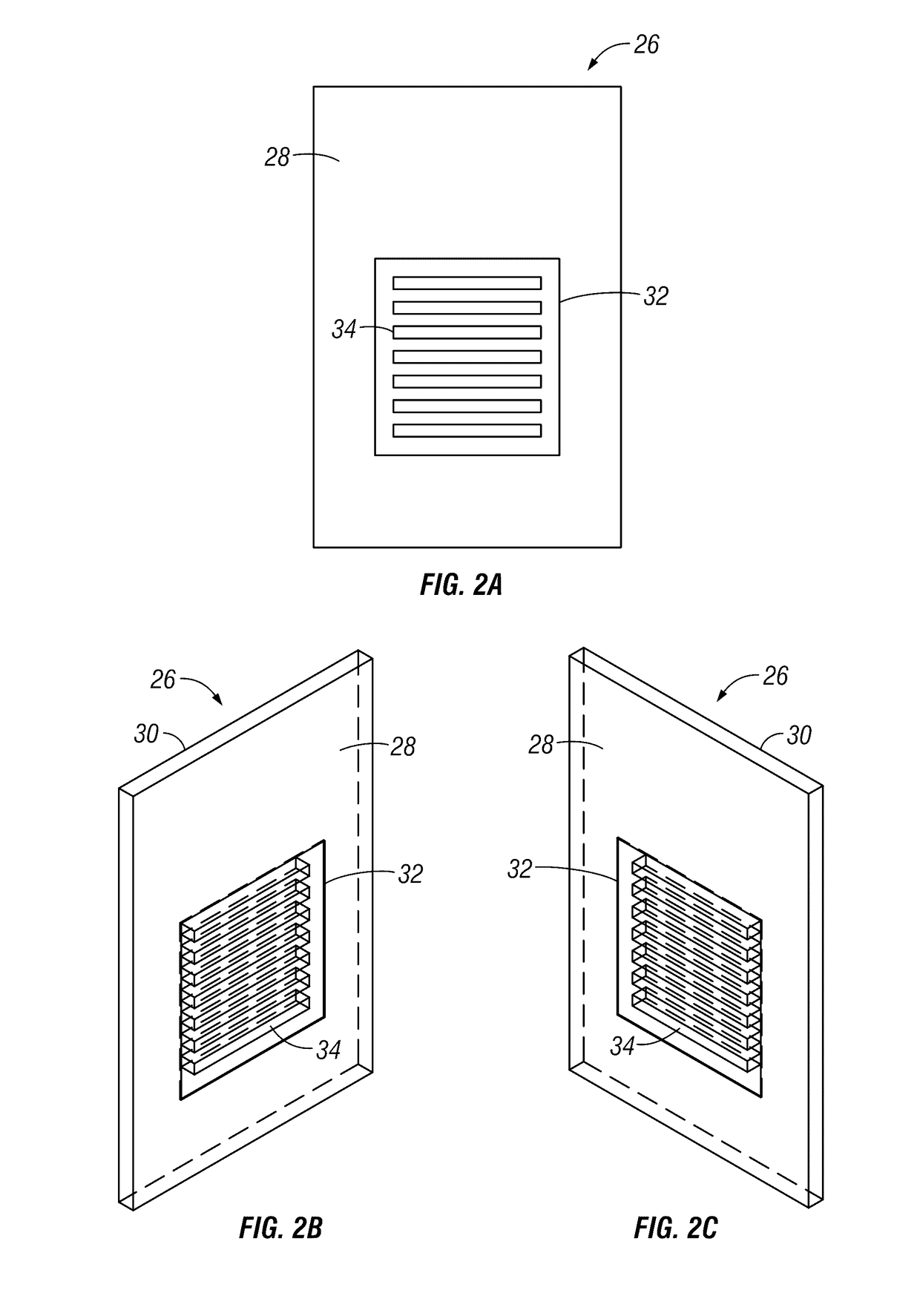
Miniaturized continuous-flow fermenting apparatus, systems, and methods
PatentInactiveUS20170107465A1
Innovation
- A miniaturized continuous-flow beverage fermenting system using immobilized yeast cells, porous membranes for mass transport, inline alcohol sensing, and temperature control, allowing for rapid screening of fermentation parameters and production of small-scale fermented beverages with high variability.

Method and device for measuring a chemical or biological reaction state
PatentWO2013153345A1
Innovation
- A device and method that eliminates the need for sample pretreatments by dynamically adjusting the light source intensity based on absorbance measurements, increasing the dynamic range and compensating for variations in absorbance across multiple wavelengths, allowing for direct, online monitoring of alcoholic beverage liquids without centrifugation or filtration.


Environmental Impact of Calorimetric Winemaking
The implementation of calorimetric techniques in winemaking processes has significant implications for environmental sustainability in the viniculture industry. By optimizing energy consumption and resource utilization, calorimetry contributes to reducing the overall environmental footprint of wine production.
One of the primary environmental benefits of calorimetric winemaking is the potential for energy conservation. Precise temperature control during fermentation, enabled by calorimetric measurements, allows for more efficient use of heating and cooling systems. This results in lower energy consumption and, consequently, reduced greenhouse gas emissions associated with power generation.
Water usage, a critical environmental concern in many wine-producing regions, can also be optimized through calorimetric techniques. By accurately monitoring the heat generated during fermentation, winemakers can fine-tune their cooling processes, potentially reducing water requirements for temperature regulation. This conservation of water resources is particularly valuable in areas prone to drought or water scarcity.
Calorimetry also plays a role in minimizing waste production in viniculture. By providing real-time data on fermentation progress, it enables winemakers to make informed decisions about when to halt the process, reducing the likelihood of spoilage or suboptimal product quality. This precision helps to decrease the volume of discarded wine, thereby reducing organic waste and the associated environmental impact of its disposal.
The application of calorimetric techniques can lead to more efficient use of agricultural inputs. By optimizing fermentation conditions, winemakers may be able to achieve desired flavor profiles and alcohol content with potentially lower initial sugar concentrations in grapes. This could translate to reduced fertilizer use in vineyards, mitigating the environmental impact of nutrient runoff and soil degradation.
Furthermore, the data-driven approach facilitated by calorimetry can contribute to the development of more sustainable vineyard management practices. By correlating calorimetric data with grape quality and wine characteristics, vintners can refine their cultivation methods, potentially reducing the need for pesticides and other chemical interventions.
The environmental benefits of calorimetric winemaking extend beyond the production phase. Improved process control can lead to more consistent product quality, potentially reducing the need for energy-intensive corrective measures or product recalls. This efficiency in the supply chain can result in lower transportation-related emissions and reduced packaging waste.
In conclusion, the integration of calorimetry in viniculture processes offers a multifaceted approach to enhancing environmental sustainability in the wine industry. From energy and water conservation to waste reduction and optimized resource use, calorimetric techniques provide a pathway for winemakers to minimize their ecological impact while maintaining or improving product quality.
One of the primary environmental benefits of calorimetric winemaking is the potential for energy conservation. Precise temperature control during fermentation, enabled by calorimetric measurements, allows for more efficient use of heating and cooling systems. This results in lower energy consumption and, consequently, reduced greenhouse gas emissions associated with power generation.
Water usage, a critical environmental concern in many wine-producing regions, can also be optimized through calorimetric techniques. By accurately monitoring the heat generated during fermentation, winemakers can fine-tune their cooling processes, potentially reducing water requirements for temperature regulation. This conservation of water resources is particularly valuable in areas prone to drought or water scarcity.
Calorimetry also plays a role in minimizing waste production in viniculture. By providing real-time data on fermentation progress, it enables winemakers to make informed decisions about when to halt the process, reducing the likelihood of spoilage or suboptimal product quality. This precision helps to decrease the volume of discarded wine, thereby reducing organic waste and the associated environmental impact of its disposal.
The application of calorimetric techniques can lead to more efficient use of agricultural inputs. By optimizing fermentation conditions, winemakers may be able to achieve desired flavor profiles and alcohol content with potentially lower initial sugar concentrations in grapes. This could translate to reduced fertilizer use in vineyards, mitigating the environmental impact of nutrient runoff and soil degradation.
Furthermore, the data-driven approach facilitated by calorimetry can contribute to the development of more sustainable vineyard management practices. By correlating calorimetric data with grape quality and wine characteristics, vintners can refine their cultivation methods, potentially reducing the need for pesticides and other chemical interventions.
The environmental benefits of calorimetric winemaking extend beyond the production phase. Improved process control can lead to more consistent product quality, potentially reducing the need for energy-intensive corrective measures or product recalls. This efficiency in the supply chain can result in lower transportation-related emissions and reduced packaging waste.
In conclusion, the integration of calorimetry in viniculture processes offers a multifaceted approach to enhancing environmental sustainability in the wine industry. From energy and water conservation to waste reduction and optimized resource use, calorimetric techniques provide a pathway for winemakers to minimize their ecological impact while maintaining or improving product quality.
Regulatory Framework for Oenological Technologies
The regulatory framework for oenological technologies plays a crucial role in shaping the viniculture industry, particularly in the context of calorimetry's application to optimize wine production processes. This framework encompasses a complex web of international, national, and regional regulations that govern the use of various technologies and practices in winemaking.
At the international level, the International Organisation of Vine and Wine (OIV) sets global standards and guidelines for oenological practices. These recommendations serve as a foundation for many national regulatory bodies and influence the adoption of new technologies, including calorimetric methods, in viniculture processes.
Within the European Union, Regulation (EU) No 1308/2013 establishes a common organization of the markets in agricultural products, including wine. This regulation outlines permitted oenological practices and processes, which may impact the implementation of calorimetry-based optimization techniques in EU member states.
In the United States, the Alcohol and Tobacco Tax and Trade Bureau (TTB) regulates wine production practices. The Code of Federal Regulations Title 27, Part 24, specifically addresses wine production procedures and may influence the adoption of calorimetry in viniculture optimization.
Many wine-producing countries have their own regulatory bodies that oversee oenological practices. For instance, Australia's Wine Australia regulates the country's wine sector, while France's Institut National de l'Origine et de la Qualité (INAO) oversees the strict Appellation d'Origine Contrôlée (AOC) system.
These regulatory frameworks often address issues such as permitted additives, processing aids, and analytical methods used in winemaking. As calorimetry emerges as a tool for optimizing viniculture processes, its integration into existing regulatory structures becomes a critical consideration.
The adoption of calorimetric techniques in viniculture may require updates to current regulations or the development of new guidelines. Regulatory bodies must assess the safety, efficacy, and potential impact of these methods on wine quality and authenticity before approving their use in commercial winemaking.
Furthermore, the regulatory framework must consider the potential implications of calorimetry on wine labeling and certification processes. As this technology can provide detailed insights into the chemical composition and production methods of wines, it may influence how wines are classified, labeled, and marketed under existing regulatory schemes.
In conclusion, the regulatory framework for oenological technologies serves as a critical backdrop for the integration of calorimetry in viniculture optimization. As this technology continues to evolve, regulatory bodies at various levels will need to adapt their frameworks to ensure the safe and effective use of calorimetric methods while maintaining the integrity and quality standards of the wine industry.
At the international level, the International Organisation of Vine and Wine (OIV) sets global standards and guidelines for oenological practices. These recommendations serve as a foundation for many national regulatory bodies and influence the adoption of new technologies, including calorimetric methods, in viniculture processes.
Within the European Union, Regulation (EU) No 1308/2013 establishes a common organization of the markets in agricultural products, including wine. This regulation outlines permitted oenological practices and processes, which may impact the implementation of calorimetry-based optimization techniques in EU member states.
In the United States, the Alcohol and Tobacco Tax and Trade Bureau (TTB) regulates wine production practices. The Code of Federal Regulations Title 27, Part 24, specifically addresses wine production procedures and may influence the adoption of calorimetry in viniculture optimization.
Many wine-producing countries have their own regulatory bodies that oversee oenological practices. For instance, Australia's Wine Australia regulates the country's wine sector, while France's Institut National de l'Origine et de la Qualité (INAO) oversees the strict Appellation d'Origine Contrôlée (AOC) system.
These regulatory frameworks often address issues such as permitted additives, processing aids, and analytical methods used in winemaking. As calorimetry emerges as a tool for optimizing viniculture processes, its integration into existing regulatory structures becomes a critical consideration.
The adoption of calorimetric techniques in viniculture may require updates to current regulations or the development of new guidelines. Regulatory bodies must assess the safety, efficacy, and potential impact of these methods on wine quality and authenticity before approving their use in commercial winemaking.
Furthermore, the regulatory framework must consider the potential implications of calorimetry on wine labeling and certification processes. As this technology can provide detailed insights into the chemical composition and production methods of wines, it may influence how wines are classified, labeled, and marketed under existing regulatory schemes.
In conclusion, the regulatory framework for oenological technologies serves as a critical backdrop for the integration of calorimetry in viniculture optimization. As this technology continues to evolve, regulatory bodies at various levels will need to adapt their frameworks to ensure the safe and effective use of calorimetric methods while maintaining the integrity and quality standards of the wine industry.
Unlock deeper insights with PatSnap Eureka Quick Research — get a full tech report to explore trends and direct your research. Try now!
Generate Your Research Report Instantly with AI Agent
Supercharge your innovation with PatSnap Eureka AI Agent Platform!