How Electrodynamic Tether Systems Reduce Operational Satellite Footprints
MAY 11, 20269 MIN READ
Generate Your Research Report Instantly with AI Agent
PatSnap Eureka helps you evaluate technical feasibility & market potential.
Electrodynamic Tether Technology Background and Objectives
Electrodynamic tether (EDT) technology represents a revolutionary approach to spacecraft propulsion and orbital mechanics that emerged from fundamental electromagnetic principles discovered in the 19th century. The concept leverages the interaction between a conductive tether, Earth's magnetic field, and the relative motion of spacecraft to generate electromagnetic forces without requiring traditional propellant systems.
The historical development of EDT systems traces back to theoretical work in the 1960s when scientists first proposed using long conductive cables in space to harness geomagnetic forces. Early conceptual studies demonstrated that a current-carrying conductor moving through Earth's magnetic field could experience Lorentz forces, enabling orbital maneuvering capabilities. This principle evolved through decades of research, culminating in experimental missions like the Tethered Satellite System (TSS-1R) in 1996, which validated core electromagnetic interactions in the space environment.
The fundamental physics underlying EDT operation involves three key components: a conductive tether deployed from a spacecraft, Earth's magnetic field lines, and the orbital velocity-induced electric field. When current flows through the tether, it interacts with the geomagnetic field to produce forces that can raise, lower, or modify orbital trajectories. This electromagnetic propulsion mechanism offers significant advantages over conventional chemical or electric propulsion systems.
The primary objective of EDT technology centers on dramatically reducing operational satellite footprints through enhanced end-of-life disposal capabilities and active debris mitigation. Traditional satellites require substantial propellant reserves for deorbiting maneuvers, contributing to overall mission mass and complexity. EDT systems aim to eliminate this propellant dependency by utilizing ambient electromagnetic fields for orbital decay acceleration.
Current technological goals focus on developing reliable tether deployment mechanisms, optimizing current collection systems, and enhancing tether survivability in the debris-populated space environment. Advanced EDT designs target autonomous deorbit capabilities that can reduce satellite orbital lifetimes from decades to months, addressing growing concerns about space debris accumulation in critical orbital regions.
The evolution toward operational EDT systems represents a paradigm shift in satellite design philosophy, emphasizing sustainable space operations and regulatory compliance with international debris mitigation guidelines while maintaining mission performance standards.
The historical development of EDT systems traces back to theoretical work in the 1960s when scientists first proposed using long conductive cables in space to harness geomagnetic forces. Early conceptual studies demonstrated that a current-carrying conductor moving through Earth's magnetic field could experience Lorentz forces, enabling orbital maneuvering capabilities. This principle evolved through decades of research, culminating in experimental missions like the Tethered Satellite System (TSS-1R) in 1996, which validated core electromagnetic interactions in the space environment.
The fundamental physics underlying EDT operation involves three key components: a conductive tether deployed from a spacecraft, Earth's magnetic field lines, and the orbital velocity-induced electric field. When current flows through the tether, it interacts with the geomagnetic field to produce forces that can raise, lower, or modify orbital trajectories. This electromagnetic propulsion mechanism offers significant advantages over conventional chemical or electric propulsion systems.
The primary objective of EDT technology centers on dramatically reducing operational satellite footprints through enhanced end-of-life disposal capabilities and active debris mitigation. Traditional satellites require substantial propellant reserves for deorbiting maneuvers, contributing to overall mission mass and complexity. EDT systems aim to eliminate this propellant dependency by utilizing ambient electromagnetic fields for orbital decay acceleration.
Current technological goals focus on developing reliable tether deployment mechanisms, optimizing current collection systems, and enhancing tether survivability in the debris-populated space environment. Advanced EDT designs target autonomous deorbit capabilities that can reduce satellite orbital lifetimes from decades to months, addressing growing concerns about space debris accumulation in critical orbital regions.
The evolution toward operational EDT systems represents a paradigm shift in satellite design philosophy, emphasizing sustainable space operations and regulatory compliance with international debris mitigation guidelines while maintaining mission performance standards.
Market Demand for Satellite Footprint Reduction Solutions
The global satellite industry faces mounting pressure to reduce operational footprints as orbital congestion intensifies and environmental sustainability becomes paramount. Traditional satellite operations generate significant space debris through conventional propulsion systems and end-of-life disposal methods, creating cascading risks for future missions. The growing awareness of space sustainability has catalyzed demand for innovative solutions that minimize satellites' environmental impact throughout their operational lifecycle.
Commercial satellite operators increasingly prioritize technologies that extend mission lifespans while reducing propellant requirements and debris generation. The proliferation of mega-constellations has amplified these concerns, as operators must demonstrate responsible space stewardship to regulatory bodies and stakeholders. This regulatory environment creates substantial market opportunities for footprint reduction technologies that address both operational efficiency and environmental compliance.
The telecommunications sector represents the largest market segment driving demand for satellite footprint reduction solutions. Operators managing large constellation deployments require cost-effective methods to maintain orbital positions, execute collision avoidance maneuvers, and ensure controlled deorbiting. The economic incentives are compelling, as reduced propellant consumption directly translates to extended mission durations and improved return on investment.
Earth observation and remote sensing markets also demonstrate strong demand for sustainable satellite operations. These applications often require precise orbital maintenance over extended periods, making efficient propulsion systems essential for mission success. The ability to minimize operational footprints while maintaining service quality creates competitive advantages in increasingly crowded market segments.
Government and defense sectors exhibit growing interest in footprint reduction technologies driven by national space policies emphasizing sustainability. Military satellite programs face dual pressures of operational security and environmental responsibility, creating demand for low-signature propulsion systems that minimize detectability while reducing space debris risks.
The emerging space tourism and commercial space manufacturing sectors represent nascent but potentially significant markets for footprint reduction solutions. These industries require demonstrated safety records and environmental responsibility to gain public acceptance and regulatory approval, driving adoption of advanced propulsion technologies that minimize operational impacts on the space environment.
Commercial satellite operators increasingly prioritize technologies that extend mission lifespans while reducing propellant requirements and debris generation. The proliferation of mega-constellations has amplified these concerns, as operators must demonstrate responsible space stewardship to regulatory bodies and stakeholders. This regulatory environment creates substantial market opportunities for footprint reduction technologies that address both operational efficiency and environmental compliance.
The telecommunications sector represents the largest market segment driving demand for satellite footprint reduction solutions. Operators managing large constellation deployments require cost-effective methods to maintain orbital positions, execute collision avoidance maneuvers, and ensure controlled deorbiting. The economic incentives are compelling, as reduced propellant consumption directly translates to extended mission durations and improved return on investment.
Earth observation and remote sensing markets also demonstrate strong demand for sustainable satellite operations. These applications often require precise orbital maintenance over extended periods, making efficient propulsion systems essential for mission success. The ability to minimize operational footprints while maintaining service quality creates competitive advantages in increasingly crowded market segments.
Government and defense sectors exhibit growing interest in footprint reduction technologies driven by national space policies emphasizing sustainability. Military satellite programs face dual pressures of operational security and environmental responsibility, creating demand for low-signature propulsion systems that minimize detectability while reducing space debris risks.
The emerging space tourism and commercial space manufacturing sectors represent nascent but potentially significant markets for footprint reduction solutions. These industries require demonstrated safety records and environmental responsibility to gain public acceptance and regulatory approval, driving adoption of advanced propulsion technologies that minimize operational impacts on the space environment.
Current State and Challenges of EDT Systems
Electrodynamic tether (EDT) systems have reached a significant level of technological maturity, with several successful orbital demonstrations validating core operational principles. The Tethered Satellite System missions conducted by NASA and the Italian Space Agency in the 1990s provided crucial proof-of-concept data, while more recent missions like Japan's EDT demonstration have advanced understanding of plasma interactions and current collection mechanisms. Current EDT configurations typically employ conductive tethers ranging from 1 to 20 kilometers in length, constructed from materials such as aluminum or copper conductors with insulating coatings.
The fundamental physics governing EDT operations are well-established, involving the interaction between a conductive tether moving through Earth's magnetic field to generate electromotive force. This process enables both propulsive thrust for orbit raising and drag force for deorbiting applications. Contemporary systems achieve current collection efficiencies of 60-80% under optimal conditions, with power generation capabilities reaching several kilowatts for large-scale deployments.
Despite technological progress, EDT systems face substantial implementation challenges that limit widespread adoption. Tether deployment remains a critical vulnerability, as the mechanism must reliably extend kilometers of conductive material in the space environment while maintaining structural integrity. Deployment failures have occurred in multiple missions, highlighting the complexity of managing tether dynamics during the unfurling process.
Plasma physics interactions present another significant challenge, as the efficiency of current collection varies dramatically with ionospheric conditions, altitude, and local plasma density. The tether-plasma interface exhibits complex behaviors that are difficult to predict accurately, leading to performance variations that can compromise mission planning. Additionally, space debris poses an existential threat to EDT systems, as the extended tether presents a large cross-sectional area vulnerable to micrometeorite impacts and orbital debris collisions.
Control system complexity represents a major technical hurdle, as EDT operations require sophisticated algorithms to manage tether dynamics, electrical current regulation, and orbital mechanics simultaneously. The coupling between electromagnetic forces and orbital dynamics creates control challenges that traditional satellite systems do not encounter. Furthermore, the scalability of EDT systems for larger satellites remains questionable, as tether mass and deployment complexity increase significantly with system size.
Current technological gaps include the development of self-healing tether materials, advanced deployment mechanisms with higher reliability rates, and improved plasma contactors for enhanced current collection efficiency. The integration of EDT systems with existing satellite platforms also requires substantial modifications to power systems, structural design, and mission operations protocols, creating barriers to commercial adoption.
The fundamental physics governing EDT operations are well-established, involving the interaction between a conductive tether moving through Earth's magnetic field to generate electromotive force. This process enables both propulsive thrust for orbit raising and drag force for deorbiting applications. Contemporary systems achieve current collection efficiencies of 60-80% under optimal conditions, with power generation capabilities reaching several kilowatts for large-scale deployments.
Despite technological progress, EDT systems face substantial implementation challenges that limit widespread adoption. Tether deployment remains a critical vulnerability, as the mechanism must reliably extend kilometers of conductive material in the space environment while maintaining structural integrity. Deployment failures have occurred in multiple missions, highlighting the complexity of managing tether dynamics during the unfurling process.
Plasma physics interactions present another significant challenge, as the efficiency of current collection varies dramatically with ionospheric conditions, altitude, and local plasma density. The tether-plasma interface exhibits complex behaviors that are difficult to predict accurately, leading to performance variations that can compromise mission planning. Additionally, space debris poses an existential threat to EDT systems, as the extended tether presents a large cross-sectional area vulnerable to micrometeorite impacts and orbital debris collisions.
Control system complexity represents a major technical hurdle, as EDT operations require sophisticated algorithms to manage tether dynamics, electrical current regulation, and orbital mechanics simultaneously. The coupling between electromagnetic forces and orbital dynamics creates control challenges that traditional satellite systems do not encounter. Furthermore, the scalability of EDT systems for larger satellites remains questionable, as tether mass and deployment complexity increase significantly with system size.
Current technological gaps include the development of self-healing tether materials, advanced deployment mechanisms with higher reliability rates, and improved plasma contactors for enhanced current collection efficiency. The integration of EDT systems with existing satellite platforms also requires substantial modifications to power systems, structural design, and mission operations protocols, creating barriers to commercial adoption.
Existing EDT Solutions for Satellite Operations
01 Electrodynamic tether deployment and control mechanisms
Systems and methods for deploying and controlling electrodynamic tethers in space applications, including mechanisms for extending, retracting, and maintaining proper tension in conductive tethers. These systems incorporate specialized deployment hardware, control algorithms, and monitoring systems to ensure reliable tether operation in the space environment.- Electrodynamic tether deployment and control mechanisms: Systems and methods for deploying and controlling electrodynamic tethers in space applications, including mechanisms for extending, retracting, and maintaining proper tension in tether systems. These mechanisms ensure reliable operation and positioning of tethers relative to satellite platforms for optimal electromagnetic interaction with the space environment.
- Satellite orbital mechanics and footprint calculation: Methods for calculating and predicting satellite coverage areas and operational footprints, including algorithms for determining ground coverage patterns, orbital trajectory analysis, and real-time position tracking. These systems enable precise prediction of satellite visibility and communication windows for ground-based operations.
- Power generation and energy harvesting systems: Electrodynamic tether systems designed for power generation through interaction with planetary magnetic fields, including energy conversion mechanisms and power conditioning circuits. These systems utilize the relative motion between tethered satellites and magnetic field lines to generate electrical power for spacecraft operations.
- Attitude control and station-keeping applications: Use of electrodynamic tethers for spacecraft attitude control and orbital maintenance, including drag compensation and orbital maneuvering capabilities. These systems provide propellantless methods for maintaining desired orbital positions and orientations through electromagnetic forces generated by tether interactions with the space environment.
- Communication and data transmission systems: Integration of communication capabilities with electrodynamic tether systems for enhanced satellite operations, including ground communication protocols and data relay functions. These systems enable improved connectivity and data transmission between satellites and ground stations within operational footprints.
02 Satellite orbital mechanics and trajectory optimization
Methods for calculating and optimizing satellite trajectories and orbital parameters when using electrodynamic tether systems. This includes algorithms for predicting satellite motion, orbital decay compensation, and trajectory planning that accounts for the electromagnetic forces generated by tether interactions with the Earth's magnetic field.Expand Specific Solutions03 Ground coverage and footprint calculation systems
Technologies for determining and analyzing satellite ground coverage patterns and communication footprints during electrodynamic tether operations. These systems calculate visibility windows, coverage areas, and communication link availability while considering the dynamic effects of tether-induced orbital changes.Expand Specific Solutions04 Power generation and electromagnetic interaction control
Systems for managing the electromagnetic interactions between conductive tethers and planetary magnetic fields to generate electrical power or provide propulsion. This includes control circuits, power conditioning systems, and methods for optimizing the electromagnetic coupling efficiency while maintaining stable satellite operations.Expand Specific Solutions05 Mission planning and operational monitoring systems
Comprehensive systems for planning and monitoring electrodynamic tether missions, including real-time tracking of tether status, satellite health monitoring, and automated mission execution protocols. These systems integrate various sensors and communication links to provide continuous oversight of tether operations and satellite performance.Expand Specific Solutions
Key Players in EDT and Satellite Deorbit Industry
The electrodynamic tether systems market for satellite footprint reduction is in its early development stage, characterized by significant research activity but limited commercial deployment. The market remains relatively small with most development concentrated in academic and government research institutions. Technology maturity varies considerably across different approaches, with leading Chinese universities including Northwestern Polytechnical University, Beijing Institute of Technology, Nanjing University of Aeronautics & Astronautics, Beihang University, and Harbin Institute of Technology driving fundamental research alongside international players like Japan Aerospace Exploration Agency and European Space Agency. While established aerospace companies such as Airbus Defence & Space and ArianeGroup possess relevant capabilities, the technology faces significant engineering challenges in space deployment and operational reliability. The competitive landscape shows strong academic leadership from Chinese institutions, with government agencies providing crucial development support, though commercial viability remains several years away.
Northwestern Polytechnical University
Technical Solution: Northwestern Polytechnical University has developed innovative electrodynamic tether systems focusing on multi-functional applications including power generation, propulsion, and orbital debris mitigation. Their research emphasizes bare aluminum tape tethers with optimized geometric configurations to maximize electromagnetic interaction efficiency. The university's approach incorporates advanced materials science with carbon nanotube-enhanced conductors that provide superior current-carrying capacity and mechanical strength. Their system design includes intelligent tether deployment mechanisms with real-time length control capabilities and integrated plasma diagnostics for performance optimization. The technology demonstrates significant potential for reducing operational satellite footprints through continuous orbital maintenance and end-of-life disposal, with theoretical models showing 60-80% reduction in deorbiting time compared to atmospheric drag alone.
Strengths: Advanced materials research capabilities, comprehensive theoretical modeling expertise, cost-effective academic research environment enabling rapid prototyping. Weaknesses: Limited space flight heritage and operational validation, technology primarily at laboratory demonstration level, requires significant additional development for commercial applications.
Japan Aerospace Exploration Agency
Technical Solution: JAXA has developed comprehensive electrodynamic tether systems for orbital debris mitigation and satellite deorbiting applications. Their approach utilizes bare conductive tethers that interact with Earth's magnetic field to generate electromagnetic forces for orbital decay acceleration. The system employs aluminum or copper-based tether materials with optimized length-to-mass ratios, typically ranging from 1-10 kilometers in length. JAXA's design incorporates plasma contactors at tether endpoints to enhance current collection efficiency and reduce operational altitude requirements. Their technology demonstrates significant reduction in satellite operational footprints by enabling controlled deorbiting within 2-5 years compared to natural decay periods of 25+ years.
Strengths: Proven space heritage through multiple mission demonstrations, robust plasma physics modeling capabilities, cost-effective passive deorbiting solution. Weaknesses: Limited to specific orbital altitudes, susceptible to tether breakage from debris impacts, requires precise magnetic field alignment for optimal performance.
Core Innovations in Electrodynamic Tether Design
Electrodynamic tether control
PatentInactiveUS6419191B1
Innovation
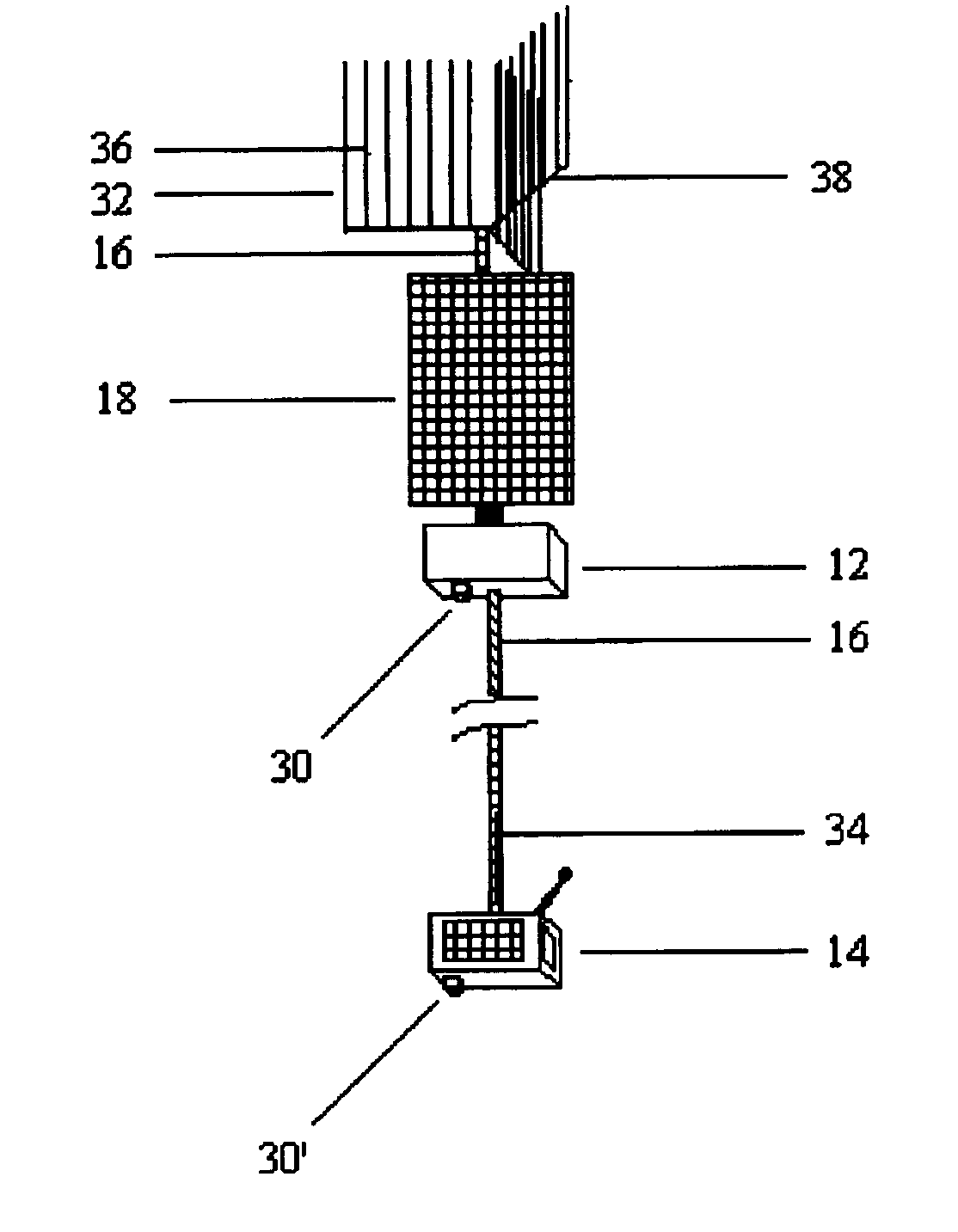
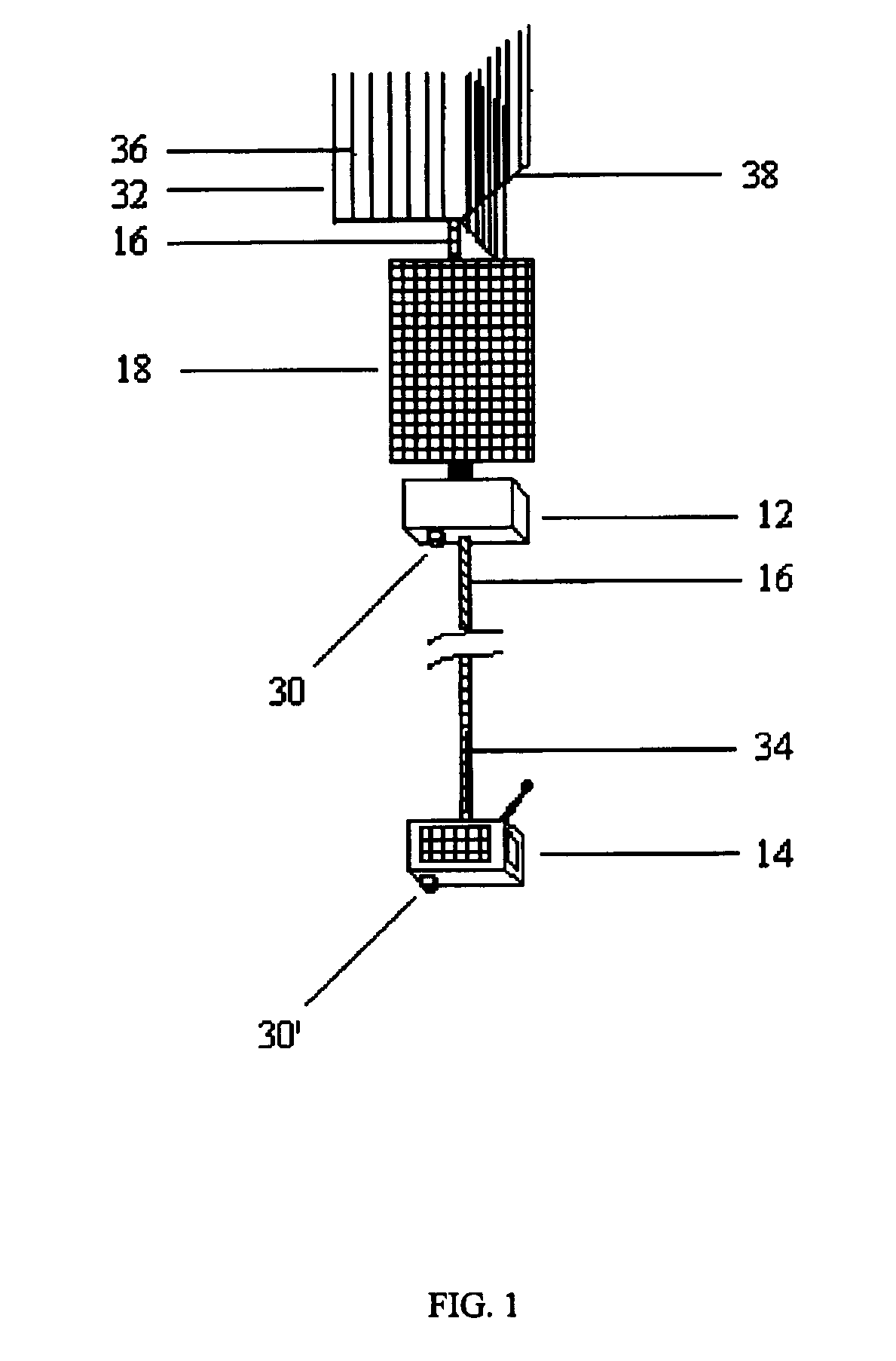
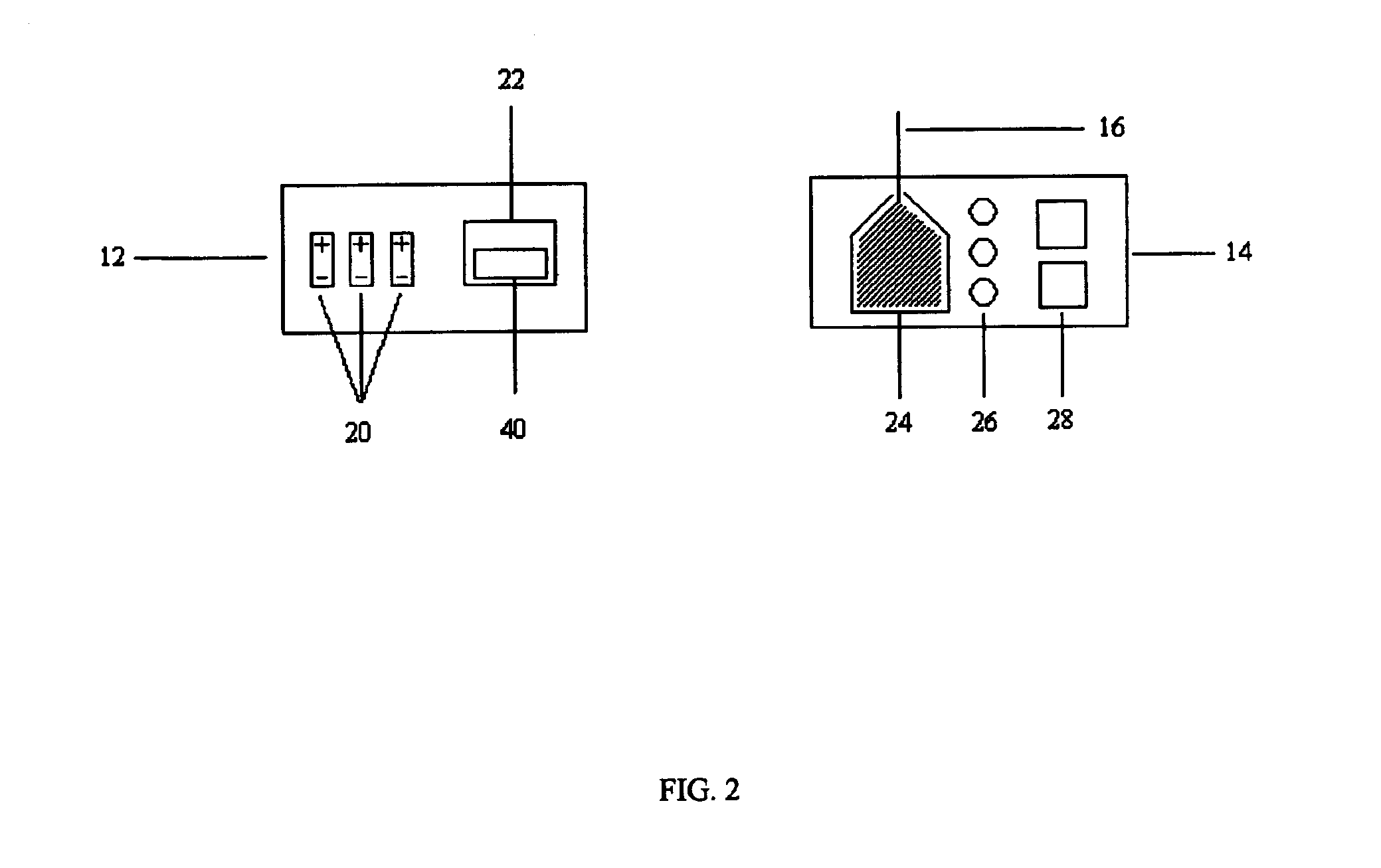
- A short, wide conductive Hoytether with a 35.26-degree trailing angle to the local vertical, combined with feedback control to manage current flow and stabilize the tether, allowing for maximum electrodynamic drag while minimizing the Area-Time-Product and using the tether structure as a thermal radiator and plasma contactor.


Method and apparatus for propulsion and power generation using spinning electrodynamic tethers
PatentInactiveUS6942186B1
Innovation
- Spinning electrodynamic tether systems, where the tether spins at an angular rate at least two times higher than the orbital rate, allowing for better angular positioning with the magnetic field, enabling higher current flow without destabilization, and utilizing onboard power sources to reverse current direction for improved control and power generation.

Space Debris Mitigation Regulatory Framework
The regulatory landscape for space debris mitigation has evolved significantly in response to the growing recognition of orbital sustainability challenges. International frameworks primarily stem from the United Nations Office for Outer Space Affairs (UNOOSA) guidelines, which established foundational principles for responsible space operations. The Inter-Agency Space Debris Coordination Committee (IADC) has developed comprehensive technical guidelines that serve as the basis for national regulatory implementations across major spacefaring nations.
Current regulatory frameworks mandate specific orbital lifetime requirements, with most jurisdictions requiring satellites in Low Earth Orbit to deorbit within 25 years of mission completion. However, electrodynamic tether systems present unique regulatory considerations due to their active deorbiting capabilities and potential electromagnetic interactions with other spacecraft systems. The Federal Communications Commission (FCC) and European Space Agency (ESA) have begun incorporating provisions for active debris removal technologies, though comprehensive standards remain under development.
National space agencies are increasingly implementing stricter licensing requirements that favor technologies demonstrating enhanced debris mitigation capabilities. The commercial space sector faces mounting pressure to adopt proactive deorbiting solutions, with some jurisdictions offering regulatory incentives for operators utilizing advanced systems like electrodynamic tethers. These incentives include expedited licensing processes and reduced orbital slot restrictions for compliant operators.
Emerging regulatory trends indicate a shift toward performance-based standards rather than prescriptive technical requirements. This approach allows innovative technologies like electrodynamic tethers to demonstrate compliance through operational effectiveness rather than adherence to specific design parameters. International coordination efforts are focusing on harmonizing these standards to prevent regulatory fragmentation that could hinder global adoption of advanced debris mitigation technologies.
The regulatory framework continues to evolve as policymakers balance the need for orbital sustainability with the promotion of commercial space innovation, creating an environment where electrodynamic tether systems can contribute to both regulatory compliance and operational efficiency.
Current regulatory frameworks mandate specific orbital lifetime requirements, with most jurisdictions requiring satellites in Low Earth Orbit to deorbit within 25 years of mission completion. However, electrodynamic tether systems present unique regulatory considerations due to their active deorbiting capabilities and potential electromagnetic interactions with other spacecraft systems. The Federal Communications Commission (FCC) and European Space Agency (ESA) have begun incorporating provisions for active debris removal technologies, though comprehensive standards remain under development.
National space agencies are increasingly implementing stricter licensing requirements that favor technologies demonstrating enhanced debris mitigation capabilities. The commercial space sector faces mounting pressure to adopt proactive deorbiting solutions, with some jurisdictions offering regulatory incentives for operators utilizing advanced systems like electrodynamic tethers. These incentives include expedited licensing processes and reduced orbital slot restrictions for compliant operators.
Emerging regulatory trends indicate a shift toward performance-based standards rather than prescriptive technical requirements. This approach allows innovative technologies like electrodynamic tethers to demonstrate compliance through operational effectiveness rather than adherence to specific design parameters. International coordination efforts are focusing on harmonizing these standards to prevent regulatory fragmentation that could hinder global adoption of advanced debris mitigation technologies.
The regulatory framework continues to evolve as policymakers balance the need for orbital sustainability with the promotion of commercial space innovation, creating an environment where electrodynamic tether systems can contribute to both regulatory compliance and operational efficiency.
Orbital Environment Impact Assessment
The deployment of electrodynamic tether systems in orbital environments introduces complex interactions with the surrounding space plasma and magnetic field structures. These systems fundamentally alter the electromagnetic signature of satellites, creating extended conductive pathways that interact with charged particles and magnetic field lines across significantly larger spatial domains than conventional spacecraft configurations.
Electrodynamic tethers generate substantial electromagnetic fields during operation, particularly when conducting current for orbital maneuvering or power generation. These fields can extend several kilometers from the primary satellite body, creating electromagnetic interference patterns that affect nearby spacecraft operations. The induced magnetic fields interact with the Earth's magnetosphere, potentially disrupting sensitive scientific measurements and communication systems of other orbital assets within the operational vicinity.
The plasma environment surrounding tethered systems experiences notable perturbations due to current collection and emission processes. As the tether system draws electrons from the ambient plasma or injects current into the ionosphere, it creates localized plasma density variations and potential gradients. These modifications can propagate through the plasma medium, affecting the charging characteristics and operational parameters of neighboring satellites.
Space debris interaction represents another critical environmental consideration. The extended physical profile of tether systems increases collision cross-sections with orbital debris, while the electromagnetic fields can influence the trajectories of charged debris particles. This dual effect creates complex debris avoidance scenarios that require sophisticated tracking and prediction models to ensure safe operations.
The ionospheric heating effects generated by high-current tether operations can create temporary atmospheric density variations at orbital altitudes. These localized heating zones affect atmospheric drag calculations for nearby spacecraft and can influence the orbital decay rates of objects operating in similar altitude ranges. The thermal emissions from current-carrying tethers also contribute to the overall thermal environment, potentially affecting infrared observation systems and thermal management strategies of adjacent satellites.
Long-term environmental impacts include the potential for electromagnetic signature accumulation in heavily trafficked orbital regions. Multiple tether systems operating simultaneously could create overlapping electromagnetic fields, leading to constructive or destructive interference patterns that significantly alter the local space environment characteristics and operational parameters for all affected spacecraft.
Electrodynamic tethers generate substantial electromagnetic fields during operation, particularly when conducting current for orbital maneuvering or power generation. These fields can extend several kilometers from the primary satellite body, creating electromagnetic interference patterns that affect nearby spacecraft operations. The induced magnetic fields interact with the Earth's magnetosphere, potentially disrupting sensitive scientific measurements and communication systems of other orbital assets within the operational vicinity.
The plasma environment surrounding tethered systems experiences notable perturbations due to current collection and emission processes. As the tether system draws electrons from the ambient plasma or injects current into the ionosphere, it creates localized plasma density variations and potential gradients. These modifications can propagate through the plasma medium, affecting the charging characteristics and operational parameters of neighboring satellites.
Space debris interaction represents another critical environmental consideration. The extended physical profile of tether systems increases collision cross-sections with orbital debris, while the electromagnetic fields can influence the trajectories of charged debris particles. This dual effect creates complex debris avoidance scenarios that require sophisticated tracking and prediction models to ensure safe operations.
The ionospheric heating effects generated by high-current tether operations can create temporary atmospheric density variations at orbital altitudes. These localized heating zones affect atmospheric drag calculations for nearby spacecraft and can influence the orbital decay rates of objects operating in similar altitude ranges. The thermal emissions from current-carrying tethers also contribute to the overall thermal environment, potentially affecting infrared observation systems and thermal management strategies of adjacent satellites.
Long-term environmental impacts include the potential for electromagnetic signature accumulation in heavily trafficked orbital regions. Multiple tether systems operating simultaneously could create overlapping electromagnetic fields, leading to constructive or destructive interference patterns that significantly alter the local space environment characteristics and operational parameters for all affected spacecraft.
Unlock deeper insights with PatSnap Eureka Quick Research — get a full tech report to explore trends and direct your research. Try now!
Generate Your Research Report Instantly with AI Agent
Supercharge your innovation with PatSnap Eureka AI Agent Platform!