

How silicon photonics enhances graphical processing units (GPUs).
JUL 17, 20259 MIN READ
Generate Your Research Report Instantly with AI Agent
PatSnap Eureka helps you evaluate technical feasibility & market potential.
Silicon Photonics and GPU Evolution
The evolution of silicon photonics and GPUs represents a significant technological convergence that has the potential to revolutionize high-performance computing. Silicon photonics, a technology that uses light for data transmission on integrated circuits, has emerged as a promising solution to overcome the limitations of traditional electronic interconnects in GPUs.
The journey of this integration began in the early 2000s when researchers first explored the possibility of using optical interconnects in computer systems. As GPUs became increasingly powerful and data-intensive, the need for faster and more efficient data transfer within these processors became apparent. Silicon photonics offered a way to address this challenge by leveraging the speed of light for data transmission.
The first major milestone in this evolution came in 2010 when Intel demonstrated the first fully integrated silicon photonics chip. This breakthrough paved the way for the development of hybrid GPU architectures that could benefit from both electronic and photonic components. In the following years, companies like NVIDIA and AMD began investing in research to incorporate silicon photonics into their GPU designs.
By 2015, the integration of silicon photonics in GPUs had progressed significantly. Researchers demonstrated prototype GPUs with optical interconnects that showed promising improvements in bandwidth and energy efficiency. These early prototypes laid the foundation for more advanced implementations in the years to come.
The period from 2015 to 2020 saw rapid advancements in both GPU architecture and silicon photonics technology. GPUs became more complex, with increased core counts and memory bandwidth requirements. Simultaneously, silicon photonics evolved to offer higher data rates, lower power consumption, and improved integration with existing semiconductor manufacturing processes.
In recent years, the focus has shifted towards developing practical, commercially viable GPU designs that incorporate silicon photonics. Major GPU manufacturers have announced plans to integrate optical interconnects in their future products, promising significant performance gains and energy savings. This integration is expected to enable new levels of parallel processing and data throughput, crucial for applications in artificial intelligence, scientific simulations, and high-performance computing.
Looking ahead, the evolution of silicon photonics and GPUs is likely to continue at a rapid pace. Researchers are exploring advanced photonic components, such as on-chip lasers and optical switches, which could further enhance GPU performance. Additionally, the development of new materials and fabrication techniques is expected to improve the efficiency and scalability of silicon photonics integration in GPUs.
The journey of this integration began in the early 2000s when researchers first explored the possibility of using optical interconnects in computer systems. As GPUs became increasingly powerful and data-intensive, the need for faster and more efficient data transfer within these processors became apparent. Silicon photonics offered a way to address this challenge by leveraging the speed of light for data transmission.
The first major milestone in this evolution came in 2010 when Intel demonstrated the first fully integrated silicon photonics chip. This breakthrough paved the way for the development of hybrid GPU architectures that could benefit from both electronic and photonic components. In the following years, companies like NVIDIA and AMD began investing in research to incorporate silicon photonics into their GPU designs.
By 2015, the integration of silicon photonics in GPUs had progressed significantly. Researchers demonstrated prototype GPUs with optical interconnects that showed promising improvements in bandwidth and energy efficiency. These early prototypes laid the foundation for more advanced implementations in the years to come.
The period from 2015 to 2020 saw rapid advancements in both GPU architecture and silicon photonics technology. GPUs became more complex, with increased core counts and memory bandwidth requirements. Simultaneously, silicon photonics evolved to offer higher data rates, lower power consumption, and improved integration with existing semiconductor manufacturing processes.
In recent years, the focus has shifted towards developing practical, commercially viable GPU designs that incorporate silicon photonics. Major GPU manufacturers have announced plans to integrate optical interconnects in their future products, promising significant performance gains and energy savings. This integration is expected to enable new levels of parallel processing and data throughput, crucial for applications in artificial intelligence, scientific simulations, and high-performance computing.
Looking ahead, the evolution of silicon photonics and GPUs is likely to continue at a rapid pace. Researchers are exploring advanced photonic components, such as on-chip lasers and optical switches, which could further enhance GPU performance. Additionally, the development of new materials and fabrication techniques is expected to improve the efficiency and scalability of silicon photonics integration in GPUs.
Market Demand for Enhanced GPUs
The market demand for enhanced GPUs has been experiencing significant growth, driven by the increasing complexity of computational tasks across various industries. As traditional GPU architectures approach their physical limits, there is a growing need for innovative solutions that can deliver higher performance, improved energy efficiency, and enhanced data processing capabilities.
One of the primary drivers of this demand is the rapid expansion of artificial intelligence and machine learning applications. These technologies require massive parallel processing power to handle complex algorithms and large datasets. Enhanced GPUs that incorporate silicon photonics technology are poised to meet this demand by offering faster data transfer rates and reduced latency, which are crucial for AI model training and inference.
The gaming industry, a long-standing pillar of GPU demand, continues to push the boundaries of graphics fidelity and real-time rendering. As game developers strive for more immersive experiences, including ray tracing and higher resolution displays, the need for GPUs with enhanced processing capabilities becomes more pronounced. Silicon photonics integration in GPUs promises to deliver the performance required for these advanced gaming features while potentially reducing power consumption.
In the field of scientific computing and data analytics, researchers and organizations are dealing with ever-larger datasets that require substantial computational resources. Enhanced GPUs with silicon photonics can significantly accelerate data processing tasks, enabling faster simulations, more accurate modeling, and real-time analysis of complex systems. This capability is particularly valuable in fields such as climate modeling, drug discovery, and financial risk assessment.
The emergence of edge computing and the Internet of Things (IoT) has created a new market segment for enhanced GPUs. As more devices become interconnected and generate vast amounts of data, there is a growing need for powerful, energy-efficient processing units at the edge. GPUs enhanced with silicon photonics can provide the necessary computational power while addressing the energy constraints often associated with edge devices.
The automotive industry's shift towards autonomous vehicles represents another significant market for enhanced GPUs. Self-driving cars require real-time processing of sensor data and complex decision-making algorithms. GPUs that can handle these tasks efficiently and with low latency are essential for the safe operation of autonomous vehicles. The integration of silicon photonics in GPUs could potentially improve the processing speed and reliability of these critical systems.
As the demand for enhanced GPUs continues to grow across these diverse sectors, manufacturers and technology companies are investing heavily in research and development to bring silicon photonics-enhanced GPUs to market. The potential for improved performance, energy efficiency, and new capabilities is driving interest from both enterprise customers and consumers, creating a robust and expanding market for this innovative technology.
One of the primary drivers of this demand is the rapid expansion of artificial intelligence and machine learning applications. These technologies require massive parallel processing power to handle complex algorithms and large datasets. Enhanced GPUs that incorporate silicon photonics technology are poised to meet this demand by offering faster data transfer rates and reduced latency, which are crucial for AI model training and inference.
The gaming industry, a long-standing pillar of GPU demand, continues to push the boundaries of graphics fidelity and real-time rendering. As game developers strive for more immersive experiences, including ray tracing and higher resolution displays, the need for GPUs with enhanced processing capabilities becomes more pronounced. Silicon photonics integration in GPUs promises to deliver the performance required for these advanced gaming features while potentially reducing power consumption.
In the field of scientific computing and data analytics, researchers and organizations are dealing with ever-larger datasets that require substantial computational resources. Enhanced GPUs with silicon photonics can significantly accelerate data processing tasks, enabling faster simulations, more accurate modeling, and real-time analysis of complex systems. This capability is particularly valuable in fields such as climate modeling, drug discovery, and financial risk assessment.
The emergence of edge computing and the Internet of Things (IoT) has created a new market segment for enhanced GPUs. As more devices become interconnected and generate vast amounts of data, there is a growing need for powerful, energy-efficient processing units at the edge. GPUs enhanced with silicon photonics can provide the necessary computational power while addressing the energy constraints often associated with edge devices.
The automotive industry's shift towards autonomous vehicles represents another significant market for enhanced GPUs. Self-driving cars require real-time processing of sensor data and complex decision-making algorithms. GPUs that can handle these tasks efficiently and with low latency are essential for the safe operation of autonomous vehicles. The integration of silicon photonics in GPUs could potentially improve the processing speed and reliability of these critical systems.
As the demand for enhanced GPUs continues to grow across these diverse sectors, manufacturers and technology companies are investing heavily in research and development to bring silicon photonics-enhanced GPUs to market. The potential for improved performance, energy efficiency, and new capabilities is driving interest from both enterprise customers and consumers, creating a robust and expanding market for this innovative technology.
Current GPU Limitations and Challenges
Graphical Processing Units (GPUs) have revolutionized computing, particularly in areas such as gaming, artificial intelligence, and scientific simulations. However, as the demand for more powerful and efficient GPUs continues to grow, several limitations and challenges have emerged that hinder their further advancement.
One of the primary challenges facing current GPUs is the increasing power consumption and heat generation. As GPUs become more powerful, they require more energy to operate, leading to higher electricity costs and potential thermal management issues. This problem is particularly acute in data centers and high-performance computing environments, where large numbers of GPUs are deployed.
Another significant limitation is the memory bandwidth bottleneck. While GPU processing power has increased dramatically over the years, memory bandwidth has not kept pace. This disparity creates a bottleneck in data transfer between the GPU and its memory, limiting overall performance in memory-intensive applications such as deep learning and large-scale simulations.
Interconnect bandwidth is another area where current GPUs face challenges. As multi-GPU systems become more common, the need for high-speed, low-latency communication between GPUs becomes critical. Current interconnect technologies struggle to keep up with the increasing demands of parallel processing across multiple GPUs.
The physical size and integration density of GPUs also present challenges. As manufacturers strive to pack more transistors and computing units into smaller spaces, they encounter physical limitations related to heat dissipation and signal integrity. This constraint impacts the ability to continue scaling GPU performance through traditional means.
Furthermore, current GPUs face challenges in terms of programmability and flexibility. While GPUs excel at parallel processing, they are less efficient at handling sequential tasks or algorithms that require frequent branching. This limitation can make it difficult to optimize certain types of applications for GPU acceleration.
Lastly, the manufacturing process for high-performance GPUs is becoming increasingly complex and expensive. As GPUs move to more advanced process nodes, the cost of development and production rises significantly, potentially limiting innovation and market competition.
These limitations and challenges highlight the need for new approaches and technologies to enhance GPU performance and efficiency. Silicon photonics emerges as a promising solution to address many of these issues, offering potential improvements in bandwidth, power efficiency, and integration density.
One of the primary challenges facing current GPUs is the increasing power consumption and heat generation. As GPUs become more powerful, they require more energy to operate, leading to higher electricity costs and potential thermal management issues. This problem is particularly acute in data centers and high-performance computing environments, where large numbers of GPUs are deployed.
Another significant limitation is the memory bandwidth bottleneck. While GPU processing power has increased dramatically over the years, memory bandwidth has not kept pace. This disparity creates a bottleneck in data transfer between the GPU and its memory, limiting overall performance in memory-intensive applications such as deep learning and large-scale simulations.
Interconnect bandwidth is another area where current GPUs face challenges. As multi-GPU systems become more common, the need for high-speed, low-latency communication between GPUs becomes critical. Current interconnect technologies struggle to keep up with the increasing demands of parallel processing across multiple GPUs.
The physical size and integration density of GPUs also present challenges. As manufacturers strive to pack more transistors and computing units into smaller spaces, they encounter physical limitations related to heat dissipation and signal integrity. This constraint impacts the ability to continue scaling GPU performance through traditional means.
Furthermore, current GPUs face challenges in terms of programmability and flexibility. While GPUs excel at parallel processing, they are less efficient at handling sequential tasks or algorithms that require frequent branching. This limitation can make it difficult to optimize certain types of applications for GPU acceleration.
Lastly, the manufacturing process for high-performance GPUs is becoming increasingly complex and expensive. As GPUs move to more advanced process nodes, the cost of development and production rises significantly, potentially limiting innovation and market competition.
These limitations and challenges highlight the need for new approaches and technologies to enhance GPU performance and efficiency. Silicon photonics emerges as a promising solution to address many of these issues, offering potential improvements in bandwidth, power efficiency, and integration density.
Existing Silicon Photonics Solutions for GPUs
01 Improved waveguide structures
Enhanced silicon photonics performance can be achieved through advanced waveguide designs. These structures optimize light propagation, reduce losses, and improve overall efficiency. Innovations in waveguide geometry, materials, and fabrication techniques contribute to better confinement and manipulation of light within silicon-based photonic circuits.- Improved waveguide structures: Enhanced silicon photonics performance can be achieved through advanced waveguide designs. These structures optimize light propagation, reduce losses, and improve overall efficiency. Innovations in waveguide geometry, materials, and fabrication techniques contribute to better confinement and manipulation of light within silicon-based photonic circuits.
- Integration of novel materials: Incorporating new materials into silicon photonics platforms can significantly enhance performance. This includes the use of III-V semiconductors, 2D materials, or other exotic materials that complement silicon's properties. These hybrid approaches can improve light emission, detection, and modulation capabilities in photonic integrated circuits.
- Advanced modulation techniques: Implementing sophisticated modulation schemes in silicon photonics devices can boost data transmission rates and signal quality. This involves developing high-speed modulators, exploring novel modulation formats, and optimizing driver circuits to achieve better performance in optical communication systems.
- Thermal management and stability: Enhancing the thermal stability of silicon photonics devices is crucial for consistent performance. This includes developing efficient heat dissipation mechanisms, temperature-compensated designs, and materials with improved thermal properties to maintain optimal operation across various conditions.
- Integration with electronic circuits: Seamless integration of photonic and electronic components on a single chip can lead to significant performance improvements. This involves developing novel architectures, interconnect solutions, and fabrication processes that enable efficient co-integration of silicon photonics with CMOS electronics, resulting in enhanced functionality and reduced power consumption.
02 Integration of novel materials
Incorporating new materials into silicon photonics platforms can significantly enhance performance. This includes the use of III-V semiconductors, 2D materials, or other exotic materials that complement silicon's properties. These materials can improve light emission, detection, or modulation capabilities, leading to more efficient and versatile photonic devices.Expand Specific Solutions03 Advanced modulation techniques
Implementing sophisticated modulation schemes in silicon photonics can boost data transmission rates and signal quality. This involves developing novel modulators that leverage electro-optic, thermo-optic, or other effects to efficiently encode information onto optical signals. Improved modulation techniques contribute to higher bandwidth and lower power consumption in photonic circuits.Expand Specific Solutions04 Enhanced light sources and detectors
Developing more efficient on-chip light sources and detectors is crucial for silicon photonics performance enhancement. This includes improving the integration of lasers, optimizing photodetector designs, and exploring novel light emission and detection mechanisms compatible with silicon technology. Better light sources and detectors lead to improved signal-to-noise ratios and overall system performance.Expand Specific Solutions05 Advanced packaging and integration techniques
Enhancing the packaging and integration of silicon photonic components can lead to significant performance improvements. This involves developing novel approaches for chip-to-chip and chip-to-fiber coupling, thermal management, and heterogeneous integration of different materials and functionalities. Advanced packaging techniques enable more compact, efficient, and reliable silicon photonic systems.Expand Specific Solutions
Key Players in GPU and Silicon Photonics
The silicon photonics market for enhancing GPUs is in a growth phase, with increasing adoption across various industries. The market size is expanding rapidly, driven by demand for high-performance computing and data center applications. Technologically, silicon photonics for GPUs is advancing, but still maturing. Key players like NVIDIA, Intel, and AMD are investing heavily in research and development to integrate silicon photonics into their GPU architectures. Companies such as IBM and Huawei are also exploring this technology to enhance their computing solutions. While not yet fully commercialized, silicon photonics shows promise in addressing bandwidth and energy efficiency challenges in traditional GPU designs.
Intel Corp.
Technical Solution: Intel has been developing silicon photonics technology to enhance GPU performance through improved data transfer capabilities. Their approach focuses on integrating photonic elements directly into the silicon chip, creating a hybrid electro-optical system. Intel's silicon photonics solution includes on-chip lasers, modulators, and photodetectors, enabling high-speed optical communication within the GPU[2]. The company has reported achieving data transfer rates of up to 400 Gbps using their silicon photonics technology[4]. Intel is also working on applying this technology to create high-bandwidth, low-latency connections between GPUs and other components in data centers, potentially revolutionizing the architecture of large-scale computing systems[6].
Strengths: High-speed data transfer capabilities and potential for improved GPU-to-GPU communication in data centers. Weaknesses: Challenges in mass production and integration with existing GPU designs.
Advanced Micro Devices, Inc.
Technical Solution: AMD has been exploring silicon photonics to enhance GPU performance, focusing on improving memory bandwidth and reducing power consumption. Their approach involves developing optical interconnects that can replace traditional electrical connections between the GPU and high-bandwidth memory (HBM). AMD's silicon photonics solution aims to overcome the limitations of electrical signaling, potentially allowing for higher memory bandwidth and reduced latency[7]. The company has demonstrated prototypes that show a potential increase in memory bandwidth by up to 5 times compared to current HBM implementations[8]. AMD is also investigating the use of silicon photonics for chip-to-chip communication in multi-GPU setups, which could lead to more efficient parallel processing in high-performance computing applications[9].
Strengths: Potential for significantly increased memory bandwidth and improved multi-GPU communication. Weaknesses: Still in early stages of development, with challenges in integrating optical components into existing GPU designs.
Core Innovations in Silicon Photonics for GPUs
A graphics processor unit (GPU) system with photonics based on-chip network
PatentActiveIN201911047168A
Innovation
- A hybrid photonic Network-on-Chip (NoC) system using a combination of single-writer-multiple-reader (SWMR) and multiple-writer-single-reader (MWSR) topologies, with point-to-point optical channels and tunable optical power splitters to predict and adjust off-chip laser power based on network activity, separating coherence and non-coherence traffic, and implementing token-based arbitration to reduce static power consumption and improve network efficiency.


Optical device having strained buried channel
PatentActiveUS20090261383A1
Innovation
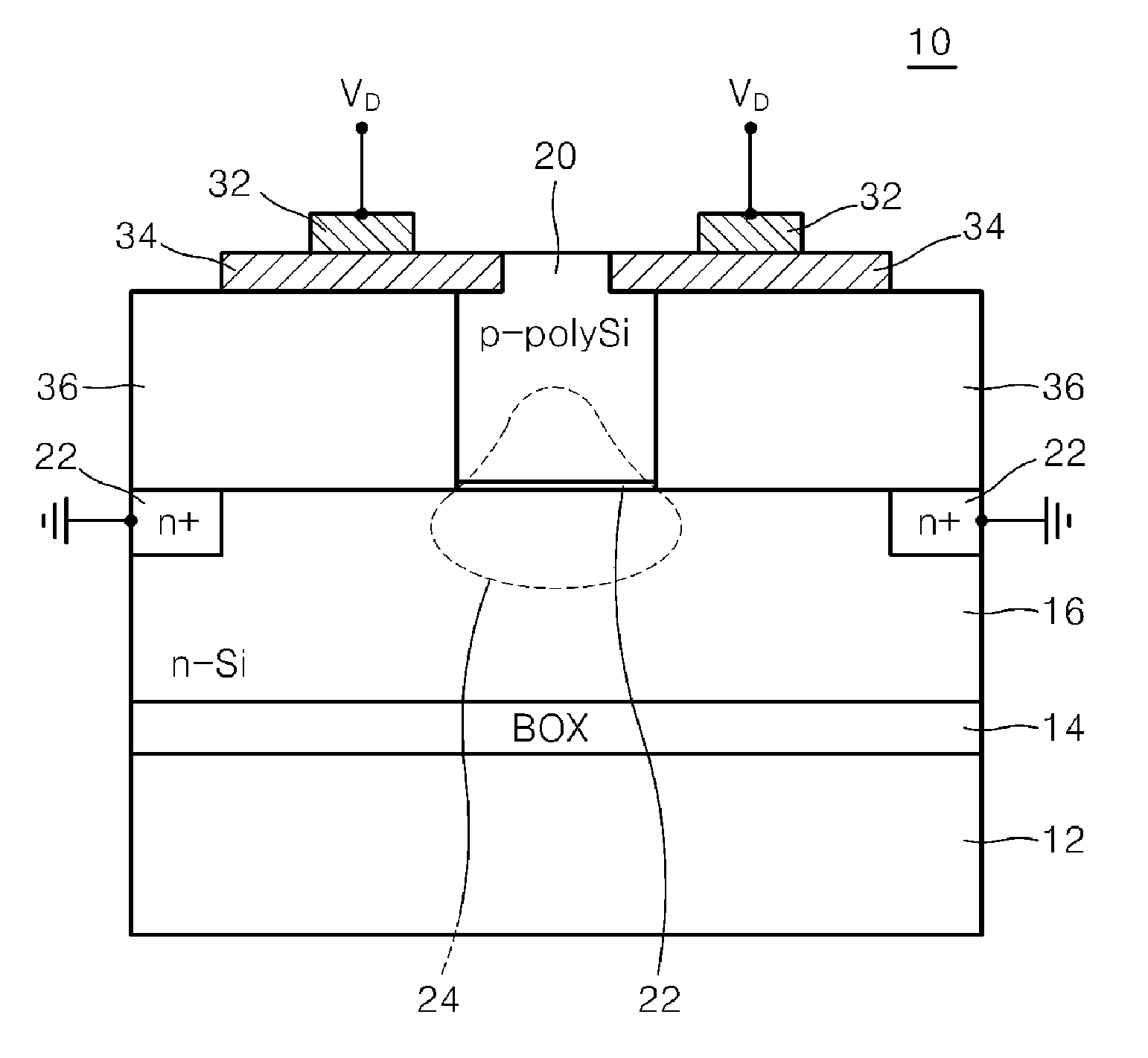
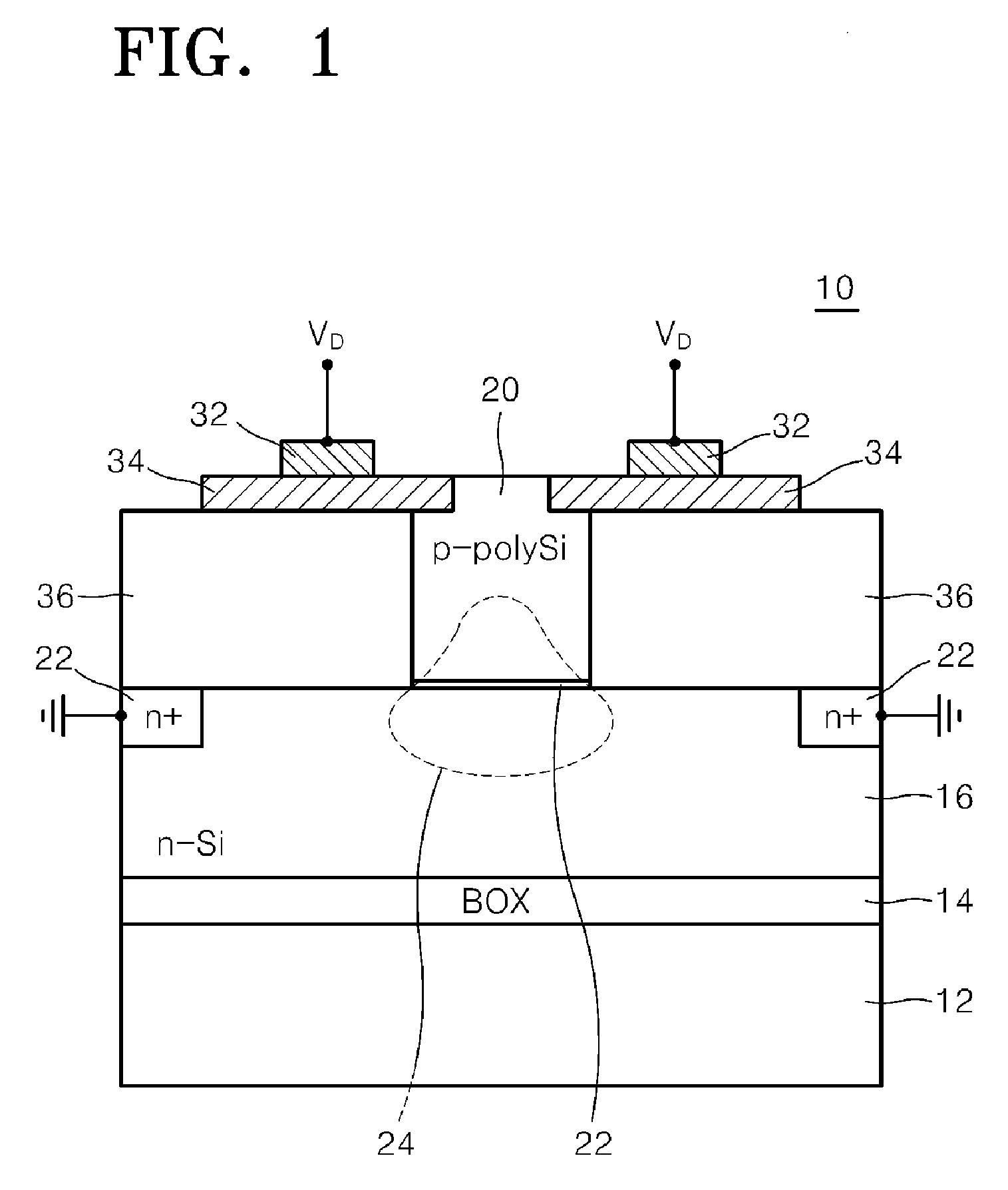
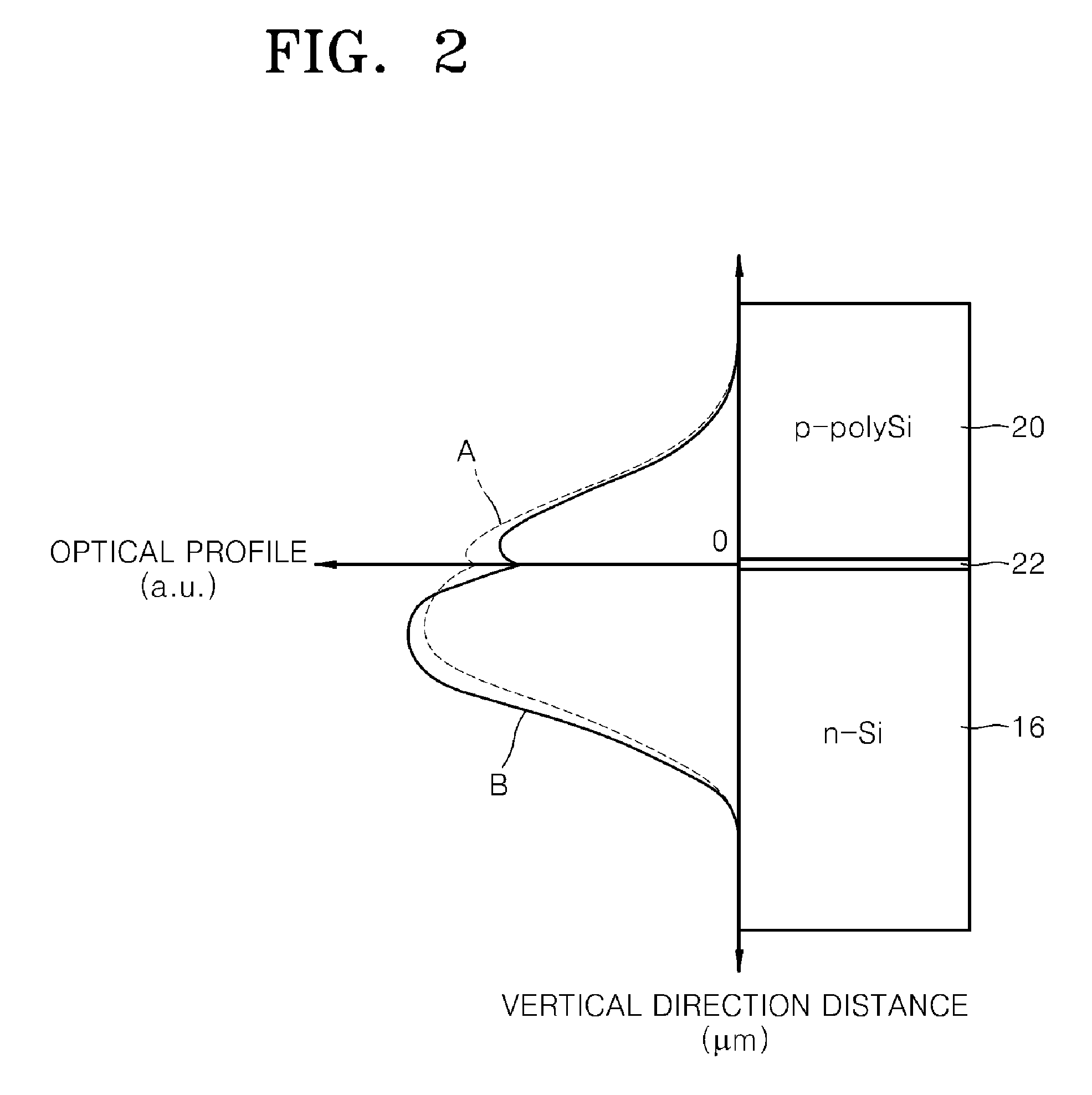
- An optical device with a strained buried channel area formed of semiconductor material with a different lattice parameter, positioned between high density dopant diffusion areas, reduces optical attenuation and increases modulation efficiency by lowering capacitance and resistance, and improving charge mobility, allowing for faster operation speeds.

Thermal Management in Photonic GPUs
Thermal management is a critical challenge in the development of photonic GPUs, as the integration of silicon photonics with traditional electronic components introduces new heat dissipation concerns. The high-density packaging of photonic and electronic elements can lead to localized hot spots, potentially compromising the performance and reliability of the device. To address this issue, researchers and engineers are exploring innovative cooling strategies that can effectively manage the thermal load in these hybrid systems.
One approach to thermal management in photonic GPUs involves the use of advanced materials with superior thermal conductivity. For instance, the incorporation of diamond-based heat spreaders or graphene layers can significantly enhance heat dissipation from active photonic and electronic components. These materials offer exceptional thermal conductivity while maintaining electrical isolation, making them ideal for use in sensitive photonic circuits.
Another promising technique is the implementation of microfluidic cooling channels integrated directly into the silicon photonic layer. These channels allow for the circulation of coolant in close proximity to heat-generating components, enabling more efficient heat removal. The use of liquid cooling also opens up possibilities for two-phase cooling systems, which can provide even greater cooling capacity by leveraging the latent heat of vaporization.
Active thermal management techniques are also being explored for photonic GPUs. Thermoelectric coolers (TECs) can be strategically placed to provide localized cooling to critical components. Additionally, the development of thermally-aware routing algorithms for optical signals can help distribute heat more evenly across the chip, preventing the formation of problematic hot spots.
The integration of thermal sensors throughout the photonic GPU architecture allows for real-time temperature monitoring and dynamic thermal management. This data can be used to implement adaptive power management strategies, such as selectively reducing clock speeds or rerouting optical signals to cooler regions of the chip when thermal thresholds are approached.
As photonic GPU designs continue to evolve, holistic thermal management approaches that consider both electronic and photonic components from the earliest stages of design are becoming increasingly important. This includes the development of comprehensive thermal models that account for the unique heat generation and dissipation characteristics of photonic components alongside traditional electronic elements. By addressing thermal challenges proactively, researchers aim to unlock the full potential of silicon photonics in enhancing GPU performance while maintaining reliable operation under demanding computational loads.
One approach to thermal management in photonic GPUs involves the use of advanced materials with superior thermal conductivity. For instance, the incorporation of diamond-based heat spreaders or graphene layers can significantly enhance heat dissipation from active photonic and electronic components. These materials offer exceptional thermal conductivity while maintaining electrical isolation, making them ideal for use in sensitive photonic circuits.
Another promising technique is the implementation of microfluidic cooling channels integrated directly into the silicon photonic layer. These channels allow for the circulation of coolant in close proximity to heat-generating components, enabling more efficient heat removal. The use of liquid cooling also opens up possibilities for two-phase cooling systems, which can provide even greater cooling capacity by leveraging the latent heat of vaporization.
Active thermal management techniques are also being explored for photonic GPUs. Thermoelectric coolers (TECs) can be strategically placed to provide localized cooling to critical components. Additionally, the development of thermally-aware routing algorithms for optical signals can help distribute heat more evenly across the chip, preventing the formation of problematic hot spots.
The integration of thermal sensors throughout the photonic GPU architecture allows for real-time temperature monitoring and dynamic thermal management. This data can be used to implement adaptive power management strategies, such as selectively reducing clock speeds or rerouting optical signals to cooler regions of the chip when thermal thresholds are approached.
As photonic GPU designs continue to evolve, holistic thermal management approaches that consider both electronic and photonic components from the earliest stages of design are becoming increasingly important. This includes the development of comprehensive thermal models that account for the unique heat generation and dissipation characteristics of photonic components alongside traditional electronic elements. By addressing thermal challenges proactively, researchers aim to unlock the full potential of silicon photonics in enhancing GPU performance while maintaining reliable operation under demanding computational loads.
Energy Efficiency Improvements
Silicon photonics integration in GPUs has led to significant energy efficiency improvements, addressing one of the most critical challenges in modern computing. By leveraging light-based data transmission, silicon photonics reduces power consumption and heat generation in GPUs, resulting in enhanced performance per watt.
The primary energy efficiency gain comes from the reduction in electrical resistance and capacitance associated with traditional copper interconnects. Optical interconnects in silicon photonics can transmit data over longer distances with minimal signal degradation and power loss. This allows for more efficient data movement both within the GPU and between the GPU and other components, such as memory or other processing units.
Furthermore, silicon photonics enables higher bandwidth density, allowing more data to be transmitted using less energy. This is particularly beneficial for GPUs, which require massive data throughput for tasks like rendering complex graphics or performing parallel computations in machine learning applications. The increased bandwidth efficiency translates directly to reduced power consumption for the same computational output.
Another key aspect of energy efficiency improvement is the reduction in thermal management requirements. As silicon photonics components generate less heat compared to their electronic counterparts, the overall cooling needs of the GPU are reduced. This not only saves energy directly but also allows for more compact designs and higher component density, further enhancing performance per unit of energy consumed.
The integration of silicon photonics also enables more efficient clock distribution within the GPU. Optical clock distribution networks can maintain signal integrity over longer distances with lower power consumption compared to electrical networks. This allows for more precise and energy-efficient synchronization of various GPU components, contributing to overall system efficiency.
Moreover, the energy efficiency gains from silicon photonics extend beyond the GPU itself. By enabling faster and more efficient data transfer between the GPU and other system components, such as high-bandwidth memory or other accelerators, the entire computing system benefits from reduced power consumption and improved performance.
As silicon photonics technology continues to mature, we can expect further improvements in energy efficiency. Ongoing research in areas such as on-chip laser sources, more efficient modulators, and integrated photonic-electronic circuits promises to push the boundaries of GPU energy efficiency even further, paving the way for more powerful and sustainable computing solutions.
The primary energy efficiency gain comes from the reduction in electrical resistance and capacitance associated with traditional copper interconnects. Optical interconnects in silicon photonics can transmit data over longer distances with minimal signal degradation and power loss. This allows for more efficient data movement both within the GPU and between the GPU and other components, such as memory or other processing units.
Furthermore, silicon photonics enables higher bandwidth density, allowing more data to be transmitted using less energy. This is particularly beneficial for GPUs, which require massive data throughput for tasks like rendering complex graphics or performing parallel computations in machine learning applications. The increased bandwidth efficiency translates directly to reduced power consumption for the same computational output.
Another key aspect of energy efficiency improvement is the reduction in thermal management requirements. As silicon photonics components generate less heat compared to their electronic counterparts, the overall cooling needs of the GPU are reduced. This not only saves energy directly but also allows for more compact designs and higher component density, further enhancing performance per unit of energy consumed.
The integration of silicon photonics also enables more efficient clock distribution within the GPU. Optical clock distribution networks can maintain signal integrity over longer distances with lower power consumption compared to electrical networks. This allows for more precise and energy-efficient synchronization of various GPU components, contributing to overall system efficiency.
Moreover, the energy efficiency gains from silicon photonics extend beyond the GPU itself. By enabling faster and more efficient data transfer between the GPU and other system components, such as high-bandwidth memory or other accelerators, the entire computing system benefits from reduced power consumption and improved performance.
As silicon photonics technology continues to mature, we can expect further improvements in energy efficiency. Ongoing research in areas such as on-chip laser sources, more efficient modulators, and integrated photonic-electronic circuits promises to push the boundaries of GPU energy efficiency even further, paving the way for more powerful and sustainable computing solutions.
Unlock deeper insights with PatSnap Eureka Quick Research — get a full tech report to explore trends and direct your research. Try now!
Generate Your Research Report Instantly with AI Agent
Supercharge your innovation with PatSnap Eureka AI Agent Platform!