

How silicon photonics is revolutionizing financial data security.
JUL 17, 20259 MIN READ
Generate Your Research Report Instantly with AI Agent
PatSnap Eureka helps you evaluate technical feasibility & market potential.
Silicon Photonics Evolution and Objectives
Silicon photonics has emerged as a transformative technology in the realm of data transmission and processing, with significant implications for financial data security. The evolution of this field can be traced back to the early 2000s when researchers began exploring the potential of integrating photonic components with silicon-based electronic circuits. The primary objective was to leverage the high-speed capabilities of light for data transmission while maintaining compatibility with existing semiconductor manufacturing processes.
Over the past two decades, silicon photonics has undergone rapid development, driven by the increasing demand for faster and more secure data transmission in various sectors, including finance. The technology aims to address the limitations of traditional electronic systems, such as bandwidth constraints and electromagnetic interference, by utilizing light-based communication within silicon chips.
One of the key objectives in the evolution of silicon photonics for financial data security is to enhance encryption and secure key distribution. By harnessing the principles of quantum mechanics, silicon photonic devices can generate and manipulate single photons, enabling quantum key distribution (QKD) systems. These systems offer theoretically unbreakable encryption, providing a robust solution for securing sensitive financial transactions and data transfers.
Another crucial goal is to improve the speed and efficiency of data processing in financial systems. Silicon photonics enables the integration of optical interconnects directly on chip, allowing for ultra-fast data transmission between components. This capability is particularly valuable in high-frequency trading and real-time risk analysis, where microseconds can make a significant difference in decision-making and transaction execution.
The technology also aims to address the growing concern of power consumption in data centers handling financial information. By replacing electronic interconnects with optical ones, silicon photonics can significantly reduce energy consumption while increasing data throughput. This aligns with the financial industry's efforts to improve sustainability and reduce operational costs.
As silicon photonics continues to evolve, researchers and industry players are focusing on developing more sophisticated integrated photonic circuits that can perform complex operations directly in the optical domain. This includes all-optical switching, signal processing, and even optical computing, which could revolutionize the way financial data is processed and secured.
The ultimate objective of silicon photonics in the context of financial data security is to create a seamless, high-speed, and ultra-secure ecosystem for data transmission and processing. By combining the benefits of photonics with the scalability and cost-effectiveness of silicon-based manufacturing, the technology promises to deliver robust solutions that can keep pace with the ever-increasing demands of the global financial system.
Over the past two decades, silicon photonics has undergone rapid development, driven by the increasing demand for faster and more secure data transmission in various sectors, including finance. The technology aims to address the limitations of traditional electronic systems, such as bandwidth constraints and electromagnetic interference, by utilizing light-based communication within silicon chips.
One of the key objectives in the evolution of silicon photonics for financial data security is to enhance encryption and secure key distribution. By harnessing the principles of quantum mechanics, silicon photonic devices can generate and manipulate single photons, enabling quantum key distribution (QKD) systems. These systems offer theoretically unbreakable encryption, providing a robust solution for securing sensitive financial transactions and data transfers.
Another crucial goal is to improve the speed and efficiency of data processing in financial systems. Silicon photonics enables the integration of optical interconnects directly on chip, allowing for ultra-fast data transmission between components. This capability is particularly valuable in high-frequency trading and real-time risk analysis, where microseconds can make a significant difference in decision-making and transaction execution.
The technology also aims to address the growing concern of power consumption in data centers handling financial information. By replacing electronic interconnects with optical ones, silicon photonics can significantly reduce energy consumption while increasing data throughput. This aligns with the financial industry's efforts to improve sustainability and reduce operational costs.
As silicon photonics continues to evolve, researchers and industry players are focusing on developing more sophisticated integrated photonic circuits that can perform complex operations directly in the optical domain. This includes all-optical switching, signal processing, and even optical computing, which could revolutionize the way financial data is processed and secured.
The ultimate objective of silicon photonics in the context of financial data security is to create a seamless, high-speed, and ultra-secure ecosystem for data transmission and processing. By combining the benefits of photonics with the scalability and cost-effectiveness of silicon-based manufacturing, the technology promises to deliver robust solutions that can keep pace with the ever-increasing demands of the global financial system.
Financial Data Security Market Analysis
The financial data security market has experienced significant growth in recent years, driven by the increasing digitization of financial services and the rising frequency and sophistication of cyber threats. As financial institutions handle vast amounts of sensitive information, including personal and financial data of customers, the demand for robust security solutions has surged. The global financial data security market was valued at approximately $13.5 billion in 2020 and is projected to reach $25.7 billion by 2026, growing at a CAGR of 11.3% during the forecast period.
Several factors contribute to this market expansion. Firstly, the proliferation of digital banking and fintech services has expanded the attack surface for cybercriminals, necessitating advanced security measures. Secondly, stringent regulatory requirements, such as GDPR and PSD2, have compelled financial institutions to invest heavily in data protection technologies. Thirdly, the increasing adoption of cloud computing and mobile banking platforms has created new vulnerabilities that require innovative security solutions.
The market is segmented based on deployment type (on-premises and cloud-based), organization size (large enterprises and SMEs), and application (data loss prevention, encryption, identity and access management, and others). Cloud-based solutions are gaining traction due to their scalability and cost-effectiveness, particularly among smaller financial institutions. Large enterprises continue to dominate the market share, but SMEs are expected to witness the highest growth rate in the coming years.
Geographically, North America holds the largest market share, followed by Europe and Asia-Pacific. The United States, in particular, leads the market due to its advanced financial infrastructure and early adoption of cutting-edge technologies. However, the Asia-Pacific region is anticipated to exhibit the fastest growth, driven by rapid digitalization in countries like China and India, and increasing regulatory focus on data protection.
Key players in the financial data security market include IBM, Cisco Systems, Symantec, McAfee, and Oracle. These companies are investing heavily in research and development to stay ahead of evolving threats and maintain their competitive edge. Emerging technologies such as artificial intelligence, machine learning, and blockchain are being integrated into security solutions to enhance threat detection and prevention capabilities.
The COVID-19 pandemic has further accelerated the growth of the financial data security market. The sudden shift to remote work environments has exposed new vulnerabilities in financial systems, prompting institutions to reassess and strengthen their security infrastructure. This has led to increased investments in secure communication tools, virtual private networks (VPNs), and multi-factor authentication systems.
Several factors contribute to this market expansion. Firstly, the proliferation of digital banking and fintech services has expanded the attack surface for cybercriminals, necessitating advanced security measures. Secondly, stringent regulatory requirements, such as GDPR and PSD2, have compelled financial institutions to invest heavily in data protection technologies. Thirdly, the increasing adoption of cloud computing and mobile banking platforms has created new vulnerabilities that require innovative security solutions.
The market is segmented based on deployment type (on-premises and cloud-based), organization size (large enterprises and SMEs), and application (data loss prevention, encryption, identity and access management, and others). Cloud-based solutions are gaining traction due to their scalability and cost-effectiveness, particularly among smaller financial institutions. Large enterprises continue to dominate the market share, but SMEs are expected to witness the highest growth rate in the coming years.
Geographically, North America holds the largest market share, followed by Europe and Asia-Pacific. The United States, in particular, leads the market due to its advanced financial infrastructure and early adoption of cutting-edge technologies. However, the Asia-Pacific region is anticipated to exhibit the fastest growth, driven by rapid digitalization in countries like China and India, and increasing regulatory focus on data protection.
Key players in the financial data security market include IBM, Cisco Systems, Symantec, McAfee, and Oracle. These companies are investing heavily in research and development to stay ahead of evolving threats and maintain their competitive edge. Emerging technologies such as artificial intelligence, machine learning, and blockchain are being integrated into security solutions to enhance threat detection and prevention capabilities.
The COVID-19 pandemic has further accelerated the growth of the financial data security market. The sudden shift to remote work environments has exposed new vulnerabilities in financial systems, prompting institutions to reassess and strengthen their security infrastructure. This has led to increased investments in secure communication tools, virtual private networks (VPNs), and multi-factor authentication systems.
Silicon Photonics: Current State and Challenges
Silicon photonics has emerged as a transformative technology in the field of financial data security, offering unprecedented capabilities in data transmission, encryption, and processing. The current state of silicon photonics in this domain is characterized by rapid advancements and increasing adoption, yet it also faces several significant challenges.
One of the primary advantages of silicon photonics in financial data security is its ability to transmit data at extremely high speeds over long distances with minimal latency. This is particularly crucial in high-frequency trading and real-time financial transactions where microseconds can make a substantial difference. Current implementations have demonstrated data transmission rates of up to 400 Gbps, with the potential to reach terabit-per-second speeds in the near future.
Another key development is the integration of quantum key distribution (QKD) systems with silicon photonics. This combination enhances the security of financial data by leveraging the principles of quantum mechanics to create unbreakable encryption keys. Several financial institutions have already begun implementing QKD-based systems for secure communication between data centers and trading floors.
Despite these advancements, silicon photonics faces several challenges in the context of financial data security. One major hurdle is the need for seamless integration with existing electronic systems. While progress has been made in developing hybrid electro-optical systems, achieving full compatibility and optimal performance remains an ongoing challenge.
Scalability is another significant issue. As financial institutions handle ever-increasing volumes of data, scaling up silicon photonic systems to meet these demands while maintaining cost-effectiveness and energy efficiency is a complex task. Current research is focused on developing more efficient manufacturing processes and designing more compact, multi-functional photonic circuits.
Heat management presents another challenge, particularly in high-density data center environments. The performance of photonic devices can be sensitive to temperature fluctuations, necessitating advanced cooling solutions and thermal management strategies.
Furthermore, the reliability and longevity of silicon photonic components in mission-critical financial applications require further improvement. Ensuring consistent performance over extended periods and under varying environmental conditions is crucial for widespread adoption in the financial sector.
Lastly, the shortage of skilled professionals with expertise in both silicon photonics and financial data security poses a challenge to the rapid development and implementation of these technologies. Bridging this knowledge gap requires concerted efforts in education and training programs.
In conclusion, while silicon photonics is making significant strides in revolutionizing financial data security, overcoming these challenges will be crucial for its widespread adoption and long-term success in the financial industry. Continued research and development efforts, along with collaboration between technology providers and financial institutions, will be key to realizing the full potential of silicon photonics in this critical domain.
One of the primary advantages of silicon photonics in financial data security is its ability to transmit data at extremely high speeds over long distances with minimal latency. This is particularly crucial in high-frequency trading and real-time financial transactions where microseconds can make a substantial difference. Current implementations have demonstrated data transmission rates of up to 400 Gbps, with the potential to reach terabit-per-second speeds in the near future.
Another key development is the integration of quantum key distribution (QKD) systems with silicon photonics. This combination enhances the security of financial data by leveraging the principles of quantum mechanics to create unbreakable encryption keys. Several financial institutions have already begun implementing QKD-based systems for secure communication between data centers and trading floors.
Despite these advancements, silicon photonics faces several challenges in the context of financial data security. One major hurdle is the need for seamless integration with existing electronic systems. While progress has been made in developing hybrid electro-optical systems, achieving full compatibility and optimal performance remains an ongoing challenge.
Scalability is another significant issue. As financial institutions handle ever-increasing volumes of data, scaling up silicon photonic systems to meet these demands while maintaining cost-effectiveness and energy efficiency is a complex task. Current research is focused on developing more efficient manufacturing processes and designing more compact, multi-functional photonic circuits.
Heat management presents another challenge, particularly in high-density data center environments. The performance of photonic devices can be sensitive to temperature fluctuations, necessitating advanced cooling solutions and thermal management strategies.
Furthermore, the reliability and longevity of silicon photonic components in mission-critical financial applications require further improvement. Ensuring consistent performance over extended periods and under varying environmental conditions is crucial for widespread adoption in the financial sector.
Lastly, the shortage of skilled professionals with expertise in both silicon photonics and financial data security poses a challenge to the rapid development and implementation of these technologies. Bridging this knowledge gap requires concerted efforts in education and training programs.
In conclusion, while silicon photonics is making significant strides in revolutionizing financial data security, overcoming these challenges will be crucial for its widespread adoption and long-term success in the financial industry. Continued research and development efforts, along with collaboration between technology providers and financial institutions, will be key to realizing the full potential of silicon photonics in this critical domain.
Current Silicon Photonics Security Solutions
01 Secure optical communication systems
Silicon photonics technology is used to develop secure optical communication systems. These systems employ advanced encryption techniques and quantum key distribution to ensure data security in high-speed optical networks. The integration of silicon photonics allows for compact, energy-efficient, and scalable secure communication solutions.- Secure optical communication systems: Silicon photonics technology is utilized to develop secure optical communication systems. These systems employ advanced encryption techniques and quantum key distribution to ensure data security in high-speed optical networks. The integration of silicon photonics allows for compact, energy-efficient, and scalable secure communication solutions.
- On-chip encryption for data protection: Silicon photonic chips are designed with built-in encryption capabilities to protect data at the hardware level. These chips incorporate photonic encryption modules that can perform real-time encryption and decryption of data streams, enhancing security in data centers and cloud computing environments.
- Quantum-safe cryptography using silicon photonics: Silicon photonics is leveraged to implement quantum-safe cryptographic protocols. This approach utilizes the unique properties of photons to create cryptographic systems that are resistant to attacks from both classical and quantum computers, ensuring long-term data security in the face of advancing quantum computing technologies.
- Photonic physical unclonable functions (PUFs): Silicon photonic devices are used to create physical unclonable functions for secure authentication and key generation. These photonic PUFs exploit the inherent variability in the manufacturing process of silicon photonic circuits to produce unique and tamper-resistant security primitives for various applications, including IoT device authentication and secure communications.
- Secure photonic interconnects for data centers: Silicon photonics technology is applied to develop secure high-speed interconnects for data centers. These interconnects incorporate advanced security features such as physical layer encryption, intrusion detection, and secure key exchange protocols to protect data in transit between servers and storage systems within data center environments.
02 On-chip encryption for data protection
Silicon photonic chips are designed with built-in encryption capabilities to protect data at the hardware level. These chips incorporate photonic encryption modules that can perform real-time encryption and decryption of data streams, enhancing security in data centers and cloud computing environments.Expand Specific Solutions03 Quantum-safe cryptography using silicon photonics
Silicon photonics is utilized to implement quantum-safe cryptography algorithms. This approach leverages the unique properties of photons to create cryptographic systems that are resistant to attacks from both classical and quantum computers, ensuring long-term data security in the face of advancing quantum computing technologies.Expand Specific Solutions04 Photonic physical unclonable functions (PUFs)
Silicon photonic devices are used to create physical unclonable functions for secure authentication and key generation. These photonic PUFs exploit the inherent variability in the manufacturing process of silicon photonic circuits to produce unique and tamper-resistant security primitives for hardware-based security applications.Expand Specific Solutions05 Secure photonic interconnects for data centers
Silicon photonics technology is employed to develop secure high-speed interconnects for data centers. These interconnects incorporate advanced security features such as side-channel attack resistance and secure key exchange protocols, ensuring the confidentiality and integrity of data transmitted between servers and storage systems in large-scale computing environments.Expand Specific Solutions
Key Players in Silicon Photonics for Finance
Silicon photonics is revolutionizing financial data security by leveraging the power of light-based communication in integrated circuits. This emerging technology is in its early growth stage, with a rapidly expanding market projected to reach billions of dollars in the coming years. While still evolving, silicon photonics is gaining traction due to its potential for ultra-secure, high-speed data transmission. Key players like Huawei, IBM, and Intel are investing heavily in research and development, driving technological advancements. Universities such as MIT and Stanford are also contributing significantly to innovation in this field. As the technology matures, we can expect wider adoption across the financial sector, enhancing data security and operational efficiency.
Huawei Technologies Co., Ltd.
Technical Solution: Huawei has developed a silicon photonics-based solution for financial data security, leveraging its expertise in optical communications. Their approach integrates photonic integrated circuits (PICs) with traditional electronic systems to create high-speed, low-latency, and secure data transmission channels. The company's silicon photonics technology enables quantum key distribution (QKD) systems, providing unprecedented levels of security for financial transactions[1]. Huawei's solution incorporates on-chip lasers, modulators, and detectors, allowing for compact and energy-efficient designs suitable for data center interconnects and long-haul communications in the financial sector[3]. The company has also demonstrated the ability to achieve data rates of up to 400 Gbps using their silicon photonics platform, significantly enhancing the speed of secure financial data transfers[5].
Strengths: Advanced integration of PICs, expertise in optical communications, and high-speed data transmission. Weaknesses: Potential geopolitical challenges and market access issues in some countries.
International Business Machines Corp.
Technical Solution: IBM has made significant strides in silicon photonics for financial data security. Their approach focuses on developing integrated photonic chips that can process and transmit data using light, offering enhanced security and performance for financial institutions. IBM's silicon photonics technology enables the implementation of quantum-safe cryptography, protecting financial data against potential threats from quantum computers[2]. The company has demonstrated the ability to integrate multiple photonic components on a single chip, including modulators, multiplexers, and photodetectors, which allows for compact and scalable solutions[4]. IBM's silicon photonics platform also supports the development of AI accelerators for real-time fraud detection and risk assessment in financial transactions, combining data security with advanced analytics capabilities[6].
Strengths: Strong research capabilities, integration with quantum computing initiatives, and established presence in the financial sector. Weaknesses: Relatively new entrant in the silicon photonics market compared to some specialized photonics companies.
Core Innovations in Silicon Photonics Security
Photonics chips and semiconductor products having angled optical fibers
PatentActiveUS20230127056A1
Innovation
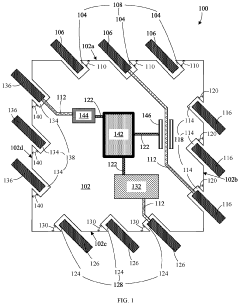
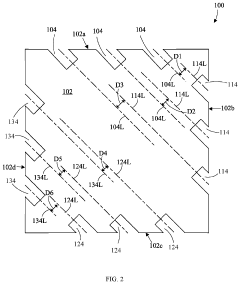
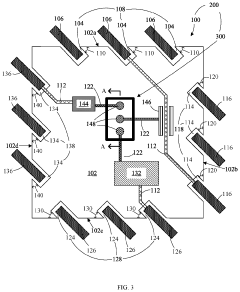
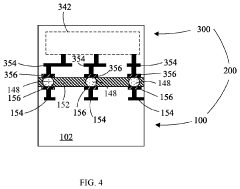
- The development of PIC chips with substrates featuring grooves angled at 30 to 60 degrees, preferably 45 degrees, along the edges to accommodate optical fibers, allowing for increased edge utilization and efficient optical signal transmission by positioning fibers within these grooves, thereby enhancing data density and communication capabilities.
Secure cross-blockchain asset movement using photonic quantum computing
PatentActiveUS12131329B2
Innovation
- The use of photonic quantum processors to generate machine learning models based on blockchain event logs and smart contract bytecode, enabling real-time detection of security risks through long short-term neural networks and transfer profile knowledge graphs, which can block or permit cryptocurrency transfers based on assessed risk thresholds.


Regulatory Framework for Financial Data Security
The regulatory framework for financial data security is evolving rapidly to keep pace with the advancements in silicon photonics technology. As this innovative approach revolutionizes data transmission and encryption in the financial sector, regulatory bodies are adapting their guidelines to ensure robust protection of sensitive information.
At the forefront of these regulatory efforts is the implementation of stringent encryption standards specifically tailored to silicon photonics-based systems. Financial institutions are now required to employ quantum-resistant encryption algorithms that can withstand potential threats from future quantum computing technologies. This proactive measure aims to safeguard financial data against long-term security risks.
Regulatory bodies have also introduced new compliance requirements for financial organizations utilizing silicon photonics in their data infrastructure. These regulations mandate regular security audits and vulnerability assessments to identify and address potential weaknesses in the photonic systems. Additionally, financial institutions must demonstrate their ability to rapidly detect and respond to any breaches or anomalies in their photonic networks.
Data privacy regulations have been updated to account for the unique characteristics of silicon photonics-based data transmission. New guidelines address the secure handling and storage of data in transit, ensuring that information remains protected throughout its journey across photonic networks. Financial institutions are now required to implement end-to-end encryption and secure key management protocols specifically designed for photonic systems.
The regulatory framework also emphasizes the importance of interoperability and standardization in silicon photonics-based financial security systems. Regulatory bodies are working closely with industry stakeholders to develop common standards and protocols, facilitating seamless integration and communication between different financial institutions and their respective photonic infrastructures.
To address the potential risks associated with the increased speed and volume of data transmission enabled by silicon photonics, regulators have introduced new guidelines for real-time monitoring and anomaly detection. Financial institutions are required to implement advanced analytics and machine learning algorithms capable of identifying suspicious patterns or unauthorized access attempts in photonic networks.
As silicon photonics technology continues to advance, regulatory bodies are adopting a more agile approach to policy-making. They are establishing collaborative platforms that bring together industry experts, academics, and policymakers to continuously assess and update regulations in response to emerging threats and technological developments. This adaptive regulatory framework aims to strike a balance between fostering innovation and maintaining robust security measures in the financial sector.
At the forefront of these regulatory efforts is the implementation of stringent encryption standards specifically tailored to silicon photonics-based systems. Financial institutions are now required to employ quantum-resistant encryption algorithms that can withstand potential threats from future quantum computing technologies. This proactive measure aims to safeguard financial data against long-term security risks.
Regulatory bodies have also introduced new compliance requirements for financial organizations utilizing silicon photonics in their data infrastructure. These regulations mandate regular security audits and vulnerability assessments to identify and address potential weaknesses in the photonic systems. Additionally, financial institutions must demonstrate their ability to rapidly detect and respond to any breaches or anomalies in their photonic networks.
Data privacy regulations have been updated to account for the unique characteristics of silicon photonics-based data transmission. New guidelines address the secure handling and storage of data in transit, ensuring that information remains protected throughout its journey across photonic networks. Financial institutions are now required to implement end-to-end encryption and secure key management protocols specifically designed for photonic systems.
The regulatory framework also emphasizes the importance of interoperability and standardization in silicon photonics-based financial security systems. Regulatory bodies are working closely with industry stakeholders to develop common standards and protocols, facilitating seamless integration and communication between different financial institutions and their respective photonic infrastructures.
To address the potential risks associated with the increased speed and volume of data transmission enabled by silicon photonics, regulators have introduced new guidelines for real-time monitoring and anomaly detection. Financial institutions are required to implement advanced analytics and machine learning algorithms capable of identifying suspicious patterns or unauthorized access attempts in photonic networks.
As silicon photonics technology continues to advance, regulatory bodies are adopting a more agile approach to policy-making. They are establishing collaborative platforms that bring together industry experts, academics, and policymakers to continuously assess and update regulations in response to emerging threats and technological developments. This adaptive regulatory framework aims to strike a balance between fostering innovation and maintaining robust security measures in the financial sector.
Economic Impact of Silicon Photonics in Finance
The integration of silicon photonics in financial data security is poised to have a significant economic impact on the finance sector. This revolutionary technology is expected to drive substantial cost savings and efficiency improvements across various financial operations.
One of the primary economic benefits of silicon photonics in finance is the potential for reduced infrastructure costs. Traditional data centers rely heavily on copper-based interconnects, which are becoming increasingly inadequate for handling the massive data volumes in modern financial systems. Silicon photonics offers a more efficient alternative, enabling higher data transfer rates with lower power consumption. This translates to reduced cooling requirements and overall energy costs for financial institutions.
The improved data processing capabilities facilitated by silicon photonics are likely to enhance trading performance and risk management. High-frequency trading firms, in particular, stand to benefit from the ultra-low latency and high bandwidth provided by photonic circuits. This could lead to more profitable trading strategies and potentially reshape market dynamics.
In terms of cybersecurity, the adoption of silicon photonics-based encryption methods is expected to significantly reduce the economic impact of data breaches. Financial institutions invest heavily in data protection, and the quantum-resistant nature of certain photonic encryption techniques could provide a more cost-effective long-term security solution.
The implementation of silicon photonics in financial networks may also drive innovation in financial products and services. Faster and more secure data transmission could enable the development of new real-time financial instruments and more sophisticated risk assessment models. This innovation potential could create new revenue streams for financial institutions and fintech companies.
Furthermore, the economic impact extends to the semiconductor and photonics industries. As demand for silicon photonics components in the finance sector grows, it is likely to stimulate investment in research and development, potentially leading to job creation and economic growth in these high-tech industries.
However, the transition to silicon photonics infrastructure will require significant initial investments. Financial institutions will need to weigh the upfront costs against the long-term economic benefits. Despite this challenge, the potential for improved operational efficiency, enhanced security, and new business opportunities suggests that the economic impact of silicon photonics in finance will be substantially positive in the long run.
One of the primary economic benefits of silicon photonics in finance is the potential for reduced infrastructure costs. Traditional data centers rely heavily on copper-based interconnects, which are becoming increasingly inadequate for handling the massive data volumes in modern financial systems. Silicon photonics offers a more efficient alternative, enabling higher data transfer rates with lower power consumption. This translates to reduced cooling requirements and overall energy costs for financial institutions.
The improved data processing capabilities facilitated by silicon photonics are likely to enhance trading performance and risk management. High-frequency trading firms, in particular, stand to benefit from the ultra-low latency and high bandwidth provided by photonic circuits. This could lead to more profitable trading strategies and potentially reshape market dynamics.
In terms of cybersecurity, the adoption of silicon photonics-based encryption methods is expected to significantly reduce the economic impact of data breaches. Financial institutions invest heavily in data protection, and the quantum-resistant nature of certain photonic encryption techniques could provide a more cost-effective long-term security solution.
The implementation of silicon photonics in financial networks may also drive innovation in financial products and services. Faster and more secure data transmission could enable the development of new real-time financial instruments and more sophisticated risk assessment models. This innovation potential could create new revenue streams for financial institutions and fintech companies.
Furthermore, the economic impact extends to the semiconductor and photonics industries. As demand for silicon photonics components in the finance sector grows, it is likely to stimulate investment in research and development, potentially leading to job creation and economic growth in these high-tech industries.
However, the transition to silicon photonics infrastructure will require significant initial investments. Financial institutions will need to weigh the upfront costs against the long-term economic benefits. Despite this challenge, the potential for improved operational efficiency, enhanced security, and new business opportunities suggests that the economic impact of silicon photonics in finance will be substantially positive in the long run.
Unlock deeper insights with PatSnap Eureka Quick Research — get a full tech report to explore trends and direct your research. Try now!
Generate Your Research Report Instantly with AI Agent
Supercharge your innovation with PatSnap Eureka AI Agent Platform!