

How to Conduct Long-Term Testing on Electrostatic Actuators
MAR 10, 20269 MIN READ
Generate Your Research Report Instantly with AI Agent
PatSnap Eureka helps you evaluate technical feasibility & market potential.
Electrostatic Actuator Testing Background and Objectives
Electrostatic actuators have emerged as critical components in precision engineering applications, ranging from micro-electromechanical systems (MEMS) to advanced optical devices and biomedical instruments. These devices leverage electrostatic forces to generate controlled mechanical motion, offering advantages such as low power consumption, rapid response times, and precise positioning capabilities. However, their widespread adoption in mission-critical applications has been constrained by concerns regarding long-term reliability and performance degradation over extended operational periods.
The evolution of electrostatic actuator technology spans several decades, beginning with early capacitive displacement sensors in the 1960s and progressing through sophisticated comb-drive actuators and parallel-plate configurations. Initial developments focused primarily on achieving desired force outputs and positioning accuracy, with limited attention to durability testing protocols. As applications expanded into aerospace, automotive, and medical sectors, the demand for comprehensive long-term performance validation became increasingly apparent.
Contemporary electrostatic actuators face unique challenges in long-term operation, including dielectric breakdown, charge accumulation, material fatigue, and environmental degradation. Unlike electromagnetic actuators, electrostatic devices operate under high electric field strengths, making them susceptible to phenomena such as electromigration, corona discharge, and insulation deterioration. These failure mechanisms often manifest gradually over thousands or millions of operational cycles, necessitating specialized testing methodologies that can accurately predict device lifetime under realistic operating conditions.
The primary objective of establishing robust long-term testing protocols for electrostatic actuators is to develop standardized methodologies that can reliably predict device performance over operational lifespans ranging from years to decades. This involves creating accelerated aging procedures that compress real-world degradation mechanisms into manageable testing timeframes while maintaining correlation with actual field performance. Additionally, the testing framework must accommodate diverse actuator architectures, operating environments, and application-specific stress profiles.
Secondary objectives include identifying early indicators of performance degradation, establishing failure mode hierarchies, and developing predictive models that correlate laboratory test results with field reliability data. The ultimate goal is to enable manufacturers and system integrators to make informed decisions regarding actuator selection, operational parameters, and maintenance schedules based on quantitative reliability assessments rather than conservative design margins that may compromise system performance or increase costs unnecessarily.
The evolution of electrostatic actuator technology spans several decades, beginning with early capacitive displacement sensors in the 1960s and progressing through sophisticated comb-drive actuators and parallel-plate configurations. Initial developments focused primarily on achieving desired force outputs and positioning accuracy, with limited attention to durability testing protocols. As applications expanded into aerospace, automotive, and medical sectors, the demand for comprehensive long-term performance validation became increasingly apparent.
Contemporary electrostatic actuators face unique challenges in long-term operation, including dielectric breakdown, charge accumulation, material fatigue, and environmental degradation. Unlike electromagnetic actuators, electrostatic devices operate under high electric field strengths, making them susceptible to phenomena such as electromigration, corona discharge, and insulation deterioration. These failure mechanisms often manifest gradually over thousands or millions of operational cycles, necessitating specialized testing methodologies that can accurately predict device lifetime under realistic operating conditions.
The primary objective of establishing robust long-term testing protocols for electrostatic actuators is to develop standardized methodologies that can reliably predict device performance over operational lifespans ranging from years to decades. This involves creating accelerated aging procedures that compress real-world degradation mechanisms into manageable testing timeframes while maintaining correlation with actual field performance. Additionally, the testing framework must accommodate diverse actuator architectures, operating environments, and application-specific stress profiles.
Secondary objectives include identifying early indicators of performance degradation, establishing failure mode hierarchies, and developing predictive models that correlate laboratory test results with field reliability data. The ultimate goal is to enable manufacturers and system integrators to make informed decisions regarding actuator selection, operational parameters, and maintenance schedules based on quantitative reliability assessments rather than conservative design margins that may compromise system performance or increase costs unnecessarily.
Market Demand for Long-Term Reliable Electrostatic Systems
The market demand for long-term reliable electrostatic systems is experiencing significant growth across multiple industrial sectors, driven by the increasing need for precise, energy-efficient actuation solutions in critical applications. Industries such as aerospace, automotive, medical devices, and precision manufacturing are actively seeking electrostatic actuators that can maintain consistent performance over extended operational periods without degradation.
In the aerospace sector, electrostatic actuators are increasingly valued for their lightweight characteristics and precise control capabilities in satellite positioning systems, aircraft control surfaces, and space exploration equipment. These applications demand actuators that can function reliably for years or even decades in harsh environmental conditions, creating substantial market pressure for comprehensive long-term testing methodologies.
The medical device industry represents another major growth area, particularly in implantable devices, surgical robotics, and diagnostic equipment. Medical applications require exceptionally high reliability standards, as device failures can have life-threatening consequences. This sector drives demand for electrostatic systems with proven long-term stability and biocompatibility, necessitating rigorous testing protocols that can validate performance over device lifespans.
Automotive manufacturers are increasingly incorporating electrostatic actuators in advanced driver assistance systems, electric vehicle components, and precision control mechanisms. The automotive industry's emphasis on durability and safety creates strong market demand for actuators with demonstrated long-term reliability through accelerated aging tests and extended operational validation.
The precision manufacturing and semiconductor industries require electrostatic actuators for micro-positioning, wafer handling, and precision assembly operations. These applications demand sub-nanometer accuracy maintained over millions of operational cycles, driving market requirements for comprehensive fatigue testing and long-term performance characterization.
Market analysis indicates growing customer willingness to invest in premium electrostatic solutions that demonstrate superior long-term reliability through validated testing protocols. This trend reflects the total cost of ownership considerations, where higher initial investment in proven reliable systems reduces maintenance costs and operational downtime over the product lifecycle.
The emerging Internet of Things and Industry 4.0 applications are creating new market segments requiring electrostatic actuators with predictable long-term behavior for autonomous systems and remote monitoring applications, further expanding the market demand for thoroughly tested, reliable electrostatic solutions.
In the aerospace sector, electrostatic actuators are increasingly valued for their lightweight characteristics and precise control capabilities in satellite positioning systems, aircraft control surfaces, and space exploration equipment. These applications demand actuators that can function reliably for years or even decades in harsh environmental conditions, creating substantial market pressure for comprehensive long-term testing methodologies.
The medical device industry represents another major growth area, particularly in implantable devices, surgical robotics, and diagnostic equipment. Medical applications require exceptionally high reliability standards, as device failures can have life-threatening consequences. This sector drives demand for electrostatic systems with proven long-term stability and biocompatibility, necessitating rigorous testing protocols that can validate performance over device lifespans.
Automotive manufacturers are increasingly incorporating electrostatic actuators in advanced driver assistance systems, electric vehicle components, and precision control mechanisms. The automotive industry's emphasis on durability and safety creates strong market demand for actuators with demonstrated long-term reliability through accelerated aging tests and extended operational validation.
The precision manufacturing and semiconductor industries require electrostatic actuators for micro-positioning, wafer handling, and precision assembly operations. These applications demand sub-nanometer accuracy maintained over millions of operational cycles, driving market requirements for comprehensive fatigue testing and long-term performance characterization.
Market analysis indicates growing customer willingness to invest in premium electrostatic solutions that demonstrate superior long-term reliability through validated testing protocols. This trend reflects the total cost of ownership considerations, where higher initial investment in proven reliable systems reduces maintenance costs and operational downtime over the product lifecycle.
The emerging Internet of Things and Industry 4.0 applications are creating new market segments requiring electrostatic actuators with predictable long-term behavior for autonomous systems and remote monitoring applications, further expanding the market demand for thoroughly tested, reliable electrostatic solutions.
Current Testing Challenges and Limitations Analysis
Long-term testing of electrostatic actuators faces significant challenges related to environmental stability and measurement consistency. Traditional testing environments struggle to maintain the ultra-clean conditions necessary for reliable electrostatic performance evaluation over extended periods. Dust accumulation, humidity fluctuations, and temperature variations can dramatically alter surface charge distributions, leading to inconsistent actuator behavior that masks genuine long-term degradation patterns.
Electrical characterization presents another major limitation in current testing methodologies. Conventional measurement equipment often lacks the sensitivity required to detect subtle changes in electrostatic force generation over time. The high-voltage, low-current nature of electrostatic actuators demands specialized instrumentation capable of maintaining calibration accuracy across months or years of continuous operation, which exceeds the capabilities of standard laboratory equipment.
Material degradation assessment remains poorly understood due to the complex interplay between electrical stress and mechanical fatigue in electrostatic systems. Current testing protocols typically focus on either electrical or mechanical failure modes independently, failing to capture the coupled degradation mechanisms that dominate long-term performance. The lack of standardized accelerated aging procedures specific to electrostatic actuators further complicates comparative analysis across different designs and materials.
Data acquisition and analysis present substantial technical hurdles for extended testing campaigns. The massive datasets generated during long-term testing require sophisticated signal processing techniques to distinguish between genuine performance degradation and measurement noise. Current analysis methods often lack the statistical rigor necessary to establish reliable failure prediction models from the complex, multi-parameter datasets typical of electrostatic actuator testing.
Standardization gaps represent a critical limitation in the field, with no universally accepted protocols for long-term electrostatic actuator evaluation. This absence of standardized testing procedures makes it difficult to compare results across different research groups and industrial applications. The lack of established metrics for defining end-of-life criteria specific to electrostatic actuators further complicates the development of reliable lifetime prediction models.
Cost and time constraints impose practical limitations on comprehensive long-term testing programs. The extended duration required for meaningful lifetime assessment, combined with the need for specialized facilities and equipment, creates significant barriers for systematic long-term evaluation studies in both academic and industrial settings.
Electrical characterization presents another major limitation in current testing methodologies. Conventional measurement equipment often lacks the sensitivity required to detect subtle changes in electrostatic force generation over time. The high-voltage, low-current nature of electrostatic actuators demands specialized instrumentation capable of maintaining calibration accuracy across months or years of continuous operation, which exceeds the capabilities of standard laboratory equipment.
Material degradation assessment remains poorly understood due to the complex interplay between electrical stress and mechanical fatigue in electrostatic systems. Current testing protocols typically focus on either electrical or mechanical failure modes independently, failing to capture the coupled degradation mechanisms that dominate long-term performance. The lack of standardized accelerated aging procedures specific to electrostatic actuators further complicates comparative analysis across different designs and materials.
Data acquisition and analysis present substantial technical hurdles for extended testing campaigns. The massive datasets generated during long-term testing require sophisticated signal processing techniques to distinguish between genuine performance degradation and measurement noise. Current analysis methods often lack the statistical rigor necessary to establish reliable failure prediction models from the complex, multi-parameter datasets typical of electrostatic actuator testing.
Standardization gaps represent a critical limitation in the field, with no universally accepted protocols for long-term electrostatic actuator evaluation. This absence of standardized testing procedures makes it difficult to compare results across different research groups and industrial applications. The lack of established metrics for defining end-of-life criteria specific to electrostatic actuators further complicates the development of reliable lifetime prediction models.
Cost and time constraints impose practical limitations on comprehensive long-term testing programs. The extended duration required for meaningful lifetime assessment, combined with the need for specialized facilities and equipment, creates significant barriers for systematic long-term evaluation studies in both academic and industrial settings.
Existing Long-Term Testing Solutions and Protocols
01 Accelerated life testing methods for electrostatic actuators
Accelerated life testing methods are employed to evaluate the long-term reliability and durability of electrostatic actuators in a shortened timeframe. These methods involve subjecting the actuators to elevated stress conditions such as increased voltage, temperature, or cycling frequency to simulate extended operational periods. Statistical models and failure analysis techniques are used to predict the actuator's lifespan and identify potential failure modes. This approach enables manufacturers to assess product reliability without conducting real-time long-term tests.- Accelerated life testing methods for electrostatic actuators: Accelerated life testing methods are employed to evaluate the long-term reliability and durability of electrostatic actuators in a shortened timeframe. These methods involve subjecting the actuators to elevated stress conditions such as increased voltage, temperature, or cycling frequency to simulate extended operational periods. Statistical models and failure analysis techniques are used to predict the actuator's lifespan and identify potential failure modes. This approach enables manufacturers to assess product reliability without conducting real-time long-term tests.
- Environmental stress testing protocols: Environmental stress testing protocols are designed to evaluate electrostatic actuator performance under various environmental conditions including temperature extremes, humidity, vibration, and thermal cycling. These protocols help identify degradation mechanisms and material compatibility issues that may affect long-term operation. Testing chambers and controlled environments are used to simulate real-world operating conditions over extended periods. The results provide critical data for design improvements and material selection to enhance actuator longevity.
- Electrical characterization and degradation monitoring: Continuous electrical characterization methods are implemented to monitor the degradation of electrostatic actuators during long-term testing. Parameters such as capacitance, leakage current, breakdown voltage, and actuation force are measured periodically to track performance changes over time. Advanced diagnostic techniques including impedance spectroscopy and charge measurement are utilized to detect early signs of degradation. Data acquisition systems record these parameters to establish degradation trends and predict remaining useful life.
- Mechanical fatigue and cycling endurance testing: Mechanical fatigue testing focuses on evaluating the structural integrity and operational stability of electrostatic actuators under repeated actuation cycles. High-frequency cycling tests are conducted to simulate millions of operational cycles and identify mechanical failure modes such as dielectric breakdown, electrode delamination, or structural fatigue. Automated test systems enable continuous operation with periodic performance assessments. The testing results inform design modifications to improve mechanical robustness and extend operational lifetime.
- Material stability and aging characterization: Material stability testing examines the long-term aging behavior of dielectric materials, electrodes, and structural components used in electrostatic actuators. Techniques include monitoring changes in material properties such as dielectric constant, mechanical compliance, and surface characteristics over extended exposure periods. Chemical analysis and microscopic examination are performed to detect material degradation, contamination, or chemical reactions. Understanding material aging mechanisms enables the selection of stable materials and the development of protective coatings to enhance actuator durability.
02 Environmental stress testing protocols
Environmental stress testing protocols are designed to evaluate electrostatic actuator performance under various environmental conditions including temperature extremes, humidity, vibration, and thermal cycling. These protocols help identify degradation mechanisms and material compatibility issues that may affect long-term operation. Testing chambers and controlled environments are used to simulate real-world operating conditions over extended periods. The results provide critical data for design improvements and material selection to enhance actuator longevity.Expand Specific Solutions03 Electrical characterization and degradation monitoring
Continuous electrical characterization methods are implemented to monitor the degradation of electrostatic actuators during long-term testing. Parameters such as capacitance, leakage current, breakdown voltage, and actuation force are measured periodically to track performance changes over time. Advanced diagnostic techniques including impedance spectroscopy and charge measurement are utilized to detect early signs of degradation. Data acquisition systems record these parameters to establish degradation trends and predict remaining useful life.Expand Specific Solutions04 Mechanical fatigue and cycling endurance testing
Mechanical fatigue testing focuses on evaluating the structural integrity and operational endurance of electrostatic actuators through repetitive cycling. High-frequency actuation cycles are performed to assess material fatigue, mechanical wear, and structural degradation over millions of operational cycles. Testing apparatus with automated cycling capabilities and real-time monitoring systems track displacement, force output, and failure events. This testing reveals mechanical failure modes such as dielectric breakdown, electrode delamination, and structural fracture.Expand Specific Solutions05 Dielectric material stability and aging assessment
Long-term stability assessment of dielectric materials used in electrostatic actuators is critical for predicting device lifetime. Testing protocols evaluate dielectric constant changes, charge trapping effects, and material degradation under sustained electric fields. Time-dependent dielectric breakdown studies and charge injection analysis are conducted to understand aging mechanisms. Material characterization techniques monitor chemical and physical changes in the dielectric layer that affect actuator performance over extended operational periods.Expand Specific Solutions
Key Players in Electrostatic Actuator Testing Industry
The electrostatic actuator long-term testing field represents an emerging technology sector in early development stages, characterized by specialized applications across aerospace, automotive, and power systems industries. The market remains relatively niche with significant growth potential driven by increasing demand for precision control systems and MEMS devices. Technology maturity varies considerably among key players, with established aerospace giants like Boeing and Airbus Operations SAS leveraging decades of experience in precision systems, while automotive leader Robert Bosch GmbH brings extensive actuator expertise. Chinese power sector entities including State Grid Corp. of China, China Electric Power Research Institute, and various regional testing institutes demonstrate strong capabilities in electrical testing methodologies. Semiconductor specialists like Texas Instruments and EM Microelectronic contribute advanced control electronics, while specialized testing companies such as Xi'an High Voltage Apparatus Research Institute and Shanghai Electrical Equipment Testing Institute provide critical validation services. The competitive landscape shows a convergence of traditional electrical testing expertise with emerging precision actuator technologies, indicating an industry poised for significant technological advancement.
Robert Bosch GmbH
Technical Solution: Bosch has developed comprehensive long-term testing protocols for electrostatic actuators used in automotive applications, particularly for fuel injection systems and MEMS sensors. Their approach involves accelerated aging tests under controlled temperature and humidity conditions, typically running for 1000-5000 hours at elevated temperatures (85-125°C). The testing methodology includes continuous voltage stress testing, mechanical cycling, and environmental exposure to simulate real-world operating conditions. Bosch employs statistical analysis methods to predict failure modes and establish reliability metrics, with particular focus on dielectric breakdown, electrode degradation, and performance drift over time.
Strengths: Extensive automotive industry experience, robust statistical analysis capabilities, well-established testing infrastructure. Weaknesses: Testing protocols may be overly specific to automotive applications, potentially limiting applicability to other sectors.
The Boeing Co.
Technical Solution: Boeing has developed specialized long-term testing procedures for electrostatic actuators used in aerospace applications, focusing on flight control systems and structural health monitoring. Their testing approach emphasizes extreme environmental conditions including temperature cycling (-55°C to +125°C), vibration testing, and altitude simulation. The company conducts extended operational tests spanning 10,000+ hours with continuous monitoring of actuator performance parameters. Boeing's methodology includes accelerated life testing (ALT) protocols that compress years of operational stress into months of laboratory testing, utilizing Weibull analysis for reliability prediction and failure mode identification.
Strengths: Aerospace-grade reliability standards, extensive experience with extreme environmental testing, advanced failure analysis capabilities. Weaknesses: High cost of testing procedures, focus primarily on aerospace applications may limit broader applicability.
Core Testing Technologies for Electrostatic Durability
Compounded AC driving signal for increased reliability and lifetime in touch-mode electrostatic actuators
PatentInactiveUS6351054B1
Innovation
- A compounded AC signal with three sections - Rise, Normal, and Fall sections - is used, where the Normal section generates steady electrostatic force with a square wave, and the Rise and Fall sections use slow amplitude modulation to reduce mechanical impact and charging, employing signals like square-wave, sine-wave, or triangular-wave signals to minimize stiction.


System and method for decreasing ESD damage during component level long term testing
PatentInactiveUS20060061366A1
Innovation
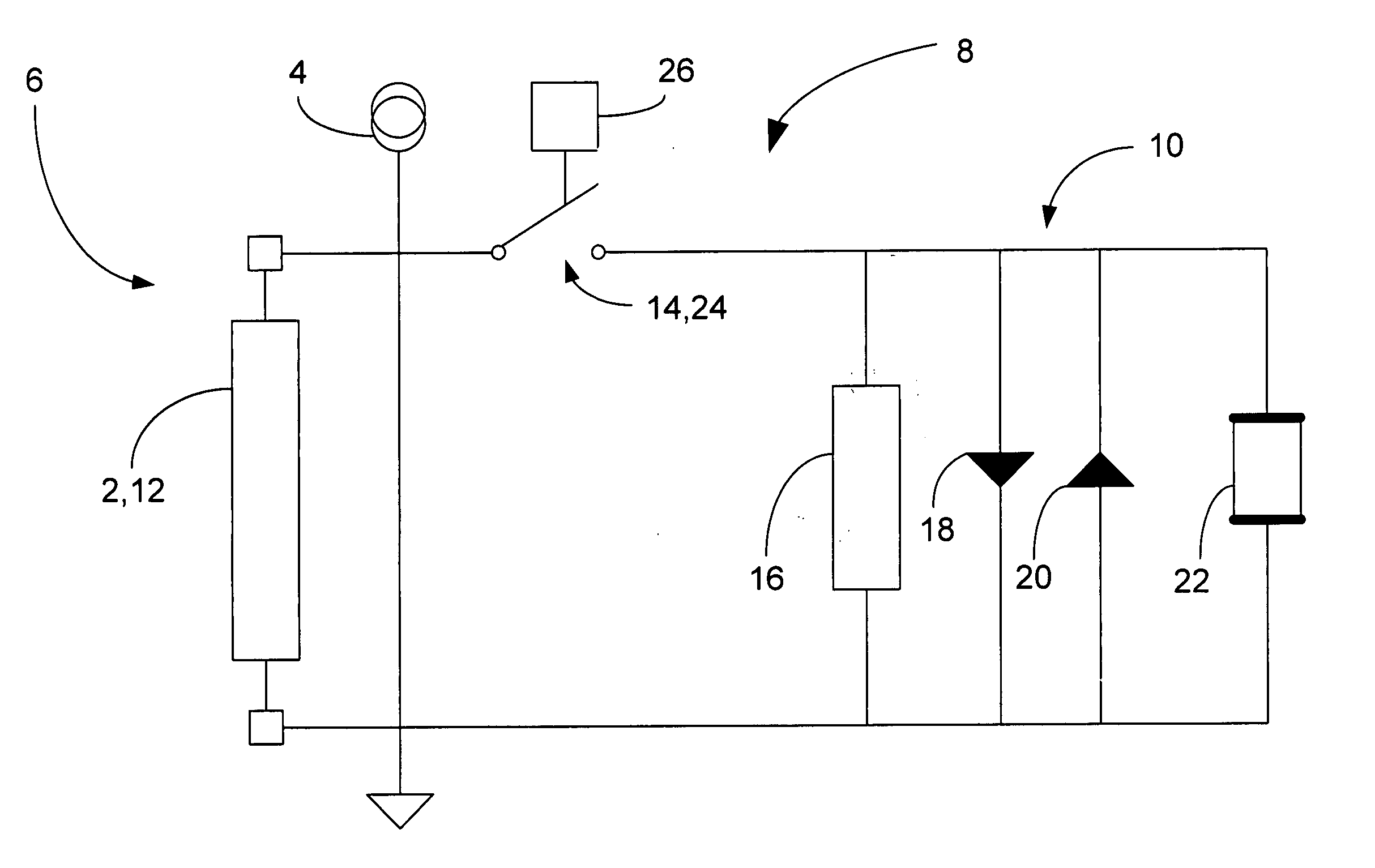
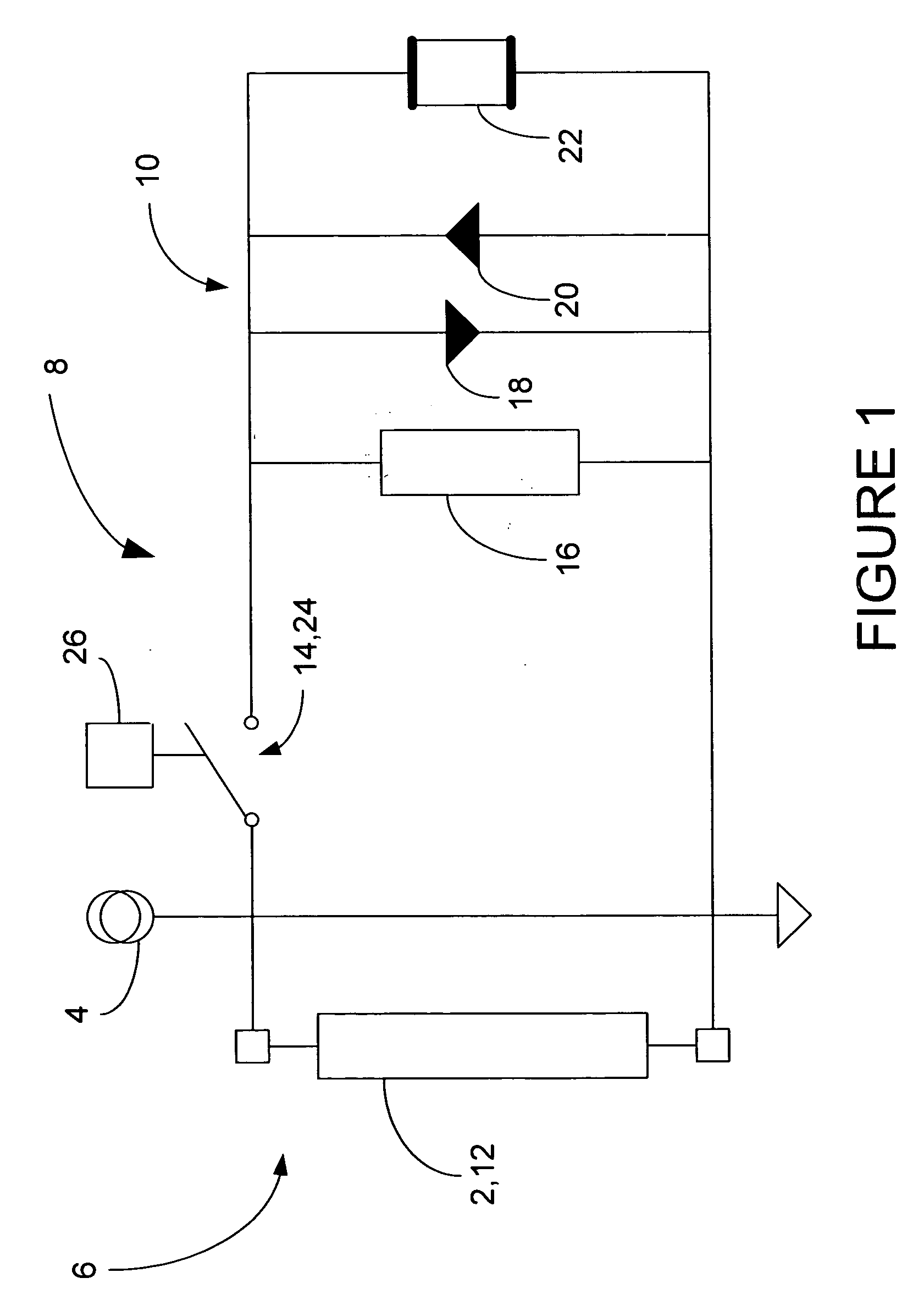
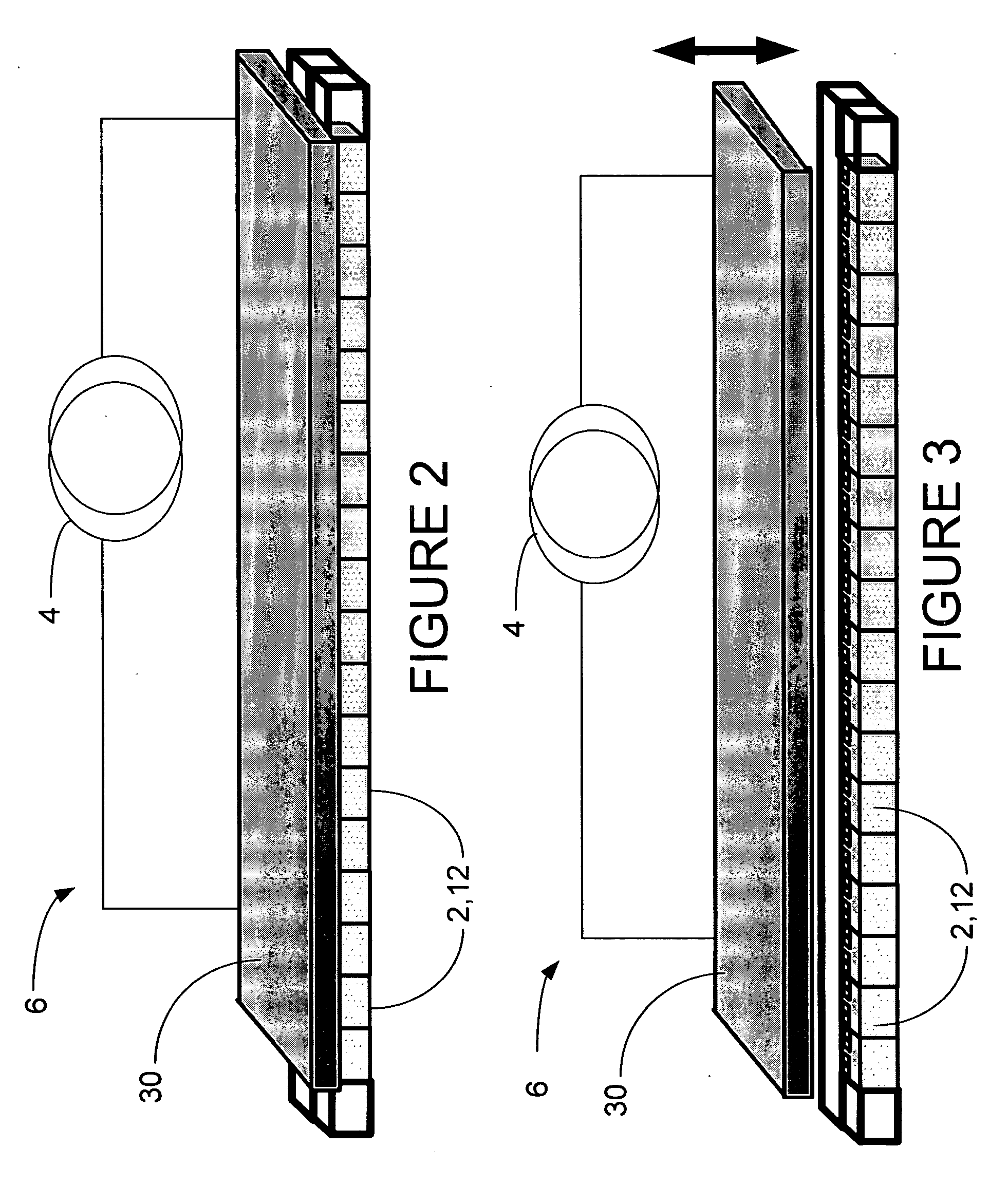
- A two-part methodology involving a shunting circuit connected during stress-testing and disconnected during Quasi-Static measurements, using a protection circuit with a mechanical switch to shield components from ESD, ensuring accurate and reliable testing results.

Safety Standards for High-Voltage Testing Equipment
Long-term testing of electrostatic actuators involves exposure to high voltages over extended periods, necessitating strict adherence to established safety standards for high-voltage testing equipment. The primary international standard governing this domain is IEC 61010-1, which provides comprehensive safety requirements for electrical equipment used for measurement, control, and laboratory applications. This standard specifically addresses insulation requirements, protective earthing, and safety interlocks essential for high-voltage operations.
The IEEE Standard 4-2013 for High-Voltage Testing Techniques establishes fundamental principles for conducting safe high-voltage tests. This standard mandates specific clearance distances, proper grounding procedures, and personnel protection measures that are critical when testing electrostatic actuators under operational voltages. Additionally, it defines requirements for test area isolation and emergency shutdown procedures that must be implemented during long-term testing campaigns.
ASTM D149 provides standardized methods for dielectric breakdown voltage testing, which directly applies to electrostatic actuator evaluation. This standard specifies electrode configurations, environmental conditions, and statistical analysis methods for interpreting breakdown data over extended test periods. The standard also addresses temperature and humidity control requirements that significantly impact long-term reliability assessments.
Safety interlock systems represent a crucial component of compliant testing setups. These systems must incorporate multiple redundant safety mechanisms, including door interlocks, emergency stop circuits, and automatic voltage discharge systems. The standards require that any interruption in safety circuits immediately de-energizes all high-voltage sources and provides safe discharge paths for stored energy in electrostatic actuators.
Personnel safety protocols mandated by these standards include mandatory training certification, use of appropriate personal protective equipment, and implementation of lockout-tagout procedures. The standards also specify minimum distances between operators and energized equipment, requirements for warning signage, and protocols for emergency response procedures specific to high-voltage incidents during long-term testing operations.
The IEEE Standard 4-2013 for High-Voltage Testing Techniques establishes fundamental principles for conducting safe high-voltage tests. This standard mandates specific clearance distances, proper grounding procedures, and personnel protection measures that are critical when testing electrostatic actuators under operational voltages. Additionally, it defines requirements for test area isolation and emergency shutdown procedures that must be implemented during long-term testing campaigns.
ASTM D149 provides standardized methods for dielectric breakdown voltage testing, which directly applies to electrostatic actuator evaluation. This standard specifies electrode configurations, environmental conditions, and statistical analysis methods for interpreting breakdown data over extended test periods. The standard also addresses temperature and humidity control requirements that significantly impact long-term reliability assessments.
Safety interlock systems represent a crucial component of compliant testing setups. These systems must incorporate multiple redundant safety mechanisms, including door interlocks, emergency stop circuits, and automatic voltage discharge systems. The standards require that any interruption in safety circuits immediately de-energizes all high-voltage sources and provides safe discharge paths for stored energy in electrostatic actuators.
Personnel safety protocols mandated by these standards include mandatory training certification, use of appropriate personal protective equipment, and implementation of lockout-tagout procedures. The standards also specify minimum distances between operators and energized equipment, requirements for warning signage, and protocols for emergency response procedures specific to high-voltage incidents during long-term testing operations.
Environmental Impact of Extended Testing Procedures
Extended testing procedures for electrostatic actuators present significant environmental considerations that must be carefully evaluated and managed. The prolonged nature of these testing protocols, often spanning months or years, creates cumulative environmental impacts that extend beyond traditional short-term testing approaches. These impacts encompass energy consumption, material waste generation, and potential emissions from testing equipment and facilities.
Energy consumption represents the most substantial environmental impact of long-term electrostatic actuator testing. Continuous operation of high-voltage power supplies, environmental chambers, and monitoring equipment can result in substantial electricity usage over extended periods. Testing facilities typically require 24/7 operation of climate control systems to maintain precise temperature and humidity conditions, contributing to increased carbon footprint. The energy intensity becomes particularly pronounced when multiple actuator samples undergo simultaneous testing across various environmental conditions.
Material waste generation during extended testing procedures includes degraded actuator components, contaminated testing substrates, and expired calibration standards. Electrostatic actuators may experience dielectric breakdown or electrode degradation during long-term stress testing, necessitating proper disposal of potentially hazardous materials. Additionally, the frequent replacement of consumable components such as seals, gaskets, and electrical connections generates ongoing waste streams that require appropriate environmental management protocols.
Chemical emissions and contamination risks emerge from various sources during prolonged testing operations. Outgassing from polymer-based actuator materials under elevated temperatures or electric fields can release volatile organic compounds into laboratory environments. High-voltage testing may produce ozone or nitrogen oxides, requiring adequate ventilation systems and air filtration. Dielectric fluids used in some testing configurations pose potential contamination risks if leakage occurs during extended operation periods.
Mitigation strategies for reducing environmental impact include implementing energy-efficient testing protocols, utilizing renewable energy sources for testing facilities, and developing accelerated testing methodologies that maintain reliability while reducing duration. Proper waste segregation and recycling programs for electronic components can minimize material disposal impacts. Regular monitoring of air quality and implementation of closed-loop testing systems help control emissions and contamination risks.
The environmental impact assessment should also consider the lifecycle benefits of improved actuator reliability achieved through comprehensive long-term testing. Enhanced product durability and performance resulting from thorough testing procedures can offset initial environmental costs by reducing premature failures and extending operational lifespans in end-use applications.
Energy consumption represents the most substantial environmental impact of long-term electrostatic actuator testing. Continuous operation of high-voltage power supplies, environmental chambers, and monitoring equipment can result in substantial electricity usage over extended periods. Testing facilities typically require 24/7 operation of climate control systems to maintain precise temperature and humidity conditions, contributing to increased carbon footprint. The energy intensity becomes particularly pronounced when multiple actuator samples undergo simultaneous testing across various environmental conditions.
Material waste generation during extended testing procedures includes degraded actuator components, contaminated testing substrates, and expired calibration standards. Electrostatic actuators may experience dielectric breakdown or electrode degradation during long-term stress testing, necessitating proper disposal of potentially hazardous materials. Additionally, the frequent replacement of consumable components such as seals, gaskets, and electrical connections generates ongoing waste streams that require appropriate environmental management protocols.
Chemical emissions and contamination risks emerge from various sources during prolonged testing operations. Outgassing from polymer-based actuator materials under elevated temperatures or electric fields can release volatile organic compounds into laboratory environments. High-voltage testing may produce ozone or nitrogen oxides, requiring adequate ventilation systems and air filtration. Dielectric fluids used in some testing configurations pose potential contamination risks if leakage occurs during extended operation periods.
Mitigation strategies for reducing environmental impact include implementing energy-efficient testing protocols, utilizing renewable energy sources for testing facilities, and developing accelerated testing methodologies that maintain reliability while reducing duration. Proper waste segregation and recycling programs for electronic components can minimize material disposal impacts. Regular monitoring of air quality and implementation of closed-loop testing systems help control emissions and contamination risks.
The environmental impact assessment should also consider the lifecycle benefits of improved actuator reliability achieved through comprehensive long-term testing. Enhanced product durability and performance resulting from thorough testing procedures can offset initial environmental costs by reducing premature failures and extending operational lifespans in end-use applications.
Unlock deeper insights with PatSnap Eureka Quick Research — get a full tech report to explore trends and direct your research. Try now!
Generate Your Research Report Instantly with AI Agent
Supercharge your innovation with PatSnap Eureka AI Agent Platform!