How to Enhance Engine Performance through ECM Calibration
MAR 27, 20269 MIN READ
Generate Your Research Report Instantly with AI Agent
Patsnap Eureka helps you evaluate technical feasibility & market potential.
ECM Calibration Background and Performance Goals
Engine Control Module (ECM) calibration represents a critical technological domain that has evolved significantly since the introduction of electronic fuel injection systems in the 1980s. Initially developed to meet increasingly stringent emissions regulations, ECM technology has transformed from basic fuel delivery control to sophisticated engine management systems capable of real-time optimization across multiple parameters. The evolution from mechanical carburetor systems to electronic control units marked a paradigm shift, enabling precise control over fuel injection timing, ignition advance, turbocharger boost pressure, and exhaust gas recirculation rates.
The technological progression has been driven by the convergence of advanced sensor technologies, high-speed microprocessors, and sophisticated control algorithms. Modern ECMs integrate machine learning capabilities, predictive analytics, and adaptive control strategies that continuously optimize engine performance based on operating conditions, fuel quality, and component aging. This evolution reflects the industry's response to competing demands for improved fuel efficiency, reduced emissions, enhanced drivability, and increased power output.
Current market dynamics emphasize the critical importance of ECM calibration optimization as automotive manufacturers face unprecedented regulatory pressures and consumer expectations. The global push toward electrification has paradoxically intensified focus on internal combustion engine efficiency, as hybrid powertrains require optimal engine operation across diverse operating scenarios. Additionally, the emergence of alternative fuels, including biofuels and synthetic fuels, necessitates adaptive calibration strategies capable of maintaining performance across varying fuel compositions.
The primary technical objectives of enhanced ECM calibration encompass multiple performance dimensions that must be simultaneously optimized. Fuel economy improvements of 5-15% are achievable through advanced calibration techniques, including cylinder-specific fuel delivery optimization, dynamic compression ratio adjustment, and predictive load-based timing strategies. Emissions reduction targets focus on minimizing nitrogen oxides, particulate matter, and carbon dioxide emissions while maintaining catalyst efficiency across extended operating ranges.
Performance enhancement goals extend beyond traditional metrics to include transient response optimization, cold-start performance improvement, and durability enhancement through reduced component stress. Advanced calibration strategies target peak torque increases of 10-20% through optimized boost control, variable valve timing coordination, and knock detection refinement. These objectives require sophisticated modeling approaches that account for complex interactions between combustion parameters, thermal management, and mechanical constraints.
The integration of artificial intelligence and machine learning algorithms represents the next frontier in ECM calibration technology. Adaptive calibration systems capable of real-time optimization based on driving patterns, environmental conditions, and component health monitoring promise to deliver unprecedented performance improvements while maintaining reliability and emissions compliance across diverse operating scenarios.
The technological progression has been driven by the convergence of advanced sensor technologies, high-speed microprocessors, and sophisticated control algorithms. Modern ECMs integrate machine learning capabilities, predictive analytics, and adaptive control strategies that continuously optimize engine performance based on operating conditions, fuel quality, and component aging. This evolution reflects the industry's response to competing demands for improved fuel efficiency, reduced emissions, enhanced drivability, and increased power output.
Current market dynamics emphasize the critical importance of ECM calibration optimization as automotive manufacturers face unprecedented regulatory pressures and consumer expectations. The global push toward electrification has paradoxically intensified focus on internal combustion engine efficiency, as hybrid powertrains require optimal engine operation across diverse operating scenarios. Additionally, the emergence of alternative fuels, including biofuels and synthetic fuels, necessitates adaptive calibration strategies capable of maintaining performance across varying fuel compositions.
The primary technical objectives of enhanced ECM calibration encompass multiple performance dimensions that must be simultaneously optimized. Fuel economy improvements of 5-15% are achievable through advanced calibration techniques, including cylinder-specific fuel delivery optimization, dynamic compression ratio adjustment, and predictive load-based timing strategies. Emissions reduction targets focus on minimizing nitrogen oxides, particulate matter, and carbon dioxide emissions while maintaining catalyst efficiency across extended operating ranges.
Performance enhancement goals extend beyond traditional metrics to include transient response optimization, cold-start performance improvement, and durability enhancement through reduced component stress. Advanced calibration strategies target peak torque increases of 10-20% through optimized boost control, variable valve timing coordination, and knock detection refinement. These objectives require sophisticated modeling approaches that account for complex interactions between combustion parameters, thermal management, and mechanical constraints.
The integration of artificial intelligence and machine learning algorithms represents the next frontier in ECM calibration technology. Adaptive calibration systems capable of real-time optimization based on driving patterns, environmental conditions, and component health monitoring promise to deliver unprecedented performance improvements while maintaining reliability and emissions compliance across diverse operating scenarios.
Market Demand for Enhanced Engine Performance Solutions
The automotive industry is experiencing unprecedented demand for enhanced engine performance solutions driven by increasingly stringent environmental regulations and evolving consumer expectations. Regulatory frameworks such as Euro 7 emissions standards and Corporate Average Fuel Economy requirements are compelling manufacturers to optimize engine efficiency while maintaining power output. This regulatory pressure creates substantial market opportunities for advanced ECM calibration technologies that can deliver measurable improvements in fuel economy and emissions reduction.
Fleet operators represent a particularly lucrative market segment, as commercial vehicle owners prioritize operational cost reduction through improved fuel efficiency. Long-haul trucking companies, delivery services, and logistics providers are actively seeking engine performance enhancement solutions that can reduce total cost of ownership. The economic incentive is compelling, as even marginal improvements in fuel efficiency translate to significant cost savings across large vehicle fleets operating high annual mileage.
The passenger vehicle market demonstrates growing consumer awareness of fuel economy benefits, particularly in regions with high fuel costs. Premium vehicle segments show strong demand for performance optimization solutions that enhance both power delivery and efficiency. Luxury car manufacturers are increasingly incorporating advanced ECM calibration capabilities as standard features to differentiate their products in competitive markets.
Emerging markets present substantial growth opportunities as vehicle ownership rates increase and environmental consciousness develops. Countries implementing new emissions standards create immediate demand for engine performance enhancement technologies. The retrofit market for existing vehicles also represents significant potential, as owners seek cost-effective alternatives to vehicle replacement.
The commercial marine and industrial engine sectors exhibit robust demand for ECM calibration solutions that optimize performance under varying load conditions. These applications often involve high-value engines where performance improvements justify premium pricing for advanced calibration technologies.
Market dynamics are further influenced by the transition period before widespread electric vehicle adoption, creating a window of opportunity for internal combustion engine optimization technologies. This transitional phase sustains demand for solutions that maximize the efficiency and environmental performance of conventional powertrains while the charging infrastructure and battery technology continue developing.
Fleet operators represent a particularly lucrative market segment, as commercial vehicle owners prioritize operational cost reduction through improved fuel efficiency. Long-haul trucking companies, delivery services, and logistics providers are actively seeking engine performance enhancement solutions that can reduce total cost of ownership. The economic incentive is compelling, as even marginal improvements in fuel efficiency translate to significant cost savings across large vehicle fleets operating high annual mileage.
The passenger vehicle market demonstrates growing consumer awareness of fuel economy benefits, particularly in regions with high fuel costs. Premium vehicle segments show strong demand for performance optimization solutions that enhance both power delivery and efficiency. Luxury car manufacturers are increasingly incorporating advanced ECM calibration capabilities as standard features to differentiate their products in competitive markets.
Emerging markets present substantial growth opportunities as vehicle ownership rates increase and environmental consciousness develops. Countries implementing new emissions standards create immediate demand for engine performance enhancement technologies. The retrofit market for existing vehicles also represents significant potential, as owners seek cost-effective alternatives to vehicle replacement.
The commercial marine and industrial engine sectors exhibit robust demand for ECM calibration solutions that optimize performance under varying load conditions. These applications often involve high-value engines where performance improvements justify premium pricing for advanced calibration technologies.
Market dynamics are further influenced by the transition period before widespread electric vehicle adoption, creating a window of opportunity for internal combustion engine optimization technologies. This transitional phase sustains demand for solutions that maximize the efficiency and environmental performance of conventional powertrains while the charging infrastructure and battery technology continue developing.
Current ECM Calibration Challenges and Technical Barriers
ECM calibration faces significant computational complexity challenges as modern engines incorporate increasingly sophisticated control algorithms. The multi-dimensional mapping required for optimal fuel injection timing, ignition advance, and boost pressure control creates exponentially growing parameter spaces. Traditional calibration approaches struggle with the interdependencies between these parameters, often requiring extensive testing matrices that become prohibitively time-consuming and resource-intensive.
Hardware limitations present another critical barrier in ECM calibration processes. Many existing ECM platforms operate with constrained processing power and memory capacity, limiting the implementation of advanced calibration algorithms. Real-time execution requirements further compound these constraints, as calibration adjustments must occur within microsecond timeframes while maintaining system stability and reliability.
The diversity of operating conditions creates substantial calibration challenges across different engine applications. Variations in fuel quality, ambient temperature, altitude, and load conditions require robust calibration strategies that can adapt dynamically. Current calibration methodologies often rely on static lookup tables that cannot adequately address the full spectrum of real-world operating scenarios, leading to suboptimal performance under certain conditions.
Emissions compliance requirements impose increasingly stringent constraints on calibration flexibility. Modern engines must simultaneously optimize for performance, fuel economy, and emissions reduction across multiple drive cycles and operating modes. The conflicting nature of these objectives creates complex trade-offs that traditional calibration approaches struggle to resolve effectively, particularly when considering the variability introduced by aging components and manufacturing tolerances.
Data acquisition and validation represent significant technical barriers in ECM calibration development. The vast amount of sensor data generated during calibration testing requires sophisticated data management and analysis capabilities. Ensuring data quality and repeatability across different test conditions while maintaining statistical significance poses ongoing challenges for calibration engineers.
Integration complexity with existing vehicle systems creates additional calibration barriers. Modern ECMs must coordinate with transmission control modules, hybrid powertrain systems, and advanced driver assistance systems. This integration requires calibration strategies that account for system-level interactions and potential conflicts between different control objectives, significantly increasing the overall calibration complexity and validation requirements.
Hardware limitations present another critical barrier in ECM calibration processes. Many existing ECM platforms operate with constrained processing power and memory capacity, limiting the implementation of advanced calibration algorithms. Real-time execution requirements further compound these constraints, as calibration adjustments must occur within microsecond timeframes while maintaining system stability and reliability.
The diversity of operating conditions creates substantial calibration challenges across different engine applications. Variations in fuel quality, ambient temperature, altitude, and load conditions require robust calibration strategies that can adapt dynamically. Current calibration methodologies often rely on static lookup tables that cannot adequately address the full spectrum of real-world operating scenarios, leading to suboptimal performance under certain conditions.
Emissions compliance requirements impose increasingly stringent constraints on calibration flexibility. Modern engines must simultaneously optimize for performance, fuel economy, and emissions reduction across multiple drive cycles and operating modes. The conflicting nature of these objectives creates complex trade-offs that traditional calibration approaches struggle to resolve effectively, particularly when considering the variability introduced by aging components and manufacturing tolerances.
Data acquisition and validation represent significant technical barriers in ECM calibration development. The vast amount of sensor data generated during calibration testing requires sophisticated data management and analysis capabilities. Ensuring data quality and repeatability across different test conditions while maintaining statistical significance poses ongoing challenges for calibration engineers.
Integration complexity with existing vehicle systems creates additional calibration barriers. Modern ECMs must coordinate with transmission control modules, hybrid powertrain systems, and advanced driver assistance systems. This integration requires calibration strategies that account for system-level interactions and potential conflicts between different control objectives, significantly increasing the overall calibration complexity and validation requirements.
Existing ECM Calibration Methods and Approaches
01 ECM calibration methods and systems for engine control
Engine Control Module (ECM) calibration involves adjusting various parameters and control strategies to optimize engine performance. These methods include developing calibration procedures, implementing calibration systems, and utilizing software tools to modify engine control parameters. The calibration process ensures that the engine operates efficiently under different conditions while meeting emission standards and performance requirements.- ECM calibration methods and systems for engine control: Engine Control Module (ECM) calibration involves systematic methods and systems to optimize engine performance parameters. This includes developing calibration procedures, implementing calibration algorithms, and establishing calibration frameworks that ensure accurate engine control. The calibration process typically involves adjusting various engine parameters such as fuel injection timing, air-fuel ratios, and ignition timing to achieve optimal performance across different operating conditions.
- Real-time engine performance monitoring and adjustment: Advanced systems enable continuous monitoring of engine performance parameters and real-time adjustments to ECM calibration settings. These systems collect data from various sensors, analyze engine behavior, and dynamically modify calibration parameters to maintain optimal performance. The technology allows for adaptive calibration that responds to changing operating conditions, wear patterns, and environmental factors.
- Automated calibration optimization using data analysis: Automated calibration systems utilize sophisticated data analysis techniques to optimize engine performance. These systems employ algorithms that process large datasets from engine testing and operation to identify optimal calibration parameters. The approach reduces manual calibration time and improves accuracy by leveraging computational methods to find the best parameter combinations for various performance metrics.
- Diagnostic and testing tools for ECM calibration validation: Specialized diagnostic and testing tools are used to validate ECM calibration effectiveness and ensure proper engine performance. These tools include testing equipment, simulation systems, and validation protocols that verify calibration accuracy under various operating scenarios. The validation process ensures that calibrated parameters meet performance specifications and regulatory requirements.
- Multi-parameter calibration strategies for performance optimization: Comprehensive calibration strategies address multiple engine parameters simultaneously to achieve overall performance optimization. These strategies consider the interdependencies between various engine control parameters and optimize them collectively rather than individually. The approach accounts for trade-offs between different performance aspects such as power output, fuel efficiency, emissions, and durability.
02 Real-time engine performance monitoring and adjustment
Systems and methods for monitoring engine performance in real-time allow for dynamic adjustments to engine parameters. These technologies utilize sensors and feedback mechanisms to continuously assess engine operation and make necessary calibration adjustments. This approach enables adaptive control strategies that respond to changing operating conditions and maintain optimal engine performance throughout the vehicle's lifecycle.Expand Specific Solutions03 Automated calibration tools and software platforms
Advanced software platforms and automated tools facilitate the ECM calibration process by providing systematic approaches to parameter optimization. These tools enable engineers to efficiently test multiple calibration scenarios, analyze performance data, and implement optimal settings. The automation reduces calibration time and improves consistency across different engine configurations.Expand Specific Solutions04 Emission control and compliance calibration strategies
Calibration techniques specifically focused on meeting emission regulations while maintaining engine performance involve optimizing fuel injection timing, air-fuel ratios, and exhaust gas recirculation parameters. These strategies balance the need for reduced emissions with power output and fuel efficiency requirements, ensuring compliance with environmental standards.Expand Specific Solutions05 Diagnostic and testing procedures for calibration validation
Comprehensive diagnostic and testing methodologies are employed to validate ECM calibration effectiveness. These procedures include bench testing, dynamometer testing, and on-road validation to ensure that calibrated parameters deliver the intended performance improvements. Testing protocols verify that the calibration meets all functional requirements and performance targets across various operating conditions.Expand Specific Solutions
Major Players in ECM and Engine Management Systems
The ECM calibration technology landscape is in a mature development stage, driven by stringent emission regulations and performance optimization demands across automotive and industrial sectors. The market demonstrates substantial scale with established OEMs like GM Global Technology Operations, Ford Global Technologies, Caterpillar, and Cummins leading traditional calibration approaches, while emerging players such as BYD and Great Wall Motor advance electrification-integrated solutions. Technology maturity varies significantly - conventional diesel and gasoline ECM calibration represents well-established technology among companies like Mercedes-Benz Group, Hyundai Motor, and Continental Automotive Systems. However, hybrid and electric powertrain calibration remains in rapid evolution phases, with companies like Avathon introducing AI-powered optimization solutions. The competitive landscape shows clear segmentation between heavy-duty industrial applications dominated by Caterpillar and Cummins, automotive applications led by traditional OEMs, and emerging smart calibration technologies from specialized firms, indicating a transitioning market toward more sophisticated, data-driven calibration methodologies.
GM Global Technology Operations LLC
Technical Solution: GM employs advanced ECM calibration strategies utilizing machine learning algorithms and real-time data analytics to optimize engine performance across diverse operating conditions. Their approach integrates predictive modeling with adaptive calibration techniques, enabling dynamic adjustment of fuel injection timing, air-fuel ratios, and ignition parameters. The system continuously monitors engine behavior through multiple sensors and adjusts calibration maps in real-time to maximize power output while minimizing emissions. GM's calibration methodology also incorporates statistical analysis of fleet data to identify optimal parameter settings for different driving patterns and environmental conditions, resulting in improved fuel economy and reduced maintenance requirements.
Strengths: Extensive fleet data collection capabilities and advanced machine learning integration. Weaknesses: High computational requirements and complex implementation costs.
Cummins, Inc.
Technical Solution: Cummins utilizes sophisticated ECM calibration techniques focused on heavy-duty diesel engine optimization through multi-dimensional mapping and advanced combustion control strategies. Their calibration approach employs detailed engine modeling combined with extensive dynamometer testing to develop precise fuel injection strategies, turbocharger control algorithms, and exhaust gas recirculation optimization. The company's calibration methodology integrates real-world duty cycle analysis with laboratory testing to ensure optimal performance across varying load conditions. Cummins also implements adaptive learning algorithms that adjust calibration parameters based on operating history and environmental factors, enabling enhanced fuel efficiency and extended engine life while meeting stringent emission standards.
Strengths: Deep expertise in diesel engine technology and comprehensive testing facilities. Weaknesses: Limited focus on gasoline engines and emerging electrification technologies.
Core Patents in Advanced ECM Calibration Techniques
Calibration control systems and methods
PatentActiveUS20120072090A1
Innovation
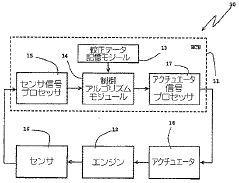
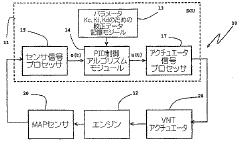
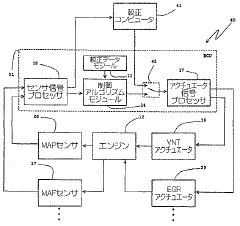
- A control module calibration system that includes a calibration module to display and set predetermined options for calibrating base and compensation values, allowing users to select and apply changes to these values, thereby enabling more flexible actuator control without the need for extensive software updates.


Engine control system calibration
PatentInactiveJP2009522488A
Innovation
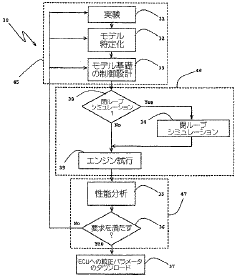
- A model-based approach using a tool that calculates engine calibration parameters through algorithms, incorporating actuator setpoints, sensor measurements, and performance demands, and includes a computer system for model identification and controller tuning.
Emissions Regulations Impact on ECM Calibration
The evolution of emissions regulations has fundamentally transformed ECM calibration practices across the automotive industry. Since the introduction of the Clean Air Act in the 1970s, regulatory frameworks have progressively tightened, with Euro standards in Europe, EPA Tier regulations in North America, and China VI standards establishing increasingly stringent limits on NOx, particulate matter, hydrocarbons, and carbon monoxide emissions. These regulations have shifted from simple tailpipe emission limits to comprehensive lifecycle assessments, including real driving emissions (RDE) testing protocols that challenge traditional laboratory-based calibration approaches.
Modern emissions standards directly constrain ECM calibration parameters, creating a complex optimization challenge between performance enhancement and regulatory compliance. The introduction of Euro 6d-TEMP and subsequent standards has mandated portable emissions measurement systems (PEMS) testing, requiring calibration engineers to optimize engine maps across diverse real-world driving conditions rather than standardized test cycles. This regulatory shift has necessitated more sophisticated calibration strategies that account for temperature variations, altitude changes, and dynamic driving patterns while maintaining emissions compliance margins.
The implementation of on-board diagnostics (OBD) requirements has further complicated ECM calibration by mandating continuous monitoring of emission control systems. Calibration engineers must now integrate diagnostic algorithms that can detect catalyst efficiency degradation, oxygen sensor malfunctions, and exhaust gas recirculation system failures while maintaining optimal engine performance. These diagnostic requirements often conflict with performance optimization goals, as conservative calibration approaches may be necessary to prevent false diagnostic triggers.
Regional variations in emissions regulations create additional calibration complexity for global automotive manufacturers. The divergence between EPA, Euro, and emerging market standards requires market-specific calibration strategies, often resulting in detuned performance characteristics in regions with stricter emissions requirements. This regulatory fragmentation has driven the development of adaptive calibration technologies that can modify engine parameters based on detected fuel quality, ambient conditions, and regional compliance requirements.
Future emissions regulations, including proposed Euro 7 standards and zero-emission vehicle mandates, are expected to further constrain traditional internal combustion engine calibration approaches. The anticipated introduction of particle number limits for gasoline engines and extended durability requirements will likely necessitate more conservative calibration strategies, potentially limiting performance enhancement opportunities through conventional ECM optimization techniques.
Modern emissions standards directly constrain ECM calibration parameters, creating a complex optimization challenge between performance enhancement and regulatory compliance. The introduction of Euro 6d-TEMP and subsequent standards has mandated portable emissions measurement systems (PEMS) testing, requiring calibration engineers to optimize engine maps across diverse real-world driving conditions rather than standardized test cycles. This regulatory shift has necessitated more sophisticated calibration strategies that account for temperature variations, altitude changes, and dynamic driving patterns while maintaining emissions compliance margins.
The implementation of on-board diagnostics (OBD) requirements has further complicated ECM calibration by mandating continuous monitoring of emission control systems. Calibration engineers must now integrate diagnostic algorithms that can detect catalyst efficiency degradation, oxygen sensor malfunctions, and exhaust gas recirculation system failures while maintaining optimal engine performance. These diagnostic requirements often conflict with performance optimization goals, as conservative calibration approaches may be necessary to prevent false diagnostic triggers.
Regional variations in emissions regulations create additional calibration complexity for global automotive manufacturers. The divergence between EPA, Euro, and emerging market standards requires market-specific calibration strategies, often resulting in detuned performance characteristics in regions with stricter emissions requirements. This regulatory fragmentation has driven the development of adaptive calibration technologies that can modify engine parameters based on detected fuel quality, ambient conditions, and regional compliance requirements.
Future emissions regulations, including proposed Euro 7 standards and zero-emission vehicle mandates, are expected to further constrain traditional internal combustion engine calibration approaches. The anticipated introduction of particle number limits for gasoline engines and extended durability requirements will likely necessitate more conservative calibration strategies, potentially limiting performance enhancement opportunities through conventional ECM optimization techniques.
AI-Driven Adaptive Calibration Technologies
AI-driven adaptive calibration technologies represent a paradigm shift in engine control management, leveraging machine learning algorithms and real-time data processing to optimize ECM parameters dynamically. These systems utilize neural networks, genetic algorithms, and reinforcement learning to continuously adjust calibration maps based on operating conditions, environmental factors, and engine wear patterns. The integration of artificial intelligence enables predictive calibration adjustments that anticipate performance requirements before traditional feedback systems would respond.
Modern AI calibration platforms employ deep learning architectures to process vast datasets from multiple sensor inputs, including combustion pressure sensors, exhaust gas analyzers, and knock detection systems. These technologies can identify complex patterns in engine behavior that exceed human analytical capabilities, enabling optimization across multiple performance dimensions simultaneously. Advanced algorithms can balance competing objectives such as fuel efficiency, emissions reduction, and power output through multi-objective optimization techniques.
Real-time adaptive systems utilize edge computing capabilities within ECM hardware to implement AI-driven decisions with minimal latency. These systems employ lightweight neural network models optimized for automotive-grade processors, ensuring reliable operation under extreme temperature and vibration conditions. The adaptive nature allows continuous learning from operational data, refining calibration strategies over the engine's lifecycle.
Cloud-based AI platforms complement onboard systems by aggregating fleet-wide data to identify optimal calibration strategies across different vehicle populations and usage patterns. These platforms utilize federated learning approaches to improve calibration algorithms while maintaining data privacy and security requirements. The combination of local adaptation and cloud-based intelligence creates a comprehensive ecosystem for continuous calibration improvement.
Emerging technologies include quantum-inspired optimization algorithms and neuromorphic computing architectures that promise even greater efficiency in processing complex calibration scenarios. These advanced AI approaches enable real-time optimization of hundreds of calibration parameters simultaneously, achieving performance levels previously impossible with conventional methods.
Modern AI calibration platforms employ deep learning architectures to process vast datasets from multiple sensor inputs, including combustion pressure sensors, exhaust gas analyzers, and knock detection systems. These technologies can identify complex patterns in engine behavior that exceed human analytical capabilities, enabling optimization across multiple performance dimensions simultaneously. Advanced algorithms can balance competing objectives such as fuel efficiency, emissions reduction, and power output through multi-objective optimization techniques.
Real-time adaptive systems utilize edge computing capabilities within ECM hardware to implement AI-driven decisions with minimal latency. These systems employ lightweight neural network models optimized for automotive-grade processors, ensuring reliable operation under extreme temperature and vibration conditions. The adaptive nature allows continuous learning from operational data, refining calibration strategies over the engine's lifecycle.
Cloud-based AI platforms complement onboard systems by aggregating fleet-wide data to identify optimal calibration strategies across different vehicle populations and usage patterns. These platforms utilize federated learning approaches to improve calibration algorithms while maintaining data privacy and security requirements. The combination of local adaptation and cloud-based intelligence creates a comprehensive ecosystem for continuous calibration improvement.
Emerging technologies include quantum-inspired optimization algorithms and neuromorphic computing architectures that promise even greater efficiency in processing complex calibration scenarios. These advanced AI approaches enable real-time optimization of hundreds of calibration parameters simultaneously, achieving performance levels previously impossible with conventional methods.
Unlock deeper insights with Patsnap Eureka Quick Research — get a full tech report to explore trends and direct your research. Try now!
Generate Your Research Report Instantly with AI Agent
Supercharge your innovation with Patsnap Eureka AI Agent Platform!