How to Implement AI in Steering Wheel Navigation Systems?
JUL 18, 20259 MIN READ
Generate Your Research Report Instantly with AI Agent
PatSnap Eureka helps you evaluate technical feasibility & market potential.
AI Navigation Background and Objectives
The integration of Artificial Intelligence (AI) into steering wheel navigation systems represents a significant leap forward in automotive technology. This advancement builds upon decades of progress in vehicle navigation, from early paper maps to digital GPS systems. The evolution of AI-powered navigation aims to enhance driver safety, improve route efficiency, and provide a more intuitive user experience.
The primary objective of implementing AI in steering wheel navigation systems is to create a seamless, intelligent interface between the driver and the vehicle's navigation capabilities. This technology seeks to anticipate driver needs, adapt to changing road conditions, and offer personalized guidance that goes beyond traditional turn-by-turn directions.
AI navigation systems draw upon a rich history of technological developments, including machine learning algorithms, natural language processing, and computer vision. These foundational technologies have matured significantly in recent years, enabling more sophisticated applications in automotive contexts. The convergence of these AI capabilities with existing navigation infrastructure presents an opportunity to revolutionize how drivers interact with their vehicles and navigate their surroundings.
One of the key trends driving this technological evolution is the increasing demand for autonomous and semi-autonomous vehicles. As the automotive industry moves towards higher levels of automation, AI-powered navigation systems serve as a crucial stepping stone, providing drivers with advanced assistance while maintaining human control over the vehicle.
The implementation of AI in steering wheel navigation also aligns with broader industry trends towards connected and smart vehicles. These systems can potentially integrate with other vehicle subsystems, traffic management infrastructure, and cloud-based services to provide a holistic navigation experience that considers factors beyond simple routing, such as real-time traffic conditions, weather patterns, and even driver preferences and habits.
As we look towards the future, the goals for AI-powered steering wheel navigation systems include reducing cognitive load on drivers, minimizing human error in navigation-related decisions, and ultimately contributing to safer and more efficient road networks. The technology aims to provide context-aware recommendations, predictive alerts, and adaptive interfaces that can cater to diverse driving scenarios and user needs.
In pursuing these objectives, developers and researchers face several challenges, including ensuring system reliability, managing data privacy concerns, and creating intuitive user interfaces that do not distract from the primary task of driving. Overcoming these hurdles will be crucial in realizing the full potential of AI-enhanced navigation systems and paving the way for the next generation of intelligent vehicles.
The primary objective of implementing AI in steering wheel navigation systems is to create a seamless, intelligent interface between the driver and the vehicle's navigation capabilities. This technology seeks to anticipate driver needs, adapt to changing road conditions, and offer personalized guidance that goes beyond traditional turn-by-turn directions.
AI navigation systems draw upon a rich history of technological developments, including machine learning algorithms, natural language processing, and computer vision. These foundational technologies have matured significantly in recent years, enabling more sophisticated applications in automotive contexts. The convergence of these AI capabilities with existing navigation infrastructure presents an opportunity to revolutionize how drivers interact with their vehicles and navigate their surroundings.
One of the key trends driving this technological evolution is the increasing demand for autonomous and semi-autonomous vehicles. As the automotive industry moves towards higher levels of automation, AI-powered navigation systems serve as a crucial stepping stone, providing drivers with advanced assistance while maintaining human control over the vehicle.
The implementation of AI in steering wheel navigation also aligns with broader industry trends towards connected and smart vehicles. These systems can potentially integrate with other vehicle subsystems, traffic management infrastructure, and cloud-based services to provide a holistic navigation experience that considers factors beyond simple routing, such as real-time traffic conditions, weather patterns, and even driver preferences and habits.
As we look towards the future, the goals for AI-powered steering wheel navigation systems include reducing cognitive load on drivers, minimizing human error in navigation-related decisions, and ultimately contributing to safer and more efficient road networks. The technology aims to provide context-aware recommendations, predictive alerts, and adaptive interfaces that can cater to diverse driving scenarios and user needs.
In pursuing these objectives, developers and researchers face several challenges, including ensuring system reliability, managing data privacy concerns, and creating intuitive user interfaces that do not distract from the primary task of driving. Overcoming these hurdles will be crucial in realizing the full potential of AI-enhanced navigation systems and paving the way for the next generation of intelligent vehicles.
Market Analysis for Smart Steering Wheels
The smart steering wheel market is experiencing significant growth, driven by the increasing demand for advanced driver assistance systems (ADAS) and the integration of artificial intelligence (AI) in automotive technologies. As vehicles become more connected and autonomous, smart steering wheels are emerging as a crucial interface between drivers and their vehicles, offering enhanced safety, convenience, and personalization features.
Market research indicates that the global smart steering wheel market is expected to grow at a compound annual growth rate (CAGR) of over 10% from 2021 to 2026. This growth is primarily attributed to the rising adoption of electric vehicles, increasing consumer preference for connected cars, and stringent safety regulations across various regions. The market is segmented based on technology, vehicle type, and geography, with passenger cars dominating the vehicle type segment due to higher consumer demand for advanced features in personal vehicles.
Key market drivers include the growing emphasis on driver safety, the need for improved human-machine interfaces in vehicles, and the integration of AI-powered navigation systems. Smart steering wheels equipped with AI capabilities can provide real-time traffic updates, personalized route suggestions, and proactive safety alerts, enhancing the overall driving experience. Additionally, the increasing focus on reducing driver distraction and improving ergonomics is fueling the development of intuitive steering wheel controls and displays.
The market landscape is characterized by intense competition among major automotive suppliers and technology companies. Established players like Bosch, Continental, and ZF Friedrichshafen are investing heavily in R&D to develop innovative smart steering wheel solutions. Simultaneously, tech giants such as Google and Apple are entering the market with their AI and navigation expertise, further intensifying competition and driving innovation.
Regional analysis reveals that North America and Europe are currently leading the smart steering wheel market, owing to their advanced automotive industries and higher consumer adoption rates of new technologies. However, the Asia-Pacific region is expected to witness the fastest growth during the forecast period, driven by the rapid expansion of the automotive sector in countries like China and India, coupled with increasing disposable incomes and growing awareness of vehicle safety features.
Challenges in the market include high initial costs associated with smart steering wheel technologies, concerns about data privacy and cybersecurity, and the need for standardization across different vehicle models and brands. However, ongoing technological advancements and economies of scale are expected to address these challenges over time, making smart steering wheels more accessible and affordable for a wider range of vehicles and consumers.
In conclusion, the market analysis for smart steering wheels, particularly those incorporating AI in navigation systems, indicates a promising future with substantial growth potential. As automotive technologies continue to evolve, smart steering wheels are poised to play a crucial role in shaping the future of driving experiences, offering enhanced safety, connectivity, and personalization features to meet the evolving needs of drivers worldwide.
Market research indicates that the global smart steering wheel market is expected to grow at a compound annual growth rate (CAGR) of over 10% from 2021 to 2026. This growth is primarily attributed to the rising adoption of electric vehicles, increasing consumer preference for connected cars, and stringent safety regulations across various regions. The market is segmented based on technology, vehicle type, and geography, with passenger cars dominating the vehicle type segment due to higher consumer demand for advanced features in personal vehicles.
Key market drivers include the growing emphasis on driver safety, the need for improved human-machine interfaces in vehicles, and the integration of AI-powered navigation systems. Smart steering wheels equipped with AI capabilities can provide real-time traffic updates, personalized route suggestions, and proactive safety alerts, enhancing the overall driving experience. Additionally, the increasing focus on reducing driver distraction and improving ergonomics is fueling the development of intuitive steering wheel controls and displays.
The market landscape is characterized by intense competition among major automotive suppliers and technology companies. Established players like Bosch, Continental, and ZF Friedrichshafen are investing heavily in R&D to develop innovative smart steering wheel solutions. Simultaneously, tech giants such as Google and Apple are entering the market with their AI and navigation expertise, further intensifying competition and driving innovation.
Regional analysis reveals that North America and Europe are currently leading the smart steering wheel market, owing to their advanced automotive industries and higher consumer adoption rates of new technologies. However, the Asia-Pacific region is expected to witness the fastest growth during the forecast period, driven by the rapid expansion of the automotive sector in countries like China and India, coupled with increasing disposable incomes and growing awareness of vehicle safety features.
Challenges in the market include high initial costs associated with smart steering wheel technologies, concerns about data privacy and cybersecurity, and the need for standardization across different vehicle models and brands. However, ongoing technological advancements and economies of scale are expected to address these challenges over time, making smart steering wheels more accessible and affordable for a wider range of vehicles and consumers.
In conclusion, the market analysis for smart steering wheels, particularly those incorporating AI in navigation systems, indicates a promising future with substantial growth potential. As automotive technologies continue to evolve, smart steering wheels are poised to play a crucial role in shaping the future of driving experiences, offering enhanced safety, connectivity, and personalization features to meet the evolving needs of drivers worldwide.
Current AI Navigation Challenges
The implementation of AI in steering wheel navigation systems faces several significant challenges that need to be addressed for successful integration and optimal performance. One of the primary obstacles is the real-time processing of vast amounts of data from multiple sensors, including GPS, cameras, and radar systems. The AI algorithms must quickly analyze this data to make accurate decisions about route planning, traffic conditions, and potential hazards.
Another major challenge is ensuring the reliability and safety of AI-driven navigation systems. The AI must be capable of handling unexpected situations, such as sudden changes in road conditions or emergencies, without compromising the safety of the vehicle's occupants. This requires robust error handling and fail-safe mechanisms to be built into the system.
The integration of AI with existing vehicle systems poses a significant technical hurdle. Seamless communication between the AI navigation system and other vehicle components, such as the engine control unit and braking system, is crucial for effective operation. This integration must be achieved without introducing latency or compromising the performance of other vehicle systems.
Adapting to diverse driving environments and regulations across different regions presents another challenge. The AI system must be flexible enough to accommodate varying road layouts, traffic rules, and cultural driving norms while maintaining consistent performance and user experience.
User interface design and human-machine interaction pose additional challenges in AI-driven navigation systems. The system must provide clear, intuitive feedback to the driver without causing distraction or information overload. Balancing automation with user control is crucial to ensure driver engagement and trust in the system.
Privacy and data security concerns also present significant challenges. AI navigation systems collect and process large amounts of personal data, including location information and driving patterns. Ensuring the protection of this data from unauthorized access or misuse is critical for user acceptance and regulatory compliance.
Lastly, the ethical implications of AI decision-making in navigation systems must be carefully considered. The AI must be programmed to make ethical choices in complex scenarios, such as prioritizing safety over efficiency or handling situations where harm is unavoidable. Addressing these ethical dilemmas and ensuring transparency in AI decision-making processes are ongoing challenges in the development of AI-driven navigation systems.
Another major challenge is ensuring the reliability and safety of AI-driven navigation systems. The AI must be capable of handling unexpected situations, such as sudden changes in road conditions or emergencies, without compromising the safety of the vehicle's occupants. This requires robust error handling and fail-safe mechanisms to be built into the system.
The integration of AI with existing vehicle systems poses a significant technical hurdle. Seamless communication between the AI navigation system and other vehicle components, such as the engine control unit and braking system, is crucial for effective operation. This integration must be achieved without introducing latency or compromising the performance of other vehicle systems.
Adapting to diverse driving environments and regulations across different regions presents another challenge. The AI system must be flexible enough to accommodate varying road layouts, traffic rules, and cultural driving norms while maintaining consistent performance and user experience.
User interface design and human-machine interaction pose additional challenges in AI-driven navigation systems. The system must provide clear, intuitive feedback to the driver without causing distraction or information overload. Balancing automation with user control is crucial to ensure driver engagement and trust in the system.
Privacy and data security concerns also present significant challenges. AI navigation systems collect and process large amounts of personal data, including location information and driving patterns. Ensuring the protection of this data from unauthorized access or misuse is critical for user acceptance and regulatory compliance.
Lastly, the ethical implications of AI decision-making in navigation systems must be carefully considered. The AI must be programmed to make ethical choices in complex scenarios, such as prioritizing safety over efficiency or handling situations where harm is unavoidable. Addressing these ethical dilemmas and ensuring transparency in AI decision-making processes are ongoing challenges in the development of AI-driven navigation systems.
Existing AI Navigation Solutions
01 AI-powered navigation systems integrated into steering wheels
Advanced navigation systems incorporating artificial intelligence are being integrated directly into steering wheels. These systems provide real-time navigation information, route suggestions, and traffic updates to drivers without the need to look away from the road, enhancing safety and convenience.- AI-powered navigation and route optimization: AI algorithms are integrated into steering wheel navigation systems to provide intelligent route planning and real-time traffic analysis. These systems can predict optimal routes, consider various factors such as traffic conditions, road closures, and user preferences to suggest the most efficient path. The AI continuously learns from user behavior and historical data to improve navigation accuracy and personalization.
- Voice-activated controls and natural language processing: AI-enabled steering wheel navigation systems incorporate advanced voice recognition and natural language processing capabilities. This allows drivers to interact with the navigation system using voice commands, enhancing safety by reducing manual input. The system can understand complex queries, provide spoken directions, and offer hands-free control of various navigation features.
- Augmented reality display integration: AI technology is used to create augmented reality (AR) displays integrated with steering wheel navigation systems. These displays overlay navigation information, such as turn-by-turn directions, points of interest, and traffic alerts, onto the driver's view of the road. The AI processes real-time camera feeds and sensor data to accurately position and update the AR elements, enhancing driver awareness and navigation clarity.
- Predictive maintenance and vehicle health monitoring: AI algorithms in steering wheel navigation systems analyze vehicle sensor data to predict maintenance needs and monitor overall vehicle health. The system can alert drivers to potential issues, suggest optimal service times, and even integrate with navigation to guide drivers to nearby service centers when necessary. This proactive approach helps prevent breakdowns and improves overall vehicle reliability.
- Adaptive user interface and personalization: AI-driven steering wheel navigation systems feature adaptive user interfaces that personalize the driving experience. The system learns from individual user preferences, frequently visited locations, and driving habits to customize the interface layout, information display, and navigation suggestions. This personalization extends to adjusting the steering wheel controls and display based on driver identification, enhancing comfort and usability.
02 Gesture and voice control for steering wheel navigation
AI-enabled steering wheel navigation systems are incorporating gesture recognition and voice control features. These allow drivers to interact with the navigation system through hand movements on the steering wheel or voice commands, reducing distractions and improving ease of use while driving.Expand Specific Solutions03 Personalized route recommendations and learning
AI algorithms in steering wheel navigation systems are capable of learning driver preferences and habits. This enables the system to provide personalized route recommendations, anticipate frequent destinations, and adapt to individual driving styles for a more tailored navigation experience.Expand Specific Solutions04 Integration with vehicle sensors and autonomous driving features
Steering wheel navigation systems are being integrated with various vehicle sensors and autonomous driving features. This integration allows for more accurate positioning, real-time obstacle detection, and seamless transitions between manual and autonomous driving modes, enhancing overall navigation and safety.Expand Specific Solutions05 Augmented reality display on steering wheel
AI-powered navigation systems are incorporating augmented reality displays directly on the steering wheel. These displays overlay navigation information, such as turn-by-turn directions and points of interest, onto the driver's view of the road, providing intuitive and immersive navigation guidance.Expand Specific Solutions
Key Players in AI Steering Systems
The implementation of AI in steering wheel navigation systems is currently in a growth phase, with increasing market size and technological advancements. The market is characterized by a mix of established automotive giants and innovative tech companies. Key players like Mercedes-Benz Group AG, Ford Global Technologies LLC, and BMW AG are leveraging their automotive expertise to integrate AI into navigation systems. Tech giants such as NVIDIA Corp. and Huawei Technologies Co., Ltd. are contributing cutting-edge AI capabilities. Emerging players like AgJunction LLC and Shanghai Pateo Electronic Equipment Manufacturing Co., Ltd. are focusing on specialized AI solutions for navigation. The technology is rapidly maturing, with companies investing heavily in R&D to enhance accuracy, user experience, and integration with other vehicle systems.
Mercedes-Benz Group AG
Technical Solution: Mercedes-Benz has implemented AI in their steering wheel navigation systems through their MBUX (Mercedes-Benz User Experience) platform. The system uses natural language processing and machine learning to provide context-aware navigation and infotainment controls. For steering wheel navigation, Mercedes employs a combination of touch-sensitive buttons and voice commands processed by AI. The system can learn driver preferences over time, adapting route suggestions and control layouts accordingly. Mercedes' AI implementation includes proactive features, such as suggesting alternative routes based on real-time traffic data and historical patterns[3]. The company has also integrated augmented reality (AR) navigation, which overlays directional arrows and street names onto a live video feed of the road ahead, enhancing the driver's spatial awareness[4].
Strengths: Highly intuitive user interface, personalized experience, and integration of cutting-edge AR technology. Weaknesses: Complexity may lead to a steeper learning curve for some users, and the system's effectiveness relies heavily on consistent internet connectivity.
GM Global Technology Operations LLC
Technical Solution: General Motors has developed the Super Cruise system, which incorporates AI for hands-free driving on compatible highways. While not exclusively a steering wheel navigation system, it significantly enhances navigation capabilities. The AI system uses a combination of LiDAR map data, high-precision GPS, and a driver attention system monitored by infrared cameras. For steering wheel navigation, GM's solution includes an LED light bar integrated into the steering wheel, which provides visual cues for system status and required driver actions. The AI continuously monitors road conditions, vehicle position, and driver attentiveness, adjusting steering and speed as necessary. GM has expanded the system's capabilities to include automatic lane changes and support for towing, demonstrating the AI's adaptability to various driving scenarios[5]. The company has also announced plans to implement Ultra Cruise, an advanced version capable of operating on city streets and rural roads[6].
Strengths: Extensive real-world testing, seamless integration with existing vehicle systems, and progressive expansion of capabilities. Weaknesses: Limited to pre-mapped highways for full functionality, and reliance on driver monitoring may be seen as intrusive by some users.
Core AI Algorithms for Navigation
Adaptive navigation system with artificial intelligence
PatentInactiveEP1530025A3
Innovation
- A vehicle navigation system incorporating artificial intelligence that learns driver habits and preferences, corrects mistakes in the digital map database, and updates information to include new roads, using a navigation control unit connected with a display, user input device, digital map database, positioning system, and traffic event notification device.


Virtual steering wheel with autonomous vehicle
PatentActiveUS20230406363A1
Innovation
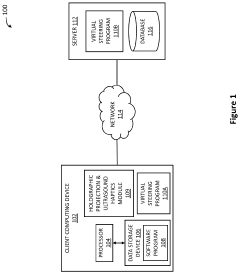
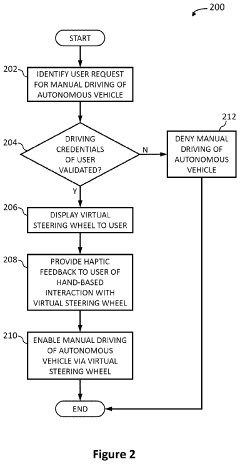
- A system that detects a user's request to manually drive an autonomous vehicle and displays a virtual steering wheel, providing haptic feedback through ultrasound-based haptic effects or haptic-enabled gloves, allowing users to manually control the vehicle's steering, acceleration, and braking.
Safety and Regulatory Compliance
The implementation of AI in steering wheel navigation systems brings forth critical considerations regarding safety and regulatory compliance. As these systems become more sophisticated, they must adhere to stringent safety standards and regulations to ensure the well-being of drivers and passengers. Regulatory bodies worldwide are developing frameworks to govern the use of AI in automotive applications, with a particular focus on navigation systems integrated into steering wheels.
One of the primary safety concerns is the potential for driver distraction. AI-powered steering wheel navigation systems must be designed to minimize cognitive load and visual distractions. This requires careful integration of voice commands, haptic feedback, and minimalistic visual cues to convey navigation information without compromising the driver's attention to the road. Manufacturers must demonstrate compliance with distracted driving regulations, which vary across jurisdictions but generally aim to reduce accidents caused by in-vehicle technologies.
Another crucial aspect is the reliability and accuracy of the AI navigation system. Regulatory bodies are likely to require extensive testing and validation processes to ensure that the AI algorithms provide consistent and dependable navigation guidance. This may include stress testing under various environmental conditions, simulating complex traffic scenarios, and evaluating the system's ability to handle unexpected situations.
Data privacy and security are also significant regulatory concerns. AI-powered navigation systems often rely on real-time data collection and processing, which may include sensitive information about the driver's location and travel patterns. Compliance with data protection regulations, such as GDPR in Europe or CCPA in California, is essential. Manufacturers must implement robust data encryption, secure storage practices, and provide users with transparent control over their data.
The integration of AI in steering wheel navigation systems also raises questions about liability in case of accidents or system failures. Regulatory frameworks are evolving to address the allocation of responsibility between the driver, the vehicle manufacturer, and the AI system provider. Clear guidelines on system limitations and driver responsibilities must be established and communicated to users.
Certification processes for AI-enabled steering wheel navigation systems are likely to become more rigorous. Regulatory bodies may require manufacturers to demonstrate the system's ability to handle edge cases, its fail-safe mechanisms, and its overall impact on driver behavior and road safety. This may involve extensive road testing, simulation-based assessments, and ongoing monitoring of system performance post-deployment.
As the technology advances, regulatory compliance will necessitate continuous updates and improvements to AI navigation systems. Manufacturers must establish processes for over-the-air updates that address newly discovered vulnerabilities or enhance system performance while ensuring that these updates themselves do not introduce new safety risks.
One of the primary safety concerns is the potential for driver distraction. AI-powered steering wheel navigation systems must be designed to minimize cognitive load and visual distractions. This requires careful integration of voice commands, haptic feedback, and minimalistic visual cues to convey navigation information without compromising the driver's attention to the road. Manufacturers must demonstrate compliance with distracted driving regulations, which vary across jurisdictions but generally aim to reduce accidents caused by in-vehicle technologies.
Another crucial aspect is the reliability and accuracy of the AI navigation system. Regulatory bodies are likely to require extensive testing and validation processes to ensure that the AI algorithms provide consistent and dependable navigation guidance. This may include stress testing under various environmental conditions, simulating complex traffic scenarios, and evaluating the system's ability to handle unexpected situations.
Data privacy and security are also significant regulatory concerns. AI-powered navigation systems often rely on real-time data collection and processing, which may include sensitive information about the driver's location and travel patterns. Compliance with data protection regulations, such as GDPR in Europe or CCPA in California, is essential. Manufacturers must implement robust data encryption, secure storage practices, and provide users with transparent control over their data.
The integration of AI in steering wheel navigation systems also raises questions about liability in case of accidents or system failures. Regulatory frameworks are evolving to address the allocation of responsibility between the driver, the vehicle manufacturer, and the AI system provider. Clear guidelines on system limitations and driver responsibilities must be established and communicated to users.
Certification processes for AI-enabled steering wheel navigation systems are likely to become more rigorous. Regulatory bodies may require manufacturers to demonstrate the system's ability to handle edge cases, its fail-safe mechanisms, and its overall impact on driver behavior and road safety. This may involve extensive road testing, simulation-based assessments, and ongoing monitoring of system performance post-deployment.
As the technology advances, regulatory compliance will necessitate continuous updates and improvements to AI navigation systems. Manufacturers must establish processes for over-the-air updates that address newly discovered vulnerabilities or enhance system performance while ensuring that these updates themselves do not introduce new safety risks.
Human-AI Interaction in Vehicles
The integration of AI in steering wheel navigation systems represents a significant advancement in human-vehicle interaction. This technology aims to enhance driver safety, comfort, and overall driving experience by creating a more intuitive and responsive interface between the driver and the vehicle's navigation system. AI-powered steering wheel navigation systems can adapt to individual driving habits, predict user preferences, and provide personalized recommendations.
One of the key aspects of human-AI interaction in vehicles is the development of natural language processing (NLP) capabilities. Advanced NLP algorithms enable drivers to interact with the navigation system using voice commands, allowing for hands-free operation and reducing distractions. These systems can understand complex queries, interpret context, and provide relevant information or execute commands accurately.
Machine learning algorithms play a crucial role in improving the system's ability to understand and respond to driver behavior. By analyzing patterns in steering inputs, speed, and route preferences, the AI can anticipate the driver's needs and proactively offer assistance. For example, the system might suggest alternative routes based on real-time traffic data and the driver's historical preferences for avoiding congestion.
Gesture recognition technology is another important component of human-AI interaction in steering wheel navigation systems. Advanced sensors and computer vision algorithms can interpret hand movements and gestures on or near the steering wheel, allowing drivers to control various functions without taking their hands off the wheel or eyes off the road.
The implementation of haptic feedback in steering wheels further enhances the human-AI interaction experience. Subtle vibrations or resistance in the steering wheel can convey important information to the driver, such as upcoming turns or potential hazards, without requiring visual attention.
Adaptive user interfaces are essential for creating a seamless interaction between the driver and the AI system. These interfaces can adjust their layout, information density, and interaction methods based on the driver's preferences, skill level, and current driving conditions. This adaptability ensures that the system remains user-friendly and effective across a wide range of scenarios and user profiles.
To address privacy concerns and ensure user trust, AI-powered steering wheel navigation systems must incorporate robust data protection measures and transparent data usage policies. Clear communication about how user data is collected, stored, and utilized is crucial for widespread acceptance of this technology.
One of the key aspects of human-AI interaction in vehicles is the development of natural language processing (NLP) capabilities. Advanced NLP algorithms enable drivers to interact with the navigation system using voice commands, allowing for hands-free operation and reducing distractions. These systems can understand complex queries, interpret context, and provide relevant information or execute commands accurately.
Machine learning algorithms play a crucial role in improving the system's ability to understand and respond to driver behavior. By analyzing patterns in steering inputs, speed, and route preferences, the AI can anticipate the driver's needs and proactively offer assistance. For example, the system might suggest alternative routes based on real-time traffic data and the driver's historical preferences for avoiding congestion.
Gesture recognition technology is another important component of human-AI interaction in steering wheel navigation systems. Advanced sensors and computer vision algorithms can interpret hand movements and gestures on or near the steering wheel, allowing drivers to control various functions without taking their hands off the wheel or eyes off the road.
The implementation of haptic feedback in steering wheels further enhances the human-AI interaction experience. Subtle vibrations or resistance in the steering wheel can convey important information to the driver, such as upcoming turns or potential hazards, without requiring visual attention.
Adaptive user interfaces are essential for creating a seamless interaction between the driver and the AI system. These interfaces can adjust their layout, information density, and interaction methods based on the driver's preferences, skill level, and current driving conditions. This adaptability ensures that the system remains user-friendly and effective across a wide range of scenarios and user profiles.
To address privacy concerns and ensure user trust, AI-powered steering wheel navigation systems must incorporate robust data protection measures and transparent data usage policies. Clear communication about how user data is collected, stored, and utilized is crucial for widespread acceptance of this technology.
Unlock deeper insights with PatSnap Eureka Quick Research — get a full tech report to explore trends and direct your research. Try now!
Generate Your Research Report Instantly with AI Agent
Supercharge your innovation with PatSnap Eureka AI Agent Platform!