

How to Integrate Spintronics in Autonomous Systems
APR 16, 20269 MIN READ
Generate Your Research Report Instantly with AI Agent
Patsnap Eureka helps you evaluate technical feasibility & market potential.
Spintronics Integration Background and Autonomous System Goals
Spintronics, or spin electronics, represents a revolutionary paradigm shift from conventional charge-based electronics to systems that exploit the intrinsic spin properties of electrons alongside their charge. This field emerged in the late 20th century following the discovery of giant magnetoresistance (GMR) and has since evolved into a cornerstone technology for next-generation computing and sensing applications. The fundamental principle leverages electron spin states to encode, process, and store information, offering unprecedented advantages in power efficiency, processing speed, and data retention.
The evolution of spintronics has progressed through distinct phases, beginning with basic magnetoresistive effects in the 1980s, advancing to spin-transfer torque devices in the 2000s, and currently focusing on spin-orbit coupling phenomena and topological materials. Recent breakthroughs in voltage-controlled magnetic anisotropy and spin-orbit torque mechanisms have opened new pathways for ultra-low power device operation, making spintronics particularly attractive for energy-constrained autonomous systems.
Autonomous systems represent the convergence of artificial intelligence, sensor fusion, real-time processing, and adaptive control mechanisms operating without human intervention. These systems span diverse applications from autonomous vehicles and unmanned aerial vehicles to robotic manufacturing systems and smart infrastructure networks. The exponential growth in autonomous system deployment has created unprecedented demands for computational efficiency, real-time decision-making capabilities, and robust operation under varying environmental conditions.
The integration of spintronics into autonomous systems addresses several critical technological objectives. Primary goals include achieving ultra-low power consumption for extended operational autonomy, enabling non-volatile memory solutions that maintain system state during power interruptions, and implementing neuromorphic computing architectures that mimic biological neural networks for enhanced learning and adaptation capabilities.
Power efficiency represents the most compelling driver for spintronic integration, as autonomous systems often operate under strict energy constraints. Spintronic devices can potentially reduce power consumption by orders of magnitude compared to conventional CMOS technology, particularly in memory and logic operations. This efficiency gain directly translates to extended mission duration and reduced battery requirements for mobile autonomous platforms.
The pursuit of cognitive computing capabilities in autonomous systems aligns perfectly with spintronic device characteristics. Magnetic tunnel junctions and spin-based neurons can implement synaptic plasticity and learning algorithms directly in hardware, enabling real-time adaptation and pattern recognition without the computational overhead of software-based neural networks. This hardware-software co-design approach promises to revolutionize autonomous system intelligence and responsiveness.
The evolution of spintronics has progressed through distinct phases, beginning with basic magnetoresistive effects in the 1980s, advancing to spin-transfer torque devices in the 2000s, and currently focusing on spin-orbit coupling phenomena and topological materials. Recent breakthroughs in voltage-controlled magnetic anisotropy and spin-orbit torque mechanisms have opened new pathways for ultra-low power device operation, making spintronics particularly attractive for energy-constrained autonomous systems.
Autonomous systems represent the convergence of artificial intelligence, sensor fusion, real-time processing, and adaptive control mechanisms operating without human intervention. These systems span diverse applications from autonomous vehicles and unmanned aerial vehicles to robotic manufacturing systems and smart infrastructure networks. The exponential growth in autonomous system deployment has created unprecedented demands for computational efficiency, real-time decision-making capabilities, and robust operation under varying environmental conditions.
The integration of spintronics into autonomous systems addresses several critical technological objectives. Primary goals include achieving ultra-low power consumption for extended operational autonomy, enabling non-volatile memory solutions that maintain system state during power interruptions, and implementing neuromorphic computing architectures that mimic biological neural networks for enhanced learning and adaptation capabilities.
Power efficiency represents the most compelling driver for spintronic integration, as autonomous systems often operate under strict energy constraints. Spintronic devices can potentially reduce power consumption by orders of magnitude compared to conventional CMOS technology, particularly in memory and logic operations. This efficiency gain directly translates to extended mission duration and reduced battery requirements for mobile autonomous platforms.
The pursuit of cognitive computing capabilities in autonomous systems aligns perfectly with spintronic device characteristics. Magnetic tunnel junctions and spin-based neurons can implement synaptic plasticity and learning algorithms directly in hardware, enabling real-time adaptation and pattern recognition without the computational overhead of software-based neural networks. This hardware-software co-design approach promises to revolutionize autonomous system intelligence and responsiveness.
Market Demand for Spintronic-Enhanced Autonomous Systems
The autonomous systems market is experiencing unprecedented growth driven by increasing demand for intelligent, energy-efficient solutions across multiple sectors. Transportation leads this expansion, with autonomous vehicles requiring advanced computing capabilities for real-time decision-making, sensor fusion, and navigation systems. Current silicon-based processors face significant limitations in power consumption and processing speed, creating substantial market opportunities for spintronic-enhanced alternatives that offer superior energy efficiency and faster data processing.
Industrial automation represents another critical market segment demanding spintronic integration. Manufacturing facilities increasingly rely on autonomous robots and smart sensors that must operate continuously while minimizing energy consumption. The ability of spintronic devices to retain information without power consumption addresses a fundamental challenge in industrial IoT deployments, where thousands of sensors require persistent memory capabilities without draining power infrastructure.
Defense and aerospace applications constitute a high-value market segment with stringent requirements for radiation-resistant, low-power computing systems. Autonomous drones, satellite systems, and military vehicles operating in harsh environments need robust electronic components that maintain functionality under extreme conditions. Spintronic devices demonstrate superior radiation tolerance compared to conventional electronics, making them particularly attractive for these demanding applications.
The consumer electronics sector shows growing interest in spintronic-enhanced autonomous systems, particularly in smart home devices, wearable technology, and mobile robotics. Market demand stems from consumer expectations for longer battery life and faster response times in intelligent devices. Spintronic memory and processing components can significantly extend operational periods while improving performance in compact form factors.
Healthcare automation presents an emerging market opportunity, with autonomous medical devices requiring ultra-reliable, low-power operation for patient monitoring and surgical assistance. The non-volatile nature of spintronic memory ensures critical medical data preservation even during power interruptions, addressing regulatory requirements for medical device reliability.
Market growth drivers include increasing energy costs, environmental regulations promoting energy-efficient technologies, and the proliferation of edge computing applications requiring local processing capabilities. The convergence of artificial intelligence with autonomous systems further amplifies demand for specialized computing architectures that spintronic technologies can uniquely provide.
Industrial automation represents another critical market segment demanding spintronic integration. Manufacturing facilities increasingly rely on autonomous robots and smart sensors that must operate continuously while minimizing energy consumption. The ability of spintronic devices to retain information without power consumption addresses a fundamental challenge in industrial IoT deployments, where thousands of sensors require persistent memory capabilities without draining power infrastructure.
Defense and aerospace applications constitute a high-value market segment with stringent requirements for radiation-resistant, low-power computing systems. Autonomous drones, satellite systems, and military vehicles operating in harsh environments need robust electronic components that maintain functionality under extreme conditions. Spintronic devices demonstrate superior radiation tolerance compared to conventional electronics, making them particularly attractive for these demanding applications.
The consumer electronics sector shows growing interest in spintronic-enhanced autonomous systems, particularly in smart home devices, wearable technology, and mobile robotics. Market demand stems from consumer expectations for longer battery life and faster response times in intelligent devices. Spintronic memory and processing components can significantly extend operational periods while improving performance in compact form factors.
Healthcare automation presents an emerging market opportunity, with autonomous medical devices requiring ultra-reliable, low-power operation for patient monitoring and surgical assistance. The non-volatile nature of spintronic memory ensures critical medical data preservation even during power interruptions, addressing regulatory requirements for medical device reliability.
Market growth drivers include increasing energy costs, environmental regulations promoting energy-efficient technologies, and the proliferation of edge computing applications requiring local processing capabilities. The convergence of artificial intelligence with autonomous systems further amplifies demand for specialized computing architectures that spintronic technologies can uniquely provide.
Current Spintronics State and Autonomous Integration Challenges
Spintronics technology has achieved significant milestones in recent years, particularly in memory storage applications such as magnetoresistive random-access memory (MRAM) and spin-transfer torque devices. Current spintronic components demonstrate exceptional properties including non-volatility, ultra-low power consumption, and radiation hardness. Major semiconductor manufacturers have successfully commercialized spin-based memory solutions, with read/write speeds approaching conventional CMOS performance while offering superior endurance and data retention capabilities.
The fundamental physics of spin manipulation has matured considerably, with researchers demonstrating reliable control over electron spin states through various mechanisms including spin-orbit coupling, magnetic tunnel junctions, and spin Hall effects. Advanced fabrication techniques now enable the production of spintronic devices at nanoscale dimensions, making them suitable for integration with existing semiconductor processes. Recent breakthroughs in room-temperature operation and improved spin coherence times have addressed many early technical barriers.
However, integrating spintronics into autonomous systems presents unique challenges that extend beyond traditional computing applications. Autonomous systems require real-time processing capabilities, adaptive learning mechanisms, and robust operation under varying environmental conditions. Current spintronic devices, while excellent for memory applications, face limitations in processing speed for complex computational tasks required by autonomous decision-making algorithms.
The integration challenge is further complicated by the need for seamless interface between spintronic components and conventional CMOS logic circuits. Signal conversion between charge-based and spin-based information processing creates latency issues and power overhead that can compromise the inherent advantages of spintronic technology. Additionally, the magnetic fields generated by spintronic devices may interfere with sensitive sensors commonly used in autonomous systems.
Thermal management represents another critical challenge, as autonomous systems often operate in uncontrolled environments with significant temperature variations. While spintronic devices generally exhibit good thermal stability, maintaining consistent performance across the wide temperature ranges encountered in automotive, aerospace, and robotics applications requires careful system-level design considerations.
The current lack of standardized design tools and simulation frameworks specifically tailored for spintronic-autonomous system integration further impedes development progress. Most existing electronic design automation tools are optimized for conventional semiconductor devices, creating a gap in the development ecosystem that slows prototyping and validation processes for hybrid spintronic-autonomous systems.
The fundamental physics of spin manipulation has matured considerably, with researchers demonstrating reliable control over electron spin states through various mechanisms including spin-orbit coupling, magnetic tunnel junctions, and spin Hall effects. Advanced fabrication techniques now enable the production of spintronic devices at nanoscale dimensions, making them suitable for integration with existing semiconductor processes. Recent breakthroughs in room-temperature operation and improved spin coherence times have addressed many early technical barriers.
However, integrating spintronics into autonomous systems presents unique challenges that extend beyond traditional computing applications. Autonomous systems require real-time processing capabilities, adaptive learning mechanisms, and robust operation under varying environmental conditions. Current spintronic devices, while excellent for memory applications, face limitations in processing speed for complex computational tasks required by autonomous decision-making algorithms.
The integration challenge is further complicated by the need for seamless interface between spintronic components and conventional CMOS logic circuits. Signal conversion between charge-based and spin-based information processing creates latency issues and power overhead that can compromise the inherent advantages of spintronic technology. Additionally, the magnetic fields generated by spintronic devices may interfere with sensitive sensors commonly used in autonomous systems.
Thermal management represents another critical challenge, as autonomous systems often operate in uncontrolled environments with significant temperature variations. While spintronic devices generally exhibit good thermal stability, maintaining consistent performance across the wide temperature ranges encountered in automotive, aerospace, and robotics applications requires careful system-level design considerations.
The current lack of standardized design tools and simulation frameworks specifically tailored for spintronic-autonomous system integration further impedes development progress. Most existing electronic design automation tools are optimized for conventional semiconductor devices, creating a gap in the development ecosystem that slows prototyping and validation processes for hybrid spintronic-autonomous systems.
Existing Spintronic Integration Solutions for Autonomous Platforms
01 Spin-orbit torque devices and magnetic memory applications
Spintronic devices utilizing spin-orbit torque effects for magnetic memory applications, including magnetic tunnel junctions and spin-orbit torque magnetic random access memory (SOT-MRAM). These devices exploit the interaction between electron spin and orbital angular momentum to achieve efficient magnetization switching with reduced power consumption. The technology enables non-volatile memory with high speed and endurance.- Spin-orbit coupling materials and devices: Spintronics devices utilize materials with strong spin-orbit coupling effects to manipulate electron spin states. These materials enable efficient spin-charge conversion and spin current generation. The spin-orbit coupling phenomenon allows for the control of magnetization through electric fields rather than magnetic fields, reducing power consumption. Advanced materials including topological insulators and heavy metal layers are employed to enhance spin-orbit torque effects for device applications.
- Magnetic tunnel junction structures: Magnetic tunnel junctions form the core component of spintronic memory and logic devices, consisting of two ferromagnetic layers separated by a thin insulating barrier. The tunneling magnetoresistance effect enables reading of magnetic states through resistance changes. These structures are optimized for high thermal stability, low switching current, and fast operation speeds. Various layer compositions and geometries are developed to improve performance metrics for commercial applications.
- Spin transfer torque switching mechanisms: Spin transfer torque technology enables magnetization switching through spin-polarized current injection, eliminating the need for external magnetic fields. This mechanism allows for scalable and energy-efficient magnetic memory devices. The switching dynamics are controlled by current density, pulse duration, and material properties. Optimization of spin transfer efficiency involves careful selection of magnetic materials and interface engineering to reduce critical switching currents.
- Spintronic sensors and detection systems: Spintronic-based sensors exploit magnetoresistive effects for highly sensitive detection of magnetic fields, position, and motion. These sensors offer advantages in terms of sensitivity, size, and power consumption compared to conventional technologies. Applications span automotive, industrial, and biomedical fields where precise magnetic field detection is required. Advanced sensor designs incorporate multi-layer structures and signal processing techniques to enhance detection capabilities and noise immunity.
- Two-dimensional materials for spintronic applications: Two-dimensional materials such as graphene and transition metal dichalcogenides provide unique platforms for spintronic devices due to their atomic-scale thickness and tunable electronic properties. These materials exhibit long spin relaxation times and high carrier mobility, making them suitable for spin transport applications. The integration of two-dimensional materials with magnetic layers enables novel device architectures with enhanced functionality. Research focuses on controlling spin injection, transport, and detection in these low-dimensional systems.
02 Magnetic materials and multilayer structures for spintronic devices
Development of specialized magnetic materials and multilayer thin film structures optimized for spintronic applications. These structures typically include ferromagnetic layers, non-magnetic spacer layers, and materials exhibiting strong spin-orbit coupling. The materials are engineered to enhance spin polarization, spin injection efficiency, and magnetoresistance effects critical for device performance.Expand Specific Solutions03 Spin transfer torque and current-induced magnetization switching
Technologies involving spin transfer torque phenomena where spin-polarized currents induce magnetization switching in magnetic nanostructures. This approach enables electrical control of magnetic states without external magnetic fields, facilitating compact and energy-efficient spintronic devices. Applications include magnetic sensors, oscillators, and logic devices.Expand Specific Solutions04 Topological materials and quantum spintronic devices
Utilization of topological insulators, Weyl semimetals, and other quantum materials in spintronic applications. These materials exhibit unique electronic properties with spin-momentum locking and protected surface states that enable robust spin transport. The technology explores quantum effects for next-generation spintronic devices with enhanced functionality and stability.Expand Specific Solutions05 Spin-based logic and computing architectures
Development of logic gates and computing architectures based on spin degrees of freedom rather than charge. These systems leverage spin currents and magnetic states to perform computational operations, offering potential advantages in power efficiency and integration density. The technology includes spin-based transistors, logic circuits, and neuromorphic computing elements.Expand Specific Solutions
Key Players in Spintronics and Autonomous Technology Industry
The integration of spintronics in autonomous systems represents an emerging technological frontier currently in its early development stage, with significant growth potential driven by the convergence of advanced materials science and autonomous vehicle technologies. The market, while nascent, shows promising expansion as automotive manufacturers like Honda Motor Co., Hyundai Motor Co., Kia Corp., and Ford-Werke GmbH increasingly invest in next-generation computing solutions for autonomous systems. Technology maturity varies significantly across stakeholders, with semiconductor leaders like Intel Corp. and Tokyo Electron Ltd. advancing foundational spintronic device fabrication, while research institutions including Beihang University, University of Electronic Science & Technology of China, and Technische Universität Kaiserslautern focus on theoretical breakthroughs and prototype development, creating a competitive landscape where commercial viability remains 3-5 years away from mainstream deployment.
Intel Corp.
Technical Solution: Intel has developed comprehensive spintronic solutions for autonomous systems, focusing on spin-transfer torque magnetic random access memory (STT-MRAM) integration with their processors. Their approach combines spin-orbit torque devices with neuromorphic computing architectures, enabling ultra-low power consumption for edge AI applications. Intel's spintronic memory solutions offer non-volatile storage with nanosecond switching speeds, making them ideal for real-time decision making in autonomous vehicles. The company has demonstrated spin-based logic devices that can perform both memory and computing functions, reducing data movement overhead in autonomous system architectures.
Strengths: Industry-leading semiconductor manufacturing capabilities, extensive ecosystem integration, proven scalability in mass production. Weaknesses: Higher development costs, dependency on existing silicon infrastructure, limited flexibility in novel spintronic material exploration.
Tokyo Electron Ltd.
Technical Solution: Tokyo Electron has developed specialized equipment and processes for manufacturing spintronic devices used in autonomous systems. Their technology focuses on precise deposition and etching techniques for magnetic tunnel junctions and spin-orbit coupling materials. The company provides advanced plasma processing solutions that enable the fabrication of high-quality magnetic multilayers essential for spintronic memory and logic devices. Their equipment supports the production of perpendicular magnetic anisotropy structures that are crucial for stable spintronic operation in varying environmental conditions typical of autonomous systems.
Strengths: Advanced manufacturing equipment expertise, high precision processing capabilities, strong partnerships with semiconductor manufacturers. Weaknesses: Limited direct system integration experience, dependency on customer adoption, high capital equipment costs.
Core Spintronic Innovations for Autonomous System Applications
Spin logic with magnetic insulators switched by spin orbit coupling
PatentWO2017044109A1
Innovation
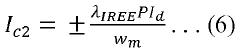
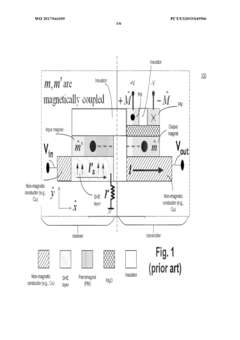
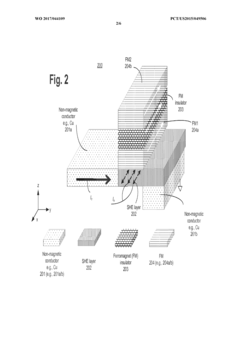
- The use of ferromagnets with strong exchange coupling and a FM insulator sandwiched between them, along with a spin orbit coupling layer, to enhance switching speed and reliability by allowing for faster and more efficient spin transfer torque switching.

Magnetic domain wall logic devices and interconnect
PatentWO2015147807A1
Innovation
- The implementation of magnetic domain wall logic devices with short ferromagnetic interconnects and spin torque repeaters/inverters, using free magnetic layers and non-magnetic metal layers to enable unidirectional propagation and isolation of magnetization signals, allowing for cascading of devices.


Safety Standards for Spintronic-Based Autonomous Systems
The integration of spintronic components into autonomous systems necessitates the establishment of comprehensive safety standards to ensure reliable operation in critical applications. Current safety frameworks for autonomous systems primarily focus on traditional semiconductor technologies, creating a regulatory gap that must be addressed as spintronic devices become more prevalent in navigation, sensing, and decision-making subsystems.
Functional safety standards such as ISO 26262 for automotive applications and DO-178C for aerospace systems require significant adaptation to accommodate the unique characteristics of spintronic devices. These components exhibit different failure modes compared to conventional electronics, including magnetic field sensitivity, thermal behavior variations, and spin coherence degradation over time. Safety standards must incorporate specific testing protocols for magnetic interference susceptibility and establish acceptable performance thresholds under varying environmental conditions.
Electromagnetic compatibility represents a critical safety consideration for spintronic-based autonomous systems. Unlike traditional electronics, spintronic devices can be both sources and victims of magnetic interference, potentially affecting nearby sensors or being disrupted by external magnetic fields. Safety standards must define minimum isolation requirements, shielding specifications, and electromagnetic field exposure limits to prevent cross-system interference that could compromise autonomous operation.
Reliability assessment methodologies require fundamental updates to address spintronic device characteristics. Traditional mean time between failure calculations may not adequately capture the gradual degradation of spin properties or the impact of magnetic domain wall movement on device performance. New accelerated aging tests and predictive maintenance protocols must be developed to ensure spintronic components maintain safety-critical performance throughout their operational lifetime.
Cybersecurity considerations for spintronic systems introduce novel attack vectors that existing safety standards do not address. The magnetic nature of data storage and processing in spintronic devices creates potential vulnerabilities to targeted electromagnetic attacks or side-channel exploitations. Safety standards must incorporate security requirements specific to magnetic-based computing architectures, including tamper detection mechanisms and secure key storage protocols that leverage spintronic properties while maintaining system integrity and preventing unauthorized access to critical autonomous system functions.
Functional safety standards such as ISO 26262 for automotive applications and DO-178C for aerospace systems require significant adaptation to accommodate the unique characteristics of spintronic devices. These components exhibit different failure modes compared to conventional electronics, including magnetic field sensitivity, thermal behavior variations, and spin coherence degradation over time. Safety standards must incorporate specific testing protocols for magnetic interference susceptibility and establish acceptable performance thresholds under varying environmental conditions.
Electromagnetic compatibility represents a critical safety consideration for spintronic-based autonomous systems. Unlike traditional electronics, spintronic devices can be both sources and victims of magnetic interference, potentially affecting nearby sensors or being disrupted by external magnetic fields. Safety standards must define minimum isolation requirements, shielding specifications, and electromagnetic field exposure limits to prevent cross-system interference that could compromise autonomous operation.
Reliability assessment methodologies require fundamental updates to address spintronic device characteristics. Traditional mean time between failure calculations may not adequately capture the gradual degradation of spin properties or the impact of magnetic domain wall movement on device performance. New accelerated aging tests and predictive maintenance protocols must be developed to ensure spintronic components maintain safety-critical performance throughout their operational lifetime.
Cybersecurity considerations for spintronic systems introduce novel attack vectors that existing safety standards do not address. The magnetic nature of data storage and processing in spintronic devices creates potential vulnerabilities to targeted electromagnetic attacks or side-channel exploitations. Safety standards must incorporate security requirements specific to magnetic-based computing architectures, including tamper detection mechanisms and secure key storage protocols that leverage spintronic properties while maintaining system integrity and preventing unauthorized access to critical autonomous system functions.
Energy Efficiency Advantages of Spintronic Autonomous Design
Spintronic autonomous systems demonstrate remarkable energy efficiency advantages compared to conventional electronic architectures, fundamentally transforming power consumption paradigms in autonomous applications. The intrinsic properties of spin-based devices enable ultra-low power operation through non-volatile memory characteristics and reduced switching energies, making them particularly suitable for energy-constrained autonomous environments.
The primary energy advantage stems from spintronics' ability to maintain information states without continuous power supply. Unlike traditional CMOS-based systems that require constant refreshing of volatile memory, spintronic devices utilize magnetic orientations to store data persistently. This non-volatility eliminates standby power consumption, which typically accounts for 30-40% of total energy usage in conventional autonomous systems. Magnetic tunnel junctions and spin-transfer torque devices can retain information for decades without power, enabling autonomous systems to enter true zero-power sleep states.
Spintronic logic operations consume significantly less energy per switching event compared to charge-based transistors. Spin manipulation requires femtojoule-level energies, approximately two orders of magnitude lower than conventional CMOS switching. This reduction becomes particularly pronounced in processing-intensive autonomous applications such as real-time sensor fusion, path planning, and decision-making algorithms where millions of logic operations occur continuously.
The integration of spintronic memory and logic functions within single devices eliminates energy-intensive data movement between separate memory and processing units. This in-memory computing capability reduces the von Neumann bottleneck that dominates energy consumption in traditional architectures. Autonomous systems benefit substantially from this integration, as they frequently perform repetitive pattern recognition and data processing tasks that can be executed directly within spintronic memory arrays.
Temperature stability represents another crucial energy efficiency advantage. Spintronic devices maintain consistent performance across wide temperature ranges without requiring active thermal management systems. Autonomous vehicles, drones, and outdoor sensors operating in harsh environments can eliminate power-hungry cooling systems while maintaining reliable operation, further extending operational lifetime and reducing overall energy requirements.
The scalability of spintronic devices enables dense integration without proportional increases in power consumption. As autonomous systems demand increasingly sophisticated processing capabilities, spintronic architectures can accommodate growing computational requirements while maintaining favorable energy scaling characteristics, ensuring sustainable performance improvements in next-generation autonomous platforms.
The primary energy advantage stems from spintronics' ability to maintain information states without continuous power supply. Unlike traditional CMOS-based systems that require constant refreshing of volatile memory, spintronic devices utilize magnetic orientations to store data persistently. This non-volatility eliminates standby power consumption, which typically accounts for 30-40% of total energy usage in conventional autonomous systems. Magnetic tunnel junctions and spin-transfer torque devices can retain information for decades without power, enabling autonomous systems to enter true zero-power sleep states.
Spintronic logic operations consume significantly less energy per switching event compared to charge-based transistors. Spin manipulation requires femtojoule-level energies, approximately two orders of magnitude lower than conventional CMOS switching. This reduction becomes particularly pronounced in processing-intensive autonomous applications such as real-time sensor fusion, path planning, and decision-making algorithms where millions of logic operations occur continuously.
The integration of spintronic memory and logic functions within single devices eliminates energy-intensive data movement between separate memory and processing units. This in-memory computing capability reduces the von Neumann bottleneck that dominates energy consumption in traditional architectures. Autonomous systems benefit substantially from this integration, as they frequently perform repetitive pattern recognition and data processing tasks that can be executed directly within spintronic memory arrays.
Temperature stability represents another crucial energy efficiency advantage. Spintronic devices maintain consistent performance across wide temperature ranges without requiring active thermal management systems. Autonomous vehicles, drones, and outdoor sensors operating in harsh environments can eliminate power-hungry cooling systems while maintaining reliable operation, further extending operational lifetime and reducing overall energy requirements.
The scalability of spintronic devices enables dense integration without proportional increases in power consumption. As autonomous systems demand increasingly sophisticated processing capabilities, spintronic architectures can accommodate growing computational requirements while maintaining favorable energy scaling characteristics, ensuring sustainable performance improvements in next-generation autonomous platforms.
Unlock deeper insights with Patsnap Eureka Quick Research — get a full tech report to explore trends and direct your research. Try now!
Generate Your Research Report Instantly with AI Agent
Supercharge your innovation with Patsnap Eureka AI Agent Platform!