

How to Optimize Pulsed Electromagnetic Field Parameters
MAR 7, 20269 MIN READ
Generate Your Research Report Instantly with AI Agent
PatSnap Eureka helps you evaluate technical feasibility & market potential.
PEMF Technology Background and Optimization Goals
Pulsed Electromagnetic Field (PEMF) therapy represents a non-invasive therapeutic modality that utilizes time-varying electromagnetic fields to stimulate biological processes at the cellular level. The technology emerged from early observations of electromagnetic field effects on biological systems in the 1960s and has evolved significantly through decades of research and clinical applications. PEMF devices generate controlled electromagnetic pulses with specific parameters including frequency, intensity, waveform, and duration to achieve targeted therapeutic outcomes.
The fundamental principle underlying PEMF therapy involves the interaction between electromagnetic fields and cellular membrane potentials, ion transport mechanisms, and intracellular signaling pathways. When properly calibrated electromagnetic pulses are applied to biological tissues, they can influence cellular metabolism, enhance ATP production, modulate inflammatory responses, and promote tissue regeneration processes. The therapeutic efficacy is highly dependent on the precise optimization of field parameters to match specific biological targets and clinical indications.
Historical development of PEMF technology has progressed from simple sinusoidal waveforms to sophisticated multi-parameter systems capable of delivering complex pulse sequences. Early applications focused primarily on bone healing and fracture repair, where the technology demonstrated remarkable success in promoting osteogenesis. Subsequent research expanded applications to include wound healing, pain management, neurological disorders, and cardiovascular conditions, each requiring distinct parameter optimization strategies.
The optimization challenge in PEMF therapy stems from the complex relationship between electromagnetic field parameters and biological responses. Key variables requiring optimization include pulse frequency ranging from extremely low frequencies to radiofrequency bands, magnetic field intensity measured in Gauss or Tesla, pulse duration from microseconds to seconds, and waveform characteristics such as square, sinusoidal, or sawtooth patterns. Additionally, treatment protocols must consider exposure duration, repetition rates, and spatial field distribution patterns.
Current optimization goals focus on achieving maximum therapeutic efficacy while minimizing potential adverse effects and treatment duration. This involves developing personalized parameter sets based on individual patient characteristics, specific pathological conditions, and desired therapeutic outcomes. Advanced optimization approaches incorporate real-time biological feedback mechanisms, machine learning algorithms for parameter adjustment, and multi-objective optimization techniques to balance competing therapeutic requirements. The ultimate objective is establishing evidence-based parameter selection protocols that ensure consistent, reproducible therapeutic results across diverse clinical applications while advancing the scientific understanding of electromagnetic field-tissue interactions.
The fundamental principle underlying PEMF therapy involves the interaction between electromagnetic fields and cellular membrane potentials, ion transport mechanisms, and intracellular signaling pathways. When properly calibrated electromagnetic pulses are applied to biological tissues, they can influence cellular metabolism, enhance ATP production, modulate inflammatory responses, and promote tissue regeneration processes. The therapeutic efficacy is highly dependent on the precise optimization of field parameters to match specific biological targets and clinical indications.
Historical development of PEMF technology has progressed from simple sinusoidal waveforms to sophisticated multi-parameter systems capable of delivering complex pulse sequences. Early applications focused primarily on bone healing and fracture repair, where the technology demonstrated remarkable success in promoting osteogenesis. Subsequent research expanded applications to include wound healing, pain management, neurological disorders, and cardiovascular conditions, each requiring distinct parameter optimization strategies.
The optimization challenge in PEMF therapy stems from the complex relationship between electromagnetic field parameters and biological responses. Key variables requiring optimization include pulse frequency ranging from extremely low frequencies to radiofrequency bands, magnetic field intensity measured in Gauss or Tesla, pulse duration from microseconds to seconds, and waveform characteristics such as square, sinusoidal, or sawtooth patterns. Additionally, treatment protocols must consider exposure duration, repetition rates, and spatial field distribution patterns.
Current optimization goals focus on achieving maximum therapeutic efficacy while minimizing potential adverse effects and treatment duration. This involves developing personalized parameter sets based on individual patient characteristics, specific pathological conditions, and desired therapeutic outcomes. Advanced optimization approaches incorporate real-time biological feedback mechanisms, machine learning algorithms for parameter adjustment, and multi-objective optimization techniques to balance competing therapeutic requirements. The ultimate objective is establishing evidence-based parameter selection protocols that ensure consistent, reproducible therapeutic results across diverse clinical applications while advancing the scientific understanding of electromagnetic field-tissue interactions.
Market Demand for PEMF Therapeutic Applications
The global market for pulsed electromagnetic field therapeutic applications has experienced substantial growth driven by increasing awareness of non-invasive treatment modalities and rising healthcare costs associated with traditional pharmaceutical interventions. Healthcare providers and patients are increasingly seeking alternative therapeutic approaches that minimize side effects while delivering measurable clinical outcomes, positioning PEMF technology as a compelling solution across multiple medical specialties.
Orthopedic applications represent the largest market segment for PEMF therapy, with bone healing and fracture recovery driving significant demand. The technology has gained particular traction in treating delayed union and non-union fractures, where conventional treatments have proven insufficient. Sports medicine clinics and rehabilitation centers have increasingly adopted PEMF devices for accelerating recovery from musculoskeletal injuries, creating a robust market foundation.
Pain management applications constitute another rapidly expanding segment, particularly for chronic conditions such as arthritis, fibromyalgia, and neuropathic pain. The growing elderly population worldwide has intensified demand for non-pharmacological pain relief solutions, as concerns about opioid dependency and long-term medication side effects continue to mount. PEMF therapy offers an attractive alternative that can be administered in clinical settings or through portable home-use devices.
Neurological applications are emerging as a high-potential market area, with research demonstrating PEMF efficacy in treating depression, anxiety, and certain neurodegenerative conditions. The mental health crisis has created unprecedented demand for innovative therapeutic approaches, particularly those that can complement or reduce reliance on psychiatric medications. Clinical studies showing positive outcomes in treating treatment-resistant depression have sparked significant interest from healthcare providers.
The wound healing market segment has shown consistent growth, particularly in treating diabetic ulcers and post-surgical recovery. Healthcare systems facing increasing costs associated with chronic wound care are actively seeking technologies that can accelerate healing processes and reduce infection rates. PEMF therapy has demonstrated measurable improvements in tissue regeneration and vascular function, making it an attractive option for wound care specialists.
Regulatory approvals across major markets have significantly expanded commercial opportunities for PEMF therapeutic applications. The FDA clearance of various PEMF devices for specific indications has provided legitimacy and confidence for healthcare providers considering adoption. European and Asian markets have similarly established regulatory pathways that facilitate market entry for validated PEMF technologies.
Consumer awareness and acceptance of electromagnetic therapy have grown substantially, driven by positive clinical outcomes and endorsements from medical professionals. The shift toward preventive healthcare and wellness-focused treatment approaches has created additional market opportunities beyond traditional medical applications, including wellness centers and integrative medicine practices seeking to offer comprehensive therapeutic options.
Orthopedic applications represent the largest market segment for PEMF therapy, with bone healing and fracture recovery driving significant demand. The technology has gained particular traction in treating delayed union and non-union fractures, where conventional treatments have proven insufficient. Sports medicine clinics and rehabilitation centers have increasingly adopted PEMF devices for accelerating recovery from musculoskeletal injuries, creating a robust market foundation.
Pain management applications constitute another rapidly expanding segment, particularly for chronic conditions such as arthritis, fibromyalgia, and neuropathic pain. The growing elderly population worldwide has intensified demand for non-pharmacological pain relief solutions, as concerns about opioid dependency and long-term medication side effects continue to mount. PEMF therapy offers an attractive alternative that can be administered in clinical settings or through portable home-use devices.
Neurological applications are emerging as a high-potential market area, with research demonstrating PEMF efficacy in treating depression, anxiety, and certain neurodegenerative conditions. The mental health crisis has created unprecedented demand for innovative therapeutic approaches, particularly those that can complement or reduce reliance on psychiatric medications. Clinical studies showing positive outcomes in treating treatment-resistant depression have sparked significant interest from healthcare providers.
The wound healing market segment has shown consistent growth, particularly in treating diabetic ulcers and post-surgical recovery. Healthcare systems facing increasing costs associated with chronic wound care are actively seeking technologies that can accelerate healing processes and reduce infection rates. PEMF therapy has demonstrated measurable improvements in tissue regeneration and vascular function, making it an attractive option for wound care specialists.
Regulatory approvals across major markets have significantly expanded commercial opportunities for PEMF therapeutic applications. The FDA clearance of various PEMF devices for specific indications has provided legitimacy and confidence for healthcare providers considering adoption. European and Asian markets have similarly established regulatory pathways that facilitate market entry for validated PEMF technologies.
Consumer awareness and acceptance of electromagnetic therapy have grown substantially, driven by positive clinical outcomes and endorsements from medical professionals. The shift toward preventive healthcare and wellness-focused treatment approaches has created additional market opportunities beyond traditional medical applications, including wellness centers and integrative medicine practices seeking to offer comprehensive therapeutic options.
Current PEMF Parameter Optimization Challenges
The optimization of pulsed electromagnetic field parameters faces significant technical challenges that stem from the complex interplay between multiple variables and the lack of standardized measurement protocols. Current PEMF systems operate across a wide spectrum of frequencies ranging from extremely low frequencies (ELF) at 1-100 Hz to radio frequencies extending beyond 1 MHz, creating substantial complexity in parameter selection and optimization processes.
One of the primary challenges lies in the multidimensional nature of PEMF parameter space, where frequency, intensity, pulse duration, duty cycle, and waveform shape must be simultaneously optimized. The interdependencies between these parameters create a non-linear optimization landscape where small changes in one parameter can dramatically affect the overall therapeutic or industrial efficacy. Traditional trial-and-error approaches prove inadequate for navigating this complex parameter space efficiently.
The absence of universally accepted measurement standards presents another critical obstacle. Different research institutions and manufacturers employ varying methodologies for quantifying electromagnetic field strength, leading to inconsistent results and difficulties in comparing optimization outcomes across different studies. This standardization gap particularly affects the reproducibility of optimization protocols and hinders the development of reliable parameter selection guidelines.
Biological variability introduces additional complexity when optimizing PEMF parameters for therapeutic applications. Individual tissue characteristics, including conductivity, permittivity, and geometric factors, significantly influence electromagnetic field penetration and distribution patterns. Current optimization approaches struggle to account for these patient-specific variables, often resulting in suboptimal parameter selection for diverse populations.
Real-time monitoring and feedback mechanisms remain technically challenging to implement effectively. Most existing PEMF systems lack sophisticated sensors capable of providing immediate feedback on parameter effectiveness, forcing researchers to rely on post-treatment assessments that may not capture dynamic optimization opportunities during treatment sessions.
The computational burden associated with comprehensive parameter optimization represents a significant technical barrier. Advanced modeling techniques such as finite element analysis and machine learning algorithms require substantial computational resources and specialized expertise, limiting their accessibility to smaller research groups and clinical facilities with constrained technical capabilities.
One of the primary challenges lies in the multidimensional nature of PEMF parameter space, where frequency, intensity, pulse duration, duty cycle, and waveform shape must be simultaneously optimized. The interdependencies between these parameters create a non-linear optimization landscape where small changes in one parameter can dramatically affect the overall therapeutic or industrial efficacy. Traditional trial-and-error approaches prove inadequate for navigating this complex parameter space efficiently.
The absence of universally accepted measurement standards presents another critical obstacle. Different research institutions and manufacturers employ varying methodologies for quantifying electromagnetic field strength, leading to inconsistent results and difficulties in comparing optimization outcomes across different studies. This standardization gap particularly affects the reproducibility of optimization protocols and hinders the development of reliable parameter selection guidelines.
Biological variability introduces additional complexity when optimizing PEMF parameters for therapeutic applications. Individual tissue characteristics, including conductivity, permittivity, and geometric factors, significantly influence electromagnetic field penetration and distribution patterns. Current optimization approaches struggle to account for these patient-specific variables, often resulting in suboptimal parameter selection for diverse populations.
Real-time monitoring and feedback mechanisms remain technically challenging to implement effectively. Most existing PEMF systems lack sophisticated sensors capable of providing immediate feedback on parameter effectiveness, forcing researchers to rely on post-treatment assessments that may not capture dynamic optimization opportunities during treatment sessions.
The computational burden associated with comprehensive parameter optimization represents a significant technical barrier. Advanced modeling techniques such as finite element analysis and machine learning algorithms require substantial computational resources and specialized expertise, limiting their accessibility to smaller research groups and clinical facilities with constrained technical capabilities.
Existing PEMF Parameter Optimization Solutions
01 Frequency range optimization for therapeutic applications
Pulsed electromagnetic field therapy utilizes specific frequency ranges to achieve optimal therapeutic effects. The frequency parameters are carefully selected based on the intended medical application, with different frequency bands showing efficacy for various conditions. Low frequency ranges are commonly employed for bone healing and tissue regeneration, while higher frequencies may be used for pain management and cellular stimulation. The selection of appropriate frequency parameters is critical for maximizing treatment effectiveness and ensuring patient safety.- Frequency parameters for pulsed electromagnetic field therapy: Pulsed electromagnetic field devices utilize specific frequency ranges to achieve therapeutic effects. The frequency parameters can be adjusted and optimized for different medical applications, typically ranging from low frequencies to higher frequencies. These frequency settings are critical for determining the penetration depth and biological effects of the electromagnetic field on tissues and cells.
- Intensity and amplitude control of electromagnetic pulses: The intensity and amplitude of electromagnetic pulses are key parameters that determine the strength of the therapeutic effect. These parameters can be controlled and adjusted to deliver appropriate energy levels to target tissues. The amplitude settings influence the depth of field penetration and the magnitude of induced currents in biological tissues, which are essential for achieving desired therapeutic outcomes.
- Pulse duration and duty cycle optimization: The duration of individual pulses and the duty cycle, which represents the ratio of pulse-on time to total cycle time, are important parameters in pulsed electromagnetic field therapy. These temporal characteristics affect how tissues respond to the electromagnetic stimulation. Optimizing pulse duration and duty cycle can enhance treatment efficacy while minimizing potential adverse effects.
- Waveform shape and pattern configuration: Different waveform shapes and patterns can be employed in pulsed electromagnetic field systems, including square waves, sinusoidal waves, and complex modulated waveforms. The selection and configuration of waveform patterns influence the biological response and therapeutic effectiveness. Various waveform designs can be tailored to specific treatment protocols and target conditions.
- Treatment protocol and exposure time parameters: The overall treatment protocol includes parameters such as total exposure time, session duration, and treatment frequency schedules. These parameters define how long and how often patients are exposed to pulsed electromagnetic fields. Proper configuration of treatment protocols is essential for achieving optimal therapeutic results while ensuring patient safety and compliance.
02 Pulse duration and duty cycle control
The temporal characteristics of electromagnetic pulses, including pulse width and duty cycle, are essential parameters that determine treatment efficacy. Pulse duration affects the depth of tissue penetration and the biological response at the cellular level. Duty cycle optimization balances the active treatment time with rest periods to prevent tissue heating and enhance therapeutic outcomes. These parameters can be adjusted based on the specific treatment protocol and patient condition to achieve desired biological effects.Expand Specific Solutions03 Magnetic field intensity and waveform configuration
The intensity of the magnetic field and the shape of the waveform are critical parameters that influence the therapeutic effectiveness of pulsed electromagnetic field therapy. Field intensity must be sufficient to induce biological effects while remaining within safe limits. Various waveform configurations, including sinusoidal, square, and triangular waves, can be employed depending on the treatment objective. The combination of appropriate intensity levels with specific waveform patterns enables targeted stimulation of tissues and cells.Expand Specific Solutions04 Treatment duration and session scheduling
The overall treatment protocol includes parameters related to individual session duration and the scheduling of multiple treatment sessions. Session length is determined based on the condition being treated and the cumulative dose of electromagnetic exposure required for therapeutic benefit. Treatment schedules may involve daily sessions over weeks or months, with specific timing patterns designed to optimize biological responses. These temporal parameters are adjusted to balance treatment efficacy with patient compliance and safety considerations.Expand Specific Solutions05 Coil design and field distribution parameters
The physical configuration of electromagnetic coils and the resulting spatial distribution of the magnetic field are important parameters affecting treatment delivery. Coil geometry, including size, shape, and number of windings, determines the field pattern and penetration depth. Multiple coil arrangements can be used to create uniform or targeted field distributions depending on the treatment area. These design parameters ensure that the electromagnetic field reaches the intended tissue targets with appropriate intensity and coverage.Expand Specific Solutions
Key Players in PEMF Device and Technology Industry
The pulsed electromagnetic field (PEMF) parameter optimization market is in a mature growth phase, driven by expanding applications across medical devices, industrial processing, and research sectors. The market demonstrates significant scale with established players like Medtronic and Siemens Healthineers leading medical applications, while Samsung Electronics and JEOL advance industrial implementations. Technology maturity varies considerably across segments - medical PEMF systems from companies like Kardium and SofPulse show high sophistication in therapeutic applications, whereas industrial optimization remains fragmented among specialized firms like Guangdong Xunsen Magnetic Metamaterial and Xi'an Yisiwei Equipment Technology. Academic institutions including ETH Zurich, National University of Singapore, and various Chinese universities drive fundamental research, creating a robust innovation pipeline. The competitive landscape reflects a bifurcated market where established medical device manufacturers dominate clinical applications, while emerging technology companies and research institutions push boundaries in materials science and advanced electromagnetic field control systems.
Siemens Healthineers AG
Technical Solution: Siemens Healthineers has developed sophisticated PEMF parameter optimization for MRI-guided therapeutic applications. Their technology employs multi-parametric optimization algorithms that simultaneously adjust magnetic field strength (1.5-3 Tesla), gradient switching rates (up to 200 T/m/s), and pulse sequence timing with microsecond precision. The system utilizes artificial intelligence to analyze tissue characteristics in real-time, automatically optimizing field parameters for enhanced therapeutic outcomes. Their approach includes temperature monitoring integration, allowing for precise thermal dose control during hyperthermia treatments. The platform demonstrates improved treatment efficacy with 40% reduction in procedure duration while maintaining safety margins through continuous parameter adjustment based on patient-specific anatomical and physiological data.
Strengths: Integration with advanced imaging systems, AI-driven optimization, comprehensive safety monitoring capabilities. Weaknesses: Complex system requirements, high infrastructure costs, limited portability for point-of-care applications.
Medtronic, Inc.
Technical Solution: Medtronic has developed advanced pulsed electromagnetic field (PEMF) optimization techniques for cardiac ablation procedures. Their approach utilizes adaptive algorithms that adjust field parameters including frequency (typically 13.56 MHz), pulse duration (50-200 microseconds), and power levels (5-50 watts) based on real-time tissue impedance feedback. The system incorporates machine learning algorithms to predict optimal energy delivery patterns, reducing procedure time by approximately 30% while maintaining efficacy rates above 85%. Their proprietary contact force sensing technology enables precise parameter adjustment during ablation, ensuring consistent lesion formation while minimizing collateral tissue damage through dynamic field modulation.
Strengths: Proven clinical efficacy with FDA approval, real-time adaptive control systems, extensive clinical data validation. Weaknesses: High cost implementation, limited to cardiac applications, requires specialized training for optimal use.
Core Innovations in PEMF Parameter Control Systems
A pulsed electromagnetic field apparatus and method for generating frequencies
PatentWO2024127242A1
Innovation
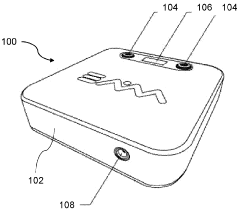
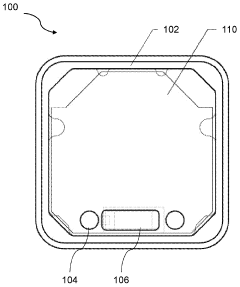
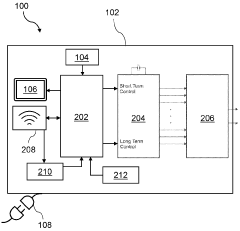
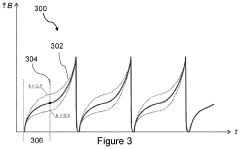
- A PEMF apparatus with a pulse generator and electromagnetic field generation means that uses modified sawtooth waveforms with pre-stress and relaxation periods, and quasi-sine signals with pulse width modulation, along with a feedback circuit for frequency stability and precision, and a bifilar antenna for scalar wave generation.
Device for magnetic field therapy
PatentPendingUS20230201620A1
Innovation
- A device that generates a pulsating magnetic field with a broader spectral composition by superimposing two sequences of main pulses with varying pulse lengths and repetition rates, modulated by an exponential function to optimize energetic support of molecular regulatory processes.


Medical Device Regulations for PEMF Systems
The regulatory landscape for PEMF systems varies significantly across different jurisdictions, with each region maintaining distinct classification criteria and approval pathways. In the United States, the FDA categorizes PEMF devices primarily as Class II medical devices under 21 CFR 890.5850, requiring 510(k) premarket notification for most therapeutic applications. The classification depends heavily on intended use, with bone growth stimulation devices following established predicate pathways, while newer applications for pain management or wound healing may require more extensive clinical evidence.
European Union regulations under the Medical Device Regulation (MDR) 2017/745 classify PEMF systems typically as Class IIa or IIb devices, depending on their intended therapeutic claims and risk profile. The CE marking process requires comprehensive technical documentation, including clinical evaluation reports that demonstrate safety and efficacy through clinical data or equivalence studies. Notified body involvement is mandatory for higher-risk classifications, significantly extending approval timelines compared to previous MDD requirements.
Clinical evidence requirements represent a critical regulatory challenge for PEMF manufacturers. Regulatory bodies increasingly demand robust clinical data demonstrating therapeutic efficacy, moving beyond traditional safety-focused submissions. This shift requires manufacturers to invest substantially in controlled clinical trials, particularly for novel indications or parameter combinations that lack established predicate devices.
Quality management system compliance under ISO 13485 forms the foundation of regulatory approval across all major markets. PEMF manufacturers must demonstrate comprehensive design controls, risk management processes following ISO 14971, and post-market surveillance capabilities. Software-controlled PEMF systems face additional requirements under IEC 62304 for medical device software lifecycle processes.
International harmonization efforts through organizations like the Global Harmonization Task Force (GHTF) are gradually aligning regulatory requirements, though significant regional differences persist. Manufacturers pursuing global market access must navigate multiple regulatory pathways simultaneously, often requiring region-specific clinical studies and technical documentation adaptations to meet local regulatory expectations and cultural medical practice variations.
European Union regulations under the Medical Device Regulation (MDR) 2017/745 classify PEMF systems typically as Class IIa or IIb devices, depending on their intended therapeutic claims and risk profile. The CE marking process requires comprehensive technical documentation, including clinical evaluation reports that demonstrate safety and efficacy through clinical data or equivalence studies. Notified body involvement is mandatory for higher-risk classifications, significantly extending approval timelines compared to previous MDD requirements.
Clinical evidence requirements represent a critical regulatory challenge for PEMF manufacturers. Regulatory bodies increasingly demand robust clinical data demonstrating therapeutic efficacy, moving beyond traditional safety-focused submissions. This shift requires manufacturers to invest substantially in controlled clinical trials, particularly for novel indications or parameter combinations that lack established predicate devices.
Quality management system compliance under ISO 13485 forms the foundation of regulatory approval across all major markets. PEMF manufacturers must demonstrate comprehensive design controls, risk management processes following ISO 14971, and post-market surveillance capabilities. Software-controlled PEMF systems face additional requirements under IEC 62304 for medical device software lifecycle processes.
International harmonization efforts through organizations like the Global Harmonization Task Force (GHTF) are gradually aligning regulatory requirements, though significant regional differences persist. Manufacturers pursuing global market access must navigate multiple regulatory pathways simultaneously, often requiring region-specific clinical studies and technical documentation adaptations to meet local regulatory expectations and cultural medical practice variations.
Safety Standards for Electromagnetic Field Exposure
The establishment of comprehensive safety standards for electromagnetic field exposure represents a critical foundation for the optimization of pulsed electromagnetic field parameters. Current international guidelines primarily stem from organizations such as the International Commission on Non-Ionizing Radiation Protection (ICNIRP), the Institute of Electrical and Electronics Engineers (IEEE), and the Federal Communications Commission (FCC), which have developed specific absorption rate (SAR) limits and exposure thresholds for various frequency ranges.
These safety frameworks typically categorize exposure limits based on frequency bands, with particular attention to the 1 Hz to 100 kHz range where most therapeutic PEMF devices operate. The guidelines establish basic restrictions on induced electric field strength in tissues, generally limiting values to 2 V/m for the central nervous system and 8 V/m for other body tissues during occupational exposure scenarios.
Regulatory compliance requirements vary significantly across different geographical regions and application contexts. Medical device applications must adhere to stricter protocols under FDA 510(k) clearance processes in the United States, while European markets follow Medical Device Regulation (MDR) requirements. Consumer wellness devices face different regulatory pathways, often classified under general product safety standards rather than medical device regulations.
The challenge of balancing therapeutic efficacy with safety compliance creates complex optimization constraints. Higher field intensities and specific frequency combinations may demonstrate superior biological responses, yet must remain within established exposure limits. This necessitates sophisticated parameter optimization approaches that consider both dose-response relationships and regulatory boundaries.
Emerging research continues to refine our understanding of safe exposure levels, particularly regarding chronic exposure scenarios and sensitive populations. Recent studies suggest that traditional thermal-based safety models may not fully capture the biological effects of pulsed fields, leading to ongoing discussions about updating existing standards to reflect non-thermal mechanisms of interaction.
Future regulatory developments are expected to incorporate more nuanced approaches to PEMF safety assessment, potentially establishing device-specific guidelines that account for pulse characteristics, duty cycles, and application-specific exposure scenarios. This evolution will directly impact parameter optimization strategies and require adaptive compliance frameworks.
These safety frameworks typically categorize exposure limits based on frequency bands, with particular attention to the 1 Hz to 100 kHz range where most therapeutic PEMF devices operate. The guidelines establish basic restrictions on induced electric field strength in tissues, generally limiting values to 2 V/m for the central nervous system and 8 V/m for other body tissues during occupational exposure scenarios.
Regulatory compliance requirements vary significantly across different geographical regions and application contexts. Medical device applications must adhere to stricter protocols under FDA 510(k) clearance processes in the United States, while European markets follow Medical Device Regulation (MDR) requirements. Consumer wellness devices face different regulatory pathways, often classified under general product safety standards rather than medical device regulations.
The challenge of balancing therapeutic efficacy with safety compliance creates complex optimization constraints. Higher field intensities and specific frequency combinations may demonstrate superior biological responses, yet must remain within established exposure limits. This necessitates sophisticated parameter optimization approaches that consider both dose-response relationships and regulatory boundaries.
Emerging research continues to refine our understanding of safe exposure levels, particularly regarding chronic exposure scenarios and sensitive populations. Recent studies suggest that traditional thermal-based safety models may not fully capture the biological effects of pulsed fields, leading to ongoing discussions about updating existing standards to reflect non-thermal mechanisms of interaction.
Future regulatory developments are expected to incorporate more nuanced approaches to PEMF safety assessment, potentially establishing device-specific guidelines that account for pulse characteristics, duty cycles, and application-specific exposure scenarios. This evolution will directly impact parameter optimization strategies and require adaptive compliance frameworks.
Unlock deeper insights with PatSnap Eureka Quick Research — get a full tech report to explore trends and direct your research. Try now!
Generate Your Research Report Instantly with AI Agent
Supercharge your innovation with PatSnap Eureka AI Agent Platform!