How to Reduce Engine Vibration using Control Module Algorithms
MAR 27, 20269 MIN READ
Generate Your Research Report Instantly with AI Agent
Patsnap Eureka helps you evaluate technical feasibility & market potential.
Engine Vibration Control Technology Background and Objectives
Engine vibration has been a persistent challenge in automotive engineering since the advent of internal combustion engines. The phenomenon stems from the inherent nature of combustion processes, where rapid pressure changes, reciprocating motion of pistons, and rotating components create complex vibrational patterns that propagate throughout the vehicle structure. These vibrations not only compromise passenger comfort but also contribute to component fatigue, reduced durability, and increased noise levels.
The evolution of engine vibration control has progressed through several distinct phases. Initially, mechanical solutions dominated the field, including engine mounts, balance shafts, and structural modifications. However, these passive approaches often provided limited effectiveness across varying operating conditions and engine speeds. The introduction of electronic control systems in the 1980s marked a paradigm shift, enabling real-time monitoring and adaptive response capabilities.
Modern engine vibration control has increasingly focused on algorithmic approaches integrated within engine control modules. These systems leverage advanced sensors, real-time data processing, and sophisticated control algorithms to actively counteract vibrational forces. The integration of accelerometers, crankshaft position sensors, and pressure transducers provides comprehensive feedback for closed-loop control systems.
The primary objective of contemporary engine vibration control technology centers on achieving multi-dimensional vibration suppression across the entire operational envelope. This encompasses idle stability, where low-frequency vibrations are most pronounced, as well as transient conditions during acceleration and deceleration. Advanced control algorithms aim to predict and preemptively counteract vibrational disturbances before they manifest as perceptible motion.
Secondary objectives include optimizing fuel efficiency while maintaining vibration control effectiveness, extending component lifespan through reduced mechanical stress, and enabling downsized engine architectures that would otherwise exhibit unacceptable vibration characteristics. The technology also targets seamless integration with hybrid powertrains, where the interaction between electric motors and internal combustion engines creates additional complexity in vibration management.
The ultimate goal involves developing predictive control systems that can adapt to changing engine conditions, component wear, and varying load demands while maintaining consistent vibration suppression performance throughout the vehicle's operational lifetime.
The evolution of engine vibration control has progressed through several distinct phases. Initially, mechanical solutions dominated the field, including engine mounts, balance shafts, and structural modifications. However, these passive approaches often provided limited effectiveness across varying operating conditions and engine speeds. The introduction of electronic control systems in the 1980s marked a paradigm shift, enabling real-time monitoring and adaptive response capabilities.
Modern engine vibration control has increasingly focused on algorithmic approaches integrated within engine control modules. These systems leverage advanced sensors, real-time data processing, and sophisticated control algorithms to actively counteract vibrational forces. The integration of accelerometers, crankshaft position sensors, and pressure transducers provides comprehensive feedback for closed-loop control systems.
The primary objective of contemporary engine vibration control technology centers on achieving multi-dimensional vibration suppression across the entire operational envelope. This encompasses idle stability, where low-frequency vibrations are most pronounced, as well as transient conditions during acceleration and deceleration. Advanced control algorithms aim to predict and preemptively counteract vibrational disturbances before they manifest as perceptible motion.
Secondary objectives include optimizing fuel efficiency while maintaining vibration control effectiveness, extending component lifespan through reduced mechanical stress, and enabling downsized engine architectures that would otherwise exhibit unacceptable vibration characteristics. The technology also targets seamless integration with hybrid powertrains, where the interaction between electric motors and internal combustion engines creates additional complexity in vibration management.
The ultimate goal involves developing predictive control systems that can adapt to changing engine conditions, component wear, and varying load demands while maintaining consistent vibration suppression performance throughout the vehicle's operational lifetime.
Market Demand for Advanced Engine Vibration Reduction Systems
The automotive industry is experiencing unprecedented demand for advanced engine vibration reduction systems, driven by increasingly stringent regulatory requirements and evolving consumer expectations. Modern vehicles must comply with noise, vibration, and harshness standards that have become significantly more demanding across global markets, particularly in developed regions where environmental regulations continue to tighten.
Consumer preferences have shifted dramatically toward premium driving experiences, with vehicle buyers prioritizing comfort, refinement, and perceived quality. This trend extends beyond luxury segments into mainstream automotive markets, where manufacturers compete intensively on ride quality and cabin comfort. Engine vibration directly impacts customer satisfaction scores and brand perception, making effective vibration control a critical differentiator in competitive markets.
The electrification transition is creating new market dynamics for vibration control technologies. Hybrid powertrains introduce complex vibration patterns due to frequent engine start-stop cycles and transitions between electric and combustion modes. These systems require sophisticated control algorithms capable of managing vibration during mode transitions, creating substantial market opportunities for advanced control module solutions.
Commercial vehicle segments represent significant growth potential, as fleet operators increasingly recognize the connection between vibration control and operational efficiency. Reduced engine vibration correlates with improved component longevity, decreased maintenance costs, and enhanced driver comfort during extended operating periods. This economic value proposition drives adoption of advanced vibration reduction systems in commercial applications.
Emerging markets present expanding opportunities as automotive production shifts globally and local manufacturers seek to improve product competitiveness. These markets often prioritize cost-effective solutions that deliver measurable performance improvements, creating demand for scalable control module algorithms that can be implemented across diverse engine platforms.
The aftermarket sector shows growing interest in retrofit vibration control solutions, particularly for high-performance and specialty vehicle applications. This segment values advanced algorithmic approaches that can be integrated with existing engine management systems without requiring extensive hardware modifications, representing a substantial addressable market for software-based solutions.
Consumer preferences have shifted dramatically toward premium driving experiences, with vehicle buyers prioritizing comfort, refinement, and perceived quality. This trend extends beyond luxury segments into mainstream automotive markets, where manufacturers compete intensively on ride quality and cabin comfort. Engine vibration directly impacts customer satisfaction scores and brand perception, making effective vibration control a critical differentiator in competitive markets.
The electrification transition is creating new market dynamics for vibration control technologies. Hybrid powertrains introduce complex vibration patterns due to frequent engine start-stop cycles and transitions between electric and combustion modes. These systems require sophisticated control algorithms capable of managing vibration during mode transitions, creating substantial market opportunities for advanced control module solutions.
Commercial vehicle segments represent significant growth potential, as fleet operators increasingly recognize the connection between vibration control and operational efficiency. Reduced engine vibration correlates with improved component longevity, decreased maintenance costs, and enhanced driver comfort during extended operating periods. This economic value proposition drives adoption of advanced vibration reduction systems in commercial applications.
Emerging markets present expanding opportunities as automotive production shifts globally and local manufacturers seek to improve product competitiveness. These markets often prioritize cost-effective solutions that deliver measurable performance improvements, creating demand for scalable control module algorithms that can be implemented across diverse engine platforms.
The aftermarket sector shows growing interest in retrofit vibration control solutions, particularly for high-performance and specialty vehicle applications. This segment values advanced algorithmic approaches that can be integrated with existing engine management systems without requiring extensive hardware modifications, representing a substantial addressable market for software-based solutions.
Current State and Challenges in Engine Vibration Control
Engine vibration control has evolved significantly over the past decades, transitioning from purely mechanical solutions to sophisticated electronic control systems. Modern engines incorporate advanced control modules that utilize real-time sensor data to actively counteract vibration sources. These systems typically employ accelerometers, crankshaft position sensors, and engine management units to monitor and respond to vibrational disturbances across multiple frequency ranges.
Current control algorithms primarily focus on active vibration cancellation through engine mount systems, variable valve timing adjustments, and fuel injection optimization. Leading automotive manufacturers have implemented adaptive control strategies that can adjust parameters in real-time based on operating conditions. However, these systems often operate independently, lacking comprehensive integration that could maximize overall vibration reduction effectiveness.
The geographical distribution of advanced engine vibration control technology remains concentrated in developed automotive markets. European manufacturers lead in diesel engine vibration control, while Japanese companies excel in hybrid powertrain vibration management. American manufacturers focus primarily on large displacement gasoline engine applications, creating distinct regional expertise clusters.
Despite technological advances, several critical challenges persist in current engine vibration control implementations. Computational limitations in existing control modules restrict the complexity of algorithms that can be deployed in real-time applications. Most current systems operate with sampling rates and processing capabilities that cannot adequately address high-frequency vibration components, particularly those above 500 Hz.
Integration complexity represents another significant obstacle, as modern engines incorporate multiple vibration sources including combustion irregularities, mechanical imbalances, and accessory drive systems. Current control algorithms struggle to simultaneously address these diverse vibration sources while maintaining optimal engine performance and fuel efficiency. The interdependencies between different control systems often create conflicting optimization objectives.
Sensor accuracy and durability under harsh engine operating conditions continue to limit system effectiveness. Temperature variations, electromagnetic interference, and mechanical stress can compromise sensor reliability, leading to suboptimal control responses. Additionally, the cost constraints of automotive applications restrict the implementation of high-precision sensing technologies that could significantly improve control algorithm performance.
Calibration complexity across different engine variants and operating conditions presents ongoing challenges for manufacturers. Current approaches require extensive testing and validation procedures, making it difficult to rapidly deploy improved algorithms across vehicle platforms. The lack of standardized interfaces between control modules from different suppliers further complicates system integration and optimization efforts.
Current control algorithms primarily focus on active vibration cancellation through engine mount systems, variable valve timing adjustments, and fuel injection optimization. Leading automotive manufacturers have implemented adaptive control strategies that can adjust parameters in real-time based on operating conditions. However, these systems often operate independently, lacking comprehensive integration that could maximize overall vibration reduction effectiveness.
The geographical distribution of advanced engine vibration control technology remains concentrated in developed automotive markets. European manufacturers lead in diesel engine vibration control, while Japanese companies excel in hybrid powertrain vibration management. American manufacturers focus primarily on large displacement gasoline engine applications, creating distinct regional expertise clusters.
Despite technological advances, several critical challenges persist in current engine vibration control implementations. Computational limitations in existing control modules restrict the complexity of algorithms that can be deployed in real-time applications. Most current systems operate with sampling rates and processing capabilities that cannot adequately address high-frequency vibration components, particularly those above 500 Hz.
Integration complexity represents another significant obstacle, as modern engines incorporate multiple vibration sources including combustion irregularities, mechanical imbalances, and accessory drive systems. Current control algorithms struggle to simultaneously address these diverse vibration sources while maintaining optimal engine performance and fuel efficiency. The interdependencies between different control systems often create conflicting optimization objectives.
Sensor accuracy and durability under harsh engine operating conditions continue to limit system effectiveness. Temperature variations, electromagnetic interference, and mechanical stress can compromise sensor reliability, leading to suboptimal control responses. Additionally, the cost constraints of automotive applications restrict the implementation of high-precision sensing technologies that could significantly improve control algorithm performance.
Calibration complexity across different engine variants and operating conditions presents ongoing challenges for manufacturers. Current approaches require extensive testing and validation procedures, making it difficult to rapidly deploy improved algorithms across vehicle platforms. The lack of standardized interfaces between control modules from different suppliers further complicates system integration and optimization efforts.
Existing Control Algorithm Solutions for Engine Vibration
01 Vibration detection and sensor-based monitoring systems
Control modules utilize various sensors to detect and monitor engine vibration in real-time. These systems employ accelerometers, piezoelectric sensors, or other vibration detection devices to measure vibration amplitude, frequency, and patterns. The collected data is processed by the control module to identify abnormal vibration conditions and trigger appropriate responses. This approach enables early detection of potential engine problems and allows for preventive maintenance actions.- Vibration detection and sensor-based monitoring systems: Control modules utilize various sensors to detect and monitor engine vibration in real-time. These systems employ accelerometers, piezoelectric sensors, or other vibration detection devices to measure vibration amplitude, frequency, and patterns. The collected data is processed by the control module to identify abnormal vibration conditions and trigger appropriate responses. Advanced sensor fusion techniques may be employed to improve detection accuracy and reliability.
- Active vibration control and damping algorithms: Control algorithms are implemented to actively reduce or eliminate engine vibration through counteracting forces or adjustments. These algorithms calculate optimal control signals based on measured vibration data and apply corrective actions through actuators or engine parameter modifications. Adaptive control strategies may be employed to adjust damping characteristics in response to changing operating conditions. The algorithms typically use feedback control loops to continuously monitor and minimize vibration levels.
- Engine parameter adjustment for vibration reduction: Control modules implement algorithms that adjust various engine parameters to minimize vibration. These parameters may include ignition timing, fuel injection timing, air-fuel ratio, and valve timing. The control system analyzes vibration patterns and correlates them with engine operating conditions to determine optimal parameter settings. Real-time adjustments are made to maintain smooth engine operation across different load and speed conditions.
- Predictive vibration analysis and diagnostic systems: Advanced control modules incorporate predictive algorithms that analyze vibration patterns to diagnose potential engine problems before they become critical. These systems use machine learning or pattern recognition techniques to identify characteristic vibration signatures associated with specific fault conditions. The diagnostic capability enables early detection of issues such as misfire, bearing wear, or imbalance, allowing for preventive maintenance actions.
- Multi-cylinder engine vibration balancing control: Control algorithms specifically designed for multi-cylinder engines focus on balancing the contribution of individual cylinders to overall engine vibration. These systems monitor cylinder-specific parameters and make individual adjustments to ensure uniform power output and minimize vibration. The control module coordinates the operation of all cylinders to achieve optimal balance and smooth operation. Techniques may include individual cylinder fuel correction and ignition timing optimization.
02 Active vibration control and cancellation algorithms
Advanced control algorithms are implemented to actively reduce or cancel engine vibration through counteracting forces or adjustments. These algorithms analyze vibration patterns and generate compensating signals to actuators or engine control parameters. The system calculates optimal control inputs based on real-time vibration measurements and applies corrective actions to minimize vibration effects. This technology improves engine smoothness and reduces mechanical stress on components.Expand Specific Solutions03 Engine parameter adjustment for vibration reduction
Control modules implement algorithms that adjust various engine operating parameters to minimize vibration. These parameters include ignition timing, fuel injection timing, air-fuel ratio, and valve timing. The algorithms continuously monitor vibration levels and optimize these parameters to achieve smoother engine operation. By dynamically adjusting engine control variables, the system can adapt to different operating conditions and reduce vibration across various engine speeds and loads.Expand Specific Solutions04 Predictive vibration analysis and diagnostic systems
Sophisticated algorithms analyze vibration data to predict potential engine failures and diagnose existing problems. These systems use pattern recognition, machine learning, or statistical analysis to identify characteristic vibration signatures associated with specific engine conditions or faults. The control module can distinguish between normal and abnormal vibration patterns, enabling early warning of issues such as bearing wear, misfire, or imbalance. This predictive capability supports condition-based maintenance strategies.Expand Specific Solutions05 Multi-cylinder engine balancing and synchronization control
Control algorithms coordinate the operation of multiple cylinders to minimize overall engine vibration through precise timing and balancing. These systems ensure proper firing order synchronization and balance the power output across all cylinders. The algorithms may adjust individual cylinder contributions to compensate for manufacturing tolerances or wear patterns. By optimizing the coordination between cylinders, the control module reduces vibration caused by uneven power delivery and improves overall engine refinement.Expand Specific Solutions
Key Players in Engine Control and Vibration Management Industry
The engine vibration control technology market is experiencing rapid growth driven by increasing demand for enhanced vehicle comfort and performance standards. The industry is in a mature development stage with established automotive giants like GM Global Technology Operations, Toyota Motor Corp., BMW, Ford Global Technologies, and Hyundai Motor leading traditional approaches. Technology suppliers including Robert Bosch GmbH, DENSO Corp., ZF Friedrichshafen AG, and Aisin KK demonstrate high technical maturity through advanced hardware solutions and integrated systems. However, the competitive landscape is evolving with software-focused innovators like Tula Technology and Tula eTechnology pioneering algorithm-based vibration control methods, representing a technological shift from hardware-centric to software-driven solutions. This transition indicates the market is entering a new phase where traditional mechanical approaches are being complemented by intelligent control algorithms, creating opportunities for both established players and emerging technology companies.
GM Global Technology Operations LLC
Technical Solution: General Motors employs sophisticated engine control algorithms within their Global Connect and Control (GC2) platform that addresses vibration through multi-modal control strategies. Their system integrates cylinder deactivation algorithms, variable displacement technology, and active torque management to minimize engine vibrations. The control modules utilize neural network-based algorithms that learn from driving patterns and engine behavior to optimize firing sequences and reduce NVH (Noise, Vibration, Harshness). GM's approach includes real-time combustion monitoring with closed-loop feedback control that adjusts injection parameters and ignition timing to maintain smooth engine operation across all operating conditions.
Strengths: Comprehensive vehicle integration capabilities and extensive real-world testing data, strong R&D investment. Weaknesses: Primarily focused on North American market requirements, may have limited global applicability.
Robert Bosch GmbH
Technical Solution: Bosch develops advanced engine control modules (ECMs) that utilize sophisticated algorithms for active vibration control. Their approach integrates multi-sensor feedback systems with real-time processing capabilities to monitor engine parameters such as crankshaft position, camshaft timing, and combustion pressure. The control algorithms employ adaptive filtering techniques and predictive modeling to anticipate vibration patterns and implement countermeasures through precise fuel injection timing, ignition timing optimization, and variable valve timing adjustments. Bosch's ECMs feature machine learning capabilities that continuously optimize vibration reduction strategies based on driving conditions and engine wear patterns.
Strengths: Industry-leading sensor integration and real-time processing capabilities, extensive automotive market presence. Weaknesses: High complexity may increase system costs and potential failure points.
Core Algorithm Innovations in Engine Vibration Suppression
Open-Loop Control Method for Cancelling Engine Induced Noise and Vibration
PatentInactiveUS20090133949A1
Innovation
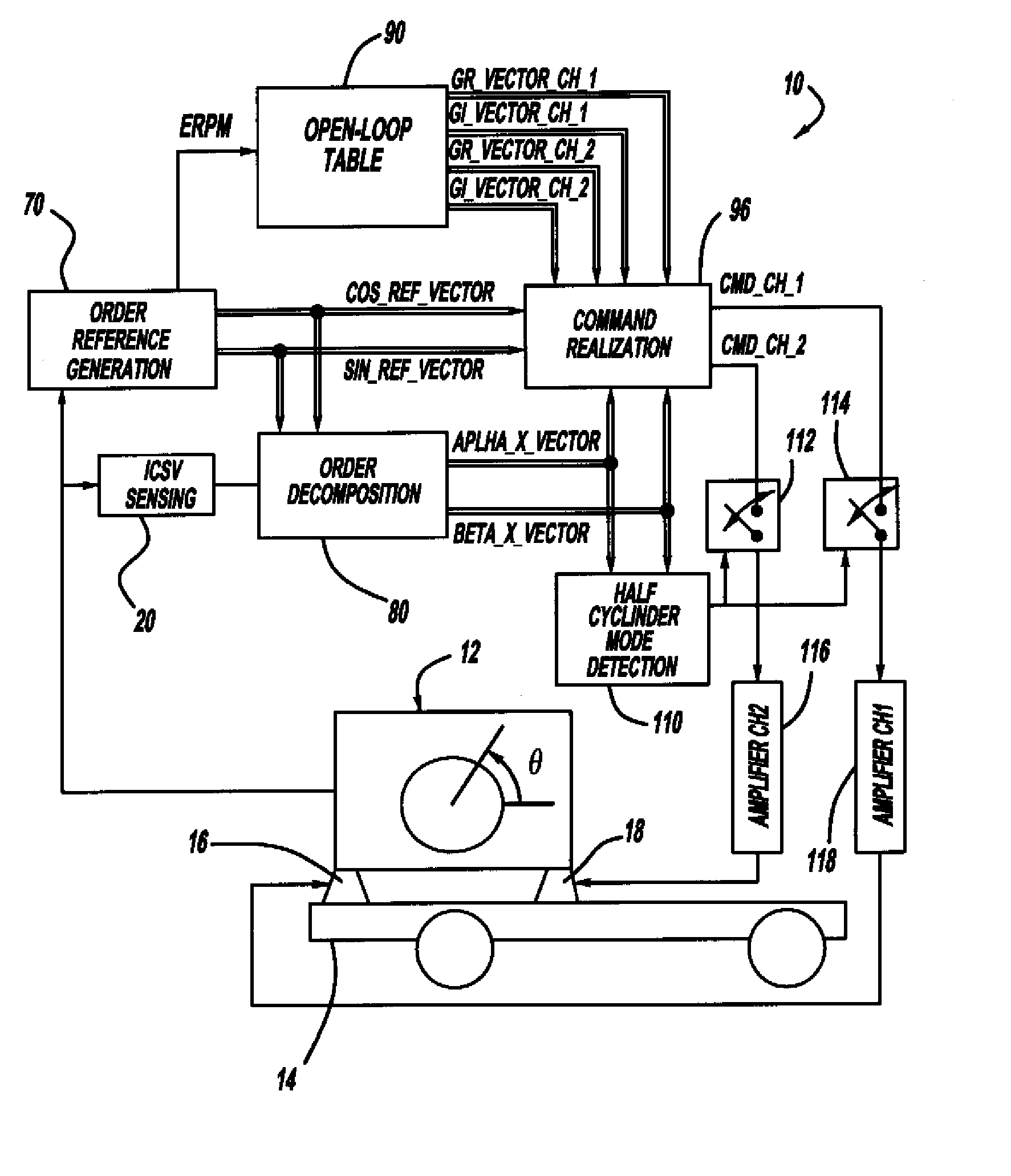
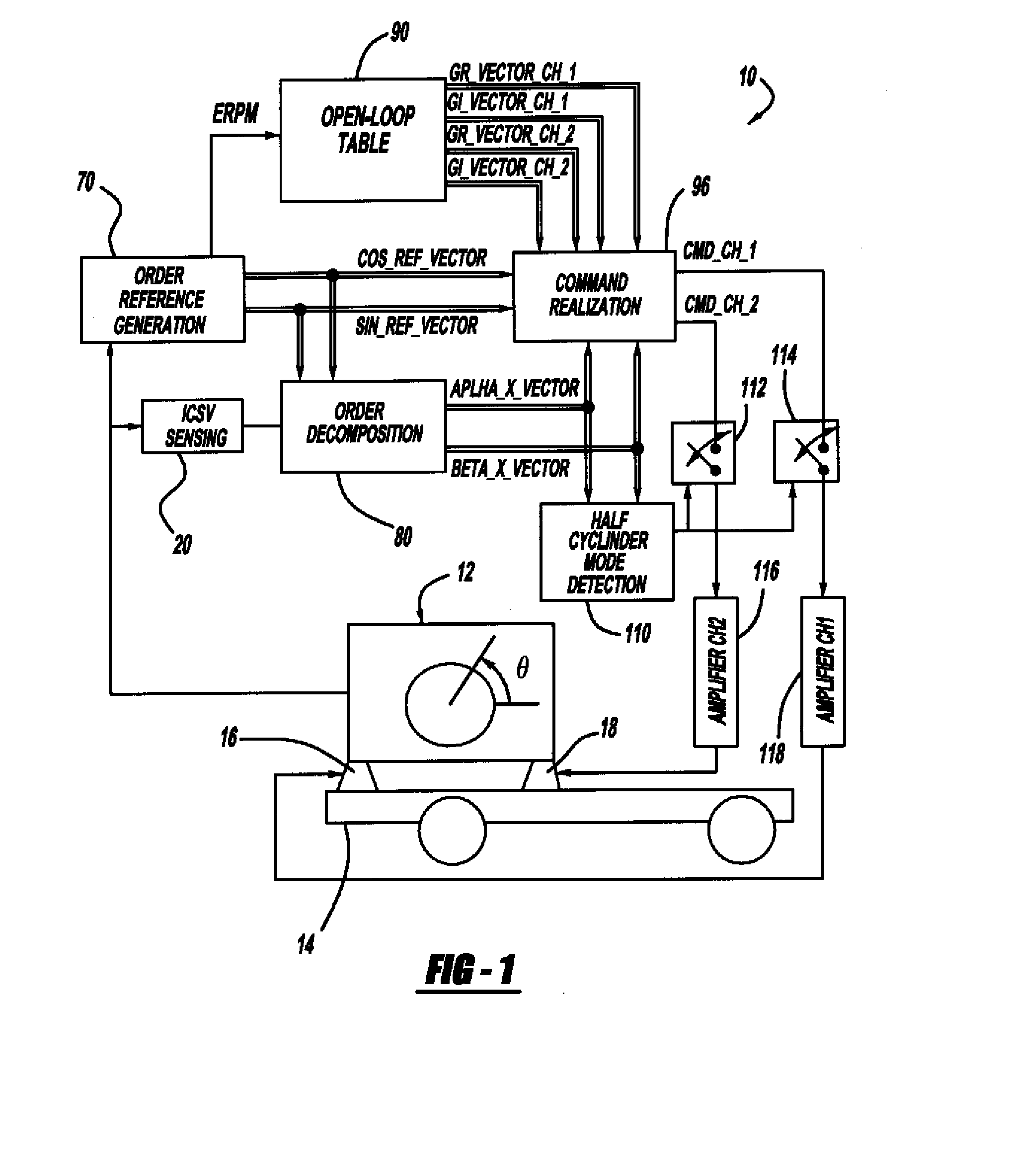
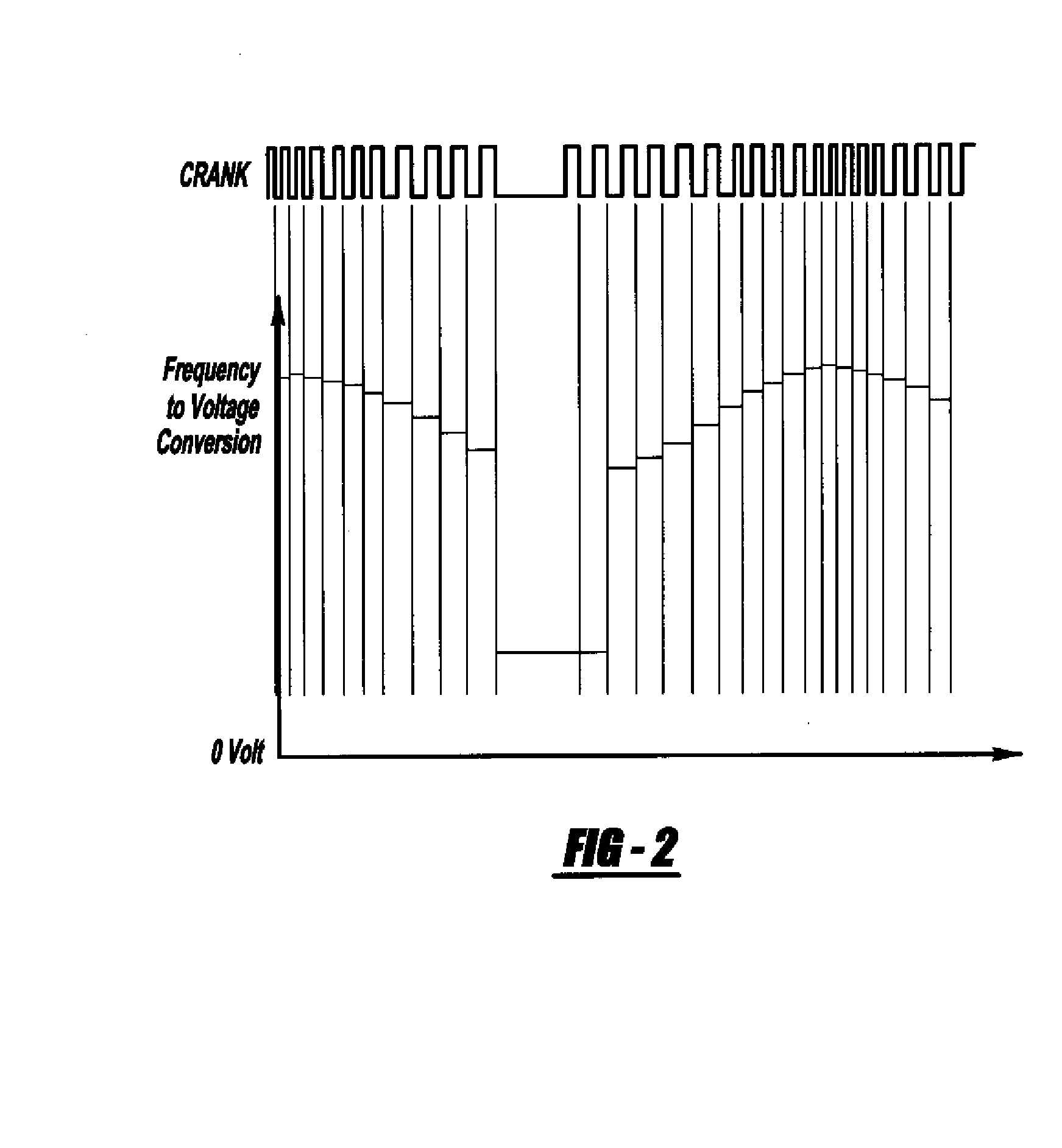
- An open-loop control system that uses only crank signal inputs to generate control signals for active engine mounts, minimizing error in crank speed variation measurements and decomposing the signal into order content to produce Fourier coefficients for precise control, with additional processing to deactivate control signals during half-cylinder operation.

Vibration feedback controller
PatentActiveUS10941725B2
Innovation
- An adaptive control module that receives vibration signals from engine sensors to determine power demand signals based on actual operating conditions, establishing operational limits specific to each engine's unique vibration signature, allowing for real-time control and maintenance optimization.


Automotive Emission Standards Impact on Vibration Control
The automotive industry faces an increasingly complex regulatory landscape where emission standards directly influence vibration control strategies in modern engines. Stringent regulations such as Euro 7, EPA Tier 3, and China VI have fundamentally altered how manufacturers approach engine design and control algorithms, creating new challenges for vibration management systems.
Contemporary emission standards mandate precise control of combustion processes, often requiring lean-burn operations, advanced exhaust gas recirculation, and sophisticated after-treatment systems. These requirements directly conflict with traditional vibration reduction approaches that relied on rich combustion mixtures and simplified engine timing strategies. The implementation of particulate filters, selective catalytic reduction systems, and NOx sensors introduces additional mechanical complexity that can amplify vibration sources.
Real-time emission compliance monitoring has become mandatory under current regulations, forcing control modules to continuously balance emission targets with vibration suppression. This dual optimization challenge requires algorithms to process multiple sensor inputs simultaneously, including lambda sensors, pressure transducers, and accelerometers, while maintaining strict emission thresholds throughout various operating conditions.
The regulatory push toward electrification and hybrid powertrains has created unique vibration control scenarios. Start-stop systems, mandated for fuel economy compliance, generate frequent transient vibrations that traditional algorithms struggle to manage. Control modules must now accommodate rapid engine restarts while maintaining emission compliance during these critical transition phases.
Advanced emission standards also restrict the use of certain vibration damping techniques that were previously acceptable. Engine mapping strategies that effectively reduced vibration but increased emissions are no longer viable, forcing engineers to develop more sophisticated algorithmic approaches that can achieve both objectives simultaneously.
Future regulatory trends indicate even stricter emission limits, particularly for real-driving emissions testing, which will further constrain vibration control strategies. The integration of artificial intelligence and machine learning in control modules represents a promising avenue for managing these competing requirements, enabling predictive algorithms that can anticipate and mitigate vibration while maintaining emission compliance across diverse operating scenarios.
Contemporary emission standards mandate precise control of combustion processes, often requiring lean-burn operations, advanced exhaust gas recirculation, and sophisticated after-treatment systems. These requirements directly conflict with traditional vibration reduction approaches that relied on rich combustion mixtures and simplified engine timing strategies. The implementation of particulate filters, selective catalytic reduction systems, and NOx sensors introduces additional mechanical complexity that can amplify vibration sources.
Real-time emission compliance monitoring has become mandatory under current regulations, forcing control modules to continuously balance emission targets with vibration suppression. This dual optimization challenge requires algorithms to process multiple sensor inputs simultaneously, including lambda sensors, pressure transducers, and accelerometers, while maintaining strict emission thresholds throughout various operating conditions.
The regulatory push toward electrification and hybrid powertrains has created unique vibration control scenarios. Start-stop systems, mandated for fuel economy compliance, generate frequent transient vibrations that traditional algorithms struggle to manage. Control modules must now accommodate rapid engine restarts while maintaining emission compliance during these critical transition phases.
Advanced emission standards also restrict the use of certain vibration damping techniques that were previously acceptable. Engine mapping strategies that effectively reduced vibration but increased emissions are no longer viable, forcing engineers to develop more sophisticated algorithmic approaches that can achieve both objectives simultaneously.
Future regulatory trends indicate even stricter emission limits, particularly for real-driving emissions testing, which will further constrain vibration control strategies. The integration of artificial intelligence and machine learning in control modules represents a promising avenue for managing these competing requirements, enabling predictive algorithms that can anticipate and mitigate vibration while maintaining emission compliance across diverse operating scenarios.
Real-time Processing Requirements for Engine Control Systems
Real-time processing capabilities represent the cornerstone of effective engine vibration control systems, where computational efficiency directly impacts the quality of vibration mitigation. Modern engine control modules must process sensor data, execute control algorithms, and generate actuator commands within microsecond timeframes to maintain system stability and performance.
The fundamental requirement for vibration control systems centers on achieving deterministic response times typically ranging from 100 microseconds to 1 millisecond, depending on engine operating conditions and vibration frequencies. This constraint necessitates specialized hardware architectures incorporating dedicated digital signal processors or field-programmable gate arrays capable of parallel processing multiple data streams simultaneously.
Sensor data acquisition forms the initial bottleneck in real-time processing chains, where accelerometers, pressure sensors, and crankshaft position encoders generate continuous data streams at sampling rates exceeding 10 kHz. The control module must buffer, filter, and process this information while maintaining temporal coherence across multiple sensor inputs to ensure accurate vibration characterization.
Algorithm execution efficiency becomes critical when implementing adaptive filtering techniques, such as least mean squares or recursive least squares algorithms, which require iterative calculations on large datasets. Modern implementations utilize optimized mathematical libraries and hardware-accelerated floating-point operations to minimize computational latency while preserving numerical precision.
Memory management strategies significantly influence real-time performance, particularly when handling circular buffers for historical data storage and prediction algorithms. Efficient memory allocation schemes prevent garbage collection delays and ensure consistent processing throughput during peak computational loads.
Communication protocols between control modules and actuators must guarantee deterministic message delivery within specified time windows. Controller Area Network and FlexRay protocols provide the necessary bandwidth and timing guarantees for coordinating multiple actuators in complex vibration control scenarios.
System validation requires comprehensive timing analysis using worst-case execution time calculations and real-time operating system scheduling verification to ensure consistent performance across all operating conditions and environmental variables.
The fundamental requirement for vibration control systems centers on achieving deterministic response times typically ranging from 100 microseconds to 1 millisecond, depending on engine operating conditions and vibration frequencies. This constraint necessitates specialized hardware architectures incorporating dedicated digital signal processors or field-programmable gate arrays capable of parallel processing multiple data streams simultaneously.
Sensor data acquisition forms the initial bottleneck in real-time processing chains, where accelerometers, pressure sensors, and crankshaft position encoders generate continuous data streams at sampling rates exceeding 10 kHz. The control module must buffer, filter, and process this information while maintaining temporal coherence across multiple sensor inputs to ensure accurate vibration characterization.
Algorithm execution efficiency becomes critical when implementing adaptive filtering techniques, such as least mean squares or recursive least squares algorithms, which require iterative calculations on large datasets. Modern implementations utilize optimized mathematical libraries and hardware-accelerated floating-point operations to minimize computational latency while preserving numerical precision.
Memory management strategies significantly influence real-time performance, particularly when handling circular buffers for historical data storage and prediction algorithms. Efficient memory allocation schemes prevent garbage collection delays and ensure consistent processing throughput during peak computational loads.
Communication protocols between control modules and actuators must guarantee deterministic message delivery within specified time windows. Controller Area Network and FlexRay protocols provide the necessary bandwidth and timing guarantees for coordinating multiple actuators in complex vibration control scenarios.
System validation requires comprehensive timing analysis using worst-case execution time calculations and real-time operating system scheduling verification to ensure consistent performance across all operating conditions and environmental variables.
Unlock deeper insights with Patsnap Eureka Quick Research — get a full tech report to explore trends and direct your research. Try now!
Generate Your Research Report Instantly with AI Agent
Supercharge your innovation with Patsnap Eureka AI Agent Platform!