How to Reduce Frequency Shift Keying Adjacency Channel Interference
MAR 19, 20269 MIN READ
Generate Your Research Report Instantly with AI Agent
PatSnap Eureka helps you evaluate technical feasibility & market potential.
FSK Adjacent Channel Interference Background and Objectives
Frequency Shift Keying (FSK) has emerged as a fundamental digital modulation technique since its introduction in the early days of digital communications. This modulation scheme encodes digital information by shifting the carrier frequency between discrete values, making it particularly robust against amplitude variations and noise. FSK's inherent simplicity and reliability have established it as a cornerstone technology in numerous communication systems, from early telegraph systems to modern IoT applications.
The evolution of FSK technology has been driven by the increasing demand for spectrum-efficient communication systems. As wireless communication networks have proliferated, the available frequency spectrum has become increasingly congested, leading to more stringent requirements for spectral efficiency and interference mitigation. The transition from analog to digital communications has further emphasized the need for modulation techniques that can operate reliably in dense spectral environments while maintaining acceptable error rates.
Adjacent channel interference represents one of the most significant challenges in FSK implementation, particularly in modern high-density communication environments. This phenomenon occurs when signals from neighboring frequency channels leak into the desired channel, causing degradation in signal quality and increased bit error rates. The problem has become more pronounced with the deployment of dense cellular networks, satellite communication constellations, and the proliferation of IoT devices operating in unlicensed spectrum bands.
The primary objective of addressing FSK adjacent channel interference is to enhance spectral efficiency while maintaining communication reliability. This involves developing techniques that can minimize out-of-band emissions from FSK transmitters while simultaneously improving receiver selectivity to reject unwanted adjacent channel signals. The goal extends beyond simple interference reduction to encompass optimization of overall system capacity and performance.
Contemporary research efforts focus on achieving improved frequency selectivity through advanced filtering techniques, adaptive modulation parameters, and intelligent spectrum management algorithms. The target is to enable higher channel packing densities without compromising communication quality, thereby maximizing the utilization of available spectrum resources. This objective aligns with broader industry goals of supporting increasing data traffic demands while operating within regulatory spectral emission limits.
The strategic importance of solving adjacent channel interference in FSK systems extends to enabling next-generation applications including massive IoT deployments, smart city infrastructure, and industrial automation systems. These applications require reliable communication in spectrally congested environments, making interference mitigation a critical enabler for technological advancement and economic growth in the digital communications sector.
The evolution of FSK technology has been driven by the increasing demand for spectrum-efficient communication systems. As wireless communication networks have proliferated, the available frequency spectrum has become increasingly congested, leading to more stringent requirements for spectral efficiency and interference mitigation. The transition from analog to digital communications has further emphasized the need for modulation techniques that can operate reliably in dense spectral environments while maintaining acceptable error rates.
Adjacent channel interference represents one of the most significant challenges in FSK implementation, particularly in modern high-density communication environments. This phenomenon occurs when signals from neighboring frequency channels leak into the desired channel, causing degradation in signal quality and increased bit error rates. The problem has become more pronounced with the deployment of dense cellular networks, satellite communication constellations, and the proliferation of IoT devices operating in unlicensed spectrum bands.
The primary objective of addressing FSK adjacent channel interference is to enhance spectral efficiency while maintaining communication reliability. This involves developing techniques that can minimize out-of-band emissions from FSK transmitters while simultaneously improving receiver selectivity to reject unwanted adjacent channel signals. The goal extends beyond simple interference reduction to encompass optimization of overall system capacity and performance.
Contemporary research efforts focus on achieving improved frequency selectivity through advanced filtering techniques, adaptive modulation parameters, and intelligent spectrum management algorithms. The target is to enable higher channel packing densities without compromising communication quality, thereby maximizing the utilization of available spectrum resources. This objective aligns with broader industry goals of supporting increasing data traffic demands while operating within regulatory spectral emission limits.
The strategic importance of solving adjacent channel interference in FSK systems extends to enabling next-generation applications including massive IoT deployments, smart city infrastructure, and industrial automation systems. These applications require reliable communication in spectrally congested environments, making interference mitigation a critical enabler for technological advancement and economic growth in the digital communications sector.
Market Demand for FSK Interference Mitigation Solutions
The telecommunications industry faces mounting pressure to address FSK adjacency channel interference as wireless communication systems become increasingly dense and spectrum resources grow scarcer. Traditional communication networks, particularly those operating in industrial IoT, smart metering, and low-power wide-area networks, rely heavily on FSK modulation schemes due to their robustness and power efficiency. However, the proliferation of these systems has created significant interference challenges that directly impact service quality and operational reliability.
Market demand for FSK interference mitigation solutions is primarily driven by the rapid expansion of IoT deployments across various sectors. Industrial automation systems, smart city infrastructure, and utility networks increasingly depend on reliable FSK-based communications. These applications require consistent data transmission without the disruptions caused by adjacency channel interference, creating a substantial market opportunity for effective mitigation technologies.
The wireless infrastructure sector represents a particularly significant demand driver, as network operators seek to maximize spectrum utilization while maintaining service quality standards. Legacy systems operating in sub-GHz frequency bands face particular challenges, as these bands have become increasingly congested with the deployment of new IoT devices and smart sensors. This congestion has created urgent demand for advanced filtering and signal processing solutions.
Regulatory pressures also contribute to market demand, as telecommunications authorities worldwide implement stricter emission standards and adjacency channel power ratio requirements. Compliance with these evolving regulations necessitates investment in interference mitigation technologies, driving adoption across both equipment manufacturers and network operators.
The market exhibits strong growth potential in emerging economies where rapid industrialization and smart infrastructure development create dense RF environments. These regions often lack the luxury of abundant spectrum resources, making efficient interference mitigation critical for successful technology deployment.
Equipment manufacturers face increasing customer demands for integrated interference mitigation capabilities in their FSK-based products. This trend has shifted market focus from standalone solutions toward embedded technologies that can be incorporated directly into communication devices during the design phase, creating opportunities for both hardware and software-based mitigation approaches.
Market demand for FSK interference mitigation solutions is primarily driven by the rapid expansion of IoT deployments across various sectors. Industrial automation systems, smart city infrastructure, and utility networks increasingly depend on reliable FSK-based communications. These applications require consistent data transmission without the disruptions caused by adjacency channel interference, creating a substantial market opportunity for effective mitigation technologies.
The wireless infrastructure sector represents a particularly significant demand driver, as network operators seek to maximize spectrum utilization while maintaining service quality standards. Legacy systems operating in sub-GHz frequency bands face particular challenges, as these bands have become increasingly congested with the deployment of new IoT devices and smart sensors. This congestion has created urgent demand for advanced filtering and signal processing solutions.
Regulatory pressures also contribute to market demand, as telecommunications authorities worldwide implement stricter emission standards and adjacency channel power ratio requirements. Compliance with these evolving regulations necessitates investment in interference mitigation technologies, driving adoption across both equipment manufacturers and network operators.
The market exhibits strong growth potential in emerging economies where rapid industrialization and smart infrastructure development create dense RF environments. These regions often lack the luxury of abundant spectrum resources, making efficient interference mitigation critical for successful technology deployment.
Equipment manufacturers face increasing customer demands for integrated interference mitigation capabilities in their FSK-based products. This trend has shifted market focus from standalone solutions toward embedded technologies that can be incorporated directly into communication devices during the design phase, creating opportunities for both hardware and software-based mitigation approaches.
Current FSK ACI Challenges and Technical Limitations
Frequency Shift Keying systems face significant adjacent channel interference challenges that fundamentally stem from spectral leakage and imperfect filtering mechanisms. The primary limitation lies in the inherent spectral characteristics of FSK modulation, where the transmitted signal energy extends beyond the allocated channel bandwidth, creating unwanted emissions that interfere with neighboring channels. This spectral spreading becomes particularly problematic in dense frequency allocation scenarios where channel spacing is minimized to maximize spectrum efficiency.
The filtering constraints represent another critical technical limitation in current FSK implementations. Practical analog and digital filters cannot achieve ideal brick-wall frequency responses, resulting in insufficient attenuation of out-of-band emissions. The trade-off between filter steepness and implementation complexity creates a fundamental bottleneck, as sharper filters require higher orders and introduce additional phase distortion and group delay variations that can degrade signal quality.
Modulation index optimization presents ongoing challenges in balancing spectral efficiency against interference mitigation. Higher modulation indices provide better noise immunity but generate wider spectral occupancy, increasing adjacent channel interference potential. Conversely, lower modulation indices reduce spectral spread but compromise demodulation performance in noisy environments, creating a fundamental design constraint that current systems struggle to resolve optimally.
Power control mechanisms in existing FSK systems demonstrate limited effectiveness in managing adjacent channel interference. Traditional automatic gain control systems lack the sophistication to dynamically adjust transmission power based on real-time interference conditions. The absence of adaptive power management results in unnecessary interference generation when high power transmission is not required, while failing to provide adequate signal strength when needed.
Synchronization and timing accuracy limitations contribute significantly to adjacent channel interference in FSK systems. Clock jitter and frequency instabilities cause spectral spreading and create time-varying interference patterns that are difficult to predict and mitigate. The cumulative effect of multiple timing imperfections across transmitter and receiver chains compounds the interference problem, particularly in multi-user environments.
Current receiver architectures exhibit insufficient selectivity and dynamic range capabilities to effectively reject adjacent channel interference while maintaining sensitivity to desired signals. The limited dynamic range of analog-to-digital converters and the constraints of practical intermediate frequency filtering create vulnerability to strong adjacent channel signals that can cause desensitization or intermodulation distortion.
The filtering constraints represent another critical technical limitation in current FSK implementations. Practical analog and digital filters cannot achieve ideal brick-wall frequency responses, resulting in insufficient attenuation of out-of-band emissions. The trade-off between filter steepness and implementation complexity creates a fundamental bottleneck, as sharper filters require higher orders and introduce additional phase distortion and group delay variations that can degrade signal quality.
Modulation index optimization presents ongoing challenges in balancing spectral efficiency against interference mitigation. Higher modulation indices provide better noise immunity but generate wider spectral occupancy, increasing adjacent channel interference potential. Conversely, lower modulation indices reduce spectral spread but compromise demodulation performance in noisy environments, creating a fundamental design constraint that current systems struggle to resolve optimally.
Power control mechanisms in existing FSK systems demonstrate limited effectiveness in managing adjacent channel interference. Traditional automatic gain control systems lack the sophistication to dynamically adjust transmission power based on real-time interference conditions. The absence of adaptive power management results in unnecessary interference generation when high power transmission is not required, while failing to provide adequate signal strength when needed.
Synchronization and timing accuracy limitations contribute significantly to adjacent channel interference in FSK systems. Clock jitter and frequency instabilities cause spectral spreading and create time-varying interference patterns that are difficult to predict and mitigate. The cumulative effect of multiple timing imperfections across transmitter and receiver chains compounds the interference problem, particularly in multi-user environments.
Current receiver architectures exhibit insufficient selectivity and dynamic range capabilities to effectively reject adjacent channel interference while maintaining sensitivity to desired signals. The limited dynamic range of analog-to-digital converters and the constraints of practical intermediate frequency filtering create vulnerability to strong adjacent channel signals that can cause desensitization or intermodulation distortion.
Existing FSK Adjacent Channel Interference Solutions
01 Frequency shift keying modulation techniques to reduce adjacent channel interference
Various frequency shift keying (FSK) modulation schemes can be employed to minimize adjacent channel interference. These techniques involve optimizing the frequency deviation, modulation index, and symbol rate to reduce spectral spillover into neighboring channels. Advanced FSK variants such as Gaussian FSK (GFSK) and minimum shift keying (MSK) utilize pulse shaping and continuous phase modulation to achieve better spectral efficiency and lower adjacent channel power.- Frequency shift keying modulation techniques for reducing adjacent channel interference: Various FSK modulation schemes can be employed to minimize adjacent channel interference by controlling the frequency deviation and modulation index. These techniques include minimum shift keying (MSK) and Gaussian frequency shift keying (GFSK), which provide better spectral efficiency and reduced sideband energy. By optimizing the modulation parameters, the signal bandwidth can be confined to reduce interference with neighboring channels while maintaining acceptable bit error rates.
- Filtering methods to suppress adjacent channel interference: Implementation of various filtering techniques in FSK systems helps attenuate out-of-band emissions and reduce interference to adjacent channels. These methods include pre-modulation filtering, post-demodulation filtering, and adaptive filtering schemes that can dynamically adjust filter characteristics based on channel conditions. Digital filters with sharp roll-off characteristics are particularly effective in limiting spectral spreading while preserving signal integrity.
- Power control and spectrum management techniques: Dynamic power control mechanisms can be implemented to reduce the impact of adjacent channel interference in FSK communication systems. These techniques involve adjusting transmission power levels based on channel quality, distance, and interference measurements. Spectrum management approaches include channel allocation algorithms and frequency planning strategies that maintain adequate guard bands between channels to minimize cross-talk and interference effects.
- Receiver design for adjacent channel interference rejection: Advanced receiver architectures incorporate interference cancellation and rejection capabilities specifically designed for FSK systems. These designs include narrow-band filtering stages, automatic gain control circuits, and digital signal processing algorithms that can identify and suppress adjacent channel signals. Techniques such as interference estimation, subtraction methods, and multi-stage filtering improve the receiver's ability to operate in congested spectrum environments.
- Multi-carrier and orthogonal frequency techniques: Implementation of multi-carrier FSK and orthogonal frequency division approaches provides enhanced resistance to adjacent channel interference. These methods distribute the transmitted signal across multiple sub-carriers with carefully controlled spacing and orthogonality properties. By utilizing frequency diversity and proper sub-carrier allocation, these techniques achieve better spectral containment and reduced interference coupling between adjacent channels while maintaining high data throughput.
02 Filtering methods for adjacent channel interference suppression
Implementation of various filtering techniques at transmitter and receiver stages can effectively suppress adjacent channel interference in FSK systems. These methods include pre-modulation filtering, post-demodulation filtering, and adaptive filtering algorithms that dynamically adjust filter parameters based on channel conditions. Digital filters with sharp roll-off characteristics and optimized bandwidth can significantly reduce out-of-band emissions and improve adjacent channel rejection.Expand Specific Solutions03 Power control and spectrum management techniques
Dynamic power control mechanisms and intelligent spectrum management strategies help mitigate adjacent channel interference in FSK communication systems. These approaches involve adjusting transmission power levels based on channel quality, implementing adaptive frequency allocation, and utilizing cognitive radio techniques to avoid interference. Spectrum sensing and monitoring capabilities enable systems to detect and avoid congested frequency bands.Expand Specific Solutions04 Receiver design and signal processing for interference mitigation
Advanced receiver architectures and signal processing algorithms are designed to enhance adjacent channel interference rejection in FSK systems. These include improved demodulation techniques, interference cancellation methods, and enhanced selectivity through multi-stage filtering. Digital signal processing techniques such as equalization, matched filtering, and maximum likelihood detection improve the ability to distinguish desired signals from adjacent channel interference.Expand Specific Solutions05 Channel spacing and frequency planning optimization
Optimal channel spacing and frequency planning strategies are essential for reducing adjacent channel interference in FSK systems. These methods involve calculating appropriate guard bands between channels, implementing frequency reuse patterns, and coordinating frequency assignments across multiple transmitters. Mathematical models and simulation tools help determine the minimum channel spacing required to maintain acceptable interference levels while maximizing spectral efficiency.Expand Specific Solutions
Key Players in FSK Communication and RF Technology
The frequency shift keying adjacency channel interference mitigation field represents a mature telecommunications technology sector experiencing steady evolution driven by 5G deployment and spectrum efficiency demands. The market demonstrates substantial scale, particularly in mobile communications infrastructure, with established players commanding significant market positions. Technology maturity varies across different solution approaches, with traditional telecommunications giants like Huawei Technologies, ZTE Corp., Qualcomm, and Ericsson leading advanced signal processing implementations, while semiconductor specialists including Texas Instruments and Advantest contribute essential hardware components. Research institutions such as China Academy of Telecom Technology drive innovation alongside established infrastructure providers like Siemens and emerging specialists like Parallel Wireless. The competitive landscape reflects a consolidating industry where patent portfolios held by entities like Thomson Licensing and Microsoft Technology Licensing create additional complexity, while automotive applications from BMW and industrial implementations suggest expanding market opportunities beyond traditional telecommunications sectors.
Huawei Technologies Co., Ltd.
Technical Solution: Huawei's FSK interference mitigation strategy focuses on intelligent frequency planning algorithms combined with advanced antenna diversity techniques. Their solution incorporates adaptive beamforming technology that dynamically adjusts radiation patterns to minimize interference between adjacent channels. The company implements sophisticated digital pre-distortion techniques and employs AI-driven interference detection and suppression algorithms. Their approach includes developing enhanced filter designs with sharper roll-off characteristics and implementing coordinated multi-point transmission techniques to reduce inter-channel interference. Huawei also utilizes advanced modulation optimization and dynamic spectrum management capabilities to ensure efficient frequency utilization while maintaining signal integrity.
Strengths: Comprehensive end-to-end solutions, strong R&D capabilities, cost-effective implementations. Weaknesses: Limited market access in some regions, regulatory restrictions affecting global deployment.
Texas Instruments Incorporated
Technical Solution: Texas Instruments focuses on hardware-level solutions for FSK interference mitigation through advanced analog and mixed-signal processing technologies. Their approach includes developing high-performance analog filters with steep roll-off characteristics, implementing precision frequency synthesis circuits with low phase noise characteristics, and creating advanced automatic gain control systems that maintain optimal signal levels. The company's solutions incorporate sophisticated clock recovery circuits, enhanced receiver sensitivity designs, and integrated interference detection mechanisms. TI also develops specialized digital signal processors optimized for real-time interference cancellation algorithms and implements advanced power management techniques to reduce spurious emissions that contribute to adjacent channel interference.
Strengths: Excellent hardware-level optimization, cost-effective semiconductor solutions, strong analog circuit expertise. Weaknesses: Limited software-based adaptive capabilities, requires external system integration for complete solutions.
Core Patents in FSK ACI Reduction Technologies
Data pulse spectrum control
PatentInactiveUS7158580B1
Innovation
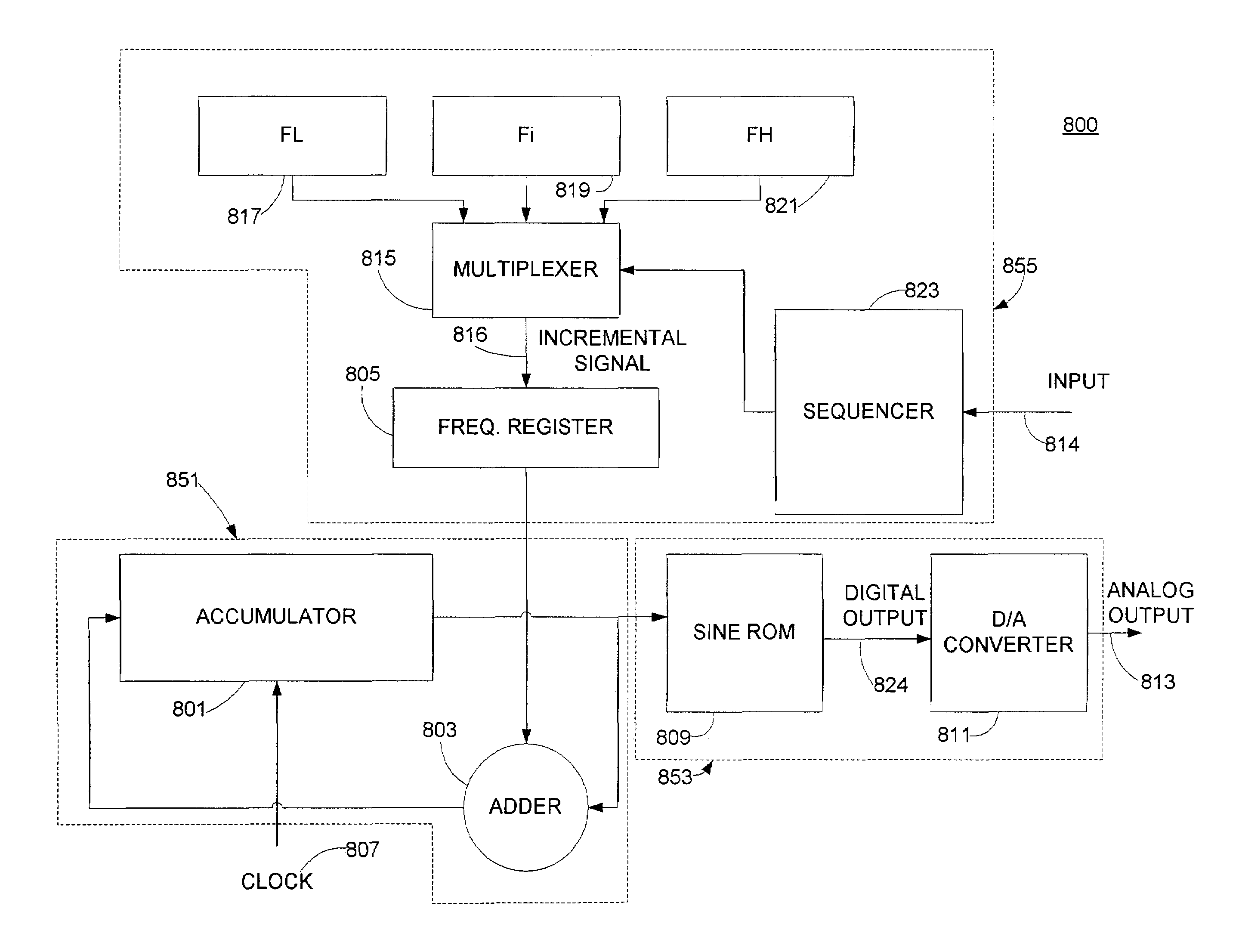
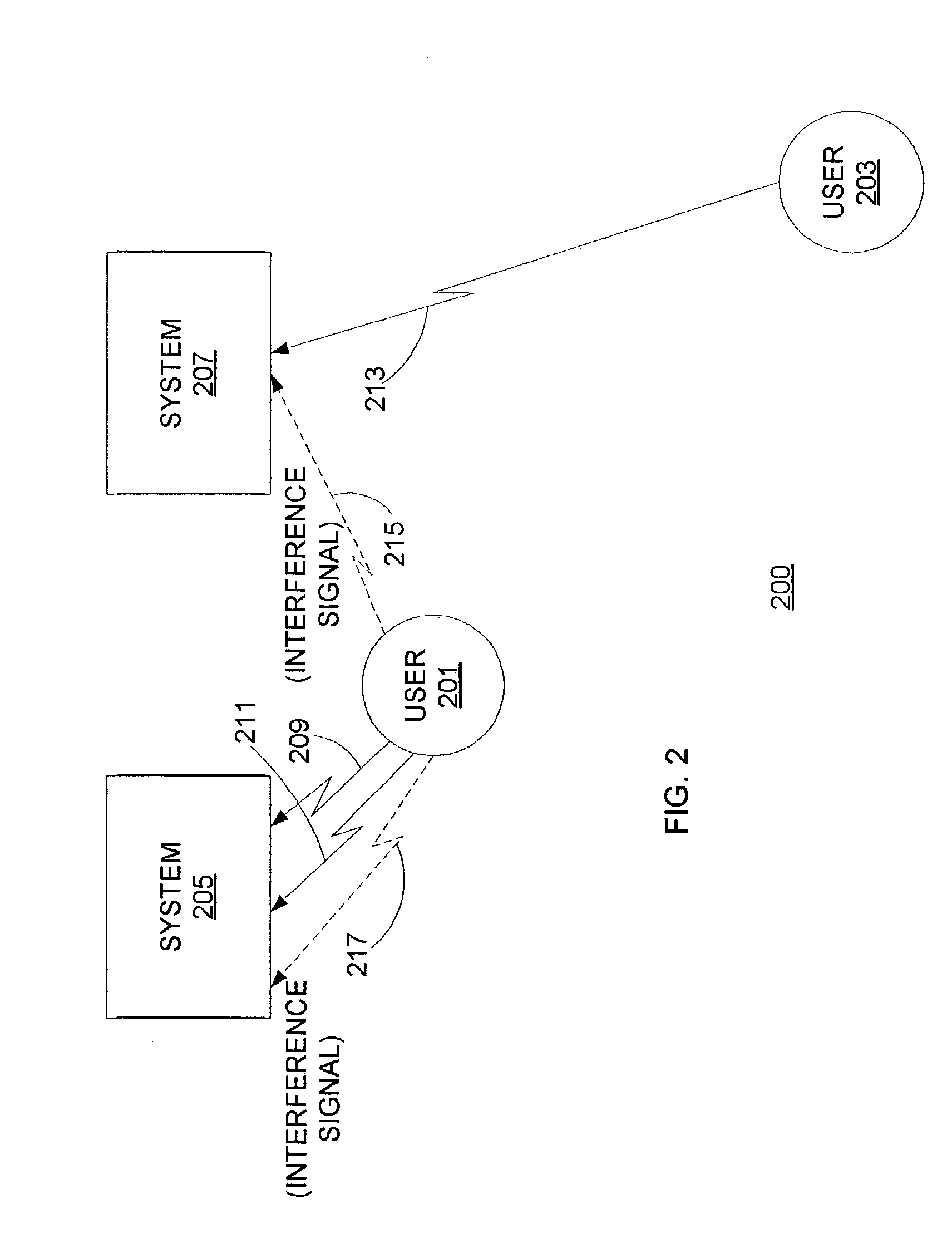
- A direct digital synthesizer generates waveforms with intermediate angular changes during transition times between symbol intervals, adjusting parameters like transition time and number of intermediate frequencies to reduce adjacent channel power, supporting multiple wireless channels and modulation techniques like phase shift keying.

Method and apparatus for adjacent channel interference reduction in an orthogonal frequency division multiplexing (OFDM) receiver
PatentWO2004004232A1
Innovation
- Monitoring an error metric to adjust the carrier frequency of the desired channel, aligning the zero crossings of the adjacent channel with FFT bins, and using a multi-tap equalizer to remove intentionally introduced inter-bin interference.


Spectrum Regulatory Framework for FSK Applications
The spectrum regulatory framework for FSK applications represents a critical foundation for managing adjacency channel interference through standardized frequency allocation and usage guidelines. Regulatory bodies worldwide have established comprehensive frameworks that define permissible frequency bands, power limitations, and spectral efficiency requirements specifically tailored to FSK transmission characteristics.
International Telecommunication Union (ITU) regulations provide the primary global framework, with regional adaptations implemented by organizations such as the Federal Communications Commission (FCC) in North America, the European Telecommunications Standards Institute (ETSI) in Europe, and similar bodies across other regions. These frameworks establish specific frequency bands designated for FSK applications, including industrial, scientific, and medical (ISM) bands, amateur radio allocations, and dedicated commercial frequency segments.
Spectral mask requirements constitute a fundamental component of the regulatory framework, defining maximum allowable out-of-band emissions and adjacent channel power ratios. These specifications directly address interference mitigation by establishing strict limits on spectral spillover into neighboring channels. Typical regulations mandate that adjacent channel emissions remain at least 40-60 dB below the main channel power, depending on the specific frequency band and application category.
Licensing requirements vary significantly across different FSK application categories, ranging from license-exempt operations in designated bands to strictly controlled commercial allocations. The framework includes provisions for coordination procedures between operators, mandatory interference analysis requirements, and technical certification processes that ensure compliance with spectral efficiency standards.
Recent regulatory developments have introduced dynamic spectrum access provisions and cognitive radio capabilities, enabling more flexible frequency utilization while maintaining interference protection. These evolving frameworks incorporate advanced interference mitigation techniques and real-time spectrum monitoring requirements, reflecting the growing complexity of modern FSK deployment scenarios and the need for adaptive interference management strategies.
International Telecommunication Union (ITU) regulations provide the primary global framework, with regional adaptations implemented by organizations such as the Federal Communications Commission (FCC) in North America, the European Telecommunications Standards Institute (ETSI) in Europe, and similar bodies across other regions. These frameworks establish specific frequency bands designated for FSK applications, including industrial, scientific, and medical (ISM) bands, amateur radio allocations, and dedicated commercial frequency segments.
Spectral mask requirements constitute a fundamental component of the regulatory framework, defining maximum allowable out-of-band emissions and adjacent channel power ratios. These specifications directly address interference mitigation by establishing strict limits on spectral spillover into neighboring channels. Typical regulations mandate that adjacent channel emissions remain at least 40-60 dB below the main channel power, depending on the specific frequency band and application category.
Licensing requirements vary significantly across different FSK application categories, ranging from license-exempt operations in designated bands to strictly controlled commercial allocations. The framework includes provisions for coordination procedures between operators, mandatory interference analysis requirements, and technical certification processes that ensure compliance with spectral efficiency standards.
Recent regulatory developments have introduced dynamic spectrum access provisions and cognitive radio capabilities, enabling more flexible frequency utilization while maintaining interference protection. These evolving frameworks incorporate advanced interference mitigation techniques and real-time spectrum monitoring requirements, reflecting the growing complexity of modern FSK deployment scenarios and the need for adaptive interference management strategies.
RF Coexistence Standards and Compliance Requirements
The regulatory landscape for RF coexistence has evolved significantly to address the growing complexity of wireless communication systems operating in shared spectrum environments. International standards organizations, including the IEEE, ITU-R, and ETSI, have established comprehensive frameworks that specifically address adjacency channel interference mitigation for FSK-based systems. These standards define mandatory spectral emission masks, out-of-band emission limits, and receiver selectivity requirements that directly impact FSK implementation strategies.
IEEE 802.15.4 and related standards establish critical parameters for FSK systems operating in ISM bands, mandating specific channel spacing requirements and power spectral density limitations. The standards require FSK transmitters to maintain emissions at least 20 dB below peak power levels in adjacent channels, with stricter requirements for systems operating in densely populated spectrum regions. Compliance testing protocols specify measurement bandwidths, reference sensitivity levels, and interference rejection ratios that FSK systems must demonstrate.
Regional regulatory bodies have implemented additional compliance requirements that vary significantly across jurisdictions. The FCC Part 15 regulations in North America impose stringent unwanted emission limits, while ETSI EN 300 220 series standards in Europe define harmonized technical requirements for FSK systems in sub-GHz bands. These regulations establish maximum permitted interference levels and mandate specific test methodologies for validating adjacency channel performance.
Emerging coexistence standards are increasingly focusing on dynamic spectrum management and cognitive radio techniques. The IEEE 802.19 working group has developed coexistence methodologies that require FSK systems to implement adaptive interference mitigation capabilities. These standards mandate real-time spectrum sensing, interference detection algorithms, and adaptive modulation parameters to minimize adjacency channel interference in heterogeneous wireless environments.
Compliance verification requires comprehensive testing across multiple operational scenarios, including worst-case interference conditions and multi-user environments. Standards specify mandatory test configurations, measurement equipment calibration requirements, and statistical validation methods. Certification processes now require demonstration of coexistence performance under realistic deployment conditions, pushing FSK system designers toward more sophisticated interference mitigation techniques and adaptive transmission strategies.
IEEE 802.15.4 and related standards establish critical parameters for FSK systems operating in ISM bands, mandating specific channel spacing requirements and power spectral density limitations. The standards require FSK transmitters to maintain emissions at least 20 dB below peak power levels in adjacent channels, with stricter requirements for systems operating in densely populated spectrum regions. Compliance testing protocols specify measurement bandwidths, reference sensitivity levels, and interference rejection ratios that FSK systems must demonstrate.
Regional regulatory bodies have implemented additional compliance requirements that vary significantly across jurisdictions. The FCC Part 15 regulations in North America impose stringent unwanted emission limits, while ETSI EN 300 220 series standards in Europe define harmonized technical requirements for FSK systems in sub-GHz bands. These regulations establish maximum permitted interference levels and mandate specific test methodologies for validating adjacency channel performance.
Emerging coexistence standards are increasingly focusing on dynamic spectrum management and cognitive radio techniques. The IEEE 802.19 working group has developed coexistence methodologies that require FSK systems to implement adaptive interference mitigation capabilities. These standards mandate real-time spectrum sensing, interference detection algorithms, and adaptive modulation parameters to minimize adjacency channel interference in heterogeneous wireless environments.
Compliance verification requires comprehensive testing across multiple operational scenarios, including worst-case interference conditions and multi-user environments. Standards specify mandatory test configurations, measurement equipment calibration requirements, and statistical validation methods. Certification processes now require demonstration of coexistence performance under realistic deployment conditions, pushing FSK system designers toward more sophisticated interference mitigation techniques and adaptive transmission strategies.
Unlock deeper insights with PatSnap Eureka Quick Research — get a full tech report to explore trends and direct your research. Try now!
Generate Your Research Report Instantly with AI Agent
Supercharge your innovation with PatSnap Eureka AI Agent Platform!