

How to Select Optimal Ink Formulation for Electrohydrodynamic Use
APR 29, 20269 MIN READ
Generate Your Research Report Instantly with AI Agent
Patsnap Eureka helps you evaluate technical feasibility & market potential.
EHD Ink Formulation Background and Objectives
Electrohydrodynamic (EHD) printing technology has emerged as a revolutionary additive manufacturing technique that leverages electric fields to control fluid behavior at the microscale. This technology enables precise deposition of materials with feature sizes ranging from nanometers to micrometers, making it invaluable for applications in electronics, biotechnology, and advanced materials manufacturing. The fundamental principle involves applying high voltage between a nozzle and substrate, creating electric fields that overcome surface tension and enable controlled droplet formation and jetting.
The historical development of EHD printing traces back to the early 20th century when scientists first observed electrospray phenomena. However, practical applications only emerged in the 1960s with the development of electrospray ionization techniques. The transition from analytical applications to manufacturing processes occurred in the 1990s, driven by the miniaturization demands of the electronics industry. Recent decades have witnessed exponential growth in EHD printing capabilities, with researchers achieving sub-100 nanometer resolution and expanding material compatibility.
Current technological evolution focuses on enhancing printing precision, expanding material versatility, and improving process stability. The integration of real-time monitoring systems and closed-loop control mechanisms represents a significant advancement, enabling consistent droplet formation and deposition accuracy. Multi-nozzle arrays and hybrid printing systems are pushing the boundaries of throughput while maintaining high resolution capabilities.
The primary technical objective centers on developing systematic methodologies for ink formulation optimization that ensure stable EHD printing processes. This involves establishing relationships between ink properties such as viscosity, surface tension, electrical conductivity, and dielectric constant with printing parameters including applied voltage, flow rate, and nozzle geometry. Achieving predictable droplet formation, consistent jetting behavior, and reliable deposition patterns remains the core challenge.
Secondary objectives encompass expanding the range of printable materials beyond traditional conductive inks to include biological materials, polymers, ceramics, and composite formulations. The development of universal formulation guidelines that can accommodate diverse material systems while maintaining printing stability represents a critical milestone. Additionally, establishing quality control metrics and standardized testing protocols for ink performance evaluation is essential for industrial adoption.
The ultimate goal involves creating intelligent formulation selection frameworks that can predict optimal ink compositions based on specific application requirements and printing conditions. This includes developing computational models that correlate molecular-level ink properties with macroscopic printing behavior, enabling rapid formulation development and reducing experimental iterations.
The historical development of EHD printing traces back to the early 20th century when scientists first observed electrospray phenomena. However, practical applications only emerged in the 1960s with the development of electrospray ionization techniques. The transition from analytical applications to manufacturing processes occurred in the 1990s, driven by the miniaturization demands of the electronics industry. Recent decades have witnessed exponential growth in EHD printing capabilities, with researchers achieving sub-100 nanometer resolution and expanding material compatibility.
Current technological evolution focuses on enhancing printing precision, expanding material versatility, and improving process stability. The integration of real-time monitoring systems and closed-loop control mechanisms represents a significant advancement, enabling consistent droplet formation and deposition accuracy. Multi-nozzle arrays and hybrid printing systems are pushing the boundaries of throughput while maintaining high resolution capabilities.
The primary technical objective centers on developing systematic methodologies for ink formulation optimization that ensure stable EHD printing processes. This involves establishing relationships between ink properties such as viscosity, surface tension, electrical conductivity, and dielectric constant with printing parameters including applied voltage, flow rate, and nozzle geometry. Achieving predictable droplet formation, consistent jetting behavior, and reliable deposition patterns remains the core challenge.
Secondary objectives encompass expanding the range of printable materials beyond traditional conductive inks to include biological materials, polymers, ceramics, and composite formulations. The development of universal formulation guidelines that can accommodate diverse material systems while maintaining printing stability represents a critical milestone. Additionally, establishing quality control metrics and standardized testing protocols for ink performance evaluation is essential for industrial adoption.
The ultimate goal involves creating intelligent formulation selection frameworks that can predict optimal ink compositions based on specific application requirements and printing conditions. This includes developing computational models that correlate molecular-level ink properties with macroscopic printing behavior, enabling rapid formulation development and reducing experimental iterations.
Market Demand for EHD Printing Applications
The electrohydrodynamic printing market is experiencing significant growth driven by increasing demand for high-precision manufacturing across multiple industries. Electronics manufacturing represents the largest application segment, where EHD printing enables the production of ultra-fine conductive traces, flexible circuits, and micro-scale electronic components that traditional printing methods cannot achieve. The miniaturization trend in consumer electronics, particularly in smartphones, wearables, and IoT devices, creates substantial demand for printing technologies capable of sub-micron resolution.
Biomedical applications constitute another rapidly expanding market segment for EHD printing technology. The ability to precisely deposit biocompatible materials makes EHD printing valuable for manufacturing medical devices, drug delivery systems, and tissue engineering scaffolds. Pharmaceutical companies increasingly seek advanced printing methods for personalized medicine applications, where precise control over drug distribution and release patterns is critical.
The aerospace and automotive industries are emerging as significant adopters of EHD printing technology. These sectors require lightweight, high-performance components with complex geometries that benefit from the additive manufacturing capabilities of EHD systems. The technology's ability to print functional materials directly onto curved surfaces and three-dimensional substrates addresses specific manufacturing challenges in these industries.
Research institutions and academic laboratories represent a growing market segment, utilizing EHD printing for fundamental research in materials science, nanotechnology, and biotechnology. The increasing availability of research funding for advanced manufacturing technologies supports continued market expansion in this sector.
Market demand is also driven by the technology's environmental advantages compared to traditional manufacturing processes. EHD printing generates minimal waste, uses fewer chemicals, and operates at lower temperatures, aligning with sustainability initiatives across industries. The growing emphasis on green manufacturing practices creates additional market opportunities for EHD printing applications.
The customization capabilities of EHD printing address market demands for personalized products and small-batch manufacturing. Industries requiring rapid prototyping and low-volume production benefit from the technology's flexibility and quick setup times, contributing to sustained market growth across diverse application areas.
Biomedical applications constitute another rapidly expanding market segment for EHD printing technology. The ability to precisely deposit biocompatible materials makes EHD printing valuable for manufacturing medical devices, drug delivery systems, and tissue engineering scaffolds. Pharmaceutical companies increasingly seek advanced printing methods for personalized medicine applications, where precise control over drug distribution and release patterns is critical.
The aerospace and automotive industries are emerging as significant adopters of EHD printing technology. These sectors require lightweight, high-performance components with complex geometries that benefit from the additive manufacturing capabilities of EHD systems. The technology's ability to print functional materials directly onto curved surfaces and three-dimensional substrates addresses specific manufacturing challenges in these industries.
Research institutions and academic laboratories represent a growing market segment, utilizing EHD printing for fundamental research in materials science, nanotechnology, and biotechnology. The increasing availability of research funding for advanced manufacturing technologies supports continued market expansion in this sector.
Market demand is also driven by the technology's environmental advantages compared to traditional manufacturing processes. EHD printing generates minimal waste, uses fewer chemicals, and operates at lower temperatures, aligning with sustainability initiatives across industries. The growing emphasis on green manufacturing practices creates additional market opportunities for EHD printing applications.
The customization capabilities of EHD printing address market demands for personalized products and small-batch manufacturing. Industries requiring rapid prototyping and low-volume production benefit from the technology's flexibility and quick setup times, contributing to sustained market growth across diverse application areas.
Current EHD Ink Challenges and Limitations
Electrohydrodynamic (EHD) ink formulation faces significant technical barriers that limit its widespread adoption in precision printing applications. The primary challenge lies in achieving optimal electrical conductivity while maintaining stable jetting behavior. Current ink formulations struggle to balance the competing requirements of sufficient ionic conductivity for electric field response and appropriate viscosity for consistent droplet formation. This fundamental trade-off often results in unstable printing processes with irregular droplet sizes and trajectories.
Solvent selection presents another critical limitation in EHD ink development. Traditional organic solvents used in conventional printing systems often exhibit poor electrical properties or incompatible evaporation rates for EHD applications. The rapid evaporation of low-boiling-point solvents can cause nozzle clogging and alter ink properties during printing, while high-boiling-point alternatives may compromise print quality through extended drying times and potential substrate interaction issues.
Particle dispersion stability remains a persistent challenge, particularly for functional inks containing metallic nanoparticles or ceramic materials. The electric fields inherent in EHD processes can induce particle aggregation and sedimentation, leading to nozzle blockages and non-uniform printed features. Current stabilization methods, including surfactants and dispersing agents, often interfere with the electrical properties required for effective EHD operation, creating additional formulation complexity.
Temperature sensitivity significantly constrains EHD ink performance across different operating conditions. Many current formulations exhibit dramatic viscosity changes with temperature variations, affecting droplet formation consistency and print quality. This sensitivity is particularly problematic in industrial environments where temperature fluctuations are common, limiting the reliability and repeatability of EHD printing processes.
The limited availability of suitable conductive additives further restricts formulation options. Existing ionic additives often compromise ink stability or introduce unwanted chemical interactions with functional materials. Salt-based conductivity enhancers can cause corrosion issues in printing equipment, while organic ionic liquids may exhibit compatibility problems with substrate materials or post-processing requirements.
Substrate wetting and adhesion properties present additional formulation challenges. EHD inks must achieve appropriate surface tension characteristics to ensure proper droplet impact and spreading behavior on target substrates. Current formulations often require substrate-specific optimization, limiting their versatility and increasing development complexity for multi-substrate applications.
Solvent selection presents another critical limitation in EHD ink development. Traditional organic solvents used in conventional printing systems often exhibit poor electrical properties or incompatible evaporation rates for EHD applications. The rapid evaporation of low-boiling-point solvents can cause nozzle clogging and alter ink properties during printing, while high-boiling-point alternatives may compromise print quality through extended drying times and potential substrate interaction issues.
Particle dispersion stability remains a persistent challenge, particularly for functional inks containing metallic nanoparticles or ceramic materials. The electric fields inherent in EHD processes can induce particle aggregation and sedimentation, leading to nozzle blockages and non-uniform printed features. Current stabilization methods, including surfactants and dispersing agents, often interfere with the electrical properties required for effective EHD operation, creating additional formulation complexity.
Temperature sensitivity significantly constrains EHD ink performance across different operating conditions. Many current formulations exhibit dramatic viscosity changes with temperature variations, affecting droplet formation consistency and print quality. This sensitivity is particularly problematic in industrial environments where temperature fluctuations are common, limiting the reliability and repeatability of EHD printing processes.
The limited availability of suitable conductive additives further restricts formulation options. Existing ionic additives often compromise ink stability or introduce unwanted chemical interactions with functional materials. Salt-based conductivity enhancers can cause corrosion issues in printing equipment, while organic ionic liquids may exhibit compatibility problems with substrate materials or post-processing requirements.
Substrate wetting and adhesion properties present additional formulation challenges. EHD inks must achieve appropriate surface tension characteristics to ensure proper droplet impact and spreading behavior on target substrates. Current formulations often require substrate-specific optimization, limiting their versatility and increasing development complexity for multi-substrate applications.
Existing EHD Ink Selection Methodologies
01 Pigment and colorant formulations for ink
Various pigments and colorants are incorporated into ink formulations to achieve desired color properties and stability. These components include organic and inorganic pigments, dyes, and color-enhancing additives that provide vibrant colors, lightfastness, and chemical resistance. The selection and concentration of these colorants significantly impact the final ink performance and appearance.- Pigment and colorant formulations for ink systems: Various pigments and colorants are incorporated into ink formulations to achieve desired color properties and stability. These components include organic and inorganic pigments, dyes, and color-enhancing additives that provide vibrant colors, lightfastness, and chemical resistance. The selection and concentration of these colorants significantly impact the final ink performance and appearance.
- Solvent and carrier systems in ink compositions: Solvent systems serve as the primary carrier medium for ink components, affecting viscosity, drying time, and application properties. These systems may include water-based, solvent-based, or hybrid formulations that determine the ink's flow characteristics, penetration into substrates, and evaporation rates. The choice of carrier system is crucial for compatibility with printing equipment and substrate materials.
- Rheological modifiers and viscosity control agents: Rheological additives are essential for controlling ink flow properties, preventing settling, and ensuring consistent print quality. These modifiers include thickeners, dispersants, and flow control agents that maintain proper viscosity across different temperature and shear conditions. Proper rheological control ensures optimal performance in various printing applications and equipment types.
- Stabilizers and preservation systems: Stabilizing agents are incorporated to prevent degradation, microbial growth, and chemical reactions that could compromise ink quality during storage and use. These systems include antioxidants, biocides, pH buffers, and chelating agents that maintain ink stability over extended periods. Effective stabilization ensures consistent performance and extends shelf life of ink products.
- Performance enhancing additives and functional components: Specialized additives are included to improve specific ink properties such as adhesion, durability, conductivity, or special effects. These components may include surfactants, crosslinking agents, conductive materials, or specialty polymers that enhance the final printed product's performance characteristics. Such additives enable inks to meet specific application requirements and performance standards.
02 Solvent systems and carrier fluids
The choice of solvents and carrier fluids is crucial for ink formulation as they affect viscosity, drying time, and application properties. Different solvent systems including water-based, solvent-based, and hybrid formulations are used depending on the intended application. These systems also influence the ink's compatibility with various substrates and printing processes.Expand Specific Solutions03 Rheological modifiers and viscosity control agents
Rheological additives are essential components that control the flow behavior and viscosity of ink formulations. These include thickeners, thinners, and flow control agents that ensure proper ink transfer, prevent settling, and maintain consistent printing quality. The rheological properties directly impact the ink's performance during application and storage.Expand Specific Solutions04 Stabilizers and preservation systems
Stabilizing agents and preservatives are incorporated to maintain ink quality during storage and prevent degradation. These components include antioxidants, UV stabilizers, biocides, and pH adjusters that protect against microbial growth, oxidation, and chemical breakdown. Proper stabilization ensures extended shelf life and consistent performance over time.Expand Specific Solutions05 Surface tension modifiers and wetting agents
Surface active agents and wetting additives are used to optimize ink adhesion and spreading on various substrates. These components reduce surface tension, improve substrate wetting, and enhance print quality by ensuring uniform ink distribution. They are particularly important for achieving good adhesion on difficult-to-print surfaces and preventing defects like crawling or poor coverage.Expand Specific Solutions
Key Players in EHD Ink and Printing Industry
The electrohydrodynamic ink formulation market represents an emerging technology sector in its early development stage, characterized by significant growth potential but limited commercial maturity. The market remains relatively niche with modest current scale, primarily driven by specialized applications in advanced printing and manufacturing processes. Technology maturity varies considerably across market participants, with established players like FUJIFILM Corp., Seiko Epson Corp., and Canon Inc. leveraging their extensive printing expertise to advance EHD ink technologies. Chemical specialists including Henkel AG, Sumitomo Chemical, and Nippon Kayaku contribute advanced materials science capabilities, while technology giants Samsung Electronics and Huawei Technologies explore integration opportunities. Research institutions like Wuhan University and Industrial Technology Research Institute provide foundational innovation support. The competitive landscape shows a convergence of traditional printing companies, chemical manufacturers, and electronics firms, indicating cross-industry collaboration essential for optimizing ink formulations for electrohydrodynamic applications.
FUJIFILM Corp.
Technical Solution: FUJIFILM has developed advanced ink formulation technologies specifically for electrohydrodynamic (EHD) printing applications. Their approach focuses on optimizing ink conductivity, viscosity, and surface tension parameters to achieve stable jet formation and precise droplet control. The company utilizes proprietary polymer additives and conductive nanoparticles to enhance ink performance while maintaining print quality. Their formulations incorporate specialized surfactants to reduce surface tension and improve wetting properties on various substrates. FUJIFILM's ink chemistry expertise extends to developing temperature-stable formulations that maintain consistent electrohydrodynamic behavior across different operating conditions, ensuring reliable performance in industrial printing applications.
Strengths: Extensive experience in ink chemistry and imaging technologies, strong R&D capabilities in functional materials. Weaknesses: Limited focus specifically on EHD applications compared to traditional inkjet technologies.
Seiko Epson Corp.
Technical Solution: Seiko Epson has developed comprehensive ink formulation strategies for electrohydrodynamic printing systems, leveraging their decades of experience in precision printing technologies. Their approach emphasizes the optimization of electrical conductivity through controlled addition of ionic additives and conductive polymers. The company focuses on achieving optimal viscosity ranges between 5-20 cP for stable EHD jet formation while incorporating anti-satellite formation agents to prevent unwanted droplet generation. Epson's formulations include specialized rheology modifiers and pH stabilizers to maintain consistent printing performance. Their ink chemistry incorporates advanced colorant dispersion technologies and surface tension control agents, typically targeting surface tension values between 25-35 mN/m for optimal electrohydrodynamic behavior and substrate wetting characteristics.
Strengths: Deep expertise in precision printing and ink formulation, established manufacturing capabilities for specialized inks. Weaknesses: Primary focus on traditional inkjet may limit specialized EHD optimization compared to dedicated EHD companies.
Core Patents in Optimal EHD Ink Formulation
Ultrafine fluid jet apparatus
PatentInactiveUS20050116069A1
Innovation
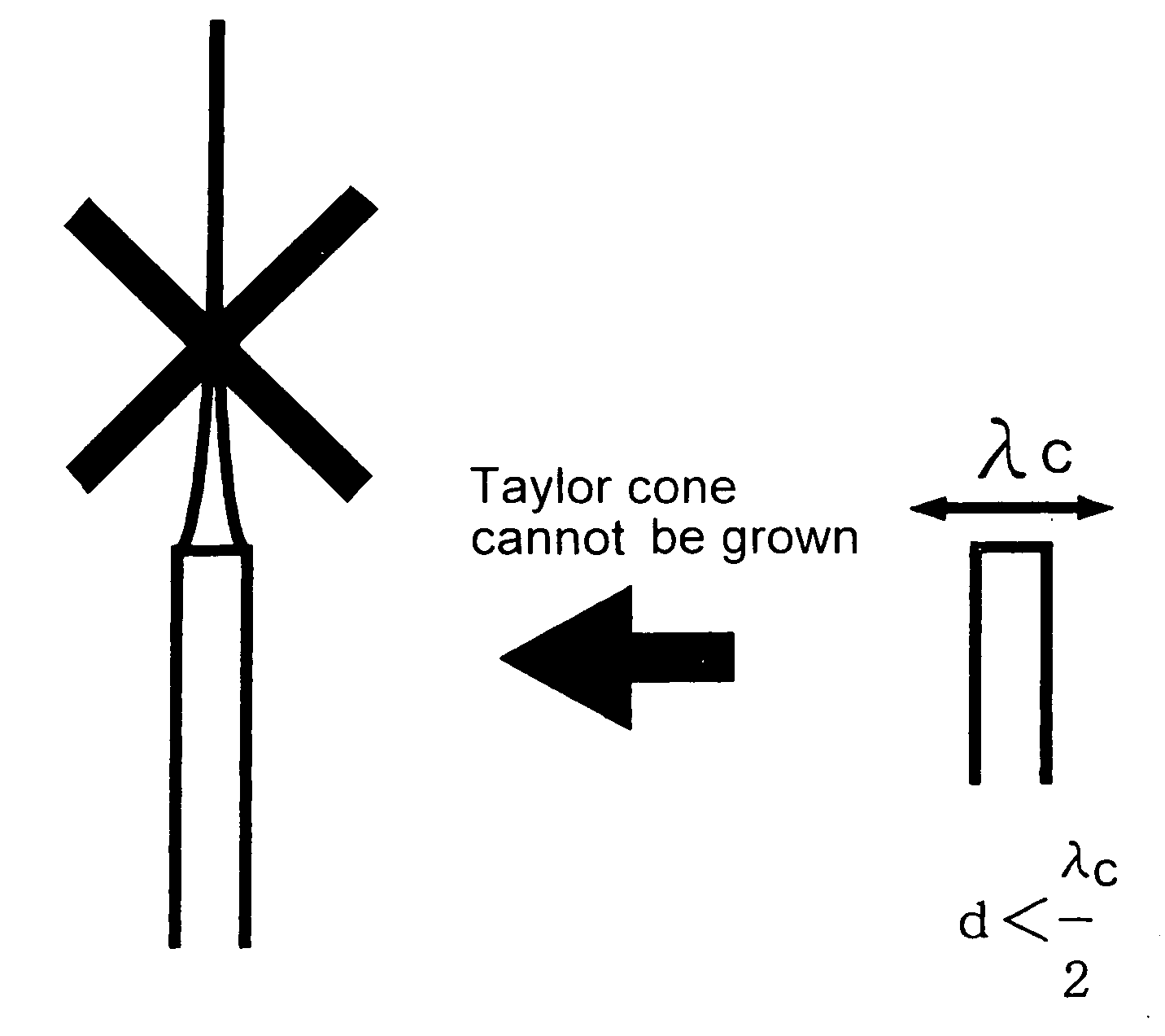
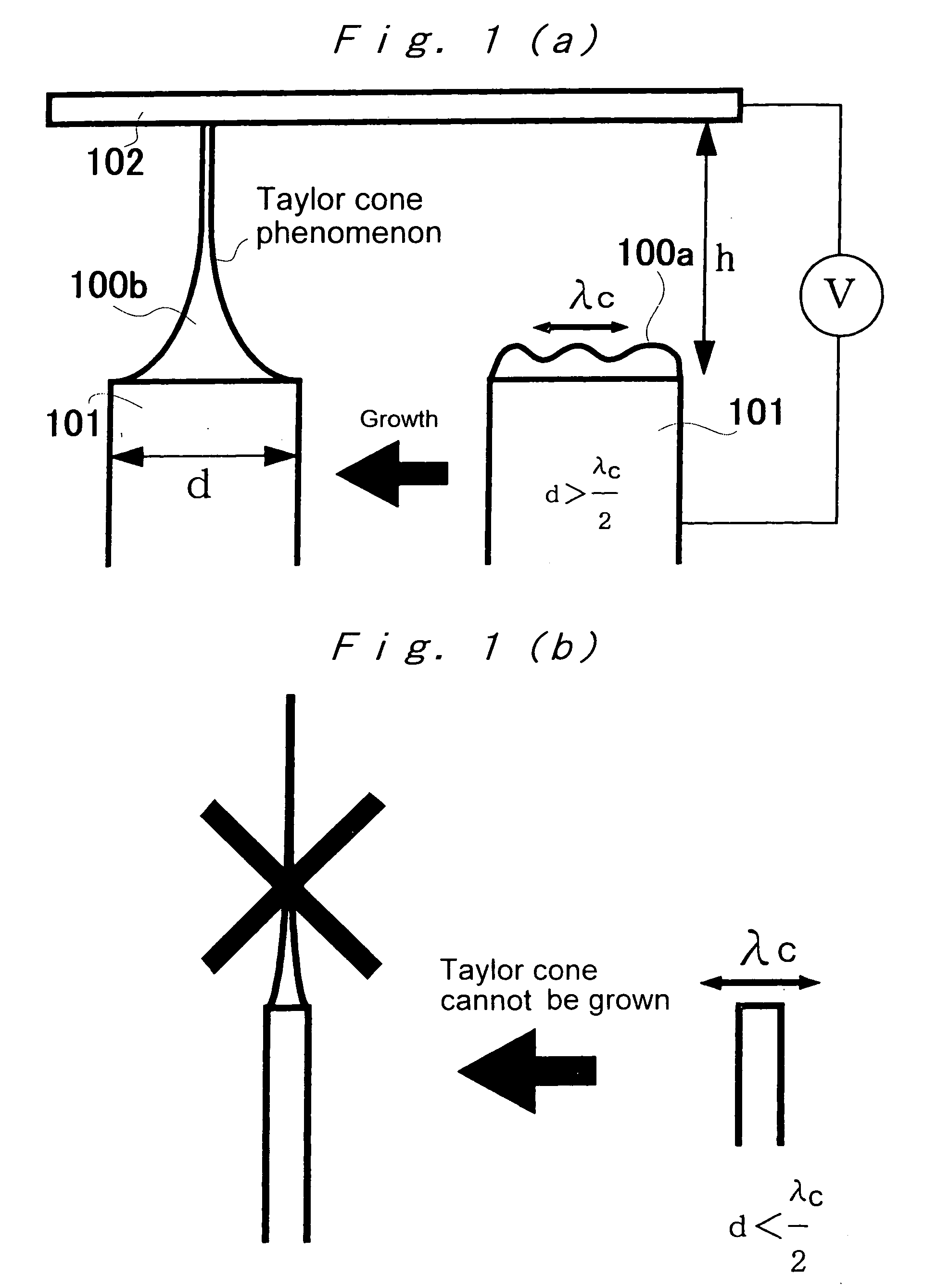
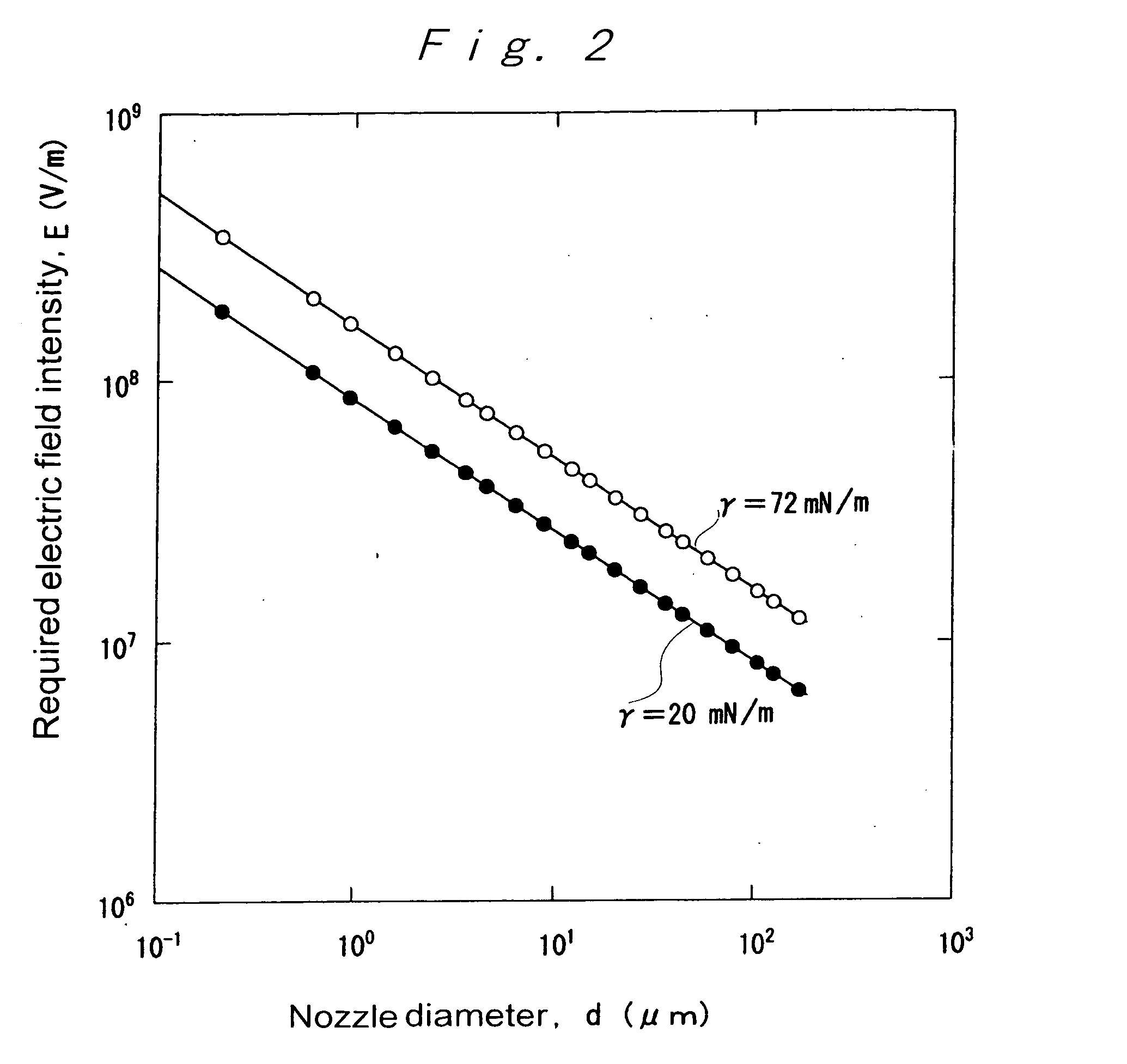
- The ultrafine fluid jet apparatus employs a nozzle with a reduced diameter to concentrate electric field intensity, utilizing Maxwell-force and Electrowetting effects to achieve lower driving voltages, improved landing accuracy, and controllable ejection on insulating substrates without a counter electrode, with a focus on low conductance flow passages and optional waveform voltages for precise ejection control.

Quantum dot composition, method of manufacturing the same, cured product thereof, and display device including the same
PatentPendingUS20250115777A1
Innovation
- A quantum dot composition is developed that includes quantum dots, a photopolymerizable monomer, and an oligomer with specific chemical structures and ratios, which results in a viscosity of 5000 cps or less, suitable for EHD inkjet printing, while maintaining excellent optical properties and ink jettability.


Environmental Impact of EHD Ink Materials
The environmental implications of electrohydrodynamic ink materials represent a critical consideration in the development and deployment of EHD printing technologies. Traditional ink formulations often contain volatile organic compounds, heavy metals, and synthetic polymers that pose significant environmental risks throughout their lifecycle, from manufacturing to disposal.
Solvent-based EHD inks typically incorporate organic solvents such as toluene, xylene, or methyl ethyl ketone to achieve optimal conductivity and viscosity properties. These compounds contribute to volatile organic compound emissions during printing processes and can persist in environmental systems. The evaporation of these solvents during EHD jetting creates air quality concerns in manufacturing environments and contributes to atmospheric pollution.
Heavy metal additives, including silver nanoparticles, copper compounds, and titanium dioxide, are frequently employed to enhance electrical conductivity and color properties in EHD formulations. These materials present bioaccumulation risks in aquatic ecosystems and soil environments when improperly disposed. The mining and processing of these metals also generate substantial carbon footprints and environmental degradation.
Polymer binders and stabilizers in EHD inks often consist of non-biodegradable synthetic materials that persist in landfills and natural environments. Polyethylene glycol derivatives, acrylic resins, and fluorinated compounds commonly used in these formulations can leach into groundwater systems and accumulate in food chains.
Emerging sustainable alternatives focus on bio-based solvents derived from renewable sources, such as ethyl lactate and limonene-based formulations. Water-based EHD ink systems eliminate volatile organic compound emissions while maintaining acceptable printing performance. Biodegradable polymer systems incorporating cellulose derivatives and plant-based binders offer reduced environmental persistence.
The development of recyclable ink cartridge systems and closed-loop solvent recovery processes represents additional environmental mitigation strategies. Life cycle assessment methodologies are increasingly applied to evaluate the comprehensive environmental impact of EHD ink formulations, encompassing raw material extraction, manufacturing energy consumption, transportation emissions, and end-of-life disposal scenarios.
Solvent-based EHD inks typically incorporate organic solvents such as toluene, xylene, or methyl ethyl ketone to achieve optimal conductivity and viscosity properties. These compounds contribute to volatile organic compound emissions during printing processes and can persist in environmental systems. The evaporation of these solvents during EHD jetting creates air quality concerns in manufacturing environments and contributes to atmospheric pollution.
Heavy metal additives, including silver nanoparticles, copper compounds, and titanium dioxide, are frequently employed to enhance electrical conductivity and color properties in EHD formulations. These materials present bioaccumulation risks in aquatic ecosystems and soil environments when improperly disposed. The mining and processing of these metals also generate substantial carbon footprints and environmental degradation.
Polymer binders and stabilizers in EHD inks often consist of non-biodegradable synthetic materials that persist in landfills and natural environments. Polyethylene glycol derivatives, acrylic resins, and fluorinated compounds commonly used in these formulations can leach into groundwater systems and accumulate in food chains.
Emerging sustainable alternatives focus on bio-based solvents derived from renewable sources, such as ethyl lactate and limonene-based formulations. Water-based EHD ink systems eliminate volatile organic compound emissions while maintaining acceptable printing performance. Biodegradable polymer systems incorporating cellulose derivatives and plant-based binders offer reduced environmental persistence.
The development of recyclable ink cartridge systems and closed-loop solvent recovery processes represents additional environmental mitigation strategies. Life cycle assessment methodologies are increasingly applied to evaluate the comprehensive environmental impact of EHD ink formulations, encompassing raw material extraction, manufacturing energy consumption, transportation emissions, and end-of-life disposal scenarios.
Quality Standards for EHD Ink Performance
Establishing comprehensive quality standards for electrohydrodynamic ink performance requires a multi-dimensional evaluation framework that addresses both fundamental physical properties and application-specific requirements. These standards serve as critical benchmarks for ensuring consistent performance across different EHD printing applications and manufacturing environments.
The electrical conductivity of EHD inks represents a fundamental quality parameter that directly influences droplet formation and printing stability. Optimal conductivity ranges typically fall between 10^-6 to 10^-3 S/m, depending on the specific application requirements. Inks with conductivity below this range may exhibit insufficient charge accumulation for stable jet formation, while excessive conductivity can lead to uncontrolled electrochemical reactions and electrode degradation.
Viscosity standards must account for the unique flow characteristics required in EHD systems. The acceptable viscosity range generally spans from 1 to 100 mPa·s at operating temperature, with specific requirements varying based on nozzle geometry and applied voltage. Temperature-dependent viscosity behavior should remain predictable and reversible within the operational temperature range to ensure consistent droplet formation.
Surface tension parameters significantly impact meniscus stability and droplet breakup dynamics in EHD printing. Quality standards typically specify surface tension values between 20-50 mN/m, with particular attention to dynamic surface tension behavior under electric field conditions. The ink formulation must maintain stable surface properties throughout the printing process without significant degradation.
Dielectric properties constitute another critical quality dimension, with dielectric constant values typically ranging from 2 to 80 depending on the solvent system and additive composition. The dielectric breakdown strength must exceed the maximum operating field strength by a safety factor of at least 2-3 to prevent electrical failures during operation.
Chemical stability standards encompass both short-term operational stability and long-term storage requirements. Inks must demonstrate consistent performance over extended printing sessions without precipitation, phase separation, or significant property drift. Accelerated aging tests under elevated temperature and humidity conditions help establish shelf-life parameters and storage recommendations.
Particle size distribution and colloidal stability represent essential quality metrics for pigmented or functional particle-loaded inks. Maximum particle sizes should not exceed 1/10th of the minimum nozzle diameter to prevent clogging, while maintaining uniform dispersion throughout the ink volume.
The electrical conductivity of EHD inks represents a fundamental quality parameter that directly influences droplet formation and printing stability. Optimal conductivity ranges typically fall between 10^-6 to 10^-3 S/m, depending on the specific application requirements. Inks with conductivity below this range may exhibit insufficient charge accumulation for stable jet formation, while excessive conductivity can lead to uncontrolled electrochemical reactions and electrode degradation.
Viscosity standards must account for the unique flow characteristics required in EHD systems. The acceptable viscosity range generally spans from 1 to 100 mPa·s at operating temperature, with specific requirements varying based on nozzle geometry and applied voltage. Temperature-dependent viscosity behavior should remain predictable and reversible within the operational temperature range to ensure consistent droplet formation.
Surface tension parameters significantly impact meniscus stability and droplet breakup dynamics in EHD printing. Quality standards typically specify surface tension values between 20-50 mN/m, with particular attention to dynamic surface tension behavior under electric field conditions. The ink formulation must maintain stable surface properties throughout the printing process without significant degradation.
Dielectric properties constitute another critical quality dimension, with dielectric constant values typically ranging from 2 to 80 depending on the solvent system and additive composition. The dielectric breakdown strength must exceed the maximum operating field strength by a safety factor of at least 2-3 to prevent electrical failures during operation.
Chemical stability standards encompass both short-term operational stability and long-term storage requirements. Inks must demonstrate consistent performance over extended printing sessions without precipitation, phase separation, or significant property drift. Accelerated aging tests under elevated temperature and humidity conditions help establish shelf-life parameters and storage recommendations.
Particle size distribution and colloidal stability represent essential quality metrics for pigmented or functional particle-loaded inks. Maximum particle sizes should not exceed 1/10th of the minimum nozzle diameter to prevent clogging, while maintaining uniform dispersion throughout the ink volume.
Unlock deeper insights with Patsnap Eureka Quick Research — get a full tech report to explore trends and direct your research. Try now!
Generate Your Research Report Instantly with AI Agent
Supercharge your innovation with Patsnap Eureka AI Agent Platform!