

Improve Surface Finish in Electrohydrodynamic Printed Devices
APR 29, 20269 MIN READ
Generate Your Research Report Instantly with AI Agent
PatSnap Eureka helps you evaluate technical feasibility & market potential.
EHD Printing Surface Quality Background and Objectives
Electrohydrodynamic (EHD) printing has emerged as a revolutionary additive manufacturing technique that leverages electric fields to control the deposition of materials at micro and nanoscale resolutions. This technology represents a significant advancement from traditional printing methods, offering unprecedented precision in material placement and pattern formation. The fundamental principle involves applying high voltage between a nozzle and substrate to generate controlled droplets or continuous jets of conductive or dielectric materials.
The evolution of EHD printing technology traces back to early electrospray research in the 1960s, gradually transitioning from analytical applications to manufacturing processes. Initial developments focused on understanding the physics of charged droplet formation and jet stability under electric fields. Over the past two decades, researchers have expanded the technology's capabilities to include printing of polymers, metals, ceramics, and biological materials, establishing EHD printing as a versatile platform for advanced manufacturing applications.
Despite its remarkable precision capabilities, EHD printing faces significant challenges related to surface finish quality that limit its widespread industrial adoption. Current surface finish issues include irregular droplet placement, satellite droplet formation, surface roughness variations, and inconsistent layer adhesion. These defects arise from complex interactions between electric field dynamics, material properties, environmental conditions, and process parameters.
The primary objective of improving surface finish in EHD printed devices centers on achieving consistent, smooth, and defect-free surfaces that meet industrial quality standards. This involves developing comprehensive understanding of the relationship between printing parameters and surface morphology, establishing predictive models for surface quality control, and implementing real-time monitoring systems for process optimization.
Key technical goals include reducing surface roughness to nanometer-scale precision, eliminating satellite droplet formation through improved jet stability control, achieving uniform layer thickness across printed areas, and developing post-processing techniques for surface enhancement. Additionally, the objective encompasses creating standardized measurement protocols for surface quality assessment and establishing quality benchmarks for different application domains.
The strategic importance of this objective extends beyond immediate manufacturing improvements, positioning EHD printing technology for broader industrial applications in electronics, biomedical devices, optical components, and precision engineering where surface quality directly impacts device performance and reliability.
The evolution of EHD printing technology traces back to early electrospray research in the 1960s, gradually transitioning from analytical applications to manufacturing processes. Initial developments focused on understanding the physics of charged droplet formation and jet stability under electric fields. Over the past two decades, researchers have expanded the technology's capabilities to include printing of polymers, metals, ceramics, and biological materials, establishing EHD printing as a versatile platform for advanced manufacturing applications.
Despite its remarkable precision capabilities, EHD printing faces significant challenges related to surface finish quality that limit its widespread industrial adoption. Current surface finish issues include irregular droplet placement, satellite droplet formation, surface roughness variations, and inconsistent layer adhesion. These defects arise from complex interactions between electric field dynamics, material properties, environmental conditions, and process parameters.
The primary objective of improving surface finish in EHD printed devices centers on achieving consistent, smooth, and defect-free surfaces that meet industrial quality standards. This involves developing comprehensive understanding of the relationship between printing parameters and surface morphology, establishing predictive models for surface quality control, and implementing real-time monitoring systems for process optimization.
Key technical goals include reducing surface roughness to nanometer-scale precision, eliminating satellite droplet formation through improved jet stability control, achieving uniform layer thickness across printed areas, and developing post-processing techniques for surface enhancement. Additionally, the objective encompasses creating standardized measurement protocols for surface quality assessment and establishing quality benchmarks for different application domains.
The strategic importance of this objective extends beyond immediate manufacturing improvements, positioning EHD printing technology for broader industrial applications in electronics, biomedical devices, optical components, and precision engineering where surface quality directly impacts device performance and reliability.
Market Demand for High-Quality EHD Printed Electronics
The global electronics manufacturing industry is experiencing unprecedented demand for high-precision printed electronic devices, driven by the proliferation of flexible displays, wearable technologies, and Internet of Things applications. Electrohydrodynamic printing has emerged as a critical manufacturing technique capable of producing ultra-fine features with resolutions below traditional printing limitations. However, the commercial viability of EHD-printed devices heavily depends on achieving superior surface finish quality that meets stringent industry standards.
Consumer electronics manufacturers are increasingly prioritizing surface quality as a key differentiator in premium product segments. Smartphones, tablets, and wearable devices require flawless surface finishes to ensure optimal optical performance, electrical conductivity, and aesthetic appeal. The automotive electronics sector similarly demands high-quality EHD printing for dashboard displays, sensor arrays, and lighting systems where surface imperfections can compromise functionality and safety standards.
The flexible electronics market represents a particularly lucrative opportunity for improved EHD printing technologies. Manufacturers of flexible OLED displays, electronic textiles, and bendable solar cells require printing processes that maintain consistent surface quality across curved and irregular substrates. Current surface finish limitations in EHD printing create bottlenecks in scaling production for these emerging applications.
Medical device manufacturers constitute another high-value market segment demanding exceptional surface quality in EHD-printed components. Biosensors, implantable electronics, and diagnostic devices require smooth, biocompatible surfaces with minimal defects to ensure reliable performance and patient safety. Regulatory requirements in medical applications further intensify the need for consistent, high-quality surface finishes.
The aerospace and defense industries present additional market opportunities where surface finish quality directly impacts device reliability and performance under extreme conditions. EHD-printed antennas, sensors, and communication devices must maintain precise surface characteristics to function effectively in harsh environments.
Market research indicates that manufacturers are willing to invest significantly in advanced EHD printing technologies that can deliver consistent, high-quality surface finishes while maintaining production efficiency. The ability to achieve superior surface quality would enable EHD printing to capture market share from competing technologies in high-value applications where precision and reliability are paramount.
Consumer electronics manufacturers are increasingly prioritizing surface quality as a key differentiator in premium product segments. Smartphones, tablets, and wearable devices require flawless surface finishes to ensure optimal optical performance, electrical conductivity, and aesthetic appeal. The automotive electronics sector similarly demands high-quality EHD printing for dashboard displays, sensor arrays, and lighting systems where surface imperfections can compromise functionality and safety standards.
The flexible electronics market represents a particularly lucrative opportunity for improved EHD printing technologies. Manufacturers of flexible OLED displays, electronic textiles, and bendable solar cells require printing processes that maintain consistent surface quality across curved and irregular substrates. Current surface finish limitations in EHD printing create bottlenecks in scaling production for these emerging applications.
Medical device manufacturers constitute another high-value market segment demanding exceptional surface quality in EHD-printed components. Biosensors, implantable electronics, and diagnostic devices require smooth, biocompatible surfaces with minimal defects to ensure reliable performance and patient safety. Regulatory requirements in medical applications further intensify the need for consistent, high-quality surface finishes.
The aerospace and defense industries present additional market opportunities where surface finish quality directly impacts device reliability and performance under extreme conditions. EHD-printed antennas, sensors, and communication devices must maintain precise surface characteristics to function effectively in harsh environments.
Market research indicates that manufacturers are willing to invest significantly in advanced EHD printing technologies that can deliver consistent, high-quality surface finishes while maintaining production efficiency. The ability to achieve superior surface quality would enable EHD printing to capture market share from competing technologies in high-value applications where precision and reliability are paramount.
Current Surface Finish Challenges in EHD Printing
Electrohydrodynamic printing faces significant surface finish challenges that limit its widespread adoption in high-precision manufacturing applications. The primary issue stems from the inherent instability of the electrohydrodynamic jet, which creates irregular droplet formation and deposition patterns. This instability manifests as surface roughness variations that can exceed acceptable tolerances for applications requiring smooth, uniform finishes.
Droplet coalescence represents another critical challenge affecting surface quality. When printed droplets merge on the substrate, they often create uneven surface topographies with pronounced ridges and valleys. The coalescence behavior is highly dependent on ink properties, substrate characteristics, and environmental conditions, making it difficult to achieve consistent surface finishes across different printing scenarios.
Substrate wetting properties significantly impact the final surface finish quality. Poor wetting can lead to dewetting phenomena, where the printed material retracts from certain areas, creating discontinuous films with rough boundaries. Conversely, excessive wetting may cause uncontrolled spreading, resulting in thickness variations and surface irregularities that compromise the overall finish quality.
The coffee ring effect poses substantial challenges for achieving uniform surface finishes in EHD printing. As solvent evaporation occurs preferentially at droplet edges, solute particles migrate outward, creating ring-like deposits with non-uniform thickness distribution. This phenomenon is particularly problematic when printing functional materials, as it leads to both aesthetic and performance degradation.
Process parameter optimization remains complex due to the multitude of variables affecting surface finish. Voltage amplitude, flow rate, nozzle-to-substrate distance, and printing speed must be precisely controlled and coordinated to minimize surface defects. Small deviations in these parameters can result in significant surface quality variations, making reproducible high-quality finishes challenging to achieve.
Environmental factors such as humidity and temperature fluctuations introduce additional variability in surface finish quality. These conditions affect solvent evaporation rates, ink viscosity, and electrostatic field stability, all of which directly influence the final surface characteristics. The sensitivity to environmental conditions makes it difficult to maintain consistent surface finishes in industrial production environments.
Current surface characterization methods often lack the resolution and speed necessary for real-time quality control during EHD printing processes. This limitation prevents immediate correction of surface finish defects, leading to waste and reduced manufacturing efficiency in applications where surface quality is critical.
Droplet coalescence represents another critical challenge affecting surface quality. When printed droplets merge on the substrate, they often create uneven surface topographies with pronounced ridges and valleys. The coalescence behavior is highly dependent on ink properties, substrate characteristics, and environmental conditions, making it difficult to achieve consistent surface finishes across different printing scenarios.
Substrate wetting properties significantly impact the final surface finish quality. Poor wetting can lead to dewetting phenomena, where the printed material retracts from certain areas, creating discontinuous films with rough boundaries. Conversely, excessive wetting may cause uncontrolled spreading, resulting in thickness variations and surface irregularities that compromise the overall finish quality.
The coffee ring effect poses substantial challenges for achieving uniform surface finishes in EHD printing. As solvent evaporation occurs preferentially at droplet edges, solute particles migrate outward, creating ring-like deposits with non-uniform thickness distribution. This phenomenon is particularly problematic when printing functional materials, as it leads to both aesthetic and performance degradation.
Process parameter optimization remains complex due to the multitude of variables affecting surface finish. Voltage amplitude, flow rate, nozzle-to-substrate distance, and printing speed must be precisely controlled and coordinated to minimize surface defects. Small deviations in these parameters can result in significant surface quality variations, making reproducible high-quality finishes challenging to achieve.
Environmental factors such as humidity and temperature fluctuations introduce additional variability in surface finish quality. These conditions affect solvent evaporation rates, ink viscosity, and electrostatic field stability, all of which directly influence the final surface characteristics. The sensitivity to environmental conditions makes it difficult to maintain consistent surface finishes in industrial production environments.
Current surface characterization methods often lack the resolution and speed necessary for real-time quality control during EHD printing processes. This limitation prevents immediate correction of surface finish defects, leading to waste and reduced manufacturing efficiency in applications where surface quality is critical.
Existing Solutions for EHD Print Surface Optimization
01 Surface treatment methods for electrohydrodynamic printed devices
Various surface treatment techniques can be applied to electrohydrodynamic printed devices to improve their surface finish quality. These methods include plasma treatment, chemical etching, and mechanical polishing processes that help achieve smoother surfaces and better adhesion properties. The treatments can modify surface roughness, remove contaminants, and enhance the overall surface characteristics of the printed devices.- Surface treatment and finishing techniques for electrohydrodynamic printed devices: Various surface treatment methods are employed to enhance the quality and functionality of electrohydrodynamically printed devices. These techniques focus on improving surface smoothness, reducing defects, and optimizing the final surface characteristics through specialized processing methods. The treatments can involve chemical, physical, or thermal processes that modify the surface properties of the printed structures.
- Post-processing methods for improving surface quality: Post-processing techniques are critical for achieving desired surface finish in electrohydrodynamic printing applications. These methods include various mechanical and chemical treatments applied after the initial printing process to enhance surface uniformity, remove imperfections, and achieve specific surface textures. The approaches can significantly impact the final device performance and aesthetic appearance.
- Material composition and formulation for enhanced surface properties: The selection and formulation of materials used in electrohydrodynamic printing directly influence the surface finish quality. Specific material compositions, including additives and modifiers, are designed to improve printability and final surface characteristics. These formulations consider factors such as viscosity, conductivity, and curing properties to achieve optimal surface results.
- Process parameter optimization for surface control: The control and optimization of electrohydrodynamic printing process parameters play a crucial role in determining surface finish quality. Key parameters include voltage settings, flow rates, substrate conditions, and environmental factors that must be carefully controlled to achieve consistent and high-quality surface finishes. Advanced monitoring and feedback systems are often employed to maintain optimal conditions.
- Substrate preparation and interface engineering: Proper substrate preparation and interface engineering are essential for achieving superior surface finish in electrohydrodynamic printed devices. This includes surface cleaning, treatment, and modification techniques that promote better adhesion and uniform deposition. The substrate-material interface significantly affects the final surface quality and device performance characteristics.
02 Post-processing techniques for surface enhancement
Post-processing methods are employed after the electrohydrodynamic printing process to refine the surface finish of printed devices. These techniques involve thermal annealing, UV curing, and solvent vapor treatments that can improve surface uniformity and reduce defects. The post-processing steps help achieve the desired surface properties and enhance the functional performance of the printed devices.Expand Specific Solutions03 Material composition optimization for surface quality
The selection and optimization of material compositions play a crucial role in achieving superior surface finish in electrohydrodynamic printed devices. This includes the use of specific polymers, additives, and surfactants that can improve flow properties and surface tension during the printing process. Proper material formulation helps minimize surface defects and enhances the overall quality of the printed structures.Expand Specific Solutions04 Process parameter control for surface finish optimization
Controlling various process parameters during electrohydrodynamic printing is essential for achieving optimal surface finish. This includes managing voltage levels, flow rates, substrate temperature, and environmental conditions such as humidity and atmospheric pressure. Precise control of these parameters helps ensure consistent surface quality and reduces variations in the printed device characteristics.Expand Specific Solutions05 Substrate preparation and coating techniques
Proper substrate preparation and the application of specialized coatings are fundamental for achieving high-quality surface finish in electrohydrodynamic printed devices. This involves surface cleaning, primer application, and the use of release agents or adhesion promoters. The substrate treatment methods help ensure proper wetting, adhesion, and uniform deposition during the printing process, leading to improved surface characteristics.Expand Specific Solutions
Key Players in EHD Printing and Surface Treatment Industry
The electrohydrodynamic (EHD) printing industry for surface finish improvement is in its emerging growth phase, with significant technological advancement potential driven by increasing demand for high-precision manufacturing across electronics, displays, and biomedical applications. The market remains relatively niche but shows promising expansion as companies seek enhanced printing resolution and surface quality. Technology maturity varies considerably among key players, with established giants like Samsung Electronics, FUJIFILM Corp., and Seiko Epson Corp. leveraging their extensive printing expertise to advance EHD applications, while specialized firms such as E Ink Corp. and SIJ Technology Co. focus on precision inkjet innovations. Research institutions including Huazhong University of Science & Technology and Indian Institute of Technology Madras contribute fundamental breakthroughs, though commercial implementation remains challenging. The competitive landscape features a mix of traditional printing companies adapting existing technologies and emerging specialists developing novel EHD solutions, indicating an industry transitioning from research-focused to commercially viable applications.
Samsung Electronics Co., Ltd.
Technical Solution: Samsung has developed advanced electrohydrodynamic (EHD) printing technologies focusing on high-resolution pattern formation and surface quality optimization. Their approach involves precise voltage control systems and specialized nozzle designs that enable uniform droplet formation and deposition. The company has implemented multi-layer coating techniques and real-time feedback control mechanisms to minimize surface roughness and achieve consistent film thickness across large substrates. Their EHD printing systems incorporate advanced materials engineering with optimized ink formulations that enhance wetting properties and reduce coffee-ring effects, resulting in smoother surface finishes for electronic device applications.
Strengths: Strong R&D capabilities, extensive manufacturing experience, integrated supply chain control. Weaknesses: High development costs, complex system integration requirements.
FUJIFILM Corp.
Technical Solution: FUJIFILM has leveraged their expertise in precision coating and imaging technologies to develop EHD printing solutions with enhanced surface finish quality. Their technology focuses on advanced ink chemistry and substrate treatment methods that improve adhesion and reduce surface defects. The company has developed proprietary surfactant systems and rheology modifiers that enable better flow control during the printing process. Their approach includes post-processing techniques such as controlled thermal annealing and UV curing that further improve surface smoothness and uniformity. FUJIFILM's systems also incorporate real-time monitoring and adaptive control algorithms to maintain consistent print quality across different substrate materials and environmental conditions.
Strengths: Deep materials science expertise, proven coating technologies, strong quality control systems. Weaknesses: Limited focus on electronic applications, smaller market presence in EHD printing.
Core Patents in EHD Surface Finish Improvement
High Resolution Printing of Charge
PatentActiveUS20110170225A1
Innovation
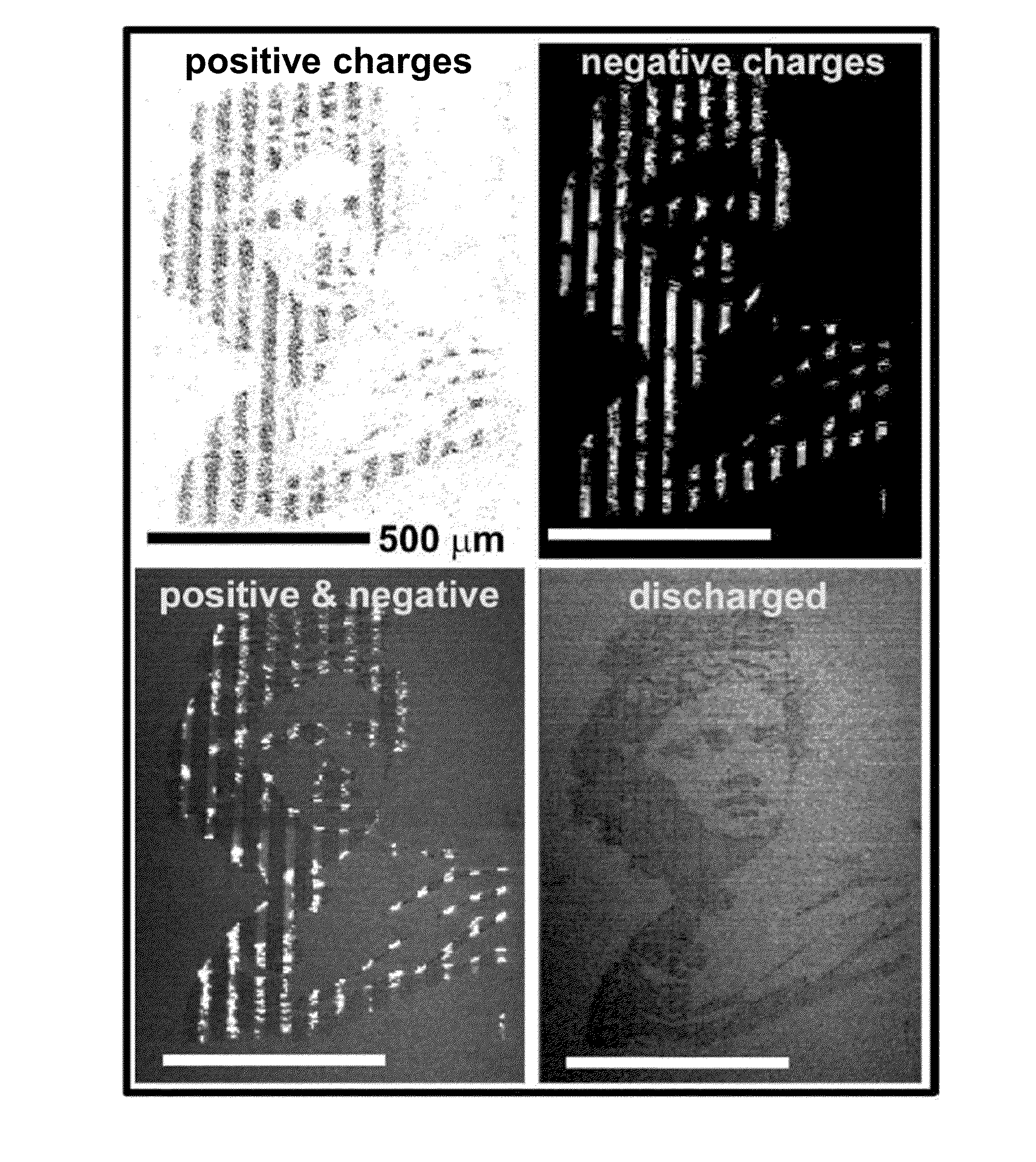
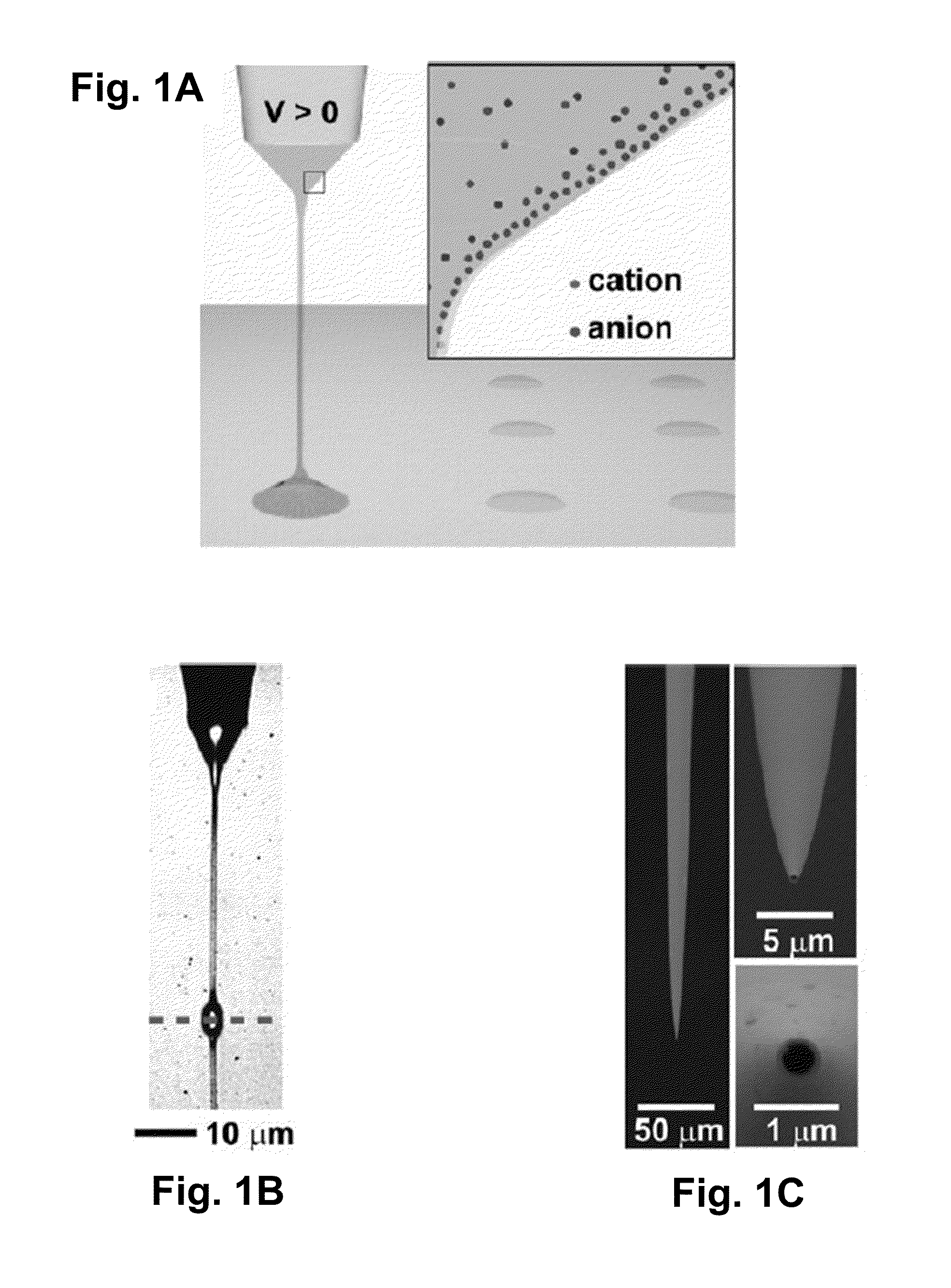
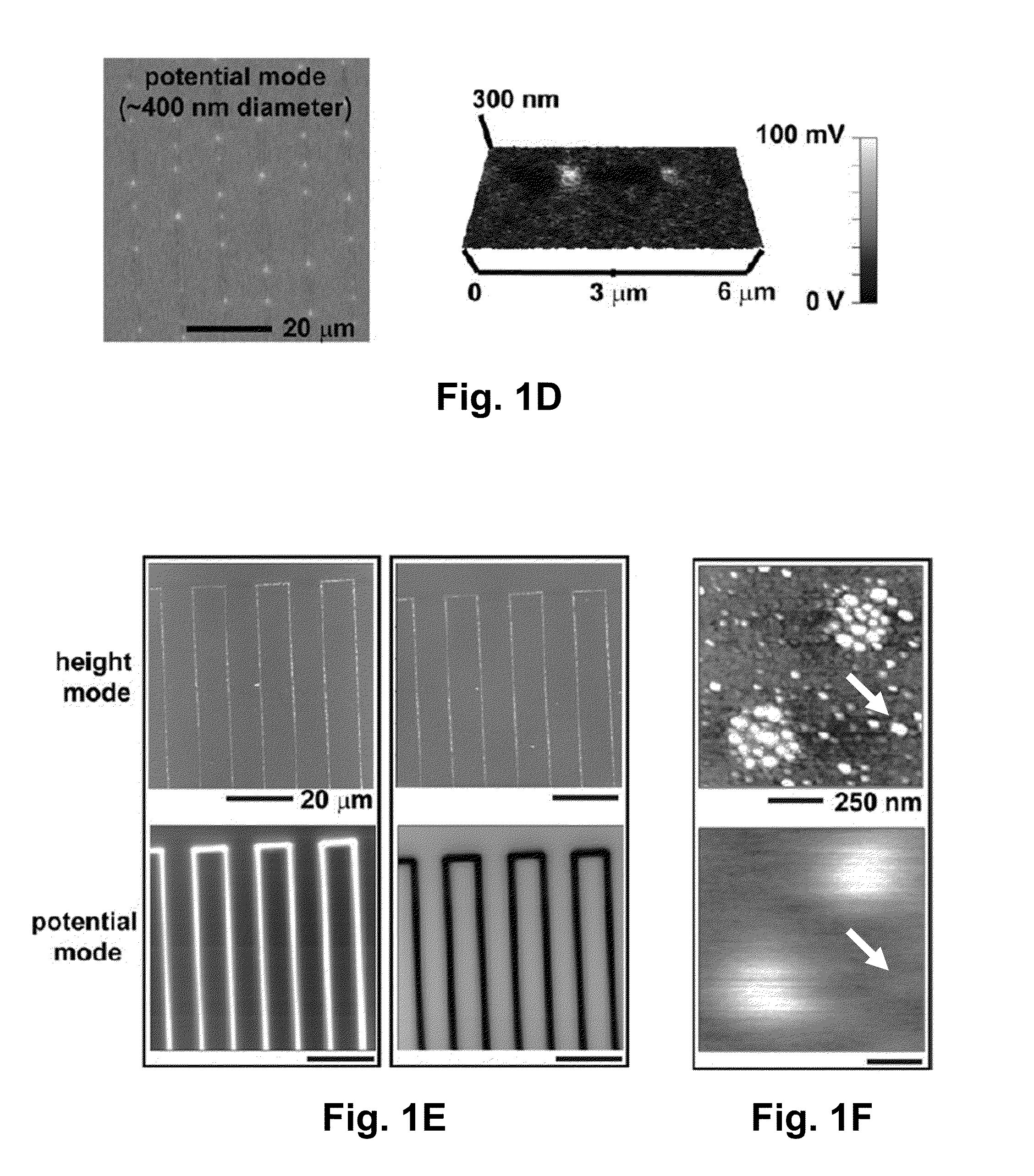
- The method involves careful control of the e-jet printing process to maximize charge transfer and retention on the substrate surface by managing ambient conditions, using insulating layers, and controlling the electric potential to maintain net charge without significant degradation, allowing for precise printing and long-term charge retention.

Device for printing biomolecules on substrate using electrohydrodynamic effect
PatentInactiveEP1721667A1
Innovation
- A device with a needle-shaped first electric field forming electrode and a ring-shaped second electrode, applying AC and DC voltages to generate a focused electric field, allowing for precise droplet formation and deposition of small-sized biomolecule droplets onto a substrate, enabling high-density biochip manufacturing.


Environmental Impact of EHD Printing Processes
Electrohydrodynamic printing processes present a complex environmental profile that requires careful evaluation across multiple impact categories. Unlike traditional manufacturing methods that rely heavily on thermal processing and chemical etching, EHD printing operates at ambient temperatures and utilizes electric fields to manipulate ink deposition. This fundamental difference significantly reduces energy consumption during the printing phase, with typical power requirements ranging from 1-10 kV at microampere current levels, translating to substantially lower carbon footprints compared to conventional lithographic techniques.
The material utilization efficiency of EHD printing demonstrates notable environmental advantages. Traditional subtractive manufacturing processes often result in material waste rates exceeding 70%, whereas EHD printing achieves near-zero waste through its additive nature and precise droplet control. The process eliminates the need for photoresists, developers, and etchants commonly used in semiconductor fabrication, thereby reducing hazardous chemical consumption and associated waste streams. However, the environmental impact varies significantly depending on the ink formulations employed, with solvent-based inks presenting greater volatile organic compound emissions compared to water-based alternatives.
Solvent management represents a critical environmental consideration in EHD printing operations. Many high-performance inks require organic solvents to achieve optimal viscosity and conductivity properties, leading to potential air quality impacts during printing and post-processing phases. Advanced EHD systems increasingly incorporate closed-loop solvent recovery systems and low-temperature drying processes to minimize emissions. The development of eco-friendly ink formulations, including bio-based solvents and recyclable polymer matrices, continues to evolve as a primary focus for sustainable EHD printing implementation.
The lifecycle environmental assessment of EHD-printed devices reveals favorable outcomes in several key areas. The elimination of high-temperature processing steps reduces overall manufacturing energy intensity by approximately 40-60% compared to conventional electronics fabrication. Additionally, the ability to print directly onto flexible substrates reduces packaging requirements and enables lighter-weight products, contributing to reduced transportation-related emissions throughout the supply chain.
The material utilization efficiency of EHD printing demonstrates notable environmental advantages. Traditional subtractive manufacturing processes often result in material waste rates exceeding 70%, whereas EHD printing achieves near-zero waste through its additive nature and precise droplet control. The process eliminates the need for photoresists, developers, and etchants commonly used in semiconductor fabrication, thereby reducing hazardous chemical consumption and associated waste streams. However, the environmental impact varies significantly depending on the ink formulations employed, with solvent-based inks presenting greater volatile organic compound emissions compared to water-based alternatives.
Solvent management represents a critical environmental consideration in EHD printing operations. Many high-performance inks require organic solvents to achieve optimal viscosity and conductivity properties, leading to potential air quality impacts during printing and post-processing phases. Advanced EHD systems increasingly incorporate closed-loop solvent recovery systems and low-temperature drying processes to minimize emissions. The development of eco-friendly ink formulations, including bio-based solvents and recyclable polymer matrices, continues to evolve as a primary focus for sustainable EHD printing implementation.
The lifecycle environmental assessment of EHD-printed devices reveals favorable outcomes in several key areas. The elimination of high-temperature processing steps reduces overall manufacturing energy intensity by approximately 40-60% compared to conventional electronics fabrication. Additionally, the ability to print directly onto flexible substrates reduces packaging requirements and enables lighter-weight products, contributing to reduced transportation-related emissions throughout the supply chain.
Quality Standards for EHD Printed Device Surfaces
Surface quality standards for electrohydrodynamic (EHD) printed devices encompass multiple dimensional parameters that directly impact device performance and commercial viability. The primary surface roughness parameter, Ra (arithmetic average roughness), typically requires values below 50 nanometers for high-performance electronic applications, while more stringent applications demand Ra values under 20 nanometers. Root mean square roughness (Rq) serves as another critical metric, generally maintained within 10-15% of the Ra value to ensure consistent surface topology.
Surface uniformity standards extend beyond simple roughness measurements to include feature consistency across the printed area. Thickness variation tolerances typically range from ±5% for standard applications to ±2% for precision devices. Edge definition quality requires sharp transitions with slope angles exceeding 70 degrees to prevent electrical leakage and ensure proper device isolation. Line width accuracy must maintain deviations within ±10% of the target dimension for most applications.
Defect density specifications establish maximum allowable concentrations of surface irregularities. Particle contamination standards limit foreign matter above 1 micrometer to fewer than 10 particles per square centimeter. Void density requirements restrict pinholes and gaps to less than 0.1% of the total surface area. Satellite droplet formation, a common EHD printing artifact, must be controlled to maintain spacing ratios below 5% of the primary feature size.
Surface adhesion quality standards ensure long-term device reliability through standardized peel tests and thermal cycling evaluations. Adhesion strength requirements typically exceed 10 MPa for polymer substrates and 20 MPa for ceramic substrates. Contact angle measurements verify proper wetting characteristics, with values ranging from 20-60 degrees depending on the material system and intended application.
Electrical surface properties constitute another critical quality dimension. Surface resistivity specifications vary dramatically based on application requirements, ranging from less than 1 ohm per square for conductive traces to greater than 10^12 ohms per square for insulating layers. Dielectric breakdown strength standards typically require minimum values of 10 MV/m for thin film applications.
Optical quality standards address transparency, reflectance, and color consistency requirements. Haze measurements must remain below 2% for display applications, while surface reflectance variations should not exceed ±5% across the printed area. These comprehensive quality standards provide the framework for evaluating and optimizing EHD printing processes to achieve commercially viable surface finishes.
Surface uniformity standards extend beyond simple roughness measurements to include feature consistency across the printed area. Thickness variation tolerances typically range from ±5% for standard applications to ±2% for precision devices. Edge definition quality requires sharp transitions with slope angles exceeding 70 degrees to prevent electrical leakage and ensure proper device isolation. Line width accuracy must maintain deviations within ±10% of the target dimension for most applications.
Defect density specifications establish maximum allowable concentrations of surface irregularities. Particle contamination standards limit foreign matter above 1 micrometer to fewer than 10 particles per square centimeter. Void density requirements restrict pinholes and gaps to less than 0.1% of the total surface area. Satellite droplet formation, a common EHD printing artifact, must be controlled to maintain spacing ratios below 5% of the primary feature size.
Surface adhesion quality standards ensure long-term device reliability through standardized peel tests and thermal cycling evaluations. Adhesion strength requirements typically exceed 10 MPa for polymer substrates and 20 MPa for ceramic substrates. Contact angle measurements verify proper wetting characteristics, with values ranging from 20-60 degrees depending on the material system and intended application.
Electrical surface properties constitute another critical quality dimension. Surface resistivity specifications vary dramatically based on application requirements, ranging from less than 1 ohm per square for conductive traces to greater than 10^12 ohms per square for insulating layers. Dielectric breakdown strength standards typically require minimum values of 10 MV/m for thin film applications.
Optical quality standards address transparency, reflectance, and color consistency requirements. Haze measurements must remain below 2% for display applications, while surface reflectance variations should not exceed ±5% across the printed area. These comprehensive quality standards provide the framework for evaluating and optimizing EHD printing processes to achieve commercially viable surface finishes.
Unlock deeper insights with PatSnap Eureka Quick Research — get a full tech report to explore trends and direct your research. Try now!
Generate Your Research Report Instantly with AI Agent
Supercharge your innovation with PatSnap Eureka AI Agent Platform!