
How to Select the Best Microcontroller for EV Applications
FEB 25, 20269 MIN READ
Generate Your Research Report Instantly with AI Agent
Patsnap Eureka helps you evaluate technical feasibility & market potential.
EV Microcontroller Technology Background and Objectives
The electric vehicle industry has experienced unprecedented growth over the past decade, fundamentally transforming automotive technology paradigms. This transformation has placed microcontrollers at the center of EV innovation, serving as the computational backbone for critical systems including battery management, motor control, charging infrastructure, and vehicle safety systems. The evolution from traditional internal combustion engines to electric powertrains has created entirely new requirements for embedded control systems, demanding higher performance, enhanced safety standards, and superior energy efficiency.
Modern electric vehicles integrate dozens of microcontrollers throughout their architecture, each serving specialized functions that collectively enable seamless vehicle operation. These range from high-performance processors managing complex algorithms for motor control and regenerative braking to low-power units monitoring individual battery cells. The complexity of EV systems has grown exponentially, with advanced driver assistance systems, over-the-air updates, and vehicle-to-everything communication capabilities becoming standard features rather than luxury additions.
The primary objective of microcontroller selection in EV applications centers on achieving optimal balance between performance, power consumption, safety compliance, and cost effectiveness. Performance requirements encompass real-time processing capabilities for motor control algorithms, sufficient computational power for advanced battery management systems, and adequate memory resources for complex software stacks. Power efficiency remains paramount, as every milliwatt of consumption directly impacts vehicle range and overall energy efficiency.
Safety objectives align with stringent automotive standards, particularly ISO 26262 functional safety requirements, which mandate specific design practices and verification procedures for safety-critical systems. Microcontrollers must demonstrate proven reliability in harsh automotive environments, including extreme temperature variations, electromagnetic interference, and mechanical vibrations. Additionally, cybersecurity considerations have become increasingly critical as vehicles become more connected and autonomous.
Cost optimization objectives extend beyond initial component pricing to encompass total system cost, including development tools, software licensing, certification expenses, and long-term supply chain stability. The selection process must also consider scalability across different vehicle platforms and future technology roadmaps to ensure sustainable product development strategies.
Modern electric vehicles integrate dozens of microcontrollers throughout their architecture, each serving specialized functions that collectively enable seamless vehicle operation. These range from high-performance processors managing complex algorithms for motor control and regenerative braking to low-power units monitoring individual battery cells. The complexity of EV systems has grown exponentially, with advanced driver assistance systems, over-the-air updates, and vehicle-to-everything communication capabilities becoming standard features rather than luxury additions.
The primary objective of microcontroller selection in EV applications centers on achieving optimal balance between performance, power consumption, safety compliance, and cost effectiveness. Performance requirements encompass real-time processing capabilities for motor control algorithms, sufficient computational power for advanced battery management systems, and adequate memory resources for complex software stacks. Power efficiency remains paramount, as every milliwatt of consumption directly impacts vehicle range and overall energy efficiency.
Safety objectives align with stringent automotive standards, particularly ISO 26262 functional safety requirements, which mandate specific design practices and verification procedures for safety-critical systems. Microcontrollers must demonstrate proven reliability in harsh automotive environments, including extreme temperature variations, electromagnetic interference, and mechanical vibrations. Additionally, cybersecurity considerations have become increasingly critical as vehicles become more connected and autonomous.
Cost optimization objectives extend beyond initial component pricing to encompass total system cost, including development tools, software licensing, certification expenses, and long-term supply chain stability. The selection process must also consider scalability across different vehicle platforms and future technology roadmaps to ensure sustainable product development strategies.
Market Demand for EV Microcontroller Solutions
The electric vehicle industry has experienced unprecedented growth momentum, fundamentally reshaping the automotive landscape and creating substantial demand for specialized microcontroller solutions. This transformation stems from global environmental regulations, government incentives, and shifting consumer preferences toward sustainable transportation alternatives. The automotive sector's electrification has generated complex requirements for sophisticated electronic control systems that demand high-performance microcontrollers capable of managing multiple critical functions simultaneously.
Battery management systems represent one of the most significant demand drivers for EV microcontrollers. These systems require precise monitoring and control of individual battery cells, thermal management, and safety protocols. The complexity of modern lithium-ion battery packs, often containing hundreds of cells, necessitates microcontrollers with advanced analog-to-digital conversion capabilities, real-time processing power, and robust safety features. Market demand in this segment continues expanding as battery pack sizes increase and energy density requirements become more stringent.
Motor control applications constitute another major market segment driving microcontroller demand. Electric vehicle powertrains require sophisticated control algorithms for permanent magnet synchronous motors, induction motors, and emerging motor technologies. The need for precise torque control, regenerative braking management, and efficiency optimization has created substantial demand for microcontrollers with dedicated motor control peripherals, high-resolution PWM capabilities, and advanced mathematical processing units.
Vehicle-to-everything communication technologies are emerging as a critical growth area for EV microcontroller applications. Smart charging infrastructure, grid integration, and autonomous driving capabilities require microcontrollers with robust communication interfaces, cybersecurity features, and real-time processing capabilities. This segment represents significant future market potential as smart city initiatives and connected vehicle ecosystems continue developing.
The market demand landscape varies significantly across different vehicle segments. Premium electric vehicles typically incorporate multiple high-performance microcontrollers for advanced features, while mass-market vehicles focus on cost-effective solutions that maintain essential functionality. Commercial electric vehicles, including buses and delivery trucks, present unique requirements for durability, extended temperature ranges, and industrial-grade reliability standards.
Regional market dynamics also influence microcontroller demand patterns. Asian markets, particularly China, demonstrate strong demand for cost-optimized solutions supporting rapid EV adoption. European markets emphasize safety and environmental compliance features, while North American markets focus on performance and advanced driver assistance system integration. These regional preferences shape microcontroller specification requirements and influence supplier strategies for addressing diverse market needs.
Battery management systems represent one of the most significant demand drivers for EV microcontrollers. These systems require precise monitoring and control of individual battery cells, thermal management, and safety protocols. The complexity of modern lithium-ion battery packs, often containing hundreds of cells, necessitates microcontrollers with advanced analog-to-digital conversion capabilities, real-time processing power, and robust safety features. Market demand in this segment continues expanding as battery pack sizes increase and energy density requirements become more stringent.
Motor control applications constitute another major market segment driving microcontroller demand. Electric vehicle powertrains require sophisticated control algorithms for permanent magnet synchronous motors, induction motors, and emerging motor technologies. The need for precise torque control, regenerative braking management, and efficiency optimization has created substantial demand for microcontrollers with dedicated motor control peripherals, high-resolution PWM capabilities, and advanced mathematical processing units.
Vehicle-to-everything communication technologies are emerging as a critical growth area for EV microcontroller applications. Smart charging infrastructure, grid integration, and autonomous driving capabilities require microcontrollers with robust communication interfaces, cybersecurity features, and real-time processing capabilities. This segment represents significant future market potential as smart city initiatives and connected vehicle ecosystems continue developing.
The market demand landscape varies significantly across different vehicle segments. Premium electric vehicles typically incorporate multiple high-performance microcontrollers for advanced features, while mass-market vehicles focus on cost-effective solutions that maintain essential functionality. Commercial electric vehicles, including buses and delivery trucks, present unique requirements for durability, extended temperature ranges, and industrial-grade reliability standards.
Regional market dynamics also influence microcontroller demand patterns. Asian markets, particularly China, demonstrate strong demand for cost-optimized solutions supporting rapid EV adoption. European markets emphasize safety and environmental compliance features, while North American markets focus on performance and advanced driver assistance system integration. These regional preferences shape microcontroller specification requirements and influence supplier strategies for addressing diverse market needs.
Current State and Challenges of EV Microcontrollers
The electric vehicle microcontroller landscape has evolved significantly over the past decade, driven by the automotive industry's rapid transition toward electrification. Current microcontroller architectures in EV applications predominantly utilize 32-bit ARM Cortex-M series processors, with increasing adoption of dual-core and multi-core configurations to handle the complex real-time processing demands of modern electric powertrains.
Contemporary EV microcontrollers must simultaneously manage battery management systems, motor control algorithms, thermal management, and vehicle communication protocols. The processing requirements have intensified as vehicles incorporate more sophisticated features such as regenerative braking optimization, predictive energy management, and advanced driver assistance systems integration. Most current solutions operate at clock frequencies ranging from 80MHz to 300MHz, with specialized automotive-grade silicon designed to withstand temperature extremes from -40°C to 150°C.
Despite technological advances, several critical challenges persist in EV microcontroller implementation. Functional safety compliance remains a primary concern, with ISO 26262 ASIL-D requirements demanding redundant processing capabilities and fail-safe mechanisms. The complexity of achieving these safety standards while maintaining cost-effectiveness presents ongoing difficulties for manufacturers, particularly in high-volume production scenarios.
Real-time processing constraints pose another significant challenge, especially in motor control applications where precise timing is crucial for optimal performance and efficiency. Current microcontrollers often struggle to balance the computational demands of advanced control algorithms with the need for deterministic response times, leading to compromises in either performance optimization or system reliability.
Power consumption optimization represents a growing concern as EV manufacturers seek to maximize driving range. Traditional microcontroller architectures were not originally designed for the ultra-low power requirements of modern electric vehicles, creating inefficiencies in standby modes and during low-demand operational periods.
Integration complexity has emerged as a substantial barrier, with modern EVs requiring seamless communication between multiple microcontroller units distributed throughout the vehicle. Current solutions often rely on legacy communication protocols that create bottlenecks and increase system latency, particularly when coordinating between battery management, motor control, and vehicle dynamics systems.
Supply chain vulnerabilities have become increasingly apparent, with semiconductor shortages exposing the automotive industry's dependence on limited microcontroller suppliers. This concentration risk has prompted manufacturers to seek more diverse sourcing strategies while maintaining the stringent quality and reliability standards required for automotive applications.
Contemporary EV microcontrollers must simultaneously manage battery management systems, motor control algorithms, thermal management, and vehicle communication protocols. The processing requirements have intensified as vehicles incorporate more sophisticated features such as regenerative braking optimization, predictive energy management, and advanced driver assistance systems integration. Most current solutions operate at clock frequencies ranging from 80MHz to 300MHz, with specialized automotive-grade silicon designed to withstand temperature extremes from -40°C to 150°C.
Despite technological advances, several critical challenges persist in EV microcontroller implementation. Functional safety compliance remains a primary concern, with ISO 26262 ASIL-D requirements demanding redundant processing capabilities and fail-safe mechanisms. The complexity of achieving these safety standards while maintaining cost-effectiveness presents ongoing difficulties for manufacturers, particularly in high-volume production scenarios.
Real-time processing constraints pose another significant challenge, especially in motor control applications where precise timing is crucial for optimal performance and efficiency. Current microcontrollers often struggle to balance the computational demands of advanced control algorithms with the need for deterministic response times, leading to compromises in either performance optimization or system reliability.
Power consumption optimization represents a growing concern as EV manufacturers seek to maximize driving range. Traditional microcontroller architectures were not originally designed for the ultra-low power requirements of modern electric vehicles, creating inefficiencies in standby modes and during low-demand operational periods.
Integration complexity has emerged as a substantial barrier, with modern EVs requiring seamless communication between multiple microcontroller units distributed throughout the vehicle. Current solutions often rely on legacy communication protocols that create bottlenecks and increase system latency, particularly when coordinating between battery management, motor control, and vehicle dynamics systems.
Supply chain vulnerabilities have become increasingly apparent, with semiconductor shortages exposing the automotive industry's dependence on limited microcontroller suppliers. This concentration risk has prompted manufacturers to seek more diverse sourcing strategies while maintaining the stringent quality and reliability standards required for automotive applications.
Current EV Microcontroller Selection Solutions
01 Microcontroller architecture and processing units
Microcontrollers with specific architectural designs including central processing units, memory management units, and instruction set architectures. These designs focus on optimizing processing capabilities, power consumption, and integration of various functional blocks within a single chip. The architectures may include specialized processing cores, cache memory systems, and bus interfaces for efficient data transfer and computation.- Microcontroller architecture and processing units: Microcontrollers with specific architectural designs including central processing units, memory management units, and instruction set architectures. These designs focus on optimizing processing capabilities, power consumption, and integration of various functional blocks within a single chip. The architectures may include specialized processing cores, cache memory systems, and bus interfaces for efficient data transfer and computation.
- Microcontroller communication interfaces and protocols: Implementation of various communication interfaces in microcontrollers for data exchange with external devices and systems. These include serial communication protocols, wireless connectivity modules, and network interface capabilities. The designs enable microcontrollers to interact with sensors, actuators, and other electronic components through standardized or proprietary communication methods.
- Microcontroller power management and energy efficiency: Power management techniques and circuits integrated into microcontrollers to optimize energy consumption and extend battery life in portable applications. These solutions include low-power operating modes, dynamic voltage scaling, clock gating mechanisms, and power domain isolation. The implementations allow microcontrollers to operate efficiently across different performance requirements while minimizing energy waste.
- Microcontroller security and protection mechanisms: Security features embedded in microcontrollers to protect against unauthorized access, data breaches, and malicious attacks. These include cryptographic engines, secure boot mechanisms, memory protection units, and tamper detection circuits. The implementations ensure data integrity, authentication, and confidentiality in applications requiring high security standards.
- Microcontroller peripheral integration and control systems: Integration of various peripheral modules and control systems within microcontrollers for specific application domains. These include analog-to-digital converters, timers, pulse-width modulation units, and specialized controllers for motor control, display management, or sensor interfacing. The designs enable microcontrollers to directly interface with and control external hardware components without requiring additional circuitry.
02 Microcontroller communication interfaces and protocols
Implementation of various communication interfaces in microcontrollers for data exchange with external devices and systems. These include serial communication protocols, wireless communication modules, and network connectivity features. The interfaces enable microcontrollers to interact with sensors, actuators, and other electronic components in embedded systems applications.Expand Specific Solutions03 Microcontroller power management and energy efficiency
Power management techniques and circuits integrated into microcontrollers to optimize energy consumption and extend battery life in portable applications. These include low-power operating modes, dynamic voltage scaling, clock gating mechanisms, and power supply monitoring circuits. The implementations allow microcontrollers to operate efficiently across different performance requirements.Expand Specific Solutions04 Microcontroller security and protection mechanisms
Security features embedded in microcontrollers to protect against unauthorized access, data breaches, and malicious attacks. These mechanisms include encryption engines, secure boot processes, memory protection units, and tamper detection circuits. The security implementations ensure safe operation in applications requiring data integrity and confidentiality.Expand Specific Solutions05 Microcontroller peripheral integration and control systems
Integration of various peripheral modules and control systems within microcontrollers for specific application domains. These include analog-to-digital converters, timer units, pulse-width modulation controllers, and sensor interfaces. The peripheral integration enables microcontrollers to directly interface with real-world signals and control external devices without requiring additional components.Expand Specific Solutions
Key Players in EV Microcontroller Industry
The microcontroller selection for EV applications represents a rapidly evolving competitive landscape driven by the automotive industry's electrification transition. The market is experiencing significant growth, with the global EV microcontroller market expanding at a compound annual growth rate exceeding 20%, reaching multi-billion dollar valuations. Technology maturity varies considerably across market participants. Established automotive suppliers like BYD Co., Ltd. and traditional automotive manufacturers such as Chery Automobile Co., Ltd. and Dongfeng Automobile Co., Ltd. demonstrate advanced integration capabilities, while specialized electronics companies including Wuhan LinControl Automotive Electronics Co., Ltd. and emerging players like Hygge Energy, Inc. focus on niche applications. Research institutions such as Tianjin University, South China University of Technology, and Jilin University contribute foundational research, bridging academic innovation with industrial implementation. The competitive dynamics reflect a maturing ecosystem where traditional automotive expertise converges with semiconductor innovation.
ABB E-mobility BV
Technical Solution: ABB E-mobility has established comprehensive microcontroller selection guidelines for electric vehicle charging infrastructure and onboard charging systems. Their approach focuses on selecting MCUs with robust communication capabilities supporting multiple protocols including CAN, Ethernet, and wireless connectivity for smart charging applications. The selection criteria emphasize power management efficiency, with preference for low-power MCUs that can operate in sleep modes during standby periods while maintaining communication readiness. ABB prioritizes controllers with integrated security features for payment processing and grid communication, high-resolution ADCs for precise power measurement, and real-time processing capabilities for power factor correction and harmonic management. Their methodology also considers scalability across different charging power levels and compatibility with renewable energy integration systems.
Strengths: Leading expertise in power and automation technologies with strong grid integration capabilities. Weaknesses: Primarily focused on infrastructure rather than vehicle-level applications.
BYD Co., Ltd.
Technical Solution: BYD has developed a comprehensive microcontroller selection strategy for EV applications focusing on automotive-grade MCUs with enhanced safety features. Their approach emphasizes selecting 32-bit ARM Cortex-M series microcontrollers that meet ISO 26262 functional safety standards for critical vehicle systems. The company prioritizes MCUs with integrated CAN-FD communication protocols for vehicle networking, built-in hardware security modules (HSM) for cybersecurity protection, and wide operating temperature ranges (-40°C to +125°C) suitable for automotive environments. BYD's selection criteria include power efficiency optimization, real-time processing capabilities for motor control applications, and scalability across different vehicle platforms from compact cars to commercial vehicles.
Strengths: Extensive automotive experience and vertical integration capabilities. Weaknesses: Limited global market presence compared to traditional automotive suppliers.
Core Technologies in EV Microcontroller Design
Method and Apparatus for Planning an Electric Car Trip
PatentPendingUS20240361137A1
Innovation
- A system that integrates environmental, car, and driver factors into navigation route planning using a computer system connected to the internet, utilizing sensors and data analytics to optimize routes based on real-time data.

Vehicular electronic control unit using multi-core microcontroller
PatentActiveKR1020210083851A
Innovation
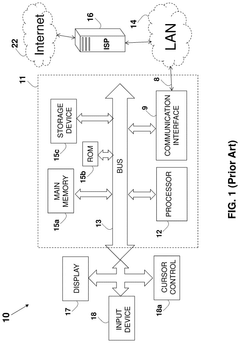
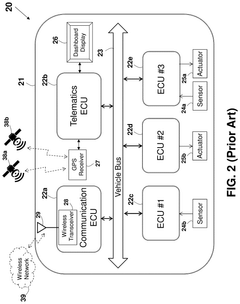
- A vehicle electronic control device using a multi-core microcontroller, comprising a first core for a domain, a second core for another domain, shared resources, and an arbitration core to mediate resource use, with inter-core interfaces and APIs for communication and task management.


Automotive Safety Standards and Certification Requirements
The automotive industry operates under stringent safety frameworks that directly impact microcontroller selection for electric vehicle applications. The most critical standard is ISO 26262, which defines functional safety requirements for automotive electrical and electronic systems. This standard establishes Automotive Safety Integrity Levels (ASIL) ranging from A to D, with ASIL D representing the highest safety requirements typically applied to critical systems like steering, braking, and powertrain control.
For EV applications, microcontrollers must comply with specific ASIL ratings depending on their intended function. Battery management systems and motor control units often require ASIL C or D compliance, necessitating microcontrollers with built-in safety mechanisms such as error correction codes, watchdog timers, and redundant processing cores. The certification process involves rigorous documentation of safety analysis, hazard assessment, and risk evaluation throughout the development lifecycle.
IEC 61508 serves as the foundational standard underlying ISO 26262, providing general principles for functional safety across industries. Additionally, ISO 21448 addresses Safety of the Intended Functionality (SOTIF), which becomes increasingly relevant as EVs incorporate advanced driver assistance systems and autonomous features. This standard focuses on performance limitations and foreseeable misuse scenarios.
Regional certification requirements add complexity to microcontroller selection. In Europe, the E-mark certification ensures electromagnetic compatibility and environmental compliance. The United States requires Federal Motor Vehicle Safety Standards (FMVSS) compliance, while China mandates GB standards adherence. Each region may have specific testing protocols and documentation requirements that influence hardware selection.
Cybersecurity standards such as ISO/SAE 21434 are becoming mandatory, requiring microcontrollers to incorporate security features like secure boot, cryptographic acceleration, and tamper detection. The certification timeline typically spans 12-24 months, significantly impacting product development schedules and requiring early engagement with certification bodies to ensure compliance verification and validation processes align with project milestones.
For EV applications, microcontrollers must comply with specific ASIL ratings depending on their intended function. Battery management systems and motor control units often require ASIL C or D compliance, necessitating microcontrollers with built-in safety mechanisms such as error correction codes, watchdog timers, and redundant processing cores. The certification process involves rigorous documentation of safety analysis, hazard assessment, and risk evaluation throughout the development lifecycle.
IEC 61508 serves as the foundational standard underlying ISO 26262, providing general principles for functional safety across industries. Additionally, ISO 21448 addresses Safety of the Intended Functionality (SOTIF), which becomes increasingly relevant as EVs incorporate advanced driver assistance systems and autonomous features. This standard focuses on performance limitations and foreseeable misuse scenarios.
Regional certification requirements add complexity to microcontroller selection. In Europe, the E-mark certification ensures electromagnetic compatibility and environmental compliance. The United States requires Federal Motor Vehicle Safety Standards (FMVSS) compliance, while China mandates GB standards adherence. Each region may have specific testing protocols and documentation requirements that influence hardware selection.
Cybersecurity standards such as ISO/SAE 21434 are becoming mandatory, requiring microcontrollers to incorporate security features like secure boot, cryptographic acceleration, and tamper detection. The certification timeline typically spans 12-24 months, significantly impacting product development schedules and requiring early engagement with certification bodies to ensure compliance verification and validation processes align with project milestones.
Environmental Impact and Sustainability Considerations
The environmental impact of microcontroller selection in electric vehicle applications has become increasingly critical as the automotive industry pursues carbon neutrality goals. Traditional microcontrollers often contain rare earth elements and heavy metals that pose significant environmental challenges during both manufacturing and end-of-life disposal phases. The semiconductor industry accounts for approximately 2% of global greenhouse gas emissions, making sustainable component selection a strategic imperative for EV manufacturers committed to reducing their overall carbon footprint.
Manufacturing processes for microcontrollers involve energy-intensive fabrication techniques, with advanced nodes requiring substantial water consumption and chemical usage. Silicon wafer production alone generates considerable CO2 emissions, while packaging materials often incorporate non-biodegradable compounds. EV manufacturers must evaluate suppliers based on their commitment to renewable energy adoption, waste reduction initiatives, and implementation of circular economy principles in their production facilities.
The operational efficiency of microcontrollers directly correlates with vehicle energy consumption and battery longevity. Low-power microcontrollers with advanced sleep modes and dynamic voltage scaling capabilities can extend EV range while reducing charging frequency, thereby minimizing grid energy demand. Power management units integrated within microcontrollers enable optimized energy distribution across vehicle systems, contributing to overall sustainability performance through reduced energy waste.
End-of-life considerations present unique challenges for microcontroller sustainability assessment. Components designed for extended operational lifespans reduce replacement frequency and associated environmental impacts. Microcontrollers with standardized interfaces and modular architectures facilitate component reuse and recycling processes. Material composition transparency enables proper sorting and recovery of valuable elements during vehicle dismantling operations.
Emerging sustainable microcontroller technologies include bio-based packaging materials, conflict-free mineral sourcing, and carbon-neutral manufacturing processes. Some manufacturers now offer lifecycle assessment data for their products, enabling EV designers to make informed decisions based on comprehensive environmental impact calculations. Additionally, the development of recyclable semiconductor substrates and biodegradable encapsulation materials represents promising advancement toward truly sustainable microcontroller solutions for future electric vehicle applications.
Manufacturing processes for microcontrollers involve energy-intensive fabrication techniques, with advanced nodes requiring substantial water consumption and chemical usage. Silicon wafer production alone generates considerable CO2 emissions, while packaging materials often incorporate non-biodegradable compounds. EV manufacturers must evaluate suppliers based on their commitment to renewable energy adoption, waste reduction initiatives, and implementation of circular economy principles in their production facilities.
The operational efficiency of microcontrollers directly correlates with vehicle energy consumption and battery longevity. Low-power microcontrollers with advanced sleep modes and dynamic voltage scaling capabilities can extend EV range while reducing charging frequency, thereby minimizing grid energy demand. Power management units integrated within microcontrollers enable optimized energy distribution across vehicle systems, contributing to overall sustainability performance through reduced energy waste.
End-of-life considerations present unique challenges for microcontroller sustainability assessment. Components designed for extended operational lifespans reduce replacement frequency and associated environmental impacts. Microcontrollers with standardized interfaces and modular architectures facilitate component reuse and recycling processes. Material composition transparency enables proper sorting and recovery of valuable elements during vehicle dismantling operations.
Emerging sustainable microcontroller technologies include bio-based packaging materials, conflict-free mineral sourcing, and carbon-neutral manufacturing processes. Some manufacturers now offer lifecycle assessment data for their products, enabling EV designers to make informed decisions based on comprehensive environmental impact calculations. Additionally, the development of recyclable semiconductor substrates and biodegradable encapsulation materials represents promising advancement toward truly sustainable microcontroller solutions for future electric vehicle applications.
Unlock deeper insights with Patsnap Eureka Quick Research — get a full tech report to explore trends and direct your research. Try now!
Generate Your Research Report Instantly with AI Agent
Supercharge your innovation with Patsnap Eureka AI Agent Platform!