

How to Select the Right Band Pass Filter for Audio Processing
MAR 25, 20269 MIN READ
Generate Your Research Report Instantly with AI Agent
PatSnap Eureka helps you evaluate technical feasibility & market potential.
Audio Filter Technology Background and Objectives
Audio filter technology has undergone significant evolution since the early days of analog signal processing, transforming from simple passive RC circuits to sophisticated digital signal processing algorithms. The development trajectory spans from basic analog filters using resistors, capacitors, and inductors in the 1920s to modern adaptive digital filters capable of real-time parameter adjustment. This evolution has been driven by the increasing demand for high-fidelity audio reproduction, noise reduction, and specialized audio effects in various applications ranging from consumer electronics to professional audio equipment.
The fundamental principle of band pass filtering in audio processing involves selectively allowing specific frequency ranges to pass through while attenuating frequencies outside the desired band. This selective frequency response is crucial for applications such as audio equalization, crossover networks in speaker systems, noise reduction, and audio effects processing. The technology encompasses both analog implementations using operational amplifiers and passive components, and digital implementations utilizing finite impulse response and infinite impulse response filter designs.
Current technological objectives in audio band pass filter development focus on achieving optimal balance between several critical parameters including frequency response accuracy, phase linearity, computational efficiency, and real-time processing capabilities. Modern filter design aims to minimize unwanted artifacts such as ringing, overshoot, and phase distortion while maintaining steep roll-off characteristics and precise center frequency control. These objectives are particularly challenging in applications requiring low latency processing, such as live audio monitoring and real-time audio effects.
The integration of machine learning and adaptive algorithms represents a significant advancement in filter technology, enabling automatic parameter optimization based on input signal characteristics. Contemporary research emphasizes the development of perceptually-optimized filters that consider human auditory system characteristics, leading to more natural-sounding audio processing. Additionally, the push toward energy-efficient implementations for mobile and battery-powered devices has driven innovation in low-power filter architectures.
Future technological goals include the development of context-aware filtering systems that can automatically adjust parameters based on content analysis, improved linearization techniques for analog implementations, and enhanced digital filter structures that provide better trade-offs between computational complexity and audio quality. The convergence of artificial intelligence with traditional filter design methodologies promises to unlock new possibilities for intelligent audio processing systems.
The fundamental principle of band pass filtering in audio processing involves selectively allowing specific frequency ranges to pass through while attenuating frequencies outside the desired band. This selective frequency response is crucial for applications such as audio equalization, crossover networks in speaker systems, noise reduction, and audio effects processing. The technology encompasses both analog implementations using operational amplifiers and passive components, and digital implementations utilizing finite impulse response and infinite impulse response filter designs.
Current technological objectives in audio band pass filter development focus on achieving optimal balance between several critical parameters including frequency response accuracy, phase linearity, computational efficiency, and real-time processing capabilities. Modern filter design aims to minimize unwanted artifacts such as ringing, overshoot, and phase distortion while maintaining steep roll-off characteristics and precise center frequency control. These objectives are particularly challenging in applications requiring low latency processing, such as live audio monitoring and real-time audio effects.
The integration of machine learning and adaptive algorithms represents a significant advancement in filter technology, enabling automatic parameter optimization based on input signal characteristics. Contemporary research emphasizes the development of perceptually-optimized filters that consider human auditory system characteristics, leading to more natural-sounding audio processing. Additionally, the push toward energy-efficient implementations for mobile and battery-powered devices has driven innovation in low-power filter architectures.
Future technological goals include the development of context-aware filtering systems that can automatically adjust parameters based on content analysis, improved linearization techniques for analog implementations, and enhanced digital filter structures that provide better trade-offs between computational complexity and audio quality. The convergence of artificial intelligence with traditional filter design methodologies promises to unlock new possibilities for intelligent audio processing systems.
Market Demand for Audio Processing Solutions
The global audio processing market has experienced substantial growth driven by the proliferation of digital content creation, streaming services, and professional audio applications. Consumer electronics manufacturers increasingly integrate sophisticated audio processing capabilities into smartphones, tablets, headphones, and smart speakers to meet rising expectations for high-quality audio experiences. Professional audio equipment vendors serve recording studios, broadcast facilities, and live sound reinforcement markets where precise frequency control through band pass filtering remains critical for signal clarity and noise reduction.
Automotive audio systems represent a rapidly expanding segment where band pass filters play essential roles in hands-free communication systems, active noise cancellation, and premium audio installations. The automotive industry's transition toward electric vehicles has intensified focus on cabin audio quality as road noise characteristics change, creating new opportunities for specialized filtering solutions that address specific frequency ranges associated with electric motor operation and wind noise.
Healthcare and assistive technology markets demonstrate growing demand for audio processing solutions incorporating precise band pass filtering. Hearing aid manufacturers require miniaturized filters capable of selectively amplifying speech frequencies while attenuating background noise. Telemedicine platforms and remote patient monitoring systems depend on clear audio transmission, necessitating filtering solutions that preserve critical voice frequencies while eliminating interference from medical equipment and environmental noise sources.
Industrial and telecommunications sectors continue expanding their audio processing requirements as remote work technologies mature. Video conferencing systems, VoIP applications, and unified communications platforms require sophisticated filtering to maintain speech intelligibility across varying network conditions and acoustic environments. The emergence of spatial audio and immersive sound technologies in gaming, virtual reality, and augmented reality applications has created demand for multi-channel filtering solutions capable of processing complex frequency distributions.
Emerging applications in artificial intelligence and machine learning present new market opportunities for audio processing solutions. Voice recognition systems, smart home devices, and autonomous systems require precise frequency isolation to improve recognition accuracy and reduce computational overhead. These applications often demand real-time processing capabilities with minimal latency, driving innovation in both analog and digital filtering approaches.
The market increasingly favors integrated solutions combining multiple filtering functions within single components or software packages. Cost pressures and miniaturization requirements push manufacturers toward solutions offering flexibility across multiple frequency ranges while maintaining performance standards. Environmental considerations and energy efficiency requirements influence design decisions, particularly in battery-powered and portable applications where power consumption directly impacts user experience.
Automotive audio systems represent a rapidly expanding segment where band pass filters play essential roles in hands-free communication systems, active noise cancellation, and premium audio installations. The automotive industry's transition toward electric vehicles has intensified focus on cabin audio quality as road noise characteristics change, creating new opportunities for specialized filtering solutions that address specific frequency ranges associated with electric motor operation and wind noise.
Healthcare and assistive technology markets demonstrate growing demand for audio processing solutions incorporating precise band pass filtering. Hearing aid manufacturers require miniaturized filters capable of selectively amplifying speech frequencies while attenuating background noise. Telemedicine platforms and remote patient monitoring systems depend on clear audio transmission, necessitating filtering solutions that preserve critical voice frequencies while eliminating interference from medical equipment and environmental noise sources.
Industrial and telecommunications sectors continue expanding their audio processing requirements as remote work technologies mature. Video conferencing systems, VoIP applications, and unified communications platforms require sophisticated filtering to maintain speech intelligibility across varying network conditions and acoustic environments. The emergence of spatial audio and immersive sound technologies in gaming, virtual reality, and augmented reality applications has created demand for multi-channel filtering solutions capable of processing complex frequency distributions.
Emerging applications in artificial intelligence and machine learning present new market opportunities for audio processing solutions. Voice recognition systems, smart home devices, and autonomous systems require precise frequency isolation to improve recognition accuracy and reduce computational overhead. These applications often demand real-time processing capabilities with minimal latency, driving innovation in both analog and digital filtering approaches.
The market increasingly favors integrated solutions combining multiple filtering functions within single components or software packages. Cost pressures and miniaturization requirements push manufacturers toward solutions offering flexibility across multiple frequency ranges while maintaining performance standards. Environmental considerations and energy efficiency requirements influence design decisions, particularly in battery-powered and portable applications where power consumption directly impacts user experience.
Current State of Band Pass Filter Technologies
Band pass filter technologies for audio processing have reached a mature state with multiple implementation approaches available across analog and digital domains. Traditional analog implementations continue to rely on active and passive circuit designs, utilizing operational amplifiers, resistors, capacitors, and inductors to achieve desired frequency response characteristics. These analog solutions remain prevalent in high-end audio equipment where signal purity and minimal latency are paramount concerns.
Digital signal processing has revolutionized band pass filter implementation through software-based algorithms and dedicated hardware processors. Finite Impulse Response (FIR) and Infinite Impulse Response (IIR) filter architectures dominate the digital landscape, offering precise control over filter parameters and the ability to implement complex filter shapes that would be challenging or impossible with analog circuits. Modern digital audio workstations and embedded audio processors extensively utilize these digital implementations.
Current technological capabilities enable real-time processing with minimal computational overhead, particularly through optimized algorithms such as biquad cascades for IIR filters and efficient convolution techniques for FIR implementations. Field-Programmable Gate Arrays (FPGAs) and Digital Signal Processors (DSPs) provide hardware acceleration for demanding applications requiring multiple simultaneous filter operations or extremely low latency processing.
The integration of adaptive filtering technologies represents a significant advancement in current band pass filter implementations. These systems can automatically adjust filter parameters based on input signal characteristics or user-defined criteria, enabling dynamic frequency response optimization. Machine learning algorithms are increasingly being incorporated to predict optimal filter settings for specific audio content types.
Manufacturing precision in analog components has improved substantially, allowing for tighter tolerance specifications and more predictable filter behavior. Surface-mount technology and integrated circuit manufacturing have enabled miniaturization while maintaining performance standards. Simultaneously, the cost of high-quality operational amplifiers and precision passive components has decreased, making sophisticated analog filter designs more accessible.
Current limitations include the inherent trade-offs between filter steepness, phase response, and stability in analog implementations. Digital filters face challenges related to quantization noise, computational complexity for high-order designs, and the need for anti-aliasing measures. Power consumption remains a constraint for battery-powered applications, particularly when implementing complex digital filter algorithms on general-purpose processors rather than specialized hardware.
Digital signal processing has revolutionized band pass filter implementation through software-based algorithms and dedicated hardware processors. Finite Impulse Response (FIR) and Infinite Impulse Response (IIR) filter architectures dominate the digital landscape, offering precise control over filter parameters and the ability to implement complex filter shapes that would be challenging or impossible with analog circuits. Modern digital audio workstations and embedded audio processors extensively utilize these digital implementations.
Current technological capabilities enable real-time processing with minimal computational overhead, particularly through optimized algorithms such as biquad cascades for IIR filters and efficient convolution techniques for FIR implementations. Field-Programmable Gate Arrays (FPGAs) and Digital Signal Processors (DSPs) provide hardware acceleration for demanding applications requiring multiple simultaneous filter operations or extremely low latency processing.
The integration of adaptive filtering technologies represents a significant advancement in current band pass filter implementations. These systems can automatically adjust filter parameters based on input signal characteristics or user-defined criteria, enabling dynamic frequency response optimization. Machine learning algorithms are increasingly being incorporated to predict optimal filter settings for specific audio content types.
Manufacturing precision in analog components has improved substantially, allowing for tighter tolerance specifications and more predictable filter behavior. Surface-mount technology and integrated circuit manufacturing have enabled miniaturization while maintaining performance standards. Simultaneously, the cost of high-quality operational amplifiers and precision passive components has decreased, making sophisticated analog filter designs more accessible.
Current limitations include the inherent trade-offs between filter steepness, phase response, and stability in analog implementations. Digital filters face challenges related to quantization noise, computational complexity for high-order designs, and the need for anti-aliasing measures. Power consumption remains a constraint for battery-powered applications, particularly when implementing complex digital filter algorithms on general-purpose processors rather than specialized hardware.
Current Band Pass Filter Design Solutions
01 Tunable band pass filter structures
Band pass filters can be designed with tunable characteristics to allow adjustment of the center frequency and bandwidth. These structures typically employ variable capacitors, varactors, or MEMS technology to achieve tunability. The tunable design enables the filter to adapt to different frequency bands and applications, providing flexibility in signal processing systems.- Tunable band pass filter circuits with adjustable frequency selection: Band pass filters can be designed with tunable characteristics to allow adjustment of the center frequency and bandwidth. These circuits typically employ variable capacitors, varactors, or digitally controlled components to enable frequency selection across a desired range. The tuning mechanism allows the filter to adapt to different signal frequencies while maintaining desired passband characteristics and rejection of unwanted frequencies.
- Multi-stage cascaded band pass filter architectures: Multiple filter stages can be cascaded in series to achieve sharper roll-off characteristics and improved selectivity. This approach combines several band pass filter sections with specific coupling mechanisms between stages to enhance overall filter performance. The cascaded configuration allows for better control of passband ripple, stopband attenuation, and transition band steepness compared to single-stage designs.
- Active band pass filters using operational amplifiers: Active filter implementations utilize operational amplifiers combined with resistors and capacitors to create band pass characteristics without requiring inductors. These designs offer advantages including ease of integration, adjustable gain, and the ability to achieve high Q-factors. The active approach enables compact circuit designs suitable for integrated circuit implementation and provides flexibility in frequency response shaping.
- Surface acoustic wave and resonator-based band pass filters: Band pass filters can be implemented using surface acoustic wave devices or mechanical resonators to achieve high selectivity and stability. These technologies exploit piezoelectric effects or mechanical vibrations to create precise frequency-selective characteristics. Such filters are particularly suitable for radio frequency applications requiring narrow bandwidth and low insertion loss with excellent temperature stability.
- Digital signal processing based band pass filter selection: Digital implementations allow for programmable band pass filter characteristics through software-defined algorithms and digital signal processing techniques. These systems can dynamically select filter parameters including center frequency, bandwidth, and filter order based on application requirements. Digital approaches offer flexibility for multi-band operation, adaptive filtering, and precise control over filter characteristics without hardware modifications.
02 Multi-stage cascaded filter design
Multi-stage cascaded band pass filter configurations utilize multiple filter stages connected in series to achieve improved selectivity and steeper roll-off characteristics. This approach allows for better rejection of unwanted frequencies while maintaining desired passband performance. The cascaded structure can combine different filter topologies to optimize overall frequency response and insertion loss.Expand Specific Solutions03 Integrated filter circuits with switching mechanisms
Band pass filter systems can incorporate switching mechanisms to select between different filter paths or frequency bands. These designs enable multi-band operation and reconfigurable filtering capabilities. The switching elements allow dynamic selection of appropriate filter characteristics based on operating requirements, making them suitable for communication systems requiring multiple frequency band support.Expand Specific Solutions04 Surface acoustic wave and resonator-based filters
Surface acoustic wave technology and resonator structures provide compact and high-performance band pass filtering solutions. These filters utilize piezoelectric materials and acoustic wave propagation to achieve precise frequency selection with low insertion loss. The resonator-based approach offers excellent temperature stability and can be manufactured with high reproducibility for mass production applications.Expand Specific Solutions05 Digital and software-defined filter selection
Digital signal processing techniques enable software-defined band pass filter selection and implementation. These systems use programmable algorithms and digital filtering methods to achieve flexible frequency response characteristics. The digital approach allows for real-time adjustment of filter parameters, adaptive filtering capabilities, and integration with modern communication systems requiring dynamic spectrum management.Expand Specific Solutions
Key Players in Audio Processing Industry
The audio band pass filter market represents a mature yet evolving sector within the broader electronic components industry. The market demonstrates significant scale driven by diverse applications spanning consumer electronics, automotive systems, telecommunications infrastructure, and professional audio equipment. Technology maturity varies considerably across market segments, with established players like Murata Manufacturing, Samsung Electronics, and Sony Group leading in consumer applications through advanced ceramic and semiconductor-based filtering solutions. Companies such as Bose and JVCKenwood have developed specialized expertise in high-fidelity audio processing, while telecommunications giants like Huawei and Ericsson focus on network infrastructure applications. The competitive landscape shows consolidation around key technological approaches, with surface acoustic wave (SAW) filters and digital signal processing gaining prominence. Emerging players like Delta Electronics and specialized firms are driving innovation in automotive and IoT applications, indicating ongoing technological evolution despite the market's overall maturity.
Murata Manufacturing Co. Ltd.
Technical Solution: Murata specializes in ceramic-based band pass filters utilizing advanced multilayer ceramic capacitor (MLCC) technology for audio processing applications. Their filters employ high-Q ceramic resonators with precise frequency control, offering excellent selectivity and low insertion loss characteristics. The company's proprietary ceramic materials enable compact filter designs with superior temperature stability and aging characteristics. Their audio band pass filters typically feature center frequencies ranging from 20Hz to 20kHz with adjustable bandwidth control, making them suitable for various audio processing requirements including crossover networks, equalizers, and noise filtering applications.
Strengths: Excellent temperature stability, compact size, high reliability. Weaknesses: Limited tunability, higher cost compared to passive alternatives.
Panasonic Holdings Corp.
Technical Solution: Panasonic develops integrated band pass filter solutions combining analog and digital signal processing techniques for audio applications. Their approach utilizes switched-capacitor filter technology with programmable center frequencies and bandwidth control through digital interfaces. The filters incorporate low-noise operational amplifiers and precision capacitor arrays to achieve high-quality audio filtering with minimal distortion. Their solutions support multiple filter topologies including Butterworth, Chebyshev, and elliptic responses, with real-time parameter adjustment capabilities for adaptive audio processing systems.
Strengths: Programmable parameters, low distortion, integrated digital control. Weaknesses: Higher power consumption, complex implementation requirements.
Core Innovations in Audio Filter Selection
Low bit rate transform coder, decoder and encoder/decoder for high-quality audio
PatentInactiveEP0455738B2
Innovation
- An encoder/decoder system that uses adaptive bit allocation and nonuniform quantization, combined with analysis and synthesis windows, to generate and reconstruct audio signals, effectively minimizing noise and distortion by aligning bit allocation with psychoacoustic masking thresholds and optimizing filter characteristics to match human auditory frequency resolution.


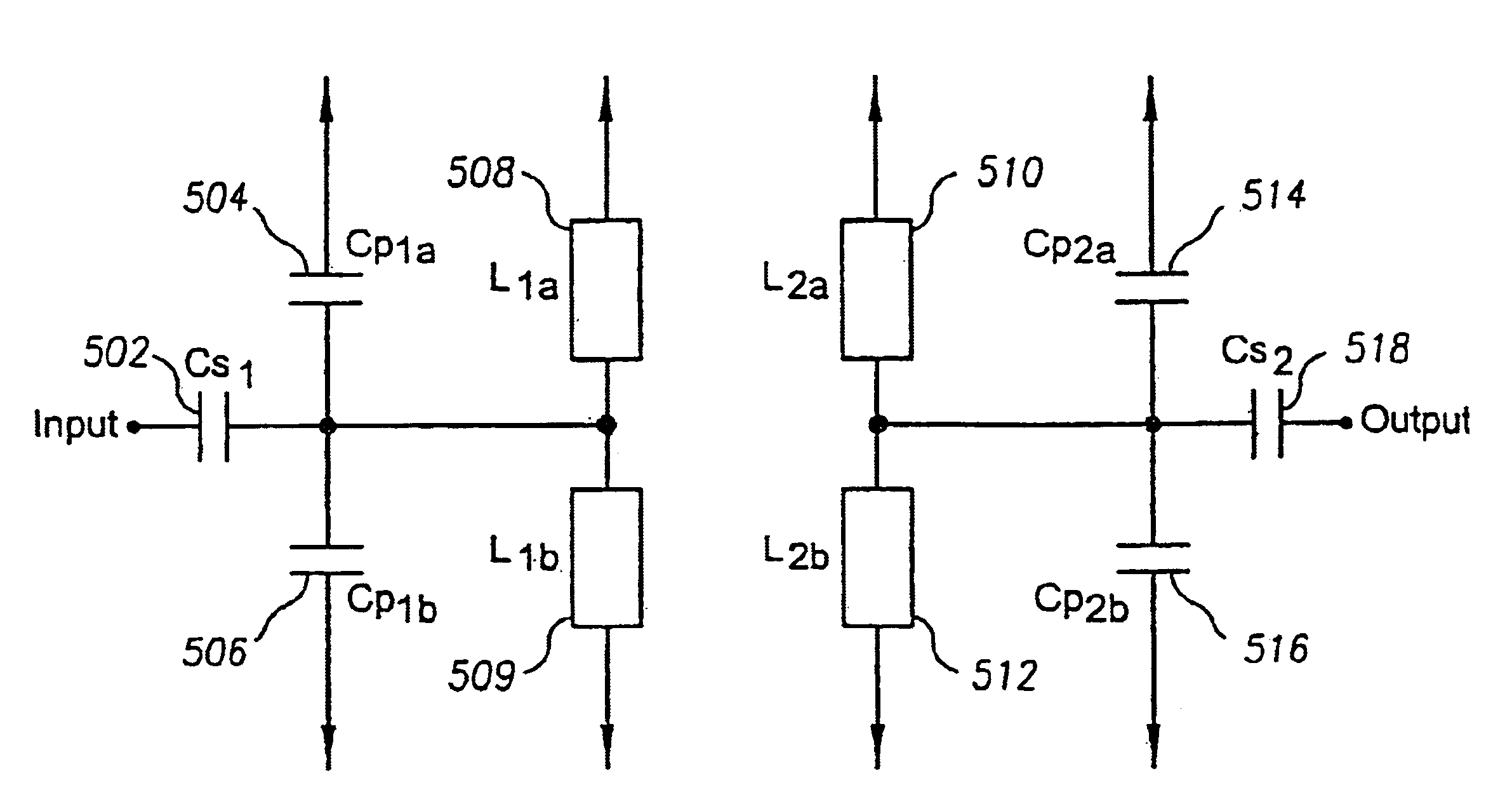
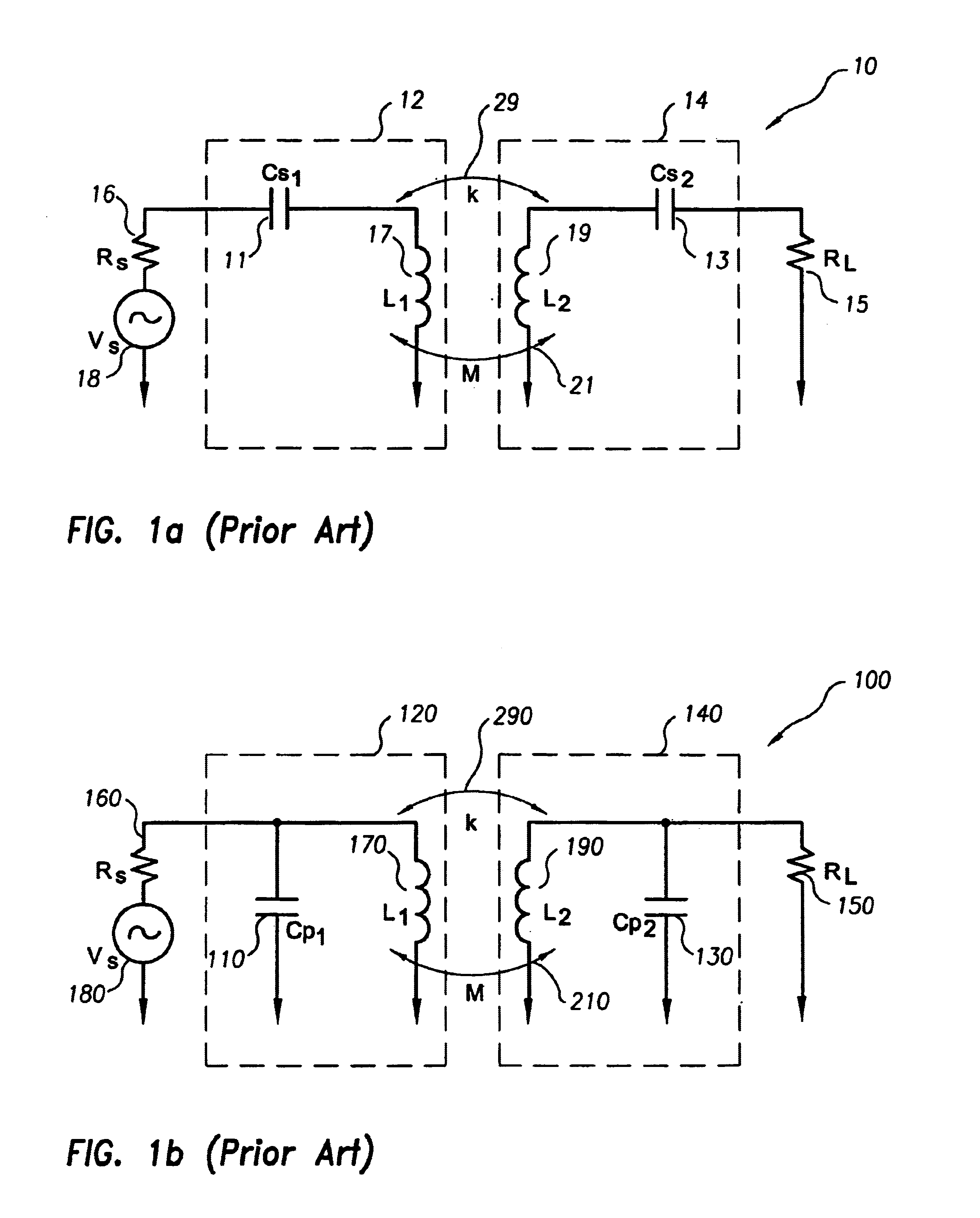
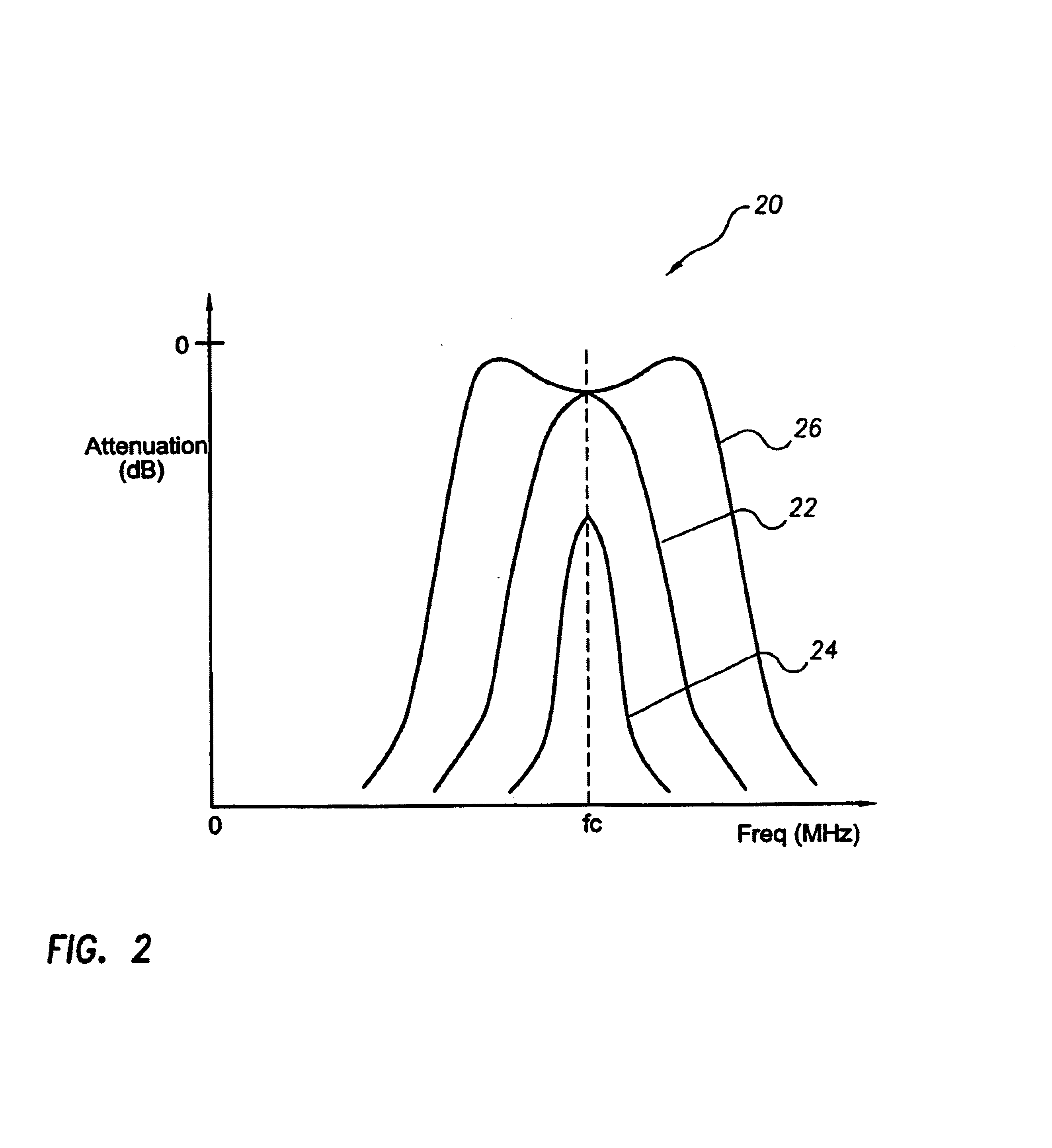
Narrow band-pass tuned resonator filter topologies having high selectivity, low insertion loss and improved out-of-band rejection over extended frequency ranges
PatentInactiveUS7078987B1
Innovation
- A parallel double-tuned magnetically coupled resonator topology using electrically short microstrip transmission lines as inductance components, with precise geometric control, and additional components like coupling capacitors or shunt capacitance, to enhance QL and reduce insertion loss, and a mirrored resonator topology to counteract increased inductive coupling at higher frequencies.

Audio Quality Standards and Compliance
Audio quality standards serve as the foundation for selecting appropriate band pass filters in professional audio processing applications. These standards define measurable parameters such as frequency response, total harmonic distortion (THD), signal-to-noise ratio (SNR), and dynamic range that directly influence filter selection criteria. International standards like AES (Audio Engineering Society) recommendations, ITU-R BS.1770 for loudness measurement, and EBU R128 for broadcast audio establish baseline requirements that filter implementations must meet or exceed.
Compliance with industry-specific audio standards requires careful consideration of filter characteristics across different application domains. Professional recording environments typically demand filters meeting AES17 standards for digital audio measurement, requiring THD+N levels below -60dB and frequency response variations within ±0.1dB across the passband. Broadcasting applications must adhere to ITU-R BS.412 specifications for sound program transmission, necessitating filters with steep roll-off characteristics and minimal phase distortion to prevent interference with adjacent channels.
Consumer audio applications follow different compliance frameworks, primarily governed by IEC 60268 series standards for sound system equipment. These standards specify acceptable performance ranges for frequency response linearity, typically allowing ±3dB variation across the audio spectrum, and establish minimum SNR requirements of 90dB for high-fidelity applications. Filter selection must account for these tolerance ranges while maintaining cost-effectiveness for mass market deployment.
Medical and hearing aid applications require adherence to specialized standards such as IEC 60118 series, which defines electroacoustic performance requirements including specific frequency shaping characteristics. These applications demand filters with precise gain control across narrow frequency bands, often requiring custom filter designs that meet both performance specifications and regulatory approval processes from agencies like FDA or CE marking requirements.
Automotive audio systems must comply with ISO 16750 environmental standards alongside audio quality requirements, necessitating filters that maintain performance across extreme temperature ranges (-40°C to +85°C) and vibration conditions. The selection process must balance acoustic performance with electromagnetic compatibility (EMC) requirements defined in ISO 11452 standards to prevent interference with vehicle electronic systems.
Measurement and verification protocols for filter compliance typically involve standardized test procedures using calibrated audio analyzers and signal generators. These procedures validate filter performance against specified standards through swept frequency response measurements, distortion analysis, and long-term stability testing under various environmental conditions.
Compliance with industry-specific audio standards requires careful consideration of filter characteristics across different application domains. Professional recording environments typically demand filters meeting AES17 standards for digital audio measurement, requiring THD+N levels below -60dB and frequency response variations within ±0.1dB across the passband. Broadcasting applications must adhere to ITU-R BS.412 specifications for sound program transmission, necessitating filters with steep roll-off characteristics and minimal phase distortion to prevent interference with adjacent channels.
Consumer audio applications follow different compliance frameworks, primarily governed by IEC 60268 series standards for sound system equipment. These standards specify acceptable performance ranges for frequency response linearity, typically allowing ±3dB variation across the audio spectrum, and establish minimum SNR requirements of 90dB for high-fidelity applications. Filter selection must account for these tolerance ranges while maintaining cost-effectiveness for mass market deployment.
Medical and hearing aid applications require adherence to specialized standards such as IEC 60118 series, which defines electroacoustic performance requirements including specific frequency shaping characteristics. These applications demand filters with precise gain control across narrow frequency bands, often requiring custom filter designs that meet both performance specifications and regulatory approval processes from agencies like FDA or CE marking requirements.
Automotive audio systems must comply with ISO 16750 environmental standards alongside audio quality requirements, necessitating filters that maintain performance across extreme temperature ranges (-40°C to +85°C) and vibration conditions. The selection process must balance acoustic performance with electromagnetic compatibility (EMC) requirements defined in ISO 11452 standards to prevent interference with vehicle electronic systems.
Measurement and verification protocols for filter compliance typically involve standardized test procedures using calibrated audio analyzers and signal generators. These procedures validate filter performance against specified standards through swept frequency response measurements, distortion analysis, and long-term stability testing under various environmental conditions.
Cost-Performance Optimization in Filter Design
Cost-performance optimization represents a critical balance in audio filter design, where engineers must achieve desired acoustic performance while maintaining economic viability. This optimization process involves evaluating multiple design parameters simultaneously, including component costs, manufacturing complexity, and performance specifications to identify the most efficient solution for specific applications.
The primary cost drivers in bandpass filter design include component selection, circuit complexity, and manufacturing processes. Active filters typically require operational amplifiers, precision resistors, and capacitors, with costs varying significantly based on tolerance requirements and temperature coefficients. Passive filters, while potentially more expensive in terms of inductor costs, often provide better long-term value through reduced power consumption and enhanced reliability.
Performance metrics must be weighted against cost implications throughout the design process. Higher-order filters deliver superior selectivity and steeper roll-off characteristics but require additional components and more complex circuit topologies. The trade-off between filter order and cost becomes particularly significant in high-volume applications where component costs multiply substantially across production quantities.
Component tolerance selection directly impacts both performance consistency and manufacturing costs. Tighter tolerances ensure more predictable frequency responses but command premium pricing. Statistical analysis of tolerance effects enables designers to identify optimal component specifications that maintain acceptable performance variations while minimizing unnecessary precision requirements.
Manufacturing scalability considerations influence long-term cost-performance ratios significantly. Surface-mount technology components generally offer cost advantages in automated assembly processes, while through-hole components may provide better performance characteristics in certain applications. The choice between these approaches affects both initial tooling investments and ongoing production costs.
Design methodology optimization involves leveraging simulation tools to minimize prototype iterations and reduce development costs. Advanced circuit simulation enables comprehensive performance evaluation before physical implementation, reducing the need for multiple design revisions and accelerating time-to-market objectives.
Volume production considerations fundamentally alter cost-performance calculations, as economies of scale can justify higher initial component costs when amortized across large production runs. Conversely, low-volume applications may favor simpler designs with readily available components to minimize inventory and procurement complexities.
The primary cost drivers in bandpass filter design include component selection, circuit complexity, and manufacturing processes. Active filters typically require operational amplifiers, precision resistors, and capacitors, with costs varying significantly based on tolerance requirements and temperature coefficients. Passive filters, while potentially more expensive in terms of inductor costs, often provide better long-term value through reduced power consumption and enhanced reliability.
Performance metrics must be weighted against cost implications throughout the design process. Higher-order filters deliver superior selectivity and steeper roll-off characteristics but require additional components and more complex circuit topologies. The trade-off between filter order and cost becomes particularly significant in high-volume applications where component costs multiply substantially across production quantities.
Component tolerance selection directly impacts both performance consistency and manufacturing costs. Tighter tolerances ensure more predictable frequency responses but command premium pricing. Statistical analysis of tolerance effects enables designers to identify optimal component specifications that maintain acceptable performance variations while minimizing unnecessary precision requirements.
Manufacturing scalability considerations influence long-term cost-performance ratios significantly. Surface-mount technology components generally offer cost advantages in automated assembly processes, while through-hole components may provide better performance characteristics in certain applications. The choice between these approaches affects both initial tooling investments and ongoing production costs.
Design methodology optimization involves leveraging simulation tools to minimize prototype iterations and reduce development costs. Advanced circuit simulation enables comprehensive performance evaluation before physical implementation, reducing the need for multiple design revisions and accelerating time-to-market objectives.
Volume production considerations fundamentally alter cost-performance calculations, as economies of scale can justify higher initial component costs when amortized across large production runs. Conversely, low-volume applications may favor simpler designs with readily available components to minimize inventory and procurement complexities.
Unlock deeper insights with PatSnap Eureka Quick Research — get a full tech report to explore trends and direct your research. Try now!
Generate Your Research Report Instantly with AI Agent
Supercharge your innovation with PatSnap Eureka AI Agent Platform!