Intercooling vs Phase Change Materials: Thermal Storage
APR 3, 20269 MIN READ
Generate Your Research Report Instantly with AI Agent
PatSnap Eureka helps you evaluate technical feasibility & market potential.
Intercooling and PCM Thermal Storage Background and Objectives
Thermal management has emerged as a critical challenge across multiple industries, from automotive and aerospace to electronics and renewable energy systems. As power densities increase and efficiency requirements become more stringent, traditional cooling methods are reaching their operational limits. The evolution of thermal management technologies has progressed from simple air cooling to sophisticated liquid cooling systems, and now toward advanced thermal storage solutions that can both manage heat and store thermal energy for later use.
Intercooling technology represents a well-established approach to thermal management, particularly in turbocharged engines and compressed air systems. This method involves removing heat from compressed gases between compression stages, improving overall system efficiency and preventing thermal damage to downstream components. The technology has matured significantly over the past decades, with applications expanding from automotive turbochargers to industrial compressors and gas turbines.
Phase Change Materials have gained substantial attention as an innovative thermal storage solution that leverages latent heat absorption and release during material phase transitions. Unlike sensible heat storage methods, PCMs can absorb or release large amounts of thermal energy at relatively constant temperatures, making them highly effective for temperature regulation and thermal buffering applications. The technology has found applications in building climate control, electronics cooling, and renewable energy storage systems.
The convergence of intercooling and PCM technologies represents a significant opportunity to address complex thermal management challenges that neither approach can effectively solve independently. Traditional intercooling systems often struggle with transient thermal loads and space constraints, while standalone PCM systems may lack the active heat transfer capabilities required for high-power applications.
The primary objective of integrating intercooling with PCM thermal storage is to create hybrid systems that combine the active heat removal capabilities of intercooling with the thermal buffering and energy storage advantages of phase change materials. This integration aims to achieve superior thermal performance, improved energy efficiency, and enhanced system reliability compared to conventional single-technology approaches.
Key technical objectives include developing optimal PCM formulations that maintain stability under cyclic thermal loading, designing heat exchanger configurations that maximize heat transfer between intercooling circuits and PCM storage media, and establishing control strategies that effectively coordinate active cooling with passive thermal storage. The ultimate goal is to create thermal management systems capable of handling both steady-state and transient thermal loads while providing energy recovery capabilities that enhance overall system efficiency.
Intercooling technology represents a well-established approach to thermal management, particularly in turbocharged engines and compressed air systems. This method involves removing heat from compressed gases between compression stages, improving overall system efficiency and preventing thermal damage to downstream components. The technology has matured significantly over the past decades, with applications expanding from automotive turbochargers to industrial compressors and gas turbines.
Phase Change Materials have gained substantial attention as an innovative thermal storage solution that leverages latent heat absorption and release during material phase transitions. Unlike sensible heat storage methods, PCMs can absorb or release large amounts of thermal energy at relatively constant temperatures, making them highly effective for temperature regulation and thermal buffering applications. The technology has found applications in building climate control, electronics cooling, and renewable energy storage systems.
The convergence of intercooling and PCM technologies represents a significant opportunity to address complex thermal management challenges that neither approach can effectively solve independently. Traditional intercooling systems often struggle with transient thermal loads and space constraints, while standalone PCM systems may lack the active heat transfer capabilities required for high-power applications.
The primary objective of integrating intercooling with PCM thermal storage is to create hybrid systems that combine the active heat removal capabilities of intercooling with the thermal buffering and energy storage advantages of phase change materials. This integration aims to achieve superior thermal performance, improved energy efficiency, and enhanced system reliability compared to conventional single-technology approaches.
Key technical objectives include developing optimal PCM formulations that maintain stability under cyclic thermal loading, designing heat exchanger configurations that maximize heat transfer between intercooling circuits and PCM storage media, and establishing control strategies that effectively coordinate active cooling with passive thermal storage. The ultimate goal is to create thermal management systems capable of handling both steady-state and transient thermal loads while providing energy recovery capabilities that enhance overall system efficiency.
Market Demand for Advanced Thermal Management Solutions
The global thermal management market is experiencing unprecedented growth driven by the increasing complexity and power density of modern electronic systems. Data centers, which consume substantial energy for cooling operations, represent a critical application area where advanced thermal solutions can deliver significant operational cost reductions and energy efficiency improvements. The proliferation of high-performance computing, artificial intelligence workloads, and edge computing infrastructure has intensified the demand for more effective thermal management technologies.
Automotive electrification has emerged as another major demand driver, particularly with the rapid adoption of electric vehicles and hybrid systems. Battery thermal management systems require sophisticated solutions to maintain optimal operating temperatures, extend battery life, and ensure safety. The automotive sector's transition toward electrification has created substantial market opportunities for both intercooling technologies and phase change materials, as traditional cooling methods prove inadequate for managing the thermal loads of high-capacity battery packs and power electronics.
Industrial manufacturing processes increasingly require precise temperature control to maintain product quality and operational efficiency. Industries such as aerospace, renewable energy, and advanced manufacturing are seeking thermal management solutions that can handle extreme temperature variations while maintaining consistent performance. Phase change materials offer particular advantages in applications requiring thermal buffering and energy storage capabilities, while advanced intercooling systems provide superior heat dissipation for high-power industrial equipment.
The telecommunications infrastructure sector, driven by 5G network deployment and increasing data transmission requirements, presents growing demand for compact, efficient thermal management solutions. Base stations and network equipment generate significant heat loads that must be managed within space-constrained environments, creating opportunities for innovative thermal storage and cooling technologies.
Consumer electronics continue to drive demand for miniaturized thermal management solutions as devices become more powerful while maintaining slim form factors. Smartphones, laptops, and gaming devices require advanced thermal solutions that can manage heat dissipation without compromising user experience or device aesthetics.
Regulatory pressures and sustainability initiatives are increasingly influencing market demand, with organizations seeking thermal management solutions that reduce energy consumption and environmental impact. This trend favors technologies that offer superior energy efficiency and reduced carbon footprints, positioning both advanced intercooling systems and phase change materials as attractive alternatives to traditional cooling methods.
Automotive electrification has emerged as another major demand driver, particularly with the rapid adoption of electric vehicles and hybrid systems. Battery thermal management systems require sophisticated solutions to maintain optimal operating temperatures, extend battery life, and ensure safety. The automotive sector's transition toward electrification has created substantial market opportunities for both intercooling technologies and phase change materials, as traditional cooling methods prove inadequate for managing the thermal loads of high-capacity battery packs and power electronics.
Industrial manufacturing processes increasingly require precise temperature control to maintain product quality and operational efficiency. Industries such as aerospace, renewable energy, and advanced manufacturing are seeking thermal management solutions that can handle extreme temperature variations while maintaining consistent performance. Phase change materials offer particular advantages in applications requiring thermal buffering and energy storage capabilities, while advanced intercooling systems provide superior heat dissipation for high-power industrial equipment.
The telecommunications infrastructure sector, driven by 5G network deployment and increasing data transmission requirements, presents growing demand for compact, efficient thermal management solutions. Base stations and network equipment generate significant heat loads that must be managed within space-constrained environments, creating opportunities for innovative thermal storage and cooling technologies.
Consumer electronics continue to drive demand for miniaturized thermal management solutions as devices become more powerful while maintaining slim form factors. Smartphones, laptops, and gaming devices require advanced thermal solutions that can manage heat dissipation without compromising user experience or device aesthetics.
Regulatory pressures and sustainability initiatives are increasingly influencing market demand, with organizations seeking thermal management solutions that reduce energy consumption and environmental impact. This trend favors technologies that offer superior energy efficiency and reduced carbon footprints, positioning both advanced intercooling systems and phase change materials as attractive alternatives to traditional cooling methods.
Current State and Challenges in Intercooling vs PCM Technologies
Intercooling technologies have reached significant maturity in automotive and industrial applications, with air-to-air and air-to-water intercoolers achieving cooling efficiencies of 60-80% in turbocharged engines. Current intercooling systems demonstrate reliable performance in temperature reduction, typically lowering compressed air temperatures by 100-150°C. However, these systems face limitations in transient response and packaging constraints, particularly in compact vehicle designs where space optimization is critical.
Phase Change Materials for thermal storage have evolved substantially, with paraffin-based PCMs dominating commercial applications due to their high latent heat capacity (150-250 kJ/kg) and thermal stability. Salt hydrates and fatty acids represent alternative PCM categories, offering different melting point ranges and thermal properties. Current PCM integration in thermal management systems achieves energy storage densities of 200-400 kWh/m³, significantly higher than conventional sensible heat storage methods.
The primary challenge in intercooling technology lies in achieving rapid thermal response while maintaining compact system architecture. Traditional intercoolers suffer from thermal inertia, creating delays in temperature regulation during dynamic operating conditions. Additionally, pressure drop across intercooler cores remains a persistent issue, with typical systems experiencing 2-5% pressure losses that directly impact overall system efficiency.
PCM technologies face distinct challenges related to thermal conductivity limitations and phase change stability. Most organic PCMs exhibit low thermal conductivity (0.15-0.3 W/mK), requiring enhanced heat transfer mechanisms such as metal foams or graphite matrices. Subcooling and supercooling phenomena in PCMs create unpredictable phase transition behaviors, affecting system reliability and thermal response predictability.
Integration challenges emerge when combining intercooling with PCM thermal storage systems. Thermal interface resistance between components creates efficiency losses, while system complexity increases maintenance requirements and potential failure points. Current hybrid systems struggle with optimal control strategies that balance immediate cooling needs with thermal energy storage objectives.
Manufacturing scalability represents another significant challenge, particularly for advanced PCM formulations and enhanced intercooler designs. Cost considerations limit widespread adoption of high-performance materials, while quality control in PCM production affects long-term thermal cycling stability. Geographic distribution of these technologies shows concentration in developed automotive markets, with emerging applications in renewable energy and industrial process cooling sectors.
Phase Change Materials for thermal storage have evolved substantially, with paraffin-based PCMs dominating commercial applications due to their high latent heat capacity (150-250 kJ/kg) and thermal stability. Salt hydrates and fatty acids represent alternative PCM categories, offering different melting point ranges and thermal properties. Current PCM integration in thermal management systems achieves energy storage densities of 200-400 kWh/m³, significantly higher than conventional sensible heat storage methods.
The primary challenge in intercooling technology lies in achieving rapid thermal response while maintaining compact system architecture. Traditional intercoolers suffer from thermal inertia, creating delays in temperature regulation during dynamic operating conditions. Additionally, pressure drop across intercooler cores remains a persistent issue, with typical systems experiencing 2-5% pressure losses that directly impact overall system efficiency.
PCM technologies face distinct challenges related to thermal conductivity limitations and phase change stability. Most organic PCMs exhibit low thermal conductivity (0.15-0.3 W/mK), requiring enhanced heat transfer mechanisms such as metal foams or graphite matrices. Subcooling and supercooling phenomena in PCMs create unpredictable phase transition behaviors, affecting system reliability and thermal response predictability.
Integration challenges emerge when combining intercooling with PCM thermal storage systems. Thermal interface resistance between components creates efficiency losses, while system complexity increases maintenance requirements and potential failure points. Current hybrid systems struggle with optimal control strategies that balance immediate cooling needs with thermal energy storage objectives.
Manufacturing scalability represents another significant challenge, particularly for advanced PCM formulations and enhanced intercooler designs. Cost considerations limit widespread adoption of high-performance materials, while quality control in PCM production affects long-term thermal cycling stability. Geographic distribution of these technologies shows concentration in developed automotive markets, with emerging applications in renewable energy and industrial process cooling sectors.
Existing Intercooling and Phase Change Material Solutions
01 Composite phase change materials with enhanced thermal conductivity
Phase change materials can be combined with high thermal conductivity materials such as graphene, carbon nanotubes, or metal foams to improve heat transfer rates. These composite structures enhance the thermal storage and release performance by creating pathways for efficient heat conduction while maintaining the latent heat storage capacity of the phase change material. The incorporation of conductive fillers addresses the inherent low thermal conductivity limitation of many organic phase change materials.- Composite phase change materials with enhanced thermal conductivity: Phase change materials can be combined with high thermal conductivity materials such as graphene, carbon nanotubes, or metal foams to improve heat transfer rates. These composite structures enhance the thermal storage and release performance by creating conductive pathways within the PCM matrix. The addition of thermally conductive fillers addresses the inherent low thermal conductivity limitation of many organic phase change materials, enabling faster charging and discharging cycles in thermal energy storage systems.
- Encapsulation techniques for phase change materials: Encapsulation methods involve containing phase change materials within protective shells or matrices to prevent leakage, enhance stability, and improve compatibility with surrounding materials. Micro-encapsulation and macro-encapsulation techniques can be employed using polymer shells, inorganic materials, or hybrid structures. This approach allows for better integration of PCMs into building materials, textiles, and thermal management systems while maintaining their phase transition properties and extending their operational lifespan.
- Form-stable phase change materials using support matrices: Form-stable PCMs are developed by incorporating phase change materials into porous support structures such as expanded graphite, silica aerogels, or polymer networks. These support matrices provide mechanical stability and prevent liquid leakage during phase transitions while maintaining high latent heat storage capacity. The porous structure allows the PCM to be absorbed and retained through capillary forces and surface tension, creating a solid composite that can undergo repeated melting and solidification cycles without shape deformation.
- Multi-stage phase change material systems: Multi-stage or cascade PCM systems utilize multiple phase change materials with different melting temperatures to achieve broader temperature range coverage and improved energy storage efficiency. By strategically layering or combining PCMs with varying transition temperatures, these systems can provide continuous thermal regulation across different operating conditions. This approach optimizes energy storage density and enables more precise temperature control for applications requiring thermal management over extended temperature ranges.
- Phase change material integration in building and construction applications: Phase change materials can be integrated into building components such as walls, roofs, floors, and windows to provide passive thermal regulation and reduce energy consumption. Integration methods include direct incorporation into concrete, gypsum boards, or insulation materials, as well as the use of PCM panels and modules. These applications leverage the latent heat storage capacity of PCMs to absorb excess heat during peak temperature periods and release it when needed, thereby stabilizing indoor temperatures and reducing heating and cooling loads.
02 Encapsulation techniques for phase change materials
Encapsulation methods are employed to contain phase change materials within protective shells or matrices to prevent leakage during phase transitions and improve structural stability. Microencapsulation and macroencapsulation techniques using polymer shells, inorganic materials, or porous structures enable the integration of phase change materials into various applications. These encapsulation strategies also enhance the durability and cycling stability of thermal storage systems.Expand Specific Solutions03 Form-stable phase change composites using porous support materials
Form-stable phase change composites are developed by impregnating phase change materials into porous support structures such as expanded graphite, silica aerogels, or metal-organic frameworks. The porous matrix provides mechanical support and prevents liquid leakage through capillary forces and surface tension, while allowing the phase change material to undergo thermal transitions. This approach eliminates the need for additional encapsulation and simplifies manufacturing processes.Expand Specific Solutions04 Multi-component phase change material systems with tailored transition temperatures
Multi-component phase change material systems utilize mixtures or eutectic combinations of different materials to achieve specific melting points and thermal properties suited for particular applications. By adjusting the composition ratios, the phase transition temperature can be precisely controlled to match operational requirements. These systems may incorporate organic compounds, inorganic salts, or hybrid combinations to optimize thermal storage capacity and temperature ranges.Expand Specific Solutions05 Integration of phase change materials in building and thermal management applications
Phase change materials are integrated into building materials, thermal management systems, and energy storage devices to regulate temperature fluctuations and improve energy efficiency. Applications include incorporation into walls, roofs, and floors for passive thermal regulation, as well as active systems for electronics cooling and renewable energy storage. The integration methods focus on maintaining structural integrity while maximizing thermal storage effectiveness and ensuring long-term performance stability.Expand Specific Solutions
Key Players in Thermal Management and PCM Industry
The thermal storage technology sector, particularly comparing intercooling versus phase change materials, represents a rapidly evolving market in the early-to-mid development stage with significant growth potential driven by increasing energy efficiency demands and renewable energy integration. The market encompasses diverse applications from industrial cooling to residential heating systems, with substantial investment from both established corporations and emerging specialists. Technology maturity varies significantly across players, with established industrial giants like Siemens AG, DENSO Corp., and Hyundai Motor Co. leveraging mature intercooling technologies, while specialized companies like Sunamp Ltd. pioneer advanced phase change material solutions. Research institutions including CEA, Fraunhofer-Gesellschaft, and various universities drive innovation, while energy companies like Sinopec and Petroliam Nasional explore large-scale applications. The competitive landscape shows convergence between traditional thermal management approaches and next-generation phase change technologies, indicating a transitional period where both solutions coexist while PCM technologies gradually mature toward broader commercial adoption.
Siemens AG
Technical Solution: Siemens has developed advanced thermal energy storage systems that integrate both intercooling and phase change materials for industrial applications. Their solution combines air-to-air intercooling with paraffin-based PCMs to achieve thermal storage capacities of up to 200 MWh. The system utilizes modular PCM containers with enhanced heat transfer surfaces, operating at temperatures between 200-400°C for power generation applications. Their technology incorporates intelligent control systems that optimize the charging and discharging cycles based on energy demand patterns.
Strengths: Proven industrial-scale implementation, high energy density storage, intelligent control integration. Weaknesses: High initial capital costs, complex maintenance requirements for large-scale systems.
Fraunhofer-Gesellschaft eV
Technical Solution: Fraunhofer has pioneered research in hybrid thermal storage systems combining intercooling with salt hydrate PCMs. Their innovative approach uses thermochemical storage materials with intercooling loops to achieve storage densities exceeding 300 kWh/m³. The technology employs zeolite-based materials coupled with air intercooling systems for long-term thermal storage applications. Their research focuses on developing compact PCM modules with integrated heat exchangers that can operate efficiently across temperature ranges of 80-250°C for building and industrial heating applications.
Strengths: High research expertise, innovative material development, excellent storage density. Weaknesses: Technology still in development phase, limited commercial availability, requires specialized materials.
Core Innovations in PCM-Enhanced Intercooling Systems
Thermal energy storage system combining sensible heat solid material and phase change material
PatentActiveUS20160201995A1
Innovation
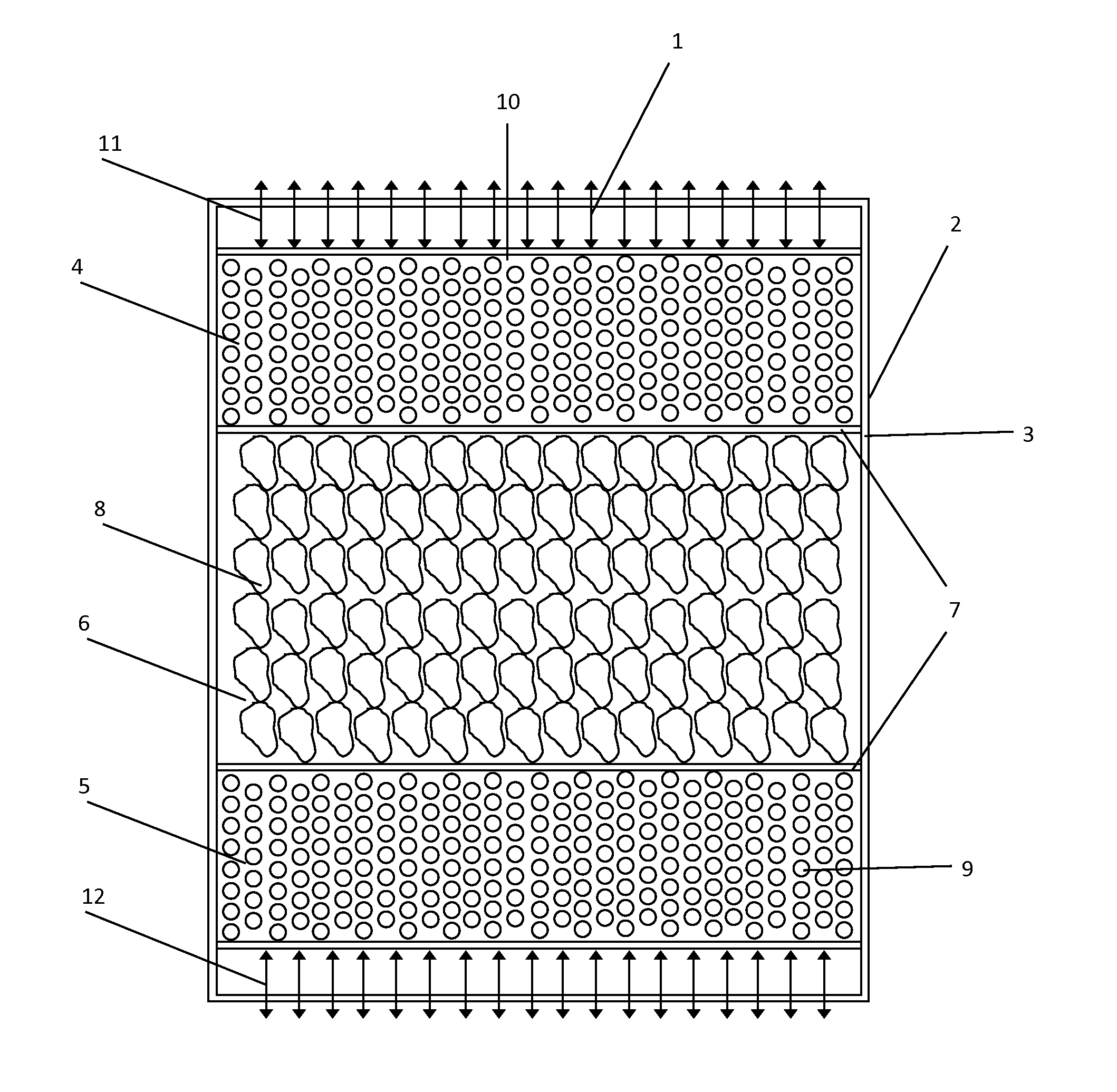
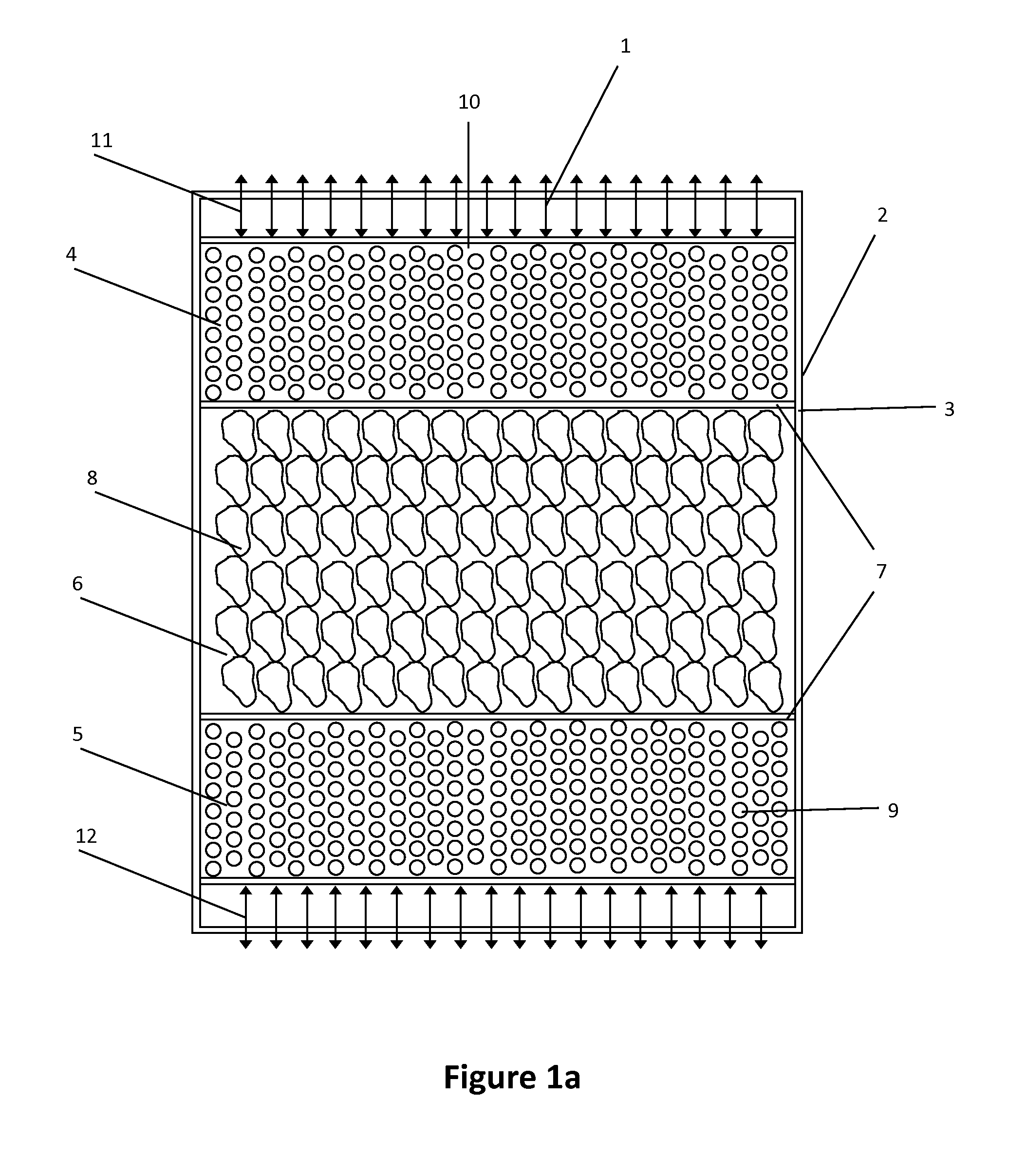
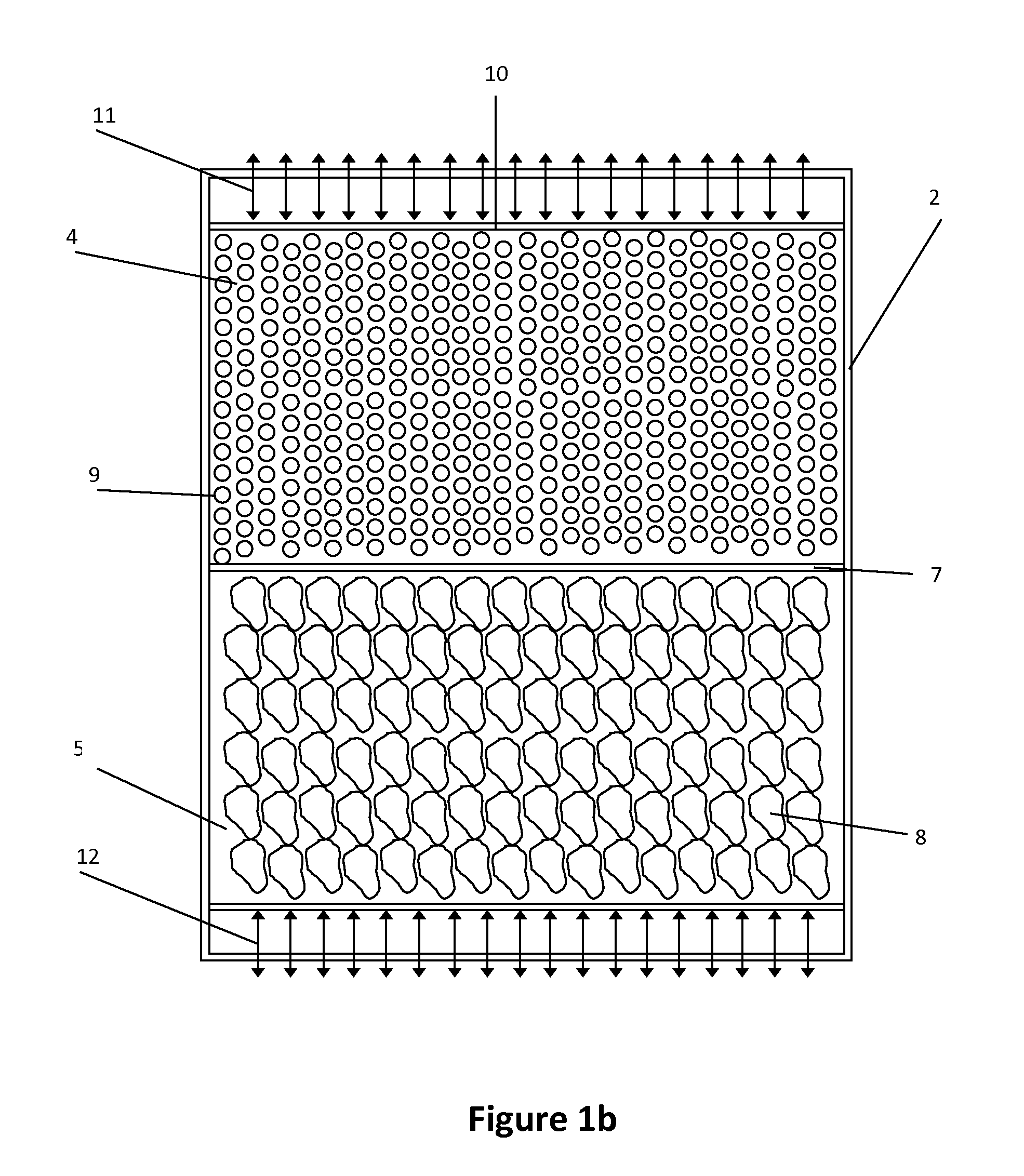
- A thermal energy storage system utilizing a single tank with distinct zones for encapsulated phase change materials (PCMs) and sensible heat solid materials, where PCMs with different melting points are strategically positioned to minimize mixing and maximize energy storage capacity, while a heat carrier fluid transfers energy between the external source and the storage system.

Thermal management systems
PatentActiveUS20170054265A1
Innovation
- A thermal management system utilizing a two-phase loop with a phase change material (PCM) integrated into the condenser, where the PCM melts and solidifies with the coolant to store and release heat, reducing the heat rejection rate and allowing for a smaller, lighter heat sink, and using a refrigerant like R-134a for efficient heat transfer.


Energy Efficiency Standards and Environmental Regulations
The thermal storage industry faces increasingly stringent energy efficiency standards that directly impact the selection between intercooling systems and phase change materials. The European Union's Energy Efficiency Directive mandates minimum efficiency thresholds for thermal management systems, with PCM-based solutions often achieving 15-20% higher efficiency ratings compared to traditional intercooling methods. These regulations particularly favor technologies that demonstrate measurable reductions in energy consumption and peak demand management capabilities.
Environmental regulations are driving significant shifts toward sustainable thermal storage solutions. The Montreal Protocol's phase-down of hydrofluorocarbons has accelerated adoption of PCM systems, which typically utilize environmentally benign materials with zero ozone depletion potential. Meanwhile, intercooling systems face mounting pressure to transition away from synthetic refrigerants, creating compliance challenges that favor PCM alternatives in regulated markets.
Carbon emission standards established under various national climate frameworks are reshaping technology selection criteria. PCM systems demonstrate superior lifecycle carbon footprints, with studies indicating 30-40% lower CO2 equivalent emissions compared to conventional intercooling approaches. This advantage stems from reduced energy consumption during operation and the elimination of refrigerant leakage concerns that plague traditional cooling systems.
Regulatory incentives are increasingly aligned with PCM technology adoption. Tax credits and rebate programs in jurisdictions including California, Germany, and Japan specifically target thermal storage systems that exceed baseline efficiency metrics. These financial mechanisms often favor PCM solutions due to their passive operation characteristics and reduced auxiliary power requirements, creating economic advantages beyond pure performance considerations.
Compliance reporting requirements are becoming more sophisticated, demanding detailed energy performance documentation and real-time monitoring capabilities. PCM systems inherently provide more stable thermal profiles, simplifying regulatory compliance and reducing administrative burdens associated with variable performance documentation required for intercooling systems. This regulatory clarity is driving institutional adoption across commercial and industrial sectors.
Future regulatory trends indicate continued tightening of efficiency standards, with proposed legislation targeting 25% efficiency improvements by 2030. These evolving requirements strongly favor PCM technologies, which offer scalable efficiency gains through material optimization rather than the mechanical complexity increases required for intercooling system improvements.
Environmental regulations are driving significant shifts toward sustainable thermal storage solutions. The Montreal Protocol's phase-down of hydrofluorocarbons has accelerated adoption of PCM systems, which typically utilize environmentally benign materials with zero ozone depletion potential. Meanwhile, intercooling systems face mounting pressure to transition away from synthetic refrigerants, creating compliance challenges that favor PCM alternatives in regulated markets.
Carbon emission standards established under various national climate frameworks are reshaping technology selection criteria. PCM systems demonstrate superior lifecycle carbon footprints, with studies indicating 30-40% lower CO2 equivalent emissions compared to conventional intercooling approaches. This advantage stems from reduced energy consumption during operation and the elimination of refrigerant leakage concerns that plague traditional cooling systems.
Regulatory incentives are increasingly aligned with PCM technology adoption. Tax credits and rebate programs in jurisdictions including California, Germany, and Japan specifically target thermal storage systems that exceed baseline efficiency metrics. These financial mechanisms often favor PCM solutions due to their passive operation characteristics and reduced auxiliary power requirements, creating economic advantages beyond pure performance considerations.
Compliance reporting requirements are becoming more sophisticated, demanding detailed energy performance documentation and real-time monitoring capabilities. PCM systems inherently provide more stable thermal profiles, simplifying regulatory compliance and reducing administrative burdens associated with variable performance documentation required for intercooling systems. This regulatory clarity is driving institutional adoption across commercial and industrial sectors.
Future regulatory trends indicate continued tightening of efficiency standards, with proposed legislation targeting 25% efficiency improvements by 2030. These evolving requirements strongly favor PCM technologies, which offer scalable efficiency gains through material optimization rather than the mechanical complexity increases required for intercooling system improvements.
Cost-Benefit Analysis of Intercooling vs PCM Implementation
The economic evaluation of intercooling versus phase change materials (PCM) implementation reveals significant differences in capital expenditure, operational costs, and long-term financial returns. Initial investment requirements for intercooling systems typically range from $50-150 per kW of cooling capacity, encompassing heat exchangers, pumping systems, and associated piping infrastructure. In contrast, PCM-based thermal storage systems demand higher upfront investments of $200-400 per kWh of storage capacity, primarily due to specialized encapsulation materials and containment systems.
Operational expenditure analysis demonstrates contrasting cost structures between the two approaches. Intercooling systems incur continuous energy consumption for pumps and fans, resulting in annual operating costs of approximately $15-25 per kW. PCM systems exhibit minimal operational energy requirements, with maintenance costs primarily focused on periodic inspection and potential material replacement, averaging $5-10 per kWh annually.
The payback period calculation reveals technology-dependent variations based on application scenarios. Intercooling implementations typically achieve payback within 2-4 years in high-utilization environments, benefiting from immediate efficiency improvements and reduced peak demand charges. PCM systems demonstrate longer payback periods of 4-7 years, though they provide superior value in applications requiring load shifting and peak shaving capabilities.
Life cycle cost analysis over a 15-year operational period indicates that PCM systems often achieve lower total cost of ownership despite higher initial investments. The durability advantage of PCM materials, with typical lifespans exceeding 10,000 thermal cycles, contributes to reduced replacement costs compared to mechanical intercooling components requiring more frequent maintenance.
Return on investment calculations must incorporate application-specific benefits including energy arbitrage opportunities, demand charge reductions, and system efficiency improvements. PCM implementations in commercial buildings demonstrate ROI improvements of 12-18% when coupled with time-of-use electricity pricing, while intercooling applications in industrial processes show consistent 8-15% returns through enhanced equipment performance and reduced cooling loads.
Operational expenditure analysis demonstrates contrasting cost structures between the two approaches. Intercooling systems incur continuous energy consumption for pumps and fans, resulting in annual operating costs of approximately $15-25 per kW. PCM systems exhibit minimal operational energy requirements, with maintenance costs primarily focused on periodic inspection and potential material replacement, averaging $5-10 per kWh annually.
The payback period calculation reveals technology-dependent variations based on application scenarios. Intercooling implementations typically achieve payback within 2-4 years in high-utilization environments, benefiting from immediate efficiency improvements and reduced peak demand charges. PCM systems demonstrate longer payback periods of 4-7 years, though they provide superior value in applications requiring load shifting and peak shaving capabilities.
Life cycle cost analysis over a 15-year operational period indicates that PCM systems often achieve lower total cost of ownership despite higher initial investments. The durability advantage of PCM materials, with typical lifespans exceeding 10,000 thermal cycles, contributes to reduced replacement costs compared to mechanical intercooling components requiring more frequent maintenance.
Return on investment calculations must incorporate application-specific benefits including energy arbitrage opportunities, demand charge reductions, and system efficiency improvements. PCM implementations in commercial buildings demonstrate ROI improvements of 12-18% when coupled with time-of-use electricity pricing, while intercooling applications in industrial processes show consistent 8-15% returns through enhanced equipment performance and reduced cooling loads.
Unlock deeper insights with PatSnap Eureka Quick Research — get a full tech report to explore trends and direct your research. Try now!
Generate Your Research Report Instantly with AI Agent
Supercharge your innovation with PatSnap Eureka AI Agent Platform!