
Ion Selective Electrode vs. X-Ray Fluorescence: Applicability
MAR 8, 20268 MIN READ
Generate Your Research Report Instantly with AI Agent
Patsnap Eureka helps you evaluate technical feasibility & market potential.
Ion Selective Electrode vs XRF Technology Background and Goals
Ion selective electrodes and X-ray fluorescence spectroscopy represent two fundamentally different analytical approaches that have evolved to address the growing demand for precise chemical analysis across diverse industries. Both technologies emerged from distinct scientific foundations during the mid-20th century, with ISE technology rooting in electrochemical principles and XRF developing from advances in X-ray physics and detector technology.
The historical development of ion selective electrodes began with the glass electrode for pH measurement in the 1920s, subsequently expanding to include membrane-based sensors for various ionic species. This technology leveraged the principle of selective ion transport across specialized membranes, creating measurable potential differences proportional to ion concentrations. Meanwhile, XRF technology evolved from early X-ray diffraction studies, maturing into a powerful elemental analysis technique capable of detecting elements from sodium to uranium in the periodic table.
Current technological evolution trends indicate a convergence toward enhanced sensitivity, miniaturization, and real-time monitoring capabilities. ISE technology is advancing through novel membrane materials, solid-state designs, and improved selectivity coefficients. Simultaneously, XRF systems are becoming more compact, with portable units offering laboratory-quality results in field applications. Both technologies are integrating digital interfaces and automated data processing capabilities.
The primary technical objectives driving development in both fields center on improving detection limits, expanding analytical ranges, and enhancing measurement reliability. For ISE systems, goals include achieving lower detection thresholds, extending operational lifespans, and reducing interference from competing ions. XRF technology aims to improve light element detection, reduce matrix effects, and enhance quantitative accuracy for complex sample matrices.
Market demands are increasingly focused on portable, user-friendly analytical solutions that provide rapid results without compromising accuracy. Environmental monitoring, food safety, pharmaceutical quality control, and industrial process monitoring represent key application drivers. The integration of both technologies into automated systems and their compatibility with Industry 4.0 frameworks reflects the broader trend toward intelligent manufacturing and continuous quality assurance.
Future development trajectories suggest continued miniaturization, improved selectivity mechanisms, and enhanced integration with digital ecosystems, positioning both technologies as complementary tools in comprehensive analytical workflows.
The historical development of ion selective electrodes began with the glass electrode for pH measurement in the 1920s, subsequently expanding to include membrane-based sensors for various ionic species. This technology leveraged the principle of selective ion transport across specialized membranes, creating measurable potential differences proportional to ion concentrations. Meanwhile, XRF technology evolved from early X-ray diffraction studies, maturing into a powerful elemental analysis technique capable of detecting elements from sodium to uranium in the periodic table.
Current technological evolution trends indicate a convergence toward enhanced sensitivity, miniaturization, and real-time monitoring capabilities. ISE technology is advancing through novel membrane materials, solid-state designs, and improved selectivity coefficients. Simultaneously, XRF systems are becoming more compact, with portable units offering laboratory-quality results in field applications. Both technologies are integrating digital interfaces and automated data processing capabilities.
The primary technical objectives driving development in both fields center on improving detection limits, expanding analytical ranges, and enhancing measurement reliability. For ISE systems, goals include achieving lower detection thresholds, extending operational lifespans, and reducing interference from competing ions. XRF technology aims to improve light element detection, reduce matrix effects, and enhance quantitative accuracy for complex sample matrices.
Market demands are increasingly focused on portable, user-friendly analytical solutions that provide rapid results without compromising accuracy. Environmental monitoring, food safety, pharmaceutical quality control, and industrial process monitoring represent key application drivers. The integration of both technologies into automated systems and their compatibility with Industry 4.0 frameworks reflects the broader trend toward intelligent manufacturing and continuous quality assurance.
Future development trajectories suggest continued miniaturization, improved selectivity mechanisms, and enhanced integration with digital ecosystems, positioning both technologies as complementary tools in comprehensive analytical workflows.
Market Demand Analysis for ISE and XRF Applications
The analytical instrumentation market demonstrates robust demand for both ion selective electrodes (ISE) and X-ray fluorescence (XRF) technologies, driven by diverse industrial applications and regulatory requirements. Environmental monitoring represents a significant growth driver, where ISE technology dominates water quality assessment applications including municipal water treatment, industrial wastewater monitoring, and groundwater contamination detection. The increasing global focus on water safety regulations and environmental compliance has substantially expanded the addressable market for ISE-based solutions.
XRF technology captures substantial market share in materials analysis sectors, particularly in metals and mining, cement production, and petroleum refining industries. The non-destructive nature of XRF analysis makes it indispensable for quality control applications where sample preservation is critical. Manufacturing industries increasingly adopt XRF systems for incoming material verification and final product certification, supporting lean manufacturing initiatives and reducing material waste.
Healthcare and pharmaceutical sectors present differentiated demand patterns for both technologies. ISE applications concentrate on clinical diagnostics, particularly electrolyte analysis in blood chemistry panels and point-of-care testing devices. The growing emphasis on personalized medicine and decentralized healthcare delivery models drives demand for portable ISE systems. Conversely, XRF technology finds application in pharmaceutical manufacturing for elemental impurity testing and raw material identification, supporting regulatory compliance with pharmacopeial standards.
Food and beverage industries demonstrate increasing adoption of both analytical approaches. ISE technology addresses salt content monitoring, pH measurement, and specific ion detection in food processing applications. XRF systems support food safety initiatives through heavy metal detection and nutritional labeling verification. The expanding organic food market and stricter food safety regulations contribute to sustained demand growth in this sector.
Emerging markets in Asia-Pacific and Latin America exhibit accelerated adoption rates, driven by industrial development and infrastructure investments. Government initiatives promoting environmental protection and food safety standards create favorable market conditions for both ISE and XRF technologies. The trend toward automation and Industry 4.0 implementation further amplifies demand for integrated analytical solutions that can provide real-time process monitoring and quality assurance capabilities.
XRF technology captures substantial market share in materials analysis sectors, particularly in metals and mining, cement production, and petroleum refining industries. The non-destructive nature of XRF analysis makes it indispensable for quality control applications where sample preservation is critical. Manufacturing industries increasingly adopt XRF systems for incoming material verification and final product certification, supporting lean manufacturing initiatives and reducing material waste.
Healthcare and pharmaceutical sectors present differentiated demand patterns for both technologies. ISE applications concentrate on clinical diagnostics, particularly electrolyte analysis in blood chemistry panels and point-of-care testing devices. The growing emphasis on personalized medicine and decentralized healthcare delivery models drives demand for portable ISE systems. Conversely, XRF technology finds application in pharmaceutical manufacturing for elemental impurity testing and raw material identification, supporting regulatory compliance with pharmacopeial standards.
Food and beverage industries demonstrate increasing adoption of both analytical approaches. ISE technology addresses salt content monitoring, pH measurement, and specific ion detection in food processing applications. XRF systems support food safety initiatives through heavy metal detection and nutritional labeling verification. The expanding organic food market and stricter food safety regulations contribute to sustained demand growth in this sector.
Emerging markets in Asia-Pacific and Latin America exhibit accelerated adoption rates, driven by industrial development and infrastructure investments. Government initiatives promoting environmental protection and food safety standards create favorable market conditions for both ISE and XRF technologies. The trend toward automation and Industry 4.0 implementation further amplifies demand for integrated analytical solutions that can provide real-time process monitoring and quality assurance capabilities.
Current Status and Challenges of ISE vs XRF Technologies
Ion Selective Electrode (ISE) technology has reached a mature stage of development, with widespread commercial availability across various analytical applications. Modern ISE systems demonstrate excellent selectivity for specific ions, with detection limits reaching parts-per-million levels for many target analytes. The technology benefits from relatively simple instrumentation, rapid response times, and cost-effective implementation in both laboratory and field environments.
However, ISE technology faces significant challenges in terms of interference from competing ions, particularly in complex sample matrices. Electrode drift over time remains a persistent issue, requiring frequent calibration and maintenance protocols. The limited lifespan of ion-selective membranes and reference electrodes contributes to ongoing operational costs and measurement uncertainty.
X-Ray Fluorescence (XRF) technology has evolved substantially, with portable XRF analyzers now offering laboratory-quality results for elemental analysis. Modern XRF systems provide multi-element detection capabilities with minimal sample preparation requirements. The technology excels in analyzing solid samples and has expanded into liquid analysis applications through specialized sample preparation techniques.
XRF technology confronts challenges related to matrix effects, where sample composition significantly influences measurement accuracy. Light element detection remains problematic, particularly for elements below sodium in the periodic table. The high initial capital investment for quality XRF instrumentation presents barriers for smaller laboratories and field applications.
Both technologies struggle with standardization across different manufacturers and measurement protocols. ISE systems show superior performance for specific ion detection in aqueous solutions but lack the broad elemental coverage of XRF. Conversely, XRF provides comprehensive elemental analysis but requires more sophisticated data interpretation and correction algorithms.
The geographical distribution of these technologies reflects their respective strengths, with ISE dominating water quality monitoring and environmental applications, while XRF maintains strong presence in materials analysis, mining, and industrial quality control sectors. Integration challenges persist when attempting to combine both technologies for comprehensive analytical solutions.
However, ISE technology faces significant challenges in terms of interference from competing ions, particularly in complex sample matrices. Electrode drift over time remains a persistent issue, requiring frequent calibration and maintenance protocols. The limited lifespan of ion-selective membranes and reference electrodes contributes to ongoing operational costs and measurement uncertainty.
X-Ray Fluorescence (XRF) technology has evolved substantially, with portable XRF analyzers now offering laboratory-quality results for elemental analysis. Modern XRF systems provide multi-element detection capabilities with minimal sample preparation requirements. The technology excels in analyzing solid samples and has expanded into liquid analysis applications through specialized sample preparation techniques.
XRF technology confronts challenges related to matrix effects, where sample composition significantly influences measurement accuracy. Light element detection remains problematic, particularly for elements below sodium in the periodic table. The high initial capital investment for quality XRF instrumentation presents barriers for smaller laboratories and field applications.
Both technologies struggle with standardization across different manufacturers and measurement protocols. ISE systems show superior performance for specific ion detection in aqueous solutions but lack the broad elemental coverage of XRF. Conversely, XRF provides comprehensive elemental analysis but requires more sophisticated data interpretation and correction algorithms.
The geographical distribution of these technologies reflects their respective strengths, with ISE dominating water quality monitoring and environmental applications, while XRF maintains strong presence in materials analysis, mining, and industrial quality control sectors. Integration challenges persist when attempting to combine both technologies for comprehensive analytical solutions.
Current Technical Solutions for ISE and XRF Systems
01 Ion selective electrode design and construction
Ion selective electrodes are designed with specific membrane materials and electrode configurations to detect and measure particular ions in solution. The construction involves selecting appropriate ionophores, membrane matrices, and internal reference solutions to achieve high selectivity and sensitivity for target ions. Various electrode geometries and manufacturing techniques are employed to optimize performance characteristics such as response time, detection limits, and operational stability.- Ion selective electrode design and construction: Ion selective electrodes are designed with specific membrane compositions and electrode structures to selectively detect target ions in various samples. The construction involves selecting appropriate ionophores, membrane materials, and internal reference solutions to achieve high selectivity and sensitivity. These electrodes can be configured in different geometries including planar, cylindrical, or micro-electrode formats to suit different analytical applications.
- X-ray fluorescence spectroscopy for elemental analysis: X-ray fluorescence spectroscopy is utilized for non-destructive elemental analysis by measuring characteristic X-rays emitted from samples upon excitation. The technique enables quantitative and qualitative determination of elements in various matrices including solids, liquids, and powders. Advanced detection systems and calibration methods enhance the accuracy and detection limits for trace element analysis.
- Combined analytical methods for comprehensive sample characterization: Integration of multiple analytical techniques including ion selective electrodes and X-ray fluorescence provides complementary information for comprehensive sample analysis. This combined approach allows simultaneous determination of ionic species and elemental composition, improving analytical accuracy and reducing analysis time. The methods can be applied to environmental monitoring, industrial process control, and quality assurance applications.
- Automated measurement systems and data processing: Automated analytical systems incorporate ion selective electrodes and X-ray fluorescence detectors with computerized data acquisition and processing capabilities. These systems feature automated sample handling, calibration routines, and real-time data analysis algorithms. The integration of advanced software enables multi-parameter measurements, statistical analysis, and quality control functions for high-throughput applications.
- Applications in industrial and environmental monitoring: Ion selective electrodes and X-ray fluorescence techniques are widely applied in industrial process monitoring and environmental analysis. These methods enable rapid on-site measurements of metal ions, pollutants, and elemental composition in water, soil, and industrial materials. The techniques provide reliable monitoring solutions for regulatory compliance, process optimization, and environmental protection with minimal sample preparation requirements.
02 X-ray fluorescence spectroscopy for elemental analysis
X-ray fluorescence technology is utilized for non-destructive elemental analysis and composition determination of materials. The technique involves exciting samples with X-rays to produce characteristic fluorescent emissions that identify and quantify elements present. Applications include quality control, material characterization, and trace element detection across various sample types and matrices.Expand Specific Solutions03 Combined analytical methods for comprehensive material characterization
Integration of multiple analytical techniques provides complementary information for complete material analysis. Combining electrochemical methods with spectroscopic approaches enables simultaneous determination of ionic species and elemental composition. This multi-technique approach enhances analytical capabilities, improves accuracy, and provides cross-validation of results for complex sample matrices.Expand Specific Solutions04 Calibration and measurement optimization techniques
Advanced calibration procedures and measurement protocols are essential for accurate quantitative analysis using both ion selective electrodes and X-ray fluorescence systems. Methods include standard addition techniques, matrix matching, interference correction algorithms, and automated calibration routines. These approaches compensate for matrix effects, minimize systematic errors, and ensure reliable analytical results across diverse sample conditions.Expand Specific Solutions05 Industrial and environmental monitoring applications
Both ion selective electrodes and X-ray fluorescence techniques are widely applied in industrial process control and environmental monitoring. Applications include water quality assessment, soil analysis, metal contamination detection, and real-time process monitoring in manufacturing. These methods provide rapid, reliable measurements for regulatory compliance, quality assurance, and environmental protection purposes.Expand Specific Solutions
Major Players in ISE and XRF Instrument Markets
The ion selective electrode versus X-ray fluorescence applicability landscape represents a mature analytical instrumentation market experiencing steady growth driven by diverse application demands across healthcare, environmental monitoring, and materials analysis. The industry demonstrates advanced technological maturity, with established players like Rigaku Corp., Horiba Ltd., and Shimadzu Corp. leading X-ray fluorescence innovations, while companies such as Siemens Healthineers AG and Koninklijke Philips NV drive electrode-based diagnostic solutions. Market segmentation reflects specialized applications, from Toshiba Corp. and Samsung Electronics' semiconductor analysis systems to medical diagnostics by The General Hospital Corp. and BC Cancer Agency. The competitive environment shows consolidation around comprehensive analytical platforms, with research institutions like Zhejiang University and Centre National de la Recherche Scientifique advancing fundamental technologies that bridge both methodologies for enhanced analytical precision.
Panalytical, Inc.
Technical Solution: Panalytical specializes in advanced X-ray fluorescence (XRF) analytical solutions, offering both wavelength-dispersive (WDXRF) and energy-dispersive (EDXRF) systems. Their XRF technology provides multi-element analysis capabilities with detection limits in the ppm range for most elements from sodium to uranium. The company's systems feature automated sample handling, standardless analysis options, and comprehensive software packages for quantitative analysis. Their XRF instruments are widely used in metals, mining, cement, glass, and petrochemical industries for quality control and process optimization. Panalytical's technology excels in simultaneous multi-element detection, making it highly efficient for routine analytical applications where speed and precision are critical.
Strengths: Excellent multi-element analysis capability, high precision and accuracy, minimal sample preparation required. Weaknesses: Higher initial investment cost, limited sensitivity for light elements, requires skilled operators for complex applications.
Rigaku Corp.
Technical Solution: Rigaku Corporation develops comprehensive X-ray fluorescence spectrometers including benchtop EDXRF and high-performance WDXRF systems. Their XRF technology incorporates advanced detector systems and proprietary software for elemental analysis across various sample types. Rigaku's instruments feature automated measurement sequences, built-in standardization procedures, and specialized applications for specific industries including pharmaceuticals, food, and environmental analysis. The company's XRF solutions provide quantitative analysis from parts-per-million to percentage levels, with particular strength in analyzing solid, liquid, and powder samples. Their systems integrate seamlessly with laboratory information management systems for enhanced workflow efficiency.
Strengths: Versatile sample handling capabilities, robust instrument design, comprehensive software packages. Weaknesses: Complex calibration procedures for some applications, maintenance requirements for high-end systems.
Core Patents in Ion Selective and XRF Detection
Ion-selective electrodes
PatentInactiveUS20050191428A1
Innovation
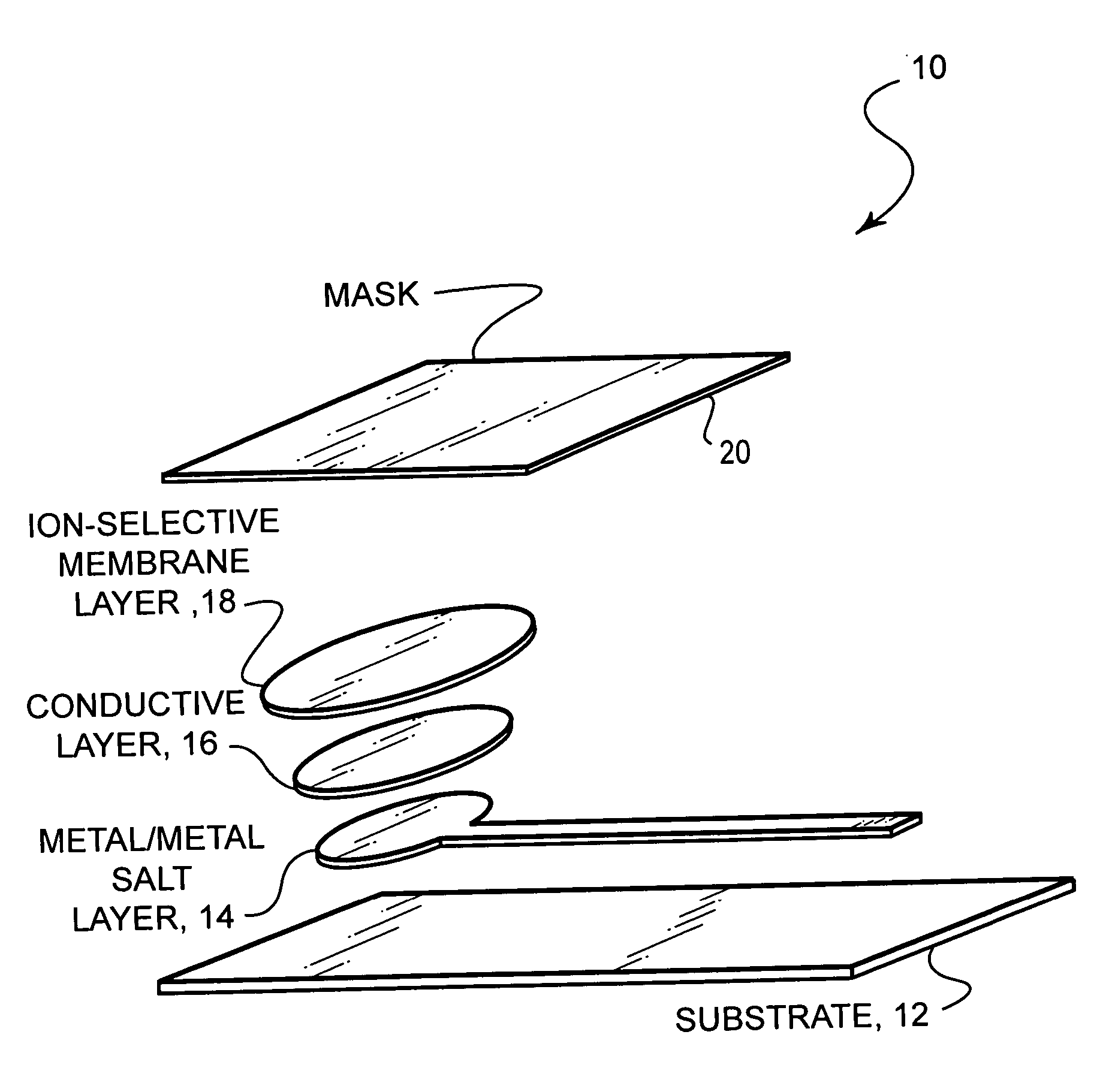
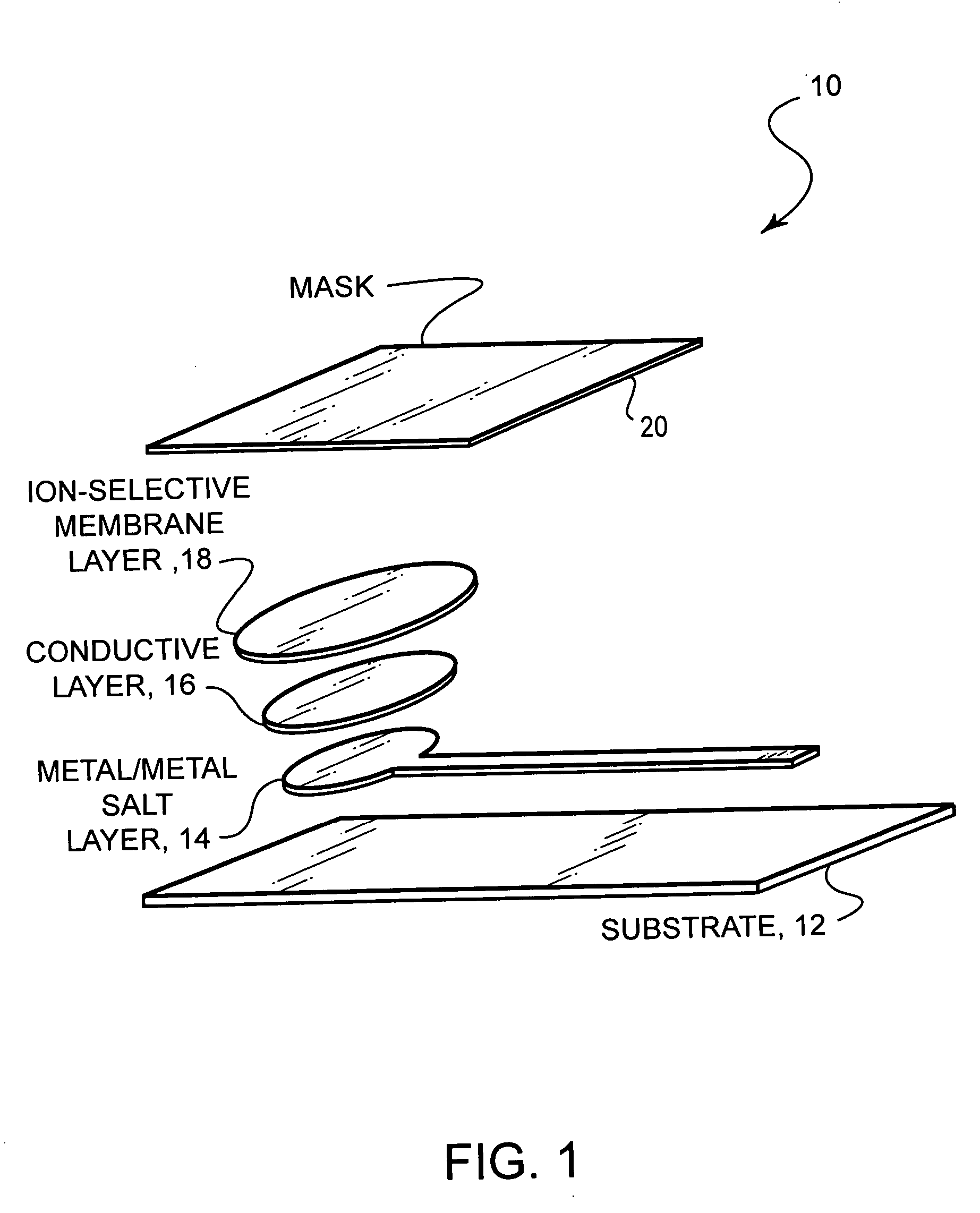
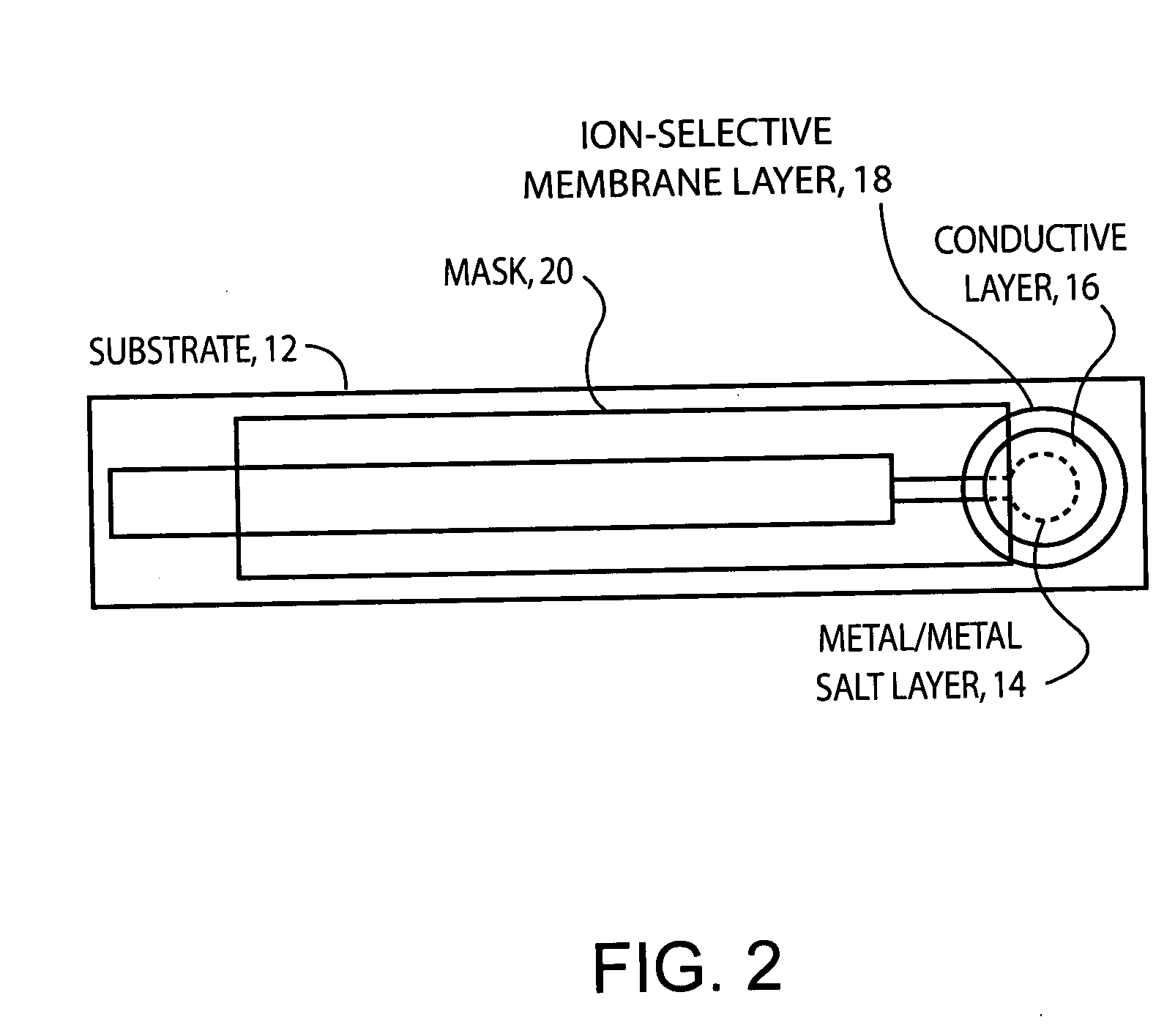
- A stable, compact ion-selective electrode design featuring a water-impermeable substrate, an electrically conductive metal/metal salt layer, a hydrophobic conductive layer with ions for stable potential, an ion-selective layer, and a water-impermeable barrier layer to prevent exposure to aqueous solutions, eliminating the need for calibration and reducing equilibration time.

Electrode used as a sample carrier for txrf-measurements
PatentWO2003016888A2
Innovation
- An electrode is used as a sample carrier for X-ray fluorescence spectroscopy, enabling simultaneous electrochemical sample preparation and trace element enrichment in one step through electrodeposition, eliminating the need for mercury and reducing contamination risks.


Environmental Regulations Impact on Analytical Methods
Environmental regulations have fundamentally transformed the landscape of analytical chemistry, establishing stringent requirements that directly influence the selection between ion selective electrodes (ISE) and X-ray fluorescence (XRF) methodologies. Regulatory frameworks such as the Clean Water Act, Safe Drinking Water Act, and various EPA protocols mandate specific detection limits, accuracy standards, and measurement protocols that analytical methods must satisfy.
The regulatory emphasis on real-time monitoring capabilities has particularly favored ISE applications in environmental compliance scenarios. Water quality regulations requiring continuous monitoring of specific ions like fluoride, chloride, and heavy metals align well with ISE's capacity for in-situ measurements and automated data logging. These regulations often specify maximum contaminant levels that demand rapid response times, making ISE's immediate readout capability advantageous over XRF's sample preparation requirements.
Conversely, multi-element screening requirements mandated by soil contamination regulations have strengthened XRF's position in environmental analysis. Comprehensive site assessments required under CERCLA and similar legislation benefit from XRF's ability to simultaneously detect multiple heavy metals and metalloids without extensive sample preprocessing. The regulatory acceptance of field-portable XRF for preliminary site characterization has expanded its applicability in environmental consulting.
Quality assurance and quality control (QA/QC) protocols embedded within environmental regulations significantly impact method selection. EPA Method validation requirements, including precision, accuracy, and detection limit specifications, often determine which technique can achieve regulatory compliance for specific analytes. Matrix interference considerations, particularly relevant in complex environmental samples, influence whether ISE selectivity or XRF's matrix-independent analysis better meets regulatory standards.
Documentation and traceability requirements imposed by environmental regulations also affect analytical method choice. The need for defensible data in legal proceedings related to environmental contamination has led to increased scrutiny of analytical protocols, favoring methods with established regulatory acceptance and standardized procedures. This regulatory framework continues to evolve, particularly with emerging contaminants and updated detection requirements, directly shaping the comparative applicability of these analytical approaches.
The regulatory emphasis on real-time monitoring capabilities has particularly favored ISE applications in environmental compliance scenarios. Water quality regulations requiring continuous monitoring of specific ions like fluoride, chloride, and heavy metals align well with ISE's capacity for in-situ measurements and automated data logging. These regulations often specify maximum contaminant levels that demand rapid response times, making ISE's immediate readout capability advantageous over XRF's sample preparation requirements.
Conversely, multi-element screening requirements mandated by soil contamination regulations have strengthened XRF's position in environmental analysis. Comprehensive site assessments required under CERCLA and similar legislation benefit from XRF's ability to simultaneously detect multiple heavy metals and metalloids without extensive sample preprocessing. The regulatory acceptance of field-portable XRF for preliminary site characterization has expanded its applicability in environmental consulting.
Quality assurance and quality control (QA/QC) protocols embedded within environmental regulations significantly impact method selection. EPA Method validation requirements, including precision, accuracy, and detection limit specifications, often determine which technique can achieve regulatory compliance for specific analytes. Matrix interference considerations, particularly relevant in complex environmental samples, influence whether ISE selectivity or XRF's matrix-independent analysis better meets regulatory standards.
Documentation and traceability requirements imposed by environmental regulations also affect analytical method choice. The need for defensible data in legal proceedings related to environmental contamination has led to increased scrutiny of analytical protocols, favoring methods with established regulatory acceptance and standardized procedures. This regulatory framework continues to evolve, particularly with emerging contaminants and updated detection requirements, directly shaping the comparative applicability of these analytical approaches.
Cost-Benefit Analysis of ISE vs XRF Implementation
The economic evaluation of Ion Selective Electrode (ISE) versus X-Ray Fluorescence (XRF) implementation reveals significant differences in capital investment requirements. ISE systems typically demand lower initial capital expenditure, with basic portable units ranging from $5,000 to $15,000, while laboratory-grade systems may reach $30,000. In contrast, XRF analyzers require substantially higher upfront investment, with handheld units starting at $25,000 and benchtop systems extending to $150,000 or more for advanced configurations.
Operational cost structures differ markedly between these technologies. ISE systems incur ongoing expenses primarily through electrode replacement, calibration solutions, and maintenance contracts, typically amounting to $2,000-5,000 annually per unit. The consumable nature of electrodes necessitates regular replacement cycles, contributing to predictable operational expenses. XRF systems demonstrate lower recurring costs, mainly involving periodic calibration, software updates, and minimal consumables, resulting in annual operational costs of $1,000-3,000 per unit.
Labor requirements present another critical cost differential. ISE operations demand skilled technicians for sample preparation, electrode maintenance, and calibration procedures, requiring approximately 15-20 minutes per sample analysis. XRF technology offers simplified operation with minimal sample preparation, enabling analysis completion within 2-5 minutes per sample and requiring less specialized training.
The return on investment timeline varies significantly based on application volume and analytical requirements. High-throughput laboratories analyzing over 1,000 samples monthly typically achieve XRF payback within 18-24 months despite higher initial costs, primarily due to reduced labor expenses and increased throughput capacity. ISE systems prove more cost-effective for lower-volume applications or specialized ion analysis requirements, achieving payback within 12-18 months.
Long-term economic benefits favor XRF implementation for multi-element analysis scenarios, where the technology's capability to simultaneously determine multiple parameters provides substantial cost advantages over multiple ISE systems. However, ISE technology maintains economic superiority for specific ion monitoring applications, particularly in continuous process monitoring where real-time measurements justify the ongoing operational expenses.
Operational cost structures differ markedly between these technologies. ISE systems incur ongoing expenses primarily through electrode replacement, calibration solutions, and maintenance contracts, typically amounting to $2,000-5,000 annually per unit. The consumable nature of electrodes necessitates regular replacement cycles, contributing to predictable operational expenses. XRF systems demonstrate lower recurring costs, mainly involving periodic calibration, software updates, and minimal consumables, resulting in annual operational costs of $1,000-3,000 per unit.
Labor requirements present another critical cost differential. ISE operations demand skilled technicians for sample preparation, electrode maintenance, and calibration procedures, requiring approximately 15-20 minutes per sample analysis. XRF technology offers simplified operation with minimal sample preparation, enabling analysis completion within 2-5 minutes per sample and requiring less specialized training.
The return on investment timeline varies significantly based on application volume and analytical requirements. High-throughput laboratories analyzing over 1,000 samples monthly typically achieve XRF payback within 18-24 months despite higher initial costs, primarily due to reduced labor expenses and increased throughput capacity. ISE systems prove more cost-effective for lower-volume applications or specialized ion analysis requirements, achieving payback within 12-18 months.
Long-term economic benefits favor XRF implementation for multi-element analysis scenarios, where the technology's capability to simultaneously determine multiple parameters provides substantial cost advantages over multiple ISE systems. However, ISE technology maintains economic superiority for specific ion monitoring applications, particularly in continuous process monitoring where real-time measurements justify the ongoing operational expenses.
Unlock deeper insights with Patsnap Eureka Quick Research — get a full tech report to explore trends and direct your research. Try now!
Generate Your Research Report Instantly with AI Agent
Supercharge your innovation with Patsnap Eureka AI Agent Platform!