
Lightweight composite design for electric vehicles
OCT 15, 20259 MIN READ
Generate Your Research Report Instantly with AI Agent
Patsnap Eureka helps you evaluate technical feasibility & market potential.
EV Composite Materials Background and Objectives
The automotive industry has witnessed a significant transformation over the past decade with the emergence of electric vehicles (EVs) as a viable alternative to conventional internal combustion engine vehicles. This shift has been driven by increasing environmental concerns, stringent emission regulations, and advancements in battery technology. However, one of the persistent challenges in EV development has been the trade-off between vehicle range and battery weight.
Lightweight composite materials have emerged as a critical enabling technology for addressing this fundamental challenge. The evolution of composite materials in automotive applications dates back to the 1950s, with significant acceleration in the 1970s during the oil crisis. Initially limited to high-performance and luxury vehicles due to cost constraints, composites have gradually found their way into mainstream automotive manufacturing as production technologies have matured and economies of scale have improved.
The primary objective of lightweight composite design for EVs is to reduce overall vehicle weight while maintaining or enhancing structural integrity, crash performance, and durability. For every 10% reduction in vehicle weight, EV range can potentially increase by 6-8%, representing a significant performance improvement without increasing battery capacity. Additionally, weight reduction contributes to better handling, acceleration, and braking performance.
Current composite materials in EV applications include carbon fiber reinforced polymers (CFRP), glass fiber reinforced polymers (GFRP), natural fiber composites, and hybrid materials combining multiple reinforcement types. The technology trend is moving toward multi-material approaches that optimize the use of composites alongside traditional materials like aluminum and high-strength steel in specific vehicle components based on performance requirements and cost considerations.
Recent technological breakthroughs in manufacturing processes, such as resin transfer molding (RTM), compression molding, and automated fiber placement, have significantly reduced production cycle times and costs, making composites increasingly viable for mass-market EVs. Additionally, advancements in simulation and design tools have enabled more precise optimization of composite structures for specific load cases encountered in EVs.
Looking forward, the industry aims to achieve a 30-40% weight reduction compared to conventional vehicle designs through advanced composite integration, while simultaneously reducing the cost premium of composite components to less than 1.5 times that of metal alternatives. This will require continued innovation in materials science, manufacturing processes, and design methodologies specifically tailored to the unique requirements of electric vehicle platforms.
Lightweight composite materials have emerged as a critical enabling technology for addressing this fundamental challenge. The evolution of composite materials in automotive applications dates back to the 1950s, with significant acceleration in the 1970s during the oil crisis. Initially limited to high-performance and luxury vehicles due to cost constraints, composites have gradually found their way into mainstream automotive manufacturing as production technologies have matured and economies of scale have improved.
The primary objective of lightweight composite design for EVs is to reduce overall vehicle weight while maintaining or enhancing structural integrity, crash performance, and durability. For every 10% reduction in vehicle weight, EV range can potentially increase by 6-8%, representing a significant performance improvement without increasing battery capacity. Additionally, weight reduction contributes to better handling, acceleration, and braking performance.
Current composite materials in EV applications include carbon fiber reinforced polymers (CFRP), glass fiber reinforced polymers (GFRP), natural fiber composites, and hybrid materials combining multiple reinforcement types. The technology trend is moving toward multi-material approaches that optimize the use of composites alongside traditional materials like aluminum and high-strength steel in specific vehicle components based on performance requirements and cost considerations.
Recent technological breakthroughs in manufacturing processes, such as resin transfer molding (RTM), compression molding, and automated fiber placement, have significantly reduced production cycle times and costs, making composites increasingly viable for mass-market EVs. Additionally, advancements in simulation and design tools have enabled more precise optimization of composite structures for specific load cases encountered in EVs.
Looking forward, the industry aims to achieve a 30-40% weight reduction compared to conventional vehicle designs through advanced composite integration, while simultaneously reducing the cost premium of composite components to less than 1.5 times that of metal alternatives. This will require continued innovation in materials science, manufacturing processes, and design methodologies specifically tailored to the unique requirements of electric vehicle platforms.
Market Analysis for Lightweight EV Components
The global market for lightweight components in electric vehicles is experiencing unprecedented growth, driven by the critical need to extend vehicle range and improve overall efficiency. As of 2023, this market segment is valued at approximately 45 billion USD, with projections indicating a compound annual growth rate of 14.7% through 2030. This remarkable expansion is primarily fueled by stringent emissions regulations worldwide and increasing consumer demand for greater EV driving ranges.
Consumer preferences are shifting decisively toward vehicles that offer extended range capabilities without compromising on performance or safety. Market research indicates that range anxiety remains a primary barrier to EV adoption, with 68% of potential buyers citing it as their main concern. Lightweight components directly address this issue by reducing vehicle weight, thereby increasing efficiency and range per charge.
Regional market analysis reveals significant variations in adoption patterns. European markets, particularly Germany and Scandinavia, lead in the integration of advanced composite materials in EV production, supported by progressive regulatory frameworks and substantial government incentives. The North American market shows strong growth potential, with major manufacturers investing heavily in lightweight technology research centers. Meanwhile, the Asia-Pacific region, especially China, is rapidly scaling up production capacity for carbon fiber reinforced polymers (CFRP) and other advanced materials.
Material-specific market segments show aluminum components currently dominating with 42% market share, followed by advanced high-strength steel (AHSS) at 28%. However, composite materials are experiencing the fastest growth rate at 18.3% annually, indicating a significant shift in material preferences among manufacturers. This trend is particularly evident in premium EV segments where cost constraints are less restrictive.
Supply chain analysis reveals potential vulnerabilities in the composite materials sector, with raw material availability and processing capacity emerging as potential bottlenecks. Carbon fiber production remains concentrated among a small number of global suppliers, creating price volatility and supply risks. Additionally, recycling infrastructure for composite materials lags significantly behind traditional materials, presenting both environmental challenges and market opportunities.
Price sensitivity varies considerably across market segments. While mass-market EVs remain highly cost-conscious, premium and performance-oriented vehicles demonstrate greater willingness to absorb the higher costs associated with advanced lightweight materials. Industry forecasts suggest that economies of scale and manufacturing innovations will drive composite material costs down by approximately 30% over the next five years, potentially expanding their application across all vehicle segments.
Consumer preferences are shifting decisively toward vehicles that offer extended range capabilities without compromising on performance or safety. Market research indicates that range anxiety remains a primary barrier to EV adoption, with 68% of potential buyers citing it as their main concern. Lightweight components directly address this issue by reducing vehicle weight, thereby increasing efficiency and range per charge.
Regional market analysis reveals significant variations in adoption patterns. European markets, particularly Germany and Scandinavia, lead in the integration of advanced composite materials in EV production, supported by progressive regulatory frameworks and substantial government incentives. The North American market shows strong growth potential, with major manufacturers investing heavily in lightweight technology research centers. Meanwhile, the Asia-Pacific region, especially China, is rapidly scaling up production capacity for carbon fiber reinforced polymers (CFRP) and other advanced materials.
Material-specific market segments show aluminum components currently dominating with 42% market share, followed by advanced high-strength steel (AHSS) at 28%. However, composite materials are experiencing the fastest growth rate at 18.3% annually, indicating a significant shift in material preferences among manufacturers. This trend is particularly evident in premium EV segments where cost constraints are less restrictive.
Supply chain analysis reveals potential vulnerabilities in the composite materials sector, with raw material availability and processing capacity emerging as potential bottlenecks. Carbon fiber production remains concentrated among a small number of global suppliers, creating price volatility and supply risks. Additionally, recycling infrastructure for composite materials lags significantly behind traditional materials, presenting both environmental challenges and market opportunities.
Price sensitivity varies considerably across market segments. While mass-market EVs remain highly cost-conscious, premium and performance-oriented vehicles demonstrate greater willingness to absorb the higher costs associated with advanced lightweight materials. Industry forecasts suggest that economies of scale and manufacturing innovations will drive composite material costs down by approximately 30% over the next five years, potentially expanding their application across all vehicle segments.
Current Challenges in Composite EV Design
Despite significant advancements in composite materials for electric vehicles, several critical challenges continue to impede widespread implementation of lightweight composite designs. Material cost remains a primary obstacle, with carbon fiber reinforced polymers (CFRP) costing 5-20 times more than conventional steel, creating a substantial barrier for mass-market EV adoption. This cost differential significantly impacts the overall vehicle price point, limiting composite implementation primarily to premium EV segments.
Manufacturing scalability presents another major hurdle. Current composite production processes like resin transfer molding (RTM) and prepreg layup are considerably slower than traditional metal stamping operations. While metal stamping can produce parts in seconds, composite manufacturing cycles typically require minutes to hours, creating bottlenecks in high-volume production environments essential for mainstream EV manufacturing.
Joining and integration complexities further complicate composite implementation. Unlike metals, which can be readily welded or mechanically fastened, composites require specialized bonding techniques. The integration of composite components with metallic structures creates galvanic corrosion risks and thermal expansion mismatches, necessitating complex interface designs and specialized fastening solutions.
Repairability and end-of-life considerations pose significant challenges for composite EV structures. Unlike metal components that can be straightforwardly repaired or recycled, damaged composite parts often require complete replacement. Current recycling technologies for thermoset composites remain limited in efficiency and economic viability, creating potential environmental concerns as EV fleets grow.
Predictive modeling and simulation tools for composite structures still lack the maturity of their metallic counterparts. Engineers face difficulties in accurately predicting crash behavior, fatigue performance, and long-term durability of composite components, particularly in multi-material systems. This modeling gap increases development time and costs while potentially introducing safety certification challenges.
Standardization remains underdeveloped across the industry, with limited consensus on design methodologies, testing protocols, and quality assurance standards for automotive-grade composites. This lack of standardization complicates supplier relationships and increases validation requirements, further extending development timelines for composite EV structures.
Addressing these interconnected challenges requires coordinated efforts across material science, manufacturing technology, design methodology, and regulatory frameworks to fully realize the potential weight savings and performance benefits that composite materials offer to electric vehicle design.
Manufacturing scalability presents another major hurdle. Current composite production processes like resin transfer molding (RTM) and prepreg layup are considerably slower than traditional metal stamping operations. While metal stamping can produce parts in seconds, composite manufacturing cycles typically require minutes to hours, creating bottlenecks in high-volume production environments essential for mainstream EV manufacturing.
Joining and integration complexities further complicate composite implementation. Unlike metals, which can be readily welded or mechanically fastened, composites require specialized bonding techniques. The integration of composite components with metallic structures creates galvanic corrosion risks and thermal expansion mismatches, necessitating complex interface designs and specialized fastening solutions.
Repairability and end-of-life considerations pose significant challenges for composite EV structures. Unlike metal components that can be straightforwardly repaired or recycled, damaged composite parts often require complete replacement. Current recycling technologies for thermoset composites remain limited in efficiency and economic viability, creating potential environmental concerns as EV fleets grow.
Predictive modeling and simulation tools for composite structures still lack the maturity of their metallic counterparts. Engineers face difficulties in accurately predicting crash behavior, fatigue performance, and long-term durability of composite components, particularly in multi-material systems. This modeling gap increases development time and costs while potentially introducing safety certification challenges.
Standardization remains underdeveloped across the industry, with limited consensus on design methodologies, testing protocols, and quality assurance standards for automotive-grade composites. This lack of standardization complicates supplier relationships and increases validation requirements, further extending development timelines for composite EV structures.
Addressing these interconnected challenges requires coordinated efforts across material science, manufacturing technology, design methodology, and regulatory frameworks to fully realize the potential weight savings and performance benefits that composite materials offer to electric vehicle design.
Current Lightweight Composite Solutions
01 Lightweight composite materials for structural applications
Lightweight composite materials designed for structural applications combine high strength with reduced weight. These materials often incorporate carbon fibers, glass fibers, or other reinforcement materials embedded in polymer matrices. The resulting composites offer superior strength-to-weight ratios compared to traditional materials, making them ideal for aerospace, automotive, and construction applications where weight reduction is critical while maintaining structural integrity.- Lightweight composite materials for structural applications: Lightweight composite materials are developed for structural applications where weight reduction is critical. These materials typically combine high-strength fibers with lightweight matrices to achieve optimal strength-to-weight ratios. Advanced manufacturing techniques ensure that these composites maintain structural integrity while significantly reducing the overall weight compared to traditional materials. Applications include aerospace components, automotive parts, and construction materials where weight savings translate to improved efficiency.
- Polymer-based composites with reduced weight: Polymer-based composite materials are formulated to achieve weight reduction while maintaining mechanical properties. These composites often incorporate specialized additives, fillers, or reinforcement materials that enhance strength without adding significant weight. The polymer matrices are selected for their low density characteristics, and processing techniques are optimized to control the distribution of components within the composite structure, resulting in materials with excellent weight-to-performance ratios.
- Carbon fiber reinforced composites for weight reduction: Carbon fiber reinforced composites offer exceptional weight reduction capabilities while maintaining high strength and stiffness. These materials utilize carbon fibers embedded in various matrix materials to create lightweight structures for demanding applications. Manufacturing processes are designed to optimize fiber orientation and volume fraction, resulting in composites that can be tailored for specific loading conditions while minimizing weight. These materials are particularly valuable in transportation and sporting goods where weight savings directly impact performance.
- Weight reduction techniques in composite material manufacturing: Various manufacturing techniques are employed to reduce the weight of composite materials without compromising their performance. These include the use of honeycomb structures, foam cores, hollow microspheres, and controlled porosity. Advanced processing methods such as resin transfer molding, vacuum-assisted processes, and additive manufacturing enable precise control over material distribution and density. These techniques allow for the strategic placement of material only where needed for structural integrity, resulting in optimized weight distribution.
- Nanocomposites for enhanced properties with reduced weight: Nanocomposites incorporate nanoscale materials to achieve weight reduction while enhancing mechanical, thermal, or electrical properties. These advanced materials utilize nanoparticles, nanotubes, or nanoplatelets dispersed within a matrix to create multifunctional composites with improved performance-to-weight ratios. The nanoscale reinforcements provide significant property enhancements at very low loading levels, allowing for substantial weight reduction compared to conventional composites while maintaining or improving key performance characteristics.
02 Weight reduction techniques in composite manufacturing
Various manufacturing techniques have been developed to reduce the weight of composite materials while maintaining their mechanical properties. These include the use of honeycomb structures, foam cores, and hollow microspheres within the composite matrix. Advanced layering techniques and optimized fiber orientation also contribute to weight reduction while preserving strength. These techniques are particularly important in transportation applications where fuel efficiency is directly related to vehicle weight.Expand Specific Solutions03 Nano-enhanced composite materials for weight optimization
Incorporating nanomaterials such as carbon nanotubes, graphene, and nanoparticles into composite structures significantly improves strength-to-weight ratios. These nano-enhanced composites exhibit superior mechanical properties at lower weights compared to conventional composites. The nanomaterials create stronger interfaces between matrix and reinforcement components, resulting in better load transfer and reduced material requirements while maintaining performance specifications.Expand Specific Solutions04 Bio-based lightweight composite materials
Bio-based composite materials offer environmentally friendly alternatives to traditional petroleum-based composites while providing weight advantages. These materials incorporate natural fibers such as flax, hemp, or bamboo, and bio-derived resins. The natural fibers have lower density compared to synthetic reinforcements, resulting in lighter composites. Additionally, these materials offer benefits such as biodegradability, renewable sourcing, and reduced carbon footprint while maintaining competitive mechanical properties.Expand Specific Solutions05 Weight distribution and balance in composite structures
Optimizing weight distribution in composite structures is crucial for performance in dynamic applications. This involves strategic placement of materials with varying densities throughout the structure, creating balanced components that maintain stability while minimizing overall weight. Advanced modeling techniques allow engineers to predict and optimize weight distribution before manufacturing, ensuring that composite structures meet both weight targets and performance requirements for specific applications.Expand Specific Solutions
Leading Manufacturers and Research Institutions
The lightweight composite design for electric vehicles market is in a growth phase, driven by increasing demand for energy-efficient transportation solutions. The market is expanding rapidly with a projected CAGR of 12-15% over the next five years, reaching approximately $5-7 billion by 2028. Technologically, the field is advancing from early commercial applications toward mainstream adoption, with varying maturity levels across different composite solutions. Leading automotive manufacturers like BYD, Hyundai, Kia, and Audi are investing heavily in lightweight materials, while specialized suppliers such as Teijin Automotive Technologies, thyssenkrupp Steel Europe, and HBIS are developing advanced composite solutions. Material specialists including Johns Manville and LX Hausys are contributing innovative formulations, while research partnerships with institutions like Chang'an University and Jiangsu University are accelerating technological breakthroughs in this competitive landscape.
thyssenkrupp Steel Europe AG
Technical Solution: Thyssenkrupp has developed an advanced lightweight steel solution specifically for electric vehicles called "InCar®plus EV." This comprehensive approach utilizes ultra-high-strength steel grades (reaching tensile strengths up to 1900 MPa) that enable significant weight reduction while maintaining crash performance. Their patented "tailored tempering" process creates components with variable material properties within a single part, allowing for precise optimization of strength and ductility exactly where needed. Thyssenkrupp's innovative "hybrid blank" technology combines different steel grades and thicknesses into a single stamped component, reducing weight while minimizing the number of parts and joining operations. The company has also pioneered specialized coating systems that enable reliable joining of steel to aluminum and composite materials, facilitating multi-material design approaches. Additionally, thyssenkrupp has developed steel-intensive battery enclosure designs that achieve weight comparable to aluminum solutions while providing superior electromagnetic shielding and cost advantages of approximately 20%.
Strengths: Unmatched expertise in advanced steel processing; solutions leverage existing automotive manufacturing infrastructure; cost-effective approach compared to more exotic materials. Weaknesses: Steel-centric solutions may not achieve the same weight reduction as more aggressive multi-material approaches; requires sophisticated design optimization to maximize weight savings potential.
BYD Co., Ltd.
Technical Solution: BYD has developed an innovative e-Platform 3.0 specifically designed for electric vehicles, featuring a lightweight composite design that integrates the battery as a structural component. Their Blade Battery technology uses lithium iron phosphate cells arranged in a novel array that increases energy density while reducing weight. BYD's CTB (cell-to-body) integration technology eliminates the traditional battery pack structure, reducing vehicle weight by approximately 100kg while increasing structural rigidity by 40%. The company employs high-strength steel, aluminum alloys, and carbon fiber composites strategically throughout the vehicle structure, with particular focus on the "Dragon Face" design that incorporates lightweight materials in the front-end structure. BYD has also pioneered the use of silicon carbide power electronics that are 30% lighter than traditional systems while improving efficiency.
Strengths: Vertical integration allows BYD to optimize entire vehicle systems rather than just components; proprietary battery technology provides weight advantages without compromising safety; manufacturing scale enables cost-effective implementation. Weaknesses: Highly integrated design makes repairs and component replacement more complex; proprietary systems may limit compatibility with industry-standard components.
Key Innovations in EV Composite Technology
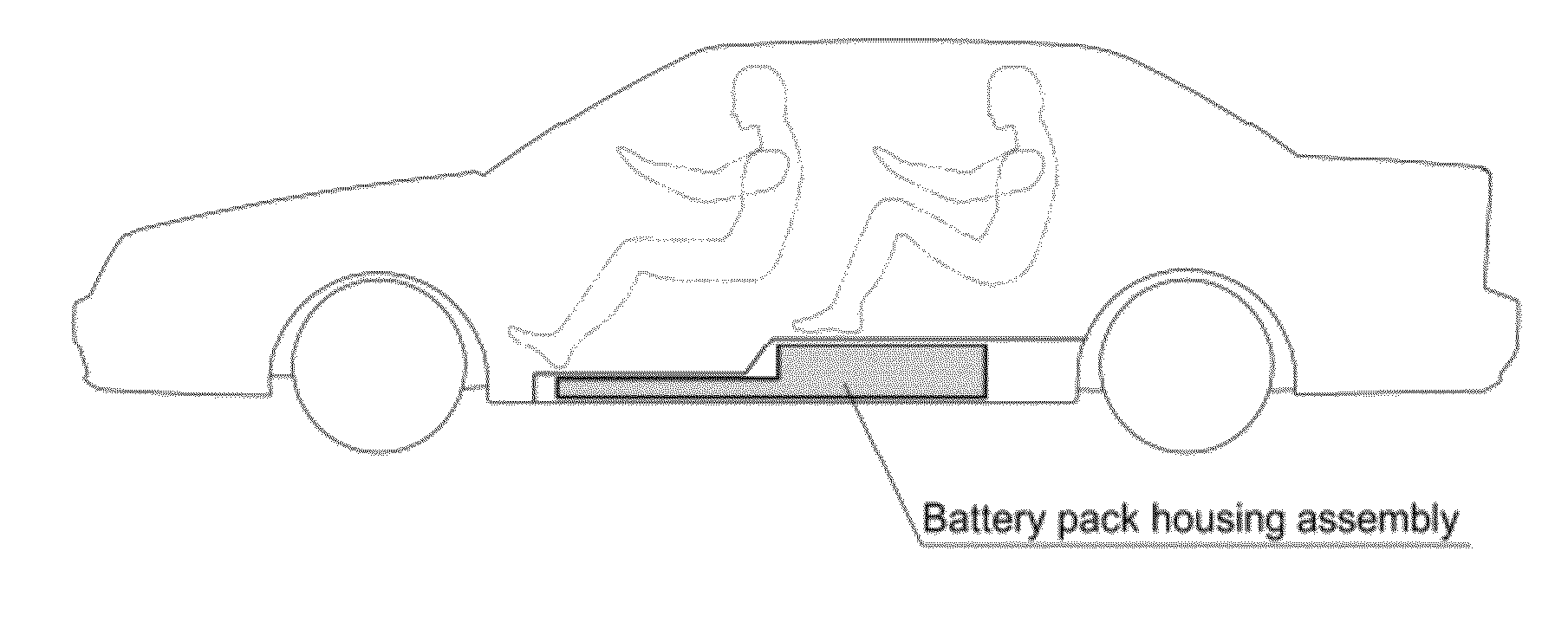
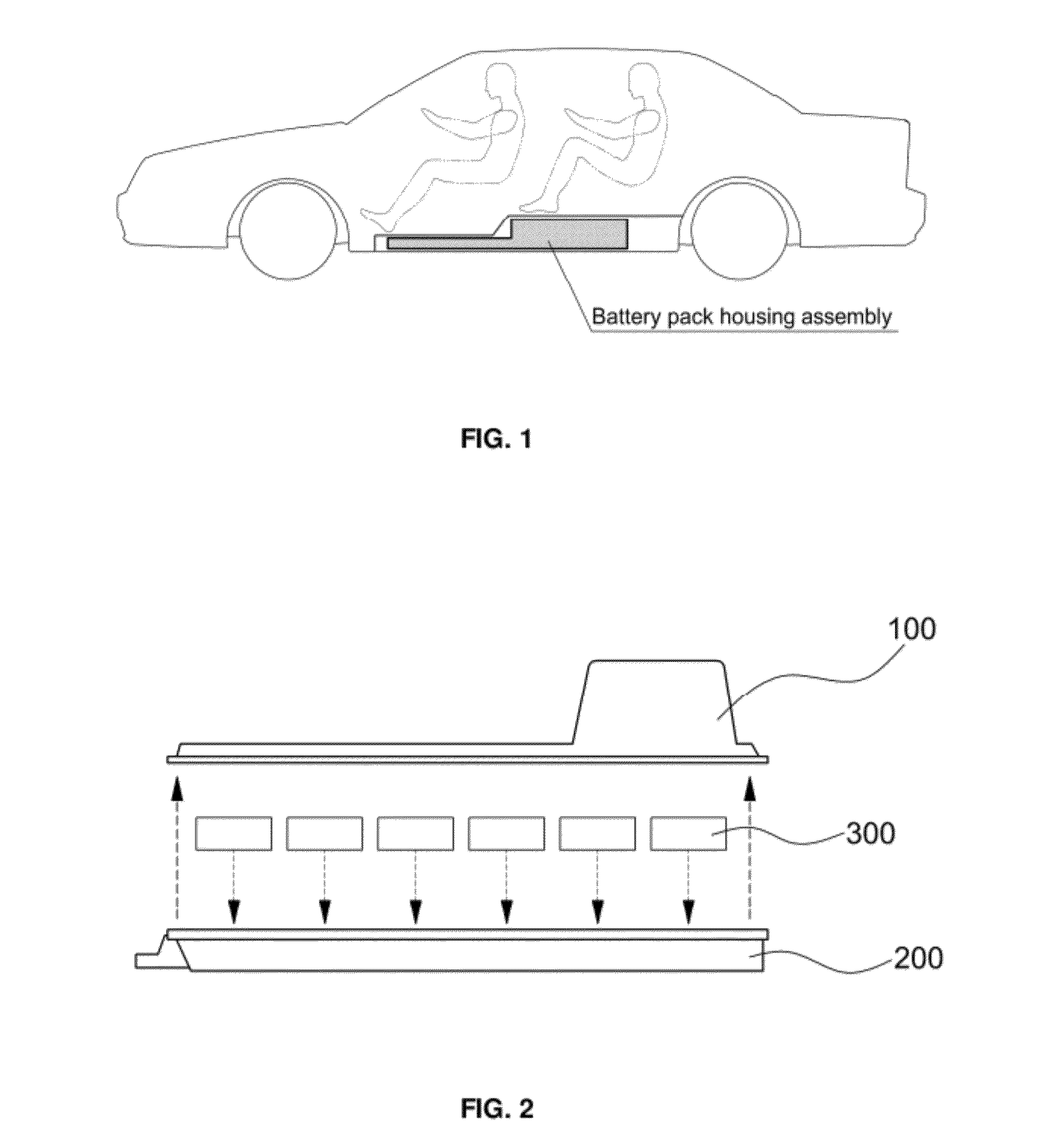
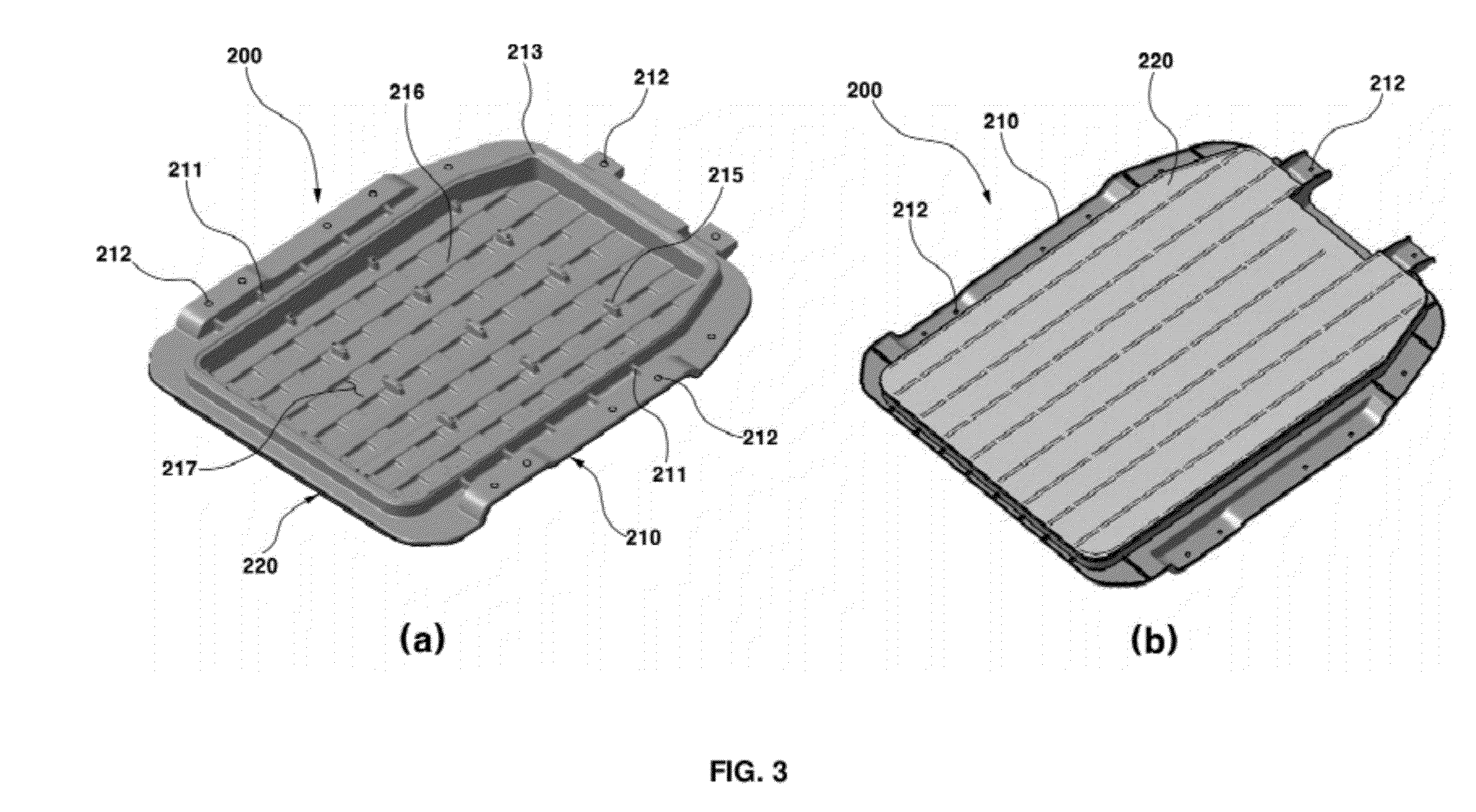
Battery pack housing assembly for electric vehicle using plastic composite material
PatentInactiveUS20120103714A1
Innovation
- A battery pack housing assembly formed from a fiber-reinforced plastic composite material with a dual laminated structure and closed cross-sectional area, replacing steel with a lightweight plastic composite that absorbs impact energy and integrates peripheral components, such as reinforcing members and mounting brackets, to reduce weight and production costs.

Battery pack assembly for an electric vehicle using a plastic composite material
PatentInactiveDE102011005403A1
Innovation
- A battery pack housing assembly formed from a fiber-reinforced plastic composite material with a double-laminated structure and closed cross-sectional area, incorporating impact-absorbing agents and integral peripheral components, reduces weight and enhances structural rigidity and impact resistance.


Sustainability Impact of Lightweight Materials
The adoption of lightweight materials in electric vehicle design represents a significant advancement in sustainable transportation technology. These materials, including advanced composites, high-strength aluminum alloys, and carbon fiber reinforced polymers, substantially reduce the environmental footprint of electric vehicles throughout their lifecycle. The primary sustainability benefit comes from improved energy efficiency during operation - lighter vehicles require less energy to accelerate and maintain speed, directly extending battery range by 6-8% for every 10% reduction in vehicle mass.
Manufacturing processes for lightweight composites are becoming increasingly eco-friendly. Recent innovations have reduced energy consumption in carbon fiber production by approximately 30% compared to traditional methods. Additionally, bio-based composites utilizing natural fibers such as flax, hemp, and kenaf are emerging as viable alternatives to synthetic materials, offering carbon footprint reductions of up to 50% while maintaining comparable mechanical properties.
The extended vehicle range enabled by lightweight design has cascading environmental benefits. Reduced battery size requirements translate to lower demand for critical raw materials like lithium, cobalt, and nickel - resources associated with significant extraction impacts. Studies indicate that a 100kg weight reduction can decrease lifetime greenhouse gas emissions by approximately 5-7 tons per vehicle when accounting for both manufacturing and operational phases.
End-of-life considerations for lightweight materials have shown promising developments. Recycling technologies for carbon fiber composites have advanced significantly, with pyrolysis and solvolysis processes now capable of recovering up to 95% of carbon fibers with minimal quality degradation. These reclaimed materials retain approximately 90% of virgin fiber mechanical properties while requiring only 10-20% of the energy needed for new fiber production.
The total lifecycle assessment of lightweight electric vehicles demonstrates compelling sustainability metrics. When compared to conventional steel-based designs, composite-intensive vehicles typically show 15-25% lower global warming potential, 10-20% reduced energy consumption, and significant decreases in acidification and eutrophication potentials. These benefits are particularly pronounced in regions with cleaner electricity grids, where the manufacturing impact is further minimized.
Water conservation represents another important sustainability dimension. Advanced composite manufacturing processes typically consume 40-60% less water than traditional metal forming operations, contributing to reduced stress on local water resources in manufacturing regions.
Manufacturing processes for lightweight composites are becoming increasingly eco-friendly. Recent innovations have reduced energy consumption in carbon fiber production by approximately 30% compared to traditional methods. Additionally, bio-based composites utilizing natural fibers such as flax, hemp, and kenaf are emerging as viable alternatives to synthetic materials, offering carbon footprint reductions of up to 50% while maintaining comparable mechanical properties.
The extended vehicle range enabled by lightweight design has cascading environmental benefits. Reduced battery size requirements translate to lower demand for critical raw materials like lithium, cobalt, and nickel - resources associated with significant extraction impacts. Studies indicate that a 100kg weight reduction can decrease lifetime greenhouse gas emissions by approximately 5-7 tons per vehicle when accounting for both manufacturing and operational phases.
End-of-life considerations for lightweight materials have shown promising developments. Recycling technologies for carbon fiber composites have advanced significantly, with pyrolysis and solvolysis processes now capable of recovering up to 95% of carbon fibers with minimal quality degradation. These reclaimed materials retain approximately 90% of virgin fiber mechanical properties while requiring only 10-20% of the energy needed for new fiber production.
The total lifecycle assessment of lightweight electric vehicles demonstrates compelling sustainability metrics. When compared to conventional steel-based designs, composite-intensive vehicles typically show 15-25% lower global warming potential, 10-20% reduced energy consumption, and significant decreases in acidification and eutrophication potentials. These benefits are particularly pronounced in regions with cleaner electricity grids, where the manufacturing impact is further minimized.
Water conservation represents another important sustainability dimension. Advanced composite manufacturing processes typically consume 40-60% less water than traditional metal forming operations, contributing to reduced stress on local water resources in manufacturing regions.
Cost-Performance Analysis of Composite Implementation
The implementation of composite materials in electric vehicle manufacturing presents a complex cost-performance equation that manufacturers must carefully navigate. Initial investment costs for composite materials significantly exceed those of traditional steel and aluminum, with carbon fiber reinforced polymers (CFRP) costing 5-20 times more per kilogram than conventional automotive steel. This substantial price differential creates a major barrier to widespread adoption, particularly for mass-market electric vehicles where price sensitivity remains high.
Manufacturing processes for composites also contribute to elevated costs, requiring specialized equipment, longer cycle times, and highly skilled labor. While traditional metal stamping processes are highly optimized for automotive production, composite manufacturing techniques like resin transfer molding (RTM) and automated fiber placement still lack the same level of production efficiency, adding 30-50% to manufacturing costs compared to conventional methods.
However, these higher upfront costs must be balanced against significant performance advantages. Weight reduction through composite implementation typically ranges from 40-60% compared to steel components, directly translating to extended vehicle range—a critical selling point for electric vehicles. Analysis shows that each 10% reduction in vehicle weight can increase range by approximately 6-8%, potentially justifying the premium cost through enhanced performance metrics valued by consumers.
Lifecycle cost analysis reveals additional economic benefits. The superior durability and corrosion resistance of composites reduce maintenance requirements and extend component lifespan by up to 40% compared to metal alternatives. Furthermore, the energy savings achieved through weight reduction compound over the vehicle's operational life, with studies indicating potential energy cost savings of $3,000-5,000 over a 150,000-mile vehicle lifespan at current electricity prices.
Production scale remains a critical factor in the cost-performance equation. Current industry projections suggest that carbon fiber costs could decrease by 25-30% with production volumes exceeding 100,000 units annually, potentially bringing composite implementation within reach of mid-market electric vehicles. Several manufacturers have already achieved cost reductions of 15-20% through strategic material hybridization, combining carbon fiber with less expensive glass fiber or natural fiber composites in non-critical structural areas.
The environmental impact assessment further complicates the cost-performance analysis, as carbon fiber production currently requires 5-10 times more energy than steel production. However, this environmental manufacturing cost is increasingly offset by operational efficiency gains and the potential for closed-loop recycling systems that are beginning to emerge within the industry.
Manufacturing processes for composites also contribute to elevated costs, requiring specialized equipment, longer cycle times, and highly skilled labor. While traditional metal stamping processes are highly optimized for automotive production, composite manufacturing techniques like resin transfer molding (RTM) and automated fiber placement still lack the same level of production efficiency, adding 30-50% to manufacturing costs compared to conventional methods.
However, these higher upfront costs must be balanced against significant performance advantages. Weight reduction through composite implementation typically ranges from 40-60% compared to steel components, directly translating to extended vehicle range—a critical selling point for electric vehicles. Analysis shows that each 10% reduction in vehicle weight can increase range by approximately 6-8%, potentially justifying the premium cost through enhanced performance metrics valued by consumers.
Lifecycle cost analysis reveals additional economic benefits. The superior durability and corrosion resistance of composites reduce maintenance requirements and extend component lifespan by up to 40% compared to metal alternatives. Furthermore, the energy savings achieved through weight reduction compound over the vehicle's operational life, with studies indicating potential energy cost savings of $3,000-5,000 over a 150,000-mile vehicle lifespan at current electricity prices.
Production scale remains a critical factor in the cost-performance equation. Current industry projections suggest that carbon fiber costs could decrease by 25-30% with production volumes exceeding 100,000 units annually, potentially bringing composite implementation within reach of mid-market electric vehicles. Several manufacturers have already achieved cost reductions of 15-20% through strategic material hybridization, combining carbon fiber with less expensive glass fiber or natural fiber composites in non-critical structural areas.
The environmental impact assessment further complicates the cost-performance analysis, as carbon fiber production currently requires 5-10 times more energy than steel production. However, this environmental manufacturing cost is increasingly offset by operational efficiency gains and the potential for closed-loop recycling systems that are beginning to emerge within the industry.
Unlock deeper insights with Patsnap Eureka Quick Research — get a full tech report to explore trends and direct your research. Try now!
Generate Your Research Report Instantly with AI Agent
Supercharge your innovation with Patsnap Eureka AI Agent Platform!