
High-temperature resistant lightweight materials
OCT 15, 20259 MIN READ
Generate Your Research Report Instantly with AI Agent
Patsnap Eureka helps you evaluate technical feasibility & market potential.
High-Temperature Materials Evolution and Objectives
The pursuit of high-temperature resistant lightweight materials represents one of the most significant technological endeavors in materials science over the past century. Beginning with traditional metals and ceramics in the early 20th century, this field has evolved through several distinct phases, each marked by breakthrough innovations that have expanded the temperature-to-weight performance envelope.
The 1950s and 1960s witnessed the emergence of superalloys, primarily nickel and cobalt-based, which revolutionized aerospace applications by enabling jet engines to operate at previously unattainable temperatures. This period established the fundamental understanding of high-temperature material behavior, particularly creep resistance and oxidation mechanisms.
By the 1980s, ceramic matrix composites (CMCs) began gaining prominence, offering exceptional temperature resistance with significantly reduced weight compared to metallic alternatives. The subsequent decades saw remarkable advancements in carbon-carbon composites, ceramic-metal hybrids, and the integration of rare earth elements for enhanced thermal stability.
The current technological landscape is increasingly focused on multi-functional materials that combine high-temperature resistance with other critical properties such as electrical conductivity, radiation shielding, and self-healing capabilities. Nano-engineered materials, including carbon nanotubes and graphene-reinforced composites, represent the cutting edge of this field, offering unprecedented strength-to-weight ratios at elevated temperatures.
The primary objective of contemporary research is to develop materials capable of withstanding temperatures exceeding 2000°C while maintaining structural integrity and minimizing weight. This goal is driven by demanding applications in hypersonic flight, next-generation energy systems, and space exploration, where traditional materials reach their fundamental limits.
Additional research aims include extending service life under extreme thermal cycling conditions, reducing manufacturing costs through innovative processing techniques, and developing environmentally sustainable alternatives to rare or toxic elements currently essential in high-performance alloys.
The evolution trajectory points toward increasingly complex material architectures, with precisely engineered microstructures and compositional gradients that optimize performance across multiple parameters simultaneously. Computational materials science and high-throughput experimental methods are accelerating this development, enabling the exploration of vast compositional spaces that were previously inaccessible.
The ultimate technological target remains the creation of lightweight materials that can maintain their mechanical properties at temperatures approaching theoretical limits, while being economically viable for widespread industrial application. This represents not merely an incremental improvement but a transformative capability that would enable entirely new classes of energy, transportation, and aerospace systems.
The 1950s and 1960s witnessed the emergence of superalloys, primarily nickel and cobalt-based, which revolutionized aerospace applications by enabling jet engines to operate at previously unattainable temperatures. This period established the fundamental understanding of high-temperature material behavior, particularly creep resistance and oxidation mechanisms.
By the 1980s, ceramic matrix composites (CMCs) began gaining prominence, offering exceptional temperature resistance with significantly reduced weight compared to metallic alternatives. The subsequent decades saw remarkable advancements in carbon-carbon composites, ceramic-metal hybrids, and the integration of rare earth elements for enhanced thermal stability.
The current technological landscape is increasingly focused on multi-functional materials that combine high-temperature resistance with other critical properties such as electrical conductivity, radiation shielding, and self-healing capabilities. Nano-engineered materials, including carbon nanotubes and graphene-reinforced composites, represent the cutting edge of this field, offering unprecedented strength-to-weight ratios at elevated temperatures.
The primary objective of contemporary research is to develop materials capable of withstanding temperatures exceeding 2000°C while maintaining structural integrity and minimizing weight. This goal is driven by demanding applications in hypersonic flight, next-generation energy systems, and space exploration, where traditional materials reach their fundamental limits.
Additional research aims include extending service life under extreme thermal cycling conditions, reducing manufacturing costs through innovative processing techniques, and developing environmentally sustainable alternatives to rare or toxic elements currently essential in high-performance alloys.
The evolution trajectory points toward increasingly complex material architectures, with precisely engineered microstructures and compositional gradients that optimize performance across multiple parameters simultaneously. Computational materials science and high-throughput experimental methods are accelerating this development, enabling the exploration of vast compositional spaces that were previously inaccessible.
The ultimate technological target remains the creation of lightweight materials that can maintain their mechanical properties at temperatures approaching theoretical limits, while being economically viable for widespread industrial application. This represents not merely an incremental improvement but a transformative capability that would enable entirely new classes of energy, transportation, and aerospace systems.
Market Analysis for Lightweight Heat-Resistant Materials
The global market for high-temperature resistant lightweight materials has experienced significant growth in recent years, driven primarily by increasing demands from aerospace, automotive, and energy sectors. Current market valuations indicate the sector reached approximately $7.2 billion in 2022, with projections suggesting a compound annual growth rate of 6.8% through 2030, potentially reaching $12.5 billion by the end of the forecast period.
Aerospace remains the dominant application segment, accounting for nearly 40% of market share. This dominance stems from the critical need for materials that can withstand extreme temperatures while minimizing overall weight in aircraft engines, thermal protection systems, and structural components. The commercial aviation sector's recovery post-pandemic and increased defense spending globally have further accelerated demand in this segment.
The automotive industry represents the fastest-growing market for these materials, particularly with the transition toward electric vehicles. Heat management in battery systems and the continuous push for vehicle weight reduction to improve fuel efficiency and range have created new application opportunities. Market penetration in this sector is expected to grow at 8.3% annually through 2028.
Regionally, North America currently leads the market with approximately 35% share, followed closely by Europe at 30% and Asia-Pacific at 25%. However, the Asia-Pacific region is demonstrating the highest growth rate, driven by rapid industrialization in China and India, alongside significant aerospace and defense investments.
Material-specific market analysis reveals that ceramic matrix composites (CMCs) hold the largest market share at 32%, followed by titanium alloys (24%), advanced polymers (18%), and carbon-carbon composites (15%). Emerging materials such as refractory metal alloys and high-entropy alloys are gaining traction but currently represent smaller market segments.
Price sensitivity varies significantly across application sectors. While aerospace and defense industries prioritize performance over cost, automotive and industrial applications remain highly cost-conscious, creating distinct market dynamics for material suppliers. The average price premium for high-temperature resistant lightweight materials ranges between 2.5-4 times that of conventional alternatives, though this gap is narrowing as production scales increase.
Supply chain challenges present significant market constraints, with critical raw material availability and processing capabilities concentrated in specific geographic regions. Recent geopolitical tensions have highlighted vulnerabilities in the supply chain, prompting increased interest in material recycling and alternative formulations to reduce dependency on scarce elements.
Aerospace remains the dominant application segment, accounting for nearly 40% of market share. This dominance stems from the critical need for materials that can withstand extreme temperatures while minimizing overall weight in aircraft engines, thermal protection systems, and structural components. The commercial aviation sector's recovery post-pandemic and increased defense spending globally have further accelerated demand in this segment.
The automotive industry represents the fastest-growing market for these materials, particularly with the transition toward electric vehicles. Heat management in battery systems and the continuous push for vehicle weight reduction to improve fuel efficiency and range have created new application opportunities. Market penetration in this sector is expected to grow at 8.3% annually through 2028.
Regionally, North America currently leads the market with approximately 35% share, followed closely by Europe at 30% and Asia-Pacific at 25%. However, the Asia-Pacific region is demonstrating the highest growth rate, driven by rapid industrialization in China and India, alongside significant aerospace and defense investments.
Material-specific market analysis reveals that ceramic matrix composites (CMCs) hold the largest market share at 32%, followed by titanium alloys (24%), advanced polymers (18%), and carbon-carbon composites (15%). Emerging materials such as refractory metal alloys and high-entropy alloys are gaining traction but currently represent smaller market segments.
Price sensitivity varies significantly across application sectors. While aerospace and defense industries prioritize performance over cost, automotive and industrial applications remain highly cost-conscious, creating distinct market dynamics for material suppliers. The average price premium for high-temperature resistant lightweight materials ranges between 2.5-4 times that of conventional alternatives, though this gap is narrowing as production scales increase.
Supply chain challenges present significant market constraints, with critical raw material availability and processing capabilities concentrated in specific geographic regions. Recent geopolitical tensions have highlighted vulnerabilities in the supply chain, prompting increased interest in material recycling and alternative formulations to reduce dependency on scarce elements.
Current Challenges in High-Temperature Lightweight Materials
Despite significant advancements in high-temperature resistant lightweight materials, several critical challenges continue to impede broader implementation across aerospace, automotive, and energy sectors. The fundamental trade-off between weight reduction and thermal resistance remains a persistent obstacle. As operating temperatures increase, traditional lightweight materials like aluminum alloys and titanium composites experience accelerated degradation, significantly compromising structural integrity and service life.
Material stability at extreme temperatures presents another major challenge. Current ceramic matrix composites (CMCs) and metal matrix composites (MMCs) exhibit promising thermal resistance but suffer from reliability issues including thermal shock sensitivity, oxidation susceptibility, and microstructural degradation during thermal cycling. These limitations restrict their application in environments requiring both lightweight properties and temperature resistance above 1000°C.
Manufacturing complexity and scalability pose substantial barriers to widespread adoption. Advanced high-temperature resistant materials often require specialized processing techniques such as spark plasma sintering, chemical vapor deposition, or additive manufacturing with precise parameter control. These processes remain costly, time-intensive, and difficult to scale for mass production, creating a significant gap between laboratory development and industrial implementation.
Cost effectiveness represents another critical challenge. The raw materials for high-performance composites like silicon carbide fibers, carbon nanotubes, and specialized metal alloys command premium prices, while complex manufacturing processes further increase production expenses. This economic barrier limits adoption to high-value applications where performance requirements justify the elevated costs.
Joining and integration difficulties further complicate implementation. Creating reliable bonds between dissimilar materials that maintain integrity across wide temperature ranges remains problematic. Current joining technologies often create weak points in structures, particularly at material interfaces where thermal expansion mismatches induce stress concentrations during thermal cycling.
Characterization and testing methodologies present additional challenges. Standard testing protocols often fail to accurately predict long-term performance under combined thermal, mechanical, and environmental stresses. This creates uncertainty in material selection and design, particularly for applications requiring decades of reliable service under extreme conditions.
Recyclability and environmental impact considerations are increasingly important challenges. Many high-performance composites are difficult to recycle at end-of-life, creating sustainability concerns that must be addressed as regulatory requirements for circular material usage continue to strengthen across global markets.
Material stability at extreme temperatures presents another major challenge. Current ceramic matrix composites (CMCs) and metal matrix composites (MMCs) exhibit promising thermal resistance but suffer from reliability issues including thermal shock sensitivity, oxidation susceptibility, and microstructural degradation during thermal cycling. These limitations restrict their application in environments requiring both lightweight properties and temperature resistance above 1000°C.
Manufacturing complexity and scalability pose substantial barriers to widespread adoption. Advanced high-temperature resistant materials often require specialized processing techniques such as spark plasma sintering, chemical vapor deposition, or additive manufacturing with precise parameter control. These processes remain costly, time-intensive, and difficult to scale for mass production, creating a significant gap between laboratory development and industrial implementation.
Cost effectiveness represents another critical challenge. The raw materials for high-performance composites like silicon carbide fibers, carbon nanotubes, and specialized metal alloys command premium prices, while complex manufacturing processes further increase production expenses. This economic barrier limits adoption to high-value applications where performance requirements justify the elevated costs.
Joining and integration difficulties further complicate implementation. Creating reliable bonds between dissimilar materials that maintain integrity across wide temperature ranges remains problematic. Current joining technologies often create weak points in structures, particularly at material interfaces where thermal expansion mismatches induce stress concentrations during thermal cycling.
Characterization and testing methodologies present additional challenges. Standard testing protocols often fail to accurately predict long-term performance under combined thermal, mechanical, and environmental stresses. This creates uncertainty in material selection and design, particularly for applications requiring decades of reliable service under extreme conditions.
Recyclability and environmental impact considerations are increasingly important challenges. Many high-performance composites are difficult to recycle at end-of-life, creating sustainability concerns that must be addressed as regulatory requirements for circular material usage continue to strengthen across global markets.
Current High-Temperature Lightweight Material Solutions
01 Ceramic-based lightweight materials for high temperature applications
Ceramic-based materials offer excellent high-temperature resistance while maintaining relatively low weight. These materials can withstand extreme temperatures above 1000°C while providing structural integrity. Advanced ceramic composites, including silicon carbide, aluminum oxide, and zirconium-based ceramics, are engineered to combine temperature resistance with reduced density compared to traditional high-temperature metals. These materials often incorporate porosity control techniques to further reduce weight without compromising thermal performance.- Ceramic-based lightweight materials for high temperature applications: Ceramic-based materials offer excellent high-temperature resistance while maintaining relatively low weight. These materials include advanced ceramic composites, ceramic foams, and ceramic matrix composites that can withstand extreme temperatures above 1000°C. The incorporation of specific ceramic materials such as alumina, zirconia, and silicon carbide provides thermal stability while maintaining structural integrity at high temperatures. These materials are engineered with controlled porosity to reduce weight without compromising their temperature resistance properties.
- Metal alloy-based lightweight high-temperature resistant materials: Advanced metal alloys, particularly those based on titanium, aluminum, and nickel, offer an optimal balance between weight reduction and high-temperature performance. These alloys are engineered with specific elemental compositions to enhance their thermal stability while maintaining structural strength at elevated temperatures. Some formulations incorporate heat-resistant elements like molybdenum, tungsten, or rhenium to improve performance in extreme thermal environments. The microstructure of these alloys is carefully controlled during manufacturing to optimize their temperature resistance while keeping density low.
- Polymer-based composites with high-temperature resistance: Advanced polymer composites incorporate specialized high-temperature resistant polymers such as polyimides, PEEK (polyether ether ketone), and phenolic resins reinforced with various fillers to create lightweight materials capable of withstanding elevated temperatures. These materials often utilize carbon fibers, glass fibers, or ceramic particles as reinforcement to enhance thermal stability while maintaining low density. The polymer matrices are chemically modified to improve their temperature resistance, with some formulations capable of withstanding temperatures up to 400°C while remaining significantly lighter than metal alternatives.
- Carbon-based lightweight materials for high-temperature applications: Carbon-based materials such as carbon fiber composites, graphene-enhanced materials, and carbon foams offer exceptional combinations of low weight and high-temperature resistance. These materials leverage the inherent thermal stability of carbon structures while maintaining extremely low density. Advanced carbon fiber reinforced carbon composites (C/C) can withstand temperatures exceeding 2000°C in non-oxidizing environments. Graphene incorporation into various matrices enhances thermal conductivity and temperature resistance while adding minimal weight. These materials are particularly valuable in aerospace and industrial applications requiring extreme temperature resistance with minimal mass.
- Aerogel and foam-based ultralight high-temperature resistant materials: Aerogels and specialized foams represent the frontier of ultralight materials with high-temperature resistance. These materials achieve their exceptional properties through highly porous structures that minimize weight while maintaining thermal insulation capabilities. Silica aerogels, ceramic foams, and metal foams with engineered porosity can withstand temperatures ranging from 600°C to over 1000°C depending on their composition. The unique cellular or nanoporous structure creates numerous small air pockets that impede heat transfer while dramatically reducing density. Some formulations incorporate phase change materials or reflective components to further enhance temperature resistance.
02 Metal matrix composites with enhanced temperature resistance
Metal matrix composites (MMCs) combine lightweight metals like aluminum or titanium with reinforcing materials to create high-temperature resistant lightweight structures. These composites incorporate ceramic particles, fibers, or other reinforcements to enhance temperature stability while maintaining the processability and ductility of metals. The reinforcements help prevent creep and deformation at elevated temperatures, while the metal matrix provides reduced weight compared to traditional high-temperature alloys. These materials can typically operate at temperatures between 300-800°C depending on the specific matrix and reinforcement combination.Expand Specific Solutions03 Polymer-derived ceramics and carbon-based materials
Polymer-derived ceramics and carbon-based materials offer exceptional lightweight properties combined with high-temperature resistance. These materials include carbon fiber reinforced composites, carbon-carbon composites, and ceramics derived from polymer precursors. The manufacturing process typically involves pyrolysis of polymer precursors to create ceramic structures with controlled porosity. These materials can withstand temperatures from 500°C to over 2000°C depending on composition, while maintaining extremely low density. Applications include aerospace components, thermal protection systems, and high-temperature industrial equipment.Expand Specific Solutions04 Aerogel and foam-based insulation materials
Aerogels and specialized foam materials provide ultra-lightweight solutions for high-temperature applications, particularly for thermal insulation. These materials feature extremely low density due to their highly porous structure, with some compositions containing up to 99% air. Despite their low weight, they can resist temperatures from 200°C to over 1000°C depending on composition. Silica aerogels, ceramic foams, and specialized polymer foams are engineered to maintain their insulating properties and structural integrity even after prolonged exposure to high temperatures, making them ideal for aerospace, energy, and industrial applications.Expand Specific Solutions05 Nanostructured and hybrid materials for extreme environments
Nanostructured and hybrid materials represent cutting-edge solutions for high-temperature lightweight applications. These materials incorporate nanoscale features or combine multiple material classes to achieve exceptional temperature resistance while minimizing weight. Examples include nanocomposites with dispersed nanoparticles, hierarchical structures with engineered interfaces, and hybrid organic-inorganic materials. The nanoscale features help control thermal expansion, enhance mechanical properties, and improve temperature stability. These advanced materials can operate in extreme environments with temperatures exceeding 1200°C while maintaining structural integrity and low density.Expand Specific Solutions
Leading Companies and Research Institutions in Advanced Materials
The high-temperature resistant lightweight materials market is currently in a growth phase, characterized by increasing demand across aerospace, automotive, and electronics sectors. The global market size is estimated to exceed $5 billion, with projected annual growth of 6-8% through 2028. Technologically, the field shows varying maturity levels, with established players like Mitsubishi Gas Chemical, IBM, and LG Chem leading commercial applications, while research institutions such as China Academy of Launch Vehicle Technology and Aerospace Research Institute of Materials focus on next-generation solutions. Japanese corporations (Murata, Shin-Etsu, Nitto Denko) dominate in electronic applications, while specialized players like Cubicure and HRL Laboratories drive innovation in additive manufacturing of high-temperature polymers. The competitive landscape features strategic partnerships between academic institutions and industry to accelerate commercialization of novel materials.
Aerospace Research Institute of Materials and Processing Technology
Technical Solution: The Aerospace Research Institute of Materials and Processing Technology has developed cutting-edge ceramic matrix composites (CMCs) and ultra-high temperature ceramic (UHTC) materials specifically engineered for extreme aerospace environments. Their proprietary C/SiC (carbon fiber reinforced silicon carbide) composites combine the lightweight properties of carbon with the thermal resistance of ceramics, capable of withstanding temperatures exceeding 1600°C while maintaining structural integrity[1]. The institute has pioneered novel manufacturing techniques including chemical vapor infiltration (CVI) and reactive melt infiltration (RMI) that enable precise control over material microstructure. Their recent breakthroughs include zirconium diboride (ZrB2) and hafnium diboride (HfB2) based UHTCs with modified grain structures that demonstrate superior oxidation resistance at temperatures above 2000°C[3]. Additionally, they've developed specialized surface treatments and coatings that further enhance oxidation resistance while maintaining the base material's lightweight properties. These materials have been successfully implemented in hypersonic vehicle components and thermal protection systems for spacecraft reentry applications.
Strengths: Exceptional thermal resistance (up to 2000°C+) while maintaining structural integrity; significantly lighter than traditional high-temperature metals; excellent oxidation resistance in extreme environments. Weaknesses: Complex and costly manufacturing processes; challenges in producing large-scale components; potential brittleness compared to metal alternatives requiring careful design considerations.
China Academy of Launch Vehicle Technology
Technical Solution: China Academy of Launch Vehicle Technology (CALT) has developed proprietary high-temperature resistant lightweight materials focused on aerospace applications, particularly for rocket engines and thermal protection systems. Their advanced carbon-carbon (C/C) composite technology incorporates specialized weaving techniques and multi-directional reinforcement to create materials that maintain structural integrity at temperatures exceeding 2000°C while offering density reductions of 60-70% compared to traditional superalloys[2]. CALT has pioneered innovative manufacturing processes combining chemical vapor infiltration with hot isostatic pressing to achieve near-zero porosity in their composites, significantly enhancing thermal shock resistance. Their recent breakthroughs include gradient-structured ceramic matrix composites that feature tailored compositions across the material thickness, optimizing both thermal protection and mechanical properties[4]. Additionally, CALT has developed specialized surface modification techniques using rare earth element compounds that dramatically improve oxidation resistance at extreme temperatures. These materials have been successfully implemented in the Long March rocket series, enabling lighter payloads and improved thermal management in critical propulsion components.
Strengths: Exceptional thermal resistance (>2000°C) combined with significant weight reduction; proven performance in actual space launch applications; excellent thermal shock resistance for rapid temperature change environments. Weaknesses: Extremely specialized manufacturing processes limiting wider commercial applications; high production costs; potential challenges in scaling production for larger components or non-aerospace applications.
Key Patents and Breakthroughs in Heat-Resistant Materials
High-temperature Resistant Lightweight Thermal Insulation Material with Dual-pore Structure and Preparation Method Thereof
PatentInactiveUS20190300447A1
Innovation
- A high-temperature resistant lightweight thermal insulation material with a dual-pore structure comprising macroscopic through-pores and micro-pores is developed, where the volume ratio of through-pores to micro-pores is controlled within a specific range to enhance synergistic effects, achieved by adding a molding promoter and pore former to raw materials like alumina and silica powders, followed by extrusion molding and sintering.
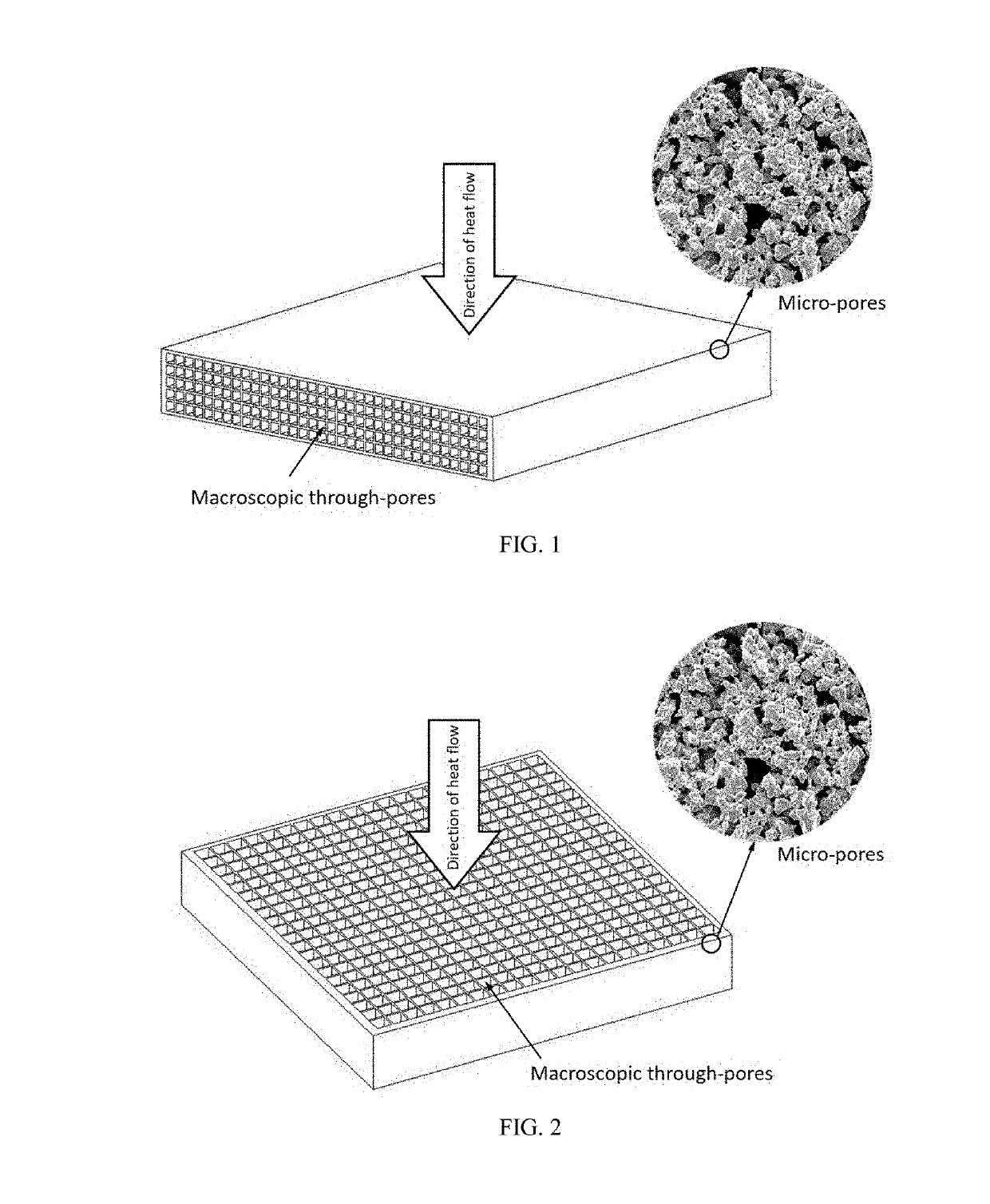
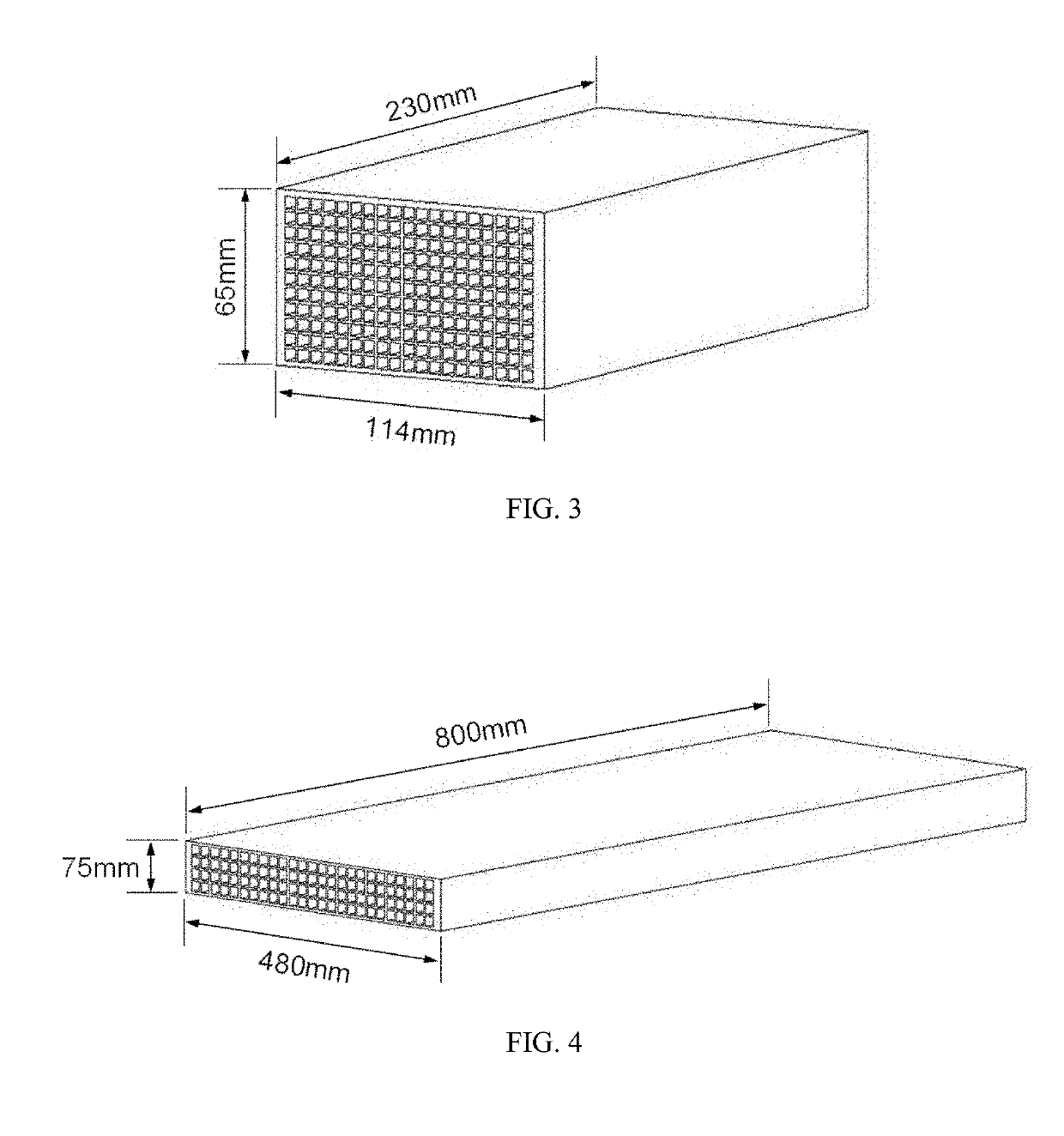
High Temperature Resistant, Lightweight And Long-lasting Thermal Insulation Material
PatentInactiveTR201102040A2
Innovation
- A composite insulation material comprising pumice, boron compounds, silicate salts, and acrylic binders, along with additives for UV resistance and fire resistance, is formulated to provide quick drying, low density, and high thermal insulation, suitable for surfaces exposed to high temperatures.
Environmental Impact and Sustainability Considerations
The development and application of high-temperature resistant lightweight materials carry significant environmental implications that must be carefully considered. Traditional manufacturing processes for these materials often involve energy-intensive methods that generate substantial carbon emissions. The extraction of raw materials, particularly rare earth elements commonly used in high-temperature applications, frequently results in habitat destruction, soil degradation, and water pollution. These environmental costs necessitate a comprehensive lifecycle assessment approach when evaluating new material solutions.
Recent advancements in high-temperature resistant lightweight materials have shown promising sustainability improvements. Bio-inspired materials and those derived from renewable resources are emerging as alternatives to conventional petroleum-based options. For instance, ceramic matrix composites reinforced with natural fibers demonstrate comparable thermal resistance while reducing the environmental footprint associated with production. Additionally, manufacturing innovations such as additive manufacturing techniques have enabled more efficient material utilization, reducing waste by up to 40% compared to traditional subtractive methods.
The recyclability of high-temperature resistant materials presents both challenges and opportunities. While many advanced composites are difficult to separate into their constituent components, research into reversible bonding mechanisms and designed-for-disassembly approaches is gaining momentum. Thermal recycling processes that can recover valuable elements from end-of-life components are showing particular promise, with recovery rates exceeding 85% for certain metal matrix composites.
Energy efficiency during the operational phase represents another critical environmental consideration. Lightweight materials that maintain structural integrity at high temperatures enable more efficient combustion processes in aerospace and automotive applications, potentially reducing fuel consumption by 15-20%. This operational benefit must be weighed against production-phase impacts when assessing overall environmental performance.
Water usage in manufacturing processes for these materials also warrants attention. Conventional cooling methods in high-temperature material production can consume significant water resources. Closed-loop cooling systems and dry processing techniques are being developed to address this concern, with some facilities reporting water usage reductions of up to 60% after implementation.
As regulatory frameworks increasingly emphasize environmental performance, manufacturers are adopting life cycle thinking in material development. This holistic approach considers environmental impacts from raw material extraction through end-of-life disposal, driving innovation toward more sustainable solutions. The integration of environmental considerations into early-stage material design represents a paradigm shift that will likely accelerate the development of next-generation high-temperature resistant lightweight materials with enhanced sustainability profiles.
Recent advancements in high-temperature resistant lightweight materials have shown promising sustainability improvements. Bio-inspired materials and those derived from renewable resources are emerging as alternatives to conventional petroleum-based options. For instance, ceramic matrix composites reinforced with natural fibers demonstrate comparable thermal resistance while reducing the environmental footprint associated with production. Additionally, manufacturing innovations such as additive manufacturing techniques have enabled more efficient material utilization, reducing waste by up to 40% compared to traditional subtractive methods.
The recyclability of high-temperature resistant materials presents both challenges and opportunities. While many advanced composites are difficult to separate into their constituent components, research into reversible bonding mechanisms and designed-for-disassembly approaches is gaining momentum. Thermal recycling processes that can recover valuable elements from end-of-life components are showing particular promise, with recovery rates exceeding 85% for certain metal matrix composites.
Energy efficiency during the operational phase represents another critical environmental consideration. Lightweight materials that maintain structural integrity at high temperatures enable more efficient combustion processes in aerospace and automotive applications, potentially reducing fuel consumption by 15-20%. This operational benefit must be weighed against production-phase impacts when assessing overall environmental performance.
Water usage in manufacturing processes for these materials also warrants attention. Conventional cooling methods in high-temperature material production can consume significant water resources. Closed-loop cooling systems and dry processing techniques are being developed to address this concern, with some facilities reporting water usage reductions of up to 60% after implementation.
As regulatory frameworks increasingly emphasize environmental performance, manufacturers are adopting life cycle thinking in material development. This holistic approach considers environmental impacts from raw material extraction through end-of-life disposal, driving innovation toward more sustainable solutions. The integration of environmental considerations into early-stage material design represents a paradigm shift that will likely accelerate the development of next-generation high-temperature resistant lightweight materials with enhanced sustainability profiles.
Manufacturing Processes and Scalability Analysis
The manufacturing processes for high-temperature resistant lightweight materials present significant challenges due to their complex compositions and structures. Traditional manufacturing methods such as casting, forging, and powder metallurgy have been adapted specifically for these advanced materials. Powder metallurgy has emerged as a particularly effective approach, allowing precise control over material composition and microstructure through careful powder preparation, compaction, and sintering processes.
Additive manufacturing technologies have revolutionized the production of high-temperature resistant lightweight components. Selective laser melting (SLM) and electron beam melting (EBM) enable the creation of complex geometries with internal cooling channels that would be impossible to produce using conventional methods. These processes have been successfully applied to titanium aluminides and ceramic matrix composites, though challenges remain in controlling porosity and residual stresses.
Chemical vapor deposition (CVD) and physical vapor deposition (PVD) techniques offer exceptional control over material properties at the nanoscale. These methods are particularly valuable for creating protective coatings and thin films that enhance temperature resistance while maintaining lightweight characteristics. Recent advances in plasma-enhanced CVD have improved deposition rates and coating adhesion significantly.
Scalability remains a critical challenge for widespread industrial adoption. Current production volumes for many high-temperature resistant lightweight materials remain limited, with high manufacturing costs restricting their use to high-value applications in aerospace and defense. The transition from laboratory-scale production to industrial-scale manufacturing requires substantial investment in specialized equipment and process optimization.
Energy consumption during manufacturing presents another scalability concern. Many processes require high temperatures and pressures, contributing to significant carbon footprints. Research into more energy-efficient manufacturing routes, including microwave-assisted sintering and low-temperature consolidation techniques, shows promise for reducing environmental impact while maintaining material performance.
Quality control and consistency across large production volumes represent additional challenges. Non-destructive testing methods including ultrasonic inspection, X-ray computed tomography, and infrared thermography have been adapted specifically for these materials, enabling detection of internal defects that could compromise performance under extreme conditions. The development of in-situ monitoring systems during manufacturing processes further enhances quality assurance capabilities.
Additive manufacturing technologies have revolutionized the production of high-temperature resistant lightweight components. Selective laser melting (SLM) and electron beam melting (EBM) enable the creation of complex geometries with internal cooling channels that would be impossible to produce using conventional methods. These processes have been successfully applied to titanium aluminides and ceramic matrix composites, though challenges remain in controlling porosity and residual stresses.
Chemical vapor deposition (CVD) and physical vapor deposition (PVD) techniques offer exceptional control over material properties at the nanoscale. These methods are particularly valuable for creating protective coatings and thin films that enhance temperature resistance while maintaining lightweight characteristics. Recent advances in plasma-enhanced CVD have improved deposition rates and coating adhesion significantly.
Scalability remains a critical challenge for widespread industrial adoption. Current production volumes for many high-temperature resistant lightweight materials remain limited, with high manufacturing costs restricting their use to high-value applications in aerospace and defense. The transition from laboratory-scale production to industrial-scale manufacturing requires substantial investment in specialized equipment and process optimization.
Energy consumption during manufacturing presents another scalability concern. Many processes require high temperatures and pressures, contributing to significant carbon footprints. Research into more energy-efficient manufacturing routes, including microwave-assisted sintering and low-temperature consolidation techniques, shows promise for reducing environmental impact while maintaining material performance.
Quality control and consistency across large production volumes represent additional challenges. Non-destructive testing methods including ultrasonic inspection, X-ray computed tomography, and infrared thermography have been adapted specifically for these materials, enabling detection of internal defects that could compromise performance under extreme conditions. The development of in-situ monitoring systems during manufacturing processes further enhances quality assurance capabilities.
Unlock deeper insights with Patsnap Eureka Quick Research — get a full tech report to explore trends and direct your research. Try now!
Generate Your Research Report Instantly with AI Agent
Supercharge your innovation with Patsnap Eureka AI Agent Platform!