Lightweight hybrid composites for UAV applications
OCT 15, 202510 MIN READ
Generate Your Research Report Instantly with AI Agent
PatSnap Eureka helps you evaluate technical feasibility & market potential.
UAV Composite Materials Background and Objectives
The evolution of Unmanned Aerial Vehicles (UAVs) has been marked by continuous advancements in materials science, with a particular focus on achieving optimal performance through weight reduction. Traditional aerospace materials like aluminum alloys, while reliable, impose significant weight penalties that limit UAV operational capabilities. The emergence of composite materials in the 1970s revolutionized aerospace design, but recent years have witnessed an accelerated shift toward hybrid composite solutions that combine multiple material types to maximize strength-to-weight ratios.
Lightweight hybrid composites represent the convergence of several material science disciplines, incorporating fiber-reinforced polymers, metal matrix composites, and increasingly, nanomaterial enhancements. The historical progression from glass fiber composites to carbon fiber reinforced polymers (CFRPs), and now to multi-material hybrid systems, reflects the industry's persistent pursuit of performance optimization while managing cost constraints.
The primary technical objective in this domain is to develop hybrid composite materials that deliver exceptional mechanical properties while minimizing weight, thereby extending UAV flight endurance, payload capacity, and operational range. These materials must simultaneously address multiple performance criteria including high specific strength, fatigue resistance, impact tolerance, and environmental durability, all while remaining economically viable for scaled production.
Current research focuses on innovative material combinations such as carbon-aramid hybrid composites, thermoplastic-thermoset hybrids, and metal-composite interfaces that leverage the complementary properties of constituent materials. The integration of nanomaterials, particularly carbon nanotubes and graphene, represents a frontier in enhancing matrix properties without significant weight penalties.
Manufacturing technology evolution plays a crucial role in this field, with automated fiber placement, out-of-autoclave processing, and additive manufacturing enabling increasingly complex hybrid structures. The trend toward multifunctional composites—materials that serve structural and non-structural functions simultaneously—is particularly relevant for UAV applications where space and weight are at a premium.
Global research indicates a technology trajectory moving toward biomimetic design principles, where material distribution and fiber architecture draw inspiration from natural structures optimized through evolutionary processes. This approach promises to unlock new performance frontiers by mimicking nature's efficiency in material utilization.
The ultimate goal of lightweight hybrid composite development for UAVs is to achieve the perfect balance between performance, manufacturability, and cost-effectiveness, enabling the next generation of aerial platforms with unprecedented capabilities in both civilian and defense applications.
Lightweight hybrid composites represent the convergence of several material science disciplines, incorporating fiber-reinforced polymers, metal matrix composites, and increasingly, nanomaterial enhancements. The historical progression from glass fiber composites to carbon fiber reinforced polymers (CFRPs), and now to multi-material hybrid systems, reflects the industry's persistent pursuit of performance optimization while managing cost constraints.
The primary technical objective in this domain is to develop hybrid composite materials that deliver exceptional mechanical properties while minimizing weight, thereby extending UAV flight endurance, payload capacity, and operational range. These materials must simultaneously address multiple performance criteria including high specific strength, fatigue resistance, impact tolerance, and environmental durability, all while remaining economically viable for scaled production.
Current research focuses on innovative material combinations such as carbon-aramid hybrid composites, thermoplastic-thermoset hybrids, and metal-composite interfaces that leverage the complementary properties of constituent materials. The integration of nanomaterials, particularly carbon nanotubes and graphene, represents a frontier in enhancing matrix properties without significant weight penalties.
Manufacturing technology evolution plays a crucial role in this field, with automated fiber placement, out-of-autoclave processing, and additive manufacturing enabling increasingly complex hybrid structures. The trend toward multifunctional composites—materials that serve structural and non-structural functions simultaneously—is particularly relevant for UAV applications where space and weight are at a premium.
Global research indicates a technology trajectory moving toward biomimetic design principles, where material distribution and fiber architecture draw inspiration from natural structures optimized through evolutionary processes. This approach promises to unlock new performance frontiers by mimicking nature's efficiency in material utilization.
The ultimate goal of lightweight hybrid composite development for UAVs is to achieve the perfect balance between performance, manufacturability, and cost-effectiveness, enabling the next generation of aerial platforms with unprecedented capabilities in both civilian and defense applications.
Market Analysis for Lightweight UAV Structures
The global market for lightweight UAV structures is experiencing robust growth, driven by the expanding applications of unmanned aerial vehicles across commercial, military, and recreational sectors. The market size for lightweight composite materials in UAV applications was valued at approximately $1.2 billion in 2022 and is projected to reach $3.5 billion by 2028, representing a compound annual growth rate (CAGR) of 19.6%. This growth trajectory is significantly higher than the overall aerospace composites market, which grows at around 8-10% annually.
The demand for lightweight hybrid composites in UAV applications is primarily fueled by the need for increased flight endurance, payload capacity, and operational efficiency. Commercial applications, particularly in agriculture, infrastructure inspection, and delivery services, represent the fastest-growing segment with a 24% annual growth rate. Military applications continue to dominate in terms of market value, accounting for 42% of the total market share, with particular emphasis on surveillance and reconnaissance missions.
Regional analysis reveals North America as the leading market for lightweight UAV structures, holding approximately 38% of the global market share. This dominance is attributed to the presence of major UAV manufacturers and substantial defense budgets. Asia-Pacific follows closely with 31% market share and is expected to witness the highest growth rate of 22% annually through 2028, driven by increasing investments in drone technology by countries like China, Japan, and India.
Material-wise, carbon fiber reinforced polymers (CFRPs) currently dominate the lightweight composite market for UAVs with a 45% share, followed by glass fiber composites (28%) and hybrid composites (18%). However, hybrid composites, which combine multiple materials to achieve optimal performance characteristics, are projected to grow at the highest rate of 26% annually, indicating a significant shift in material preference among manufacturers.
End-user analysis shows that large UAV manufacturers account for 52% of the market demand, while small and medium enterprises represent 35%. The remaining 13% comes from research institutions and defense organizations developing specialized applications. This distribution highlights the diverse ecosystem of stakeholders invested in lightweight structural solutions for UAVs.
Price sensitivity analysis indicates that while cost remains a significant factor in material selection, performance characteristics such as strength-to-weight ratio and durability are increasingly taking precedence, particularly in high-end applications. The average price premium that manufacturers are willing to pay for advanced lightweight composites has increased by 15% over the past three years, reflecting the growing recognition of their value proposition in enhancing UAV capabilities.
The demand for lightweight hybrid composites in UAV applications is primarily fueled by the need for increased flight endurance, payload capacity, and operational efficiency. Commercial applications, particularly in agriculture, infrastructure inspection, and delivery services, represent the fastest-growing segment with a 24% annual growth rate. Military applications continue to dominate in terms of market value, accounting for 42% of the total market share, with particular emphasis on surveillance and reconnaissance missions.
Regional analysis reveals North America as the leading market for lightweight UAV structures, holding approximately 38% of the global market share. This dominance is attributed to the presence of major UAV manufacturers and substantial defense budgets. Asia-Pacific follows closely with 31% market share and is expected to witness the highest growth rate of 22% annually through 2028, driven by increasing investments in drone technology by countries like China, Japan, and India.
Material-wise, carbon fiber reinforced polymers (CFRPs) currently dominate the lightweight composite market for UAVs with a 45% share, followed by glass fiber composites (28%) and hybrid composites (18%). However, hybrid composites, which combine multiple materials to achieve optimal performance characteristics, are projected to grow at the highest rate of 26% annually, indicating a significant shift in material preference among manufacturers.
End-user analysis shows that large UAV manufacturers account for 52% of the market demand, while small and medium enterprises represent 35%. The remaining 13% comes from research institutions and defense organizations developing specialized applications. This distribution highlights the diverse ecosystem of stakeholders invested in lightweight structural solutions for UAVs.
Price sensitivity analysis indicates that while cost remains a significant factor in material selection, performance characteristics such as strength-to-weight ratio and durability are increasingly taking precedence, particularly in high-end applications. The average price premium that manufacturers are willing to pay for advanced lightweight composites has increased by 15% over the past three years, reflecting the growing recognition of their value proposition in enhancing UAV capabilities.
Current State and Challenges in Hybrid Composites
Hybrid composites for UAV applications have seen significant advancements globally, with current research focusing on optimizing strength-to-weight ratios while maintaining structural integrity. The state-of-the-art hybrid composites typically combine carbon fiber with glass fiber, aramid, or natural fibers to achieve balanced mechanical properties and cost efficiency. These materials have demonstrated up to 30% weight reduction compared to traditional aluminum structures while maintaining comparable or superior mechanical properties.
Despite these advancements, several critical challenges persist in the development and implementation of lightweight hybrid composites for UAV applications. Material compatibility issues remain prominent, as different reinforcement materials often exhibit dissimilar thermal expansion coefficients and chemical properties, leading to potential delamination and reduced structural integrity under varying environmental conditions. This incompatibility becomes particularly problematic during the manufacturing process and throughout the service life of UAVs operating in diverse environments.
Manufacturing complexity represents another significant hurdle. Current production methods for hybrid composites require precise control of fiber orientation, resin distribution, and curing parameters. The integration of different fiber types within a single component demands sophisticated manufacturing techniques that are often costly and time-consuming. Automated fiber placement and advanced molding technologies show promise but remain insufficiently mature for cost-effective mass production.
Cost considerations continue to constrain widespread adoption, with high-performance carbon fibers and specialized resins commanding premium prices. Although hybrid approaches aim to reduce costs by partially substituting expensive materials with more affordable alternatives, the overall expense still exceeds that of conventional materials by approximately 40-60%, primarily due to complex processing requirements and quality control measures.
Quality assurance and non-destructive testing present additional challenges. Detecting defects such as voids, delaminations, and fiber misalignments in hybrid structures requires advanced inspection techniques. Conventional methods like ultrasonic testing and X-ray computed tomography often struggle to accurately characterize interfaces between different material systems, creating reliability concerns for safety-critical UAV components.
Environmental sustainability has emerged as a growing concern, with end-of-life recycling of hybrid composites proving particularly problematic. The heterogeneous nature of these materials complicates separation and recovery processes, with current recycling technologies achieving only partial material recovery at significant energy costs. This challenge is increasingly relevant as regulatory frameworks worldwide move toward circular economy principles.
Standardization remains underdeveloped, with limited industry-wide specifications for hybrid composite materials in aerospace applications. This lack of standardization impedes quality control, certification processes, and interoperability between different UAV systems and components, ultimately slowing market adoption and technological progress.
Despite these advancements, several critical challenges persist in the development and implementation of lightweight hybrid composites for UAV applications. Material compatibility issues remain prominent, as different reinforcement materials often exhibit dissimilar thermal expansion coefficients and chemical properties, leading to potential delamination and reduced structural integrity under varying environmental conditions. This incompatibility becomes particularly problematic during the manufacturing process and throughout the service life of UAVs operating in diverse environments.
Manufacturing complexity represents another significant hurdle. Current production methods for hybrid composites require precise control of fiber orientation, resin distribution, and curing parameters. The integration of different fiber types within a single component demands sophisticated manufacturing techniques that are often costly and time-consuming. Automated fiber placement and advanced molding technologies show promise but remain insufficiently mature for cost-effective mass production.
Cost considerations continue to constrain widespread adoption, with high-performance carbon fibers and specialized resins commanding premium prices. Although hybrid approaches aim to reduce costs by partially substituting expensive materials with more affordable alternatives, the overall expense still exceeds that of conventional materials by approximately 40-60%, primarily due to complex processing requirements and quality control measures.
Quality assurance and non-destructive testing present additional challenges. Detecting defects such as voids, delaminations, and fiber misalignments in hybrid structures requires advanced inspection techniques. Conventional methods like ultrasonic testing and X-ray computed tomography often struggle to accurately characterize interfaces between different material systems, creating reliability concerns for safety-critical UAV components.
Environmental sustainability has emerged as a growing concern, with end-of-life recycling of hybrid composites proving particularly problematic. The heterogeneous nature of these materials complicates separation and recovery processes, with current recycling technologies achieving only partial material recovery at significant energy costs. This challenge is increasingly relevant as regulatory frameworks worldwide move toward circular economy principles.
Standardization remains underdeveloped, with limited industry-wide specifications for hybrid composite materials in aerospace applications. This lack of standardization impedes quality control, certification processes, and interoperability between different UAV systems and components, ultimately slowing market adoption and technological progress.
Current Hybrid Composite Solutions for UAVs
01 Lightweight hybrid composites for automotive applications
Hybrid composites designed specifically for automotive applications focus on weight reduction while maintaining structural integrity. These composites typically combine carbon fiber with other materials to achieve optimal weight-to-strength ratios. The integration of these materials helps reduce the overall weight of vehicles, improving fuel efficiency and performance while meeting safety standards.- Lightweight hybrid composites for automotive applications: Hybrid composites designed specifically for automotive applications focus on weight reduction while maintaining structural integrity. These composites typically combine carbon fiber with other materials to achieve optimal weight-to-strength ratios. The integration of these lightweight materials helps improve fuel efficiency and reduce emissions while meeting safety standards. Advanced manufacturing techniques ensure consistent quality and performance in automotive components.
- Fiber-reinforced hybrid composites for weight reduction: Fiber-reinforced hybrid composites utilize various types of fibers (carbon, glass, natural) in combination with polymer matrices to create lightweight yet strong materials. These composites achieve significant weight reduction compared to traditional materials while maintaining or improving mechanical properties. The strategic placement and orientation of fibers within the matrix optimize load-bearing capabilities while minimizing overall weight, making them suitable for applications where weight is a critical factor.
- Nano-enhanced hybrid composites for improved weight-to-strength ratio: Incorporating nanomaterials such as carbon nanotubes, graphene, or nanoparticles into hybrid composites significantly enhances their mechanical properties while maintaining low weight. These nano-enhanced composites exhibit superior strength, stiffness, and durability compared to conventional composites. The nanomaterials create stronger interfaces between different components of the hybrid composite, resulting in better load transfer and reduced weight requirements for equivalent performance.
- Biodegradable hybrid composites with reduced weight: Environmentally friendly hybrid composites incorporate natural fibers and biodegradable polymers to create lightweight materials with reduced environmental impact. These composites combine the weight advantages of traditional hybrid materials with sustainability benefits. By utilizing renewable resources such as plant fibers (jute, hemp, flax) in combination with biodegradable matrices, these materials achieve significant weight reduction while offering end-of-life biodegradability, addressing both performance and environmental concerns.
- Manufacturing processes for lightweight hybrid composite structures: Advanced manufacturing techniques specifically developed for lightweight hybrid composites focus on optimizing the weight-to-performance ratio. These processes include automated fiber placement, resin transfer molding, and additive manufacturing approaches that enable precise control over material distribution. By strategically placing materials only where needed for structural integrity, these manufacturing methods minimize weight while maintaining or enhancing mechanical properties, thermal stability, and durability of the final composite structure.
02 Fiber-reinforced hybrid composites for weight reduction
Fiber-reinforced hybrid composites utilize various types of fibers (carbon, glass, natural) in combination with polymer matrices to create lightweight yet strong materials. These composites are engineered to optimize weight distribution and mechanical properties through strategic fiber orientation and layering techniques. The combination of different fiber types allows for customized performance characteristics while minimizing overall weight.Expand Specific Solutions03 Nano-enhanced hybrid composites for improved strength-to-weight ratio
Incorporating nanomaterials such as carbon nanotubes, graphene, or nanoparticles into hybrid composites significantly enhances their strength-to-weight ratio. These nano-enhanced composites exhibit superior mechanical properties while maintaining low density. The nanomaterials create stronger interfacial bonding within the composite structure, resulting in materials that can withstand higher loads despite their reduced weight.Expand Specific Solutions04 Biodegradable hybrid composites with weight optimization
Environmentally friendly hybrid composites incorporate natural fibers and biodegradable polymers to create lightweight materials with reduced environmental impact. These composites balance weight reduction with sustainability goals by utilizing renewable resources such as plant fibers, biopolymers, and eco-friendly manufacturing processes. The resulting materials offer competitive weight advantages while addressing end-of-life disposal concerns.Expand Specific Solutions05 Multi-functional hybrid composites with optimized weight distribution
Advanced hybrid composites designed with multi-functionality incorporate features beyond structural support while optimizing weight. These materials may combine electromagnetic shielding, thermal management, or energy absorption properties with lightweight characteristics. Strategic material selection and structural design enable these composites to perform multiple functions simultaneously without significant weight penalties.Expand Specific Solutions
Major Industry Players in UAV Composite Materials
The lightweight hybrid composites market for UAV applications is in a growth phase, driven by increasing demand for high-performance, fuel-efficient unmanned aerial vehicles. The global market is expanding rapidly, with projections indicating significant growth over the next decade. Technologically, the field is advancing from early-stage development toward maturity, with major aerospace players like Boeing, Airbus Defence & Space, and Safran leading innovation. Chinese companies including Hangtian Shenzhou Aircraft and China Academy of Aerospace Aerodynamics are making substantial investments, while specialized firms like Lowental Hybrid are developing niche solutions. The competitive landscape features a mix of established aerospace giants, specialized composite manufacturers, and emerging startups, with collaboration between industry and academic institutions like Swiss Federal Institute of Technology accelerating technological advancement.
The Boeing Co.
Technical Solution: Boeing has developed advanced lightweight hybrid composites specifically for UAV applications through their Insitu subsidiary. Their technology combines carbon fiber reinforced polymers (CFRP) with innovative core materials to achieve weight reductions of up to 30% compared to traditional composites. Boeing's ScanEagle and Integrator UAV platforms utilize these proprietary hybrid composite structures that incorporate nano-reinforced resins and optimized fiber orientations. The company has pioneered automated fiber placement techniques for UAV components, enabling precise control over fiber orientation and resin content, resulting in structures with tailored mechanical properties. Boeing's hybrid composites also feature integrated health monitoring systems with embedded sensors that can detect structural damage in real-time, enhancing operational safety and maintenance efficiency.
Strengths: Industry-leading automated manufacturing capabilities for consistent quality; extensive flight testing data; integrated health monitoring systems. Weaknesses: Higher production costs compared to conventional materials; longer certification timelines; proprietary systems limit broader industry adoption.
Airbus Defence & Space GmbH
Technical Solution: Airbus Defence & Space has developed a proprietary lightweight hybrid composite system called ASTRAEUS specifically for their Zephyr High Altitude Pseudo-Satellite (HAPS) UAV program. This technology combines ultra-thin carbon fiber prepregs with specialized honeycomb cores and incorporates bio-based resins to reduce environmental impact. The ASTRAEUS system achieves remarkable strength-to-weight ratios by utilizing variable-thickness sandwich structures optimized through extensive computational modeling. Airbus has implemented a multi-scale approach where nanomaterials are integrated at strategic locations to enhance specific properties like impact resistance and electrical conductivity. Their manufacturing process employs out-of-autoclave curing techniques that reduce energy consumption while maintaining structural integrity. The Zephyr platform, utilizing these materials, has demonstrated record-breaking endurance flights exceeding 25 days at altitudes above 70,000 feet.
Strengths: Exceptional strength-to-weight ratio optimized for high-altitude operations; proven long-duration flight capability; integration of sustainable materials. Weaknesses: High production costs; complex manufacturing processes requiring specialized equipment; limited scalability for mass production.
Key Innovations in Lightweight Composite Engineering
Vertical take off and landing unmanned aerial vehicle airframe structure
PatentInactiveUS8328130B2
Innovation
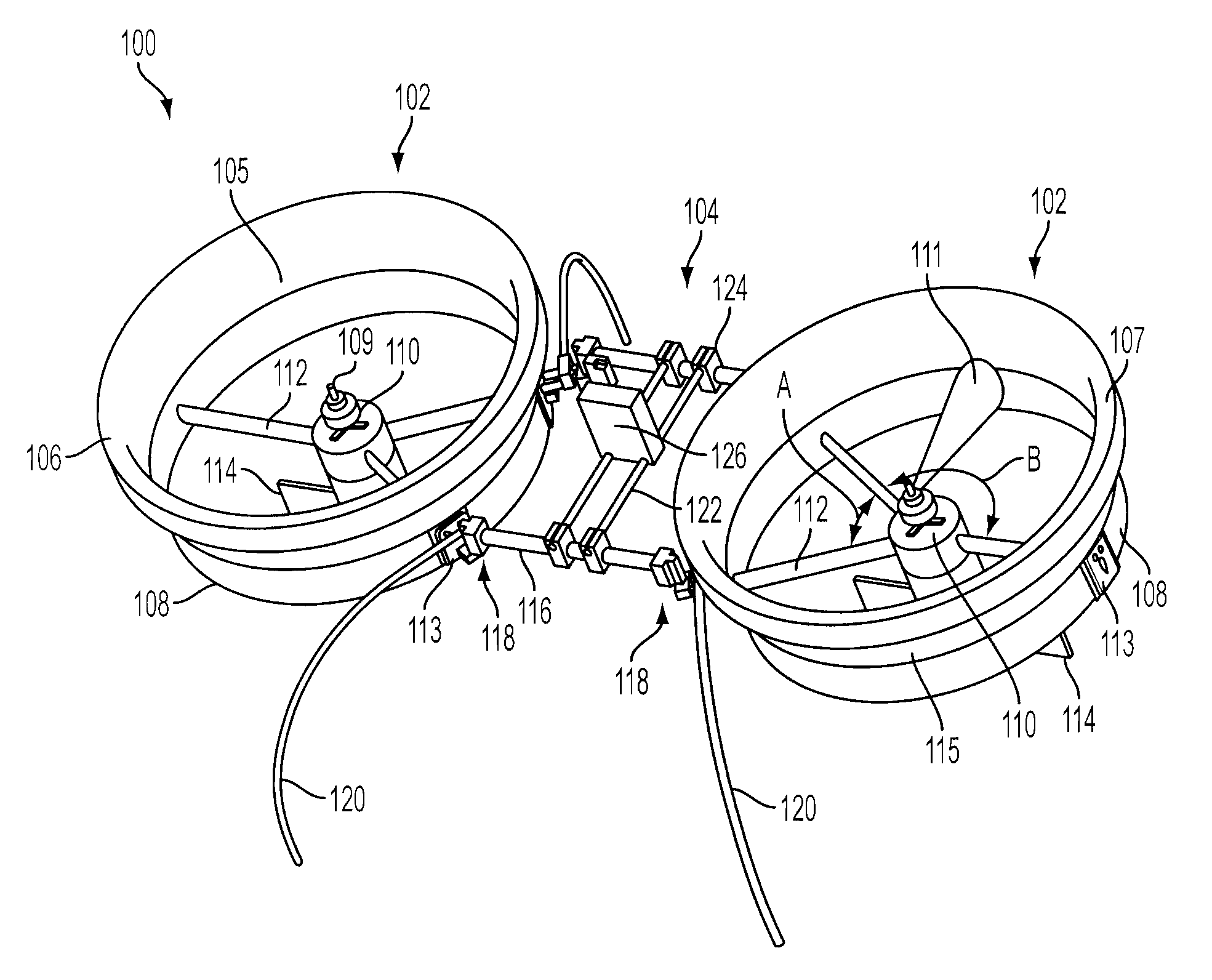
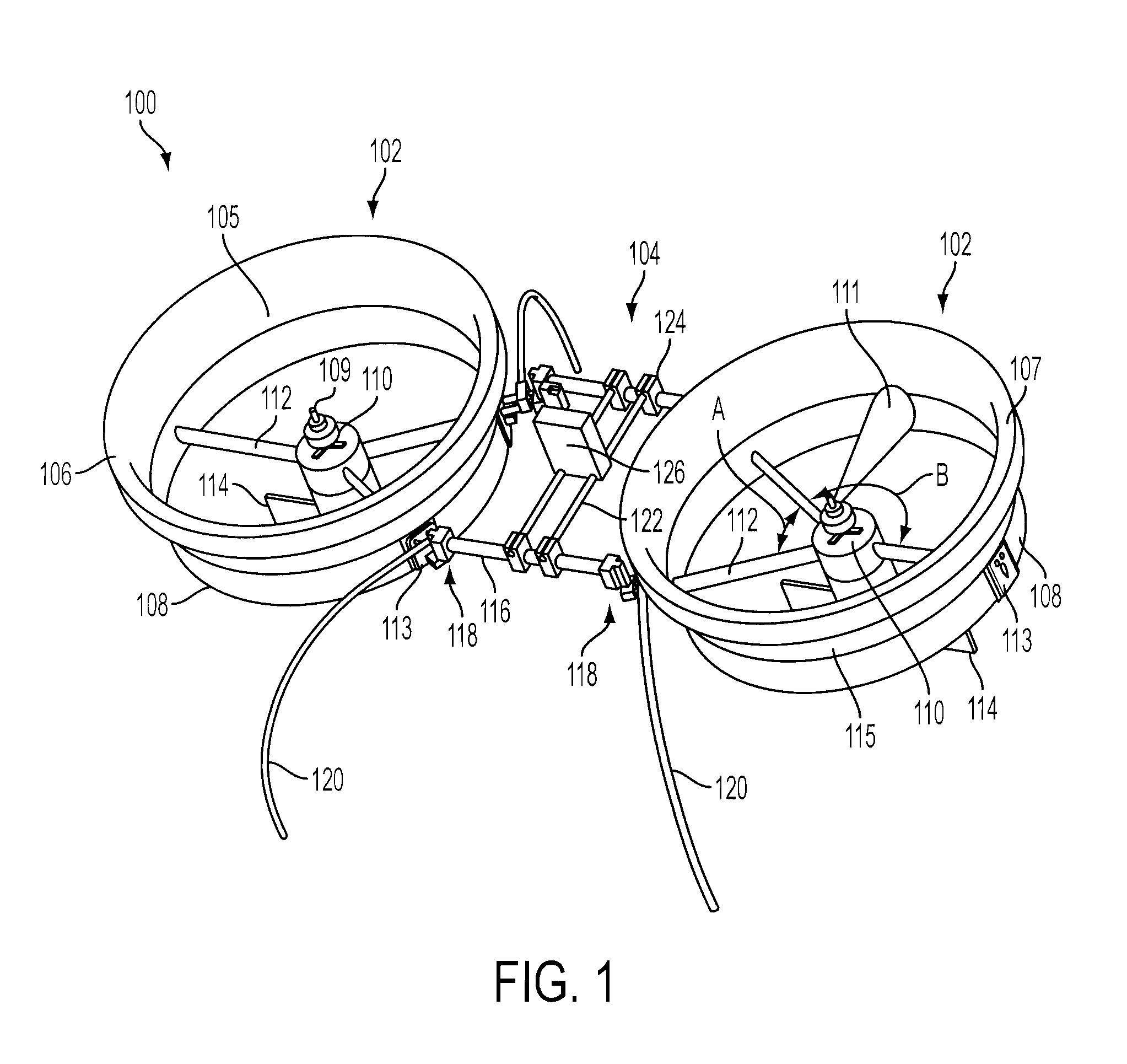
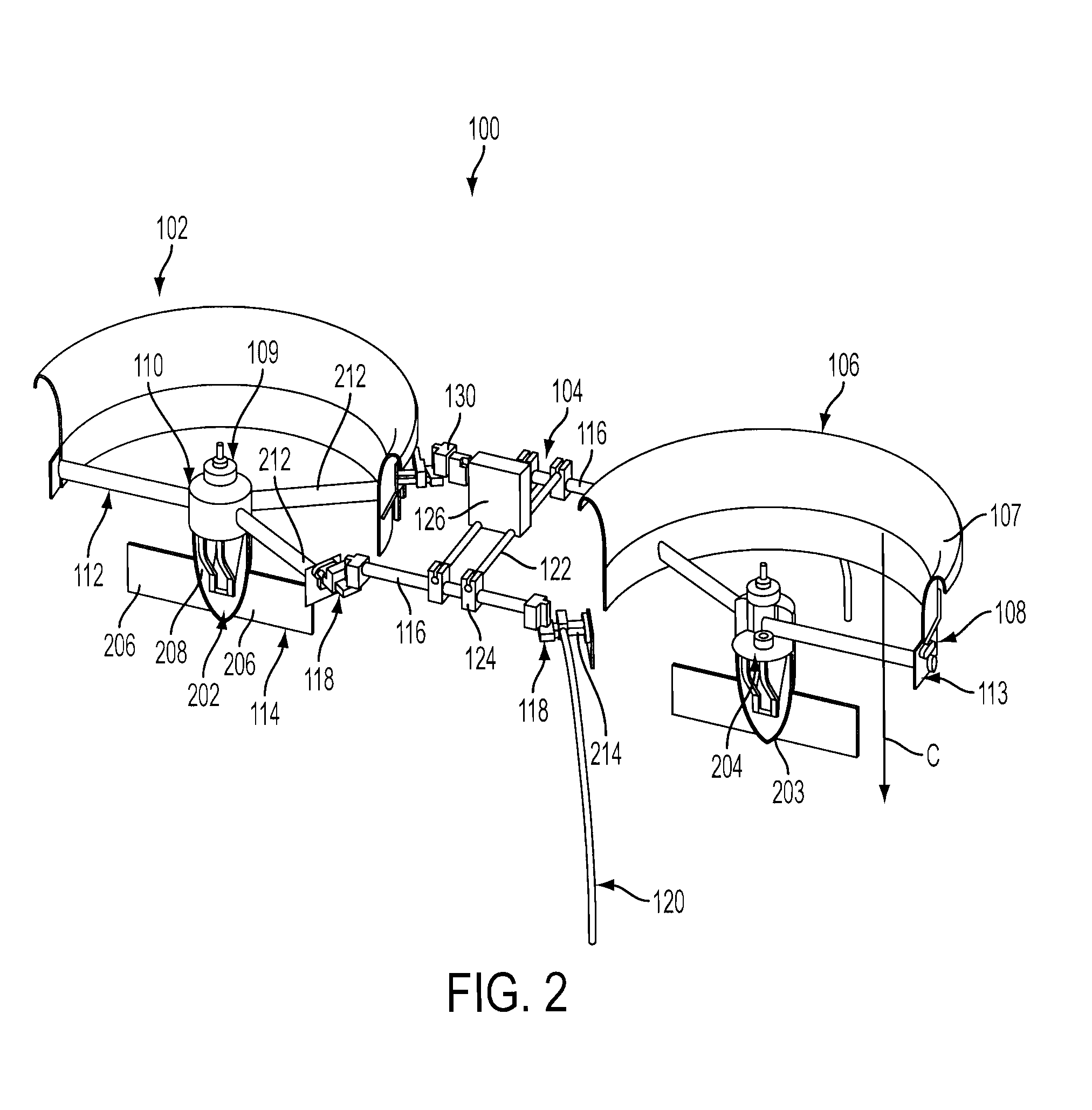
- A UAV design that utilizes composite, metal, and foam materials to reduce weight and cost, incorporates frangible elements for controlled disintegration upon impact, and separates aerodynamic and structural elements to maintain structural integrity while minimizing overall weight below hazardous limits, allowing for reduced regulatory and insurance burdens.

UAV components made from a composite comprising sheep horn powder and polymer resin
PatentActiveIN202241041436A
Innovation
- A composition comprising 20 to 50% sheep horn powder and 50 to 80% polymer resin is used to create a composite material for UAV frames, offering improved mechanical properties such as ultimate stress, maximum strain, and density, achieved by mixing sheep horn powder with a polymer resin like epoxy, which is then cured to form a lightweight yet robust structure.


Environmental Impact and Sustainability Considerations
The environmental impact of lightweight hybrid composites in UAV applications represents a critical consideration as the industry expands. Traditional aerospace materials often involve energy-intensive production processes and contain substances that pose significant environmental hazards. In contrast, many modern hybrid composites offer reduced environmental footprints through lower energy manufacturing requirements and decreased reliance on non-renewable resources. Life cycle assessments indicate that carbon fiber reinforced polymers (CFRP), despite their energy-intensive production, can achieve net environmental benefits through fuel savings during the operational phase of UAVs due to their exceptional strength-to-weight ratios.
Biodegradability and end-of-life management present significant challenges for composite materials in UAV applications. Most thermoset-based composites are difficult to recycle, creating potential waste management issues as UAV deployment increases. Recent innovations in thermoplastic-based composites and bio-derived resins offer promising alternatives with improved recyclability characteristics. Research into natural fiber reinforcements, such as flax, hemp, and bamboo fibers, demonstrates potential for reducing environmental impact while maintaining acceptable mechanical properties for specific UAV applications.
Manufacturing processes for lightweight composites are evolving toward more sustainable methodologies. Out-of-autoclave techniques reduce energy consumption compared to traditional autoclave curing, while additive manufacturing approaches minimize material waste. Water-based resin systems and solvent-free manufacturing processes further reduce volatile organic compound (VOC) emissions associated with composite production. These advancements align with increasingly stringent environmental regulations governing aerospace manufacturing.
Carbon footprint considerations extend beyond manufacturing to include the entire lifecycle of UAV composites. The reduced weight of advanced hybrid composites translates directly to lower energy consumption during operation, potentially offsetting initial production impacts. For electrically powered UAVs, lightweight structures enable extended flight times and reduced battery requirements, further enhancing sustainability benefits. Quantitative studies suggest that weight reductions of 10-15% can yield operational energy savings of 20-25% over a typical UAV service life.
Sustainable sourcing strategies are emerging as important considerations for composite manufacturers. Bio-based resins derived from renewable resources offer alternatives to petroleum-based polymers, while recycled carbon fiber presents opportunities to reduce virgin material consumption. Certification systems and environmental standards specific to aerospace composites are developing to provide frameworks for sustainable material selection and manufacturing practices, though harmonization of these standards remains a challenge across global markets.
Biodegradability and end-of-life management present significant challenges for composite materials in UAV applications. Most thermoset-based composites are difficult to recycle, creating potential waste management issues as UAV deployment increases. Recent innovations in thermoplastic-based composites and bio-derived resins offer promising alternatives with improved recyclability characteristics. Research into natural fiber reinforcements, such as flax, hemp, and bamboo fibers, demonstrates potential for reducing environmental impact while maintaining acceptable mechanical properties for specific UAV applications.
Manufacturing processes for lightweight composites are evolving toward more sustainable methodologies. Out-of-autoclave techniques reduce energy consumption compared to traditional autoclave curing, while additive manufacturing approaches minimize material waste. Water-based resin systems and solvent-free manufacturing processes further reduce volatile organic compound (VOC) emissions associated with composite production. These advancements align with increasingly stringent environmental regulations governing aerospace manufacturing.
Carbon footprint considerations extend beyond manufacturing to include the entire lifecycle of UAV composites. The reduced weight of advanced hybrid composites translates directly to lower energy consumption during operation, potentially offsetting initial production impacts. For electrically powered UAVs, lightweight structures enable extended flight times and reduced battery requirements, further enhancing sustainability benefits. Quantitative studies suggest that weight reductions of 10-15% can yield operational energy savings of 20-25% over a typical UAV service life.
Sustainable sourcing strategies are emerging as important considerations for composite manufacturers. Bio-based resins derived from renewable resources offer alternatives to petroleum-based polymers, while recycled carbon fiber presents opportunities to reduce virgin material consumption. Certification systems and environmental standards specific to aerospace composites are developing to provide frameworks for sustainable material selection and manufacturing practices, though harmonization of these standards remains a challenge across global markets.
Manufacturing Processes and Cost Analysis
The manufacturing processes for lightweight hybrid composites in UAV applications have evolved significantly to address the unique requirements of aerospace structures. Traditional manufacturing methods include hand lay-up, which offers design flexibility but suffers from inconsistent quality and labor intensity. More advanced techniques such as automated tape laying (ATL) and automated fiber placement (AFP) have emerged as preferred methods for producing high-performance UAV components, offering precision, repeatability, and reduced material waste.
Resin transfer molding (RTM) and vacuum-assisted resin transfer molding (VARTM) represent cost-effective alternatives for medium-volume production, providing excellent surface finish and dimensional accuracy. For complex geometries, compression molding and injection molding are increasingly utilized, particularly for thermoplastic matrix composites that offer advantages in terms of recyclability and rapid processing cycles.
Additive manufacturing has revolutionized prototype development and small-batch production of specialized UAV components. Technologies such as continuous fiber 3D printing enable the creation of optimized structures with tailored mechanical properties that would be impossible to achieve through conventional methods. This approach significantly reduces lead times and allows for rapid design iterations.
Cost analysis reveals that material expenses typically constitute 40-60% of total manufacturing costs for lightweight hybrid composites. Carbon fiber remains the most expensive reinforcement material at $20-100 per kilogram depending on quality, while glass fiber offers a more economical alternative at $2-10 per kilogram. Hybrid approaches combining both materials can optimize the cost-performance ratio, reducing overall expenses by 15-30% compared to pure carbon fiber composites.
Labor costs vary significantly based on manufacturing method, with automated processes reducing labor requirements by up to 70% compared to manual techniques. However, the initial capital investment for automated systems can range from $500,000 to several million dollars, necessitating careful consideration of production volumes and expected return on investment.
Quality control represents another significant cost factor, accounting for approximately 5-15% of total manufacturing expenses. Non-destructive testing methods such as ultrasonic inspection and thermography are essential for ensuring structural integrity but add to the overall cost structure. The implementation of in-process monitoring systems can reduce post-production inspection requirements while improving overall quality consistency.
Economies of scale play a crucial role in cost optimization, with studies indicating that doubling production volumes can reduce per-unit costs by 10-20% through improved material utilization, process optimization, and amortization of fixed costs. This relationship underscores the importance of strategic production planning and potential collaboration across different UAV programs to achieve cost efficiencies.
Resin transfer molding (RTM) and vacuum-assisted resin transfer molding (VARTM) represent cost-effective alternatives for medium-volume production, providing excellent surface finish and dimensional accuracy. For complex geometries, compression molding and injection molding are increasingly utilized, particularly for thermoplastic matrix composites that offer advantages in terms of recyclability and rapid processing cycles.
Additive manufacturing has revolutionized prototype development and small-batch production of specialized UAV components. Technologies such as continuous fiber 3D printing enable the creation of optimized structures with tailored mechanical properties that would be impossible to achieve through conventional methods. This approach significantly reduces lead times and allows for rapid design iterations.
Cost analysis reveals that material expenses typically constitute 40-60% of total manufacturing costs for lightweight hybrid composites. Carbon fiber remains the most expensive reinforcement material at $20-100 per kilogram depending on quality, while glass fiber offers a more economical alternative at $2-10 per kilogram. Hybrid approaches combining both materials can optimize the cost-performance ratio, reducing overall expenses by 15-30% compared to pure carbon fiber composites.
Labor costs vary significantly based on manufacturing method, with automated processes reducing labor requirements by up to 70% compared to manual techniques. However, the initial capital investment for automated systems can range from $500,000 to several million dollars, necessitating careful consideration of production volumes and expected return on investment.
Quality control represents another significant cost factor, accounting for approximately 5-15% of total manufacturing expenses. Non-destructive testing methods such as ultrasonic inspection and thermography are essential for ensuring structural integrity but add to the overall cost structure. The implementation of in-process monitoring systems can reduce post-production inspection requirements while improving overall quality consistency.
Economies of scale play a crucial role in cost optimization, with studies indicating that doubling production volumes can reduce per-unit costs by 10-20% through improved material utilization, process optimization, and amortization of fixed costs. This relationship underscores the importance of strategic production planning and potential collaboration across different UAV programs to achieve cost efficiencies.
Unlock deeper insights with PatSnap Eureka Quick Research — get a full tech report to explore trends and direct your research. Try now!
Generate Your Research Report Instantly with AI Agent
Supercharge your innovation with PatSnap Eureka AI Agent Platform!