Logic Chips vs PID Controllers: Control Efficiency Metrics
APR 2, 20269 MIN READ
Generate Your Research Report Instantly with AI Agent
PatSnap Eureka helps you evaluate technical feasibility & market potential.
Logic Chips vs PID Control Background and Objectives
The evolution of control systems has witnessed a fundamental shift from traditional analog controllers to sophisticated digital solutions, with PID controllers and logic chips representing two distinct paradigms in industrial automation. PID controllers, developed in the early 20th century, have dominated process control applications for decades due to their simplicity and effectiveness in handling linear systems. Meanwhile, the rapid advancement of semiconductor technology has introduced logic chips as powerful alternatives, offering enhanced computational capabilities and programmable flexibility.
The historical development of control systems began with mechanical governors and evolved through pneumatic and electronic analog controllers before reaching the current digital era. PID controllers gained widespread adoption in the 1940s and 1950s, becoming the industry standard for continuous process control. The emergence of microprocessors in the 1970s and subsequent development of specialized logic chips, including FPGAs and dedicated control processors, has created new possibilities for implementing complex control algorithms with superior performance characteristics.
Current technological trends indicate a growing demand for higher precision, faster response times, and greater adaptability in control systems. Industries such as aerospace, automotive, and manufacturing are pushing the boundaries of control performance, requiring solutions that can handle multi-variable systems, nonlinear dynamics, and real-time optimization. The integration of artificial intelligence and machine learning algorithms into control systems further emphasizes the need for computational platforms capable of executing sophisticated algorithms.
The primary objective of comparing logic chips versus PID controllers centers on establishing comprehensive efficiency metrics that encompass response time, computational overhead, power consumption, and implementation complexity. This evaluation aims to identify optimal application scenarios for each technology, considering factors such as system requirements, cost constraints, and performance expectations. Understanding the trade-offs between traditional PID control simplicity and logic chip versatility is crucial for making informed decisions in modern control system design.
The research seeks to quantify performance differences across various control scenarios, from simple single-loop applications to complex multi-input multi-output systems. By establishing standardized efficiency metrics, engineers can make data-driven decisions when selecting control technologies for specific applications, ultimately advancing the field of industrial automation and control system optimization.
The historical development of control systems began with mechanical governors and evolved through pneumatic and electronic analog controllers before reaching the current digital era. PID controllers gained widespread adoption in the 1940s and 1950s, becoming the industry standard for continuous process control. The emergence of microprocessors in the 1970s and subsequent development of specialized logic chips, including FPGAs and dedicated control processors, has created new possibilities for implementing complex control algorithms with superior performance characteristics.
Current technological trends indicate a growing demand for higher precision, faster response times, and greater adaptability in control systems. Industries such as aerospace, automotive, and manufacturing are pushing the boundaries of control performance, requiring solutions that can handle multi-variable systems, nonlinear dynamics, and real-time optimization. The integration of artificial intelligence and machine learning algorithms into control systems further emphasizes the need for computational platforms capable of executing sophisticated algorithms.
The primary objective of comparing logic chips versus PID controllers centers on establishing comprehensive efficiency metrics that encompass response time, computational overhead, power consumption, and implementation complexity. This evaluation aims to identify optimal application scenarios for each technology, considering factors such as system requirements, cost constraints, and performance expectations. Understanding the trade-offs between traditional PID control simplicity and logic chip versatility is crucial for making informed decisions in modern control system design.
The research seeks to quantify performance differences across various control scenarios, from simple single-loop applications to complex multi-input multi-output systems. By establishing standardized efficiency metrics, engineers can make data-driven decisions when selecting control technologies for specific applications, ultimately advancing the field of industrial automation and control system optimization.
Market Demand for Advanced Control Solutions
The global control systems market is experiencing unprecedented growth driven by the increasing complexity of industrial processes and the demand for higher precision in automation applications. Manufacturing industries across automotive, aerospace, chemical processing, and semiconductor sectors are seeking advanced control solutions that can deliver superior performance while maintaining cost-effectiveness. This surge in demand stems from the need to optimize production efficiency, reduce operational costs, and meet stringent quality standards in competitive markets.
Traditional PID controllers have dominated the control systems landscape for decades due to their simplicity, reliability, and well-understood implementation characteristics. However, emerging applications in high-speed manufacturing, precision robotics, and real-time processing systems are pushing the boundaries of conventional control methodologies. Industries are increasingly recognizing that legacy control approaches may not adequately address the performance requirements of next-generation automated systems.
The semiconductor and electronics manufacturing sectors represent particularly lucrative markets for advanced control solutions. These industries require ultra-precise control mechanisms capable of handling complex multi-variable systems with minimal latency. Logic chip-based control systems are gaining traction in these applications due to their ability to implement sophisticated algorithms and provide deterministic response times that traditional analog controllers cannot match.
Automotive manufacturing and electric vehicle production lines are driving significant demand for hybrid control architectures that combine the reliability of PID controllers with the computational power of logic-based systems. The integration of Industry 4.0 principles and smart manufacturing concepts is creating new market opportunities for control solutions that can seamlessly interface with digital ecosystems while maintaining real-time performance characteristics.
The aerospace and defense sectors are increasingly adopting logic chip-based control systems for mission-critical applications where failure is not an option. These markets demand control solutions with built-in redundancy, fault tolerance, and the ability to adapt to changing operational conditions without human intervention. The growing emphasis on autonomous systems and unmanned platforms is further accelerating the adoption of intelligent control architectures.
Energy sector applications, including renewable energy systems and smart grid infrastructure, are creating substantial market demand for advanced control solutions capable of managing distributed systems with varying operational parameters. The transition toward sustainable energy sources requires control systems that can efficiently manage power generation, distribution, and storage while maintaining grid stability and optimizing energy utilization across complex networks.
Traditional PID controllers have dominated the control systems landscape for decades due to their simplicity, reliability, and well-understood implementation characteristics. However, emerging applications in high-speed manufacturing, precision robotics, and real-time processing systems are pushing the boundaries of conventional control methodologies. Industries are increasingly recognizing that legacy control approaches may not adequately address the performance requirements of next-generation automated systems.
The semiconductor and electronics manufacturing sectors represent particularly lucrative markets for advanced control solutions. These industries require ultra-precise control mechanisms capable of handling complex multi-variable systems with minimal latency. Logic chip-based control systems are gaining traction in these applications due to their ability to implement sophisticated algorithms and provide deterministic response times that traditional analog controllers cannot match.
Automotive manufacturing and electric vehicle production lines are driving significant demand for hybrid control architectures that combine the reliability of PID controllers with the computational power of logic-based systems. The integration of Industry 4.0 principles and smart manufacturing concepts is creating new market opportunities for control solutions that can seamlessly interface with digital ecosystems while maintaining real-time performance characteristics.
The aerospace and defense sectors are increasingly adopting logic chip-based control systems for mission-critical applications where failure is not an option. These markets demand control solutions with built-in redundancy, fault tolerance, and the ability to adapt to changing operational conditions without human intervention. The growing emphasis on autonomous systems and unmanned platforms is further accelerating the adoption of intelligent control architectures.
Energy sector applications, including renewable energy systems and smart grid infrastructure, are creating substantial market demand for advanced control solutions capable of managing distributed systems with varying operational parameters. The transition toward sustainable energy sources requires control systems that can efficiently manage power generation, distribution, and storage while maintaining grid stability and optimizing energy utilization across complex networks.
Current State of Logic Chips and PID Controller Technologies
Logic chips have evolved significantly in recent decades, transitioning from simple discrete components to highly integrated programmable solutions. Field-Programmable Gate Arrays (FPGAs) and Application-Specific Integrated Circuits (ASICs) now dominate the landscape, offering unprecedented processing speeds and parallel computation capabilities. Modern logic chips can execute complex control algorithms with nanosecond-level response times, making them increasingly attractive for high-frequency control applications.
Contemporary FPGA platforms from leading manufacturers like Xilinx, Intel, and Lattice provide sophisticated development environments with hardware description languages and high-level synthesis tools. These platforms support real-time processing capabilities exceeding 500 MHz clock frequencies, enabling implementation of advanced control strategies including model predictive control and adaptive algorithms. The integration of embedded processors within FPGAs has further enhanced their versatility in control system applications.
PID controller technology has reached remarkable maturity, with implementations spanning from analog circuits to sophisticated digital platforms. Modern industrial PID controllers incorporate advanced features such as auto-tuning algorithms, gain scheduling, and anti-windup mechanisms. Leading manufacturers including Siemens, ABB, and Honeywell offer controllers with sub-millisecond sampling rates and extensive communication protocols for industrial automation networks.
Digital PID implementations have benefited from improved microprocessor architectures and floating-point processing units. Current controllers support multiple control loops simultaneously, with some systems managing hundreds of control channels within a single device. Advanced PID variants including cascade control, feedforward compensation, and fuzzy logic integration have expanded their applicability across diverse industrial sectors.
The convergence of these technologies presents interesting hybrid approaches. System-on-Chip solutions now integrate both programmable logic and dedicated PID processing cores, offering the flexibility of custom logic implementation alongside proven PID algorithms. This technological convergence is reshaping control system architectures, particularly in applications requiring both high-speed discrete control and continuous process regulation.
Emerging challenges include managing increased system complexity, ensuring real-time determinism in multi-core environments, and addressing cybersecurity concerns in networked control systems. The ongoing development of edge computing capabilities and artificial intelligence integration continues to influence both technology domains.
Contemporary FPGA platforms from leading manufacturers like Xilinx, Intel, and Lattice provide sophisticated development environments with hardware description languages and high-level synthesis tools. These platforms support real-time processing capabilities exceeding 500 MHz clock frequencies, enabling implementation of advanced control strategies including model predictive control and adaptive algorithms. The integration of embedded processors within FPGAs has further enhanced their versatility in control system applications.
PID controller technology has reached remarkable maturity, with implementations spanning from analog circuits to sophisticated digital platforms. Modern industrial PID controllers incorporate advanced features such as auto-tuning algorithms, gain scheduling, and anti-windup mechanisms. Leading manufacturers including Siemens, ABB, and Honeywell offer controllers with sub-millisecond sampling rates and extensive communication protocols for industrial automation networks.
Digital PID implementations have benefited from improved microprocessor architectures and floating-point processing units. Current controllers support multiple control loops simultaneously, with some systems managing hundreds of control channels within a single device. Advanced PID variants including cascade control, feedforward compensation, and fuzzy logic integration have expanded their applicability across diverse industrial sectors.
The convergence of these technologies presents interesting hybrid approaches. System-on-Chip solutions now integrate both programmable logic and dedicated PID processing cores, offering the flexibility of custom logic implementation alongside proven PID algorithms. This technological convergence is reshaping control system architectures, particularly in applications requiring both high-speed discrete control and continuous process regulation.
Emerging challenges include managing increased system complexity, ensuring real-time determinism in multi-core environments, and addressing cybersecurity concerns in networked control systems. The ongoing development of edge computing capabilities and artificial intelligence integration continues to influence both technology domains.
Existing Control Efficiency Solutions and Implementations
01 Integration of logic chips with PID controllers for enhanced control systems
Logic chips can be integrated with PID controllers to create advanced control systems that improve efficiency and response time. The logic chips handle complex computational tasks and decision-making processes, while the PID controllers manage the feedback loop for precise control. This integration enables faster processing of control algorithms and more accurate system adjustments, leading to improved overall system performance and energy efficiency.- Integration of logic chips with PID controllers for enhanced control systems: Logic chips can be integrated with PID controllers to create advanced control systems that improve efficiency and response time. The logic chips handle complex computational tasks and decision-making processes, while the PID controllers manage the feedback loop for precise control. This integration enables faster processing of control algorithms and more accurate system adjustments, leading to improved overall system performance and energy efficiency.
- Adaptive PID control using programmable logic devices: Programmable logic devices can be utilized to implement adaptive PID control algorithms that automatically adjust control parameters based on system conditions. This approach allows for real-time optimization of control performance without manual intervention. The adaptive nature of these systems enables them to maintain optimal efficiency across varying operating conditions and load changes, resulting in improved stability and reduced energy consumption.
- Digital signal processing in PID control loops: Digital signal processors and logic circuits can be employed to enhance PID control loops by providing high-speed computation and filtering capabilities. These components enable more sophisticated control strategies, including multi-variable control and advanced filtering techniques. The digital processing approach allows for better noise rejection, improved setpoint tracking, and faster response to disturbances, ultimately leading to higher control efficiency.
- Microcontroller-based PID implementation for industrial applications: Microcontrollers with integrated logic capabilities provide a cost-effective solution for implementing PID control in industrial settings. These devices combine processing power with peripheral interfaces, enabling direct control of actuators and sensors. The implementation allows for flexible parameter tuning, data logging, and communication with supervisory systems, contributing to improved process efficiency and reduced operational costs.
- FPGA-based parallel processing for multi-loop PID control: Field-programmable gate arrays enable parallel implementation of multiple PID control loops, significantly improving system throughput and response time. This architecture is particularly beneficial for complex systems requiring simultaneous control of multiple parameters. The parallel processing capability reduces latency and enables more sophisticated control strategies, resulting in enhanced system stability and energy efficiency across multiple control zones.
02 Adaptive PID control using programmable logic devices
Programmable logic devices can be utilized to implement adaptive PID control algorithms that automatically adjust control parameters based on system conditions. This approach allows for real-time optimization of control performance without manual intervention. The adaptive nature of these systems enables them to maintain optimal efficiency across varying operating conditions and load changes, resulting in improved stability and reduced energy consumption.Expand Specific Solutions03 Digital signal processing in PID control circuits
Digital signal processors and logic circuits can be employed to enhance PID control functionality through advanced signal processing techniques. These implementations allow for more sophisticated filtering, noise reduction, and signal conditioning, which improve the accuracy of control decisions. The digital approach also enables easier parameter tuning and the implementation of complex control strategies that would be difficult to achieve with analog systems.Expand Specific Solutions04 Multi-loop PID control with centralized logic processing
Centralized logic processing units can coordinate multiple PID control loops simultaneously, enabling efficient management of complex systems with multiple controlled variables. This architecture allows for inter-loop communication and coordination, preventing conflicts between different control objectives. The centralized approach improves overall system efficiency by optimizing the interaction between multiple control loops and reducing computational redundancy.Expand Specific Solutions05 Fuzzy logic enhancement of PID controllers
Fuzzy logic algorithms can be combined with traditional PID control to handle non-linear systems and uncertain conditions more effectively. This hybrid approach uses logic-based reasoning to adjust PID parameters dynamically or to supplement PID output with fuzzy inference results. The combination provides better control performance in complex scenarios where traditional PID controllers may struggle, leading to improved efficiency and robustness in challenging operating environments.Expand Specific Solutions
Key Players in Logic Chip and PID Controller Markets
The control systems industry comparing logic chips and PID controllers is experiencing a mature growth phase, with the global market reaching approximately $180 billion annually. The competitive landscape is dominated by established industrial automation giants including Siemens AG, Honeywell International, OMRON Corp., and Yokogawa Electric Corp., who leverage decades of PID controller expertise. Technology maturity varies significantly across segments - traditional PID controllers represent highly mature technology with incremental improvements, while logic chip-based control systems are rapidly advancing through companies like Infineon Technologies AG, SG Micro Corp., and Asahi Kasei Microsystems. The industry shows clear bifurcation between legacy analog control providers and emerging digital solution developers, with academic institutions like Harbin Institute of Technology and University of Delaware driving next-generation research in hybrid control architectures that combine both approaches for optimized efficiency metrics.
Siemens AG
Technical Solution: Siemens has developed advanced SIMATIC PCS 7 and TIA Portal systems that integrate both logic-based control and traditional PID controllers for optimal process control efficiency. Their approach combines programmable logic controllers (PLCs) with sophisticated PID algorithms, enabling real-time performance monitoring and adaptive control strategies. The system utilizes distributed control architecture where logic chips handle discrete control functions while PID controllers manage continuous process variables, achieving response times under 1ms for critical applications and maintaining control accuracy within ±0.1% for industrial processes.
Strengths: Industry-leading integration capabilities, proven reliability in harsh industrial environments, comprehensive diagnostic tools. Weaknesses: High implementation costs, complex configuration requirements, vendor lock-in concerns.
Honeywell International Technologies Ltd.
Technical Solution: Honeywell's Experion PKS platform employs hybrid control architecture combining FPGA-based logic chips with advanced PID control algorithms for enhanced process control efficiency. Their C300 controllers feature dual-core processors running at 1.2GHz, providing deterministic control execution with cycle times as low as 5ms. The system implements model predictive control (MPC) alongside traditional PID loops, enabling predictive adjustments and reducing process variability by up to 50%. The platform supports over 2000 I/O points per controller and maintains 99.99% availability through redundant architecture design.
Strengths: High-performance processing capabilities, excellent scalability, robust cybersecurity features. Weaknesses: Requires specialized training, higher maintenance costs, limited third-party integration options.
Core Innovations in Logic-Based vs PID Control Methods
Method and a system for tuning multivariable PID controller
PatentActiveUS20140236316A1
Innovation
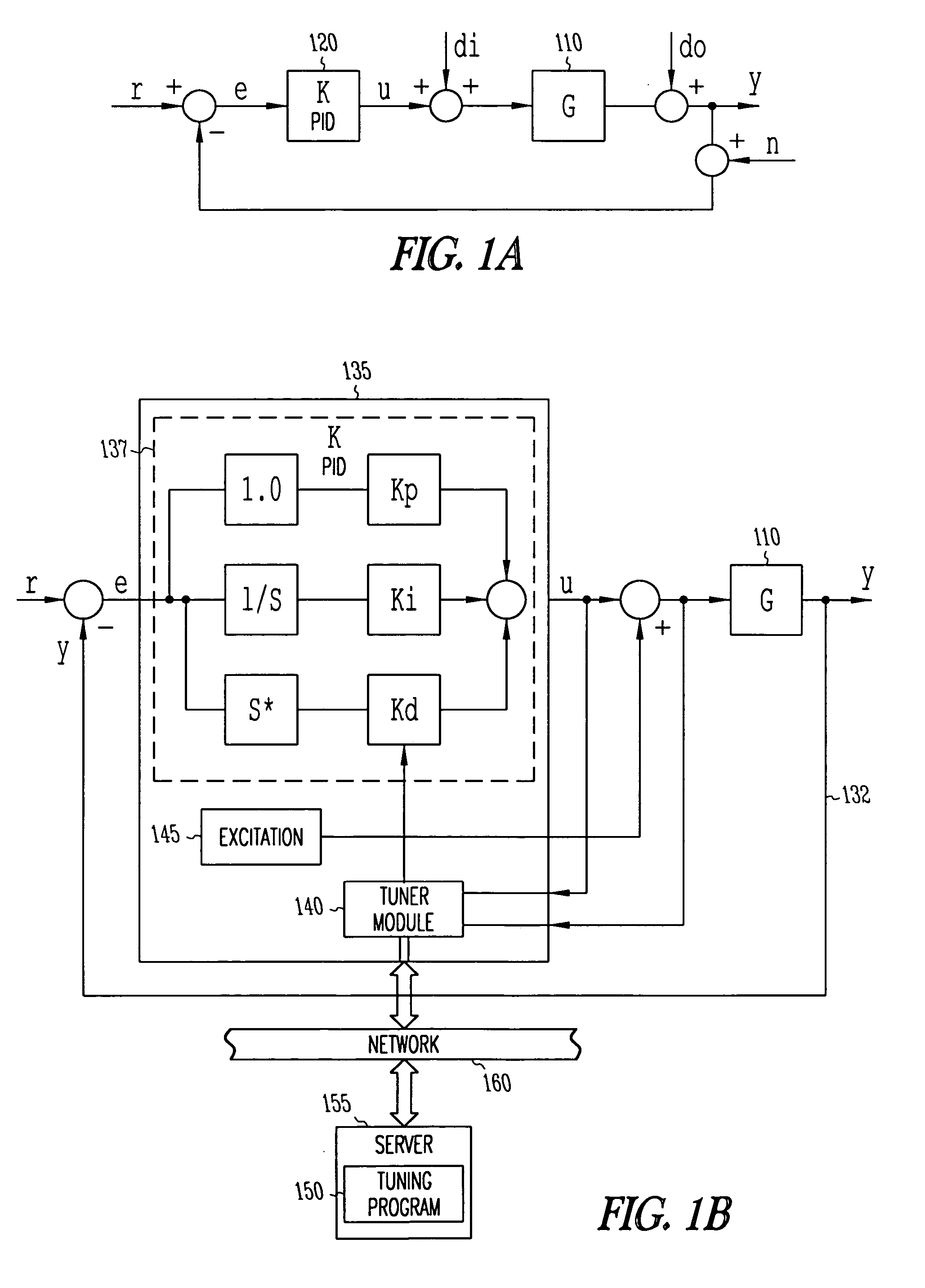
- The use of Model Predictive Control (MPC) to formulate a process model, obtain affine control solutions, and determine equivalent PID tuning parameters for adaptive multivariable PID controllers, enabling optimal control across designated regions.


On-demand auto-tuner for a plant control system
PatentInactiveUS20070073422A1
Innovation
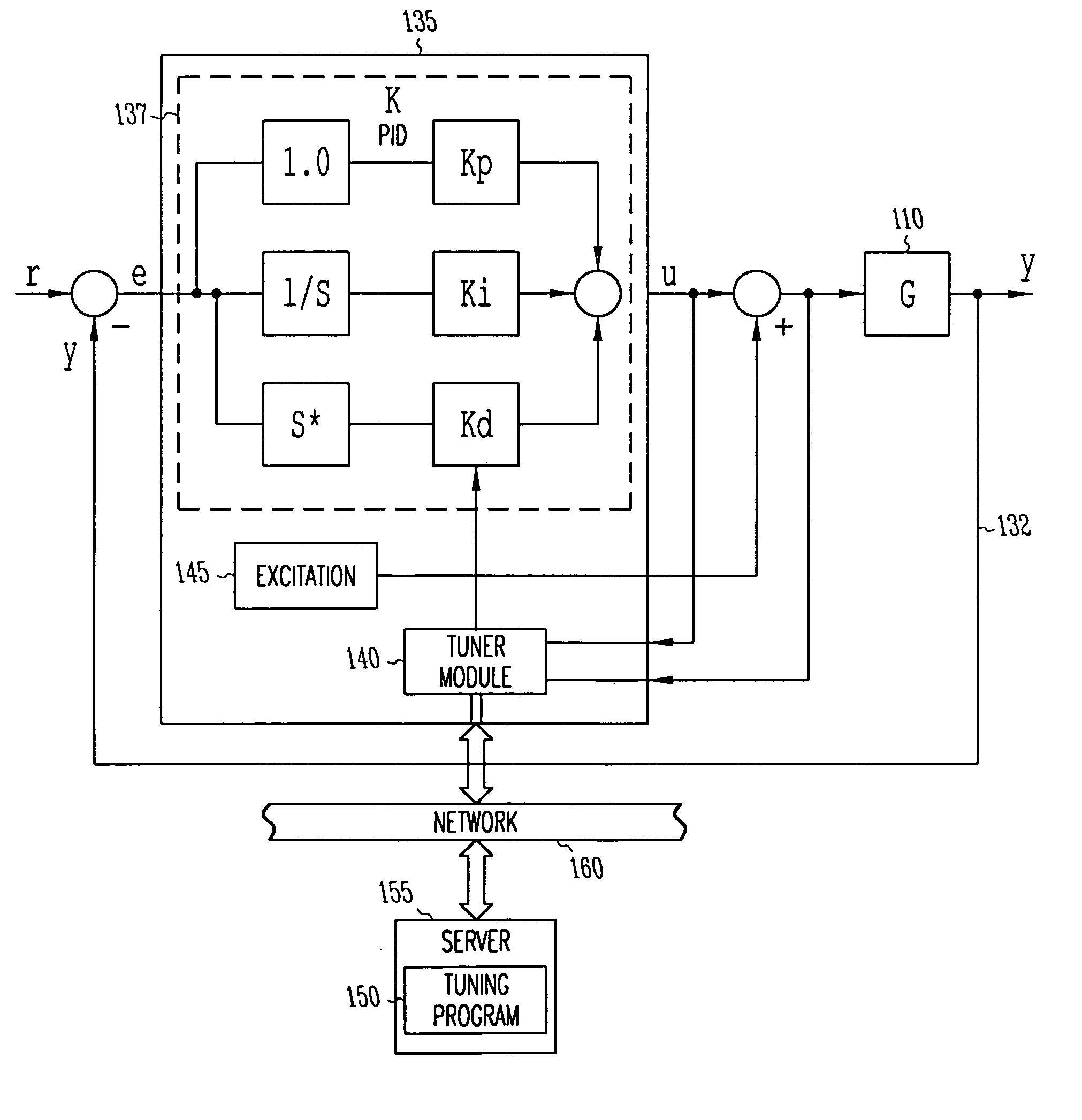
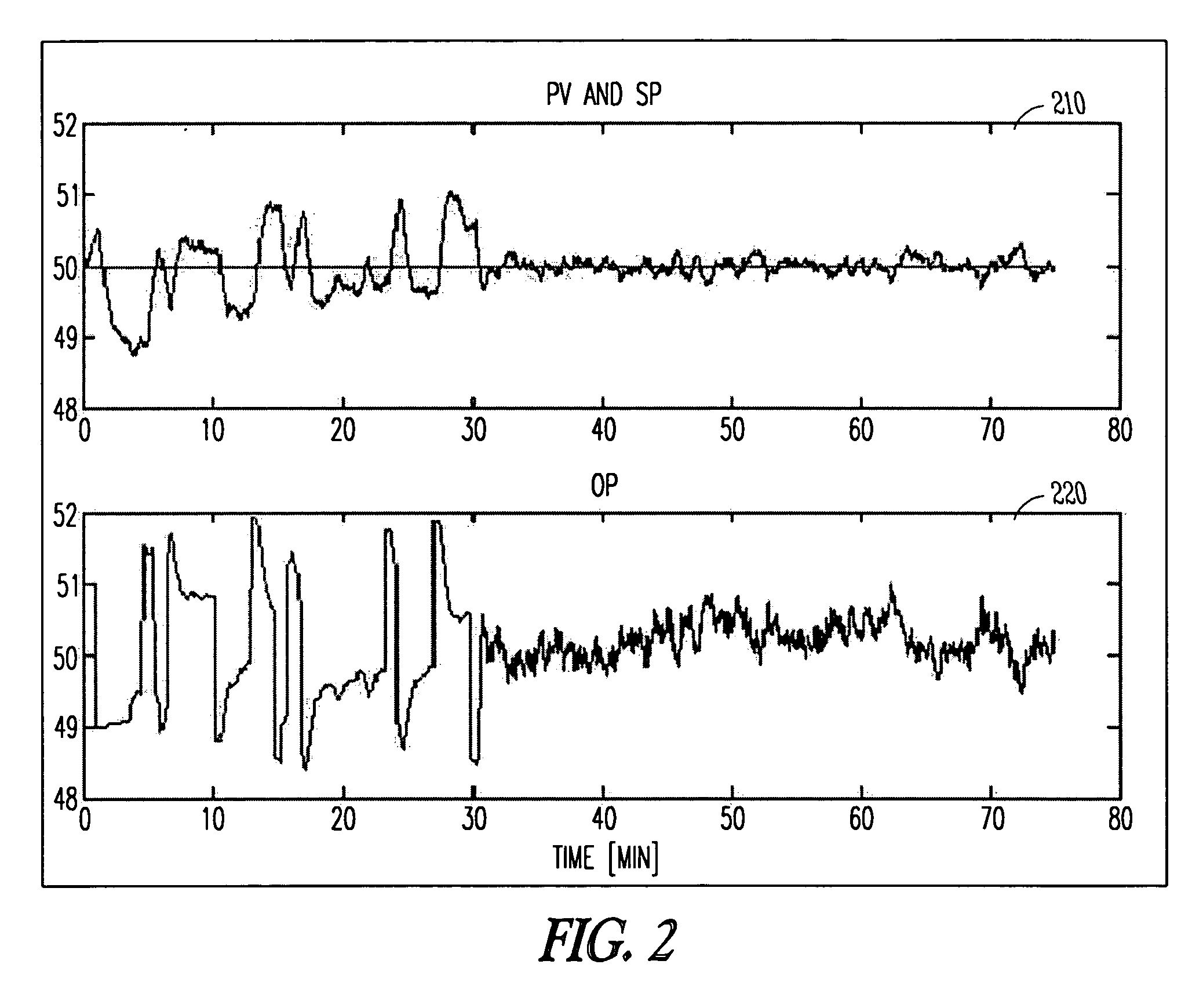
- A system and method for auto-tuning distributed control plant systems, which includes a controller with a tuner module that automatically sets the bandwidth and adjusts coefficients of the controller transfer function to match a target transfer function, using input excitation and fit-error criteria to iteratively refine the tuning process.

Performance Benchmarking and Evaluation Standards
Establishing comprehensive performance benchmarking and evaluation standards for logic chips versus PID controllers requires a multi-dimensional framework that addresses both quantitative metrics and qualitative assessment criteria. The fundamental challenge lies in creating standardized measurement protocols that can fairly compare these fundamentally different control architectures while accounting for their distinct operational characteristics and application contexts.
Response time benchmarking represents a critical evaluation dimension, necessitating precise measurement methodologies for both steady-state and transient performance. Logic chips typically demonstrate deterministic response patterns with nanosecond-level precision, while PID controllers exhibit continuous-time responses that require different measurement approaches. Standardized test protocols must define specific input signal characteristics, measurement sampling rates, and environmental conditions to ensure reproducible results across different testing scenarios.
Accuracy and precision standards form another essential evaluation pillar, requiring establishment of reference control scenarios with known optimal responses. These benchmarks should encompass various control challenges including setpoint tracking, disturbance rejection, and noise immunity. The evaluation framework must account for different accuracy metrics such as steady-state error, overshoot percentage, and settling time, while considering the statistical significance of measurements across multiple test iterations.
Energy efficiency evaluation standards present unique challenges due to the different power consumption profiles of digital logic systems versus analog PID implementations. Standardized power measurement protocols must consider both active processing power and standby consumption, while accounting for the relationship between computational complexity and energy usage in logic-based systems versus the continuous operation characteristics of traditional PID controllers.
Robustness and reliability benchmarking requires comprehensive stress testing protocols that evaluate performance degradation under various adverse conditions. These standards should define specific test scenarios including temperature variations, electromagnetic interference, component aging effects, and input signal corruption. The evaluation framework must establish acceptable performance thresholds and failure criteria that reflect real-world operational requirements.
Scalability assessment standards become increasingly important as control systems grow in complexity. The benchmarking framework should evaluate how each approach handles increasing numbers of control loops, higher-frequency operations, and expanded parameter ranges. This includes measuring computational overhead scaling, memory requirements, and maintenance complexity as system demands increase.
Response time benchmarking represents a critical evaluation dimension, necessitating precise measurement methodologies for both steady-state and transient performance. Logic chips typically demonstrate deterministic response patterns with nanosecond-level precision, while PID controllers exhibit continuous-time responses that require different measurement approaches. Standardized test protocols must define specific input signal characteristics, measurement sampling rates, and environmental conditions to ensure reproducible results across different testing scenarios.
Accuracy and precision standards form another essential evaluation pillar, requiring establishment of reference control scenarios with known optimal responses. These benchmarks should encompass various control challenges including setpoint tracking, disturbance rejection, and noise immunity. The evaluation framework must account for different accuracy metrics such as steady-state error, overshoot percentage, and settling time, while considering the statistical significance of measurements across multiple test iterations.
Energy efficiency evaluation standards present unique challenges due to the different power consumption profiles of digital logic systems versus analog PID implementations. Standardized power measurement protocols must consider both active processing power and standby consumption, while accounting for the relationship between computational complexity and energy usage in logic-based systems versus the continuous operation characteristics of traditional PID controllers.
Robustness and reliability benchmarking requires comprehensive stress testing protocols that evaluate performance degradation under various adverse conditions. These standards should define specific test scenarios including temperature variations, electromagnetic interference, component aging effects, and input signal corruption. The evaluation framework must establish acceptable performance thresholds and failure criteria that reflect real-world operational requirements.
Scalability assessment standards become increasingly important as control systems grow in complexity. The benchmarking framework should evaluate how each approach handles increasing numbers of control loops, higher-frequency operations, and expanded parameter ranges. This includes measuring computational overhead scaling, memory requirements, and maintenance complexity as system demands increase.
Cost-Benefit Analysis of Control System Implementations
The economic evaluation of logic chip-based control systems versus traditional PID controllers reveals significant variations in initial investment requirements and operational expenditures. Logic chip implementations typically demand higher upfront capital due to sophisticated hardware components, specialized development tools, and extended engineering design phases. Initial costs for logic chip systems can range from 150% to 300% higher than conventional PID solutions, primarily attributed to custom silicon development, advanced testing equipment, and specialized programming environments.
Operational cost structures demonstrate contrasting patterns between these control methodologies. PID controllers exhibit predictable maintenance cycles with standardized replacement components and widely available technical expertise, resulting in lower ongoing operational expenses. Logic chip systems, while requiring minimal physical maintenance due to solid-state architecture, necessitate specialized technical support and periodic firmware updates that can increase long-term operational costs by approximately 20-40%.
Performance-based economic benefits favor logic chip implementations in high-throughput applications. Enhanced processing capabilities enable simultaneous multi-loop control operations, reducing system complexity and eliminating redundant hardware components. This consolidation effect can yield cost savings of 25-35% in large-scale industrial applications where multiple control loops are required. Additionally, improved response times and precision control characteristics translate to reduced material waste and enhanced product quality, generating measurable economic returns.
Energy consumption analysis reveals logic chips consume 40-60% less power compared to equivalent PID controller networks, particularly in applications requiring multiple control loops. This energy efficiency advantage becomes economically significant in continuous operation environments, where annual energy cost reductions can offset higher initial investments within 18-24 months.
Return on investment calculations indicate logic chip solutions achieve break-even points faster in applications demanding high precision, rapid response times, or complex control algorithms. Manufacturing environments with stringent quality requirements typically realize positive ROI within 2-3 years, while simpler control applications may require 4-5 years to justify the additional investment. The economic viability ultimately depends on application complexity, operational scale, and performance requirements specific to each implementation scenario.
Operational cost structures demonstrate contrasting patterns between these control methodologies. PID controllers exhibit predictable maintenance cycles with standardized replacement components and widely available technical expertise, resulting in lower ongoing operational expenses. Logic chip systems, while requiring minimal physical maintenance due to solid-state architecture, necessitate specialized technical support and periodic firmware updates that can increase long-term operational costs by approximately 20-40%.
Performance-based economic benefits favor logic chip implementations in high-throughput applications. Enhanced processing capabilities enable simultaneous multi-loop control operations, reducing system complexity and eliminating redundant hardware components. This consolidation effect can yield cost savings of 25-35% in large-scale industrial applications where multiple control loops are required. Additionally, improved response times and precision control characteristics translate to reduced material waste and enhanced product quality, generating measurable economic returns.
Energy consumption analysis reveals logic chips consume 40-60% less power compared to equivalent PID controller networks, particularly in applications requiring multiple control loops. This energy efficiency advantage becomes economically significant in continuous operation environments, where annual energy cost reductions can offset higher initial investments within 18-24 months.
Return on investment calculations indicate logic chip solutions achieve break-even points faster in applications demanding high precision, rapid response times, or complex control algorithms. Manufacturing environments with stringent quality requirements typically realize positive ROI within 2-3 years, while simpler control applications may require 4-5 years to justify the additional investment. The economic viability ultimately depends on application complexity, operational scale, and performance requirements specific to each implementation scenario.
Unlock deeper insights with PatSnap Eureka Quick Research — get a full tech report to explore trends and direct your research. Try now!
Generate Your Research Report Instantly with AI Agent
Supercharge your innovation with PatSnap Eureka AI Agent Platform!