

Longitudinal wave description in digital twin frameworks
AUG 13, 20259 MIN READ
Generate Your Research Report Instantly with AI Agent
PatSnap Eureka helps you evaluate technical feasibility & market potential.
Digital Twin Evolution
The concept of digital twins has undergone significant evolution since its inception in the early 2000s. Initially conceived as a virtual representation of physical assets, digital twins have transformed into complex, dynamic systems that integrate real-time data, advanced analytics, and simulation capabilities.
In the early stages, digital twins were primarily used in manufacturing and aerospace industries for product lifecycle management. These early iterations focused on creating static models of physical objects, with limited real-time data integration. As technology advanced, the scope and capabilities of digital twins expanded rapidly.
The introduction of Internet of Things (IoT) technologies marked a pivotal moment in digital twin evolution. IoT sensors enabled continuous data collection from physical assets, allowing digital twins to reflect real-time conditions and behaviors. This shift from static to dynamic models significantly enhanced the accuracy and utility of digital twins across various industries.
Cloud computing and big data analytics further accelerated the development of digital twins. These technologies enabled the processing and analysis of vast amounts of data, leading to more sophisticated predictive modeling and simulation capabilities. As a result, digital twins became powerful tools for optimizing operations, predicting maintenance needs, and improving overall system performance.
The integration of artificial intelligence and machine learning algorithms represented another major leap in digital twin evolution. These technologies enabled digital twins to learn from historical data, adapt to changing conditions, and make autonomous decisions. This advancement transformed digital twins from passive representations to active, intelligent systems capable of providing valuable insights and recommendations.
Recent developments in digital twin technology have focused on enhancing interoperability and scalability. The creation of standardized frameworks and protocols has facilitated the integration of digital twins across different systems and platforms. This has led to the emergence of complex, interconnected digital twin ecosystems that can model entire supply chains, cities, or even global systems.
The incorporation of longitudinal wave descriptions into digital twin frameworks represents a cutting-edge development in this field. This advancement allows for more accurate modeling of dynamic systems that involve wave propagation, such as in structural health monitoring, seismic analysis, and acoustic engineering applications. By integrating longitudinal wave descriptions, digital twins can now capture and simulate complex wave behaviors, enhancing their predictive capabilities and expanding their applicability to new domains.
In the early stages, digital twins were primarily used in manufacturing and aerospace industries for product lifecycle management. These early iterations focused on creating static models of physical objects, with limited real-time data integration. As technology advanced, the scope and capabilities of digital twins expanded rapidly.
The introduction of Internet of Things (IoT) technologies marked a pivotal moment in digital twin evolution. IoT sensors enabled continuous data collection from physical assets, allowing digital twins to reflect real-time conditions and behaviors. This shift from static to dynamic models significantly enhanced the accuracy and utility of digital twins across various industries.
Cloud computing and big data analytics further accelerated the development of digital twins. These technologies enabled the processing and analysis of vast amounts of data, leading to more sophisticated predictive modeling and simulation capabilities. As a result, digital twins became powerful tools for optimizing operations, predicting maintenance needs, and improving overall system performance.
The integration of artificial intelligence and machine learning algorithms represented another major leap in digital twin evolution. These technologies enabled digital twins to learn from historical data, adapt to changing conditions, and make autonomous decisions. This advancement transformed digital twins from passive representations to active, intelligent systems capable of providing valuable insights and recommendations.
Recent developments in digital twin technology have focused on enhancing interoperability and scalability. The creation of standardized frameworks and protocols has facilitated the integration of digital twins across different systems and platforms. This has led to the emergence of complex, interconnected digital twin ecosystems that can model entire supply chains, cities, or even global systems.
The incorporation of longitudinal wave descriptions into digital twin frameworks represents a cutting-edge development in this field. This advancement allows for more accurate modeling of dynamic systems that involve wave propagation, such as in structural health monitoring, seismic analysis, and acoustic engineering applications. By integrating longitudinal wave descriptions, digital twins can now capture and simulate complex wave behaviors, enhancing their predictive capabilities and expanding their applicability to new domains.
Market Demand Analysis
The market demand for longitudinal wave description in digital twin frameworks is experiencing significant growth, driven by the increasing adoption of digital twin technology across various industries. As organizations seek to create more accurate and comprehensive virtual representations of physical assets and processes, the need for advanced wave modeling techniques has become paramount.
In the manufacturing sector, there is a growing demand for digital twin solutions that can accurately simulate and predict the behavior of materials under different stress conditions. Longitudinal wave description plays a crucial role in this context, enabling engineers to model and analyze the propagation of stress waves through complex structures. This capability is particularly valuable in industries such as aerospace, automotive, and construction, where understanding material behavior under dynamic loads is essential for product design and safety.
The energy sector, particularly in oil and gas exploration, has shown a strong interest in incorporating longitudinal wave descriptions into digital twin frameworks. These models help in predicting the behavior of subsurface formations during seismic surveys and drilling operations, leading to more efficient resource extraction and reduced environmental impact. The ability to simulate wave propagation through different geological layers provides valuable insights for reservoir characterization and well placement strategies.
In the field of structural health monitoring, there is an increasing demand for digital twin solutions that can accurately model the propagation of longitudinal waves through buildings, bridges, and other infrastructure. This capability allows for early detection of structural defects, fatigue, and potential failure points, enhancing safety and reducing maintenance costs. The integration of longitudinal wave descriptions into digital twin frameworks enables real-time monitoring and predictive maintenance strategies, which are highly valued by infrastructure managers and city planners.
The healthcare industry is another sector showing growing interest in longitudinal wave modeling within digital twin frameworks. Applications include the simulation of ultrasound wave propagation in medical imaging and the development of more accurate diagnostic tools. The ability to model wave behavior in complex biological tissues aids in the design of non-invasive treatment methods and personalized medicine approaches.
As the Internet of Things (IoT) and 5G technologies continue to evolve, there is an emerging market demand for digital twin solutions that can model wave propagation in communication networks. This includes the simulation of radio wave propagation in urban environments, which is crucial for optimizing network coverage and performance. The integration of longitudinal wave descriptions in these digital twin frameworks enables more efficient network planning and deployment strategies.
The market for longitudinal wave description in digital twin frameworks is expected to grow significantly in the coming years, driven by the increasing complexity of engineered systems and the need for more accurate simulation tools. As industries continue to digitalize their operations, the demand for sophisticated wave modeling capabilities within digital twin environments is likely to expand, opening up new opportunities for technology providers and researchers in this field.
In the manufacturing sector, there is a growing demand for digital twin solutions that can accurately simulate and predict the behavior of materials under different stress conditions. Longitudinal wave description plays a crucial role in this context, enabling engineers to model and analyze the propagation of stress waves through complex structures. This capability is particularly valuable in industries such as aerospace, automotive, and construction, where understanding material behavior under dynamic loads is essential for product design and safety.
The energy sector, particularly in oil and gas exploration, has shown a strong interest in incorporating longitudinal wave descriptions into digital twin frameworks. These models help in predicting the behavior of subsurface formations during seismic surveys and drilling operations, leading to more efficient resource extraction and reduced environmental impact. The ability to simulate wave propagation through different geological layers provides valuable insights for reservoir characterization and well placement strategies.
In the field of structural health monitoring, there is an increasing demand for digital twin solutions that can accurately model the propagation of longitudinal waves through buildings, bridges, and other infrastructure. This capability allows for early detection of structural defects, fatigue, and potential failure points, enhancing safety and reducing maintenance costs. The integration of longitudinal wave descriptions into digital twin frameworks enables real-time monitoring and predictive maintenance strategies, which are highly valued by infrastructure managers and city planners.
The healthcare industry is another sector showing growing interest in longitudinal wave modeling within digital twin frameworks. Applications include the simulation of ultrasound wave propagation in medical imaging and the development of more accurate diagnostic tools. The ability to model wave behavior in complex biological tissues aids in the design of non-invasive treatment methods and personalized medicine approaches.
As the Internet of Things (IoT) and 5G technologies continue to evolve, there is an emerging market demand for digital twin solutions that can model wave propagation in communication networks. This includes the simulation of radio wave propagation in urban environments, which is crucial for optimizing network coverage and performance. The integration of longitudinal wave descriptions in these digital twin frameworks enables more efficient network planning and deployment strategies.
The market for longitudinal wave description in digital twin frameworks is expected to grow significantly in the coming years, driven by the increasing complexity of engineered systems and the need for more accurate simulation tools. As industries continue to digitalize their operations, the demand for sophisticated wave modeling capabilities within digital twin environments is likely to expand, opening up new opportunities for technology providers and researchers in this field.
Technical Challenges
The integration of longitudinal wave description into digital twin frameworks presents several significant technical challenges that researchers and developers must address. One of the primary obstacles is the accurate modeling and simulation of complex wave propagation phenomena within diverse materials and structures. This requires sophisticated mathematical models and computational algorithms capable of capturing the intricate behavior of longitudinal waves across various scales and mediums.
Another major challenge lies in the real-time processing and analysis of vast amounts of sensor data. Digital twins rely on continuous streams of information from physical assets, and incorporating longitudinal wave data adds another layer of complexity. Developing efficient data processing techniques and algorithms that can handle high-frequency wave data without compromising the overall system performance is crucial.
The synchronization between the physical asset and its digital counterpart poses a significant hurdle when dealing with longitudinal waves. Ensuring that the digital representation accurately reflects the real-time state of the physical system, including wave propagation and interactions, requires advanced synchronization protocols and low-latency communication systems.
Integrating longitudinal wave descriptions with existing digital twin frameworks also presents interoperability challenges. Many current digital twin platforms may not be designed to accommodate the specific requirements of wave-based simulations, necessitating the development of new interfaces and data exchange formats to seamlessly incorporate wave-related information.
The multiscale nature of longitudinal waves adds another layer of complexity to digital twin implementations. Accurately representing wave behavior at both microscopic and macroscopic levels within a unified framework demands innovative modeling approaches and computational techniques that can bridge these different scales effectively.
Furthermore, the validation and calibration of digital twins incorporating longitudinal wave descriptions present unique challenges. Developing robust methodologies for comparing simulated wave behavior with real-world measurements and iteratively refining the digital models is essential for ensuring the reliability and accuracy of the digital twin.
Lastly, the computational resources required for real-time simulation and analysis of longitudinal waves within digital twin frameworks can be substantial. Optimizing algorithms, leveraging parallel computing architectures, and developing efficient numerical methods are critical for making such implementations feasible and scalable for practical applications.
Another major challenge lies in the real-time processing and analysis of vast amounts of sensor data. Digital twins rely on continuous streams of information from physical assets, and incorporating longitudinal wave data adds another layer of complexity. Developing efficient data processing techniques and algorithms that can handle high-frequency wave data without compromising the overall system performance is crucial.
The synchronization between the physical asset and its digital counterpart poses a significant hurdle when dealing with longitudinal waves. Ensuring that the digital representation accurately reflects the real-time state of the physical system, including wave propagation and interactions, requires advanced synchronization protocols and low-latency communication systems.
Integrating longitudinal wave descriptions with existing digital twin frameworks also presents interoperability challenges. Many current digital twin platforms may not be designed to accommodate the specific requirements of wave-based simulations, necessitating the development of new interfaces and data exchange formats to seamlessly incorporate wave-related information.
The multiscale nature of longitudinal waves adds another layer of complexity to digital twin implementations. Accurately representing wave behavior at both microscopic and macroscopic levels within a unified framework demands innovative modeling approaches and computational techniques that can bridge these different scales effectively.
Furthermore, the validation and calibration of digital twins incorporating longitudinal wave descriptions present unique challenges. Developing robust methodologies for comparing simulated wave behavior with real-world measurements and iteratively refining the digital models is essential for ensuring the reliability and accuracy of the digital twin.
Lastly, the computational resources required for real-time simulation and analysis of longitudinal waves within digital twin frameworks can be substantial. Optimizing algorithms, leveraging parallel computing architectures, and developing efficient numerical methods are critical for making such implementations feasible and scalable for practical applications.
Current Solutions
01 Digital twin frameworks for wave propagation modeling
Digital twin technologies are being applied to model and simulate longitudinal wave propagation in various systems. These frameworks integrate real-time data with physics-based models to accurately represent wave behavior, enabling improved analysis and prediction of system responses to longitudinal waves.- Digital twin frameworks for wave propagation modeling: Digital twin technologies are being applied to model and simulate longitudinal wave propagation in various systems. These frameworks allow for real-time monitoring and analysis of wave behavior, enabling more accurate predictions and optimizations in fields such as acoustics, seismology, and structural engineering.
- Longitudinal wave description in digital twin environments: Advanced digital twin systems incorporate detailed descriptions of longitudinal waves, including their properties, propagation characteristics, and interactions with different materials. This enables more precise simulations of wave behavior in complex environments, improving the accuracy of predictive models and design processes.
- Integration of sensor data for real-time wave analysis: Digital twin frameworks are being developed to integrate real-time sensor data for longitudinal wave analysis. These systems combine physical measurements with virtual models to provide continuous monitoring and assessment of wave propagation in various applications, such as structural health monitoring and seismic activity prediction.
- Machine learning algorithms for wave behavior prediction: Advanced machine learning algorithms are being incorporated into digital twin frameworks to enhance the prediction of longitudinal wave behavior. These AI-driven models can learn from historical data and real-time inputs to improve the accuracy of wave propagation simulations and forecasts in complex systems.
- Visualization techniques for longitudinal wave representation: Digital twin technologies are employing sophisticated visualization techniques to represent longitudinal waves in virtual environments. These visual representations enhance the understanding of wave propagation patterns, allowing for better analysis and decision-making in fields such as acoustics, medical imaging, and non-destructive testing.
02 Longitudinal wave analysis in structural health monitoring
Advanced digital twin frameworks are being developed to analyze longitudinal waves for structural health monitoring applications. These systems use sensor data and wave propagation models to detect and characterize defects or damage in structures, enhancing maintenance and safety protocols.Expand Specific Solutions03 Integration of machine learning in wave description models
Machine learning algorithms are being incorporated into digital twin frameworks to enhance the description and prediction of longitudinal wave behavior. These AI-driven models can adapt to complex wave phenomena and improve the accuracy of simulations in various engineering applications.Expand Specific Solutions04 Real-time longitudinal wave monitoring and control systems
Digital twin frameworks are enabling the development of real-time monitoring and control systems for longitudinal waves. These systems can dynamically adjust parameters based on live data, allowing for adaptive management of wave-related processes in industrial and scientific settings.Expand Specific Solutions05 Multi-scale modeling of longitudinal waves in complex media
Advanced digital twin frameworks are being used to model longitudinal wave propagation across multiple scales in complex media. These models integrate micro and macro-scale physics to provide comprehensive descriptions of wave behavior in heterogeneous materials and structures.Expand Specific Solutions
Key Industry Players
The longitudinal wave description in digital twin frameworks is an emerging field within the broader context of digital twin technology. The market is in its early growth stage, with increasing adoption across industries such as manufacturing, healthcare, and telecommunications. While the market size is still relatively small, it is expected to expand rapidly as more companies recognize the potential of integrating longitudinal wave analysis into their digital twin solutions. Technologically, the field is evolving, with companies like QUALCOMM, Intel, and Microsoft leading research and development efforts. These companies are focusing on improving the accuracy and real-time capabilities of longitudinal wave modeling within digital twin environments, aiming to enhance predictive maintenance and system optimization applications.
QUALCOMM, Inc.
Technical Solution: Qualcomm's approach to longitudinal wave description in digital twin frameworks leverages their expertise in wireless communication and edge computing. They utilize their Snapdragon platforms to process and analyze wave data at the edge, reducing latency and improving real-time performance. Qualcomm's framework incorporates their AI Engine to enhance wave pattern recognition and prediction[7]. The company also employs their 5G modem technology to enable high-speed, low-latency data transmission between physical assets and their digital twins, facilitating accurate and timely wave description[8]. Qualcomm's solution integrates with their Hexagon DSP for efficient signal processing of longitudinal wave data.
Strengths: Advanced wireless communication technologies, strong edge computing capabilities, and expertise in mobile and IoT platforms. Weaknesses: May have limitations in non-wireless or traditional industrial environments.
Fujitsu Ltd.
Technical Solution: Fujitsu's approach to longitudinal wave description in digital twin frameworks leverages their expertise in high-performance computing and AI. They utilize their Digital Annealer technology to optimize complex wave simulations and analysis. Fujitsu's framework incorporates their Zinrai AI platform to enhance wave pattern recognition and prediction capabilities[9]. The company employs their quantum-inspired computing solutions to tackle computationally intensive aspects of longitudinal wave modeling in digital twins. Fujitsu also integrates their cloud services to enable scalable and flexible deployment of wave analysis tools across various industrial applications[10].
Strengths: Strong expertise in high-performance computing, advanced AI capabilities, and innovative quantum-inspired technologies. Weaknesses: May have a steeper learning curve for implementation compared to more mainstream solutions.
Core Innovations
Digital twin and a method for a heavy-duty vehicle
PatentPendingUS20230306156A1
Innovation
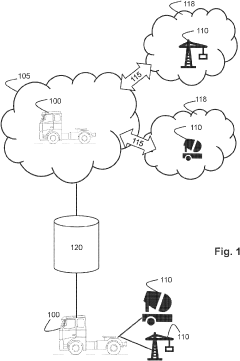
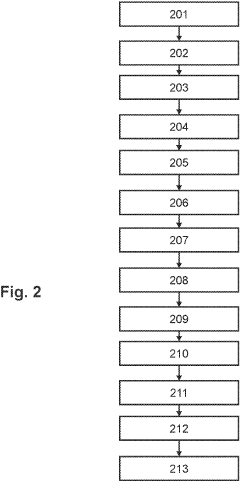
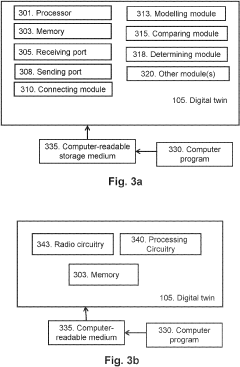
- A digital twin system that includes interfaces to connect with replaceable digital modules for auxiliary devices, allowing real-time data transfer and modeling of power consumption based on the operating state, vehicle state, and environmental conditions, enabling accurate assessment of power requirements and optimization of auxiliary device usage.
Digital twin lubrication simulation
PatentActiveUS11934755B2
Innovation
- The implementation of digital twin models that utilize real-time data from sensors and IoT devices, combined with cognitive computing, to simulate lubricant performance and predict optimal actions for extending lubricant life, including recommendations for replacement timing and maintenance schedules.


Data Security Aspects
Data security is a critical aspect of implementing longitudinal wave descriptions in digital twin frameworks. As these frameworks rely heavily on real-time data transmission and processing, ensuring the confidentiality, integrity, and availability of data becomes paramount. Encryption plays a crucial role in protecting sensitive information during transmission and storage. Advanced encryption algorithms, such as AES-256, should be employed to safeguard data from unauthorized access and interception.
Access control mechanisms are essential to maintain data security within digital twin frameworks. Implementing robust authentication and authorization protocols ensures that only authorized personnel can access and manipulate longitudinal wave data. Multi-factor authentication and role-based access control systems can significantly enhance the overall security posture of the framework.
Data integrity is another vital consideration in longitudinal wave descriptions. Digital signatures and hash functions can be utilized to verify the authenticity and integrity of data throughout its lifecycle. This helps prevent tampering and ensures that the data used in digital twin simulations accurately represents the physical counterpart.
Secure communication channels are necessary for transmitting longitudinal wave data between sensors, edge devices, and central processing systems. Implementing secure protocols like TLS/SSL for data in transit helps protect against man-in-the-middle attacks and eavesdropping. Additionally, virtual private networks (VPNs) can be employed to create secure tunnels for data transmission across public networks.
Regular security audits and vulnerability assessments are crucial to identify and address potential weaknesses in the digital twin framework. Penetration testing can help uncover vulnerabilities that may be exploited by malicious actors. Implementing a robust incident response plan ensures that any security breaches or data leaks can be quickly detected and mitigated.
Data backup and recovery strategies are essential to maintain business continuity in case of system failures or cyber attacks. Implementing redundant storage systems and regular backup procedures helps ensure that longitudinal wave data can be recovered in the event of data loss or corruption. Disaster recovery plans should be in place to minimize downtime and data loss in worst-case scenarios.
As digital twin frameworks often involve collaboration between multiple stakeholders, data sharing agreements and compliance with data protection regulations are crucial. Implementing data anonymization techniques and adhering to privacy laws, such as GDPR, helps protect sensitive information and maintain regulatory compliance. Clear policies and procedures for data handling, retention, and disposal should be established and communicated to all relevant parties.
Access control mechanisms are essential to maintain data security within digital twin frameworks. Implementing robust authentication and authorization protocols ensures that only authorized personnel can access and manipulate longitudinal wave data. Multi-factor authentication and role-based access control systems can significantly enhance the overall security posture of the framework.
Data integrity is another vital consideration in longitudinal wave descriptions. Digital signatures and hash functions can be utilized to verify the authenticity and integrity of data throughout its lifecycle. This helps prevent tampering and ensures that the data used in digital twin simulations accurately represents the physical counterpart.
Secure communication channels are necessary for transmitting longitudinal wave data between sensors, edge devices, and central processing systems. Implementing secure protocols like TLS/SSL for data in transit helps protect against man-in-the-middle attacks and eavesdropping. Additionally, virtual private networks (VPNs) can be employed to create secure tunnels for data transmission across public networks.
Regular security audits and vulnerability assessments are crucial to identify and address potential weaknesses in the digital twin framework. Penetration testing can help uncover vulnerabilities that may be exploited by malicious actors. Implementing a robust incident response plan ensures that any security breaches or data leaks can be quickly detected and mitigated.
Data backup and recovery strategies are essential to maintain business continuity in case of system failures or cyber attacks. Implementing redundant storage systems and regular backup procedures helps ensure that longitudinal wave data can be recovered in the event of data loss or corruption. Disaster recovery plans should be in place to minimize downtime and data loss in worst-case scenarios.
As digital twin frameworks often involve collaboration between multiple stakeholders, data sharing agreements and compliance with data protection regulations are crucial. Implementing data anonymization techniques and adhering to privacy laws, such as GDPR, helps protect sensitive information and maintain regulatory compliance. Clear policies and procedures for data handling, retention, and disposal should be established and communicated to all relevant parties.
Standardization Efforts
Standardization efforts for longitudinal wave description in digital twin frameworks are crucial for ensuring interoperability and consistency across various implementations. Several organizations and industry consortia have been working towards establishing common standards and protocols to facilitate the integration of longitudinal wave data into digital twin ecosystems.
The Industrial Internet Consortium (IIC) has been at the forefront of developing guidelines for digital twin implementations, including the representation of dynamic phenomena such as longitudinal waves. Their Digital Twin Interoperability Task Group has been focusing on creating a standardized approach to describing and exchanging wave-related data within digital twin models.
ISO/IEC JTC 1/SC 41, the subcommittee responsible for Internet of Things and Digital Twin, has been developing standards specifically addressing the incorporation of physical phenomena into digital twin frameworks. Their work includes the creation of a common vocabulary and data models for representing longitudinal waves in various industrial and scientific applications.
The Open Geospatial Consortium (OGC) has also been contributing to the standardization efforts, particularly in the context of geospatial digital twins. Their SensorThings API and Moving Features standards provide a foundation for integrating dynamic wave data into spatiotemporal representations within digital twin environments.
In the realm of engineering simulations, NAFEMS (International Association for the Engineering Modelling, Analysis and Simulation Community) has been working on guidelines for the inclusion of wave propagation models in digital twin frameworks. Their efforts aim to standardize the representation and exchange of longitudinal wave data between different simulation tools and digital twin platforms.
The Digital Twin Consortium, a global ecosystem of industry leaders, has established working groups focused on developing best practices and reference architectures for digital twins. Their efforts include standardizing the description and integration of longitudinal wave phenomena across various domains, from manufacturing to healthcare.
These standardization initiatives are essential for promoting widespread adoption and seamless integration of longitudinal wave descriptions in digital twin frameworks. By establishing common protocols and data models, these efforts enable more efficient collaboration, data exchange, and interoperability among different digital twin implementations and related technologies.
The Industrial Internet Consortium (IIC) has been at the forefront of developing guidelines for digital twin implementations, including the representation of dynamic phenomena such as longitudinal waves. Their Digital Twin Interoperability Task Group has been focusing on creating a standardized approach to describing and exchanging wave-related data within digital twin models.
ISO/IEC JTC 1/SC 41, the subcommittee responsible for Internet of Things and Digital Twin, has been developing standards specifically addressing the incorporation of physical phenomena into digital twin frameworks. Their work includes the creation of a common vocabulary and data models for representing longitudinal waves in various industrial and scientific applications.
The Open Geospatial Consortium (OGC) has also been contributing to the standardization efforts, particularly in the context of geospatial digital twins. Their SensorThings API and Moving Features standards provide a foundation for integrating dynamic wave data into spatiotemporal representations within digital twin environments.
In the realm of engineering simulations, NAFEMS (International Association for the Engineering Modelling, Analysis and Simulation Community) has been working on guidelines for the inclusion of wave propagation models in digital twin frameworks. Their efforts aim to standardize the representation and exchange of longitudinal wave data between different simulation tools and digital twin platforms.
The Digital Twin Consortium, a global ecosystem of industry leaders, has established working groups focused on developing best practices and reference architectures for digital twins. Their efforts include standardizing the description and integration of longitudinal wave phenomena across various domains, from manufacturing to healthcare.
These standardization initiatives are essential for promoting widespread adoption and seamless integration of longitudinal wave descriptions in digital twin frameworks. By establishing common protocols and data models, these efforts enable more efficient collaboration, data exchange, and interoperability among different digital twin implementations and related technologies.
Unlock deeper insights with PatSnap Eureka Quick Research — get a full tech report to explore trends and direct your research. Try now!
Generate Your Research Report Instantly with AI Agent
Supercharge your innovation with PatSnap Eureka AI Agent Platform!