

Neuromorphic Photonic Computing for Predictive Analytics in IoT Systems
JUN 2, 20269 MIN READ
Generate Your Research Report Instantly with AI Agent
PatSnap Eureka helps you evaluate technical feasibility & market potential.
Neuromorphic Photonic Computing Background and Objectives
Neuromorphic photonic computing represents a revolutionary convergence of biological neural network principles with advanced photonic technologies, fundamentally reimagining how computational systems process and analyze information. This emerging paradigm draws inspiration from the human brain's neural architecture, where information processing occurs through interconnected networks of neurons that communicate via electrical and chemical signals. By translating these biological mechanisms into photonic implementations, researchers have created computational frameworks that leverage light-based processing to achieve unprecedented speed, energy efficiency, and parallel processing capabilities.
The foundational concept emerged from decades of research in both neuromorphic engineering and photonic computing. Traditional neuromorphic systems, initially developed using electronic components, demonstrated the potential for brain-inspired computing architectures that could perform complex pattern recognition and learning tasks with remarkable efficiency. However, electronic implementations faced inherent limitations in terms of processing speed and power consumption, particularly when scaling to handle the massive data volumes characteristic of modern IoT ecosystems.
Photonic computing addresses these limitations by utilizing photons instead of electrons as information carriers. Light-based processing offers several fundamental advantages including immunity to electromagnetic interference, minimal heat generation, and the ability to process multiple wavelengths simultaneously through wavelength division multiplexing. When combined with neuromorphic architectures, photonic systems can implement neural network operations such as matrix multiplications, convolutions, and activation functions directly in the optical domain.
The integration of neuromorphic principles with photonic technologies has evolved through several key developmental phases. Early research focused on implementing basic neural network operations using optical components such as modulators, photodetectors, and optical interconnects. Subsequent advances introduced sophisticated photonic neural network architectures capable of performing complex machine learning algorithms including deep learning, reinforcement learning, and predictive analytics.
The primary objective of applying neuromorphic photonic computing to IoT predictive analytics centers on addressing the computational challenges inherent in processing vast quantities of sensor data generated by distributed IoT networks. Traditional centralized processing approaches often suffer from latency issues, bandwidth limitations, and energy inefficiencies when handling real-time analytics requirements. Neuromorphic photonic systems aim to enable edge-based predictive analytics that can process IoT data streams locally with minimal latency while maintaining high accuracy and energy efficiency.
Specific technical objectives include developing photonic neural network architectures optimized for time-series prediction, anomaly detection, and pattern recognition tasks common in IoT applications. These systems must demonstrate the capability to learn and adapt to changing environmental conditions while maintaining robust performance across diverse IoT deployment scenarios. Additionally, the technology aims to achieve significant improvements in processing speed, typically targeting microsecond-level response times for predictive analytics tasks that would require milliseconds or seconds using conventional electronic processors.
The foundational concept emerged from decades of research in both neuromorphic engineering and photonic computing. Traditional neuromorphic systems, initially developed using electronic components, demonstrated the potential for brain-inspired computing architectures that could perform complex pattern recognition and learning tasks with remarkable efficiency. However, electronic implementations faced inherent limitations in terms of processing speed and power consumption, particularly when scaling to handle the massive data volumes characteristic of modern IoT ecosystems.
Photonic computing addresses these limitations by utilizing photons instead of electrons as information carriers. Light-based processing offers several fundamental advantages including immunity to electromagnetic interference, minimal heat generation, and the ability to process multiple wavelengths simultaneously through wavelength division multiplexing. When combined with neuromorphic architectures, photonic systems can implement neural network operations such as matrix multiplications, convolutions, and activation functions directly in the optical domain.
The integration of neuromorphic principles with photonic technologies has evolved through several key developmental phases. Early research focused on implementing basic neural network operations using optical components such as modulators, photodetectors, and optical interconnects. Subsequent advances introduced sophisticated photonic neural network architectures capable of performing complex machine learning algorithms including deep learning, reinforcement learning, and predictive analytics.
The primary objective of applying neuromorphic photonic computing to IoT predictive analytics centers on addressing the computational challenges inherent in processing vast quantities of sensor data generated by distributed IoT networks. Traditional centralized processing approaches often suffer from latency issues, bandwidth limitations, and energy inefficiencies when handling real-time analytics requirements. Neuromorphic photonic systems aim to enable edge-based predictive analytics that can process IoT data streams locally with minimal latency while maintaining high accuracy and energy efficiency.
Specific technical objectives include developing photonic neural network architectures optimized for time-series prediction, anomaly detection, and pattern recognition tasks common in IoT applications. These systems must demonstrate the capability to learn and adapt to changing environmental conditions while maintaining robust performance across diverse IoT deployment scenarios. Additionally, the technology aims to achieve significant improvements in processing speed, typically targeting microsecond-level response times for predictive analytics tasks that would require milliseconds or seconds using conventional electronic processors.
IoT Predictive Analytics Market Demand Analysis
The global Internet of Things ecosystem continues to experience unprecedented expansion, driving substantial demand for advanced predictive analytics capabilities across multiple industry verticals. Manufacturing sectors increasingly require real-time equipment monitoring and predictive maintenance solutions to minimize downtime and optimize operational efficiency. Smart city initiatives worldwide are creating massive demand for traffic flow prediction, energy consumption forecasting, and infrastructure health monitoring systems that can process vast amounts of sensor data in real-time.
Healthcare applications represent another significant growth driver, with wearable devices and remote patient monitoring systems generating continuous data streams requiring sophisticated predictive algorithms. The agricultural sector is embracing precision farming techniques that rely heavily on environmental sensors and crop yield prediction models. Supply chain management across industries demands enhanced visibility and predictive capabilities to anticipate disruptions and optimize logistics operations.
Current market dynamics reveal a critical gap between the volume of IoT-generated data and the processing capabilities of existing analytics infrastructure. Traditional cloud-based analytics solutions face increasing challenges related to latency, bandwidth limitations, and energy consumption when handling the exponential growth in IoT data streams. Edge computing adoption is accelerating as organizations seek to reduce data transmission costs and improve response times for time-critical applications.
The convergence of artificial intelligence and IoT is creating new market opportunities for neuromorphic computing approaches that can deliver ultra-low power consumption and real-time processing capabilities. Industries are particularly interested in solutions that can perform complex pattern recognition and predictive modeling directly at the edge, eliminating the need for constant cloud connectivity while maintaining high accuracy levels.
Regulatory requirements around data privacy and security are further driving demand for localized processing solutions that can minimize data transmission and storage in external systems. Energy efficiency concerns are becoming paramount as IoT deployments scale, creating market pressure for computing paradigms that can deliver superior performance per watt compared to conventional digital processors.
The automotive industry's transition toward autonomous vehicles is generating substantial demand for real-time sensor fusion and predictive analytics capabilities that can operate reliably in resource-constrained environments. Industrial automation and Industry 4.0 initiatives are similarly driving requirements for distributed intelligence that can adapt and learn from local conditions while maintaining robust predictive performance.
Healthcare applications represent another significant growth driver, with wearable devices and remote patient monitoring systems generating continuous data streams requiring sophisticated predictive algorithms. The agricultural sector is embracing precision farming techniques that rely heavily on environmental sensors and crop yield prediction models. Supply chain management across industries demands enhanced visibility and predictive capabilities to anticipate disruptions and optimize logistics operations.
Current market dynamics reveal a critical gap between the volume of IoT-generated data and the processing capabilities of existing analytics infrastructure. Traditional cloud-based analytics solutions face increasing challenges related to latency, bandwidth limitations, and energy consumption when handling the exponential growth in IoT data streams. Edge computing adoption is accelerating as organizations seek to reduce data transmission costs and improve response times for time-critical applications.
The convergence of artificial intelligence and IoT is creating new market opportunities for neuromorphic computing approaches that can deliver ultra-low power consumption and real-time processing capabilities. Industries are particularly interested in solutions that can perform complex pattern recognition and predictive modeling directly at the edge, eliminating the need for constant cloud connectivity while maintaining high accuracy levels.
Regulatory requirements around data privacy and security are further driving demand for localized processing solutions that can minimize data transmission and storage in external systems. Energy efficiency concerns are becoming paramount as IoT deployments scale, creating market pressure for computing paradigms that can deliver superior performance per watt compared to conventional digital processors.
The automotive industry's transition toward autonomous vehicles is generating substantial demand for real-time sensor fusion and predictive analytics capabilities that can operate reliably in resource-constrained environments. Industrial automation and Industry 4.0 initiatives are similarly driving requirements for distributed intelligence that can adapt and learn from local conditions while maintaining robust predictive performance.
Current Neuromorphic Photonics Development Status and Challenges
Neuromorphic photonic computing represents a convergence of brain-inspired computing architectures with photonic technologies, currently experiencing rapid development across multiple research fronts. The field has progressed from theoretical concepts to experimental demonstrations, with several institutions achieving breakthrough results in photonic neural network implementations. Current development encompasses both analog and digital approaches, with analog photonic neural networks showing particular promise for real-time processing applications.
The integration of photonic components with neuromorphic principles has reached a maturity level where basic neural network operations can be performed optically. Silicon photonic platforms have emerged as the dominant technology base, leveraging existing semiconductor fabrication infrastructure. Recent advances include the demonstration of photonic synapses using phase-change materials, optical reservoir computing systems, and integrated photonic tensor processing units capable of matrix multiplication operations at the speed of light.
Despite significant progress, several fundamental challenges continue to impede widespread adoption of neuromorphic photonic systems. Power consumption remains a critical concern, as current photonic neural networks often require high-power lasers and electronic-photonic conversion interfaces that can offset the inherent energy advantages of optical processing. The precision and stability of photonic weights present another major obstacle, with current systems struggling to achieve the numerical precision required for complex machine learning tasks.
Scalability represents perhaps the most significant technical barrier facing the field. While small-scale demonstrations have proven successful, scaling neuromorphic photonic systems to handle the complexity required for IoT predictive analytics remains challenging. Current fabrication technologies limit the density of photonic components, and the integration of large numbers of optical elements introduces cumulative noise and crosstalk issues that degrade system performance.
The geographical distribution of neuromorphic photonics research shows concentration in regions with strong photonics and semiconductor industries. North America leads in fundamental research and system-level demonstrations, while Europe excels in photonic component development and integration technologies. Asia, particularly China and Japan, has made substantial investments in manufacturing capabilities and large-scale integration approaches, creating a competitive global landscape for technology development.
Training and adaptation mechanisms for photonic neural networks present unique challenges compared to traditional electronic systems. The lack of efficient backpropagation algorithms for optical systems has led researchers to explore alternative training approaches, including in-situ learning and hybrid electronic-photonic training schemes. These limitations currently restrict the complexity of neural network architectures that can be effectively implemented in photonic systems.
The integration of photonic components with neuromorphic principles has reached a maturity level where basic neural network operations can be performed optically. Silicon photonic platforms have emerged as the dominant technology base, leveraging existing semiconductor fabrication infrastructure. Recent advances include the demonstration of photonic synapses using phase-change materials, optical reservoir computing systems, and integrated photonic tensor processing units capable of matrix multiplication operations at the speed of light.
Despite significant progress, several fundamental challenges continue to impede widespread adoption of neuromorphic photonic systems. Power consumption remains a critical concern, as current photonic neural networks often require high-power lasers and electronic-photonic conversion interfaces that can offset the inherent energy advantages of optical processing. The precision and stability of photonic weights present another major obstacle, with current systems struggling to achieve the numerical precision required for complex machine learning tasks.
Scalability represents perhaps the most significant technical barrier facing the field. While small-scale demonstrations have proven successful, scaling neuromorphic photonic systems to handle the complexity required for IoT predictive analytics remains challenging. Current fabrication technologies limit the density of photonic components, and the integration of large numbers of optical elements introduces cumulative noise and crosstalk issues that degrade system performance.
The geographical distribution of neuromorphic photonics research shows concentration in regions with strong photonics and semiconductor industries. North America leads in fundamental research and system-level demonstrations, while Europe excels in photonic component development and integration technologies. Asia, particularly China and Japan, has made substantial investments in manufacturing capabilities and large-scale integration approaches, creating a competitive global landscape for technology development.
Training and adaptation mechanisms for photonic neural networks present unique challenges compared to traditional electronic systems. The lack of efficient backpropagation algorithms for optical systems has led researchers to explore alternative training approaches, including in-situ learning and hybrid electronic-photonic training schemes. These limitations currently restrict the complexity of neural network architectures that can be effectively implemented in photonic systems.
Existing Neuromorphic Photonic Solutions for IoT Analytics
01 Neuromorphic hardware architectures for photonic computing
Implementation of brain-inspired computing architectures using photonic components to mimic neural networks. These systems utilize optical elements to create artificial neurons and synapses that can process information in parallel, enabling efficient computation for machine learning and artificial intelligence applications. The architectures leverage the speed of light for signal transmission and the ability to perform multiple operations simultaneously.- Neuromorphic computing architectures for photonic systems: Implementation of brain-inspired computing architectures that utilize photonic components to mimic neural networks. These systems leverage the parallel processing capabilities of light-based computation to create artificial neural networks that can process information in a manner similar to biological neurons. The architectures incorporate photonic synapses and neurons to enable efficient computation with reduced power consumption compared to traditional electronic systems.
- Optical neural network implementations: Development of optical neural networks that use light-based processing elements to perform computational tasks. These implementations focus on creating photonic circuits that can execute neural network operations such as matrix multiplication, convolution, and activation functions using optical components. The systems enable high-speed parallel processing with potential for significant energy efficiency improvements over electronic counterparts.
- Predictive analytics algorithms for neuromorphic systems: Advanced algorithms specifically designed for predictive analytics applications running on neuromorphic photonic computing platforms. These algorithms leverage the unique characteristics of neuromorphic hardware to perform time-series analysis, pattern recognition, and forecasting tasks. The methods are optimized to take advantage of the spike-based processing and temporal dynamics inherent in neuromorphic systems.
- Photonic spike processing and temporal coding: Techniques for processing spike-based signals in photonic neuromorphic systems, including methods for encoding temporal information in optical pulses. These approaches focus on utilizing the timing and frequency characteristics of optical signals to represent and process information in a manner similar to biological neural spike trains. The systems enable efficient processing of temporal patterns and sequences for predictive modeling applications.
- Integrated photonic computing platforms: Complete integrated systems that combine photonic computing elements with neuromorphic processing capabilities for predictive analytics applications. These platforms integrate various optical components including modulators, detectors, and waveguides on single chips to create comprehensive computing systems. The integration enables scalable and practical deployment of neuromorphic photonic computing for real-world predictive analytics tasks.
02 Optical neural network implementations
Development of neural network structures using optical components such as waveguides, modulators, and photodetectors to perform computational tasks. These implementations focus on creating scalable optical processing units that can handle complex mathematical operations required for deep learning and pattern recognition while maintaining high speed and low power consumption.Expand Specific Solutions03 Predictive analytics algorithms for neuromorphic systems
Advanced algorithms designed specifically for neuromorphic computing platforms to perform predictive modeling and data analysis. These methods incorporate machine learning techniques optimized for the unique characteristics of neuromorphic hardware, enabling real-time prediction and decision-making capabilities in various applications including financial forecasting, healthcare diagnostics, and autonomous systems.Expand Specific Solutions04 Photonic signal processing and modulation techniques
Methods for manipulating and processing optical signals in neuromorphic computing systems, including techniques for encoding, transmitting, and decoding information using light-based carriers. These approaches focus on optimizing signal integrity, reducing noise, and maximizing computational efficiency through advanced modulation schemes and signal processing algorithms tailored for photonic neural networks.Expand Specific Solutions05 Integration and system-level optimization
Comprehensive approaches for integrating neuromorphic photonic components into complete computing systems, including optimization strategies for performance, power efficiency, and scalability. These solutions address challenges in system architecture, component interconnection, and overall system management to create practical neuromorphic photonic computing platforms suitable for real-world predictive analytics applications.Expand Specific Solutions
Key Players in Neuromorphic Photonic Computing Industry
The neuromorphic photonic computing field for IoT predictive analytics is in its nascent stage, representing an emerging convergence of brain-inspired computing and photonic technologies. The market remains highly specialized with limited commercial deployment, primarily driven by research institutions and technology giants. Key players demonstrate varying technological maturity levels, with established corporations like IBM, Intel, and Hewlett Packard Enterprise leveraging their extensive R&D capabilities and infrastructure expertise to advance neuromorphic architectures. Academic institutions including California Institute of Technology, Zhejiang University, and Huazhong University of Science & Technology contribute fundamental research breakthroughs. Specialized companies like Polyn Technology focus on ultra-low-power neuromorphic solutions, while emerging players such as Chengdu Synsense Technology develop application-specific implementations. The technology remains largely experimental, with most solutions in proof-of-concept phases, indicating significant development potential but requiring substantial investment in research and commercialization efforts.
International Business Machines Corp.
Technical Solution: IBM has developed a comprehensive neuromorphic photonic computing platform that integrates silicon photonic circuits with memristive devices for IoT predictive analytics. Their approach utilizes wavelength-division multiplexing (WDM) to enable parallel processing of multiple data streams from IoT sensors. The system employs photonic neural networks with integrated photodetectors and modulators to perform real-time pattern recognition and anomaly detection. IBM's solution features adaptive learning algorithms that can update synaptic weights using optical signals, enabling continuous model refinement based on incoming IoT data streams. The platform demonstrates energy efficiency improvements of up to 100x compared to traditional electronic processors while maintaining sub-microsecond response times for critical IoT applications.
Strengths: Extensive R&D resources, proven track record in neuromorphic computing, strong integration capabilities. Weaknesses: High development costs, complex manufacturing processes requiring specialized facilities.
Chengdu Synsense Technology Co. Ltd.
Technical Solution: Synsense has developed a neuromorphic photonic computing platform that combines their expertise in spiking neural networks with photonic processing for IoT predictive analytics. Their solution features bio-inspired photonic neurons that process temporal information using light pulses, mimicking the behavior of biological neural networks. The system integrates photonic synapses with electronic readout circuits to enable hybrid processing of IoT sensor data. Synsense's approach utilizes event-driven processing paradigms, where photonic spikes are generated only when significant changes occur in IoT sensor readings, dramatically reducing power consumption. Their platform supports distributed inference across IoT networks, enabling real-time anomaly detection and predictive maintenance applications with microsecond-level response times.
Strengths: Specialized neuromorphic expertise, focus on energy-efficient computing, strong understanding of spiking neural networks. Weaknesses: Limited photonic manufacturing capabilities, smaller scale compared to major semiconductor companies.
Core Patents in Neuromorphic Photonic Computing Systems
Implementing a neuromorphic computing system using nanophotonic neurons
PatentActiveUS20190065941A1
Innovation
- A photonic neuron system is designed with excitatory and inhibitory input detectors, an electrical neuron for integrating signals, and a light-emitting output device, implemented in a 3D integrated neuromorphic computing system using nanophotonic neural networks and optical interconnection networks with Mach-Zehnder interferometer blocks, enabling efficient energy use and scalability.
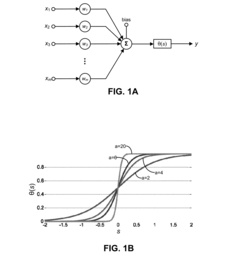
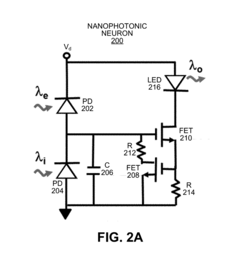
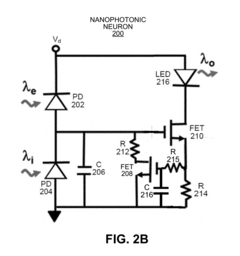
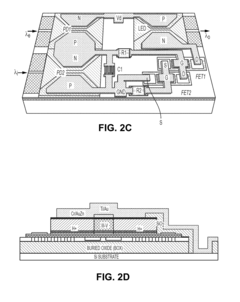
Method and system for analyzing internet of things (IOT) data in real-time and providing predictions
PatentActiveIN201841035359A
Innovation
- A method and system that acquire real-time IoT data, build predictive models using machine learning algorithms, and tune these models based on deviations between predicted and actual events, enabling the prediction of future events and improving model performance.
Energy Efficiency Standards for Edge Computing Devices
The integration of neuromorphic photonic computing systems into IoT networks necessitates the establishment of comprehensive energy efficiency standards for edge computing devices. Current regulatory frameworks primarily focus on traditional silicon-based processors, leaving a significant gap in addressing the unique power consumption characteristics of photonic neural networks deployed at network edges.
Existing energy efficiency standards such as ENERGY STAR and IEEE 1621 provide baseline metrics for conventional computing devices but lack specific provisions for hybrid photonic-electronic systems. These standards typically measure static power consumption and computational throughput separately, failing to capture the dynamic energy profiles of neuromorphic architectures that exhibit event-driven processing patterns.
The development of specialized standards for neuromorphic photonic edge devices requires new measurement methodologies that account for optical power budgets, laser efficiency ratios, and photodetector sensitivity thresholds. Unlike traditional processors with predictable power states, these systems demonstrate non-linear energy consumption patterns that correlate with data processing complexity and ambient environmental conditions.
Proposed standardization frameworks should incorporate multi-dimensional efficiency metrics including photons-per-operation ratios, thermal dissipation coefficients, and adaptive power scaling capabilities. These metrics must address the unique operational characteristics of spike-based neural processing where energy consumption directly relates to information density and temporal processing requirements.
International standardization bodies including ISO/IEC and ITU-T are beginning to recognize the need for photonic computing standards, though current efforts remain fragmented across different technical committees. The establishment of unified energy efficiency benchmarks will be crucial for enabling widespread adoption of neuromorphic photonic systems in IoT deployments.
Implementation challenges include developing standardized testing environments that can accurately measure both optical and electrical power consumption under varying operational loads. Additionally, standards must accommodate the diverse architectural approaches emerging in neuromorphic photonic computing, from integrated silicon photonics to free-space optical implementations, ensuring broad applicability across different technological implementations while maintaining measurement consistency and reliability.
Existing energy efficiency standards such as ENERGY STAR and IEEE 1621 provide baseline metrics for conventional computing devices but lack specific provisions for hybrid photonic-electronic systems. These standards typically measure static power consumption and computational throughput separately, failing to capture the dynamic energy profiles of neuromorphic architectures that exhibit event-driven processing patterns.
The development of specialized standards for neuromorphic photonic edge devices requires new measurement methodologies that account for optical power budgets, laser efficiency ratios, and photodetector sensitivity thresholds. Unlike traditional processors with predictable power states, these systems demonstrate non-linear energy consumption patterns that correlate with data processing complexity and ambient environmental conditions.
Proposed standardization frameworks should incorporate multi-dimensional efficiency metrics including photons-per-operation ratios, thermal dissipation coefficients, and adaptive power scaling capabilities. These metrics must address the unique operational characteristics of spike-based neural processing where energy consumption directly relates to information density and temporal processing requirements.
International standardization bodies including ISO/IEC and ITU-T are beginning to recognize the need for photonic computing standards, though current efforts remain fragmented across different technical committees. The establishment of unified energy efficiency benchmarks will be crucial for enabling widespread adoption of neuromorphic photonic systems in IoT deployments.
Implementation challenges include developing standardized testing environments that can accurately measure both optical and electrical power consumption under varying operational loads. Additionally, standards must accommodate the diverse architectural approaches emerging in neuromorphic photonic computing, from integrated silicon photonics to free-space optical implementations, ensuring broad applicability across different technological implementations while maintaining measurement consistency and reliability.
Data Privacy Regulations in IoT Predictive Systems
The integration of neuromorphic photonic computing with IoT predictive analytics systems introduces complex data privacy challenges that require comprehensive regulatory compliance frameworks. Current data protection regulations, including the General Data Protection Regulation (GDPR) in Europe and the California Consumer Privacy Act (CCPA) in the United States, establish fundamental requirements for data collection, processing, and storage that directly impact IoT predictive systems implementation.
Neuromorphic photonic computing systems process vast amounts of sensor data from IoT devices, often containing personally identifiable information (PII) and sensitive behavioral patterns. These systems must comply with data minimization principles, ensuring that only necessary data is collected and processed for specific predictive analytics purposes. The real-time nature of neuromorphic processing creates additional compliance complexities, as traditional data governance mechanisms may not adequately address the speed and volume of data flows.
Cross-border data transfer regulations pose significant challenges for distributed IoT predictive systems. Many jurisdictions require explicit consent mechanisms and data localization requirements that can conflict with the distributed architecture of neuromorphic photonic computing networks. Organizations must implement privacy-by-design principles, incorporating data protection measures directly into the system architecture rather than as an afterthought.
Emerging regulatory frameworks specifically targeting AI and machine learning systems, such as the EU's proposed AI Act, introduce additional compliance requirements for predictive analytics applications. These regulations mandate algorithmic transparency, bias assessment, and human oversight mechanisms that must be integrated into neuromorphic photonic computing implementations.
The dynamic nature of IoT environments requires adaptive privacy protection mechanisms that can respond to changing regulatory requirements across different jurisdictions. Organizations must establish robust data governance frameworks that include automated compliance monitoring, consent management systems, and privacy impact assessment procedures tailored to the unique characteristics of neuromorphic photonic computing architectures.
Neuromorphic photonic computing systems process vast amounts of sensor data from IoT devices, often containing personally identifiable information (PII) and sensitive behavioral patterns. These systems must comply with data minimization principles, ensuring that only necessary data is collected and processed for specific predictive analytics purposes. The real-time nature of neuromorphic processing creates additional compliance complexities, as traditional data governance mechanisms may not adequately address the speed and volume of data flows.
Cross-border data transfer regulations pose significant challenges for distributed IoT predictive systems. Many jurisdictions require explicit consent mechanisms and data localization requirements that can conflict with the distributed architecture of neuromorphic photonic computing networks. Organizations must implement privacy-by-design principles, incorporating data protection measures directly into the system architecture rather than as an afterthought.
Emerging regulatory frameworks specifically targeting AI and machine learning systems, such as the EU's proposed AI Act, introduce additional compliance requirements for predictive analytics applications. These regulations mandate algorithmic transparency, bias assessment, and human oversight mechanisms that must be integrated into neuromorphic photonic computing implementations.
The dynamic nature of IoT environments requires adaptive privacy protection mechanisms that can respond to changing regulatory requirements across different jurisdictions. Organizations must establish robust data governance frameworks that include automated compliance monitoring, consent management systems, and privacy impact assessment procedures tailored to the unique characteristics of neuromorphic photonic computing architectures.
Unlock deeper insights with PatSnap Eureka Quick Research — get a full tech report to explore trends and direct your research. Try now!
Generate Your Research Report Instantly with AI Agent
Supercharge your innovation with PatSnap Eureka AI Agent Platform!