

Neuromorphic Photonics in Renewable Energy Optimization Algorithms
JUN 2, 20269 MIN READ
Generate Your Research Report Instantly with AI Agent
PatSnap Eureka helps you evaluate technical feasibility & market potential.
Neuromorphic Photonics Background and Energy Goals
Neuromorphic photonics represents a revolutionary convergence of biological neural network principles with photonic computing architectures, fundamentally transforming how computational systems process information. This emerging field draws inspiration from the human brain's neural structures and synaptic behaviors, translating these mechanisms into optical computing platforms that leverage photons rather than electrons for information processing. The technology emerged from decades of research in both neuromorphic engineering and silicon photonics, gaining significant momentum in the early 2010s as researchers recognized the potential for combining the brain's energy efficiency with photonics' inherent speed and bandwidth advantages.
The evolution of neuromorphic photonics has been driven by the increasing limitations of traditional von Neumann computing architectures, particularly in handling complex optimization problems that require massive parallel processing capabilities. Early developments focused on creating photonic neural networks using integrated silicon photonics platforms, with researchers demonstrating basic synaptic functionalities through optical components such as microring resonators and Mach-Zehnder interferometers. These foundational works established the feasibility of implementing neural network operations in the optical domain, achieving computational speeds several orders of magnitude faster than electronic counterparts.
Recent technological advances have expanded the scope of neuromorphic photonics to address complex real-world applications, with renewable energy optimization emerging as a particularly promising domain. The technology's ability to process vast amounts of data in parallel while maintaining ultra-low latency makes it ideally suited for managing the dynamic and distributed nature of renewable energy systems. Current research trajectories focus on developing specialized photonic neural architectures capable of handling multi-objective optimization problems inherent in renewable energy management.
The primary technological objectives center on achieving real-time optimization of renewable energy systems through neuromorphic photonic processors that can simultaneously manage multiple variables including weather patterns, energy demand fluctuations, grid stability requirements, and storage system dynamics. These systems aim to surpass traditional optimization algorithms by providing continuous learning capabilities and adaptive responses to changing environmental conditions. The ultimate goal involves creating autonomous energy management systems that can optimize renewable energy utilization across entire smart grid networks while minimizing computational energy consumption and maximizing overall system efficiency through bio-inspired processing paradigms.
The evolution of neuromorphic photonics has been driven by the increasing limitations of traditional von Neumann computing architectures, particularly in handling complex optimization problems that require massive parallel processing capabilities. Early developments focused on creating photonic neural networks using integrated silicon photonics platforms, with researchers demonstrating basic synaptic functionalities through optical components such as microring resonators and Mach-Zehnder interferometers. These foundational works established the feasibility of implementing neural network operations in the optical domain, achieving computational speeds several orders of magnitude faster than electronic counterparts.
Recent technological advances have expanded the scope of neuromorphic photonics to address complex real-world applications, with renewable energy optimization emerging as a particularly promising domain. The technology's ability to process vast amounts of data in parallel while maintaining ultra-low latency makes it ideally suited for managing the dynamic and distributed nature of renewable energy systems. Current research trajectories focus on developing specialized photonic neural architectures capable of handling multi-objective optimization problems inherent in renewable energy management.
The primary technological objectives center on achieving real-time optimization of renewable energy systems through neuromorphic photonic processors that can simultaneously manage multiple variables including weather patterns, energy demand fluctuations, grid stability requirements, and storage system dynamics. These systems aim to surpass traditional optimization algorithms by providing continuous learning capabilities and adaptive responses to changing environmental conditions. The ultimate goal involves creating autonomous energy management systems that can optimize renewable energy utilization across entire smart grid networks while minimizing computational energy consumption and maximizing overall system efficiency through bio-inspired processing paradigms.
Market Demand for AI-Driven Energy Optimization
The global energy sector is experiencing unprecedented transformation driven by the urgent need for sustainable solutions and intelligent grid management. Traditional energy optimization approaches face significant limitations in handling the complexity and variability inherent in renewable energy systems, creating substantial market opportunities for AI-driven optimization technologies.
Renewable energy sources such as solar and wind power exhibit inherent intermittency and unpredictability, requiring sophisticated forecasting and real-time optimization capabilities. Grid operators and energy companies are increasingly seeking advanced solutions that can process vast amounts of data from distributed energy resources, weather patterns, and consumption behaviors to maximize efficiency and minimize costs.
The integration of artificial intelligence into energy optimization has emerged as a critical market segment, with utilities and energy service providers recognizing the potential for significant operational improvements. Smart grid implementations worldwide are driving demand for technologies that can perform complex optimization tasks while maintaining low latency and high reliability requirements.
Neuromorphic photonics represents a particularly compelling solution for this market demand due to its unique ability to process information at the speed of light while mimicking the parallel processing capabilities of biological neural networks. This technology addresses key market pain points including real-time decision making for energy dispatch, predictive maintenance of renewable energy infrastructure, and dynamic load balancing across distributed networks.
Energy companies are actively seeking solutions that can reduce operational costs while improving grid stability and renewable energy integration rates. The market demand extends beyond traditional utilities to include industrial consumers, data centers, and smart city initiatives that require sophisticated energy management capabilities.
The convergence of renewable energy expansion, grid modernization initiatives, and artificial intelligence adoption creates a substantial addressable market for neuromorphic photonic solutions. Market drivers include regulatory pressures for carbon reduction, economic incentives for energy efficiency, and the technical necessity of managing increasingly complex energy systems with higher renewable penetration rates.
Commercial and industrial sectors represent significant demand sources, particularly facilities with high energy consumption that can benefit from optimized renewable energy utilization and demand response capabilities. The technology's potential for edge computing applications in distributed energy resources further expands market opportunities across residential and commercial segments.
Renewable energy sources such as solar and wind power exhibit inherent intermittency and unpredictability, requiring sophisticated forecasting and real-time optimization capabilities. Grid operators and energy companies are increasingly seeking advanced solutions that can process vast amounts of data from distributed energy resources, weather patterns, and consumption behaviors to maximize efficiency and minimize costs.
The integration of artificial intelligence into energy optimization has emerged as a critical market segment, with utilities and energy service providers recognizing the potential for significant operational improvements. Smart grid implementations worldwide are driving demand for technologies that can perform complex optimization tasks while maintaining low latency and high reliability requirements.
Neuromorphic photonics represents a particularly compelling solution for this market demand due to its unique ability to process information at the speed of light while mimicking the parallel processing capabilities of biological neural networks. This technology addresses key market pain points including real-time decision making for energy dispatch, predictive maintenance of renewable energy infrastructure, and dynamic load balancing across distributed networks.
Energy companies are actively seeking solutions that can reduce operational costs while improving grid stability and renewable energy integration rates. The market demand extends beyond traditional utilities to include industrial consumers, data centers, and smart city initiatives that require sophisticated energy management capabilities.
The convergence of renewable energy expansion, grid modernization initiatives, and artificial intelligence adoption creates a substantial addressable market for neuromorphic photonic solutions. Market drivers include regulatory pressures for carbon reduction, economic incentives for energy efficiency, and the technical necessity of managing increasingly complex energy systems with higher renewable penetration rates.
Commercial and industrial sectors represent significant demand sources, particularly facilities with high energy consumption that can benefit from optimized renewable energy utilization and demand response capabilities. The technology's potential for edge computing applications in distributed energy resources further expands market opportunities across residential and commercial segments.
Current State of Neuromorphic Computing in Energy Systems
Neuromorphic computing has emerged as a transformative paradigm in energy systems, leveraging brain-inspired architectures to address the complex optimization challenges inherent in renewable energy management. Current implementations primarily focus on grid-level applications where traditional computing approaches struggle with real-time processing demands and energy efficiency requirements.
The integration of neuromorphic processors in smart grid infrastructure has demonstrated significant progress, particularly in distributed energy resource management. Intel's Loihi and IBM's TrueNorth chips have been deployed in pilot projects for microgrid optimization, showing up to 1000x improvement in energy efficiency compared to conventional processors when handling dynamic load balancing tasks.
Photonic neuromorphic systems represent the cutting edge of this field, combining the speed of light-based processing with the adaptive learning capabilities of neural networks. Research institutions including MIT, Stanford, and the University of Oxford have developed prototype photonic neural networks capable of processing energy optimization algorithms at unprecedented speeds. These systems utilize silicon photonic platforms integrated with memristive devices to create synaptic connections that can adapt in real-time to changing energy patterns.
Current applications span multiple domains within renewable energy systems. Wind farm optimization benefits from neuromorphic computing's ability to process turbulent flow patterns and predict optimal turbine positioning. Solar panel arrays utilize these systems for maximum power point tracking under varying atmospheric conditions, while energy storage systems employ neuromorphic algorithms for predictive maintenance and charge-discharge optimization.
The technology faces several implementation challenges, including limited scalability of current photonic components and the need for specialized programming frameworks. Existing neuromorphic platforms require significant adaptation to handle the specific mathematical operations common in energy optimization, such as convex optimization and stochastic gradient descent algorithms.
Despite these challenges, the field shows remarkable momentum with increasing investment from both government agencies and private sector entities. The European Union's Human Brain Project and the US BRAIN Initiative have allocated substantial funding toward neuromorphic computing applications in energy systems, recognizing the potential for revolutionary improvements in renewable energy efficiency and grid stability.
The integration of neuromorphic processors in smart grid infrastructure has demonstrated significant progress, particularly in distributed energy resource management. Intel's Loihi and IBM's TrueNorth chips have been deployed in pilot projects for microgrid optimization, showing up to 1000x improvement in energy efficiency compared to conventional processors when handling dynamic load balancing tasks.
Photonic neuromorphic systems represent the cutting edge of this field, combining the speed of light-based processing with the adaptive learning capabilities of neural networks. Research institutions including MIT, Stanford, and the University of Oxford have developed prototype photonic neural networks capable of processing energy optimization algorithms at unprecedented speeds. These systems utilize silicon photonic platforms integrated with memristive devices to create synaptic connections that can adapt in real-time to changing energy patterns.
Current applications span multiple domains within renewable energy systems. Wind farm optimization benefits from neuromorphic computing's ability to process turbulent flow patterns and predict optimal turbine positioning. Solar panel arrays utilize these systems for maximum power point tracking under varying atmospheric conditions, while energy storage systems employ neuromorphic algorithms for predictive maintenance and charge-discharge optimization.
The technology faces several implementation challenges, including limited scalability of current photonic components and the need for specialized programming frameworks. Existing neuromorphic platforms require significant adaptation to handle the specific mathematical operations common in energy optimization, such as convex optimization and stochastic gradient descent algorithms.
Despite these challenges, the field shows remarkable momentum with increasing investment from both government agencies and private sector entities. The European Union's Human Brain Project and the US BRAIN Initiative have allocated substantial funding toward neuromorphic computing applications in energy systems, recognizing the potential for revolutionary improvements in renewable energy efficiency and grid stability.
Existing Photonic Solutions for Energy Optimization
01 Neuromorphic computing architectures with photonic integration
Development of brain-inspired computing systems that integrate photonic components to mimic neural networks. These architectures leverage optical processing capabilities to enhance computational efficiency and enable parallel processing similar to biological neural systems. The integration combines electronic and photonic elements to create hybrid systems that can perform complex pattern recognition and learning tasks.- Neuromorphic computing architectures with photonic integration: Development of brain-inspired computing systems that integrate photonic components to mimic neural networks. These architectures leverage the speed and parallelism of light-based processing to create artificial neural networks that can perform complex computations with improved efficiency and reduced power consumption compared to traditional electronic systems.
- Optical neural network optimization techniques: Methods for enhancing the performance of optical neural networks through various optimization algorithms and techniques. These approaches focus on improving learning efficiency, reducing training time, and enhancing the accuracy of photonic neural network implementations through advanced mathematical models and adaptive algorithms.
- Photonic synaptic devices and plasticity mechanisms: Implementation of artificial synapses using photonic components that can exhibit plasticity similar to biological neural connections. These devices enable adaptive learning and memory formation in neuromorphic systems by modulating optical signals to represent synaptic weights and connection strengths between artificial neurons.
- Wavelength division multiplexing for neural processing: Utilization of multiple wavelengths of light to create parallel processing channels in neuromorphic photonic systems. This approach enables simultaneous processing of multiple data streams and increases the computational density and throughput of optical neural networks by exploiting the wavelength dimension for information encoding and processing.
- Energy-efficient photonic computing optimization: Strategies for minimizing power consumption and maximizing energy efficiency in neuromorphic photonic systems. These optimization methods focus on reducing optical losses, improving component efficiency, and developing low-power operation modes while maintaining high computational performance and accuracy in neural network implementations.
02 Optical neural network optimization techniques
Methods and systems for optimizing optical neural networks through advanced algorithms and hardware configurations. These techniques focus on improving the training efficiency, reducing power consumption, and enhancing the accuracy of photonic neural processing units. The optimization approaches include novel learning algorithms specifically designed for optical computing platforms.Expand Specific Solutions03 Photonic synaptic devices and memory elements
Implementation of artificial synapses using photonic components that can store and process information similar to biological synapses. These devices utilize optical properties to create programmable memory elements that support learning and adaptation in neuromorphic systems. The photonic synapses offer advantages in terms of speed, bandwidth, and energy efficiency compared to traditional electronic counterparts.Expand Specific Solutions04 Wavelength division multiplexing for neural processing
Utilization of multiple wavelengths in optical systems to create parallel processing channels for neuromorphic computing applications. This approach enables simultaneous processing of multiple data streams and increases the computational density of photonic neural networks. The wavelength-based multiplexing techniques allow for scalable and efficient implementation of large-scale neural architectures.Expand Specific Solutions05 Integrated photonic circuits for neuromorphic applications
Design and fabrication of specialized integrated photonic circuits optimized for neuromorphic computing tasks. These circuits incorporate various optical components such as modulators, detectors, and waveguides to create compact and efficient neural processing units. The integration enables on-chip implementation of complex neural network functionalities with reduced footprint and improved performance.Expand Specific Solutions
Key Players in Neuromorphic and Photonic Industries
The neuromorphic photonics field for renewable energy optimization is in its nascent stage, representing a convergence of emerging technologies with significant growth potential. The market remains relatively small but shows promising expansion as organizations seek advanced computational approaches for energy management. Technology maturity varies considerably across key players, with established tech giants like IBM, Intel, and Hewlett Packard Enterprise leading foundational research through their extensive R&D capabilities. Academic institutions including MIT, Caltech, Stanford, and leading Chinese universities such as Tsinghua and Zhejiang University are driving theoretical breakthroughs and proof-of-concept developments. Energy sector players like State Grid Corp. of China and Électricité de France are exploring practical applications, while specialized companies such as Chengdu Synsense Technology focus on neuromorphic implementations. The competitive landscape reflects early-stage technology development, with most players still in research phases rather than commercial deployment, indicating substantial future opportunities as the technology matures.
International Business Machines Corp.
Technical Solution: IBM has developed neuromorphic computing architectures that integrate photonic components for energy-efficient processing in renewable energy systems. Their approach combines spiking neural networks with silicon photonics to create brain-inspired processors that can handle complex optimization algorithms for solar and wind energy management. The technology leverages optical interconnects and photonic synapses to reduce power consumption by up to 1000x compared to traditional digital processors while maintaining high computational throughput for real-time energy grid optimization tasks.
Strengths: Extensive research infrastructure and proven track record in neuromorphic computing with strong photonic integration capabilities. Weaknesses: High development costs and complex manufacturing processes that may limit commercial scalability in the near term.
California Institute of Technology
Technical Solution: Caltech has developed advanced neuromorphic photonic processors that leverage coherent optical computing for renewable energy optimization. Their system employs programmable photonic circuits with phase-change materials to create reconfigurable neural networks capable of solving complex energy management problems. The technology integrates wavelength-division multiplexing with neuromorphic algorithms to optimize power flow in hybrid renewable energy systems, demonstrating superior performance in handling multi-variable optimization problems for energy storage scheduling and demand response management with reduced computational latency.
Strengths: World-class research capabilities in photonics and strong collaboration networks with industry partners for technology development and validation. Weaknesses: Early-stage technology development with limited scalability demonstration and potential integration challenges with existing energy infrastructure systems.
Core Innovations in Neuromorphic Energy Algorithms
Neuromorphic photonics with coherent linear neurons
PatentActiveUS20220012582A1
Innovation
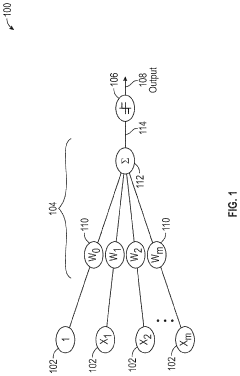
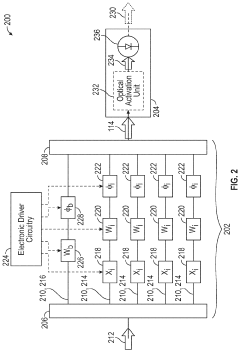
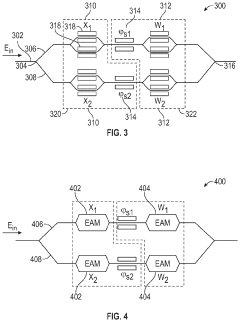
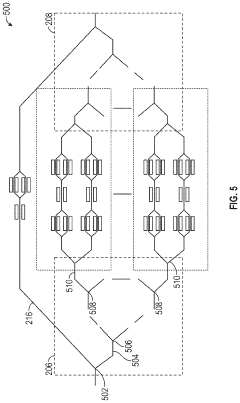
- The development of a single-wavelength, coherent linear neuron stage using a multipath interferometer with electronically controlled phase shifters and amplitude modulators, allowing for encoding of weight signs in the optical phase and enabling all-optical processing of weighted sums, which can be further processed electro-optically for non-linear activation functions.
Energy Policy Impact on Neuromorphic Technologies
Energy policy frameworks worldwide are increasingly recognizing neuromorphic technologies as critical enablers for achieving renewable energy targets and carbon neutrality goals. Government initiatives across major economies have begun incorporating neuromorphic computing into their strategic technology roadmaps, with particular emphasis on applications that enhance renewable energy system efficiency and grid optimization capabilities.
The European Union's Green Deal and Digital Strategy explicitly acknowledge the potential of brain-inspired computing technologies in accelerating the energy transition. Policy instruments such as Horizon Europe have allocated substantial funding streams specifically targeting neuromorphic photonics research for energy applications. Similarly, the United States' CHIPS and Science Act includes provisions for neuromorphic technology development, recognizing its strategic importance in maintaining technological leadership in both artificial intelligence and clean energy sectors.
China's 14th Five-Year Plan prominently features neuromorphic computing as a priority technology area, with specific mandates for its application in smart grid management and renewable energy optimization. The policy framework emphasizes the development of indigenous neuromorphic capabilities to support the country's ambitious carbon peak and carbon neutrality commitments. This has resulted in significant state-directed investment in neuromorphic photonics research institutes and public-private partnerships.
Regulatory environments are evolving to accommodate the unique characteristics of neuromorphic systems in energy infrastructure. Traditional energy regulations, designed for conventional computing architectures, require adaptation to address the real-time, adaptive nature of neuromorphic processors. Policymakers are developing new standards for neuromorphic-enabled energy systems, focusing on reliability, security, and interoperability requirements that differ substantially from conventional digital systems.
International cooperation frameworks are emerging to coordinate neuromorphic technology development for global energy challenges. Multilateral initiatives such as the International Energy Agency's Technology Collaboration Programmes are beginning to incorporate neuromorphic approaches into their research agendas. These collaborative efforts aim to establish common standards and share best practices for deploying neuromorphic photonics in renewable energy optimization across different regulatory and technical environments.
The policy landscape also reflects growing awareness of the potential economic disruption that neuromorphic technologies may bring to traditional energy sectors. Governments are implementing transition support mechanisms and retraining programs to address workforce implications while simultaneously promoting innovation in neuromorphic energy applications.
The European Union's Green Deal and Digital Strategy explicitly acknowledge the potential of brain-inspired computing technologies in accelerating the energy transition. Policy instruments such as Horizon Europe have allocated substantial funding streams specifically targeting neuromorphic photonics research for energy applications. Similarly, the United States' CHIPS and Science Act includes provisions for neuromorphic technology development, recognizing its strategic importance in maintaining technological leadership in both artificial intelligence and clean energy sectors.
China's 14th Five-Year Plan prominently features neuromorphic computing as a priority technology area, with specific mandates for its application in smart grid management and renewable energy optimization. The policy framework emphasizes the development of indigenous neuromorphic capabilities to support the country's ambitious carbon peak and carbon neutrality commitments. This has resulted in significant state-directed investment in neuromorphic photonics research institutes and public-private partnerships.
Regulatory environments are evolving to accommodate the unique characteristics of neuromorphic systems in energy infrastructure. Traditional energy regulations, designed for conventional computing architectures, require adaptation to address the real-time, adaptive nature of neuromorphic processors. Policymakers are developing new standards for neuromorphic-enabled energy systems, focusing on reliability, security, and interoperability requirements that differ substantially from conventional digital systems.
International cooperation frameworks are emerging to coordinate neuromorphic technology development for global energy challenges. Multilateral initiatives such as the International Energy Agency's Technology Collaboration Programmes are beginning to incorporate neuromorphic approaches into their research agendas. These collaborative efforts aim to establish common standards and share best practices for deploying neuromorphic photonics in renewable energy optimization across different regulatory and technical environments.
The policy landscape also reflects growing awareness of the potential economic disruption that neuromorphic technologies may bring to traditional energy sectors. Governments are implementing transition support mechanisms and retraining programs to address workforce implications while simultaneously promoting innovation in neuromorphic energy applications.
Sustainability Assessment of Photonic Computing Systems
The sustainability assessment of photonic computing systems represents a critical evaluation framework for understanding the environmental implications and long-term viability of neuromorphic photonic technologies in renewable energy optimization. This assessment encompasses multiple dimensions including energy efficiency, material lifecycle impacts, manufacturing processes, and end-of-life considerations that collectively determine the environmental footprint of these advanced computing paradigms.
Energy consumption analysis forms the cornerstone of sustainability evaluation for photonic computing systems. Unlike traditional electronic processors that suffer from significant heat dissipation and power losses, photonic systems demonstrate superior energy efficiency through optical signal processing. The inherent low-power characteristics of photonic neurons and synapses, operating at femtojoule energy levels per operation, contribute to dramatically reduced operational energy requirements compared to conventional digital processors handling similar computational workloads.
Material sustainability considerations focus on the semiconductor compounds and optical components essential for photonic system fabrication. Silicon photonics platforms leverage established CMOS manufacturing infrastructure, promoting resource efficiency and reducing the need for exotic materials. However, specialized components such as III-V compound semiconductors for light sources and photodetectors introduce considerations regarding material scarcity and extraction environmental impacts.
Manufacturing process sustainability evaluation examines the fabrication methodologies required for photonic computing components. Advanced lithography techniques, epitaxial growth processes, and precision assembly procedures demand significant energy inputs during production phases. Nevertheless, the extended operational lifespan and superior performance characteristics of photonic systems often offset initial manufacturing energy investments through improved computational efficiency over system lifecycles.
Lifecycle assessment methodologies provide comprehensive frameworks for quantifying environmental impacts from raw material extraction through end-of-life disposal or recycling. Photonic computing systems demonstrate favorable lifecycle profiles due to reduced operational energy consumption, extended service lifespans, and potential for component material recovery. The absence of moving parts and reduced thermal stress contribute to enhanced system durability and reduced replacement frequencies.
Carbon footprint analysis reveals significant advantages for photonic computing systems in renewable energy optimization applications. The reduced energy consumption during operation, combined with the ability to process complex optimization algorithms more efficiently, results in lower overall carbon emissions compared to traditional computing approaches. This advantage becomes particularly pronounced in large-scale renewable energy management scenarios where continuous optimization calculations are required.
Energy consumption analysis forms the cornerstone of sustainability evaluation for photonic computing systems. Unlike traditional electronic processors that suffer from significant heat dissipation and power losses, photonic systems demonstrate superior energy efficiency through optical signal processing. The inherent low-power characteristics of photonic neurons and synapses, operating at femtojoule energy levels per operation, contribute to dramatically reduced operational energy requirements compared to conventional digital processors handling similar computational workloads.
Material sustainability considerations focus on the semiconductor compounds and optical components essential for photonic system fabrication. Silicon photonics platforms leverage established CMOS manufacturing infrastructure, promoting resource efficiency and reducing the need for exotic materials. However, specialized components such as III-V compound semiconductors for light sources and photodetectors introduce considerations regarding material scarcity and extraction environmental impacts.
Manufacturing process sustainability evaluation examines the fabrication methodologies required for photonic computing components. Advanced lithography techniques, epitaxial growth processes, and precision assembly procedures demand significant energy inputs during production phases. Nevertheless, the extended operational lifespan and superior performance characteristics of photonic systems often offset initial manufacturing energy investments through improved computational efficiency over system lifecycles.
Lifecycle assessment methodologies provide comprehensive frameworks for quantifying environmental impacts from raw material extraction through end-of-life disposal or recycling. Photonic computing systems demonstrate favorable lifecycle profiles due to reduced operational energy consumption, extended service lifespans, and potential for component material recovery. The absence of moving parts and reduced thermal stress contribute to enhanced system durability and reduced replacement frequencies.
Carbon footprint analysis reveals significant advantages for photonic computing systems in renewable energy optimization applications. The reduced energy consumption during operation, combined with the ability to process complex optimization algorithms more efficiently, results in lower overall carbon emissions compared to traditional computing approaches. This advantage becomes particularly pronounced in large-scale renewable energy management scenarios where continuous optimization calculations are required.
Unlock deeper insights with PatSnap Eureka Quick Research — get a full tech report to explore trends and direct your research. Try now!
Generate Your Research Report Instantly with AI Agent
Supercharge your innovation with PatSnap Eureka AI Agent Platform!