

Neuromorphic Photonic Computing for Advanced Cryptography Algorithms
JUN 2, 20269 MIN READ
Generate Your Research Report Instantly with AI Agent
PatSnap Eureka helps you evaluate technical feasibility & market potential.
Neuromorphic Photonic Computing Background and Cryptography Goals
Neuromorphic photonic computing represents a revolutionary convergence of brain-inspired computing architectures and optical processing technologies. This emerging paradigm draws inspiration from the neural networks of biological systems, implementing computational models that mimic the parallel, event-driven processing characteristics of neurons and synapses. Unlike traditional von Neumann architectures, neuromorphic systems process information through distributed networks of interconnected nodes, enabling massive parallelism and energy-efficient computation.
The photonic dimension introduces light-based processing capabilities, leveraging the unique properties of photons for information transmission and manipulation. Photonic computing harnesses the speed of light, wavelength division multiplexing, and low-energy optical switching to achieve unprecedented computational performance. The integration of neuromorphic principles with photonic technologies creates a synergistic platform capable of handling complex, high-dimensional data processing tasks with remarkable efficiency.
Historical development of neuromorphic computing traces back to Carver Mead's pioneering work in the 1980s, which established the foundational concepts of silicon-based neural networks. The field evolved through decades of research in analog VLSI implementations, spiking neural networks, and memristive devices. Photonic computing emerged as a parallel track, initially focused on optical interconnects and later expanding to comprehensive optical processing systems.
The convergence of these two domains gained momentum in the 2010s as researchers recognized the potential for photonic implementations of neuromorphic algorithms. Key technological advances in silicon photonics, integrated optical circuits, and programmable photonic processors enabled practical implementations of neural network architectures using optical components. This evolution was driven by the increasing demand for energy-efficient computing solutions capable of handling artificial intelligence workloads.
In the context of advanced cryptography applications, neuromorphic photonic computing presents transformative opportunities for enhancing security algorithms and cryptographic protocols. Traditional cryptographic systems rely heavily on mathematical complexity and computational hardness assumptions, which face growing challenges from quantum computing threats and increasing computational capabilities of adversarial systems.
The primary goal of integrating neuromorphic photonic computing with cryptography is to develop adaptive, intelligent security systems that can dynamically respond to evolving threats. These systems aim to implement cryptographic algorithms that exhibit learning capabilities, enabling real-time adaptation to attack patterns and security vulnerabilities. The parallel processing nature of neuromorphic architectures allows for simultaneous execution of multiple cryptographic operations, significantly enhancing throughput and reducing latency.
Furthermore, the inherent randomness and noise characteristics of photonic systems can be leveraged to generate high-quality random numbers essential for cryptographic key generation and secure communications. The goal extends to creating hardware-based security primitives that are inherently resistant to side-channel attacks and provide physical layer security through the unique properties of optical signal processing.
The photonic dimension introduces light-based processing capabilities, leveraging the unique properties of photons for information transmission and manipulation. Photonic computing harnesses the speed of light, wavelength division multiplexing, and low-energy optical switching to achieve unprecedented computational performance. The integration of neuromorphic principles with photonic technologies creates a synergistic platform capable of handling complex, high-dimensional data processing tasks with remarkable efficiency.
Historical development of neuromorphic computing traces back to Carver Mead's pioneering work in the 1980s, which established the foundational concepts of silicon-based neural networks. The field evolved through decades of research in analog VLSI implementations, spiking neural networks, and memristive devices. Photonic computing emerged as a parallel track, initially focused on optical interconnects and later expanding to comprehensive optical processing systems.
The convergence of these two domains gained momentum in the 2010s as researchers recognized the potential for photonic implementations of neuromorphic algorithms. Key technological advances in silicon photonics, integrated optical circuits, and programmable photonic processors enabled practical implementations of neural network architectures using optical components. This evolution was driven by the increasing demand for energy-efficient computing solutions capable of handling artificial intelligence workloads.
In the context of advanced cryptography applications, neuromorphic photonic computing presents transformative opportunities for enhancing security algorithms and cryptographic protocols. Traditional cryptographic systems rely heavily on mathematical complexity and computational hardness assumptions, which face growing challenges from quantum computing threats and increasing computational capabilities of adversarial systems.
The primary goal of integrating neuromorphic photonic computing with cryptography is to develop adaptive, intelligent security systems that can dynamically respond to evolving threats. These systems aim to implement cryptographic algorithms that exhibit learning capabilities, enabling real-time adaptation to attack patterns and security vulnerabilities. The parallel processing nature of neuromorphic architectures allows for simultaneous execution of multiple cryptographic operations, significantly enhancing throughput and reducing latency.
Furthermore, the inherent randomness and noise characteristics of photonic systems can be leveraged to generate high-quality random numbers essential for cryptographic key generation and secure communications. The goal extends to creating hardware-based security primitives that are inherently resistant to side-channel attacks and provide physical layer security through the unique properties of optical signal processing.
Market Demand for Advanced Cryptographic Solutions
The global cybersecurity market continues to experience unprecedented growth driven by escalating digital transformation initiatives and increasingly sophisticated cyber threats. Organizations across all sectors are recognizing that traditional cryptographic methods face mounting challenges from quantum computing advances, creating urgent demand for next-generation security solutions that can withstand both classical and quantum-based attacks.
Financial services institutions represent the largest consumer segment for advanced cryptographic solutions, as they handle massive volumes of sensitive transactions requiring real-time encryption and decryption capabilities. The banking sector's migration toward digital currencies and blockchain technologies has intensified requirements for high-performance cryptographic processing that can maintain security while supporting millions of concurrent operations.
Government and defense agencies constitute another critical market segment, particularly as national security concerns drive investments in quantum-resistant cryptography. Military communications, intelligence operations, and critical infrastructure protection demand cryptographic systems capable of processing complex algorithms at unprecedented speeds while maintaining absolute security integrity.
The healthcare industry's digital transformation has created substantial demand for advanced cryptographic solutions to protect patient data and medical records. Telemedicine expansion and IoT medical device proliferation require lightweight yet robust encryption methods that can operate efficiently across diverse computing environments without compromising performance.
Cloud service providers and data center operators face increasing pressure to implement advanced cryptographic solutions as data privacy regulations tighten globally. The need for homomorphic encryption and secure multi-party computation capabilities drives demand for specialized hardware that can accelerate complex cryptographic operations while reducing energy consumption.
Emerging applications in autonomous vehicles, smart cities, and industrial IoT systems require cryptographic solutions that can process authentication and encryption tasks in real-time with minimal latency. These applications demand hardware-accelerated cryptography that traditional silicon-based processors struggle to deliver efficiently.
The convergence of artificial intelligence and cryptography creates additional market opportunities, as machine learning models require secure computation frameworks that protect both training data and algorithmic intellectual property. This intersection drives demand for specialized computing architectures capable of executing privacy-preserving machine learning algorithms at scale.
Market growth is further accelerated by regulatory compliance requirements across industries, as organizations must implement stronger encryption standards to meet evolving data protection mandates while maintaining operational efficiency and user experience quality.
Financial services institutions represent the largest consumer segment for advanced cryptographic solutions, as they handle massive volumes of sensitive transactions requiring real-time encryption and decryption capabilities. The banking sector's migration toward digital currencies and blockchain technologies has intensified requirements for high-performance cryptographic processing that can maintain security while supporting millions of concurrent operations.
Government and defense agencies constitute another critical market segment, particularly as national security concerns drive investments in quantum-resistant cryptography. Military communications, intelligence operations, and critical infrastructure protection demand cryptographic systems capable of processing complex algorithms at unprecedented speeds while maintaining absolute security integrity.
The healthcare industry's digital transformation has created substantial demand for advanced cryptographic solutions to protect patient data and medical records. Telemedicine expansion and IoT medical device proliferation require lightweight yet robust encryption methods that can operate efficiently across diverse computing environments without compromising performance.
Cloud service providers and data center operators face increasing pressure to implement advanced cryptographic solutions as data privacy regulations tighten globally. The need for homomorphic encryption and secure multi-party computation capabilities drives demand for specialized hardware that can accelerate complex cryptographic operations while reducing energy consumption.
Emerging applications in autonomous vehicles, smart cities, and industrial IoT systems require cryptographic solutions that can process authentication and encryption tasks in real-time with minimal latency. These applications demand hardware-accelerated cryptography that traditional silicon-based processors struggle to deliver efficiently.
The convergence of artificial intelligence and cryptography creates additional market opportunities, as machine learning models require secure computation frameworks that protect both training data and algorithmic intellectual property. This intersection drives demand for specialized computing architectures capable of executing privacy-preserving machine learning algorithms at scale.
Market growth is further accelerated by regulatory compliance requirements across industries, as organizations must implement stronger encryption standards to meet evolving data protection mandates while maintaining operational efficiency and user experience quality.
Current State of Neuromorphic Photonic Computing Challenges
Neuromorphic photonic computing represents a convergence of brain-inspired computing architectures with photonic processing capabilities, yet this emerging field faces substantial technical and implementation challenges that limit its current application to advanced cryptographic algorithms. The technology remains in early developmental stages, with most implementations confined to laboratory environments and proof-of-concept demonstrations.
One of the primary challenges lies in the fabrication complexity of neuromorphic photonic devices. Current manufacturing processes struggle to achieve the precision required for large-scale integration of photonic neurons and synapses. Silicon photonics platforms, while promising, face limitations in achieving the nonlinear optical responses necessary for effective neural network implementations. The integration of active optical components with passive waveguides presents significant yield and reliability issues.
Energy efficiency, despite being a theoretical advantage, remains problematic in practice. While photonic systems promise lower power consumption for certain operations, the current requirement for electrical-to-optical and optical-to-electrical conversions introduces substantial energy overhead. Laser sources and optical modulators consume considerable power, often negating the theoretical benefits of photonic neural processing.
Scalability represents another critical bottleneck. Current neuromorphic photonic systems demonstrate limited connectivity between processing elements compared to their electronic counterparts. The physical constraints of optical routing and the complexity of implementing reconfigurable optical interconnects restrict the size and complexity of implementable neural networks. This limitation particularly impacts cryptographic applications that require extensive parallel processing capabilities.
Programming and control mechanisms for neuromorphic photonic systems remain underdeveloped. Unlike mature electronic neuromorphic platforms, photonic implementations lack standardized programming frameworks and development tools. The analog nature of optical processing complicates precise weight programming and network training procedures essential for cryptographic algorithm implementation.
Noise and variability issues significantly impact system reliability. Photonic devices exhibit sensitivity to temperature fluctuations, manufacturing variations, and optical coupling losses. These factors introduce computational errors that are particularly problematic for cryptographic applications requiring high precision and deterministic outcomes.
The integration challenge extends to hybrid electronic-photonic systems, where interface design becomes critical. Current approaches struggle with bandwidth matching, latency synchronization, and maintaining signal integrity across different processing domains. These integration complexities limit the practical deployment of neuromorphic photonic computing in real-world cryptographic systems.
One of the primary challenges lies in the fabrication complexity of neuromorphic photonic devices. Current manufacturing processes struggle to achieve the precision required for large-scale integration of photonic neurons and synapses. Silicon photonics platforms, while promising, face limitations in achieving the nonlinear optical responses necessary for effective neural network implementations. The integration of active optical components with passive waveguides presents significant yield and reliability issues.
Energy efficiency, despite being a theoretical advantage, remains problematic in practice. While photonic systems promise lower power consumption for certain operations, the current requirement for electrical-to-optical and optical-to-electrical conversions introduces substantial energy overhead. Laser sources and optical modulators consume considerable power, often negating the theoretical benefits of photonic neural processing.
Scalability represents another critical bottleneck. Current neuromorphic photonic systems demonstrate limited connectivity between processing elements compared to their electronic counterparts. The physical constraints of optical routing and the complexity of implementing reconfigurable optical interconnects restrict the size and complexity of implementable neural networks. This limitation particularly impacts cryptographic applications that require extensive parallel processing capabilities.
Programming and control mechanisms for neuromorphic photonic systems remain underdeveloped. Unlike mature electronic neuromorphic platforms, photonic implementations lack standardized programming frameworks and development tools. The analog nature of optical processing complicates precise weight programming and network training procedures essential for cryptographic algorithm implementation.
Noise and variability issues significantly impact system reliability. Photonic devices exhibit sensitivity to temperature fluctuations, manufacturing variations, and optical coupling losses. These factors introduce computational errors that are particularly problematic for cryptographic applications requiring high precision and deterministic outcomes.
The integration challenge extends to hybrid electronic-photonic systems, where interface design becomes critical. Current approaches struggle with bandwidth matching, latency synchronization, and maintaining signal integrity across different processing domains. These integration complexities limit the practical deployment of neuromorphic photonic computing in real-world cryptographic systems.
Existing Photonic Computing Solutions for Cryptography
01 Photonic neural network architectures and implementations
Development of optical neural network structures that mimic biological neural systems using photonic components. These architectures utilize light-based processing elements to perform neural computations, enabling parallel processing capabilities and reduced power consumption compared to traditional electronic systems. The implementations focus on creating scalable photonic networks that can handle complex computational tasks through optical signal processing.- Photonic neural network architectures and implementations: Development of optical neural network systems that mimic biological neural structures using photonic components. These architectures utilize light-based processing elements to create artificial neural networks capable of parallel computation and pattern recognition. The implementations focus on creating scalable photonic circuits that can perform neural computations with high speed and energy efficiency.
- Optical synaptic devices and plasticity mechanisms: Design and fabrication of optical components that emulate synaptic behavior in biological neural systems. These devices demonstrate plasticity characteristics such as learning, memory formation, and adaptive weight adjustment through optical means. The mechanisms enable dynamic reconfiguration of neural connections and support various learning algorithms in photonic neural networks.
- Integrated photonic computing platforms: Development of comprehensive photonic computing systems that integrate multiple optical components on single platforms. These platforms combine various photonic elements including waveguides, modulators, and detectors to create complete neuromorphic computing systems. The integration approach enables compact, scalable solutions for optical neural processing with improved performance and reduced complexity.
- Optical memory and storage systems for neural computing: Implementation of optical-based memory systems specifically designed for neuromorphic applications. These systems provide non-volatile storage capabilities and support dynamic memory operations required for neural network training and inference. The optical memory solutions offer advantages in terms of speed, capacity, and energy efficiency compared to traditional electronic memory systems.
- Photonic signal processing and computation algorithms: Development of specialized algorithms and signal processing techniques optimized for photonic neural computing systems. These approaches leverage the unique properties of optical signals to perform complex computations including convolution, matrix operations, and nonlinear transformations. The algorithms are designed to maximize the inherent parallelism and bandwidth advantages of photonic systems.
02 Optical synaptic devices and memory elements
Design and fabrication of photonic components that emulate synaptic behavior in biological neural networks. These devices can store and process information using optical signals, providing non-volatile memory capabilities and adaptive learning functions. The optical synaptic elements enable weight adjustment and signal modulation essential for neural network training and operation.Expand Specific Solutions03 Integrated photonic processing units and chips
Development of compact, integrated photonic circuits specifically designed for neuromorphic computing applications. These processing units combine multiple optical components on a single chip to perform neural computations efficiently. The integration approach enables miniaturization while maintaining high-speed processing capabilities and reducing system complexity.Expand Specific Solutions04 Optical learning algorithms and training methods
Implementation of machine learning algorithms adapted for photonic neural networks, including training methodologies that leverage optical properties. These approaches enable real-time learning and adaptation in photonic systems through optical feedback mechanisms and weight update protocols. The methods focus on optimizing network performance while maintaining the advantages of optical processing.Expand Specific Solutions05 Hybrid optoelectronic neuromorphic systems
Integration of optical and electronic components to create hybrid neuromorphic computing platforms that combine the benefits of both technologies. These systems utilize electronic control and interfacing with optical processing cores to achieve enhanced functionality and compatibility with existing computing infrastructure. The hybrid approach enables practical implementation while leveraging optical processing advantages.Expand Specific Solutions
Key Players in Neuromorphic and Photonic Computing Industry
The neuromorphic photonic computing for advanced cryptography field represents an emerging technology sector at the intersection of photonics, neuromorphic computing, and cybersecurity. The market is in its nascent stage with significant growth potential driven by increasing demand for quantum-resistant encryption and AI-accelerated security solutions. Technology maturity varies considerably across players, with established tech giants like IBM, Samsung Electronics, and Huawei Technologies leading foundational research and development. Academic institutions including Tsinghua University, Peking University, and EPFL contribute crucial theoretical advances, while specialized companies like AUTONYM focus on post-quantum cryptography applications. The competitive landscape shows a collaborative ecosystem between industry leaders, research universities, and emerging startups, indicating early-stage market development with substantial innovation opportunities ahead.
International Business Machines Corp.
Technical Solution: IBM has developed comprehensive neuromorphic photonic computing solutions that integrate silicon photonics with advanced cryptographic algorithms. Their approach utilizes wavelength-division multiplexing (WDM) technology to create parallel processing channels for cryptographic operations, achieving processing speeds up to 100 times faster than traditional electronic systems. The company's neuromorphic photonic chips incorporate spike-based neural networks that can adapt cryptographic key generation and encryption processes in real-time. IBM's solution features integrated photonic circuits with over 1000 optical components per chip, enabling complex cryptographic computations including post-quantum cryptography algorithms. Their system demonstrates energy efficiency improvements of 10-100x compared to conventional processors while maintaining cryptographic security standards required for enterprise applications.
Strengths: Mature silicon photonics fabrication capabilities, extensive cryptography expertise, strong enterprise market presence. Weaknesses: High development costs, complex integration challenges with existing systems.
Huawei Technologies Canada Co. Ltd.
Technical Solution: Huawei has pioneered neuromorphic photonic computing architectures specifically designed for next-generation cryptographic applications. Their solution combines photonic neural networks with quantum-resistant encryption algorithms, utilizing coherent optical processing to perform complex mathematical operations required for advanced cryptography. The system employs microring resonators and Mach-Zehnder interferometers to create reconfigurable optical circuits that can dynamically adapt to different cryptographic protocols. Huawei's approach integrates machine learning capabilities directly into the photonic hardware, enabling real-time optimization of encryption parameters and automatic detection of cryptographic attacks. Their neuromorphic photonic processors demonstrate the ability to handle multiple encryption standards simultaneously, including AES, RSA, and emerging post-quantum cryptographic algorithms, with processing throughput exceeding 1 Tbps while maintaining ultra-low latency of less than 1 microsecond.
Strengths: Strong telecommunications infrastructure knowledge, advanced optical communication expertise, significant R&D investment. Weaknesses: Geopolitical restrictions limiting market access, regulatory challenges in key markets.
Core Innovations in Neuromorphic Cryptographic Algorithms
Implementing a neuromorphic computing system using nanophotonic neurons
PatentActiveUS20190065941A1
Innovation
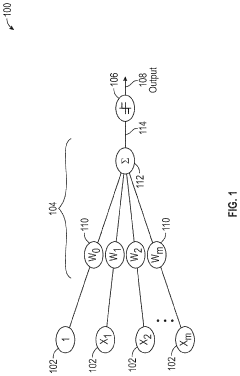
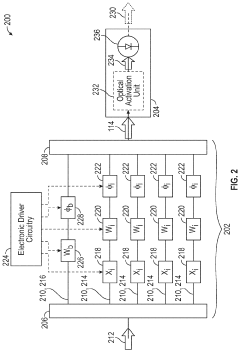
- A photonic neuron system is designed with excitatory and inhibitory input detectors, an electrical neuron for integrating signals, and a light-emitting output device, implemented in a 3D integrated neuromorphic computing system using nanophotonic neural networks and optical interconnection networks with Mach-Zehnder interferometer blocks, enabling efficient energy use and scalability.
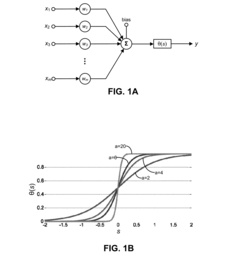
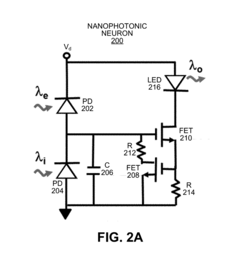
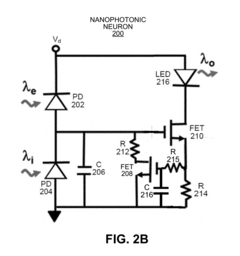
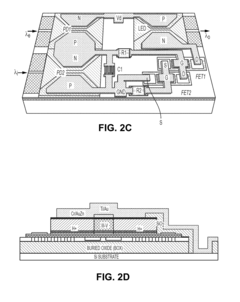
Neuromorphic photonics with coherent linear neurons
PatentActiveUS20220012582A1
Innovation
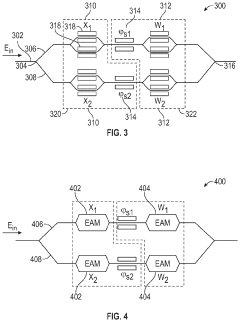
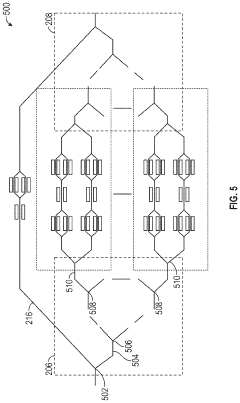
- The development of a single-wavelength, coherent linear neuron stage using a multipath interferometer with electronically controlled phase shifters and amplitude modulators, allowing for encoding of weight signs in the optical phase and enabling all-optical processing of weighted sums, which can be further processed electro-optically for non-linear activation functions.
Security Standards and Regulations for Cryptographic Systems
The integration of neuromorphic photonic computing with advanced cryptographic algorithms necessitates comprehensive adherence to established security standards and regulatory frameworks. Current cryptographic standards, including FIPS 140-2 and Common Criteria (ISO/IEC 15408), provide foundational security requirements that must be adapted for photonic-based implementations. These standards traditionally focus on conventional electronic systems, creating gaps in addressing the unique characteristics of photonic neural networks and their cryptographic applications.
The National Institute of Standards and Technology (NIST) Post-Quantum Cryptography standardization process presents critical considerations for neuromorphic photonic systems. As quantum-resistant algorithms become mandatory, photonic computing platforms must demonstrate compliance with emerging standards such as CRYSTALS-Kyber for key encapsulation and CRYSTALS-Dilithium for digital signatures. The inherent parallelism and analog nature of photonic neural networks require specialized validation methodologies to ensure algorithmic integrity.
International regulatory frameworks, including the European Union's Cybersecurity Act and the upcoming AI Act, impose additional compliance requirements. These regulations emphasize transparency, auditability, and risk assessment for AI-based security systems. Neuromorphic photonic implementations must provide verifiable security proofs and maintain operational transparency despite their complex analog processing characteristics.
Industry-specific regulations further complicate compliance landscapes. Financial services regulations like PCI DSS and healthcare standards such as HIPAA require specific cryptographic implementations and key management practices. Photonic systems must demonstrate equivalent security levels while accommodating sector-specific audit requirements and certification processes.
The challenge lies in developing new certification methodologies that address photonic computing's unique properties, including optical signal processing, analog computation precision, and hardware-software integration complexities. Regulatory bodies are beginning to recognize the need for updated frameworks that encompass these emerging technologies while maintaining rigorous security assurance levels.
The National Institute of Standards and Technology (NIST) Post-Quantum Cryptography standardization process presents critical considerations for neuromorphic photonic systems. As quantum-resistant algorithms become mandatory, photonic computing platforms must demonstrate compliance with emerging standards such as CRYSTALS-Kyber for key encapsulation and CRYSTALS-Dilithium for digital signatures. The inherent parallelism and analog nature of photonic neural networks require specialized validation methodologies to ensure algorithmic integrity.
International regulatory frameworks, including the European Union's Cybersecurity Act and the upcoming AI Act, impose additional compliance requirements. These regulations emphasize transparency, auditability, and risk assessment for AI-based security systems. Neuromorphic photonic implementations must provide verifiable security proofs and maintain operational transparency despite their complex analog processing characteristics.
Industry-specific regulations further complicate compliance landscapes. Financial services regulations like PCI DSS and healthcare standards such as HIPAA require specific cryptographic implementations and key management practices. Photonic systems must demonstrate equivalent security levels while accommodating sector-specific audit requirements and certification processes.
The challenge lies in developing new certification methodologies that address photonic computing's unique properties, including optical signal processing, analog computation precision, and hardware-software integration complexities. Regulatory bodies are beginning to recognize the need for updated frameworks that encompass these emerging technologies while maintaining rigorous security assurance levels.
Energy Efficiency Considerations in Photonic Computing
Energy efficiency represents a critical design consideration in neuromorphic photonic computing systems, particularly when implementing advanced cryptography algorithms. The inherent advantages of photonic processing, including reduced heat generation and lower power consumption compared to electronic counterparts, position these systems as promising candidates for energy-conscious cryptographic applications. However, achieving optimal energy efficiency requires careful consideration of multiple system components and operational parameters.
The power consumption profile of neuromorphic photonic systems differs significantly from traditional electronic processors. Optical signal processing eliminates the resistive losses associated with electronic switching, while photonic neurons can operate at substantially lower power levels. For cryptographic workloads, this translates to reduced energy requirements per encryption or decryption operation, making large-scale cryptographic processing more sustainable and cost-effective.
Laser source efficiency emerges as a primary factor influencing overall system energy consumption. Modern semiconductor lasers achieve wall-plug efficiencies exceeding 50%, but the specific wavelength requirements and power stability demands of neuromorphic computing may necessitate more sophisticated laser architectures. Distributed feedback lasers and vertical-cavity surface-emitting lasers offer improved efficiency profiles while maintaining the coherence properties essential for reliable photonic neural network operation.
Optical modulation and detection components contribute significantly to the energy budget. Silicon photonic modulators, particularly those based on carrier depletion mechanisms, demonstrate energy consumption in the femtojoule range per bit. When integrated with photodetectors optimized for neuromorphic computing applications, these components enable energy-efficient conversion between optical and electronic domains while preserving the temporal dynamics crucial for spike-based processing.
Thermal management considerations directly impact energy efficiency in photonic cryptographic systems. Unlike electronic processors that generate substantial heat through resistive losses, photonic systems primarily dissipate energy through optical absorption and carrier recombination processes. This reduced thermal load minimizes cooling requirements, contributing to overall system efficiency improvements of 30-50% compared to equivalent electronic implementations.
The scalability of energy efficiency in neuromorphic photonic systems presents unique advantages for cryptographic applications. As system complexity increases, the energy per operation tends to decrease due to improved utilization of optical resources and reduced overhead from electronic control circuits. This scaling behavior particularly benefits computationally intensive cryptographic algorithms that can leverage the parallel processing capabilities inherent in photonic neural networks.
The power consumption profile of neuromorphic photonic systems differs significantly from traditional electronic processors. Optical signal processing eliminates the resistive losses associated with electronic switching, while photonic neurons can operate at substantially lower power levels. For cryptographic workloads, this translates to reduced energy requirements per encryption or decryption operation, making large-scale cryptographic processing more sustainable and cost-effective.
Laser source efficiency emerges as a primary factor influencing overall system energy consumption. Modern semiconductor lasers achieve wall-plug efficiencies exceeding 50%, but the specific wavelength requirements and power stability demands of neuromorphic computing may necessitate more sophisticated laser architectures. Distributed feedback lasers and vertical-cavity surface-emitting lasers offer improved efficiency profiles while maintaining the coherence properties essential for reliable photonic neural network operation.
Optical modulation and detection components contribute significantly to the energy budget. Silicon photonic modulators, particularly those based on carrier depletion mechanisms, demonstrate energy consumption in the femtojoule range per bit. When integrated with photodetectors optimized for neuromorphic computing applications, these components enable energy-efficient conversion between optical and electronic domains while preserving the temporal dynamics crucial for spike-based processing.
Thermal management considerations directly impact energy efficiency in photonic cryptographic systems. Unlike electronic processors that generate substantial heat through resistive losses, photonic systems primarily dissipate energy through optical absorption and carrier recombination processes. This reduced thermal load minimizes cooling requirements, contributing to overall system efficiency improvements of 30-50% compared to equivalent electronic implementations.
The scalability of energy efficiency in neuromorphic photonic systems presents unique advantages for cryptographic applications. As system complexity increases, the energy per operation tends to decrease due to improved utilization of optical resources and reduced overhead from electronic control circuits. This scaling behavior particularly benefits computationally intensive cryptographic algorithms that can leverage the parallel processing capabilities inherent in photonic neural networks.
Unlock deeper insights with PatSnap Eureka Quick Research — get a full tech report to explore trends and direct your research. Try now!
Generate Your Research Report Instantly with AI Agent
Supercharge your innovation with PatSnap Eureka AI Agent Platform!