

Optimize Band Pass Filter Design for Reduced Power Consumption
MAR 25, 20269 MIN READ
Generate Your Research Report Instantly with AI Agent
PatSnap Eureka helps you evaluate technical feasibility & market potential.
Band Pass Filter Power Optimization Background and Goals
Band pass filters have evolved significantly since their inception in early radio communication systems during the 1920s. Initially implemented using simple LC circuits, these components were primarily designed for signal selectivity rather than power efficiency. The evolution accelerated with the advent of active filters in the 1960s, incorporating operational amplifiers to achieve better performance characteristics. However, these early active implementations often consumed substantial power, making them unsuitable for portable applications.
The semiconductor revolution of the 1980s introduced integrated circuit-based filters, enabling more sophisticated designs with improved frequency response and reduced component count. Digital signal processing emerged as a transformative technology in the 1990s, allowing for programmable filter characteristics but introducing new power consumption challenges due to continuous analog-to-digital conversion and computational overhead.
Modern wireless communication systems demand increasingly stringent performance requirements while operating under severe power constraints. The proliferation of Internet of Things devices, mobile communications, and battery-powered sensors has intensified the need for ultra-low-power filter solutions. Contemporary applications require filters that maintain excellent selectivity and linearity while consuming minimal power to extend battery life and reduce thermal dissipation.
Current technological trends indicate a convergence toward hybrid approaches combining analog and digital techniques. Advanced semiconductor processes enable the implementation of sophisticated power management strategies, including dynamic biasing, adaptive bandwidth control, and intelligent duty cycling. These innovations represent a paradigm shift from traditional always-on filter architectures toward smart, context-aware filtering systems.
The primary objective of optimizing band pass filter design for reduced power consumption encompasses multiple technical goals. Achieving sub-milliwatt power consumption while maintaining acceptable signal-to-noise ratios represents a fundamental challenge. Additionally, preserving filter performance parameters such as insertion loss, out-of-band rejection, and phase linearity under reduced power conditions requires innovative circuit topologies and design methodologies.
Future developments aim to establish new benchmarks for power efficiency without compromising filtering performance, ultimately enabling next-generation wireless systems and portable electronic devices to operate with extended battery life and improved thermal characteristics.
The semiconductor revolution of the 1980s introduced integrated circuit-based filters, enabling more sophisticated designs with improved frequency response and reduced component count. Digital signal processing emerged as a transformative technology in the 1990s, allowing for programmable filter characteristics but introducing new power consumption challenges due to continuous analog-to-digital conversion and computational overhead.
Modern wireless communication systems demand increasingly stringent performance requirements while operating under severe power constraints. The proliferation of Internet of Things devices, mobile communications, and battery-powered sensors has intensified the need for ultra-low-power filter solutions. Contemporary applications require filters that maintain excellent selectivity and linearity while consuming minimal power to extend battery life and reduce thermal dissipation.
Current technological trends indicate a convergence toward hybrid approaches combining analog and digital techniques. Advanced semiconductor processes enable the implementation of sophisticated power management strategies, including dynamic biasing, adaptive bandwidth control, and intelligent duty cycling. These innovations represent a paradigm shift from traditional always-on filter architectures toward smart, context-aware filtering systems.
The primary objective of optimizing band pass filter design for reduced power consumption encompasses multiple technical goals. Achieving sub-milliwatt power consumption while maintaining acceptable signal-to-noise ratios represents a fundamental challenge. Additionally, preserving filter performance parameters such as insertion loss, out-of-band rejection, and phase linearity under reduced power conditions requires innovative circuit topologies and design methodologies.
Future developments aim to establish new benchmarks for power efficiency without compromising filtering performance, ultimately enabling next-generation wireless systems and portable electronic devices to operate with extended battery life and improved thermal characteristics.
Market Demand for Low Power Filter Solutions
The global electronics industry is experiencing unprecedented demand for energy-efficient solutions, driven by stringent environmental regulations and rising energy costs. Low power filter solutions have emerged as critical components across multiple sectors, with wireless communication systems leading the adoption curve. The proliferation of Internet of Things devices, which require extended battery life while maintaining signal integrity, has created substantial market pressure for optimized band pass filter designs.
Mobile device manufacturers face increasing consumer expectations for longer battery life without compromising performance. Modern smartphones, tablets, and wearable devices integrate multiple radio frequency chains, each requiring dedicated filtering solutions. The cumulative power consumption of these filters directly impacts overall device autonomy, making power-optimized designs essential for competitive advantage in consumer electronics markets.
The automotive sector represents another significant growth driver, particularly with the expansion of electric vehicles and autonomous driving systems. These applications demand robust filtering solutions that minimize power drain while operating in harsh electromagnetic environments. Advanced driver assistance systems and vehicle-to-everything communication protocols require sophisticated filtering architectures that balance performance with energy efficiency.
Industrial automation and smart manufacturing environments increasingly rely on wireless sensor networks and machine-to-machine communication systems. These deployments often involve thousands of connected devices operating in remote or hard-to-access locations, where battery replacement costs can be prohibitive. Consequently, industrial customers prioritize filter solutions that extend operational lifespans through reduced power consumption.
The telecommunications infrastructure sector faces mounting pressure to reduce operational expenses while expanding network capacity. Base station equipment manufacturers seek filter technologies that lower cooling requirements and improve overall system efficiency. The deployment of small cell networks and distributed antenna systems amplifies this demand, as these installations often operate with limited power budgets.
Emerging applications in medical devices and aerospace systems further expand market opportunities for low power filtering solutions. Implantable medical devices require ultra-low power consumption to extend battery life and reduce surgical interventions, while satellite communication systems benefit from reduced power requirements to maximize payload capacity and mission duration.
Mobile device manufacturers face increasing consumer expectations for longer battery life without compromising performance. Modern smartphones, tablets, and wearable devices integrate multiple radio frequency chains, each requiring dedicated filtering solutions. The cumulative power consumption of these filters directly impacts overall device autonomy, making power-optimized designs essential for competitive advantage in consumer electronics markets.
The automotive sector represents another significant growth driver, particularly with the expansion of electric vehicles and autonomous driving systems. These applications demand robust filtering solutions that minimize power drain while operating in harsh electromagnetic environments. Advanced driver assistance systems and vehicle-to-everything communication protocols require sophisticated filtering architectures that balance performance with energy efficiency.
Industrial automation and smart manufacturing environments increasingly rely on wireless sensor networks and machine-to-machine communication systems. These deployments often involve thousands of connected devices operating in remote or hard-to-access locations, where battery replacement costs can be prohibitive. Consequently, industrial customers prioritize filter solutions that extend operational lifespans through reduced power consumption.
The telecommunications infrastructure sector faces mounting pressure to reduce operational expenses while expanding network capacity. Base station equipment manufacturers seek filter technologies that lower cooling requirements and improve overall system efficiency. The deployment of small cell networks and distributed antenna systems amplifies this demand, as these installations often operate with limited power budgets.
Emerging applications in medical devices and aerospace systems further expand market opportunities for low power filtering solutions. Implantable medical devices require ultra-low power consumption to extend battery life and reduce surgical interventions, while satellite communication systems benefit from reduced power requirements to maximize payload capacity and mission duration.
Current State and Power Consumption Challenges in BPF Design
Band pass filter design has evolved significantly over the past decades, with traditional approaches primarily focusing on achieving desired frequency selectivity and insertion loss characteristics. However, the exponential growth of mobile devices, IoT applications, and wireless communication systems has fundamentally shifted design priorities toward power efficiency. Contemporary BPF implementations face mounting pressure to minimize power consumption while maintaining performance standards, creating a complex optimization challenge that extends beyond conventional design methodologies.
The current landscape of BPF design reveals substantial power consumption challenges across multiple implementation approaches. Active filter designs, while offering excellent tunability and gain control, typically consume significant static power through operational amplifiers and bias circuits. These designs often require continuous current flow ranging from microamperes to milliamperes, depending on bandwidth and noise requirements. Passive filter implementations, though inherently power-efficient, suffer from insertion losses that necessitate additional amplification stages, indirectly increasing overall system power consumption.
Modern RF front-end architectures compound these challenges by demanding multiple concurrent filter operations. Software-defined radio systems and multi-band transceivers require simultaneous filtering across various frequency bands, multiplying power consumption linearly with the number of active channels. Additionally, the trend toward higher frequency operations in 5G and beyond introduces parasitic effects that degrade filter efficiency, forcing designers to implement compensation circuits that further increase power overhead.
Temperature stability presents another critical challenge in power-optimized BPF design. Traditional temperature compensation techniques rely on active bias adjustment circuits or heating elements, both contributing to baseline power consumption. Silicon-based integrated filters, while offering miniaturization benefits, exhibit significant temperature coefficients that require continuous calibration, consuming additional power for monitoring and adjustment circuitry.
Process variations in semiconductor manufacturing create additional power consumption challenges. To ensure consistent performance across production lots, designers typically incorporate margin adjustments that result in over-designed circuits consuming more power than theoretically necessary. Adaptive biasing schemes, while addressing this issue, introduce their own power overhead through sensing and control mechanisms.
The integration of BPFs with digital control systems has introduced new power consumption vectors. Digital tuning interfaces, memory storage for filter coefficients, and real-time adaptation algorithms all contribute to the overall power budget. These digital components often operate continuously, even when filter parameters remain static, representing a significant opportunity for power optimization through intelligent power management strategies.
The current landscape of BPF design reveals substantial power consumption challenges across multiple implementation approaches. Active filter designs, while offering excellent tunability and gain control, typically consume significant static power through operational amplifiers and bias circuits. These designs often require continuous current flow ranging from microamperes to milliamperes, depending on bandwidth and noise requirements. Passive filter implementations, though inherently power-efficient, suffer from insertion losses that necessitate additional amplification stages, indirectly increasing overall system power consumption.
Modern RF front-end architectures compound these challenges by demanding multiple concurrent filter operations. Software-defined radio systems and multi-band transceivers require simultaneous filtering across various frequency bands, multiplying power consumption linearly with the number of active channels. Additionally, the trend toward higher frequency operations in 5G and beyond introduces parasitic effects that degrade filter efficiency, forcing designers to implement compensation circuits that further increase power overhead.
Temperature stability presents another critical challenge in power-optimized BPF design. Traditional temperature compensation techniques rely on active bias adjustment circuits or heating elements, both contributing to baseline power consumption. Silicon-based integrated filters, while offering miniaturization benefits, exhibit significant temperature coefficients that require continuous calibration, consuming additional power for monitoring and adjustment circuitry.
Process variations in semiconductor manufacturing create additional power consumption challenges. To ensure consistent performance across production lots, designers typically incorporate margin adjustments that result in over-designed circuits consuming more power than theoretically necessary. Adaptive biasing schemes, while addressing this issue, introduce their own power overhead through sensing and control mechanisms.
The integration of BPFs with digital control systems has introduced new power consumption vectors. Digital tuning interfaces, memory storage for filter coefficients, and real-time adaptation algorithms all contribute to the overall power budget. These digital components often operate continuously, even when filter parameters remain static, representing a significant opportunity for power optimization through intelligent power management strategies.
Existing Power Reduction Techniques for Band Pass Filters
01 Low power consumption band pass filter circuit design
Band pass filters can be designed with circuit topologies that minimize power consumption through optimized component selection and configuration. These designs focus on reducing static and dynamic power dissipation while maintaining filtering performance. Techniques include using low-power operational amplifiers, optimized biasing circuits, and efficient transistor configurations that reduce current draw during operation.- Low power consumption band pass filter circuit design: Band pass filters can be designed with circuit topologies that minimize power consumption through optimized component selection and configuration. These designs focus on reducing static and dynamic power dissipation while maintaining filtering performance. Techniques include using low-power operational amplifiers, optimized biasing circuits, and efficient transistor configurations that reduce current draw during operation.
- Switched-capacitor band pass filter for power efficiency: Switched-capacitor techniques can be employed in band pass filter designs to achieve lower power consumption compared to continuous-time implementations. These filters use switches and capacitors instead of resistors, reducing static power dissipation. The switching operation allows for power savings by enabling duty-cycled operation and eliminating DC current paths through resistive elements.
- Active filter power management and control: Power consumption in band pass filters can be managed through intelligent control circuits that adjust operating modes based on signal conditions. These systems may include power-down modes, adaptive biasing, and dynamic range adjustment to minimize energy usage during periods of low signal activity. Control mechanisms can selectively activate or deactivate filter stages to balance performance requirements with power constraints.
- MEMS and acoustic band pass filters with reduced power: Micro-electromechanical systems and acoustic resonator-based band pass filters offer passive filtering solutions that consume minimal or zero static power. These devices utilize mechanical or acoustic resonance phenomena to achieve frequency selectivity without requiring continuous power supply for active components. Such implementations are particularly advantageous in battery-powered and energy-constrained applications.
- Digital and programmable band pass filters for power optimization: Digital signal processing implementations of band pass filters allow for flexible power optimization through software control and hardware acceleration. These solutions can dynamically adjust filter parameters, precision, and processing rates to match application requirements while minimizing computational power. Programmable architectures enable trade-offs between filtering performance and energy consumption based on real-time needs.
02 Switched-capacitor band pass filter for power efficiency
Switched-capacitor techniques can be employed in band pass filter implementations to achieve lower power consumption compared to continuous-time filters. These filters operate by periodically switching capacitors, which allows for reduced power dissipation and better integration in low-power applications. The switching mechanism enables power savings during idle periods and provides flexibility in frequency tuning.Expand Specific Solutions03 Active band pass filter with power management
Active band pass filters can incorporate power management features such as sleep modes, dynamic biasing, and adaptive power control to reduce overall power consumption. These filters can adjust their operating parameters based on signal conditions and system requirements, enabling power savings when full performance is not needed. Power management circuits monitor the filter state and optimize current consumption accordingly.Expand Specific Solutions04 MEMS-based band pass filter for low power applications
Micro-electromechanical systems technology can be utilized to create band pass filters with extremely low power consumption. These filters leverage mechanical resonators that require minimal power to operate and can achieve high quality factors with low insertion loss. The passive nature of mechanical resonance combined with minimal electronic circuitry results in significant power savings compared to traditional active filters.Expand Specific Solutions05 Digital band pass filter with power optimization
Digital signal processing techniques can be applied to implement band pass filters with optimized power consumption through algorithmic efficiency and hardware acceleration. These implementations can utilize clock gating, voltage scaling, and parallel processing architectures to minimize power dissipation. Digital filters offer flexibility in adjusting filter characteristics while maintaining low power operation through optimized computational algorithms.Expand Specific Solutions
Key Players in Low Power Filter and IC Industry
The band pass filter optimization market for reduced power consumption represents a mature yet rapidly evolving competitive landscape driven by increasing demand for energy-efficient electronic systems across telecommunications, automotive, and consumer electronics sectors. The industry is experiencing significant growth, with market size expanding due to 5G deployment and IoT proliferation. Technology maturity varies significantly among key players, with established component manufacturers like Murata Manufacturing, TDK Corp., and Samsung Electronics leading in advanced ceramic and semiconductor-based filter technologies. Traditional electronics giants including Kyocera Corp., Panasonic Holdings, and Siemens AG leverage decades of materials science expertise, while telecommunications leaders such as Huawei Technologies and Nokia of America drive innovation in network infrastructure applications. The competitive dynamics show a clear division between specialized component suppliers focusing on miniaturization and power efficiency, and system integrators developing comprehensive solutions for next-generation wireless standards.
Samsung Electronics Co., Ltd.
Technical Solution: Samsung implements digitally-tunable band pass filters using CMOS-based active filter architectures with intelligent power scaling algorithms. Their approach combines switched-capacitor techniques with adaptive biasing circuits that monitor signal conditions in real-time. The filters feature programmable bandwidth control and automatic gain adjustment, enabling power consumption optimization across different operating modes. Samsung's solution integrates machine learning algorithms to predict signal patterns and pre-emptively adjust filter parameters, achieving power savings of 25-35% while maintaining signal integrity through advanced noise cancellation techniques.
Strengths: Advanced semiconductor integration capabilities, AI-driven optimization, scalable manufacturing. Weaknesses: Complex design requiring sophisticated control algorithms, potential reliability concerns in harsh environments.
Murata Manufacturing Co. Ltd.
Technical Solution: Murata develops advanced ceramic-based band pass filters utilizing high-Q resonator technology with integrated power management circuits. Their solutions employ temperature-compensated ceramic materials and optimized coupling structures to achieve insertion loss reduction of up to 0.5dB compared to conventional designs. The company's proprietary multilayer ceramic technology enables miniaturized filter designs with enhanced selectivity while incorporating adaptive bias control circuits that dynamically adjust power consumption based on signal strength requirements, resulting in up to 40% power reduction in standby modes.
Strengths: Industry-leading ceramic technology expertise, excellent temperature stability, compact form factor. Weaknesses: Higher manufacturing costs, limited customization flexibility for specific frequency bands.
Core Innovations in Ultra-Low Power BPF Design
Band pass filter
PatentInactiveUS7649431B2
Innovation
- The use of step-impedance resonators with meandered high impedance portions and direct coupling of input/output units to resonators with a tap shape, along with notching capacitors, to maintain a constant impedance ratio and improve stop characteristics, while reducing the filter's size and physical length.
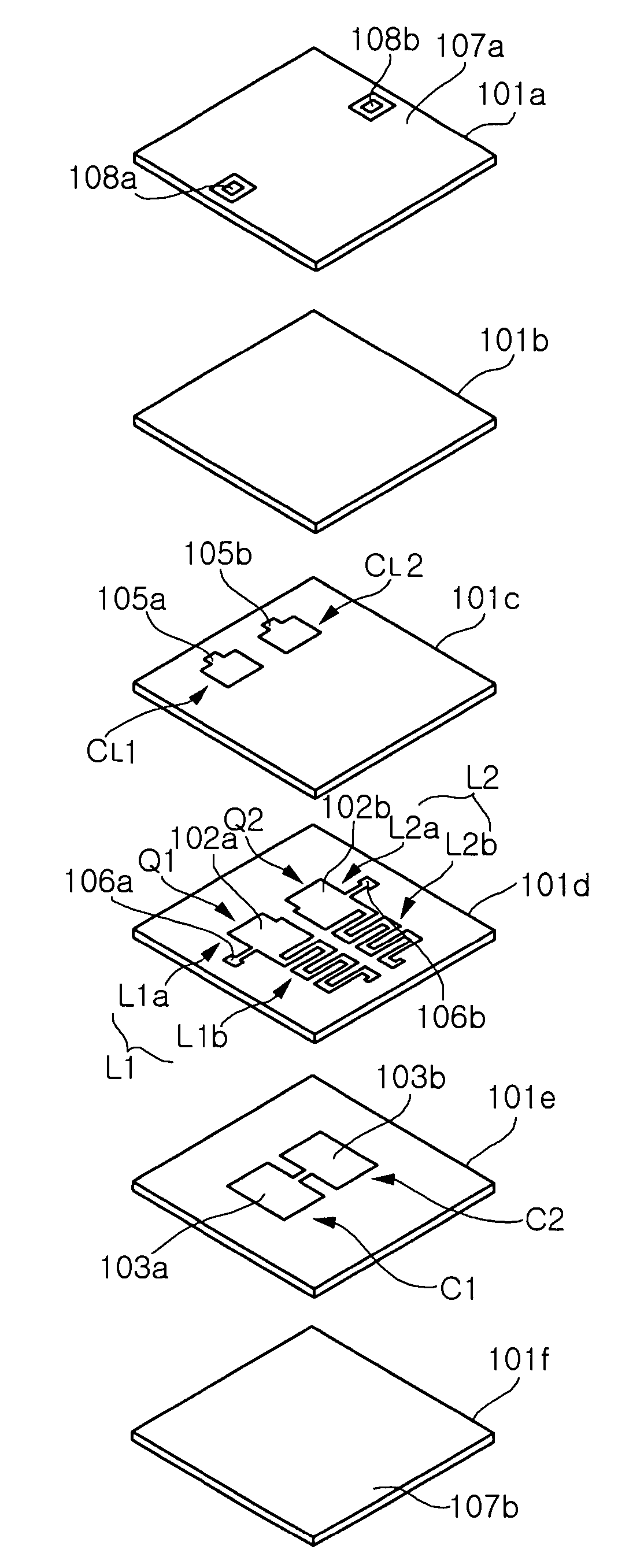
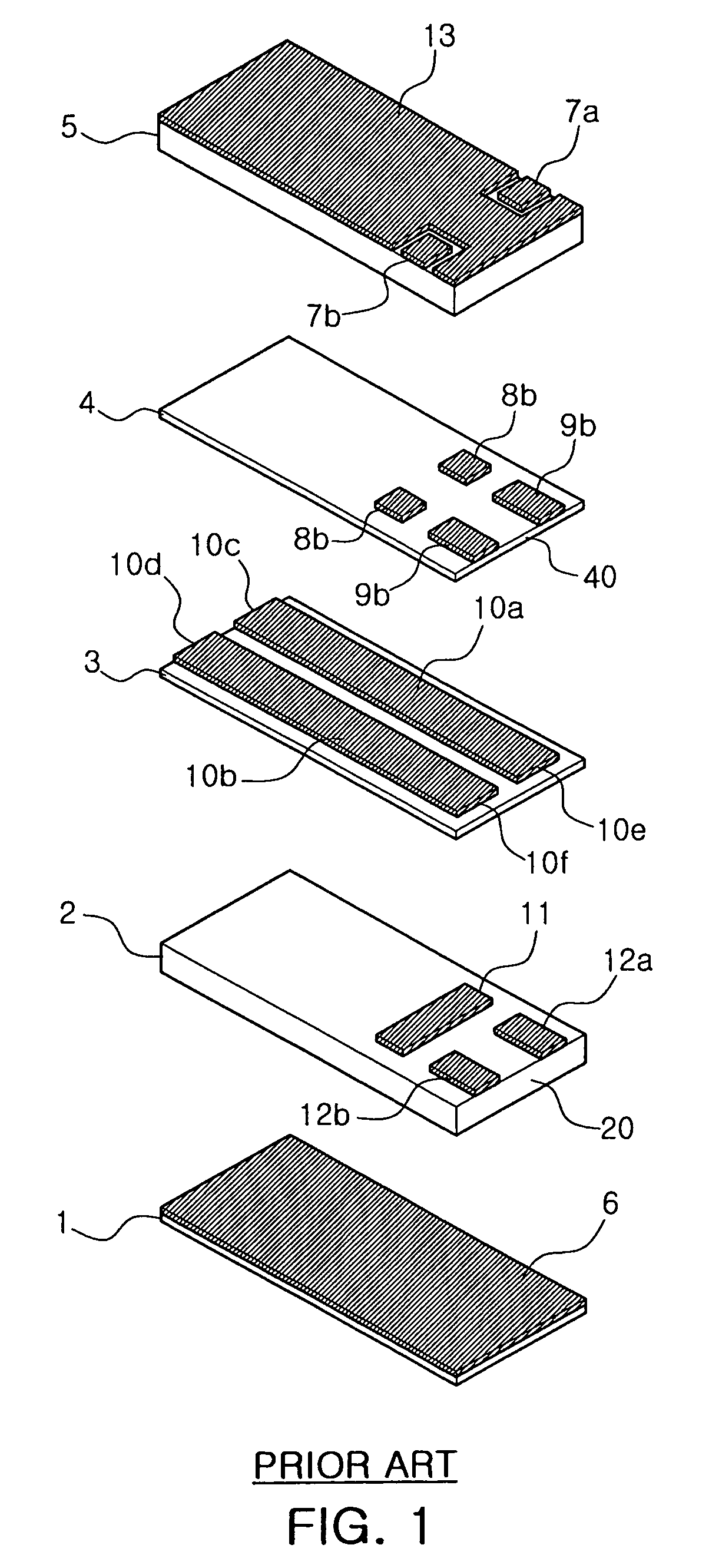
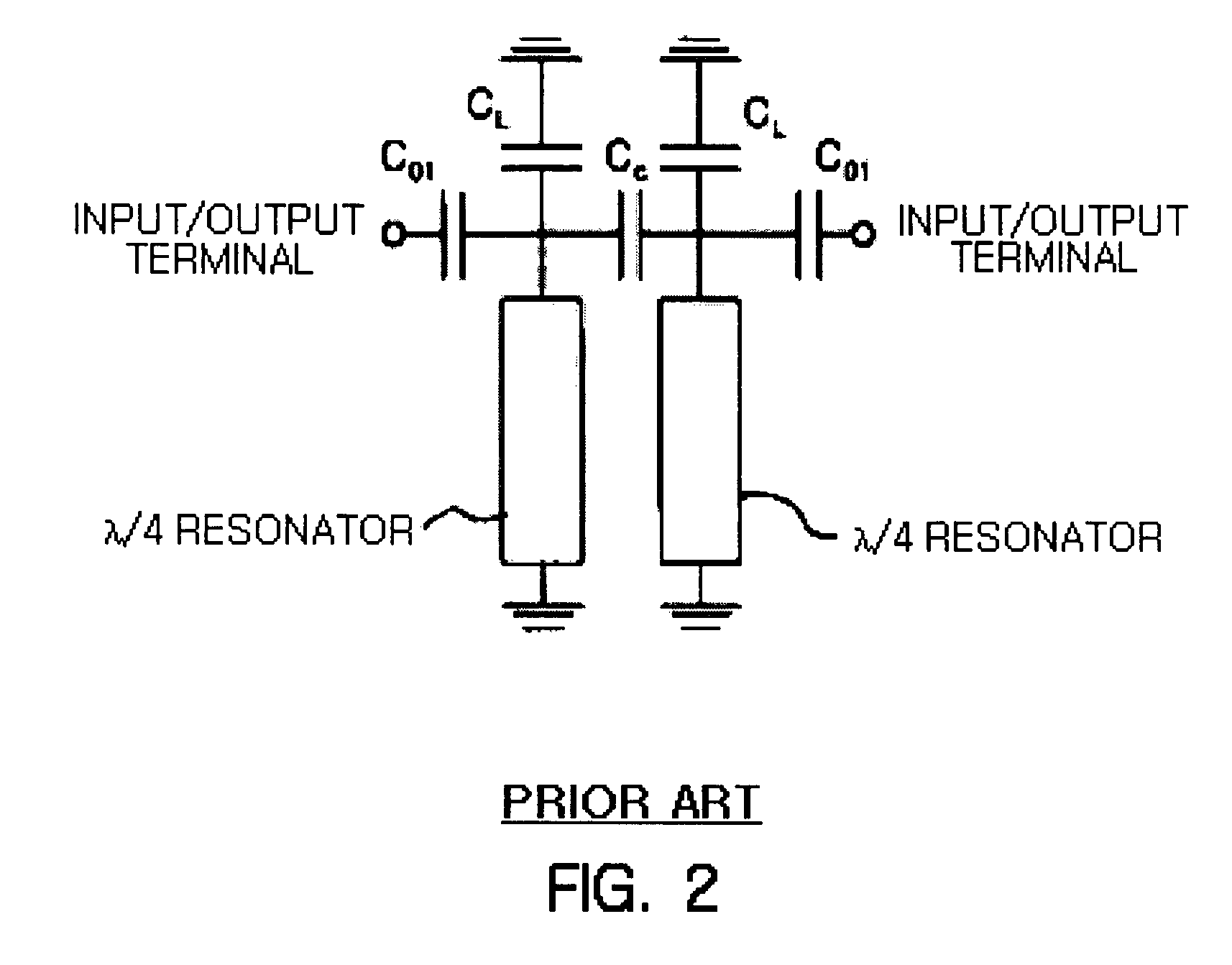

Band pass filter
PatentInactiveUS7081788B2
Innovation
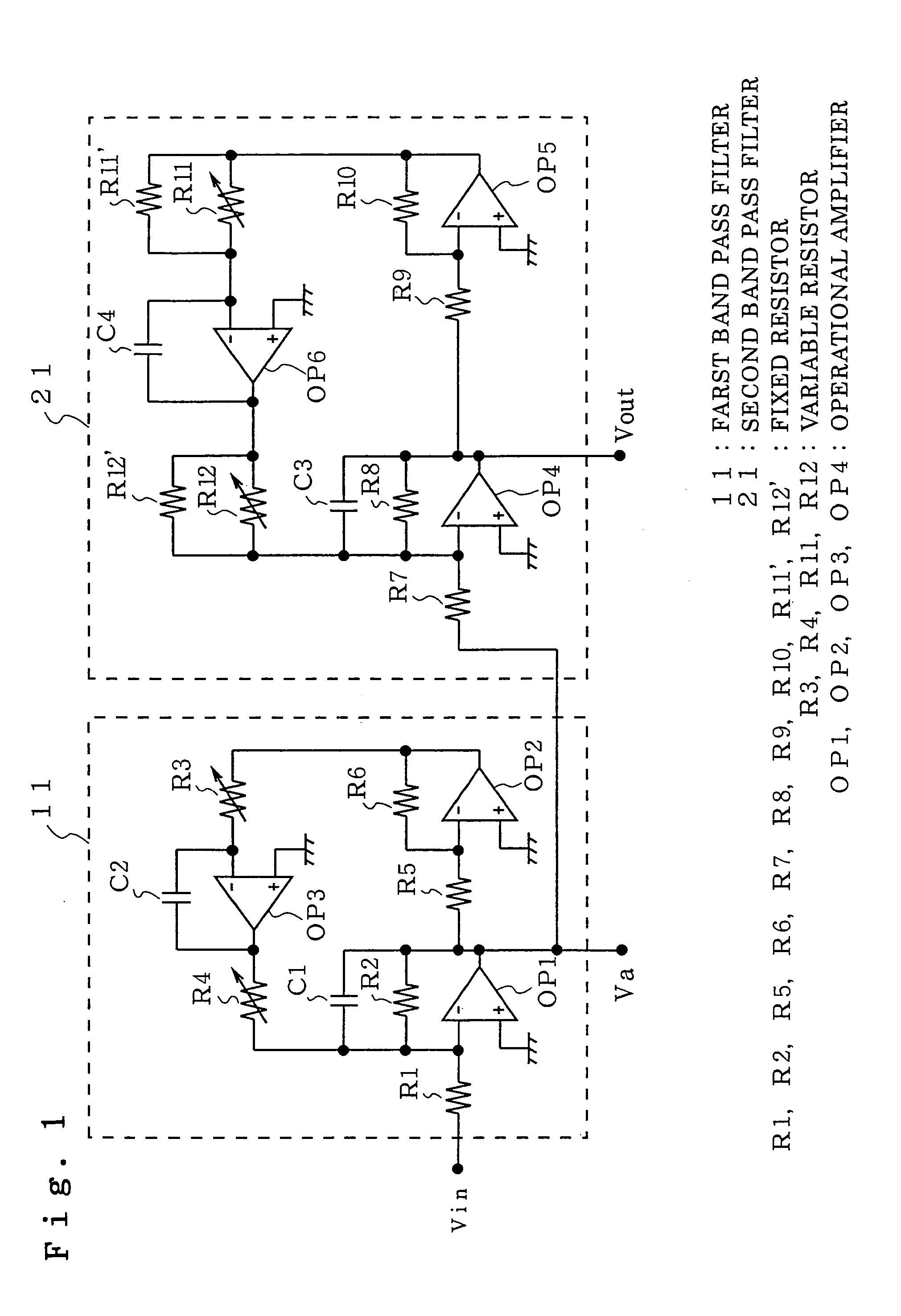
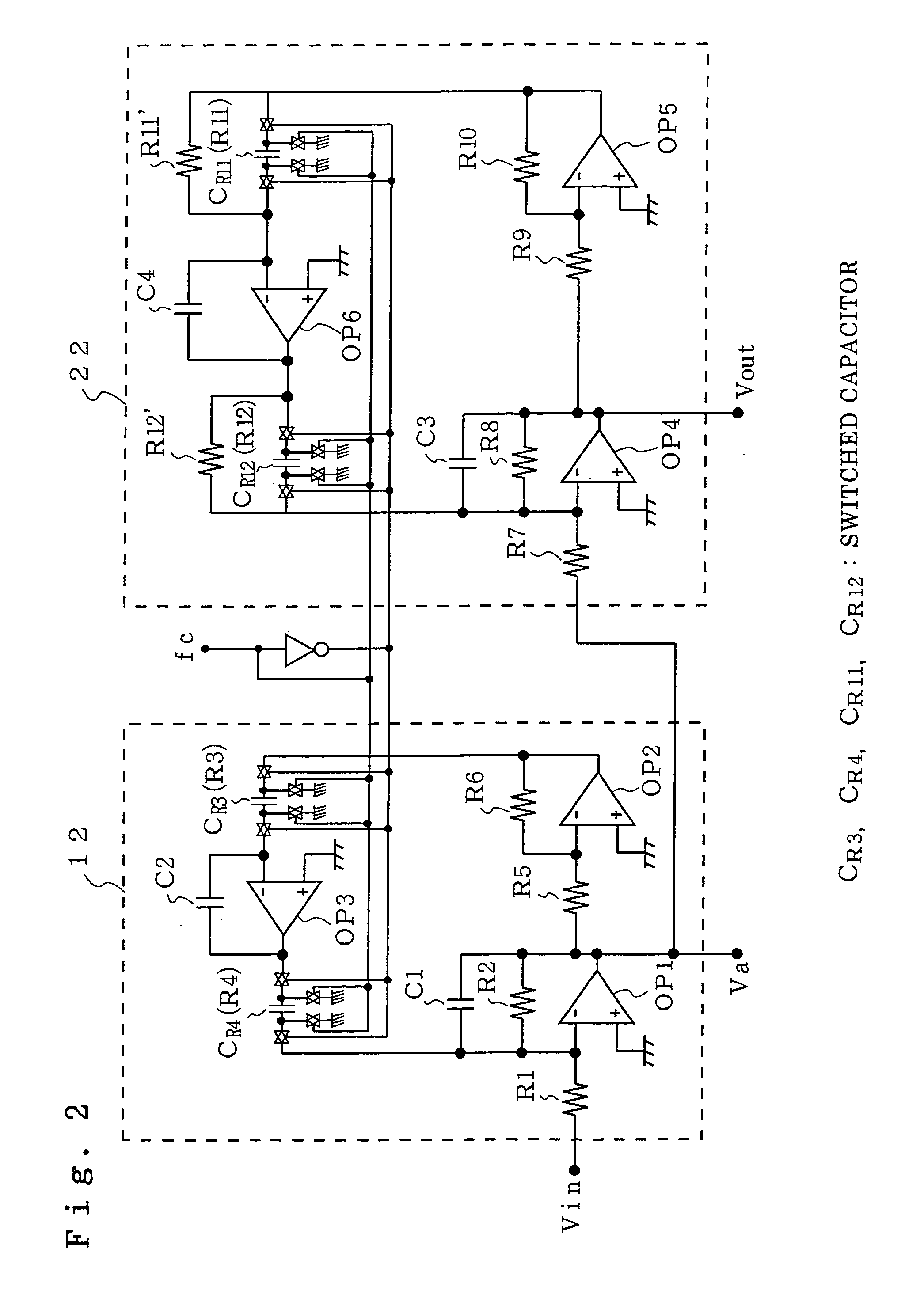
- A band pass filter design that includes a first and second biquad circuit-based band pass filter with center frequency and maximum gain adjusting variable resistors, where a fixed resistor is connected in parallel to the center frequency adjusting variable resistor, allowing for variable center frequency and maximum gain adjustments using switched capacitors or resistors, while keeping the band width fixed.
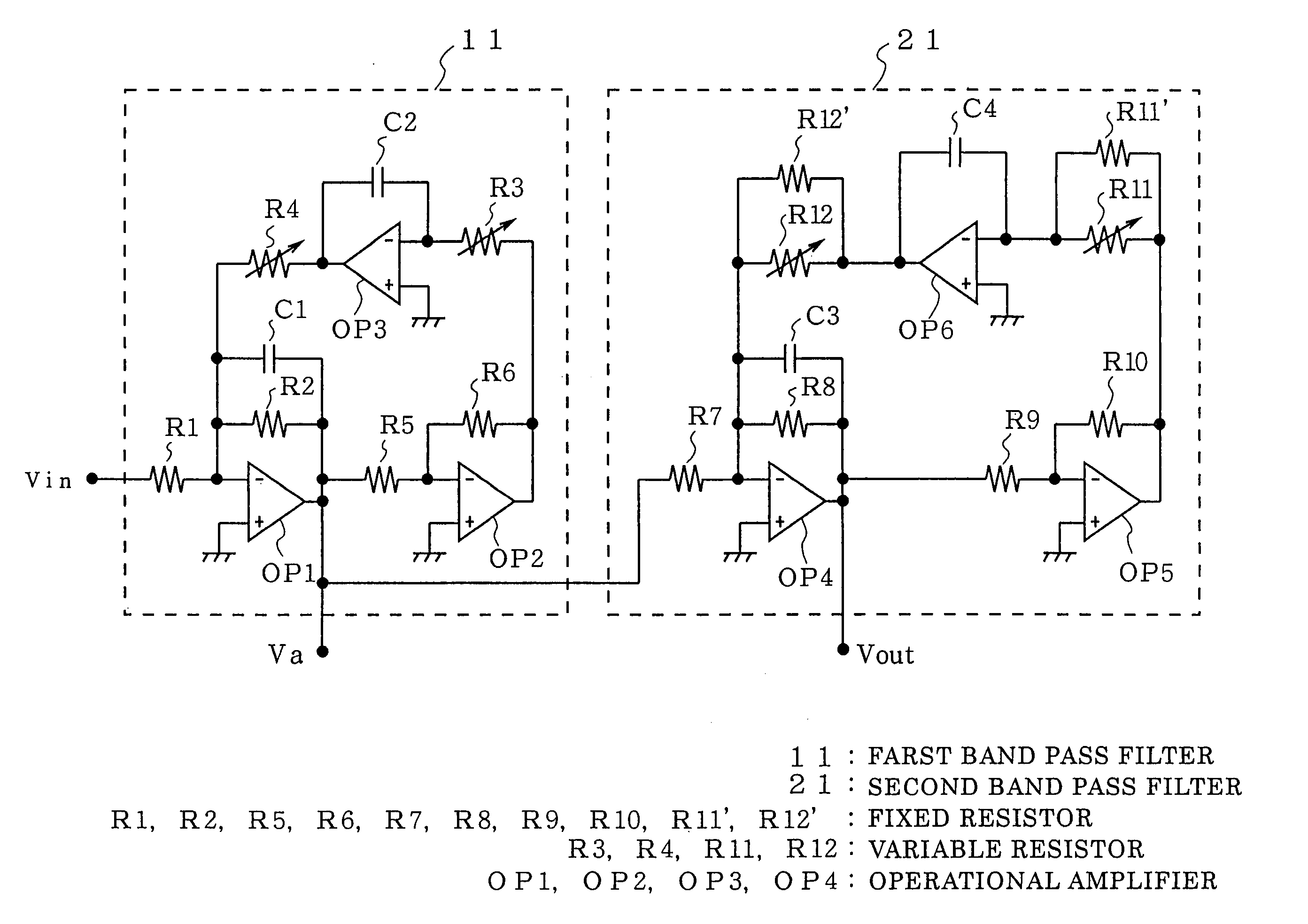

Circuit Design Methodologies for Power Optimization
Power optimization in band pass filter design requires a systematic approach that encompasses multiple circuit design methodologies, each targeting specific aspects of energy consumption reduction. The fundamental principle underlying these methodologies involves minimizing static and dynamic power dissipation while maintaining filter performance specifications such as selectivity, insertion loss, and linearity.
Voltage scaling represents one of the most effective power optimization techniques, as power consumption exhibits quadratic dependence on supply voltage. Advanced methodologies employ adaptive voltage scaling that dynamically adjusts operating voltages based on real-time performance requirements. This approach allows filters to operate at minimum necessary voltage levels while preserving signal integrity and frequency response characteristics.
Current reuse topology emerges as another critical methodology, particularly effective in multi-stage filter implementations. This technique enables multiple filter stages to share the same bias current path, significantly reducing overall current consumption without compromising individual stage performance. The methodology requires careful impedance matching and signal coupling considerations to prevent inter-stage interference.
Transistor sizing optimization constitutes a fundamental design methodology that balances power consumption with performance metrics. Advanced algorithms determine optimal width-to-length ratios for each transistor, considering trade-offs between transconductance efficiency, parasitic capacitances, and noise performance. This methodology often employs geometric programming techniques to achieve global optimization across multiple design variables.
Bias current optimization methodologies focus on establishing minimum current levels necessary for desired filter characteristics. These approaches utilize advanced biasing schemes such as self-biased architectures and current mirrors with improved current efficiency. Temperature compensation techniques ensure stable operation across environmental variations while maintaining power efficiency.
Switched-capacitor techniques offer dynamic power optimization by enabling time-multiplexed operation modes. These methodologies allow filters to operate in low-power standby states during inactive periods, with rapid wake-up capabilities when full performance is required. Clock frequency optimization further reduces switching losses in these implementations.
Class-AB operation methodologies provide enhanced power efficiency compared to traditional Class-A designs by reducing quiescent current requirements. These approaches maintain low distortion characteristics while significantly improving power consumption profiles, particularly beneficial for high-frequency band pass applications.
Voltage scaling represents one of the most effective power optimization techniques, as power consumption exhibits quadratic dependence on supply voltage. Advanced methodologies employ adaptive voltage scaling that dynamically adjusts operating voltages based on real-time performance requirements. This approach allows filters to operate at minimum necessary voltage levels while preserving signal integrity and frequency response characteristics.
Current reuse topology emerges as another critical methodology, particularly effective in multi-stage filter implementations. This technique enables multiple filter stages to share the same bias current path, significantly reducing overall current consumption without compromising individual stage performance. The methodology requires careful impedance matching and signal coupling considerations to prevent inter-stage interference.
Transistor sizing optimization constitutes a fundamental design methodology that balances power consumption with performance metrics. Advanced algorithms determine optimal width-to-length ratios for each transistor, considering trade-offs between transconductance efficiency, parasitic capacitances, and noise performance. This methodology often employs geometric programming techniques to achieve global optimization across multiple design variables.
Bias current optimization methodologies focus on establishing minimum current levels necessary for desired filter characteristics. These approaches utilize advanced biasing schemes such as self-biased architectures and current mirrors with improved current efficiency. Temperature compensation techniques ensure stable operation across environmental variations while maintaining power efficiency.
Switched-capacitor techniques offer dynamic power optimization by enabling time-multiplexed operation modes. These methodologies allow filters to operate in low-power standby states during inactive periods, with rapid wake-up capabilities when full performance is required. Clock frequency optimization further reduces switching losses in these implementations.
Class-AB operation methodologies provide enhanced power efficiency compared to traditional Class-A designs by reducing quiescent current requirements. These approaches maintain low distortion characteristics while significantly improving power consumption profiles, particularly beneficial for high-frequency band pass applications.
Performance Trade-offs in Low Power Filter Design
Low power band pass filter design inherently involves complex performance trade-offs that significantly impact overall system efficiency and functionality. The fundamental challenge lies in balancing power consumption reduction with maintaining acceptable filter performance characteristics, creating a multi-dimensional optimization problem that requires careful consideration of various design parameters.
The most critical trade-off exists between filter selectivity and power consumption. Traditional high-performance filters with steep roll-off characteristics and narrow transition bands typically require higher bias currents and more complex circuit topologies, directly increasing power dissipation. Designers must often accept relaxed selectivity requirements or wider transition bands to achieve meaningful power savings, potentially compromising the filter's ability to reject unwanted signals effectively.
Quality factor represents another significant performance parameter affected by power optimization efforts. Lower power operation generally correlates with reduced transconductance values and smaller bias currents, which can degrade the achievable Q-factor. This degradation manifests as increased insertion loss, reduced stopband attenuation, and broader passband characteristics, potentially affecting the overall system's signal-to-noise ratio and interference rejection capabilities.
Dynamic range considerations present additional complexity in low power filter design. Reduced supply voltages and bias currents, while beneficial for power consumption, typically result in decreased signal handling capability and increased susceptibility to nonlinear distortion. The trade-off between power efficiency and linearity becomes particularly pronounced in applications requiring high dynamic range performance, necessitating innovative circuit techniques or architectural modifications.
Frequency response stability under varying operating conditions represents another critical trade-off area. Low power designs often exhibit increased sensitivity to process variations, temperature fluctuations, and supply voltage changes due to reduced bias margins and lower transconductance values. This sensitivity can manifest as center frequency drift, bandwidth variations, and gain fluctuations, requiring additional compensation mechanisms that may partially offset power savings.
Noise performance degradation constitutes an inevitable consequence of power reduction strategies. Lower bias currents and reduced transconductance values typically result in increased thermal noise contributions and degraded noise figure performance. The trade-off between power consumption and noise performance becomes particularly challenging in sensitive receiver applications where maintaining low noise levels is paramount for system functionality.
The most critical trade-off exists between filter selectivity and power consumption. Traditional high-performance filters with steep roll-off characteristics and narrow transition bands typically require higher bias currents and more complex circuit topologies, directly increasing power dissipation. Designers must often accept relaxed selectivity requirements or wider transition bands to achieve meaningful power savings, potentially compromising the filter's ability to reject unwanted signals effectively.
Quality factor represents another significant performance parameter affected by power optimization efforts. Lower power operation generally correlates with reduced transconductance values and smaller bias currents, which can degrade the achievable Q-factor. This degradation manifests as increased insertion loss, reduced stopband attenuation, and broader passband characteristics, potentially affecting the overall system's signal-to-noise ratio and interference rejection capabilities.
Dynamic range considerations present additional complexity in low power filter design. Reduced supply voltages and bias currents, while beneficial for power consumption, typically result in decreased signal handling capability and increased susceptibility to nonlinear distortion. The trade-off between power efficiency and linearity becomes particularly pronounced in applications requiring high dynamic range performance, necessitating innovative circuit techniques or architectural modifications.
Frequency response stability under varying operating conditions represents another critical trade-off area. Low power designs often exhibit increased sensitivity to process variations, temperature fluctuations, and supply voltage changes due to reduced bias margins and lower transconductance values. This sensitivity can manifest as center frequency drift, bandwidth variations, and gain fluctuations, requiring additional compensation mechanisms that may partially offset power savings.
Noise performance degradation constitutes an inevitable consequence of power reduction strategies. Lower bias currents and reduced transconductance values typically result in increased thermal noise contributions and degraded noise figure performance. The trade-off between power consumption and noise performance becomes particularly challenging in sensitive receiver applications where maintaining low noise levels is paramount for system functionality.
Unlock deeper insights with PatSnap Eureka Quick Research — get a full tech report to explore trends and direct your research. Try now!
Generate Your Research Report Instantly with AI Agent
Supercharge your innovation with PatSnap Eureka AI Agent Platform!